
Archived: 14 September 2026
Abstract
31,786 BCE is a modern label within unstable Marine Isotope Stage 3, not a recordable Irish year. Derryvree, County Fermanagh, preserves freshwater sediments, dated broadly 36,900–31,700 calibrated years before present, between glacial tills. Plant and insect remains indicate cold, open tundra wetlands during an ice-free interval, challenging assumptions of continuous ice cover. Castlepook Cave’s mixed faunal record documents mammals including reindeer, mammoth, predators and bears, showing intermittent ecological connections with north-west Europe. A possibly cut-marked reindeer bone suggests human visitation, but not settlement. Climatic deterioration and renewed ice expansion subsequently buried or destroyed much evidence of this changing Pleistocene landscape.
Read Article

Archived: 14 September 2026
Abstract
31,788 BCE is an orientating date within Marine Isotope Stage 3, not a documented year. At Derryvree, County Fermanagh, organic freshwater deposits between glacial tills indicate an interval of cold, treeless, wet tundra-like conditions before renewed ice advance; radiocarbon calibration gives a broad range rather than certainty. Pollen, mosses, insects and plants reveal diverse microhabitats. Castlepook Cave, County Cork, preserves evidence of mammals including mammoth, reindeer, giant deer, predators and lemmings, although their coexistence cannot be assumed. Ireland's shifting ice, seas, vegetation and animal routes created environments. No reliable evidence establishes human settlement, society, trade or activity at this time.
Read Article

Archived: 14 September 2026
Abstract
About 31,790 BCE, Ireland lay in the unstable, cold MIS 3 phase of the last Ice Age, not within a precisely dateable historical year. Inter-till freshwater deposits at Derryvree, County Fermanagh, preserve sedges, mosses, pollen and insects indicating waterlogged, tundra-like open country between ice advances. Comparable deposits confirm living northern environments. Castlepook Cave, County Cork, contains reindeer, wolf, Arctic fox and other cold-country fauna, demonstrating altered connections and seasonal productivity. A reportedly cut-marked reindeer femur may indicate an early human visit, but its context remains uncertain. No evidence supports permanent settlement, institutions or Palaeolithic society; environmental change dominates the record.
Read Article

Archived: 14 September 2026
Abstract
Around 33,700 calibrated years before present, Ireland lay within the unstable Late Pleistocene, as ice advanced towards the Last Glacial Maximum. Open grasslands, shrubs and bare ground supported grazing animals, while lower sea levels altered coastlines without proving migration routes. Castlepook Cave, County Cork, preserves Ireland’s richest pre-maximum vertebrate archive, including mammoth, reindeer, giant deer, bear and hyaena, though its disturbed bones represent episodes. A 33,000-year-old reindeer femur bears a possible stone-tool cut mark, suggesting but not confirming an early human visit. No occupation evidence establishes settlement, hunting practices or continuity. It chiefly records environmental change and unresolved human presence.
Read Article

Archived: 14 September 2026
Abstract
31,793 BCE is a modern filing date, roughly 33,700 years before present, within climatically unstable Marine Isotope Stage 3. Ireland was cold, treeless and regionally varied, with tundra-like wetlands, periglacial terrain and advancing, uneven ice. Castlepook Cave, County Cork, preserves fauna including mammoth, giant deer, reindeer, bears, hyaenas, wolves, foxes and lemmings, showing ecological links beyond Ireland. A marked reindeer femur may record stone-tool use and an early human visit, but disturbed deposits and uncertain dating prevent firm conclusions. Secure butchery evidence at Clare is far later. No settlement, culture, trade or society can be reconstructed; faunal evidence remains paramount.
Read Article
Archived: 14 September 2026
Abstract
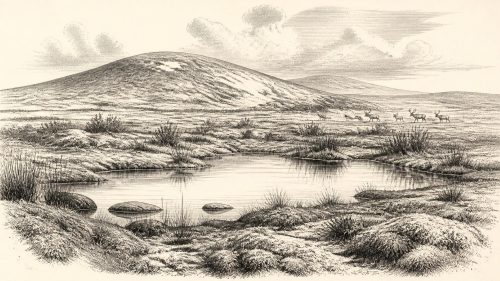
31,794 BCE cannot be treated as a precise Irish historical year, but falls within a fluctuating Late Glacial interval. At Derryvree near Maguiresbridge, Fermanagh, freshwater silts between glacial tills preserve evidence of an ice-free phase: open tundra, wetlands, sedges, mosses and cold-adapted insects. Conditions varied regionally as ice advanced and retreated before later extensive glaciation. Castlepook Cave, Cork, contains reindeer, mammoth and spotted hyena remains, showing a productive cold-stage fauna. A marked reindeer bone may indicate brief human activity around 33,000 years ago, but cannot prove settlement. The sparse record depicts a living, precarious landscape, reconstructed through deposits and probabilities.
Read Article
Archived: 14 September 2026
Abstract
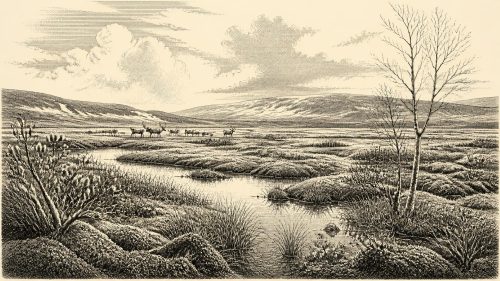
Around 31,795 BCE, Ireland lay within an unstable Late Pleistocene cold phase, rather than the later Last Glacial Maximum. At Derryvree, County Fermanagh, sediments between glacial tills preserve evidence of treeless tundra wetlands, with mosses, sedges, dwarf birch, insects and freshwater pools. Lower sea levels altered coasts, but no certain land bridge or travel routes can be identified. Castlepook Cave, County Cork, records cold-adapted mammals, including reindeer, mammoth and hyaena. A possibly cut-marked reindeer bone suggests an early human visit, not settlement. No securely dated occupation exists; any presence was likely brief, mobile and vulnerable to severe advancing glacial ice.
Read Article

Archived: 14 September 2026
Abstract
At the nominal date 31,796 BCE, Ireland lay within climatically unstable Marine Isotope Stage 3, not a precisely datable historical year. Fermanagh sediments between glacial tills record cold, treeless freshwater wetlands during ice-free intervals. Castlepook Cave in County Cork preserves a long-lived assemblage of Ice Age animals, including mammoth, reindeer, giant deer, bear, wolf and hyaena, demonstrating open-country ecosystems before and after the Last Glacial Maximum. A marked reindeer femur may indicate stone-tool butchery by visitors, but cannot prove settlement. No evidence supports detailed human history at all; environmental archives instead reveal shifting ice, habitats, fauna and uncertain human presence.
Read Article

Archived: 14 September 2026
Abstract
Around 31,797 BCE, Ireland lay within the climatically unstable Late Pleistocene, before the Last Glacial Maximum, rather than a date permitting year-specific history. Castlepook Cave in north Cork preserves Ireland’s principal pre-maximum faunal archive, with mammoth, reindeer, giant deer, predators and lemmings indicating cold, open habitats connected to wider north-west Europe. Northern Irish organic deposits similarly reveal fluctuating treeless wetlands and occasional milder woodland. Growing ice sheets and lower sea levels reshaped environments and dispersal routes. A possibly tool-marked Castlepook reindeer femur may indicate early human butchery, but lacks secure archaeological context and cannot prove settlement. The evidence records ecosystems.
Read Article

Archived: 14 September 2026
Abstract
Around 31,798 BCE, Ireland formed part of a changing Late Pleistocene landscape, with fluctuating ice, lower seas and intermittently exposed cold, open terrain. Evidence is regional and uncertain, since later glaciation destroyed or disturbed much of the record. Castlepook Cave in County Cork yielded reindeer, hyaena, bear, fox, hare, lemming and mammoth remains, accumulated at different times through natural and animal processes. A reindeer leg bone, dated roughly 33,000 years ago, bears a possible stone-tool cut mark, suggesting human activity. It cannot prove settlement, population continuity or social life. Castlepook instead highlights Ireland’s Ice-Age fauna and evidence for Palaeolithic visitors.
Read Article

Archived: 14 September 2026
Abstract
Although 31,799 BCE is an artificial precise label, it denotes later Marine Isotope Stage 3, when parts of Ireland were ice-free before the Last Glacial Maximum. At Derryvree near Maguiresbridge, freshwater silts sealed between glacial tills, radiocarbon dated broadly to 36,900–31,700 calibrated years BP, reveal cold open tundra, wetlands and periglacial conditions. Southern caves preserve remains of mammoth, reindeer, giant deer and predators, though mixed deposits cannot provide a single-time census. A possibly tool-marked Castlepook reindeer bone suggests an early human visit, not settlement. Subsequent British–Irish Ice Sheet expansion transformed and obscured these fragile prehistoric landscapes over the following millennia.
Read Article

Archived: 13 September 2026
Abstract
The reference year 31,801 BCE places Ireland within the Late Pleistocene, without claiming an event datable to that precise year. Glacial deposits, freshwater sediments and cave faunas suggest cold conditions before greater ice expansion. Open ground and freshwater environments could persist locally as the British-Irish Ice Sheet developed unevenly. Later glaciation destroyed or buried earlier surfaces, making annual reconstruction impossible. Evidence from Derryvree, Castlepook and regional ice studies instead supports environmental sequences. The article treats the date as an archival marker, explaining how fragmentary deposits, animal remains and calibrated dating inform cautious accounts of Ireland’s changing prehistoric landscape and ecology.
Read Article

Archived: 14 September 2026
Abstract
Around 31,801 BCE, a retrospective and imprecise calendar conversion, Ireland lay in the unstable later Marine Isotope Stage 3. At Derryvree, County Fermanagh, organic sediments between tills preserve mosses, sedges and cold-climate insects, indicating open tundra, freshwater hollows and periglacial conditions between ice advances. Related deposits confirm intermittent non-glacial environments, not island-wide conditions. Castlepook Cave, County Cork, contains mixed MIS 3 fauna including mammoth, reindeer, hyaena and bear. A cut-marked reindeer femur may indicate human carcass processing, but cannot prove settlement. Approaching major ice expansion, Ireland’s record remains environmental, fragmentary and cautiously interpreted, with chronology expressed through broad calibrated ranges.
Read Article
Archived: 13 September 2026
Abstract
The reference year 31,802 BCE represents a Late Pleistocene setting rather than a securely dated Irish event. Cave remains, freshwater deposits and glacial geology provide the surviving evidence. Open landscapes supported tundra vegetation, freshwater habitats and large mammals while ice expanded unevenly across the British-Irish region. Later glaciation removed much of the earlier surface record, limiting certainty about local conditions and their timing. Castlepook research, Derryvree evidence, regional reconstructions and radiocarbon calibration therefore require cautious interpretation. The article explores habitable environments before wider ice cover while distinguishing modern archival chronology from the broad dating ranges supported by surviving scientific evidence.
Read Article
Archived: 13 September 2026
Abstract
The reference year 31,803 BCE offers a modern chronological marker for Ireland’s Late Pleistocene environment. No exact calendar record survives. Freshwater deposits in County Fermanagh indicate cold, open habitats with low vegetation, showing that ecosystems persisted before later ice expansion. Cave remains and glacial evidence contribute a regional picture. Ice growth, exposed ground and shifting habitats formed changing combinations rather than a uniform landscape. Derryvree studies, Castlepook investigations and regional reconstructions help interpret this fragmentary record. The article emphasises environmental change and chronological caution, explaining why broad scientific evidence cannot establish specific events in a single prehistoric Irish reference year.
Read Article

Archived: 13 September 2026
Abstract
Although 31,803 BCE cannot denote a documented Irish event, it falls within MIS 3, before the Last Glacial Maximum. Ireland then experienced unstable cold conditions, with exposed tundra, wetlands and advancing ice rather than uniform glaciation. Derryvree sediments in Fermanagh indicate periglacial vegetation and freshwater habitats. Castlepook Cave, Cork, preserves a long, disturbed fossil record including mammoth, reindeer, giant deer, predators and lemmings, demonstrating access for Ice Age mammals. A marked reindeer femur may indicate brief Upper Palaeolithic butchery, but lacks secure context or supporting artefacts. Evidence supports animal landscapes and possible transient human visits, not settled population or polity.
Read Article

Archived: 13 September 2026
Abstract
Labelled 31,804 BCE, this period falls within unstable Marine Isotope Stage 3, for which only broad calibrated chronologies are defensible. Irish sediments show that some areas were ice-free before the later Last Glacial Maximum, supporting cold, open tundra environments and mobile fauna. Castlepook Cave in County Cork preserves diverse, time-layered Pleistocene animal remains. A reindeer femur, dated broadly to about 33,000 years ago, bears a mark interpreted as stone-tool damage during butchery. If confirmed, it suggests a brief human encounter with a carcass, not settlement. No evidence supports continuous occupation, identities, politics, religion, or culture, while expanding ice transformed Ireland.
Read Article
Archived: 13 September 2026
Abstract
The reference year 31,804 BCE situates Ireland near a glacial frontier within the Late Pleistocene. Glacial geology, freshwater sediments and cave faunas suggest uneven ice development across the British-Irish region. Some landscapes remained open and biologically active while others experienced stronger glacial influence. Subsequent ice movement removed or buried earlier material, leaving scattered evidence and broad dating ranges. Research concerning Derryvree, Castlepook, regional ice histories and radiocarbon calibration supports cautious environmental reconstruction. The article uses its date as an archival reference rather than an exact event, stressing the distinction between annual organisation and the limited precision of Ireland’s prehistoric record.
Read Article

Archived: 13 September 2026
Abstract
31,805 BCE is a modern label within late Marine Isotope Stage 3, not a date for recoverable Irish events. Ireland experienced unstable glacial conditions, with ice-free areas varying regionally before later ice reshaped evidence. Derryvree’s freshwater sediments, preserved between tills, reveal cold, treeless tundra-like wetlands supporting insects and pools. Southern caves preserve fauna including mammoth, reindeer, giant deer, bear and hyaena, indicating open habitats but complex depositional histories. A possibly cut-marked reindeer bone from Castlepook raises prospects of transient Upper Palaeolithic visitors, yet no settlement or secure human occupation is known. These fragmentary archives demonstrate environmental change, not social history.
Read Article
Archived: 13 September 2026
Abstract
The reference year 31,805 BCE introduces Ireland’s Late Pleistocene animal communities without assigning them to an exact calendar event. Castlepook Cave preserves remains of reindeer, mammoth, giant deer, bear, wolf and spotted hyaena from the wider period. These finds illuminate cold environments before later glaciation. Open habitats could persist locally while ice expanded elsewhere, producing an uneven regional landscape. Later glacial activity erased many earlier surfaces, leaving a fragmentary record. Castlepook studies, Derryvree environmental evidence, museum collections and regional reconstructions provide context. The article explains how surviving animal and sediment evidence informs cautious interpretation of Ireland’s changing Ice Age ecology.
Read Article
Archived: 13 September 2026
Abstract
The reference year 31,806 BCE provides an archival setting for cold environments before later glaciation in Ireland. Deposits near Maguiresbridge in County Fermanagh preserve plants and invertebrates associated with treeless freshwater habitats. They demonstrate biological activity during a period of growing glacial influence. Across the British-Irish region, ice developed unevenly rather than covering every landscape simultaneously. Subsequent glaciation removed much earlier evidence, limiting chronological precision and local reconstruction. Derryvree studies, regional ice research, museum collections and radiocarbon calibration help interpret the remains. The article distinguishes this broad environmental history from claims about an identifiable event in one exact prehistoric year.
Read Article
Archived: 13 September 2026
Abstract
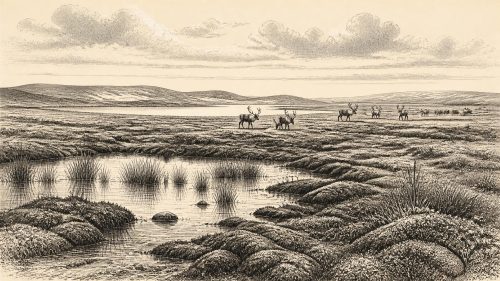
31,807 BCE is a modern marker within unstable Marine Isotope Stage 3, not a documented Irish year. Derryvree, County Fermanagh, preserves freshwater sediments between glacial tills, dated broadly enough to encompass this period. Bogbean, mosses, sedges, insects and sparse herbs indicate cold, open, wet tundra-like ground during an ice-free interval. Greenagho confirms intermittent freshwater environments, challenging assumptions of continuous ice cover. Castlepook Cave records cold-stage fauna, including reindeer, mammoth, predators and scavengers, but represents successive episodes rather than one community. A possible cut-marked reindeer bone suggests transient Upper Palaeolithic visitors, not settlement. Ireland was a shifting frontier before maximum glaciation.
Read Article
Archived: 13 September 2026
Abstract
The reference year 31,807 BCE locates Ireland within a broad cold interval of the Late Pleistocene. Cave deposits, freshwater sediments and glacial geology provide environmental evidence, without securely identifying an event in that calendar year. Open tundra and cold-adapted animals persisted in parts of Ireland as regional ice expanded. Castlepook Cave in County Cork preserves significant mammal remains from the wider period. Derryvree studies, museum collections, ice reconstructions and radiocarbon calibration provide complementary context. The article explains why the surviving record supports ecological reconstruction rather than political narrative, treating annual chronology as an organising framework for a changing prehistoric landscape.
Read Article

Archived: 13 September 2026
Abstract
31,808 BCE is a modern label rather than a recoverable Irish year, representing a broad Middle Midlandian interval within Marine Isotope Stage 3. Ireland’s conditions varied as the British–Irish Ice Sheet grew, producing severe, open periglacial landscapes rather than uniform ice cover. Derryvree and other Fermanagh deposits indicate wet treeless tundra, with sedges, grasses, shrubs, insects and freshwater habitats. Castlepook Cave preserves mammoth, reindeer, giant deer, predators and smaller cold-adapted animals, demonstrating intermittent ecological connections with Britain and Eurasia amid lower sea levels. A possibly cut-marked reindeer bone suggests, but does not prove, Upper Palaeolithic human presence without settlement evidence.
Read Article
Archived: 13 September 2026
Abstract
The reference year 31,808 BCE introduces Ireland’s Late Pleistocene tundra environments while acknowledging that no event can be dated precisely to it. Environmental deposits, cave faunas and glacial evidence cover long periods. Cold grassland, sedges, herbs and low vegetation persisted where expanding ice had not overridden the ground. Fermanagh freshwater deposits demonstrate biological activity, while Castlepook Cave preserves remains of reindeer, mammoth, giant deer, bear, wolf and spotted hyaena. These assemblages connect Ireland to wider northwestern European ecology. The article interprets scattered evidence cautiously, separating an annual archive marker from the broader chronological ranges that scientific reconstruction can actually support.
Read Article
Archived: 13 September 2026
Abstract
31,809 BCE is a modern chronological marker, not a securely dated Irish event, with no written records, named people or settlements. Ireland then lay within a cold, unstable Late Pleistocene environment as the British-Irish Ice Sheet expanded unevenly. Open tundra, freshwater basins and treeless vegetation survived in places, although later ice destroyed much evidence. Inter-till deposits at Derryvree, County Fermanagh, indicate cold freshwater habitats. Castlepook Cave, County Cork, yielded reindeer, mammoth, giant deer, predators and other fauna, demonstrating substantial pre-glacial animal life. A marked reindeer bone may suggest brief human presence, but cannot prove permanent or continuous settlement in Ireland.
Read Article
Archived: 10 September 2026
Abstract
Around 31,810 BCE, Ireland lay within a changing Late Pleistocene landscape as the British–Irish Ice Sheet began expanding. Evidence from Derryvree, County Fermanagh, indicates treeless tundra, freshwater habitats and cold-adapted plants during an earlier ice-free interval. Castlepook Cave in north Cork produced remains of mammoth, reindeer, giant deer, bears, wolves, foxes, lemmings and spotted hyaenas, demonstrating intermittent links with continental fauna. A marked reindeer femur may indicate human butchery around 31,000 BCE, but lacks securely associated tools or occupation evidence. Any human presence remains hypothetical. Lower sea levels altered routes, while advancing ice later reduced habitable land and destroyed evidence.
Read Article

Archived: 10 September 2026
Abstract
At the notional date of 31,811 BCE, Ireland lay in the variable MIS 3 phase before the Last Glacial Maximum, not in a historically identifiable year. Evidence is necessarily broad and uncertain. Organic sediments at Derryvree indicate a treeless, periglacial wetland with tundra vegetation during an interval encompassing this date. Castlepook Cave preserves remains of cold-adapted fauna, including reindeer, but cave deposits are mixed and imperfectly dated. A marked reindeer femur may indicate human butchery, suggesting transient Upper Palaeolithic visits, not permanent settlement. Low sea levels altered routes but did not guarantee a land bridge. Glaciation destroyed or buried evidence.
Read Article

Archived: 10 September 2026
Abstract
Around 31,812 BCE, Ireland lay within the unstable cold conditions of Marine Isotope Stage 3, not a precisely datable historical year. At Derryvree, County Fermanagh, freshwater silts later sealed beneath glacial till show an ice-free wet tundra of sedges, mosses, herbs, pools and seasonal freezing. Crag Cave calcite indicates episodic liquid-water conditions, confirming climatic variability. Cave faunas, including reindeer and mammoth, reflect harsh environments but uncertain dates and associations. A possibly cut-marked reindeer bone offers only tentative evidence of human activity. No settlements, polities or economy are known. Changing ice and sea levels made access uncertain before glaciation reshaped Ireland.
Read Article




