Archived: 18 September 2026
Abstract
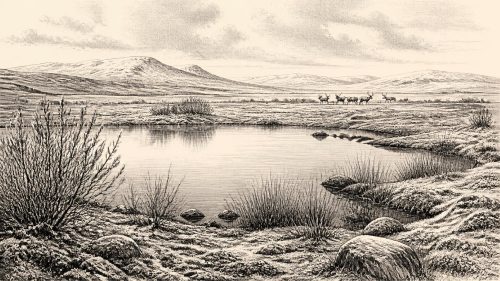
Around 31,244 BCE, Ireland was a climatically unstable glacial frontier, not a historically observable society. Organic sediments at Derryvree, County Fermanagh, dated broadly to later Marine Isotope Stage 3, preserve evidence of cold freshwater wetlands, open vegetation and arctic-alpine species between glacial advances. Kerry speleothems indicate intermittent above-freezing conditions, while cave finds demonstrate occasional presence of reindeer, mammoth, horse, giant deer, bear and hyena. A cut-marked reindeer bone from Castlepook Cave may indicate human butchery, but no secure settlement evidence exists. Falling sea levels altered access routes before expanding ice sheets reshaped landscapes and destroyed much earlier evidence across Ireland.
Read Article

Archived: 18 September 2026
Abstract
31,250 BCE is a modern label within variable Marine Isotope Stage 3, not a precisely dated Irish event. Ireland experienced fluctuating cold conditions, with ice, periglacial terrain and occasional ice-free habitats. At Derryvree, Fermanagh, an interglacial wetland deposit, dated broadly to 36,900–31,700 calibrated BP, preserves tundra-like plants and insects between glacial advances. Castlepook Cave, Cork, contains fauna accumulated over millennia, including reindeer, mammoth, predators and other cold-country species, indicating ecological connections with north-west Europe. A cut-marked reindeer femur may record Upper Palaeolithic butchery, but proves neither permanent settlement nor wider society. Together sites reveal changing environments and possible human visits.
Read Article
Archived: 18 September 2026
Abstract
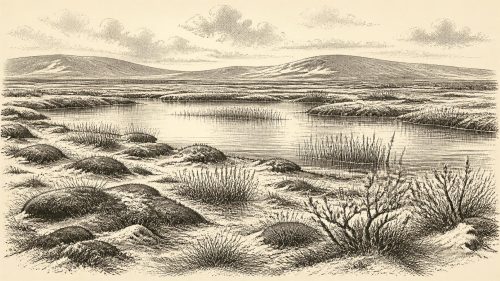
Around 31,262 BCE, a modern filing date within MIS 3 rather than a precise year, Ireland was a changing Ice Age landscape. Derryvree, County Fermanagh, preserves freshwater silts between glacial tills, indicating an ice-free cold wetland interval around 33,500 calendar years BP. Tundra vegetation and periglacial conditions prevailed, while lowered sea levels permitted animal movement across wider north-west Europe. Castlepook Cave, County Cork, yielded mammoth, reindeer, giant deer, carnivores and lemmings from differing episodes. A possibly butchered reindeer bone may indicate human activity, but no secure settlement exists. Later glaciation obscured earlier evidence, leaving human presence uncertain in the record.
Read Article

Archived: 18 September 2026
Abstract
The label 31,266 BCE cannot identify a precise event, but falls within MIS 3, a climatically unstable phase of the Midlandian cold stage. At Derryvree near Maguiresbridge, freshwater silts between glacial tills record an ice-free interval dated broadly to 36,900–31,700 years BP. Wetlands, tundra-like vegetation, insects and aquatic plants indicate severe periglacial conditions. Castlepook Cave preserves a long-accumulated fauna including mammoth, giant deer, reindeer, bear and hyena, demonstrating intermittently productive habitats. A possibly cut-marked reindeer bone suggests early human activity, but without associated tools or settlements it cannot prove occupation. The evidence depicts shifting ice, water, vegetation and animal movement.
Read Article

Archived: 18 September 2026
Abstract
31,279 BCE is a modern chronological label, not an identifiable Irish historical year. During Marine Isotope Stage 3, Ireland experienced severe, fluctuating glacial conditions, altered coastlines and open tundra-wetland habitats. Derryvree, County Fermanagh, preserves organic sediments indicating mosses, grasses, sedges, herbs, juniper, pools and cold-phase biodiversity between glacial advances. Castlepook Cave, County Cork, accumulated fauna over millennia, including mammoth, giant deer, reindeer and hyaena, shaped by carnivore activity and disturbance. A marked reindeer femur, tentatively interpreted as stone-tool butchery, may indicate human presence, but proves neither settlement nor society. The evidence reveals ecological opportunity, climatic instability and uncertain human visitation.
Read Article
Archived: 18 September 2026
Abstract
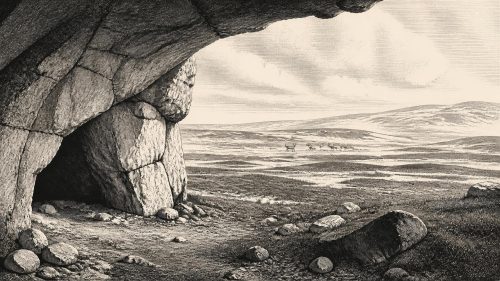
Around 33,200 calibrated years before present, Ireland lay within the climatically unstable Late Pleistocene, although no evidence can identify conditions in 31,280 BCE precisely. Ice sheets, sea levels and coastlines changed unevenly, while later glaciation destroyed much terrestrial evidence. Castlepook Cave in County Cork preserves Ireland’s richest relevant fauna, including mammoth, giant deer, reindeer, bear and hyena, accumulated across extended periods rather than a single moment. Redating places some remains in MIS 3, supporting intermittent animal occupation. A reportedly cut-marked reindeer bone may indicate human visitation, but remains contested and cannot demonstrate settlement. Evidence remains fragmentary, not an annual narrative.
Read Article
Archived: 18 September 2026
Abstract
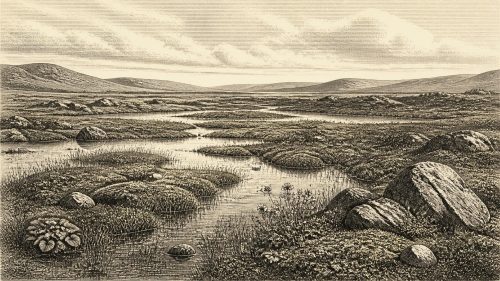
31,281 BCE is a modern label for a poorly resolved Late Pleistocene interval, rather than a recoverable Irish year. At Derryvree, County Fermanagh, freshwater sediments between glacial tills, dated broadly to 36,900–31,700 calibrated years BP, reveal treeless tundra wetland with bogbean, mountain avens and sedges. Castlepook Cave, County Cork, preserves evidence of diverse cold-climate fauna, including reindeer, mammoth, giant deer, predators and smaller mammals, demonstrating connectivity with north-west Europe. A marked, dated reindeer bone may indicate human butchery, but remains inconclusive. Ireland was an unstable frontier of ice-free habitats and advancing glaciers, without evidence for settled communities, polities or culture.
Read Article
Archived: 18 September 2026
Abstract
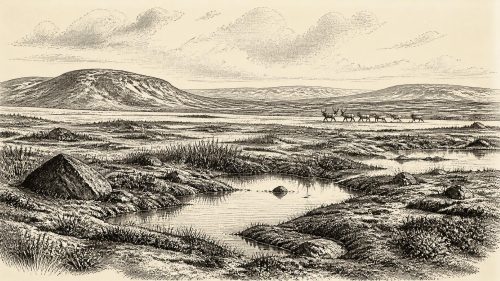
About 31,283 BCE, Ireland’s history is reconstructed from uncertain environmental and archaeological evidence, not annual events. During late Marine Isotope Stage 3, fluctuating Ice Age conditions produced shifting ice, exposed ground and wetlands. At Derryvree, Fermanagh, organic sediments sealed between glacial tills record an ice-free, treeless freshwater tundra with mosses, sedges and shallow water. Castlepook Cave, Cork, preserves pre-Last Glacial Maximum fauna, including reindeer, mammoth, giant deer, predators and cold-adapted small mammals. A marked reindeer femur may indicate human butchery, but cannot prove settlement or continuous occupation. No evidence supports communities, polities, farming or trade. Later glaciation erased much evidence.
Read Article
Archived: 18 September 2026
Abstract
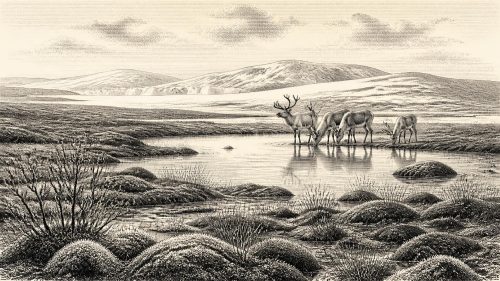
At approximately 33,240 cal BP, corresponding broadly to 31,291 BCE, Ireland experienced the climatically unstable Marine Isotope Stage 3. Ice-free and glacial conditions alternated, while lower sea levels reshaped coasts without guaranteeing land bridges. At Derryvree, County Fermanagh, freshwater sediments dated 36,900–31,700 cal BP preserve evidence of sedges, grasses, mosses and cold-adapted wetland plants in a treeless landscape. Castlepook Cave, County Cork, records a time-averaged fauna including reindeer, mammoth, giant deer, predators and lemmings. Possible cut marks on reindeer bone suggest unconfirmed human visitation. Later glaciation destroyed much evidence, leaving environmental change, rather than recorded society, as this period’s history.
Read Article
Archived: 18 September 2026
Abstract
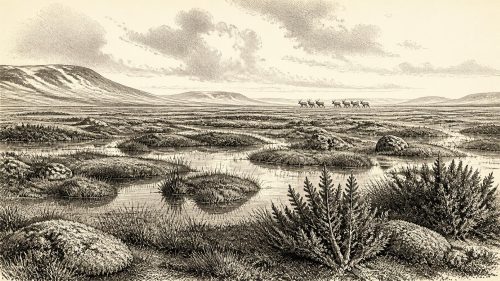
Rather than documenting a single year, evidence for Ireland around 31,296 BCE describes a variable later MIS 3 environment. At Derryvree, Fermanagh, organic freshwater sediments between tills indicate a locally ice-free tundra wetland with mosses, sedges, low shrubs and cold-adapted plants. Castlepook Cave, Cork, preserves a long-accumulated fauna of mammoth, giant deer, reindeer, predators and scavengers, demonstrating intermittent access for cold-stage mammals. Ice conditions, sea levels and routes changed repeatedly, preventing island-wide conclusions. A possibly stone-tool-marked reindeer bone may indicate brief Upper Palaeolithic human activity, but lacks contextual evidence of settlement. No states, agriculture or named peoples can be claimed.
Read Article
Archived: 18 September 2026
Abstract
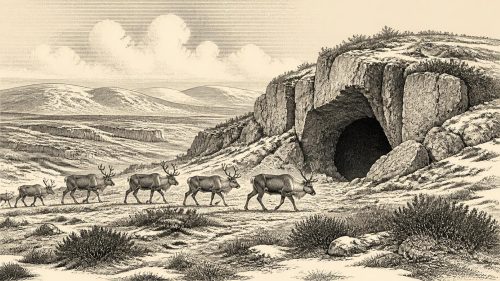
31,304 BCE is a retrospective label for a Late Pleistocene, MIS 3 period, not a recoverable Irish year. Castlepook Cave, County Cork, preserves a valuable but disturbed pre-Last Glacial Maximum fauna, including reindeer, mammoth, giant deer, carnivores, hares and lemmings, indicating cold, open, variable habitats and wider ecological connections. Revised radiocarbon dating places key animals earlier than initial results suggested, without establishing an event in that year. A marked reindeer femur may indicate Upper Palaeolithic butchery, yet mixed deposits and absent associated artefacts preclude claims of settlement. Ireland's ice extent, routes and human presence remain uncertain; environmental change defined life.
Read Article

Archived: 18 September 2026
Abstract
Around 31,315 BCE, the landmass that became Ireland lay within an unstable Late Pleistocene glacial landscape, not a defined country. Derryvree, County Fermanagh, preserves freshwater sediments between tills, dated broadly to this period, indicating treeless tundra wetlands, seasonal thaw and later renewed ice. Castlepook Cave, County Cork, contains a long-lived assemblage of mammoth, giant deer, reindeer, bear, hyaena and other cold-climate fauna, demonstrating intermittent ecological richness but not a single contemporary community. A possibly cut-marked reindeer bone may indicate transient human activity, yet no secure occupation evidence survives. Evidence supports environmental change, not settled populations, institutions or precise annual history.
Read Article
Archived: 18 September 2026
Abstract
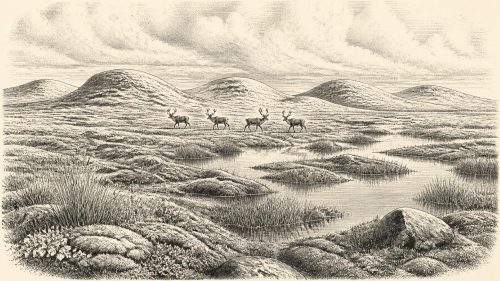
31,326 BCE is a modern label for later Marine Isotope Stage 3, not a recoverable Irish year. Derryvree, County Fermanagh, preserves freshwater sediments between tills, indicating an ice-free, cold tundra wetland during a broadly dated interval. Castlepook Cave, County Cork, contains MIS 3 remains of reindeer, mammoth, hyaena and other open-country fauna, although disturbed deposits prevent a single ecological snapshot. A cut-like mark on a reindeer femur may indicate early human butchery, but remains contested and cannot prove settlement. Glaciation and changing sea levels obscured evidence. Secure Irish human presence is far later; permanent society is unproven for this period.
Read Article
Archived: 18 September 2026
Abstract
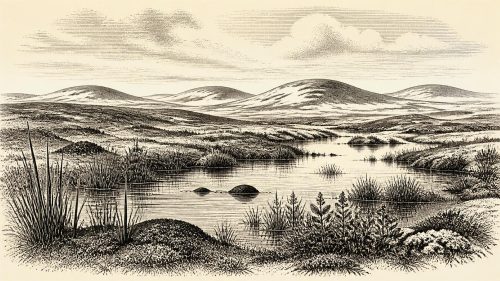
Around 31,335 BCE, Ireland was a cold, unstable, largely open Ice Age landscape, not uniformly ice-covered but shaped by glaciers, periglacial processes and shifting sea levels. Freshwater sediments at Derryvree, County Fermanagh, dated broadly to this period, preserve bogbean, sedges and other evidence of wetland habitats within treeless tundra-like terrain. Cave remains from Castlepook, County Cork, indicate large mammals including mammoth, reindeer, giant deer, hyaena and wolf in suitable open country. Possible tool marks on a reindeer bone may indicate brief human visits, but cannot prove settlement. Evidence remains fragmentary, local and unsuitable for reconstructing specific events, societies or politics.
Read Article
Archived: 18 September 2026
Abstract
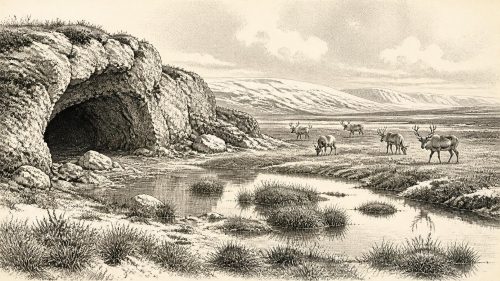
31,336 BCE is a modern label, not a precisely datable Irish event, within climatically unstable Marine Isotope Stage 3. Ireland’s ice margins, sea levels and coastlines were changing, although full British–Irish Ice Sheet cover came later. Derryvree deposits in Fermanagh reveal cold, treeless, waterlogged tundra wetlands supporting varied life. Castlepook Cave, County Cork, preserves remains of reindeer, mammoth, giant deer, predators and other cold-adapted fauna, accumulated across different periods. A roughly 33,000-year-old marked reindeer bone may indicate human butchery, but lacks secure archaeological context. No settlement or society can be inferred. This period is reconstructed through environmental and faunal evidence.
Read Article

Archived: 18 September 2026
Abstract
At the notional date of 31,342 BCE, Ireland lay within climatically unstable Marine Isotope Stage 3, not a year capable of precise historical dating. Derryvree, County Fermanagh, preserves wetland sediments between glacial tills, demonstrating a locally ice-free interval with treeless tundra vegetation, freshwater and severe seasonal cold. Castlepook Cave, County Cork, contains MIS 3 fauna including reindeer, mammoth and predators. An incised reindeer femur may indicate Upper Palaeolithic butchery, but cannot establish settlement or continuous occupation. Fragmentary evidence permits no conclusions about society, beliefs or politics. These sites instead reveal changing habitats, mobile animals and a possible brief human presence.
Read Article
Archived: 18 September 2026
Abstract
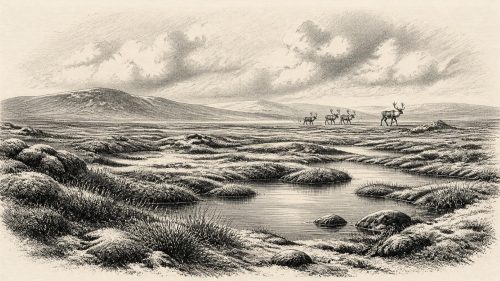
31,344 BCE is a modern label for an uncertain interval within MIS 3, rather than a datable Irish event. Environmental evidence is fragmentary because later glaciation disturbed or destroyed deposits. At Derryvree, Fermanagh, freshwater organic sediments between tills reveal a cold, treeless, wetland landscape during an ice-free episode. Castlepook Cave, Cork, preserves remains of reindeer, mammoth, giant deer and predators, accumulated over long periods rather than as a single fauna. A marked reindeer femur may indicate early human butchery, but cannot prove settlement. Calcite records and fossils underline fluctuating climates, varied habitats, and Ireland’s prehistory before farming, monuments or societies.
Read Article

Archived: 18 September 2026
Abstract
31,346 BCE is a modern nominal date within a broad Late Pleistocene range, rather than a recoverable Irish year. At Derryvree, County Fermanagh, organic sediments between glacial tills record an ice-free, cold, treeless tundra wetland with freshwater plants, mosses and sedges. Castlepook Cave, County Cork, preserves MIS 3 remains of mammoth, reindeer, giant deer, predators and other cold-adapted fauna, though these did not necessarily coexist. A marked reindeer femur may indicate brief human carcass processing, but cannot prove settlement. Lower sea levels may have enabled animal movement, while routes remain uncertain. Evidence reveals changing environments, not societies, events or polities.
Read Article

Archived: 18 September 2026
Abstract
Circa 31,350 BCE, Ireland lay within the climatically unstable Late Pleistocene MIS 3, not a recordable historical year. At Derryvree, County Fermanagh, freshwater sediments between glacial tills, dated broadly to 36,900–31,700 cal BP, reveal treeless periglacial wetlands supporting grasses, sedges, juniper, mosses, aquatic plants and insects. Castlepook Cave, County Cork, preserves MIS 3 fauna including mammoth, reindeer, giant deer, bear, wolf, hare, lemmings and hyaena, indicating open habitats and ecological links abroad. A possibly cut-marked reindeer bone suggests fleeting human activity, but no settlement is proven. Later ice advances destroyed or buried much evidence, leaving only a fragmentary environmental record.
Read Article

Archived: 17 September 2026
Abstract
31,356 BCE is not a recorded year but falls within MIS 3 during the Last Glacial Period. At Derryvree, County Fermanagh, inter-till freshwater sediments radiocarbon dated broadly to 36,900–31,700 calendar years before present preserve evidence of treeless, cold, wet tundra, pools and herb-rich vegetation during an ice-free interval. Southern caves, especially Castlepook, indicate a diverse cold-stage fauna including mammoth, reindeer, giant deer, predators and lemmings, although dates and occupations varied. A possibly cut-marked reindeer bone suggests transient Upper Palaeolithic human activity, not settlement. Lower sea levels and fluctuating ice created shifting access and habitats, leaving Ireland environmentally dynamic but elusive.
Read Article

Archived: 17 September 2026
Abstract
At c. 33.3 ka cal BP, Ireland experienced unstable MIS 3 cold-stage environment rather than a datable year. Derryvree, County Fermanagh, preserves organic wetland sediments between tills, showing ice-free intervals with open, treeless tundra vegetation, freshwater pools and periglacial conditions. Castlepook Cave, County Cork, yielded mammoth, reindeer, giant deer, hyaena and other fauna, demonstrating intermittent ecological links with north-west Europe, though deposits span time and are biased. Revised dating places some fauna earlier than believed. A marked reindeer bone may indicate human butchery around 33,000 years ago but cannot prove settlement. Evidence supports changing landscapes, animals and possible human visits.
Read Article
Archived: 17 September 2026
Abstract
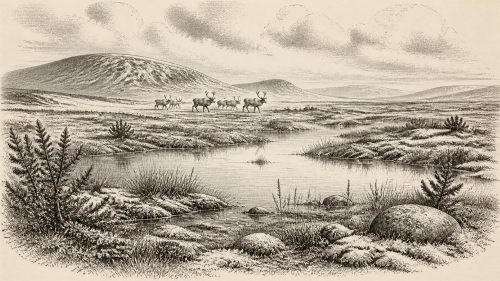
Around 31,363 BCE, Ireland lay within the unstable MIS 3 phase of the Late Pleistocene, not a date permitting annual historical reconstruction. At Derryvree, County Fermanagh, organic sediments between glacial tills indicate a cold, open, wet periglacial landscape with freshwater pools, grasses, sedges, juniper, mosses and insects. Comparable deposits and Kerry speleothems show locally varied climatic and ice conditions. Before the ice sheet’s later maximum, Ireland supported large mammals, documented at Castlepook Cave, including mammoth, reindeer, giant deer, bear and hyena. Human settlement is unproven; one possibly cut-marked reindeer bone suggests only a tentative, fleeting human presence on the island.
Read Article

Archived: 17 September 2026
Abstract
Around 31,364 BCE, Ireland lay within the climatically unstable Late Pleistocene, not a recoverable historical year. At Derryvree, County Fermanagh, freshwater organic beds between glacial tills reveal a temporary non-glacial interval of tundra-like wetlands, mosses, sedges, insects and shallow pools under severe periglacial conditions. Cave faunas, especially at Castlepook, County Cork, demonstrate repeated presence of mammoth, reindeer, giant deer, bears, hyaenas and other cold-stage animals in open, largely treeless terrain. A marked reindeer bone may indicate Upper Palaeolithic human activity, but cannot securely prove settlement. Glacial change, uncertain dating and fragmentary deposits preclude political, social or year-specific narratives with confidence.
Read Article

Archived: 17 September 2026
Abstract
Although 31,367 BCE is a modern label, Derryvree, County Fermanagh, illuminates a broader MIS 3 interval. Organic silts between glacial tills, dated BIRM-166 to 30,500 ± 1,100 radiocarbon years BP, indicate a cold freshwater wetland amid shifting ice. Plants reveal largely treeless, tundra-like vegetation, while regional conditions varied rapidly. Castlepook Cave fauna demonstrate that reindeer, mammoth, hyaena and other Ice Age animals reached Ireland, though deposits span different times. A cut-marked reindeer bone may indicate Upper Palaeolithic human activity, but does not prove settlement. Evidence supports temporary environmental opportunity, not a permanently inhabited or historically organised Ireland during this period.
Read Article
Archived: 17 September 2026
Abstract
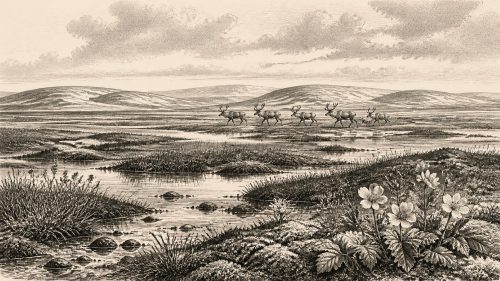
Around 31,389 BCE, Ireland lay within the fluctuating cold conditions of Marine Isotope Stage 3, not a recoverable historical year. Derryvree deposits in Fermanagh record treeless, wet tundra with sedges, mosses, shallow pools and cold-adapted plants, later buried by ice. Castlepook Cave in Cork preserves mixed faunal remains, including mammoth, reindeer, giant deer, hyaena and lemmings, demonstrating a cold, open ecosystem. A marked reindeer femur may indicate early human activity, but disturbed context and uncertain interpretation prevent firm conclusions. No evidence supports permanent settlement, politics or culture. Fragmentary archives reveal changing climates, expanding ice and possible transient visitors to Ireland.
Read Article
Archived: 17 September 2026
Abstract
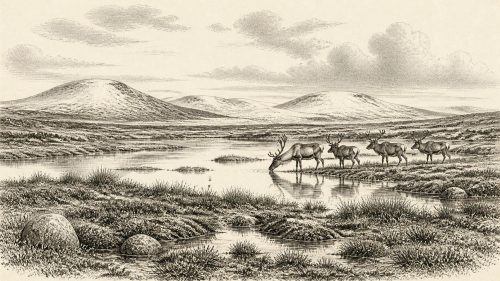
31,390 BCE is a modern label within MIS 3, not a precisely datable Irish year. Ireland’s evidence is environmental, chiefly Derryvree’s freshwater silts between glacial tills, broadly dated 36,900–31,700 cal BP. Their pollen, mosses, plants and insects indicate open, treeless, cold wetlands with pools, rather than permanent ice or woodland. Cave records from Kerry show episodic liquid-water conditions, while Cork fauna demonstrate that Ice Age mammals entered suitable landscapes. A possibly cut-marked Castlepook reindeer bone raises, but does not establish, human presence. Glacial erosion and uncertain dating preclude claims about communities, politics or conditions, revealing a Atlantic Ice Age landscape.
Read Article
Archived: 17 September 2026
Abstract
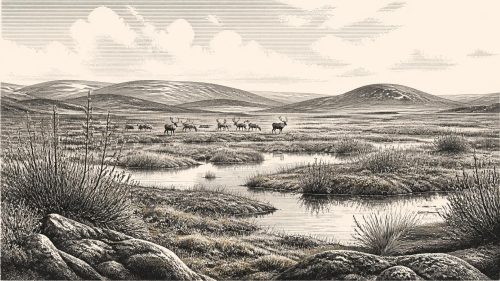
Around 31,391 BCE, Ireland cannot be described through a precise annual history, but Derryvree, County Fermanagh, preserves organic freshwater deposits dating broadly within this interval. Silts beneath later glacial till reveal a treeless, periglacial tundra of sedges, mosses, dwarf willow, aquatic plants and insects, proving local ice-free habitats and liquid water. Other records indicate fluctuating conditions before maximum ice-sheet expansion. Castlepook Cave fauna, including mammoth, reindeer and predators, demonstrates cold-stage wildlife. A possibly cut-marked reindeer bone suggests, but does not prove, human presence. No secure evidence establishes settlement, institutions, ritual, agriculture or technology; Ireland’s record remains fragmentary and environmentally focused.
Read Article

Archived: 17 September 2026
Abstract
31,398 BCE is a notional date within the climatically unstable Middle Midlandian, not a recordable historical year. At Derryvree, County Fermanagh, freshwater organic deposits between glacial tills document an ice-free interval of cold, tundra-like wetlands, though their broad dates cannot map conditions across Ireland. Related sites suggest local non-glacial terrain. Castlepook Cave, County Cork, preserves Marine Isotope Stage 3 fauna, including reindeer, hyaena and mammoth, but cave processes prevent a single contemporaneous reconstruction. A marked reindeer femur may indicate early human butchery, yet no settlement exists. Evidence reveals changing Ice Age environments, animals and possible transient human contact without societies.
Read Article
Archived: 17 September 2026
Abstract
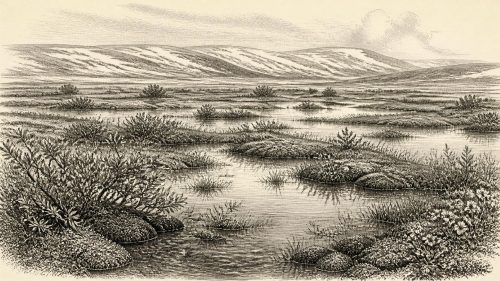
31,399 BCE is a modern label for later Marine Isotope Stage 3, not a recoverable Irish calendar year. Derryvree, County Fermanagh, preserves freshwater organic sediments between glacial tills, indicating a cold, treeless periglacial wetland during an ice-free local interval. Pollen, plants and insects document shallow pools and low-growing vegetation. Climate and ice varied, while lower sea levels did not necessarily create continental routes. Castlepook Cave records diverse cold-stage fauna, including mammoth, reindeer and predators. A marked reindeer femur may indicate brief human carcass processing, but cannot prove settlement, society, culture or permanent occupation. Evidence chiefly reveals a harsh, changing environment.
Read Article
Archived: 17 September 2026
Abstract
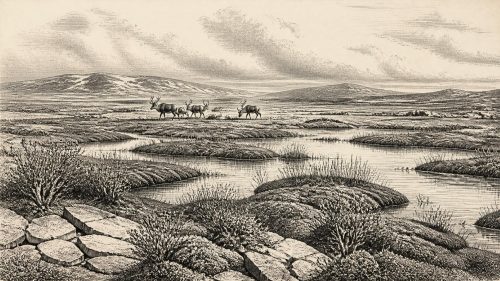
31,405 BCE cannot denote a precisely dated Irish event, but falls within Marine Isotope Stage 3. At Derryvree, County Fermanagh, freshwater sediments between glacial tills, dated broadly to 34,950–29,750 BCE, preserve pollen, plants, mosses and beetles from an ice-free, treeless periglacial wetland. Comparable deposits confirm episodic cold open habitats, while Crag Cave records warmer interstadials. Castlepook Cave, County Cork, yielded cold-adapted fauna and a reindeer femur possibly bearing butchery marks, suggesting, but not proving, brief human presence. Later glaciation damaged evidence. No settlements, polities, trade or sustained occupation can be demonstrated; the period is reconstructed from environmental and faunal archives.
Read Article
