Archived: 20 October 2026
Abstract
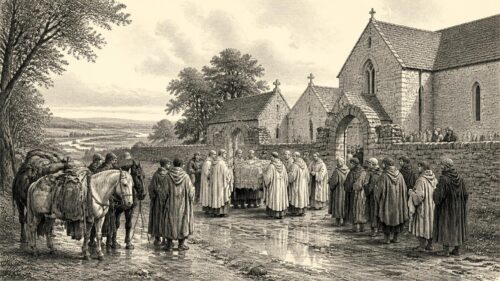
In 1437, Ireland’s annals recorded regional transitions rather than a national event. Seoan Mac Peorais, Archbishop of Tuam, died, opening a contested ecclesiastical vacancy resolved neither quickly nor simply. Gormlaith Ó Duibgeannáin, wife of Brian Mac Aodhagáin, died as an anchorite at Loch Key, linking learned kinship and religious life. Ulster notices named three deaths, while a cautiously dated peace between Niall Garbh Ó Domhnaill and his brother Neachtan reflected strained northern lordship. Farming, trade and uneven royal authority shaped everyday life. News of James I of Scotland’s assassination demonstrated Ireland’s continuing Irish Sea connections across a politically fragmented island.
Read Article
Archived: 20 October 2026
Abstract
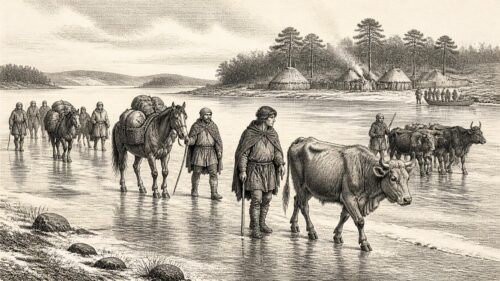
A Winter Made PassableFor Ireland, 1435 opened in a landscape temporarily remade by cold. The annals call it an exceptional frost: lakes and rivers were hard enough to be crossed on solid ice. The Annals of Ulster add an unusually vivid detail from Fermanagh. When Eóghan Ó Néill entered the region with an army, the people of Fir Manach moved cattle, horses carrying loads and other portable goods westward across Lough Erne—not in boats, but over the frozen lake. This was not merely a picturesque curiosity. It changed the practical geography of a frontier lordship. Water that normally protected communities,
Read Article
Archived: 20 October 2026
Abstract
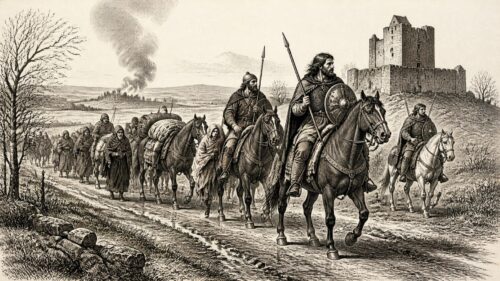
In 1434, Eóghan Ó Néill of Tír Eóghain and Niall Garbh Ó Domhnaill of Tír Chonaill, recently rivals, led a broad Ulster coalition into the English lordship. They exacted tribute at Sradbaile, burned Sliabh Breagh and Oriel, and attacked Nobber Castle. Thomas Stanley’s mounted response allowed Ó Néill’s sons to withdraw safely but trapped Ó Domhnaill’s separated party seeking cattle. His heir Toirdhealbhach and other leaders died, while Niall Garbh was captured, enabling his brother Neachtan to rule. Annals also recorded deaths among churchmen and learned families. Late in the year, severe frost froze major lakes, disrupting life and travel.
Read Article
Archived: 20 October 2026
Abstract
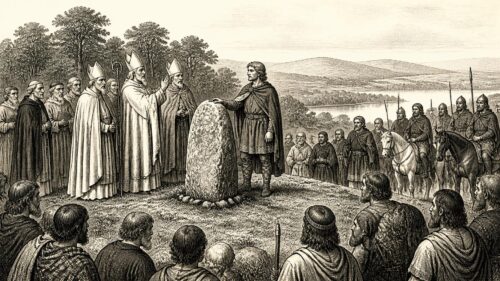
In 1432, Domhnall Bog Ó Néill was killed in Ó Catháin territory, enabling his rival Eóghan, son of Niall Óg, to be inaugurated king of Tír Eóghain at Tullaghoge with clerical and learned support. Eóghan’s alliance with Sligo provoked conflict with Niall Garbh Ó Domhnaill of Tír Conaill, bringing armed diplomacy, Erne crossings, prolonged campaigning, burned settlements and crops. Raids exposed Armagh’s vulnerability, while bishops and learned families remained centres of hospitality, law and memory. Elsewhere, Ormond attacked Éile and Mac Murchadha challenged English power in Leinster. The year revealed fragmented authority, shifting alliances, and legitimacy unable to secure peace.
Read Article
Archived: 20 October 2026
Abstract
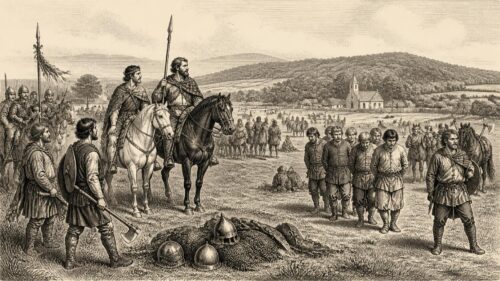
The best-documented Irish event of 1429 was a major defeat at Achadh Cille Móire, now generally identified with Aghakilmore in County Cavan. It was not a battle between two neatly bounded nations. Rather, it grew from the shifting alliances, rival branches and armed followings that shaped lordship in the Breifne borderlands. The annals place it firmly in this year, while their differing emphases also reveal why a single encounter could matter far beyond the field on which it was fought. War in Breifne The Annals of Ulster report a “great war” between Tadhg Ua Ruairc (O’Rourke) and Eóghan Ua Raighillaigh
Read Article
Archived: 20 October 2026
Abstract
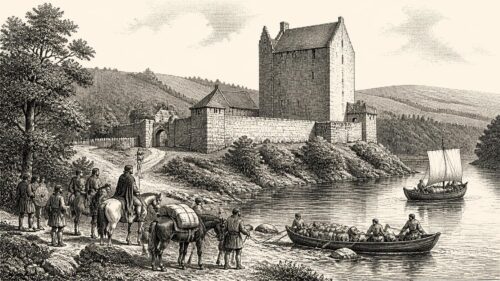
In 1423, Ireland was shaped by competing Gaelic lordships and a weakened English administration. Domnall and Eóghan Ó Néill, with Niall Garbh Ó Domhnaill, led an Ulster coalition through Louth into Meath, defeating forces associated with the king’s deputy and securing tribute and agreements. Niall Garbh also built Ath Seanaigh castle at Ballyshannon, reinforcing his new rule in Tír Chonaill after his father’s death. Dublin government was divided by disputes among Mortimer’s deputies and Richard Talbot. In Connacht, Uilleag de Burgh died, while Uí Maine underwent a violent succession. Clerical and scholarly obituaries reveal intertwined religious, hereditary and political authority.
Read Article
Archived: 20 October 2026
Abstract
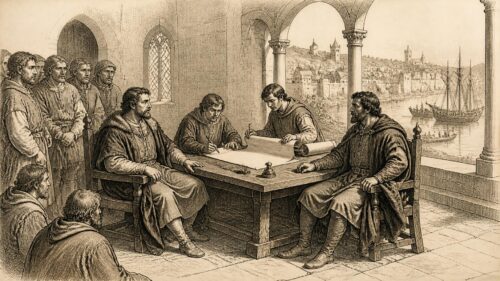
In 1422 Irish politics operated through local lordships, alliances, hostages, land and warfare. At Youghal, Ormond granted Desmond a life interest in 240 acres, securing revenues and services while retaining rights. In Tír Conaill, Toirdhealbhach Ó Domhnaill retired to Assaroe, succeeded by Niall Garbh, whose campaigns asserted authority across Ulster and into Connacht. Eóghan Ó Néill’s ransom and subsequent alliances demonstrated hostage diplomacy’s importance. Offaly’s An Calbhach defeated Meath forces near Trim, amid wider frontier fighting. Raids damaged crops, cattle, homes, churches and learned people. Henry V’s death brought Henry VI’s minority, while regional powers continued negotiating, raiding and fighting.
Read Article
Archived: 20 October 2026
Abstract
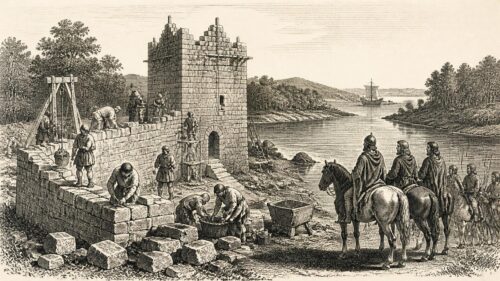
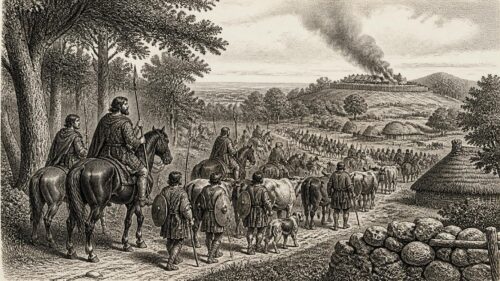
In 1420, Irish political life combined warfare, negotiation, trade and royal administration. Brian Ó Conchobair built Bundrowes Castle beside the Drowes, provoking Ulster opposition and fighting around Assaroe, where Domnall Ó Domhnaill was killed and Niall Garbh escaped aboard a trading ship. Kinship disputes in Connacht brought murders, raids, captivity and settlements secured through lordly protections. Granard Castle was briefly seized, then demolished by Ó Fearghail. Dublin officials collected customs and administered justice and finance. Death notices linked leading families to churches, while violence reached sacred spaces. Annals also recorded wolves killing many people, revealing environmental danger amid political instability.
Read Article
Archived: 21 October 2026
Abstract
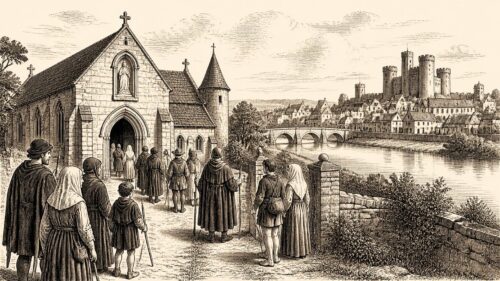
In 1419 Ireland experienced overlapping conflicts rather than a single national crisis. Eóghan Ó Néill, backed by northern allies, expelled Domnall Ó Néill from Tyrone, while Connacht forces burned Murbach and devastated Tírhugh. A major Connacht invasion of Clanricard ended in defeat at Bél Átha Lige, with heavy losses, captures and plunder. English lieutenant John Talbot’s administration seized Leinster’s Donnchadh Mac Murchadha, while Calbach Ó Conchobair escaped captivity. Succession disputes disturbed Breifne. Plague killed the scholar Dauid Ó Maolconaire; an unusually hot summer brought drought but abundant harvests. Deaths of poets, rulers and clerics highlighted patronage, learning and religious life.
Read Article
Archived: 21 October 2026
Abstract
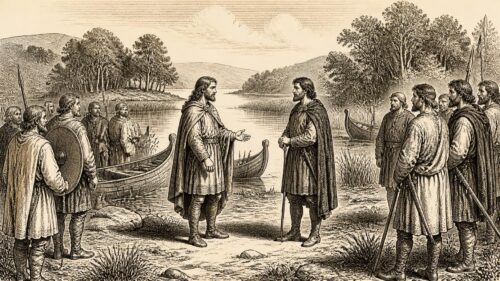
The surviving evidence for 1412 presents Ireland not as a single political unit but as a country of intensely local powers, connected by warfare, kinship, devotion and movement. Annalists recorded raids and counter-raids from the Moy to Fermanagh, the escape of a high-status captive from Dublin, a campaign across Connacht involving Gaelic and Anglo-Irish forces, and reports of miracles at a Marian shrine in Trim. These were not episodes on a national stage directed from one centre. They reveal overlapping lordships, towns and ecclesiastical institutions, each vulnerable to events beyond its own boundaries. A Violent Night in Tullyhunco The sharpest
Read Article
Archived: 21 October 2026
Abstract
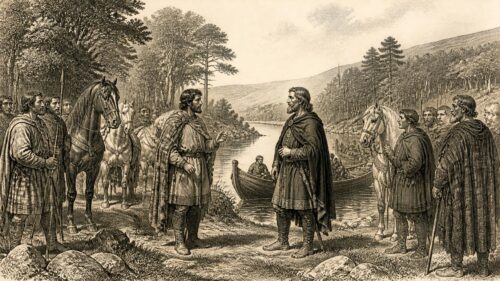
In 1402, Irish politics was characterised by negotiated, contested local authority rather than national unity. At Caol Uisce, Niall Óg Ó Néill of Tyrone made peace with Toirdelbach Ó Domhnaill of Tír Chonaill, whose submission acknowledged northern precedence without ending rivalry. In Connacht, Uilleag and Walter Burke became competing Mac Williams, illustrating divided Burke lordship and its links to Munster conflict. The killing of Louth sheriff John Dowdall and the bloody capture of Carraig Locha Cé exposed insecurity. Quin’s traditional Franciscan foundation reflected Gaelic patronage. Conflicting annal dates require caution, especially concerning Niall Óg’s death, which scholarship places in 1403.
Read Article
Archived: 21 October 2026
Abstract
Ireland in 1401 was shaped by competing Gaelic, Anglo-Irish, ecclesiastical and Dublin-based authorities. In Connacht, Thomas Burke’s death produced rival Mac Williams, while Conchobar Anabaidh succeeded in Uí Maine and fighting engulfed Lough Key and Muintir Eolais. Leinster suffered reciprocal devastation between Art Mac Murchadha and Dublin’s forces, alongside a local western plague. Northern politics centred on a peace at Caol Uisce between Niall Óg Ó Néill and Toirdelbach Ó Domhnaill, though annals differ over its date and later violence exposed continuing dynastic tensions. Church and chancery institutions remained influential but geographically limited. The year revealed fragile, locally negotiated power.
Read Article

Archived: 21 October 2026
Abstract
In 1398, the political settlement imposed after Richard II’s first Irish expedition was visibly coming apart. The year’s most consequential firmly dated event was the death on 20 July of Roger Mortimer, earl of March and Ulster, the king’s lieutenant in Ireland. Mortimer was a major lord in his own right, an heir presumptive to the childless Richard II, and the Crown’s foremost military representative in Ireland. His death in a Leinster campaign exposed how limited English authority remained beyond the better-defended lordship towns and lordly estates. That did not make 1398 a simple national contest between ‘English’ and ‘Irish’.
Read Article

Archived: 21 October 2026
Abstract
In 1392, Ireland experienced local warfare, succession disputes and notable deaths rather than an island-wide turning point. Niall Ó Néill of Tír Eógain led a major expedition against the English around Dundalk, achieving temporary mastery. Northern tensions intensified after Henry Aimhreidh Ó Néill’s death and the capture of his son by Toirdelbach Ó Domhnaill. In Connacht, Ó Conchobair Donn’s army burned Uí Maine, revealing fractured regional alliances. Deaths of Archbishop Grigair Ó Mocháin, the countess of Desmond and other nobles highlighted ecclesiastical and aristocratic networks. English administration remained uncertain as Thomas of Woodstock’s lieutenancy failed and Roger Mortimer was appointed.
Read Article
Archived: 21 October 2026
Abstract
In 1380 Edmund Mortimer, Richard II’s lieutenant and claimant to Ulster and Connacht, brought military resources and royal authority to Ireland. Gaelic rulers, notably Niall Mór Ó Néill, initially accommodated him, but Mortimer’s treacherous arrest of Art Mág Aonghusa damaged confidence and exposed limits to his influence. Campaigning in Ulster coincided with dynastic killings, territorial conflicts and successions among Gaelic and Anglo-Irish lordships across Ireland. In Dublin, Mortimer summoned parliament, secured clerical taxation for defence, and enforced discriminatory religious admissions rules. Murage at Ardee and ecclesiastical deaths reflect administrative and social continuity. The year demonstrated Ireland’s fragmented, contested political order.
Read Article

Archived: 23 October 2026
Abstract
In 1359 Cathal Óg Ó Conchobair defeated Cenél Conaill at Ballyshannon, capturing leading men and extending warfare into Tír Chonaill. The battle affected regional lordly networks across Connacht, Donegal and Breifne; the wounded claimant Matha Mag Samradháin later died. Ransom negotiations linked the victory to the transfer of Lebor na hUidre and Leabhar Gearr, demonstrating manuscripts’ political and learned value. In Desmond, Cormac Mac Carthaigh Mór died during a siege, succeeded by Domhnall Óg. Other deaths highlighted contested succession, while eminent judge Aed Mac Aedacáin’s death marked legal learning’s importance. James Butler became chief governor, reflecting Ireland’s divided political authority.
Read Article
Archived: 23 October 2026
Abstract
In 1352, annals from Connacht and later Four Masters record violent contests for lordship across Connacht, Breifne and Tír Chonaill. Aodh mac Toirdelbach Ó Conchobair forcibly recovered Connacht’s kingship against Gall and Gael, amid associated killings, and breached Baile an Dúin, destroying cattle and sheep. In Breifne, Aodh Ó Ruairc and his Clann Suibhne gallóglaigh were killed, while further deaths exposed unstable leadership. Aengus Ó Domhnaill’s treacherous killing triggered disputed succession in Tír Chonaill. Notices of captains, nobles and patrons reveal intertwined warfare and cultural support. Recent plague formed the background, but evidence does not establish a 1352 nationwide outbreak.
Read Article
Archived: 23 October 2026
Abstract
In 1343, Ireland saw shifting lordship, violence and religious investment. Toirrdelbach Ó Conchobair regained Connacht and made peace with Conchobar Mac Diarmata, while Clann Feorais and Clann Ricaird crushed Uí Maine, killing eleven Ó Ceallaigh princes. In Thomond, Diarmait Ó Briain briefly succeeded Muirchertach before Brian Bán seized power. In Tír Conaill, Aengus Ó Domhnaill displaced Niall through a broad coalition, granted land to exiles, and defeated his rival’s supporters. Deaths included nobles, churchmen and scholars. Kilronan received a new church, St Mary’s, Kilkenny, a belfry, and Boyle Abbey remained central to Mac Diarmata burials and succession during the year.
Read Article
Archived: 24 October 2026
Abstract
In 1290, Irish politics saw several local struggles for authority. Cairbre Ó Máelsechlainn, king of Meath, was treacherously killed by Mac Cochlain and the Delbhna amid overlapping Gaelic and colonial lordships. Domnall Ó Néill expelled Niall Ó Néill and seized Tír Eógain, while Toirdelbach Ó Domhnaill, supported by maternal kin and galloglasses, deposed his brother Áed in Tír Chonaill. William Mac Fheorais assumed effective possession of Tuam’s archbishopric, and Kilmacduagh’s bishop died. Edward I appointed William de Vesci justiciar; he arrived in Ireland, combining royal office with Kildare lordship. A Carmelite friary at Kildare was plausibly founded about this time.
Read Article
Archived: 24 October 2026
Abstract
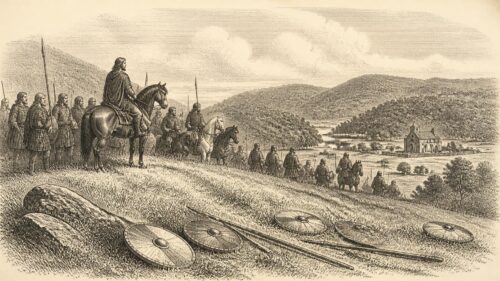
In 1281, Domhnall Óg Ó Domhnaill of Tír Conaill was defeated and killed at Disert-da-chrioch by Áed Buide Ó Néill’s forces, supported by the English of Ulster, devastating his wider political coalition. His son Áed succeeded him. Connacht saw fighting between the Barretts and Cusacks, while Tadhg Mac Diarmada of Moylurg died. In Thomond, rival Ó Briain factions accepted division and Thomas de Clare’s overlordship, enabling relative peace and Quin Castle’s completion. Richard de Burgh assumed Ulster and Connacht. Dublin strengthened administration under Stephen de Fulbourn, reopened its mint, and established one at Waterford, expanding royal revenue and fiscal capacity.
Read Article





