Archived: 13 October 2026
Abstract
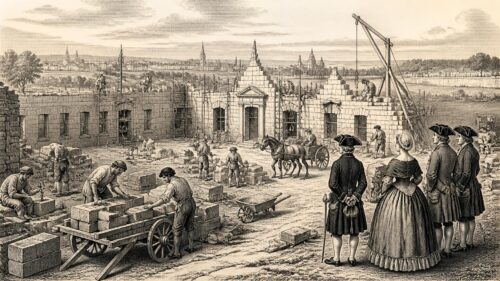
In 1720, Westminster's Sixth of George I asserted Britain's power to legislate for Ireland and made the British Lords Ireland's final appellate court, deepening dependency. Ireland's Anglican ascendancy governed a population restricted by penal laws; James Cotter's execution heightened sectarian tensions. Jonathan Swift's Irish Manufacture pamphlet urged consumers to reject English goods, articulating economic patriotism amid mercantilist constraints. A proposed national bank reflected commercial ambition, but the South Sea Bubble's collapse brought banking panic. Construction began on Dr Steevens' Hospital, promoted by Grizelda Steevens, while Cork Harbour's Water Club was founded. Together they exposed dependence, inequality, charity and elite sociability.
Read Article
Archived: 13 October 2026
Abstract
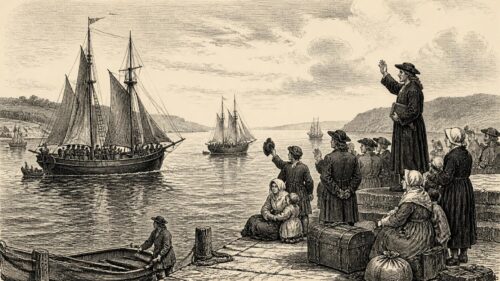
In 1718, Ireland’s significant developments centred on migration, religion and voluntary institutions rather than rebellion. Five vessels carried Presbyterian emigrants from Ulster to Boston, beginning a durable Atlantic movement driven by tenancy insecurity, economic pressures, religious disabilities and colonial opportunity. Ireland’s Protestant ruling order continued to disadvantage Catholics and dissenters, while Sherlock v Annesley highlighted contested Irish autonomy. Six surgeons founded Dublin’s Cook Street infirmary for injured poor, precursor to Jervis Street Hospital. A Ballybough cemetery lease recorded Jewish life. Church appointments and Catholic diocesan administration demonstrated competing authorities, while Thomas Parnell’s death connected Irish culture with British literary networks.
Read Article
Archived: 13 October 2026
Abstract
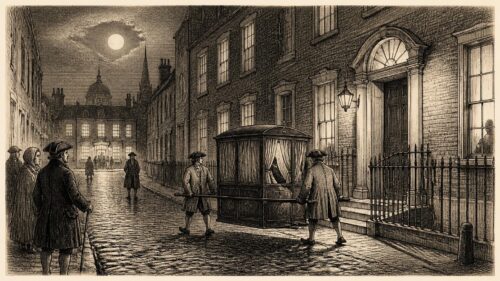
In 1717, Ireland remained a separate kingdom under Hanoverian rule, governed by a Protestant establishment that excluded most Catholics. Charles Paulet, Duke of Bolton, became lord lieutenant, while parliament renewed revenue and reinforced Protestant municipal control in Galway and Kilkenny. Colonel Henry Luttrell, a former Jacobite accused of betrayal, was murdered in Dublin; despite official rewards and proclamations, the crime remained unsolved. Authorities also pursued mutiny and armed disorder. Penal restrictions shaped Catholic and Presbyterian life. Hugh MacCurtin defended Irish antiquity in print. Rural society depended on vulnerable agricultural and export economies amid variable weather, reflecting an anxious political order.
Read Article
Archived: 13 October 2026
Abstract
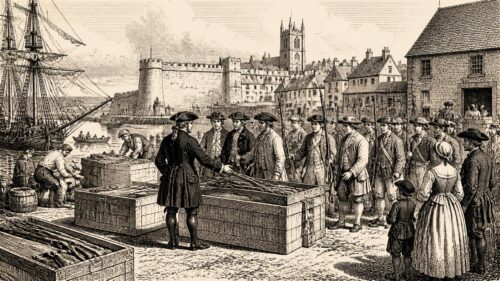
In 1715, Ireland avoided a Jacobite rising despite rebellion in Scotland and northern England, but Hanoverian authorities governed amid anxiety. Officials disarmed Catholics, enforced penal laws, monitored clergy, travellers and supplies, and reinforced ports and garrisons, although evidence of conspiracy was lacking. Troops were sent to Britain, prompting plans for a Protestant militia that lacked sufficient weapons and ammunition. The new Protestant parliament funded defence through renewed and additional taxes, while asserting control over public finance. Anti-Jacobite measures also targeted Ormond’s influence. Dublin’s theatre remained active. Ireland stayed peaceful, yet surveillance, sectarian exclusion and military expenditure deepened under imperial insecurity.
Read Article
Archived: 13 October 2026
Abstract
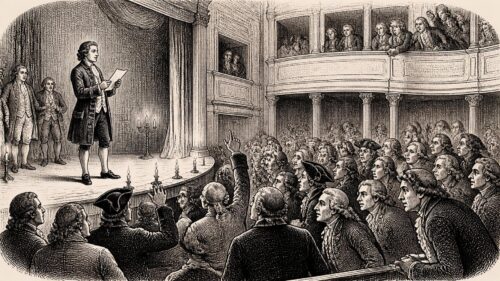
In 1712, Ireland remained tense following Williamite wars, with Tory administrators under Sir Constantine Phipps accused by Whigs of favouring Jacobitism and interests. Dublin’s conflict erupted when Dudley Moore delivered a banned Whig prologue on William III’s anniversary, provoking proceedings. Religious policy combined missionary outreach and exclusion: John Richardson published an Irish-English prayer book while penal laws constrained Catholics; Quaker pioneer William Edmundson died. Banbridge gained a bridge across the Bann, aiding communications. Livelihoods depended on agriculture and expanding linen exports, shaped by imperial restrictions, war and landholding. These events reveal authority contested through politics, religion, print, commerce and infrastructure.
Read Article
Archived: 13 October 2026
Abstract
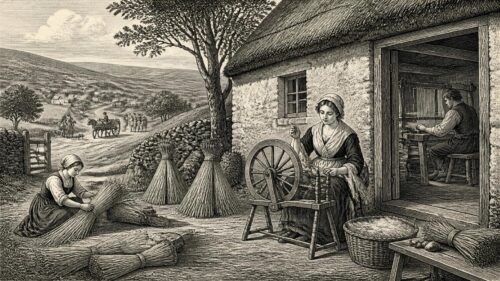
In 1711, Ireland experienced political division, legal persecution, economic initiative and insecurity. Under Queen Anne’s Tory administration, Lord Lieutenant Ormond and Lord Chancellor Phipps reshaped offices, while Dublin’s disputed mayoral succession exposed conflict between Castle authority and civic self-government. At Carrickfergus, eight Islandmagee women, and later William Sellor, were convicted of witchcraft, Ireland’s last known proceedings under the statute. Parliament appointed trustees for linen and hemp manufacture, formalising state support for an expanding export industry. Wartime proclamations addressed naval recruitment, privateers and quarantine. Late-year orders against cattle houghing, alongside Catholic disarmament, reflected rural conflict, property fears and confessional security policies.
Read Article
Archived: 13 October 2026
Abstract
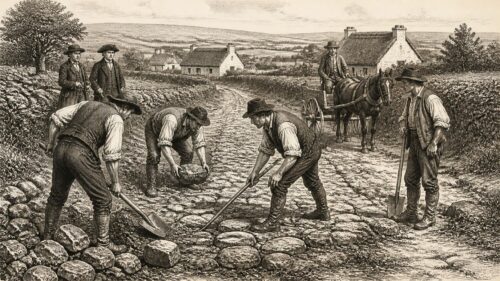
In 1710, Ireland’s Protestant parliament, operating under Queen Anne amid changing Whig and Tory influence, passed measures affecting revenue, property, trade and local administration. Its roads act required rural householders and tenants to provide up to six days’ unpaid labour, reflecting reliance on communal maintenance rather than modern infrastructure. Legislators promoted linen, regulated cattle, rents and timber, and imposed duties on consumer goods. Dublin Castle also suppressed Catholic assemblies in Meath, punished damage to William III’s statue, pursued tobacco thieves, and managed Palatine refugee settlement. Quarantine regulations for Baltic shipping showed Ireland’s exposure to continental war, migration, commerce and disease.
Read Article
Archived: 13 October 2026
Abstract
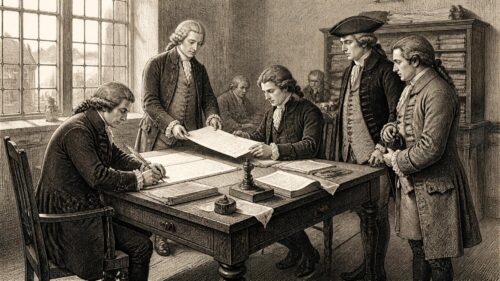
In 1708, Ireland’s new Registry of Deeds entered its first memorial, strengthening recorded property claims while serving a Protestant order shaped by confiscation and penal laws. During the French-backed Jacobite invasion scare, Dublin Castle issued anti-Catholic proclamations and detained clergy and gentlemen, though no rebellion followed. Parliament was prorogued under Lord Lieutenant Pembroke, while Thomas Wharton’s appointment foreshadowed change. Belfast Castle burned, killing three Donegall daughters and servants. Samuel Molyneux’s northern tour recorded contrasting landscapes, rebuilding, Belfast’s growth and Ulster’s developing linen trade. Thomas Milles became bishop of Waterford and Lismore in 1708, illustrating the Church of Ireland’s institutional authority.
Read Article
Archived: 13 October 2026
Abstract
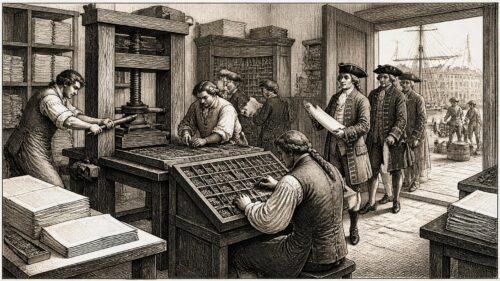
In 1705, Dublin Castle established the Dublin Gazette, printed by Edwin Sandys under official scrutiny, to circulate authorised news and restrain rumour. Ormond’s parliament, meeting from February to June under Queen Anne, imposed consumption duties and regulated tolls, measures, horse theft, debtors and mineral property amid wartime pressures. It strengthened penal supervision of Catholic clergy, restricting unregistered priests while the established Church of Ireland retained political privilege. Westminster permitted direct exports of specified Irish linen to English American plantations, encouraging linen while preserving English commercial control. Together, these measures expanded Protestant government through taxation, surveillance, economic regulation and controlled publicity.
Read Article
Archived: 13 October 2026
Abstract
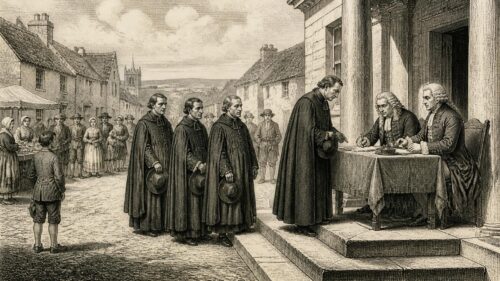
In 1704, Queen Anne’s Irish parliament enacted measures reinforcing Protestant political supremacy after the Williamite wars. The Popish Clergy Register required Catholic secular priests to register, provide sureties and remain locally confined, while excluding new clergy and threatening noncompliance with punishment. Its companion Popery Act restricted Catholic inheritance, education, conversion, office holding and family autonomy, though implementation varied. Parliament simultaneously encouraged Protestant immigrants, notably Huguenots, through selective naturalisation. Other statutes established Dublin’s coercive workhouse system and regulated credit, excise and livestock trade. These measures classified clergy, heirs, migrants and poor people, extending state supervision into worship, households, markets and streets.
Read Article
Archived: 13 October 2026
Abstract
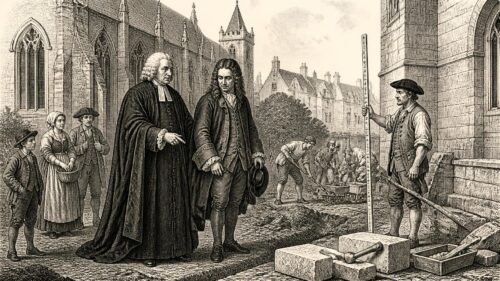
On 9 July 1701, St Patrick’s Cathedral granted Archbishop Narcissus Marsh ground to build a library beside St Sepulchre’s Palace, initiating Ireland’s first purpose-built public library, later known as Marsh’s Library. Its learned but socially restricted vision joined Protestant ecclesiastical power with Huguenot scholar Élie Bouhéreau. Meanwhile, Lord Lieutenant Rochester’s arrival reinforced English control over Irish administration, military recruitment and post-Williamite security. Catholic clergy faced uneven enforcement of banishment laws, while dissenters remained disadvantaged. Woollen export restrictions and Irish Sea trade shaped economic pressures. The Act of Settlement and James II’s death heightened Protestant fears of Jacobite and French threats.
Read Article
Archived: 14 October 2026
Abstract
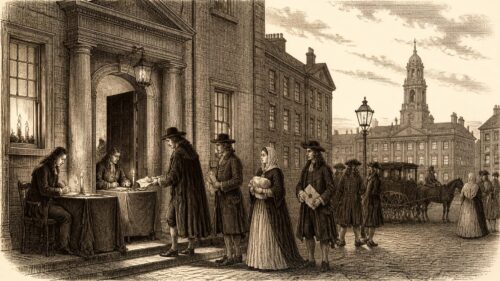
In 1700, the Act of Resumption required claimants to register interests in forfeited Irish estates at Chichester House, Dublin, producing over 3,000 claims involving families, creditors, tenants and purchasers. The process consolidated a post-Williamite Protestant order while exposing Catholic insecurity over land and rights. Ireland remained a separate but subordinate kingdom, governed through London-linked institutions amid confessional restrictions and commercial controls, notably woollen export limits. Agricultural life, regional trade and Dublin's growth continued under unequal conditions. Intellectual activity included Edward Lhuyd's antiquarian work, Ulster printing and George Berkeley's Trinity admission. Paperwork, property, religion and allegiance defined this unsettled post-war society.
Read Article

Archived: 14 October 2026
Abstract
In 1699, post-war Ireland remained shaped by land redistribution, Protestant security and contested trade. The Irish parliament concluded legislation imposing woollen export duties, supporting Church of Ireland clerical residences, protecting timber and regulating butter casks. Westminster's Woollen Act then barred most Irish wool and woollen exports to foreign markets, restricting a vital, widespread industry and encouraging, but not immediately replacing it with, linen. A parliamentary commission investigated Williamite forfeitures, reporting thousands attainted and over one million plantation acres affected, deepening uncertainty over titles. Anti-Catholic laws and proclamations restricted solicitors, arms and clerical jurisdiction. Dublin's print trade nevertheless demonstrated wider connections.
Read Article

Archived: 14 October 2026
Abstract
In 1698, enforcement of the Bishops’ Banishment Act required Catholic bishops, regular clergy and religious superiors to leave Ireland by 1 May, weakening Catholic leadership while secular priests often continued clandestine ministry. Hundreds of regular clergy were transported, though enforcement varied. The policy entrenched Protestant rule after the Williamite war without creating religious equality. In April, Protestant lawyer and parliamentarian William Molyneux published The Case of Ireland, challenging Westminster’s authority to bind Ireland and linking constitutional autonomy to disputes over appeals and trade. English concern over Irish woollens foreshadowed restrictions. Thomas Molyneux’s Giant’s Causeway observations connected Ireland to scientific inquiry.
Read Article

Archived: 14 October 2026
Abstract
In 1697, post-war Ireland faced food scarcity, political consolidation and social disruption. Grain exports were restricted amid fears of shortages, while parliament reinforced Protestant ascendancy through property, security and religious legislation. It confirmed limited treaty protections for qualifying Jacobites but secured wartime forfeitures. The Banishment Act ordered Catholic bishops and regular clergy to leave, while restrictions targeted Protestant-Catholic marriages. Peace with France ended the Nine Years’ War, yet fears of Jacobitism persisted. Lightning destroyed Athlone Castle’s powder magazine, causing major damage. Scottish migration strengthened Ulster Presbyterian communities, while commercial tensions over Irish woollens and modest rebuilding reflected an uneven recovery.
Read Article

Archived: 14 October 2026
Abstract
In 1696, Williamite Ireland consolidated its post-war authority through military, fiscal and municipal controls rather than major conflict. Alarm over French-backed Jacobitism prompted proclamations against fugitives, alleged tories and absent officers, while Catholic disarmament authorised searches and deepened inequality. At Clonmel, the corporation ordered soldiers quartered in Catholic homes to prevent meetings, illustrating domestic surveillance despite continued Catholic trading. Poll and hearth taxes, regulated measures and proclamations sustained administration. Investigations into forfeited estates exposed continuing uncertainty over Catholic property rights. State-appointed fasts and thanksgivings reinforced Protestant political culture, while action against pirate Henry Every reflected Ireland’s place in imperial policing.
Read Article

Archived: 14 October 2026
Abstract
In 1695 Lord Capell’s Dublin parliament, under Poynings’ Law, consolidated Williamite rule after the Treaty of Limerick, reconciling Crown revenue needs with Protestant demands for fiscal influence. Amid fears of France, Jacobite exile and Catholic rebellion, it initiated religious exclusion. The Disarming Act required Catholics to surrender weapons and restricted ownership of horses, extending officials’ powers of search and control. The Foreign Education Act curbed Catholic teaching, overseas study and support, attaching severe civil and property penalties. Parliament also regulated property, trade, coinage and worship. Its legislation strengthened administration while making Catholic disability a durable foundation of the post-war settlement.
Read Article




