Archived: 31 October 2026
Abstract
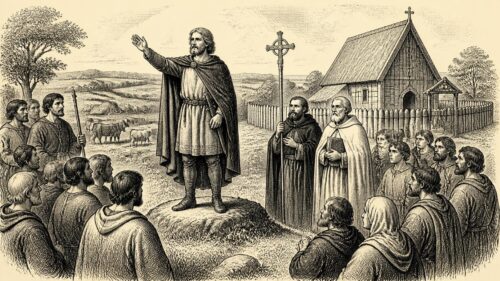
In 753 CE, Domnall Midi of Clann Cholmáin enforced the law of Colum Cille, publicly combining royal authority with the saint’s protection, privileges and ecclesiastical claims. The act reflected Ireland’s fragmented political order, where rulers, kin groups and churches negotiated power. Annals also record a solar eclipse, deaths of abbots and churchmen across Ireland, the death of Echaid, king of Uí Moccu Uais, slaughter among Connacht groups, and Ferblae’s death as a learned man. These terse notices reveal interconnected religious, political and economic communities. Chronological differences among annals require caution, although the eclipse is securely dated to 9 January 753.
Read Article
Archived: 1 November 2026
Abstract
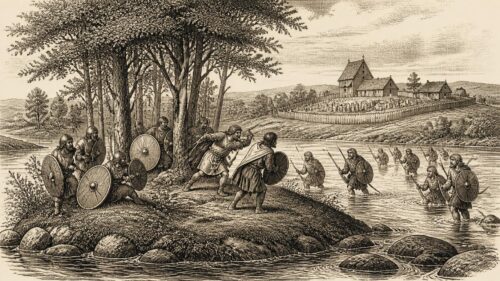
In 745, Irish annals recorded a battle at Inis eter dá Dabul between the Uí Thuirtri and Airthir. Congal son of Éicnech led the Airthir to victory; notable opponents were killed or fled. The conflict reflected shifting local power within Airgíalla, despite Domnall Midi’s wider kingship of Tara. The same annalistic year saw the deaths of abbots at Clonard, Lann Léire and Tech Taille, an anchorite, a church superior and the scribe Conall Foltchain. A remarkable night-time celestial sign was also reported. Together, these concise notices illuminate interconnected warfare, ecclesiastical leadership, learning, rural resources and belief in early medieval Ireland.
Read Article
Archived: 1 November 2026
Abstract
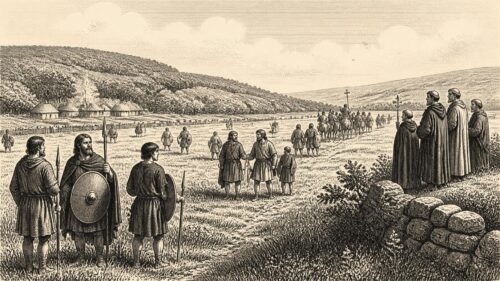
In 743, at Seredmag, probably Kells, Domnall Midi of Clann Cholmáin defeated and killed Áed Allán of Cenél nÉogain, king of Tara, with three Airgíallan allies. The victory shifted Uí Néill pre-eminence from northern to midland hands, though Ireland remained divided among kingships. Annalistic dating differs slightly, but denotes one battle. It occurred during a summer of conflicts across Brega, the midlands, Connacht and the north. Notices also record ecclesiastical law, relics on circuit, a widespread disease called bolgach, deaths of church leaders, and a later tradition of airborne ships. The year reveals contested authority, religious influence and social insecurity.
Read Article
Archived: 1 November 2026
Abstract
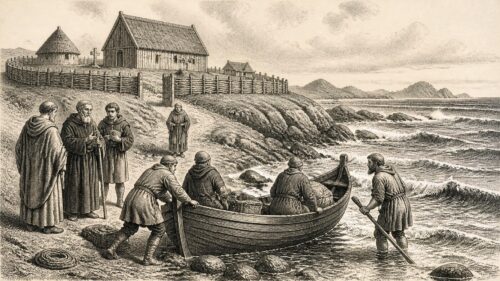
In 717, Irish annals record the death of Dúnchad, eleventh abbot of Iona, an Irish-founded monastery central to networks linking Ireland, Dál Riata, Pictland and Northumbria. They also note King Nechtan’s expulsion of Iona’s community from Pictish lands beyond Dorsum Britanniae, probably amid reforms concerning Roman Easter, although its scale and cause remain uncertain. In Ireland, Fogartach disrupted the royal assembly at Tailtiu, where a man was killed, illustrating contested Uí Néill authority. Dál Riata defeated Britons at Minuirc. Together, these sparse records in 717 clearly reveal strained religious, political and maritime connections across early medieval Ireland and northern Britain.
Read Article
Archived: 1 November 2026
Abstract
In 715, annalistic notices, dated by modern synchronisation despite displacement in the Annals of Ulster, record political and ecclesiastical change across Ireland. Cellach Cualann’s death ended Uí Máil dominance in Leinster and enabled the rising Uí Dúnlainge, represented by Murchad son of Bran. Murchad’s hosting to Cashel demonstrated Leinster’s ability to project force into Munster, although no outcome is recorded. Murchad son of Diarmait, a Uí Néill king, was killed amid midland rivalry. Deaths of Armagh’s abbot Flann Febla, Ferns’s Bishop Cilléne, King Áed Dub, and the learned Flaithnia marked leadership losses, while rural agricultural society sustained these power networks.
Read Article
Archived: 1 November 2026
Abstract
In 711, Fergal son of Máel Dúin of Cenél nÉogain defeated Uí Méith at Sliab Fúait in south Armagh, killing their king Tnúthach and Cú Raí of the Brega-based descendants of Áed Sláine. The victory strengthened Fergal’s authority in a contested borderland, though it did not establish national rule. Annals also record Cenn Fáelad, abbot of Fore, illustrating churches’ economic and political importance. Across the Irish Sea, Dál Riata defeated Britons at Lorg Ecclet, reflecting maritime connections. Annalistic date differences require caution, but together these notices portray competing kingdoms, religious communities and interconnected Irish Sea politics in early medieval Ireland.
Read Article
Archived: 1 November 2026
Abstract
In 710, Irish annals recorded the burning of Kildare, a major Leinster ecclesiastical centre, alongside the death of Congal Cennmagair, king of Tara. Congal’s sudden death enabled Fergal son of Máel Dúin of Cenél nÉogain to assume the kingship, shifting northern Uí Néill power from Cenél Conaill. The sources provide no evidence linking the fire to political events or identifying its cause and damage. Conamail, abbot of Iona, also died amid complex Columban leadership arrangements. Violence around the Irish Sea and Pictish religious change formed a wider context. These events reveal interconnected religious, political and economic institutions adapting to disruption.
Read Article
Archived: 1 November 2026
Abstract
In 708, Cill Dara, modern Kildare, suffered a destructive fire, although annals provide no cause, casualties or details of damage. The disaster followed the death of its bishop, Mael Dóbarchon, and required resources and patronage for recovery. Congal Cennmagair of Cenél Conaill, a leading Uí Néill overking, also died suddenly, prompting Fergal of Cenél nEógain’s accession around 708–709. Obituaries for the abbots of Iona and Lorrha demonstrate ecclesiastical networks extending across Ireland and the Irish Sea. These events reveal a rural, politically fragmented society dependent on churches, agriculture, kinship, tribute and personal leadership, vulnerable to fire, death and shifting alliances.
Read Article
Archived: 13 October 2026
Abstract
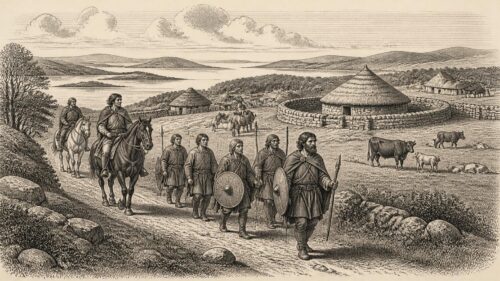
Annals for 707 record political, ecclesiastical and environmental developments in a divided, rural Ireland. Indrechtach mac Dúnchado, overking of Connacht, was killed by northern Uí Néill leaders and allies, demonstrating continuing rivalry without proving conquest. Congal Cennmagair, king of Tara, led a host against Leinster, though no outcome is known. Dúnchad became superior of Iona, reinforcing the monastery’s Irish Sea importance, while Bishop Coibdenach of Ardstraw died and Béc of Bairche undertook religious pilgrimage. Two northern tremors occurred in December. These sparse notices illuminate interconnected kingship, church networks, mobility and agrarian society, while leaving everyday conditions largely unrecorded to historians.
Read Article
Archived: 1 November 2026
Abstract
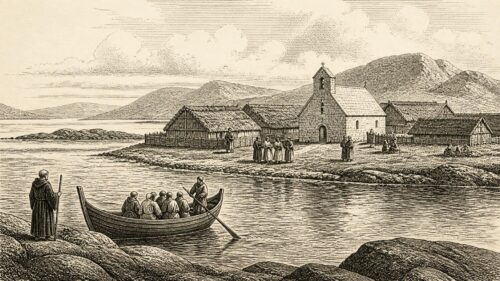
In 704, Ireland witnessed major political reversals and the death of Adomnán, abbot of Iona. On 12 July, Cellach mac Rogallaig of Connacht defeated and killed Loingsech mac Óengusso, king of Tara, with three sons, at Corann; Congal Cennmagair succeeded him. Later, Cellach Cualann of Leinster repelled a southern Uí Néill force at Clóenad, while instability affected neighbouring dynasties. Annals also note Dál Riata's destruction at Glen Leven. Adomnán died on 23 September, leaving widely influential writings, diplomatic achievements and Cáin Adomnáin. These events reveal interconnected Irish, Scottish and Northumbrian worlds, though annalistic dating remains uncertain and their social consequences.
Read Article
Archived: 1 November 2026
Abstract
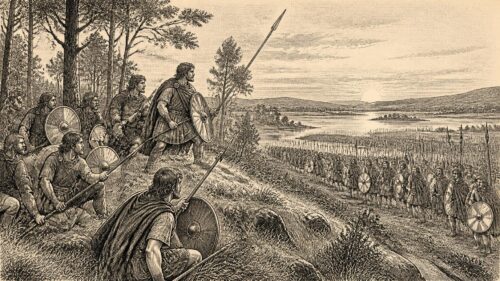
In 703, Connacht defeated an invading northern Uí Néill coalition at Corann or Claenfhinn, killing Loingsech son of Óengus, styled king of Ireland, his three sons and numerous allied rulers. The battle, probably in south-central Sligo, checked Loingsech’s claim to wider supremacy and preserved Connacht’s autonomy under Cellach son of Rogallach. Annals also record the Ulaid’s victory over Britons at Mag Cuilinn, though details remain uncertain. Colmán, abbot of Lismore, died, while notices mention Ailén Daingen’s construction and Rithe’s siege. These events reveal a rural, contested Ireland where kings, churches and fortified communities managed warfare, resources, mobility and insecure authority.
Read Article
Archived: 2 November 2026
Abstract
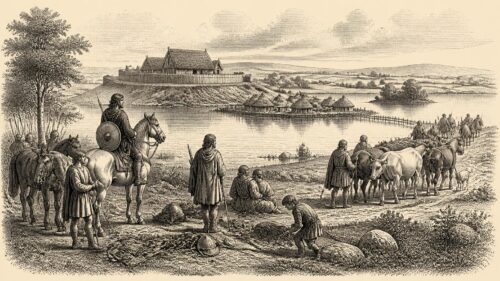
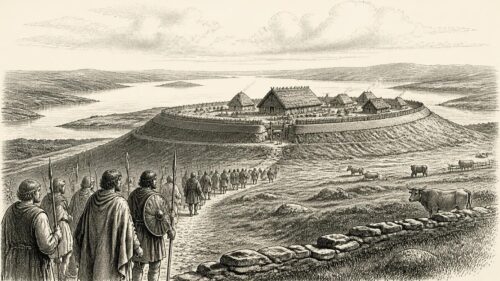
In 677 CE, the most consequential Irish event securely associated with the conventional year was a battle near Loch Gabair, modern Lagore in County Meath, where Fínshnechtae Fledach, king of Tara, defeated the Laigin. It was a victory on the frontier of his own Brega heartland, not a conquest of Leinster, and that distinction matters. The surviving annals are terse, while their chronological headings are not wholly straightforward: the Annals of Ulster place the relevant dossier under an annal numbered 677 but give an equivalent of AD 676, whereas the Fragmentary Annals and modern biographical reference works conventionally date the
Read Article
Archived: 2 November 2026
Abstract
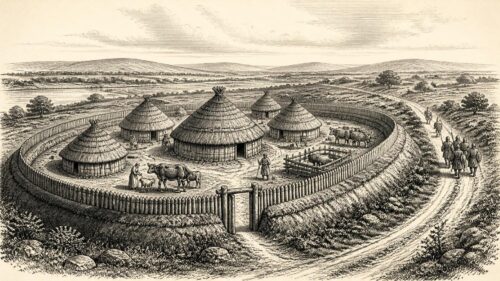
In 676 CE, the most consequential Irish event assigned by the annals to the year was the destruction of Ailech Frigrenn by Fínsnechtae Fledach, king of Tara. The record is brief, but its implications were not. Ailech stood at the heart of the Cenél nÉogain’s northern power, while Fínsnechtae belonged to the southern Uí Néill dynasty of Síl nÁedo Sláine. His attack was therefore not a local raid but a forceful declaration that his newly won supremacy extended beyond Brega and the midlands. Medieval Irish annal chronology is not mechanically exact: the same cluster is placed under 676 in the
Read Article
Archived: 2 November 2026
Abstract
In 666 CE, Ireland remained in the grip of the great epidemic remembered in the Irish annals as the buide Chonaill, while a battle at Áine brought together the Arada and the Uí Fhidgeinti and cost the life of Eógan son of Crunnmáel. These are the securely relevant notices in the Annals of Ulster under its heading for AD 666. The same entry also records the death of Cernach Sotal, son of Diarmait. They are brief records, not narratives: they do not tell us the cause of the disease, the size of either force, the precise location of the battlefield,
Read Article
Archived: 2 November 2026
Abstract
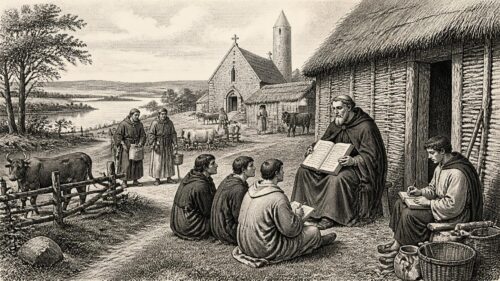
In 662 CE, Irish annalists associated a cluster of political deaths, a battle within the southern Uí Néill and the passing of a celebrated church scholar with this year. The evidence is unusually revealing but not perfectly uniform. The Fragmentary Annals explicitly place the battle of Ogoman, the death of King Máenach of Munster and that of Cummíne Fota in 662; other annalistic compilations place some of the same notices under adjacent year-headings. This is a familiar problem in early Irish chronology, not a reason to discard the events. It does mean that no day, season or sequence within the
Read Article
Archived: 3 November 2026
Abstract
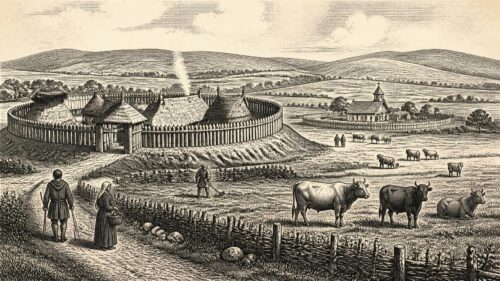
In 648 CE, Ireland was governed through many competing kingships, churches and kin-groups rather than by a single state, and the surviving evidence must be handled with unusual care. A famous cluster of notices is assigned to this year by the seventeenth-century Annals of the Four Masters: the ninth year of Conall and Cellach, the death of Maincheni, abbot of Meanadrochit, the conflict of Cúil Corra in which Cillíne son of Forannán of Uí Failge was killed, and the death of Cugamhna son of Suibne. Yet the older annalistic traditions place the same cluster several years later, under their annal
Read Article
Archived: 3 November 2026
Abstract
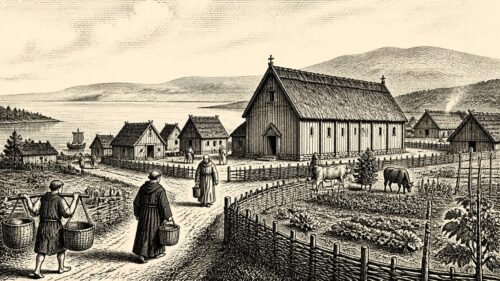
In 646, the Annals of Ulster record the killing of Scannal son of Béc, styled king of the Cruithin, and the death of Mac Laisre, abbot of Bangor. Scannal’s violent death reflects continuing political competition in north-east Ulaid after the battle of Mag Roth, though the annals name neither his killer nor location. Mac Laisre’s obituary marks a leadership change at Bangor, an important monastery beside Belfast Lough with wider Irish Sea connections. Sparse sources reveal little else about the year, but these notices illuminate the coexistence of vulnerable secular rulership and enduring ecclesiastical institutions within a predominantly rural society.
Read Article
Archived: 3 November 2026
Abstract
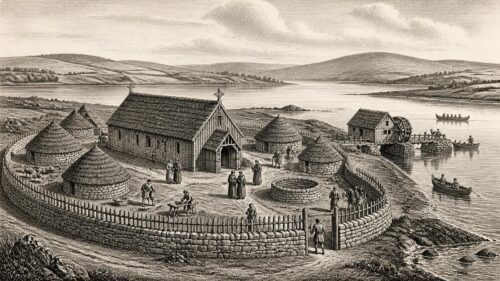
In 644 CE, Ireland’s surviving annalistic tradition presents a compact but revealing cluster of deaths, warfare and disputed royal authority. Yet the date must be handled with care. The notices now grouped under 644 were copied into chronicles centuries after the events, and the parallel annals do not always place them in the same numbered year. What can responsibly be said is that, around this calendar year, the political order was unsettled after the death of Domnall mac Áedo, a major northern Uí Néill ruler, while Leinster, Osraige, Munster and the north-east each appear in the record through named people
Read Article
Archived: 3 November 2026
Abstract
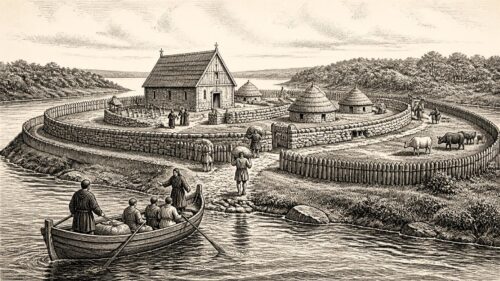
In 643, Irish annals recorded disputed succession after the death of Domnall mac Áedo, a prominent northern Uí Néill ruler. Sources variously named his nephews Cellach and Conall Cáel as successors or described shared authority with Diarmait and Blathmac of the southern Uí Néill. Chronological differences place these events around 642–643, but all reflect uncertainty over wider kingship. Regional conflict, including the battle of Cenn Con, demonstrated the independence of Munster dynasties. The death of Bishop Crónán of Naendruim also illustrates the political and economic importance of churches. Ireland remained a network of competing kingdoms, kin groups and ecclesiastical communities.
Read Article
Archived: 3 November 2026
Abstract
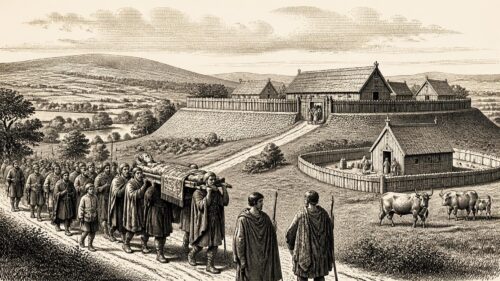
In 641 CE, the securely dateable Irish development is the death of Cúán mac Amalgado, a king of Munster from the Eóganacht Áine branch of the Eóganachta. The surviving annalistic notice is brief: it records his death without a place, cause, successor’s inauguration or account of public reaction. Yet the loss of a provincial overking mattered. In a country of many small kingdoms, Munster’s ruler stood within a dense hierarchy of client peoples, churches, kin-groups and rival royal lines. Cúán’s death therefore marks a real, if sparsely described, transition in the political life of southern Ireland. A Death in the
Read Article





