
Archived: 26 September 2026
Abstract
In 1032, annalistic records portray Ireland as a patchwork of competing lordships after the decline of island-wide kingship. Domnall ua Maíl Doraid of Cenél Conaill and Mathgamain Ua Riacáin of Brega were killed, while Mathgamain’s killer was blinded. Sitriuc of Dublin defeated neighbouring groups at the Boyne estuary. In Munster, Donnchad mac Briain married Ragnall’s daughter, reinforcing Norse-Gaelic connections amid regional tensions. Deaths of local rulers, officials and prominent churchmen reveal dispersed authority. The killing of Étrú Ua Conaing after violation of Emly underscored ecclesiastical protection. These fragmentary notices vividly depict warfare, alliance, church power, and political instability throughout Ireland.
Read Article
Archived: 26 September 2026
Abstract
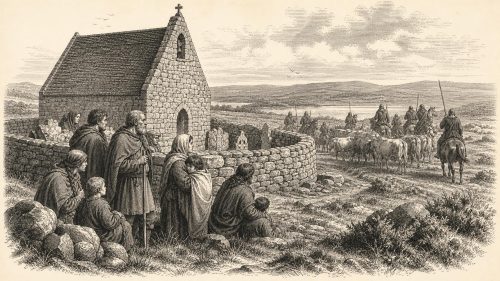
In 1031 Ireland remained politically fragmented after Brian Bóruma, as northern, southern and Hiberno-Norse rulers pursued power through raids, booty and captives. Flaithbertach Ua Néill returned from Rome while Aed Ua Néill campaigned against Cenél Conaill. Dublin’s Sitriuc Silkbeard was linked to Ardbraccan’s devastating plunder, and Waterford’s king was killed in Dublin. Churches at Ardbraccan, Swords, Kildare, Cell Chomair and Clonfert suffered burning, robbery or violence. Donnchad mac Briain raided Osraige but lost men; conflict also afflicted the Déisi. Obituaries emphasised learning, hospitality, piety and ecclesiastical office, revealing society’s religious resilience amid warfare, trade and local rivalry throughout Ireland alike.
Read Article

Archived: 26 September 2026
Abstract
In 1029, Ireland remained divided among competing Gaelic dynasties, church centres and Hiberno-Norse Dublin. Mathgamain Ua Riagáin of Brega captured Amlaíb, Dublin’s prince, whose release required an exceptional ransom of cattle, horses, silver, gold, hostages and a renowned sword, demonstrating links between rural and maritime economies. Killings of rulers in Uí Fhailgi, Fernmag, Conaille, Connacht and Cenél Conaill exposed persistent succession disputes and regional rivalries. At Inis na Lainne, a fire killed nobles and Drumcliff’s superior. Pilgrimage and church patronage connected elites to wider Christianity, while the death of master craftsman Máel Brigte Ua Brolcháin attests to skilled ecclesiastical culture.
Read Article

Archived: 26 September 2026
Abstract
In 1028, Ireland remained politically fragmented after Brian Bórama and Máel Sechnaill, with power contested through raids, killings, hostages and cattle wealth. Cenél nEógain plundered Tír Conaill, while the Conaille killed regional rulers. Sitriuc Silkbeard, Hiberno-Norse king of Dublin, and Flannacán of Brega made a prestigious pilgrimage to Rome, signalling wider Christian connections and developments associated with Dublin’s cathedral. Severe Lent snow disrupted people and livestock. Ecclesiastical deaths, Duleek’s plundering, and Slane’s collapsed oratory reveal churches’ institutional importance and vulnerability. Conflicting annals record violent regional succession, especially Connacht’s Brian Ua Conchobair, portraying a literate, agrarian, martial society linked to Europe.
Read Article
Archived: 26 September 2026
Abstract
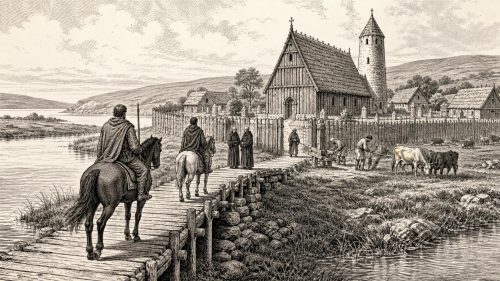
In 1027, Irish annals recorded a politically fragmented island where regional rulers, Dublin and monasteries shaped events. Donnchad mac Briain of Munster invaded Osraige, taking booty and captives, but suffered a costly defeat against local resistance. In Mide, forces of Sitriuc Silkbeard’s Dublin and Brega fought Mide, killing both Ráen ua Máel Sechnaill and Donnchad ua Duinn. Northern cattle raids and local conflicts underscored persistent border warfare. Deaths, pilgrimages and ecclesiastical successions linked Ireland to Iona, Rome and Cologne. The reported desecration of the Staff of Jesus demonstrated relics’ public importance. Warfare, trade, lordship and Christian learning were deeply interconnected.
Read Article
Archived: 26 September 2026
Abstract
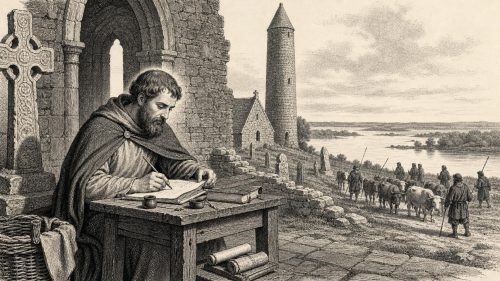
In 1023, Ireland experienced political fragmentation after Máel Sechnaill’s death. Rivalries destabilised Mide, where Domnall Ua Máel Sechnaill was killed, while Dublin’s Hiberno-Scandinavian rulers raided South Brega, killed Ainbíth Ua Cathasaigh, and seized King Donnchad Ua Duinn. Tadc son of Brian Bórama, a Munster dynastic rival, was killed by the Éile, allegedly at his half-brother Donnchad’s instigation. Connacht and northern kings also died in factional conflict. Clonmacnoise’s church lands were plundered of cattle. Annalists recorded January lunar and solar eclipses, spring drought, ecclesiastical deaths, and foreign rulers, revealing monastic learning and Ireland’s links across the Irish Sea and Christian Europe.
Read Article

Archived: 26 September 2026
Abstract
In 1021 Máel Sechnaill mac Domnaill’s restored overkingship remained active but fragile. He raided Dublin’s foreigners and Cenél nEógain, while Úgaire of Leinster defeated Sitriuc Silkbeard’s Dubliners near Delgany. Northern raids, killings and local conflicts exposed contested lordship around Airgialla. The murder of Áed, Máel Sechnaill’s heir, and other elite deaths weakened succession prospects in Mide. Amalgaid of Armagh made a politically significant visitation to Munster, asserting Patrician authority. Ecclesiastical deaths, Branacán’s drowning in Lough Ennell, and a reported shower of wheat in Osraige coloured annalistic memory. The year foreshadowed intensified struggle following Máel Sechnaill’s death in 1022 for Ireland.
Read Article

Archived: 26 September 2026
Abstract
In 1020, Ireland remained politically fragmented after Clontarf. Máel Sechnaill mac Domnaill led a coalition including Uí Néill, Donnchad mac Briain and Art Ua Ruairc to the Shannon, receiving Connacht hostages and asserting overkingship. Northern and eastern lesser kingdoms experienced blinding, killings and rapid succession disputes. Fires devastated Kildare, Glendalough, Clonard, Clonmacnoise, Swords and Armagh, damaging churches, treasures and settlement districts. Armagh’s blaze then preceded Máel Muire’s death and Amalgaid’s installation as Patrick’s successor; Patrick’s shrine and bell were also plundered. Annals additionally commemorate learned clerics, revealing churches as centres of wealth, scholarship, authority and vulnerability amid violent political competition.
Read Article
Archived: 26 September 2026
Abstract
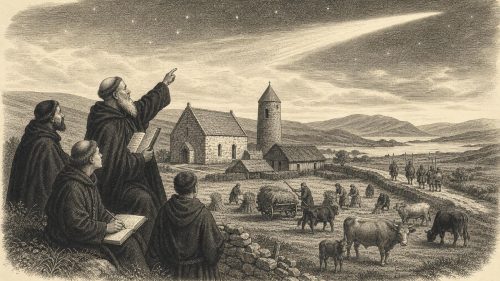
In 1018, four years after Clontarf, Ireland remained fragmented, as rival dynasties, Hiberno-Norse towns and local peoples pursued power through raiding, treachery and alliance. Máel Sechnaill’s authority in Mide was challenged when his steward and an allied king died during conflict in Fir Chell. Sitriuc Silkbeard of Dublin treacherously blinded Braen, son of Leinster’s Máel Mórda, ending his capacity to rule. Northern Uí Néill forces mobilised, while killings and plundering affected Gailenga, Tuatha Luigne and Óentreb. Ecclesiastical deaths reflected churches’ political and cultural importance; Waterford’s Norse king died. Annalists also recorded an autumn comet, revealing learned religious observation amid instability.
Read Article

Archived: 26 September 2026
Abstract
In 1016, two years after Clontarf, Máel Sechnaill mac Domnaill reasserted authority by taking Ulaid hostages, while Donnchad mac Briain raided Shannon islands, seized boats and consolidated Munster. Northern conflict between Ulaid and Dál Araide killed several rulers, and Osraige’s king slew Leinster and Uí Drona leaders at Leithglenn. Other regional dynastic deaths revealed fragmented power. Ecclesiastical life remained influential despite fires at Clonmacnoise, Clonfert, Kells and Downpatrick; church officers and the chief poet Mac Liag died. Raiding, hostage-taking and an autumn storm burdened communities. Annalistic peace meant relative stability after Clontarf, not an end to violence or political rivalry.
Read Article
Archived: 26 September 2026
Abstract
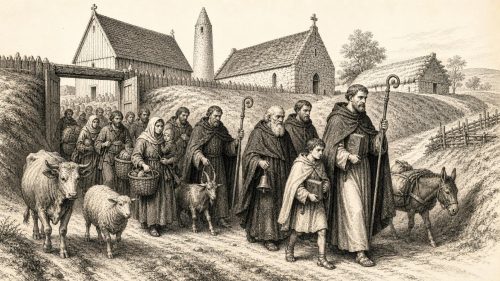
In 1015, Ireland remained unsettled after Clontarf, which had killed Brian Bóruma, Leinster’s Máel Mórda and key heirs. Máel Sechnaill mac Domnaill, aided by Flaithbertach Ua Néill, reasserted authority by plundering Leinster, taking cattle, tribute and hostages; later sources also associate campaigning with Dublin. In Munster, Donnchad mac Briain fought rivals while local kings suffered killings and deaths. Scarcity and dissension disrupted churches, with Emly vacated, Lorrha invaded and other sites plundered. Norse-Gaelic raiders seized 150 captives from western islands. Deaths, betrayals and interdynastic violence across Connacht, Bréifne and the north underscored a fragmented, dangerous political reconstruction after Brian's death.
Read Article

Archived: 26 September 2026
Abstract
In 1013, Brian Bórama’s Irish overlordship faced coordinated resistance from Leinster and Hiberno-Norse Dublin under Máel Mórda and Sitriuc Silkbeard. Warfare spread across Mide, Brega, Leinster and Munster: Máel Sechnaill suffered losses near Dublin but countered raids, while northern rivals increased pressure. Brian and his son Murchad conducted prolonged campaigns, devastating Leinster, taking captives and advancing towards Dublin. Dublin’s fleet burned Cork, though Munster forces killed prominent Dubliners. Church relics, ecclesiastical authority, agriculture and fortifications featured in the conflict. Annals portray a Christian, literate yet violent society. No settlement emerged; 1013 established the conditions for Clontarf’s decisive battle in 1014.
Read Article

Archived: 26 September 2026
Abstract
In 1011, Brian Bórama’s supremacy reached the north-west through a major campaign against Cenél Conaill. Forces led by Brian and his sons, allied with Flaithbertach Ua Néill and other rulers, raided, seized cattle and captives, and compelled Máel Ruanaid Ua Máel Doraid to submit at Cenn Corad. The events demonstrated both Brian’s wide influence and the negotiated, competitive character of Irish over-kingship. Máel Sechnaill remained within Brian’s political order, while Ulster’s dynastic conflicts continued. Deaths among royal heirs and prominent churchmen, illness near Armagh, and a plentiful nut harvest reveal a society shaped by warfare, ecclesiastical learning, disease, and resources.
Read Article

Archived: 26 September 2026
Abstract
In 1010 Brian Bóruma reinforced his contested supremacy by leading Munster forces north to Armagh and securing hostages from the northern Uí Néill, Ulaid and wider Leth Cuinn. The campaign demonstrated that overlordship required repeated negotiation, military display and guarantees. Connacht’s king Cathal mac Conchobair died penitently, while lesser rulers, an Ailech heir and other political figures also died or were killed. Church losses included Brian’s brother Marcán, senior cleric of Munster, Clonmacnoise bishop Conaing, and scholar-king Máel Suthain ua Cerbaill. An abbot suffered blinding. Annals also recorded a hot summer and fruitful autumn, underscoring rural resources sustaining political power.
Read Article

Archived: 26 September 2026
Abstract
Annals for 1009 portray Ireland as a contested polity under Brian mac Cennétig’s formidable but limited overlordship. Máel Sechnaill raided Leinster, while Flaithbertach Ua Néill killed rivals, raided Brega and seized cattle tribute. Connacht and Bréifne fought reciprocal campaigns, alongside local dynastic killings. The death of Brian’s Connacht-born wife reflected the political importance of royal marriage. Armagh’s lead-roofed oratory demonstrated ecclesiastical wealth and ambition; deaths of church successors at Kells and Ros Cré marked institutional change. The chief poet Clothna also died. Cattle, warfare, hostages, alliances and religious centres shaped authority, revealing competing kingships rather than a unified Irish state.
Read Article

Archived: 26 September 2026
Abstract
In 1008, Irish annals recorded no battle but revealed pressures shaping Brian Boru's overkingship. Chronological discrepancies require caution, yet Inisfallen and Ulster agree on a severe winter, ecclesiastical deaths and political violence. Muiredach son of Matudán, heir designate of Ulaid, was killed by his own people, exposing dynastic division amid northern rivalries. The deaths of abbots and coarbs, including Ferdomnach of Colum Cille's familia, prompted transitions in institutions controlling land, relics, learning and legitimacy. Frost and snow from January to Easter threatened livestock, farming and communications. Together, events illuminate a weather-vulnerable society governed through churches, dynasties, tribute, negotiation and force.
Read Article
Archived: 26 September 2026
Abstract
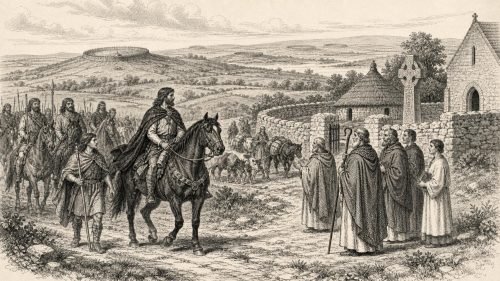
In 1006, Brian Bórama demonstrated the reach yet limits of his Irish overlordship by leading a broad coalition from Munster, Leinster, Mide, Connacht and Dublin through the north. His circuit secured Ulaid hostages and satisfied Armagh's claims, strengthening royal and ecclesiastical legitimacy, but Cenél Conaill and Cenél nEógain withheld submission. Provincial violence continued, including killings of regional kings, revealing unstable local rule. The deaths of Armagh churchmen underline clerical institutions' importance. A mild, food-rich winter offered relief after scarcity, while the army's passage burdened rural communities. Dublin's participation reflected its growing military, commercial and maritime value within Brian's negotiated supremacy.
Read Article

Archived: 26 September 2026
Abstract
Brian Boru’s northern campaign of 1005 demonstrated his contested claim to high-kingship over Ireland. After establishing dominance in the south and securing Máel Sechnaill’s submission, he led an army, including Gaelic and Norse-Irish forces, to Armagh and Ulaid. At Patrick’s altar he gave twenty ounces of gold, strengthening ties with Armagh’s primatial church; the Book of Armagh associated him with title imperator Scotorum. His expedition sought hostages from northern dynasties, but accounts differ over whether Cenél Conaill and Cenél nEógain submitted. Ulaid suffered dynastic killings, external attacks and scarcity that dispersed its population. The year showed kingship dependent on campaigns.
Read Article

Archived: 26 September 2026
Abstract
In 1001, rivalry between Brian Boru of Munster and Máel Sechnaill of Mide centred on control of the midlands and Shannon. Brian’s growing power, strengthened by Dublin’s submission, threatened the older Uí Néill order, though Munster raiders were defeated in southern Mide. Máel Sechnaill and Cathal of Connacht constructed a causeway at Athlone to obstruct Munster fleets and defend Leth Cuinn, demonstrating both alliance and anxiety. Deaths among northern rulers exposed unstable regional politics. Changes at Armagh and clerical deaths underscored churches’ political and economic importance. The year remained inconclusive, but marked a defensive attempt to contain Dál Cais expansion.
Read Article

Archived: 10 September 2026
Abstract
31,820 BCE is a modern approximation within Marine Isotope Stage 3, not a recoverable historical year. Ireland then experienced unstable Ice Age conditions before the Last Glacial Maximum. Derryvree’s buried freshwater sediments in Fermanagh reveal locally ice-free, open tundra or mossy wetland supporting herbs, sedges, insects and seasonal animal life. Castlepook Cave in Cork preserves remains of diverse cold-stage mammals, accumulated across different periods rather than as one community. A marked reindeer femur may indicate butchery by people, but lacks secure archaeological context and cannot demonstrate settlement. Later glaciation destroyed much evidence; environmental change, not human history, is securely documented.
Read Article

Archived: 10 September 2026
Abstract
Around 33,800 cal BP, corresponding broadly to 31,823 BCE, Ireland experienced a climatically unstable late Pleistocene environment before the Last Glacial Maximum. Derryvree, near Maguiresbridge, preserves freshwater silts between tills, dated approximately 35,900 cal BP, indicating locally ice-free, open tundra with mosses, sedges, grasses, herbs and juniper. Cave deposits show that reindeer, giant deer and carnivores reached Ireland at various times, but do not form single snapshots. No securely dated human settlements, tools or institutions exist for this period; early human presence remains unproven. Fragmentary geological and biological evidence instead records seasonal habitats later profoundly reshaped by expanding ice sheets.
Read Article

Archived: 10 September 2026
Abstract
31,829 BCE is a modern approximation within Marine Isotope Stage 3, not a precisely knowable Irish date. Evidence from Derryvree, County Fermanagh, records freshwater sediments between glacial tills, showing locally ice-free, cold, treeless wetlands before the later ice-sheet maximum. Plants, insects and southern cave deposits indicate fluctuating climates, with water and sparse vegetation persisting during severe conditions. Castlepook Cave preserves mammoth, reindeer, giant deer, predators and lemmings, though its old, disturbed collections require caution. A marked reindeer bone may indicate human activity, but cannot prove settlement. No political or cultural institutions are evidenced; environmental change defines this deep Irish prehistory.
Read Article

Archived: 10 September 2026
Abstract
Around 31,849 BCE, Ireland lay in the climatically unstable Marine Isotope Stage 3, not a date archaeology can resolve precisely. Freshwater silts at Derryvree, County Fermanagh, dated broadly to 36,900–31,700 cal BP, indicate a locally ice-free interstadial landscape of open vegetation, wetlands and cold conditions. Castlepook Cave, County Cork, preserves remains of reindeer, deer, bear, fox, hare, lemming, wolf, hyaena and mammoth, showing varied Pleistocene fauna. A cut-marked reindeer bone may indicate Upper Palaeolithic butchery, but cannot demonstrate settlement. Subsequent ice-sheet expansion then profoundly transformed Ireland. Evidence supports only cautious reconstruction of transient habitats, animals and possible brief human visits.
Read Article

Archived: 10 September 2026
Abstract
31,853 BCE represents an approximate point within Marine Isotope Stage 3, not a precisely documented Irish year. Before the Last Glacial Maximum, parts of Ireland were ice-free, as Derryvree sediments in Fermanagh show, preserving freshwater, tundra and periglacial conditions later sealed beneath glacial till. Castlepook Cave fauna demonstrate connections with wider north-west European cold-climate ecosystems, though dates and depositional contexts require caution. No secure evidence establishes human settlement or activity; a possibly cut-marked reindeer bone remains inconclusive. Ireland’s record for this period concerns changing ice, lowered seas, vegetation and animal movement, emphasising a fragmentary environmental archive rather than historical events.
Read Article

Archived: 10 September 2026
Abstract
Around 33,800 calendar years BP (31,854 BCE), Ireland stood near an advancing phase of the Midlandian glaciation, although it was not necessarily ice-covered. Climate was cold, open, wet and largely treeless, with tundra habitats evidenced at Derryvree, Fermanagh. Expanding ice, lowered seas and periglacial processes reshaped terrain and obscured earlier deposits. Castlepook Cave in north Cork preserves remains of reindeer, giant deer, mammoth, predators and other Pleistocene fauna, indicating cold-stage environments, but not a single contemporary community. Human occupation remains unproven: a possibly cut-marked reindeer bone may suggest brief Upper Palaeolithic visitation. Fragmentary evidence permits environmental reconstruction, not social history.
Read Article

Archived: 9 September 2026
Abstract
Around 31,860 BCE, Ireland cannot be described through a precise annual chronology, but through uncertain environmental evidence from Marine Isotope Stage 3. At Derryvree, County Fermanagh, organic silts beneath later till record an ice-free, cold landscape of sedges, mosses, wet basins and open tundra-like vegetation. Ice-sheet advance and retreat varied regionally, altering drainage and relative sea levels. Revised cave-bone dates from southern Ireland show brown bears, giant deer, hyaenas and mammoths during broad MIS 3 phases. No accepted evidence demonstrates human settlement then. Later glaciation destroyed much evidence, leaving a fragmentary prehistory interpreted through calibrated ranges, sediments, fossils and probabilities.
Read Article
Archived: 9 September 2026
Abstract
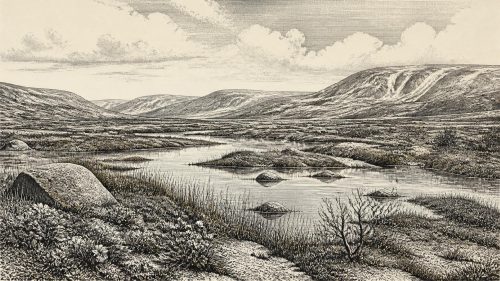
Nominally dated to 31,872 BCE, this period in Ireland belongs to the climatically volatile Late Pleistocene, not a precisely identifiable year. Derryvree, County Fermanagh, preserves freshwater silts between glacial tills, indicating open, treeless tundra with cold-adapted plants including mountain avens. Castlepook Cave, County Cork, contains time-mixed MIS 3 remains of mammoth, giant deer, reindeer, carnivores and smaller cold-stage fauna, but cannot represent one moment or island-wide conditions. A possibly cut-marked reindeer femur suggests human visitation, though disturbed context and absent tools, hearths or settlements prevent confirmation. Lower sea levels changed geography, while ice, habitats and possible access routes remained variable.
Read Article

Archived: 9 September 2026
Abstract
Derryvree in County Fermanagh preserves freshwater sediments beneath later glacial till from a broad period spanning the nominal date of 31,879 BCE. Mosses, herbaceous pollen and invertebrates indicate open, treeless tundra with cold wetlands during climatically unstable Marine Isotope Stage 3. Southern caves, especially Castlepook in Cork, contain reindeer, mammoth, hyaena and lemming remains supporting cold-adapted ecosystems. A cut-marked reindeer femur may indicate human butchery around 31,000 BC, but disturbed deposits and absent associated artefacts prevent claims of settlement. Ireland was intermittently ice-free and perhaps occasionally visited before the British–Irish Ice Sheet expanded towards its Last Glacial Maximum much later.
Read Article
Archived: 9 September 2026
Abstract
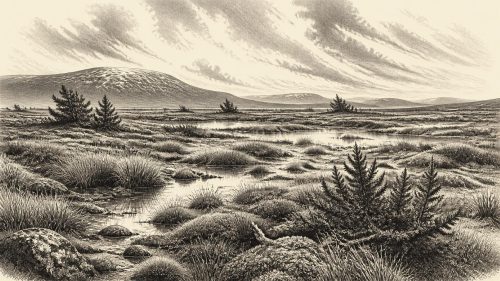
Labelled 31,892 BCE, this period cannot be dated to a single Irish calendar year, but falls within Marine Isotope Stage 3. At Derryvree, County Fermanagh, freshwater sediments between glacial tills indicate locally ice-free, treeless tundra, with wetlands, grasses, sedges, herbs, juniper, mosses and severe seasonal conditions. Castlepook Cave, County Cork, preserves mixed evidence of mammoth, reindeer, giant deer and predators, demonstrating intermittent cold-adapted fauna. Possible stone-tool cuts on a dated reindeer bone may suggest brief human visits, but do not prove settlement. Later ice-sheet expansion reshaped or destroyed evidence, leaving a dynamic, sparsely documented glacial Ireland at its western edge.
Read Article
Archived: 9 September 2026
Abstract
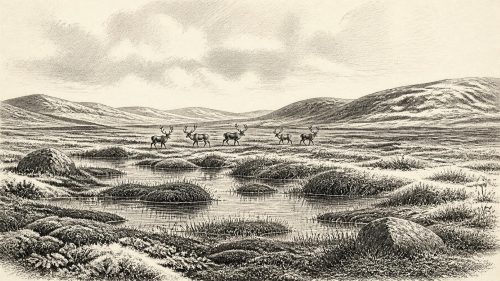
About 31,896 BCE, a modern label, Ireland lay in later Marine Isotope Stage 3, before the Last Glacial Maximum. Derryvree near Maguiresbridge preserves sediments beneath glacial tills, indicating ice-free northern ground with treeless tundra, wetlands, pools and cold-adapted plants and insects. Cave evidence from Cork records MIS 3 fauna including mammoth, reindeer, giant deer, bears and hyaenas, though remains span episodes and disturbed contexts. Kerry speleothems indicate milder conditions. Ice expansion was regionally varied and intensified later. No secure human settlement dates to this period; possible butchery evidence remains uncertain. Surviving sediments, bones and calcite reveal a diverse Ice-Age landscape.
Read Article

