
Limerick Treaty(c.1690s)

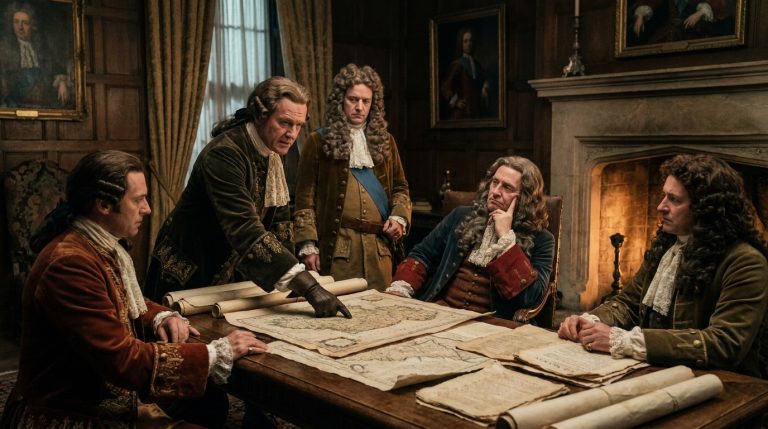
On 3 October 1691 the city of Limerick surrendered and commissioners signed what is known as the Treaty of Limerick. The agreement comprised separate military and civil articles negotiated between Williamite commanders led by Baron de Ginkel and Jacobite leaders in the garrison. It ended organised Jacobite resistance in the city and allowed many soldiers and inhabitants to remain under specified protections. The articles were drafted and printed soon afterwards and presented to the king for ratification. Negotiations took place while French relief was expected and while the garrison still retained considerable strength and supplies and honourable terms were sought.
The military articles permitted officers and soldiers to march out with arms and baggage or to depart for service in France, while the civil articles promised Catholics protection for religion, property, inheritance and lawful trades provided they submitted and took an oath of allegiance. The second article specified who could claim the benefit including inhabitants, garrison officers and qualifying persons from neighbouring counties. On paper these guarantees were clear and generous and were registered by letters patent. Contemporary officers wrote terms into official drafts and the agreements were recorded in printed copies circulated in Dublin and London for legal effect.
Despite formal ratification many protections proved fragile. Over subsequent years legislation, penal statutes and compulsory declarations narrowed the civil article protections and excluded Catholics from public office, legal practice and politics. Officials required declarations that attacked Catholic belief and loyalty tests that many could not conscientiously accept. Many of the officers who declined service under William departed for France in what became known as the Flight of the Wild Geese, while others who stayed found their rights increasingly constrained despite the treaty wording. Limerick memory kept the treaty as a promise broken by later acts and enforcement and popular grievance.
The treaty was negotiated after two sieges and grave defeats elsewhere, notably the battle of Aughrim in July 1691 which cost the Jacobite army thousands of men and its commander. Patrick Sarsfield and other leaders argued the articles offered safety for civilians and soldiers alike and secured terms to avoid further bloodshed. The documents were signed in Limerick on a large stone by the river which later became known as the Treaty Stone. Both commanders sought orderly transfer of authority and measures to prevent pillage, indemnify inhabitants and regulate the departure of willing soldiers to foreign service and protect property.
In Limerick the treaty became a symbol of negotiated capitulation and betrayed hope, invoked in sermons, petitions and local memory when later acts eroded its privileges. Public discourse across the eighteenth and nineteenth centuries recalled the articles when contesting property claims, civic rights and Catholic emancipation. The stone where signatures were said to be placed remained a civic relic and focal point for commemoration and historical reflection. Modern historians use original articles, letters patent and contemporary printed accounts to assess what was promised and what was delivered, showing a complex settlement whose legal form often diverged from lived experience regularly.
Primary Sources
- Corpus of Electronic Texts edition: The Treaty of Limerick, 3 October 1691 (civil and military articles transcribed). Source Link
- National Library of Ireland catalogue: ‘Articles granted by Gen. Ginckel to the Irish at Limerick, Oct. 3, 1691’ (original draft in hand of Payzant, clerk to George Clarke). Source Link
- Printed ratification: ‘The civil articles of Limerick exactly printed from the letters patent wherein they are ratified and exemplified by Their Majesties’ (1692 printing, Early English Books Online / Text Creation Partnership). Source Link
- Copy of the articles of agreement for the surrender of Limerick, Oct. 3, 1691 — catalogue entry, National Library of Ireland (copy holdings). Source Link
- Original draft of the civil articles of Limerick, 1691 — scholarly edition and commentary citing the manuscript draft (Irish Historical Studies article describing the primary draft).
- ‘An Exact Relation of routing the Irish army under Sarsfield, and of the hostages agreed on, in order to a capitulation for surrender of Limerick’ — contemporary 1691 printed account (broadside/pamphlet held in early print collections). Source Link
- George Clarke to Sir Theobald Butler: Ratification correspondence and notes concerning the omission and correction in the articles (official correspondence held and edited in primary source corpora). Source Link
- Printed broadside/booklet: ‘The Civil and Military Articles of Limerick [3 Oct. 1691], Exactly Printed from the Letters Patents’ — contemporary printed imprint held in national and university libraries (digitised copy in early print collections). Source Link
- Proclamations and acts relating to persons having the benefit of the articles with the garrisons of Limerick and Galway — published in later proclamations; see Irish Statute Book references to 1691 proclamations and subsequent orders enforcing or limiting article privileges. Source Link
- Contemporary newspapers and Dublin press reports, 1691–1692, reporting the surrender, articles and ratification proceedings including printed proclamations and gazette notices (contemporary press and gazettes held in national newspaper collections and archives).
Image Prompt
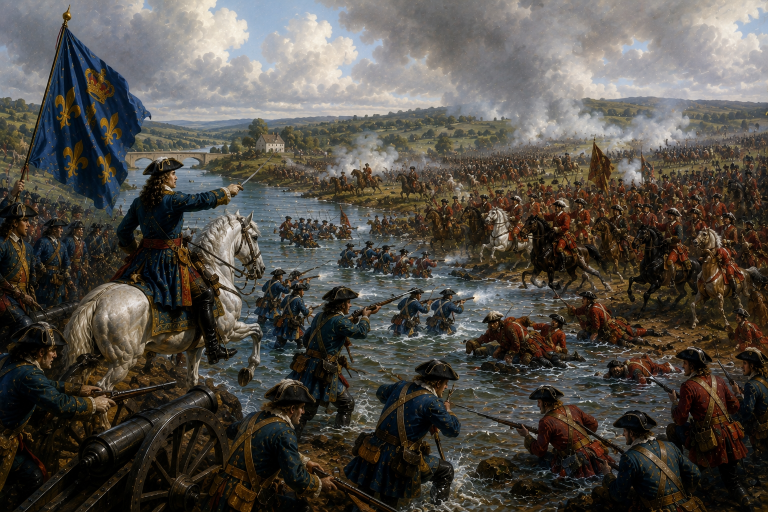
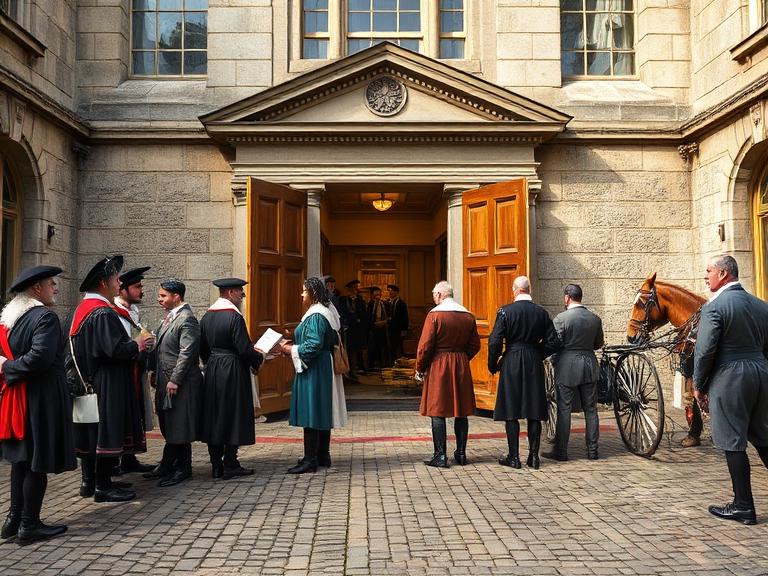
Photorealistic full colour landscape view of Limerick city and the River Shannon at dawn in early October 1691, historically accurate: include the medieval walls, the stone bridge with a group of officers signing documents on a large flat stone at the bridge edge, horse artillery and Williamite officers in accurate late seventeenth century uniforms and Jacobite officers and townspeople in contemporary Irish dress, natural soft morning light, period-appropriate tents and barges on the river, no modern objects or written words, architectural detail matching late seventeenth century Limerick, accurate fabrics and military accoutrements, cinematic but documentary tone, high resolution.