Archived: 25 October 2026
Abstract
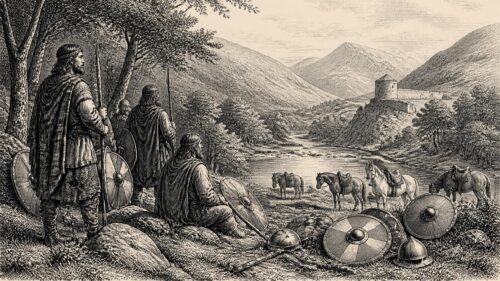
In 1261, Fínghin Mac Carthaigh defeated a major Geraldine force at Callann in Desmond, killing John fitz Thomas FitzGerald, his heir Maurice and many followers. The victory checked Geraldine expansion, but Fínghin was killed soon afterwards, leaving Desmond disputed. Annals differ over details, including dating, casualties and participants, while confirming the battle's significance. Conflict elsewhere included raids, burned settlements and fortresses, rival successions in Breifne and Tír Eógain, and struggles in Thomond and Connacht. Clerics and churches suffered violence at Derry and Ballysadare, while Raphoe's bishop was elected archbishop of Armagh. The year reveals politically fragmented, shifting power across Ireland.
Read Article

Archived: 26 September 2026
Abstract
In 1222, Ireland remained politically divided between Gaelic lordships and the Anglo-Norman lordship, whose authority was strongest in eastern and south-eastern towns and castles. Hugh de Lacy’s return exposed fragile royal control: Henry III restored some inherited lands but retained Ulster, while annals link de Lacy’s alliance with Áed Ó Néill to raids, Culrathain’s destruction and negotiated terms at Dundalk. An exceptional great wind damaged buildings, woods, churches and ships, disrupting rural, maritime and commercial life. Annals also record ecclesiastical deaths, elite benefaction and moral judgement. Farming, trade, kinship, warfare and religious institutions bound together a connected yet uneven society.
Read Article

Archived: 26 September 2026
Abstract
Irish annals portray 1214 as a period of contested lordship rather than national unity. Anglo-Norman castles at Clonmacnoise and Durrow provoked Cormac Ó Máel Sechlainn’s raids, involving cattle seizure, burning and attacks on church resources. Ualgarg Ó Ruairc raided settler-held Carbury, while deaths among Connacht lords and churchmen marked shifting local authority. Ulster records, though chronologically disputed, describe plunder at Derry, castle-building at Coleraine, resistance to settlers and destruction at Carlingford. Ecclesiastical communities remained influential yet vulnerable. Dublin received authority for commercial infrastructure. King John’s papal settlement formally included Ireland, but did not establish uniform control over its competing regions.
Read Article

Archived: 26 September 2026
Abstract
In 1204, Ireland remained politically fragmented, with King John’s authority strongest in Anglo-Norman towns, castles and lordships. Justiciar Meiler fitz Henry curbed William de Burgh’s Connacht ambitions, while Cathal Crobhdearg Ua Conchobair negotiated terms to preserve part of his kingdom. In Ulster, John de Courcy’s displacement enabled the de Lacys’ rise, though royal law sought to regulate the outcome. Annals record raids, church plundering, Doire’s burning and Domnall Mac Carthaig’s southern victory. Ecclesiastical disputes at Iona demonstrated clerical power. Dublin fortifications, authorised fairs, and Duiske’s foundation linked royal administration, commerce, settlement and religious patronage amid continuing local conflict across Ireland.
Read Article
Archived: 26 September 2026
Abstract
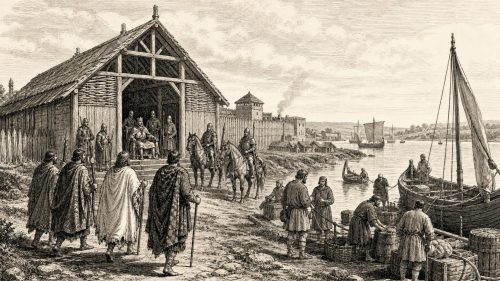
In 1172 Henry II held a winter court at Dublin, asserting royal control over Strongbow’s Anglo-Norman venture and receiving submissions from Irish rulers, though Ruaidrí Ua Conchobair remained independent. He secured Dublin, Waterford and Wexford, encouraged Bristol settlement, and linked conquest to commerce. The Council of Cashel promoted ecclesiastical order, building upon Irish reforms, while Gaelic church and political authority persisted elsewhere. Henry departed in April, granting Meath and Dublin’s custody to Hugh de Lacy. His forces devastated communities, and Tigernán Ua Ruairc was killed. Papal backing strengthened Henry’s claims, but Ireland remained divided between competing Gaelic and Angevin lordships.
Read Article
Archived: 26 September 2026
Abstract
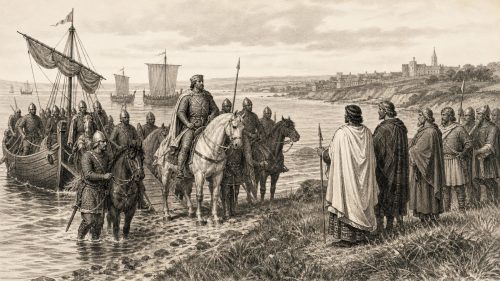
In 1171 Diarmait Mac Murchada’s death intensified conflict over Leinster, as Strongbow claimed succession through marriage while Irish dynasties supported Diarmait’s son. Dublin repelled Hiberno-Norse and Irish-led challenges, though Anglo-Norman settlements remained vulnerable. Henry II invaded in October to restrain Strongbow, received his submission, reserved major ports for royal control, and accepted submissions from several Irish rulers. At Dublin he held court, promoted Bristol settlement and displayed Angevin power. Church reform predated his arrival, but royal authority became linked to it. Henry neither conquered Ireland nor displaced Gaelic government, yet transformed a private expedition into enduring English intervention in Ireland.
Read Article

Archived: 26 September 2026
Abstract
In 1081, Tairdelbach Ua Briain, Munster's dominant king, secured Ulaid's submission, though authority remained negotiated and unstable. Donn Sléibe Ua hEochada killed Ua Mathgamna, king of Ulaid, at Downpatrick, amid wider northern dynastic violence. In Mide, Máel Sechnaill killed a Calraige chief, later linked to alleged plunder of Clonmacnoise. Hiberno-Norse or Scandinavian-background raiders plundered Aran, while fires devastated Cork, Killaloe, Mungret and churches. Clerical obituaries illustrate ecclesiastical learning and saintly successions. Beyond annalistic elites, rural farming, craft production and Hiberno-Norse trade sustained interconnected communities despite political conflict, maritime raiding and local disasters throughout the island's diverse, layered social order overall.
Read Article

Archived: 26 September 2026
Abstract
In 1052, Diarmait mac Máel na mBó, overking of Leinster, captured Dublin after raiding and burning Fine Gall, forcing its Hiberno-Norse ruler, Echmarcach mac Ragnaill, overseas. Control of the port gave Diarmait maritime, commercial and military resources, weakening the position of Munster’s Donnchad mac Briain. Elsewhere, Áed Ua Conchobair ravaged Conmaicne, while conflict claimed regional rulers and Domnall Bán Ua Briain was killed around 1051–52. Ecclesiastical rivalry brought murder at Armagh and a contested abbacy at Emly; prominent clergy and ex-king Bran died. A violent December storm damaged houses and woods. Dublin’s seizure reshaped southern Irish power for decades thereafter.
Read Article
Archived: 26 September 2026
Abstract
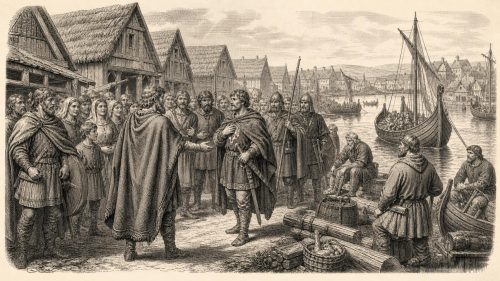
In 1046, Ireland remained politically fragmented, with regional rulers relying on alliances, military strength and lesser kings’ submission. Art Uallach Ua Ruairc, king of Connacht, was killed by Cenél Conaill, enabling Áed in Gaí Bernaig Ua Conchobair’s succession. Northern, midland and Munster elites also suffered killings, exposing conflict beneath provincial overkingship. Dublin’s inhabitants expelled Ímar mac Arailt and restored Echmarcach mac Ragnaill, linking Irish politics to the Irish Sea world. Ecclesiastical life continued through clerical successions, pilgrimage and Ardfert’s lightning damage. Annals preserve elite events, while farming, trade, churches and local communities sustained everyday life amid raids, obligations and insecurity.
Read Article
Archived: 26 October 2026
Abstract
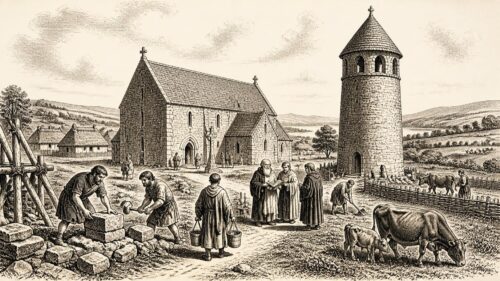
In 965 Ireland suffered a great famine, recorded by the Annals of Ulster as so severe that families reportedly sold children for food. Its causes and regional effects remain unknown, but scarcity threatened households, churches and political communities dependent on crops, cattle and stored resources. Domnall ua Néill, king of Tara, raided Connacht and took hostages from Ua Ruairc, while the Uí Channannáin won a battle killing Domnall. Ecclesiastical successions and deaths occurred at Tír dá Glas, Lismore and Armagh. Chronicon Scotorum associates bishop Cormac Ua Cillín with Tomgraney's church and bell-house, though its construction date and form remain uncertain.
Read Article
Archived: 26 October 2026
Abstract
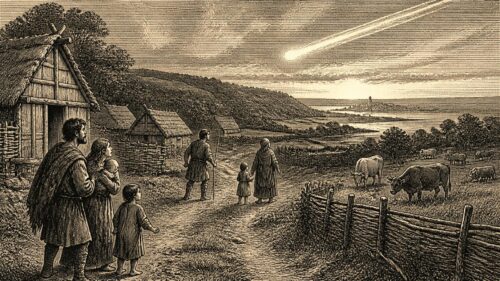
Conventionally assigned to 961, though annalistic chronologies differ, the year is chiefly marked by a reported fiery arrow travelling across Leinster from the south-west towards Áth Cliath, killing people and livestock. Its nature and stated thousand deaths remain unverifiable, but the notice records an exceptional environmental shock affecting agrarian communities and Dublin’s hinterland. The annals also note deaths of rulers in Uí Briúin Seóla, Dartraige and Cashel, the latter two killed by their own people, revealing unstable regional lordship. Ecclesiastical leaders at Clogher, Cork and Lismore died, underscoring churches’ institutional importance. Together, the entries depict politically fragmented, interconnected tenth-century Ireland.
Read Article
Archived: 27 October 2026
Abstract
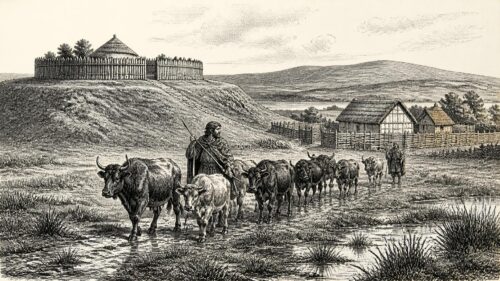
In 954, Irish annals record a great cattle murrain throughout Ireland, threatening wealth, food supplies, tribute and political power. Ua Ruairc inflicted a major defeat on Cairpre and Tethba, killing their king, amid wider instability in the midlands and north-west. Congalach of Tara faced growing pressure from Domnall ua Néill, supported by Dublin, while violence also affected Brega. Cellachán, king of Cashel, died, weakening Éoganacht prominence as Dál Cais influence grew. Numerous bishops, abbots and ecclesiastical successors also died, demonstrating church networks’ importance. Differing annalistic accounts require caution, particularly because Congalach’s death belongs to 956, not 954, in reliable records.
Read Article
Archived: 27 October 2026
Abstract
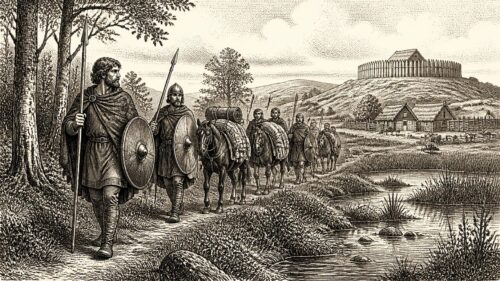
Records conventionally associated with 949 illuminate violence and chronological uncertainty in tenth-century Ireland. Annals differ over the date of Ruaidrí Ua Canannáin’s raid into Fir Lí, during which Flaithbertach, son of Muirchertach and grandson of Niall Glúndub, was killed. The episode marked Cenél Conaill’s success against rival Cenél nEógain. Elsewhere, Matudán of Ulaid and Niall grandson of Erulb plundered Conaille and districts, while Congalach of Brega ravaged Uí Méith and Fernmag, demonstrating authority. Obits for Aedán of Tuaim Dá Ghualann and Fogartach of Airgialla reflect ecclesiastical importance and Christian commemoration. Sparse sources reveal local warfare, not a national turning point.
Read Article
Archived: 27 October 2026
Abstract
In 932, Irish annals recorded the death of Aengus son of Aengus, probably chief poet of Ireland, indicating the public importance of learned culture and its links with churches and aristocratic patrons. They also note Flann son of Máel Sinna, king of Brega, killed by the Uí Echach, alongside the deaths of Loingsech of Dál Araide and Colla of Norse-Gaelic Limerick. These notices reveal competing regional powers, unstable succession and maritime connections. Differing annalistic chronologies prevent precise dating of related events. Beyond elite records, political changes could directly affect farming, obligations, travel and security, though no nationwide catastrophe is evidenced.
Read Article
Archived: 27 October 2026
Abstract
In 929, sparse annalistic evidence illuminates Ireland’s political, ecclesiastical and maritime connections. Céile, successor of Comgall of Bangor, died on pilgrimage in Rome on 14 September, demonstrating Irish links with Latin Christendom. Donnchad Donn, king of Tara, led an armed expedition against Muirchertach mac Néill at Liathdruim, apparently without a recorded battle. A fleet appeared on Lough Corrib, reflecting the strategic significance of inland waterways. Death notices for Tuathal, bishop and scribe, and Fínnechta, Ciarraige Luachra king, anchorite and counsellor, reveal intertwined religious learning, institutional authority and regional lordship. Differing annalistic dates require interpretation across competing manuscripts and chronological systems.
Read Article
Archived: 27 October 2026
Abstract
Annals conventionally assigned to 928 describe Ailche’s son leading Scandinavian or Hiberno-Scandinavian forces across Lough Neagh, ravaging islands and adjacent territories, demonstrating inland waterways’ strategic importance. Chronological uncertainties complicate the dating of related notices. Norsemen killed Donnchad, northern heir-designate, while Donnchad Donn of Mide killed his nephew Máel Ruanaid; rivalry with Muirchertach also limited Tara’s authority. Diarmait of Osraige died. Ecclesiastical leaders at Birr, Aghaboe and Cork died, and Bangor’s Céile began a Roman pilgrimage. Records also note elite women’s deaths and a disputedly dated raid on Kildare, revealing interconnected dynastic, church and Scandinavian power networks across Ireland and Europe.
Read Article
Archived: 28 October 2026
Abstract
In 895, during the year, according to annalistic chronology, Dublin raiders led by Glún Iarainn plundered Armagh, reportedly carrying off 710 captives and damaging its church. The attack exposed the vulnerability of a major ecclesiastical and political centre. Elsewhere, Dub Lachtna of Caisel and churchman Máel Petair died; Cellach, Brega’s leading heir, was treacherously killed; and Muiredach of Ulaid fell in regional conflict. Heavy snowfall and great scarcity disrupted subsistence, likely worsening hardship without proving direct causes for violence. These fragmented records portray Ireland as interconnected kingdoms and churches, where sacred wealth, political succession, and ordinary survival remained precariously entwined.
Read Article
Archived: 28 October 2026
Abstract
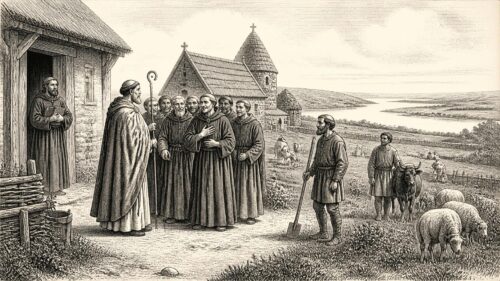
In 891, Irish annals record three modest yet revealing events: the death of Gormán son of Mugrón, king of Glennamain; the death of Flann mac Máel Dúin, abbot of Iona; and Máel Petair son of Cúán’s acquisition of Clonfert. Variant annalistic naming of Iona’s abbot illustrates the uncertainties of transmitted chronology, though scholars generally identify Faelán and Flann as one man. Iona remained an active Columban centre despite earlier Scandinavian raids, while authority was gradually shifting towards Irish houses such as Kells. Clonfert’s succession reflected ecclesiastical control of land, revenues and patronage. Gormán’s death demonstrates Ireland’s fragmented local kingship clearly.
Read Article
Archived: 29 October 2026
Abstract
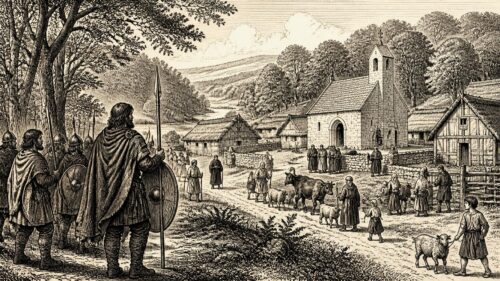
In 829, as dated by the Annals of Ulster despite its U830 heading, Feidlimid mac Crimthainn, king of Munster, projected power into the midlands and Connacht. He burned Foire, probably Fore in Westmeath, and inflicted a major defeat on the southern Uí Briúin, though details remain unknown. Munstermen also killed Folloman, brother of Conchobor mac Donnchada, king of Tara, intensifying their rivalry. Deaths of abbots, bishops and local kings underline the interdependence of ecclesiastical institutions, dynasties and regional politics. No Viking attack is recorded that year; Irish warfare itself threatened settlements and churches. The year showed expansionist pressure, without resolution.
Read Article
Archived: 29 October 2026
Abstract
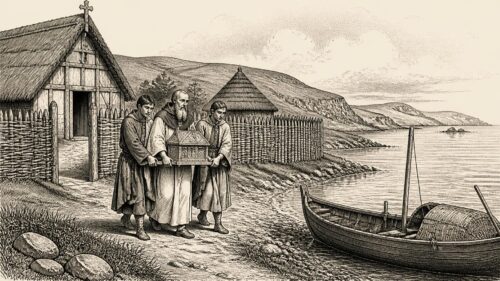
In 828, as calibrated in the Annals of Ulster rather than the displaced Viking material assigned to 827, Ireland’s record combines deaths, violence and religious travel. Muiredach of Leinster and several lesser kings died, alongside leading churchmen and an ecclesiastical steward, illustrating layered political and institutional authority. Conaing was treacherously killed, while Mide defeated Connacht in an otherwise unexplained battle. Diarmait, abbot of Iona, carried Colum Cille’s relics to Scotland, demonstrating maritime links within the Columban world, although no motive is recorded. The sparse evidence depicts a fragmented yet connected society shaped by rulership, warfare, churches, economy and sea routes.
Read Article
Archived: 29 October 2026
Abstract
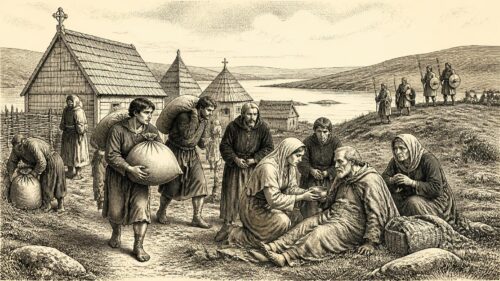
Conventionally dated 825, though annalistic chronologies vary, this cluster of Irish events records pestilence, famine and bread scarcity affecting vulnerable people across Ireland. Raiders plundered Downpatrick, Movilla and Inis Daimle, but Ulaid defeated them at Mag Inis; elsewhere raiders routed Osraige. Blathmac son of Flann was killed on Iona, later commemorated as a martyr. Numerous prominent clerics and several kings died, highlighting fragile religious and political networks. Armagh’s bishop Artrí extended Patrick’s law over Connacht, asserting ecclesiastical authority. The notices do not describe a unified national crisis but reveal overlapping hardship, violence, leadership losses and competing regional authority within Ireland.
Read Article
Archived: 29 October 2026
Abstract
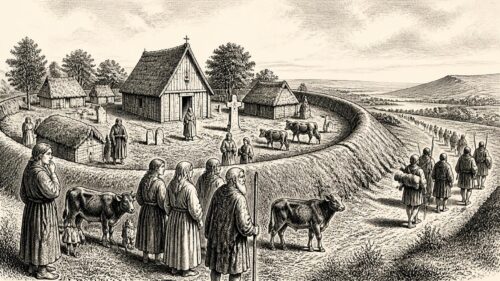
In 815, Irish annals recorded deaths, killings and the plunder of Cluain Creamha, revealing political and ecclesiastical vulnerability. Muirgius son of Tomaltach, dominant Uí Briúin overking of Connacht, died, ending a reign amid rivalries. Men of Bréifne and Síl Cathail attacked Cluain Creamha, killing people and despoiling an ecclesiastical community. Southern Brega lost kings Conall son of Niall and Fócarta son of Cernach. After Cenél Conaill killed his brother Colmán, Áed Oirdnide campaigned northwards. Annals also note deaths of churchmen at Cell Moinne, Lugmad and Iona, while no Viking raid is explicitly recorded for Ireland in the surviving annalistic sources.
Read Article
Archived: 30 October 2026
Abstract
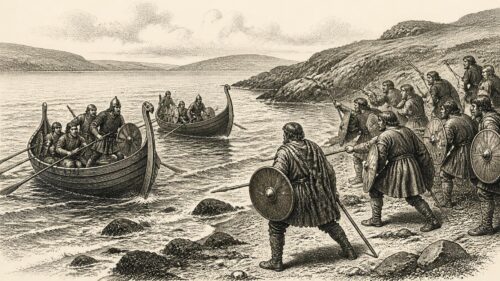
In 811, annalistic evidence records Scandinavian raiding and Irish political religious activity across Ireland. Men of Umall killed raiders, while Scandinavians defeated the Conmaicne; Cobthach of Loch Léin likewise slew raiders in Munster. These mobile incursions brought no proven permanent settlement. Muirgius son of Tomaltach, king of Connacht, led a southern hosting, though its destination and outcome remain unknown. Daire's law was promulgated in Connacht, demonstrating ecclesiastical and secular cooperation. Deaths of prominent abbots, bishops and regional kings highlighted interconnected religious institutions and fragmented political authority. The year reveals local resistance, royal ambition, church privilege, and pressures on coastal communities.
Read Article
Archived: 30 October 2026
Abstract
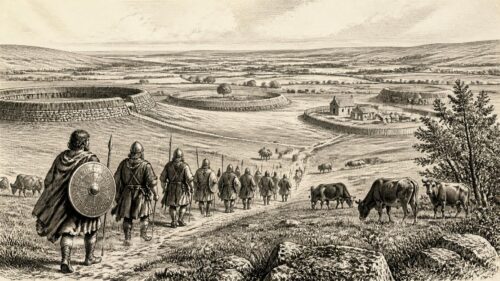
Conventionally dated to 808, the annals record a short-lived Connacht–Mide challenge to Áed Oirdnide, king of Tara. Led by Conchobar of Mide with Muirgius of Connacht’s support, a force occupied Tír ind Aenaig near Tailtiu for three nights before retreating; Áed retaliated by burning Mide’s borders. The episode illustrates contested kingship, strategic assembly sites and coercion through agricultural devastation. Other notices record the death at Kildare of the deposed Leinster king Fínnechta, and deaths of leading churchmen at Armagh, Linn Duachail and Cell Achaid. They also note Cinaed’s killing in Mag Cobo, thus revealing local violence alongside wider political rivalry.
Read Article
Archived: 30 October 2026
Abstract
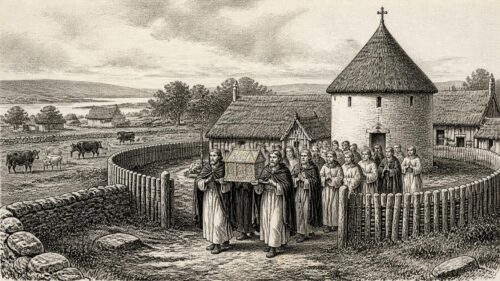
In 800, the Annals of Ulster record a battle between the Ulaid and Uí Echach Cobha, in which Echu, king of Cobha, died and Cairell’s force prevailed. Bresal of Cenél Loégairi was killed by his brothers, illustrating dynastic rivalry. Rónán’s relics were placed in a gold and silver casket, showing ecclesiastical resources and devotion. Deaths included abbots of Clondalkin, Domnach Sechnaill and Iona, linking Ireland to Columban networks across the Irish Sea. A rainy summer affected rural conditions without recorded disaster. Together, these selective notices reveal contested kingship, influential churches, maritime connections, and an agrarian society closely dependent on weather.
Read Article
Archived: 30 October 2026
Abstract
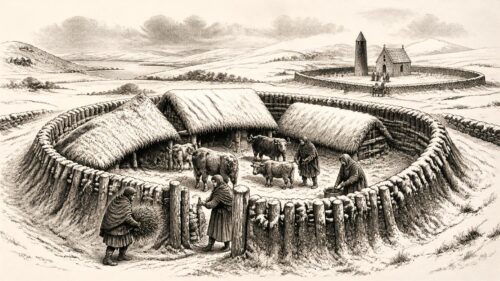
In 799, as conventionally dated despite annalistic chronological differences, Ireland’s fragmented politics intertwined warfare, dynastic rivalry, ecclesiastical authority and environmental hardship. Muirgius son of Tomaltach won the internal Connacht battle of Dún Ganiba, while Ailill of Uí Maine died. At Finnabair in Tethba, Murchad son of Domnall defeated forces including two Cenél Cairpri kings. Clann Cholmáin kinsmen killed Abbot Blathmac and treacherously slew Domnall son of Donnchad. Heavy snowfall killed people and cattle. Numerous abbots died, and Gormgal promulgated Patrick’s law in Connacht, affirming church influence. No Viking raid was recorded; domestic conflict and vulnerability dominated the year across Ireland.
Read Article
Archived: 30 October 2026
Abstract
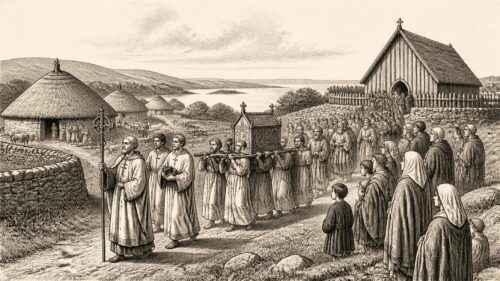
In 794, Irish annals record interconnected religious, political and maritime developments, while remaining sparse about causes and outcomes. The relics of Trian travelled on circuit, extending ecclesiastical authority among communities. Donnchad of Mide led forces supporting Leinster against Munster, while Áed son of Niall invaded Mugdorna Maigen, illustrating regional rivalry rather than national unity. Deaths of senior figures at Armagh, Bangor, Clonmacnoise, Tuaim Gréine and Cluain Bairenn marked significant ecclesiastical transitions, including female leadership. Reports of Scandinavian devastation around Britain warned Irish communities of mounting seaborne danger, preceding securely recorded attacks on Irish islands in following years and transforming horizons.
Read Article
Archived: 30 October 2026
Abstract
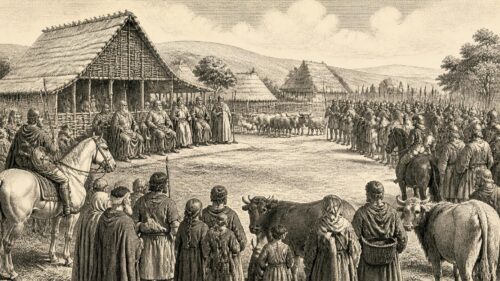
In 790, recorded in the Annals of Ulster under a chronologically disputed heading, Donnchad Midi of Clann Cholmáin defeated Áed Ingor of Cenél nÉogain at Tailtiu, the prestigious Uí Néill assembly site. Allies from Uí Chremthainn died with Áed’s force, demonstrating complex political connections. Diarmait of Tethba was killed at Ard Ablae, while regional kings of Uí Maine and Airthir also died. Obituaries marked leading clerics’ deaths across major churches, and Connacht’s king Artgal died at Iona. Rural farming, ecclesiastical estates and assemblies underpinned society. No securely dated Viking raid belongs to this year; indigenous rivalry dominated political life throughout.
Read Article
Archived: 30 October 2026
Abstract
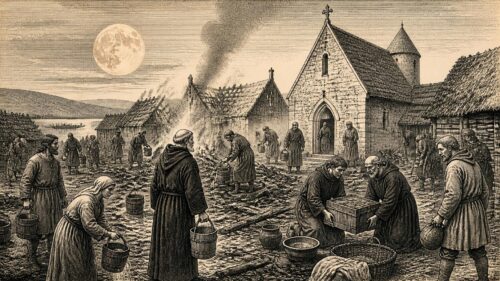
In 787, Irish annals record the death of Máel Dúin, king of In Fochla, creating a transition within the Cenél nÉogain dynasty rather than a national succession. In Connacht, Ciarán of Clonmacnoise’s law was proclaimed, extending ecclesiastical authority and protections with secular support after unrest. Deaths of abbots and bishops at several churches illustrate religious institutions managing land, learning and ritual. Daire Calgaid, probably Derry, suffered a fire of unknown cause. Annalists also noted a blood-red Moon on 18 February, preserving a celestial observation without establishing its explanation. These entries reveal intertwined political, religious and authority in early medieval Ireland.
Read Article
Archived: 30 October 2026
Abstract
In 786, annalistic evidence depicts Ireland as politically fragmented but connected by ecclesiastical networks. In Connacht, the Uí Briúin were defeated at Gola, while the Uí Fhiachrach of Muirisc killed Flaithgal of Umall and his nobles; Tipraite of Connacht and Conall of Uí Maine also died. In the north, Máel Dúin of Cenél nEógain defeated and expelled Domnall of Cenél Conaill. Dub dá Bairenn, abbot of Clonard, visited Clonard’s Munster ecclesiastical sphere. Deaths among abbots, bishops, scholars and ascetics, notably at Kildare, underline church institutions’ importance. They nonetheless show clearly volatile local lordship, rural dependence, and durable religious authority throughout.
Read Article





