Archived: 2 November 2026
Abstract
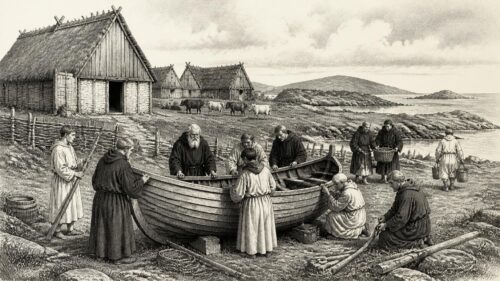
In 679 CE, Ireland’s annalists record a year defined less by a single island-wide crisis than by the passing and testing of influential people and institutions. The securely dated core consists of the death of Fáilbe, abbot of Í or Iona; the death of Cenn Fáelad, styled “the learned”; and a clash in which Fínnechta Fledach, the dominant Uí Néill king of Tara, defeated Bécc Bairrche. These concise notices are unusually revealing. Together they show a country of many competing dynasties, in which armed expeditions, ecclesiastical leadership and learned reputation all carried political weight. A Year in Difficult Calendars The
Read Article
Archived: 2 November 2026
Abstract
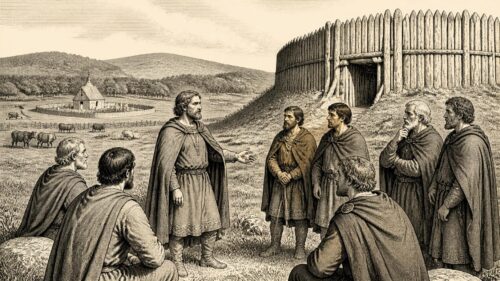
In 674 CE, the annals place Ireland’s most consequential recorded development in a struggle within the Síl nÁedo Sláine, an important branch of the Southern Uí Néill. Cenn Fáelad, son of Blathmac and styled king of Tara in later historical reckoning, was killed in battle; his kinsman Fínnechta Fledach emerged as victor and began to rule. The terse report offers neither battlefield narrative nor a reliable location. Yet it marks a real change in the leadership of the midlands, where claims to the kingship of Tara depended less on a unitary national state than on kinship, military following, tribute, alliances
Read Article
Archived: 2 November 2026
Abstract
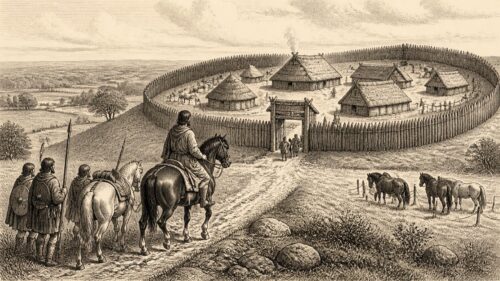
In 671 CE, the most consequential recorded Irish event was the killing of Sechnassach mac Blathmaic, king of Tara, at the beginning of winter. The terse notice in the Irish annals is unusually revealing despite its brevity: it names his killer, Dub Dúin of Cenél Cairpri, and preserves a four-line verse remembering the king’s household as rich in bridles, horse-switches and surplus. The same annalistic year also records a battle at Druim Cepais, the death of Fergus son of Crunnmael, the death of Bran Finn of the Déisi in one source, and Máel Ruba’s sea-voyage from Ireland to Britain. Together
Read Article
Archived: 2 November 2026
Abstract
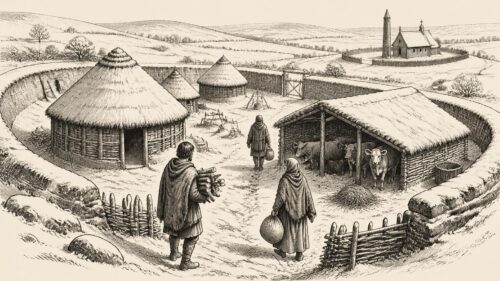
In 670 CE, Ireland’s surviving annalistic record preserves a stark notice: “Great snow fell. A great famine occurred.” The entry, in the Annals of Tigernach, is brief enough to conceal almost everything a modern reader wants to know: how long the snow lay, which districts suffered most, whether harvest stores failed, and how many people died. None of that can responsibly be supplied. Yet the pairing of exceptional snowfall and famine is itself important. In an overwhelmingly agrarian society, winter weather could turn stored food, fodder, livestock and labour into matters of survival. The year is therefore best approached through
Read Article
Archived: 2 November 2026
Abstract
In 664 CE, Ireland entered a year remembered above all for the arrival of a devastating epidemic. The Irish annals place its coming on 1 August, stating with unusual precision that “the plague reached Ireland” and that it first raged at Mag Itha of Fotharta. This is one of the firmest dates attached to an early medieval Irish disease outbreak. Yet the surviving records are terse, copied and rearranged centuries after the events; their year headings do not always coincide exactly with modern chronological conventions. What can responsibly be said is that, during the calendar year 664, mortality reached Ireland,
Read Article
Archived: 2 November 2026
Abstract
In 658 CE, the most securely attested Irish developments were not a single great battle or royal assembly, but a cluster of deaths that reveal how closely political authority, ecclesiastical institutions and regional society were intertwined. The annals record the deaths of Díma Dub, bishop of Condaire or Connor, and Cuiméne, bishop of Nendrum in Strangford Lough. The Annals of the Four Masters, compiled much later but drawing on older annalistic material, also place in this year the death of Sillán, bishop of Daiminis, probably Devenish in Lough Erne, on 17 May. Its same entry calls 658 the second year
Read Article
Archived: 2 November 2026
Abstract
In 656 CE, the surviving Irish annals place a small but revealing cluster of deaths, a battle and an extraordinary report from the countryside within the year. None amounts to a narrative of a united Irish kingdom: Ireland was divided among many dynasties and petty kingdoms, while churches and monasteries exercised influence across political frontiers. Yet the entries for this year illuminate several connected worlds: the Columban community of Iona, the ecclesiastical landscape of Meath and Munster, local violence, cattle-centred rural life, and Ireland’s close relationship with northern Britain. The evidence is terse and must be handled cautiously, but it
Read Article
Archived: 2 November 2026
Abstract
In 654 CE, a violent change at the summit of the Uí Néill reshaped the balance of power in Ireland. Conall Cóel, son of Máel Coba of Cenél Conaill, was killed by Diarmait mac Áedo Sláine. The notice is brief, but its implications were substantial: a northern claimant to the pre-eminent kingship had been removed by a member of the southern Uí Néill line rooted in Brega and associated with Tara. Other annalistic notices connected with this year record killings in Connacht, the deaths of senior clerics at Clonard, and a battle in northern Britain involving Dál Riata. Together they
Read Article
Archived: 3 November 2026
Abstract
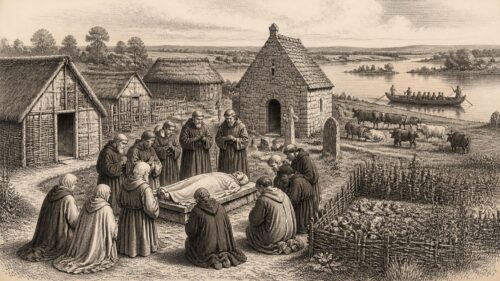
In 652 CE, the Irish annalistic record conventionally places a striking cluster of deaths among leading churchmen alongside a local dynastic battle in the midlands. Yet this is also a year that demands unusual chronological care. The surviving Annals of Ulster group these notices under U652, but their own kalend entry identifies the year as AD 651; related chronicles and later compilations distribute some of the same material under different years. The safest conclusion is not that every event can be fixed to a modern 1 January–31 December 652, but that these events belong to the narrowly defined historical horizon
Read Article
Archived: 3 November 2026
Abstract
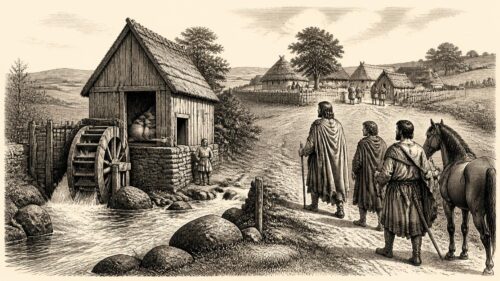
In 651 CE, the Irish annals associate one striking episode with the year: the killing of Dúnchad and Conall, sons of Blathmac son of Áed Sláine, at or beside the mill of Máel Odhrán. The surviving accounts are terse, poetic and chronologically complicated, so the event should not be treated as a securely dated incident on a modern calendar day. Yet it is firmly lodged in the annalistic sequence conventionally discussed under 651. The deaths mattered because the victims belonged to the powerful Síl nÁedo Sláine of Brega, a leading southern branch of the Uí Néill. Their violent end, remembered
Read Article
Archived: 3 November 2026
Abstract
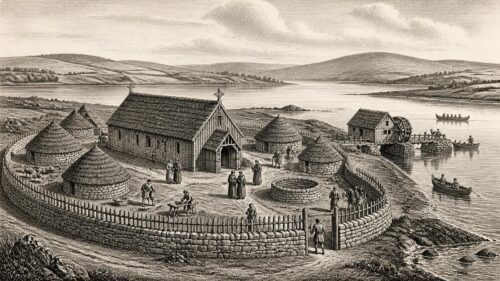
In 644 CE, Ireland’s surviving annalistic tradition presents a compact but revealing cluster of deaths, warfare and disputed royal authority. Yet the date must be handled with care. The notices now grouped under 644 were copied into chronicles centuries after the events, and the parallel annals do not always place them in the same numbered year. What can responsibly be said is that, around this calendar year, the political order was unsettled after the death of Domnall mac Áedo, a major northern Uí Néill ruler, while Leinster, Osraige, Munster and the north-east each appear in the record through named people
Read Article
Archived: 6 November 2026
Abstract
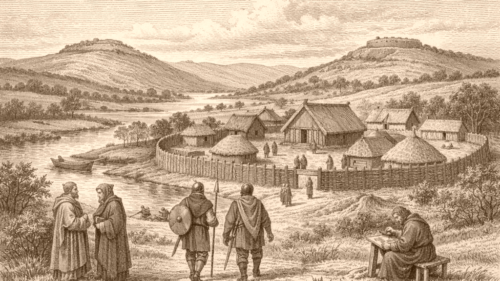
Year FrameFor 634 CE, the safest starting point is the annalistic year itself rather than any attempt to build a continuous event story. The surviving Irish annals do not present a modern narrative; they list brief notices under year headings, and the preserved evidence for this year is uneven across texts. In the Annals of Inisfallen, the entry for 634 contains three short notices: the repose of Mo-Bae moccu Alldae, the death of Rónán son of Fergus, and the slaying of Catluan. In the Annals of the Four Masters, the equivalent year also preserves several notices, including deaths and battles,
Read Article
Archived: 6 November 2026
Abstract
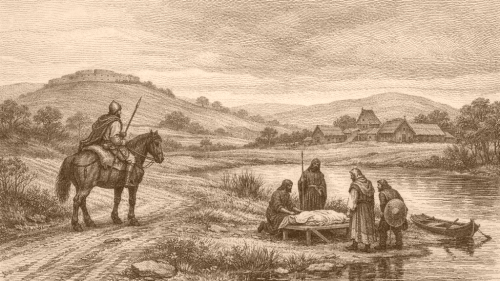
Yearly FrameThe annalistic evidence for 633 CE in the retrieved material is extremely slight. In the Annals of the Four Masters, the year entry states only that Failbhe Flann, king of Munster, died. That is the secure core of the year’s record here. No second event is attached to the same year in this witness, and no explanatory detail follows the notice. A careful account must therefore begin from the fact of the death and from the limits of the record, not from any imagined fuller story.This brevity is not a defect in the historian’s work but a condition of
Read Article
Archived: 7 November 2026
Abstract
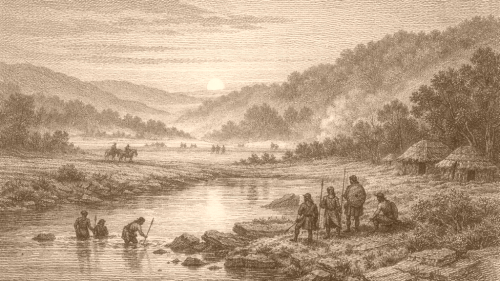
Year EvidenceFor 632 CE, the safest starting point is the annal entry itself. In the Annals of Tigernach, the year is marked by a compact cluster of notices: the battle of Fid Eoin, the death of Eochaidh Buidhe son of Aedán, the battle of Dún Cethirn, and another death notice. Because annalistic dating is terse and often compressed, these entries form the secure core for the year. Anything beyond them depends on comparison and caution rather than direct statement.The broader annalistic landscape shows why restraint is necessary. Nearby years in the same tradition continue to list battles, deaths, and rulership
Read Article
Archived: 7 November 2026
Abstract
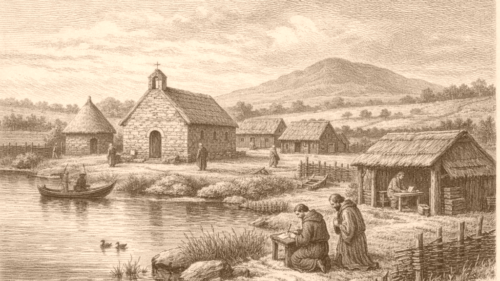
Yearly RecordFor 631 CE, the surviving notices are short and uneven. The Annals of Tigernach preserves only the year heading for T631 in the excerpt here, with no event notice attached in the visible passage. By contrast, the Annals of the Four Masters and the Annals of Inisfallen both supply specific entries for the same year. This makes 631 visible chiefly as a moment of record, not as a year with many securely dated events.The same material also shows that the year was not recorded in only one way. The Four Masters assigns 631 to the eighth year of Domhnall
Read Article
Archived: 7 November 2026
Abstract
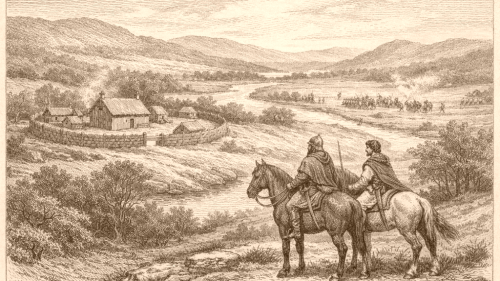
Year EvidenceFor 630 CE, the evidence is annalistic rather than narrative, and the surviving notices are short. The Annals of Ulster provide a year-heading for AD 630 and attach to it only one battle notice and one death notice. That limits what can be said securely about the year itself. The surviving record here is not a continuous chronicle of political life, but a sequence of dated items whose scope depends on each annal's own entry for the year.The same year is represented more fully in the Annals of Tigernach and in the Annals of the Four Masters, both of
Read Article
Archived: 7 November 2026
Abstract
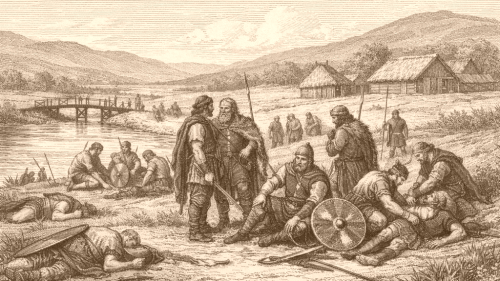
Year FrameFor 629 CE, the annalistic record opens only a narrow window. One Tigernach entry is placed under T629 and reports a battle at Ard Corann. A separate comparative notice says that the same event appears in the Annals of Ulster as 629, while Tigernach places it in 630. That is enough to discuss the year, but only by staying close to the wording of the texts and not by filling the gap with invented detail.The year can therefore be treated as a dated notice rather than a full narrative. The surviving wording names a battle, identifies a victor, and
Read Article





