
c.1809
90 archived items
January 30 items
Gate Distillery
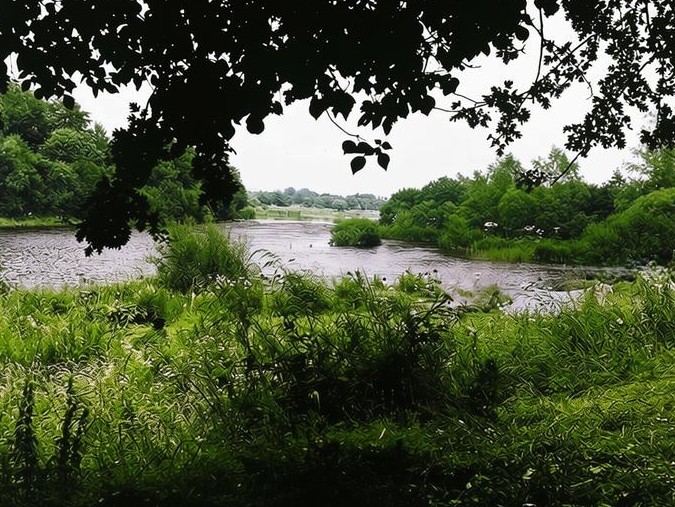
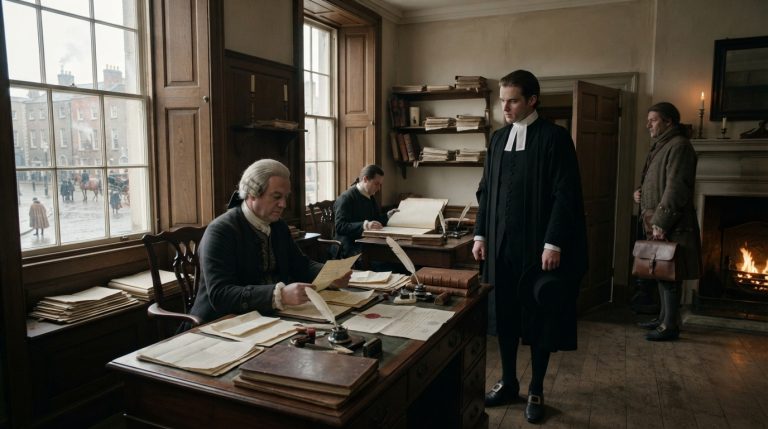
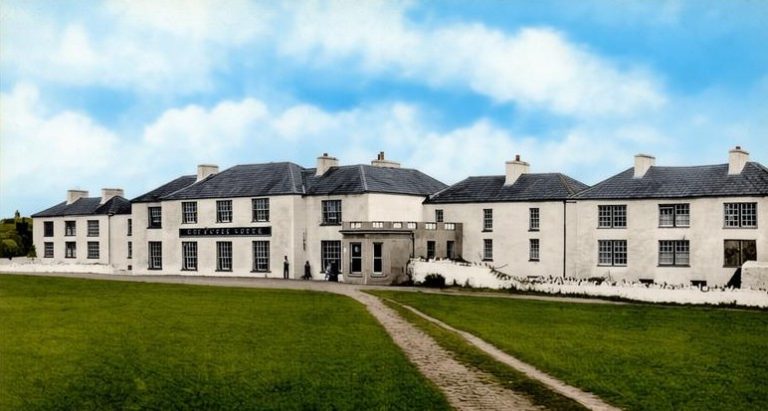
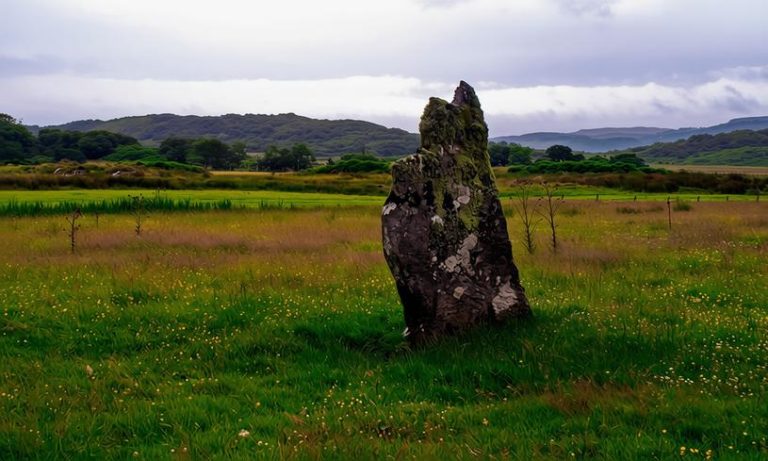
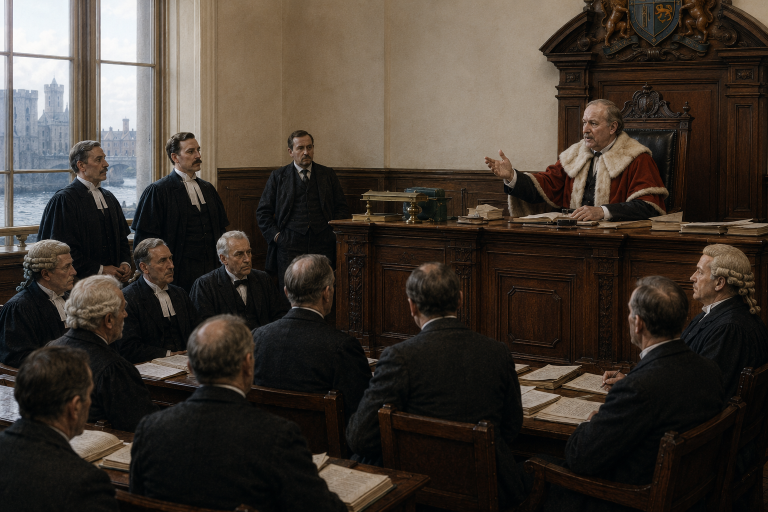
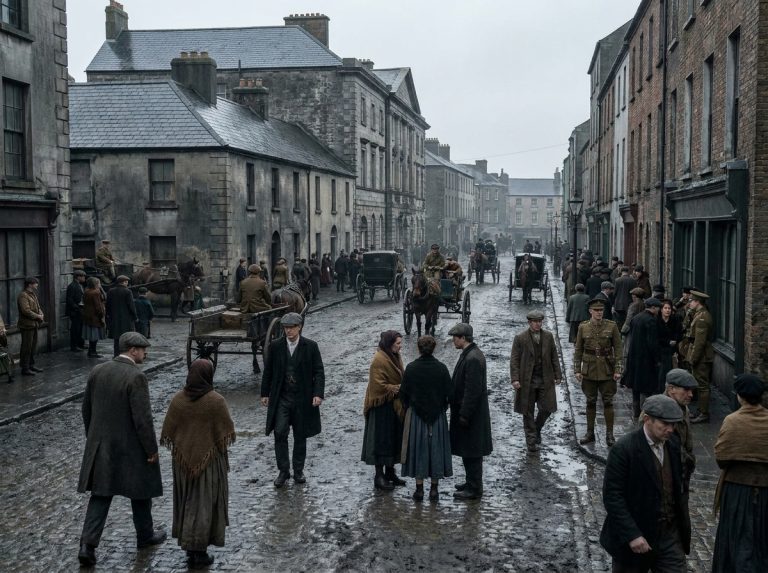
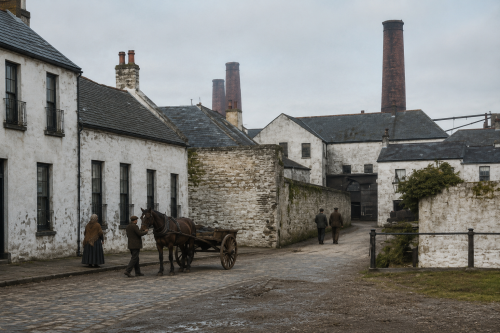
Thomond Gate Distillery stood beside the River Shannon from 1809 until 1919, forming an important part of Limerick’s industrial and distilling heritage. During the nineteenth century, the complex operated three copper pot stills and produced traditional Irish whiskey under several owners, including Stein Brown & Co. and Archibald Walker’s Limerick Distillery. These reconstructed scenes imagine the surrounding streets, workers, carts, buildings and towering chimneys during the distillery’s active years. Although production eventually ceased, the Thomond Gate name has been revived through an independent Limerick whiskey brand dedicated to preserving the memory and traditions of the original enterprise for future generations.
View Image
Nelson’s Pillar
Nelson’s Pillar was a prominent monument that stood on Sackville Street, now O’Connell Street, in Dublin, Ireland, from 1809 until 1966. Erected to commemorate Admiral Horatio Nelson after the Battle of Trafalgar, the 134-foot granite Doric column was topped by a 13-foot statue carved by Thomas Kirk. Visitors could climb 168 internal steps to enjoy panoramic views across the city. Long regarded by many as a symbol of British rule, the pillar was badly damaged by a republican bomb on 8 March 1966. The remaining structure was demolished by the Irish Army six days later, ending a Dublin landmark’s history.
View Image
Nelson’s Pillar
Nelson’s Pillar was a prominent monument that stood on Sackville Street, now O’Connell Street, in Dublin, Ireland, from 1809 until 1966. Erected to commemorate Admiral Horatio Nelson after the Battle of Trafalgar, the 134-foot granite Doric column was topped by a 13-foot statue carved by Thomas Kirk. Visitors could climb 168 internal steps to enjoy panoramic views across the city. Long regarded by many as a symbol of British rule, the pillar was badly damaged by a republican bomb on 8 March 1966. The remaining structure was demolished by the Irish Army six days later, ending a Dublin landmark’s history.
View Image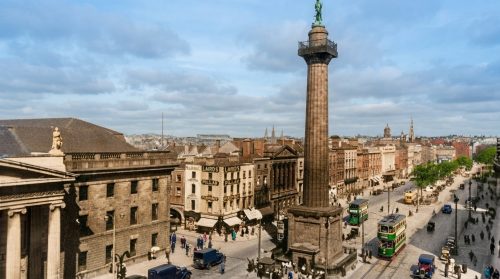
Nelson’s Pillar
Nelson’s Pillar was a prominent monument that stood on Sackville Street, now O’Connell Street, in Dublin, Ireland, from 1809 until 1966. Erected to commemorate Admiral Horatio Nelson after the Battle of Trafalgar, the 134-foot granite Doric column was topped by a 13-foot statue carved by Thomas Kirk. Visitors could climb 168 internal steps to enjoy panoramic views across the city. Long regarded by many as a symbol of British rule, the pillar was badly damaged by a republican bomb on 8 March 1966. The remaining structure was demolished by the Irish Army six days later, ending a Dublin landmark’s history.
View Image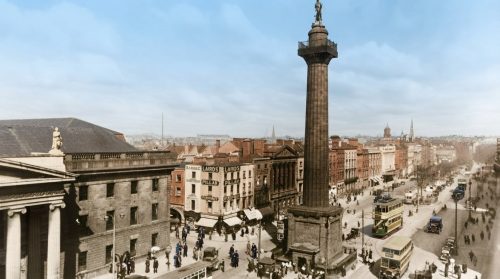
Nelson’s Pillar
Nelson’s Pillar was a prominent monument that stood on Sackville Street, now O’Connell Street, in Dublin, Ireland, from 1809 until 1966. Erected to commemorate Admiral Horatio Nelson after the Battle of Trafalgar, the 134-foot granite Doric column was topped by a 13-foot statue carved by Thomas Kirk. Visitors could climb 168 internal steps to enjoy panoramic views across the city. Long regarded by many as a symbol of British rule, the pillar was badly damaged by a republican bomb on 8 March 1966. The remaining structure was demolished by the Irish Army six days later, ending a Dublin landmark’s history.
View Image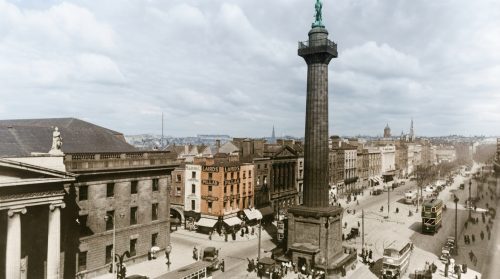
Nelson’s Pillar
Nelson’s Pillar was a prominent monument that stood on Sackville Street, now O’Connell Street, in Dublin, Ireland, from 1809 until 1966. Erected to commemorate Admiral Horatio Nelson after the Battle of Trafalgar, the 134-foot granite Doric column was topped by a 13-foot statue carved by Thomas Kirk. Visitors could climb 168 internal steps to enjoy panoramic views across the city. Long regarded by many as a symbol of British rule, the pillar was badly damaged by a republican bomb on 8 March 1966. The remaining structure was demolished by the Irish Army six days later, ending a Dublin landmark’s history.
View Image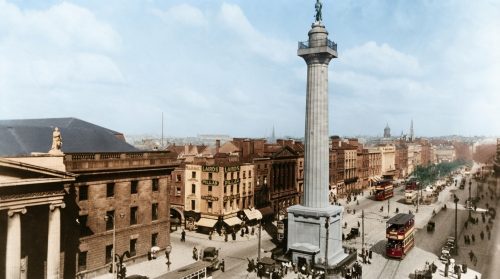
Nelson’s Pillar
Nelson’s Pillar was a prominent monument that stood on Sackville Street, now O’Connell Street, in Dublin, Ireland, from 1809 until 1966. Erected to commemorate Admiral Horatio Nelson after the Battle of Trafalgar, the 134-foot granite Doric column was topped by a 13-foot statue carved by Thomas Kirk. Visitors could climb 168 internal steps to enjoy panoramic views across the city. Long regarded by many as a symbol of British rule, the pillar was badly damaged by a republican bomb on 8 March 1966. The remaining structure was demolished by the Irish Army six days later, ending a Dublin landmark’s history.
View Image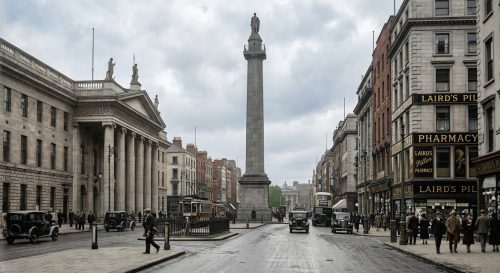
Nelson’s Pillar
Nelson’s Pillar was a prominent monument that stood on Sackville Street, now O’Connell Street, in Dublin, Ireland, from 1809 until 1966. Erected to commemorate Admiral Horatio Nelson after the Battle of Trafalgar, the 134-foot granite Doric column was topped by a 13-foot statue carved by Thomas Kirk. Visitors could climb 168 internal steps to enjoy panoramic views across the city. Long regarded by many as a symbol of British rule, the pillar was badly damaged by a republican bomb on 8 March 1966. The remaining structure was demolished by the Irish Army six days later, ending a Dublin landmark’s history.
View Image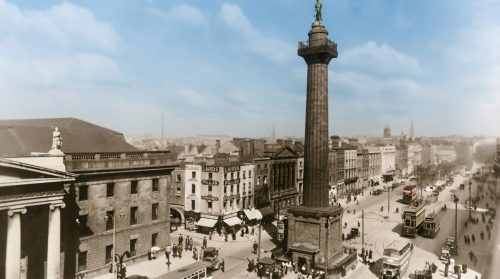
Nelson’s Pillar
Nelson’s Pillar was a prominent monument that stood on Sackville Street, now O’Connell Street, in Dublin, Ireland, from 1809 until 1966. Erected to commemorate Admiral Horatio Nelson after the Battle of Trafalgar, the 134-foot granite Doric column was topped by a 13-foot statue carved by Thomas Kirk. Visitors could climb 168 internal steps to enjoy panoramic views across the city. Long regarded by many as a symbol of British rule, the pillar was badly damaged by a republican bomb on 8 March 1966. The remaining structure was demolished by the Irish Army six days later, ending a Dublin landmark’s history.
View Image
Nelson’s Pillar
Nelson’s Pillar was a prominent monument that stood on Sackville Street, now O’Connell Street, in Dublin, Ireland, from 1809 until 1966. Erected to commemorate Admiral Horatio Nelson after the Battle of Trafalgar, the 134-foot granite Doric column was topped by a 13-foot statue carved by Thomas Kirk. Visitors could climb 168 internal steps to enjoy panoramic views across the city. Long regarded by many as a symbol of British rule, the pillar was badly damaged by a republican bomb on 8 March 1966. The remaining structure was demolished by the Irish Army six days later, ending a Dublin landmark’s history.
View Image
Nelson’s Pillar
Nelson’s Pillar was a prominent monument that stood on Sackville Street, now O’Connell Street, in Dublin, Ireland, from 1809 until 1966. Erected to commemorate Admiral Horatio Nelson after the Battle of Trafalgar, the 134-foot granite Doric column was topped by a 13-foot statue carved by Thomas Kirk. Visitors could climb 168 internal steps to enjoy panoramic views across the city. Long regarded by many as a symbol of British rule, the pillar was badly damaged by a republican bomb on 8 March 1966. The remaining structure was demolished by the Irish Army six days later, ending a Dublin landmark’s history.
View Image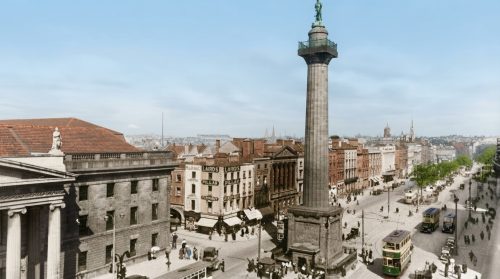
Nelson’s Pillar
Nelson’s Pillar was a prominent monument that stood on Sackville Street, now O’Connell Street, in Dublin, Ireland, from 1809 until 1966. Erected to commemorate Admiral Horatio Nelson after the Battle of Trafalgar, the 134-foot granite Doric column was topped by a 13-foot statue carved by Thomas Kirk. Visitors could climb 168 internal steps to enjoy panoramic views across the city. Long regarded by many as a symbol of British rule, the pillar was badly damaged by a republican bomb on 8 March 1966. The remaining structure was demolished by the Irish Army six days later, ending a Dublin landmark’s history.
View Image
Nelson’s Pillar
Nelson’s Pillar was a prominent monument that stood on Sackville Street, now O’Connell Street, in Dublin, Ireland, from 1809 until 1966. Erected to commemorate Admiral Horatio Nelson after the Battle of Trafalgar, the 134-foot granite Doric column was topped by a 13-foot statue carved by Thomas Kirk. Visitors could climb 168 internal steps to enjoy panoramic views across the city. Long regarded by many as a symbol of British rule, the pillar was badly damaged by a republican bomb on 8 March 1966. The remaining structure was demolished by the Irish Army six days later, ending a Dublin landmark’s history.
View Image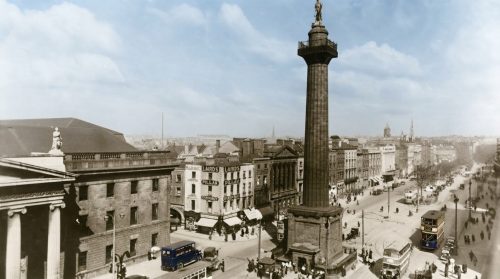
Nelson’s Pillar
Nelson’s Pillar was a prominent monument that stood on Sackville Street, now O’Connell Street, in Dublin, Ireland, from 1809 until 1966. Erected to commemorate Admiral Horatio Nelson after the Battle of Trafalgar, the 134-foot granite Doric column was topped by a 13-foot statue carved by Thomas Kirk. Visitors could climb 168 internal steps to enjoy panoramic views across the city. Long regarded by many as a symbol of British rule, the pillar was badly damaged by a republican bomb on 8 March 1966. The remaining structure was demolished by the Irish Army six days later, ending a Dublin landmark’s history.
View Image
Gate Distillery
Thomond Gate Distillery stood beside the River Shannon from 1809 until 1919, forming an important part of Limerick’s industrial and distilling heritage. During the nineteenth century, the complex operated three copper pot stills and produced traditional Irish whiskey under several owners, including Stein Brown & Co. and Archibald Walker’s Limerick Distillery. These reconstructed scenes imagine the surrounding streets, workers, carts, buildings and towering chimneys during the distillery’s active years. Although production eventually ceased, the Thomond Gate name has been revived through an independent Limerick whiskey brand dedicated to preserving the memory and traditions of the original enterprise for future generations.
View Image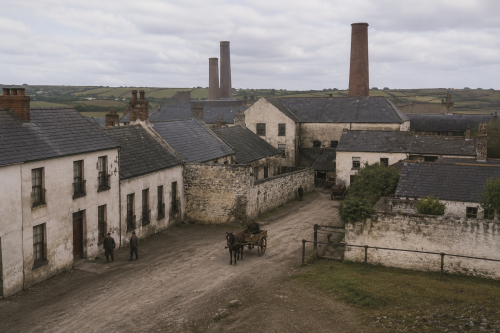
Gate Distillery
Thomond Gate Distillery stood beside the River Shannon from 1809 until 1919, forming an important part of Limerick’s industrial and distilling heritage. During the nineteenth century, the complex operated three copper pot stills and produced traditional Irish whiskey under several owners, including Stein Brown & Co. and Archibald Walker’s Limerick Distillery. These reconstructed scenes imagine the surrounding streets, workers, carts, buildings and towering chimneys during the distillery’s active years. Although production eventually ceased, the Thomond Gate name has been revived through an independent Limerick whiskey brand dedicated to preserving the memory and traditions of the original enterprise for future generations.
View Image
Nelson’s Pillar
Nelson’s Pillar was a prominent monument that stood on Sackville Street, now O’Connell Street, in Dublin, Ireland, from 1809 until 1966. Erected to commemorate Admiral Horatio Nelson after the Battle of Trafalgar, the 134-foot granite Doric column was topped by a 13-foot statue carved by Thomas Kirk. Visitors could climb 168 internal steps to enjoy panoramic views across the city. Long regarded by many as a symbol of British rule, the pillar was badly damaged by a republican bomb on 8 March 1966. The remaining structure was demolished by the Irish Army six days later, ending a Dublin landmark’s history.
View Image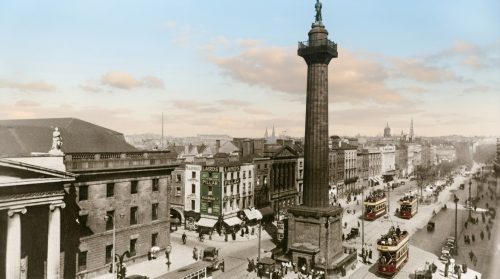
Nelson’s Pillar
Nelson’s Pillar was a prominent monument that stood on Sackville Street, now O’Connell Street, in Dublin, Ireland, from 1809 until 1966. Erected to commemorate Admiral Horatio Nelson after the Battle of Trafalgar, the 134-foot granite Doric column was topped by a 13-foot statue carved by Thomas Kirk. Visitors could climb 168 internal steps to enjoy panoramic views across the city. Long regarded by many as a symbol of British rule, the pillar was badly damaged by a republican bomb on 8 March 1966. The remaining structure was demolished by the Irish Army six days later, ending a Dublin landmark’s history.
View Image
Gate Distillery
Thomond Gate Distillery stood beside the River Shannon from 1809 until 1919, forming an important part of Limerick’s industrial and distilling heritage. During the nineteenth century, the complex operated three copper pot stills and produced traditional Irish whiskey under several owners, including Stein Brown & Co. and Archibald Walker’s Limerick Distillery. These reconstructed scenes imagine the surrounding streets, workers, carts, buildings and towering chimneys during the distillery’s active years. Although production eventually ceased, the Thomond Gate name has been revived through an independent Limerick whiskey brand dedicated to preserving the memory and traditions of the original enterprise for future generations.
View Image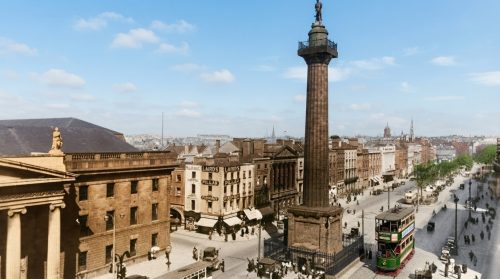
Nelson’s Pillar
Nelson’s Pillar was a prominent monument that stood on Sackville Street, now O’Connell Street, in Dublin, Ireland, from 1809 until 1966. Erected to commemorate Admiral Horatio Nelson after the Battle of Trafalgar, the 134-foot granite Doric column was topped by a 13-foot statue carved by Thomas Kirk. Visitors could climb 168 internal steps to enjoy panoramic views across the city. Long regarded by many as a symbol of British rule, the pillar was badly damaged by a republican bomb on 8 March 1966. The remaining structure was demolished by the Irish Army six days later, ending a Dublin landmark’s history.
View Image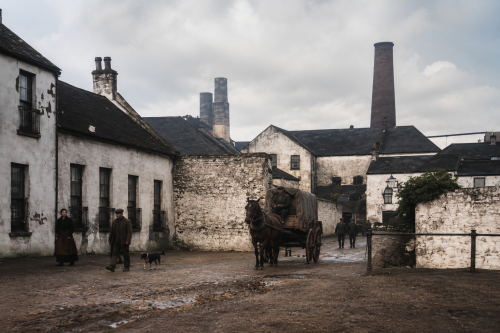
Gate Distillery
Thomond Gate Distillery stood beside the River Shannon from 1809 until 1919, forming an important part of Limerick’s industrial and distilling heritage. During the nineteenth century, the complex operated three copper pot stills and produced traditional Irish whiskey under several owners, including Stein Brown & Co. and Archibald Walker’s Limerick Distillery. These reconstructed scenes imagine the surrounding streets, workers, carts, buildings and towering chimneys during the distillery’s active years. Although production eventually ceased, the Thomond Gate name has been revived through an independent Limerick whiskey brand dedicated to preserving the memory and traditions of the original enterprise for future generations.
View Image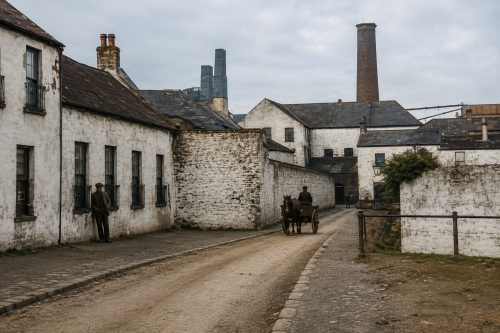
Gate Distillery
Thomond Gate Distillery stood beside the River Shannon from 1809 until 1919, forming an important part of Limerick’s industrial and distilling heritage. During the nineteenth century, the complex operated three copper pot stills and produced traditional Irish whiskey under several owners, including Stein Brown & Co. and Archibald Walker’s Limerick Distillery. These reconstructed scenes imagine the surrounding streets, workers, carts, buildings and towering chimneys during the distillery’s active years. Although production eventually ceased, the Thomond Gate name has been revived through an independent Limerick whiskey brand dedicated to preserving the memory and traditions of the original enterprise for future generations.
View Image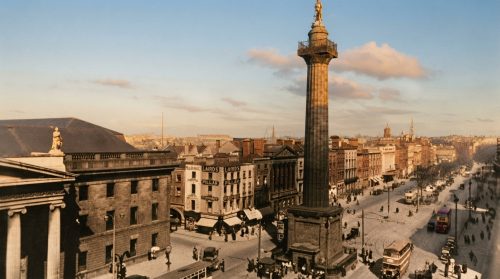
Nelson’s Pillar
Nelson’s Pillar was a prominent monument that stood on Sackville Street, now O’Connell Street, in Dublin, Ireland, from 1809 until 1966. Erected to commemorate Admiral Horatio Nelson after the Battle of Trafalgar, the 134-foot granite Doric column was topped by a 13-foot statue carved by Thomas Kirk. Visitors could climb 168 internal steps to enjoy panoramic views across the city. Long regarded by many as a symbol of British rule, the pillar was badly damaged by a republican bomb on 8 March 1966. The remaining structure was demolished by the Irish Army six days later, ending a Dublin landmark’s history.
View Image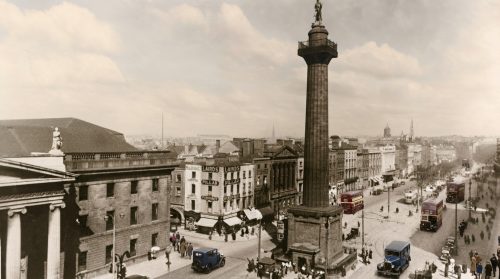
Nelson’s Pillar
Nelson’s Pillar was a prominent monument that stood on Sackville Street, now O’Connell Street, in Dublin, Ireland, from 1809 until 1966. Erected to commemorate Admiral Horatio Nelson after the Battle of Trafalgar, the 134-foot granite Doric column was topped by a 13-foot statue carved by Thomas Kirk. Visitors could climb 168 internal steps to enjoy panoramic views across the city. Long regarded by many as a symbol of British rule, the pillar was badly damaged by a republican bomb on 8 March 1966. The remaining structure was demolished by the Irish Army six days later, ending a Dublin landmark’s history.
View Image
Gate Distillery
Thomond Gate Distillery stood beside the River Shannon from 1809 until 1919, forming an important part of Limerick’s industrial and distilling heritage. During the nineteenth century, the complex operated three copper pot stills and produced traditional Irish whiskey under several owners, including Stein Brown & Co. and Archibald Walker’s Limerick Distillery. These reconstructed scenes imagine the surrounding streets, workers, carts, buildings and towering chimneys during the distillery’s active years. Although production eventually ceased, the Thomond Gate name has been revived through an independent Limerick whiskey brand dedicated to preserving the memory and traditions of the original enterprise for future generations.
View Image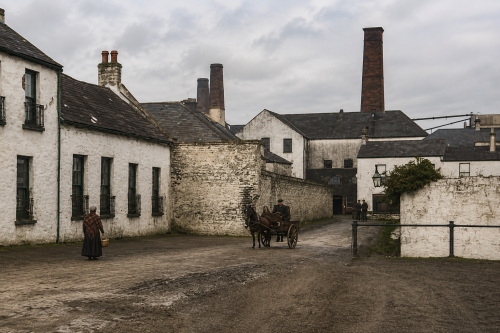
Gate Distillery
Thomond Gate Distillery stood beside the River Shannon from 1809 until 1919, forming an important part of Limerick’s industrial and distilling heritage. During the nineteenth century, the complex operated three copper pot stills and produced traditional Irish whiskey under several owners, including Stein Brown & Co. and Archibald Walker’s Limerick Distillery. These reconstructed scenes imagine the surrounding streets, workers, carts, buildings and towering chimneys during the distillery’s active years. Although production eventually ceased, the Thomond Gate name has been revived through an independent Limerick whiskey brand dedicated to preserving the memory and traditions of the original enterprise for future generations.
View Image
Nelson’s Pillar
Nelson’s Pillar was a prominent monument that stood on Sackville Street, now O’Connell Street, in Dublin, Ireland, from 1809 until 1966. Erected to commemorate Admiral Horatio Nelson after the Battle of Trafalgar, the 134-foot granite Doric column was topped by a 13-foot statue carved by Thomas Kirk. Visitors could climb 168 internal steps to enjoy panoramic views across the city. Long regarded by many as a symbol of British rule, the pillar was badly damaged by a republican bomb on 8 March 1966. The remaining structure was demolished by the Irish Army six days later, ending a Dublin landmark’s history.
View Image
Gate Distillery
Thomond Gate Distillery stood beside the River Shannon from 1809 until 1919, forming an important part of Limerick’s industrial and distilling heritage. During the nineteenth century, the complex operated three copper pot stills and produced traditional Irish whiskey under several owners, including Stein Brown & Co. and Archibald Walker’s Limerick Distillery. These reconstructed scenes imagine the surrounding streets, workers, carts, buildings and towering chimneys during the distillery’s active years. Although production eventually ceased, the Thomond Gate name has been revived through an independent Limerick whiskey brand dedicated to preserving the memory and traditions of the original enterprise for future generations.
View Image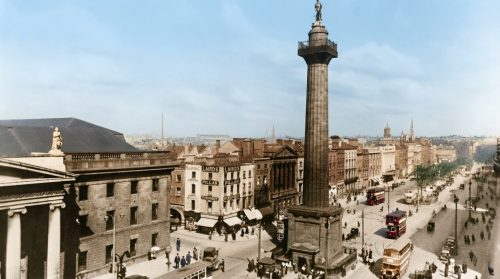
Nelson’s Pillar
Nelson’s Pillar was a prominent monument that stood on Sackville Street, now O’Connell Street, in Dublin, Ireland, from 1809 until 1966. Erected to commemorate Admiral Horatio Nelson after the Battle of Trafalgar, the 134-foot granite Doric column was topped by a 13-foot statue carved by Thomas Kirk. Visitors could climb 168 internal steps to enjoy panoramic views across the city. Long regarded by many as a symbol of British rule, the pillar was badly damaged by a republican bomb on 8 March 1966. The remaining structure was demolished by the Irish Army six days later, ending a Dublin landmark’s history.
View Image
Gate Distillery
Thomond Gate Distillery stood beside the River Shannon from 1809 until 1919, forming an important part of Limerick’s industrial and distilling heritage. During the nineteenth century, the complex operated three copper pot stills and produced traditional Irish whiskey under several owners, including Stein Brown & Co. and Archibald Walker’s Limerick Distillery. These reconstructed scenes imagine the surrounding streets, workers, carts, buildings and towering chimneys during the distillery’s active years. Although production eventually ceased, the Thomond Gate name has been revived through an independent Limerick whiskey brand dedicated to preserving the memory and traditions of the original enterprise for future generations.
View ImageFebruary 0 items
No published items are currently assigned to this period.
March 0 items
No published items are currently assigned to this period.
April 0 items
No published items are currently assigned to this period.
May 0 items
No published items are currently assigned to this period.
June 0 items
No published items are currently assigned to this period.
July 0 items
No published items are currently assigned to this period.
August 0 items
No published items are currently assigned to this period.
September 0 items
No published items are currently assigned to this period.
October 0 items
No published items are currently assigned to this period.
November 0 items
No published items are currently assigned to this period.
December 0 items
No published items are currently assigned to this period.