Clerical Patronage(c.1410s)
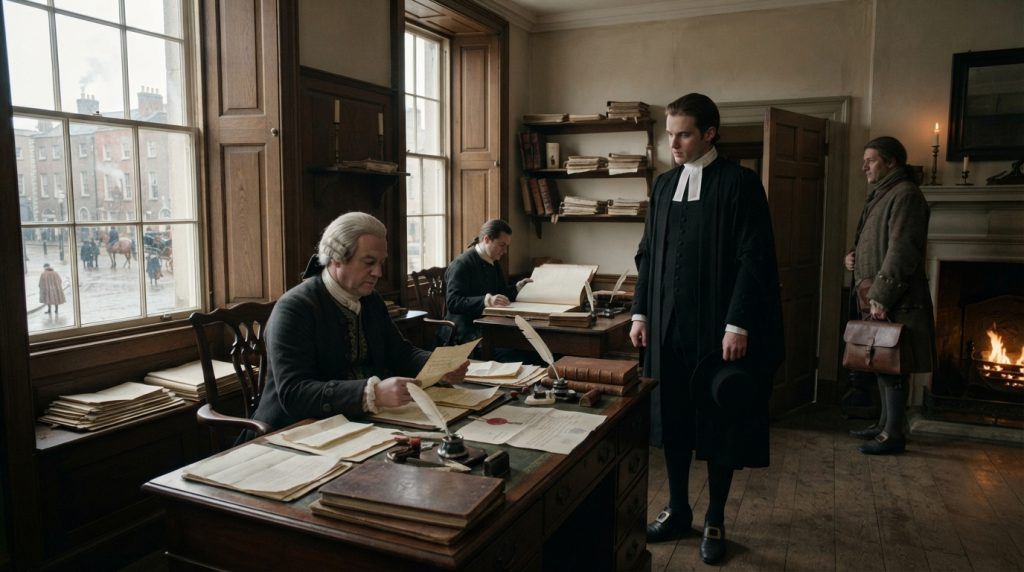
On Wednesday, 17 January 1753, a letter written at Dublin Castle recorded an apparently modest but revealing act of ecclesiastical administration. P. Donnellan wrote to Lord George Sackville confirming that he had received the letter authorising the presentation of Robert Baillie to the living recorded in the archive as “Fithmorre.” The original catalogue preserves that spelling, and its precise modern place-name should not be guessed without further documentary evidence. The letter nevertheless establishes something important with certainty: on this exact day, government machinery was being used to advance the career of a young Church of Ireland clergyman.
A church “living” was a benefice from which a clergyman derived the right to hold an ecclesiastical office and receive the income associated with it. Appointment could involve a patron formally presenting a candidate, after which ecclesiastical procedures such as institution and induction followed. Consequently, Donnellan’s reference to the presentation of Baillie was not simply a private recommendation. It belonged to the legal and administrative structure of the established Church. The surviving correspondence is particularly revealing because it shows Lord George Sackville, chief secretary in Ireland, involved in a process through which clerical careers could intersect with government influence and political patronage.
The Robert Baillie concerned appears to have been the Irish Anglican clergyman later known as Robert Baillie, Archdeacon of Cashel. Later clerical records identify him as born in County Kilkenny in 1724 and educated at Trinity College Dublin. He would eventually hold significant office within the Church of Ireland, becoming Archdeacon of Cashel in 1790 and remaining there until his death in 1806. If this identification is correct, the short Dublin Castle letter of January 1753 captures him near the beginning of a clerical career that would extend for more than half a century.
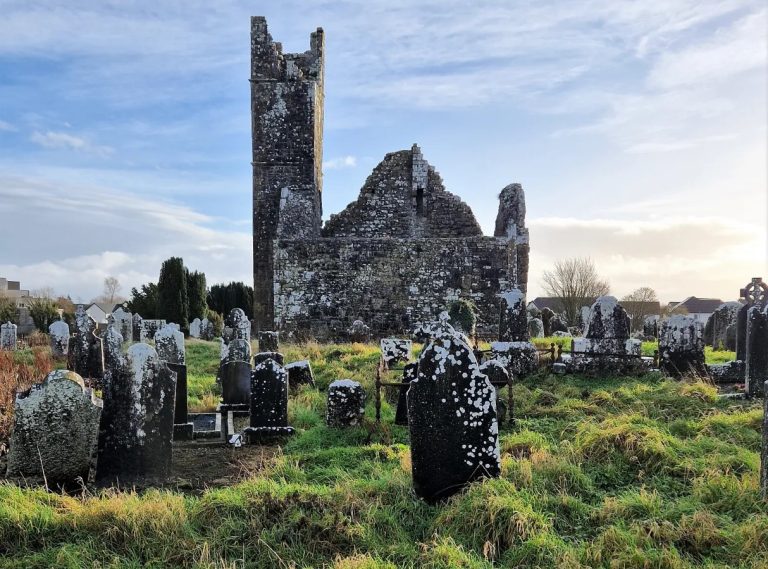
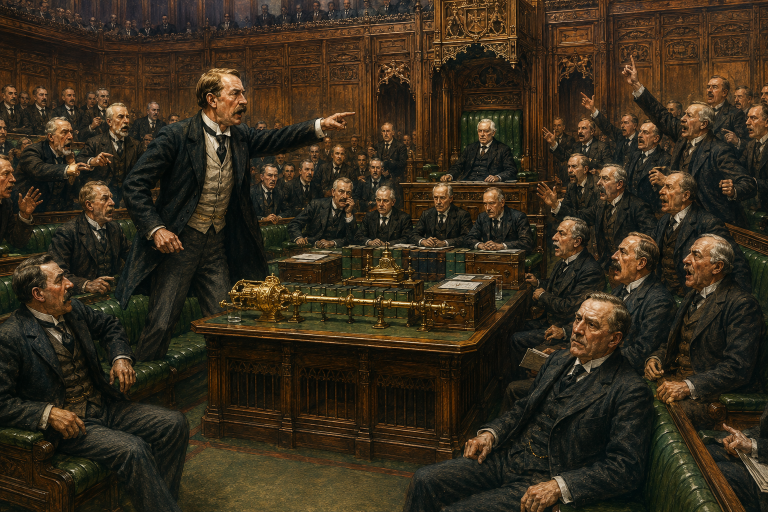
The episode also reveals the privileged constitutional position of the Church of Ireland. Although most inhabitants of Ireland were Roman Catholic, the established Anglican church possessed official status, property, tithes and close institutional links with government. Its bishops sat in the Irish House of Lords, while senior ecclesiastical appointments could be matters of political consequence. Parish livings were smaller prizes, yet they too participated in networks of patronage. A benefice could provide income, residence and advancement for a clergyman, while patrons could reward families, allies and dependants. The presentation recorded on 17 January therefore belonged to a much larger system joining religion, property, government and social influence.
The timing makes the document especially interesting. Only three days earlier, on 14 January 1753, George Berkeley, Bishop of Cloyne and one of Ireland’s most internationally important philosophers, had died at Oxford. His death created a major vacancy within the Irish episcopate. Later that month James Stopford would be chosen to succeed him, eventually receiving his patent as Bishop of Cloyne and being consecrated in Dublin in March. Baillie’s modest appointment was unrelated to Berkeley’s death as far as surviving evidence shows, but the proximity of the two events reminds us that January 1753 was already producing movement within Ireland’s established ecclesiastical hierarchy.
More evidence of clerical patronage appeared immediately afterwards. On 18 January, Lord Tyrone wrote from Dublin to Lord George Sackville asking that the Reverend William Law be made vicar of Carrigans. Here again a clergyman’s advancement was being raised through political correspondence. The sequence is striking: Baillie’s presentation was acknowledged on the seventeenth, and another request for a church appointment reached Sackville the next day. Such letters demonstrate that ecclesiastical preferment was part of the routine business passing through elite political networks. These were individual careers, but the documents reveal a system in which church appointments and political connections repeatedly overlapped.
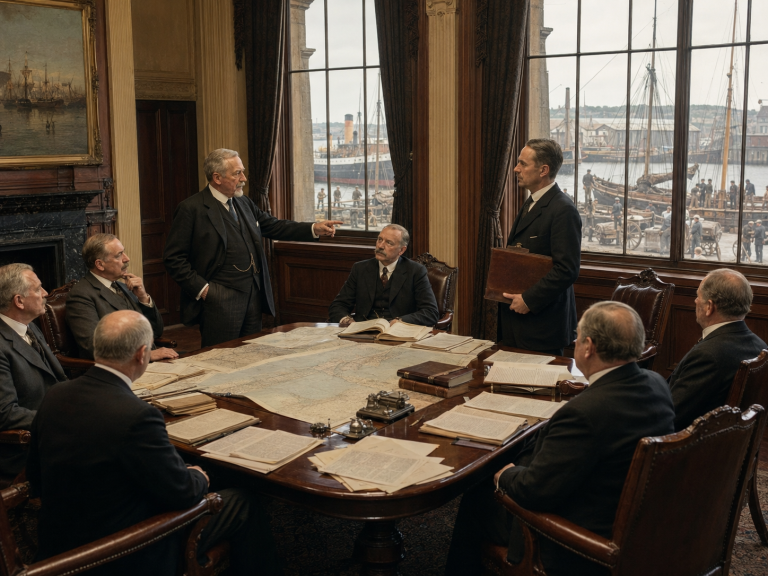
Dublin Castle itself was the administrative centre through which much of this business flowed. Lionel Sackville, Duke of Dorset, was serving his second term as lord lieutenant, while his son Lord George Sackville served as chief secretary. Officials dealt daily with military affairs, clerical appointments, public works, petitions, financial questions and correspondence with Britain. Surviving papers from January demonstrate the astonishing variety of matters arriving within days of one another: courts martial, a proposed Cork infirmary, rebuilding at Dublin Castle, army accounts and church patronage. Baillie’s appointment therefore occupied one small place within a continuous stream of paperwork by which Ireland was governed.
The printed world provides another witness to the date. The Dublin Gazette, Number 250, issued on 16 January and continuing until 20 January, was the official government newspaper circulating on the seventeenth. Faulkner’s Dublin Journal also produced an issue spanning 15–17 January. Printed newspapers carried information to the public while letters like Donnellan’s remained within administrative channels. The difference is valuable for historians. Newspapers reveal what contemporaries could openly read; government correspondence often exposes decisions being made privately. Together they allow the political and social workings of eighteenth-century Ireland to be reconstructed more fully than either type of source could achieve alone.
Baillie’s subsequent career suggests that this early preferment was only one stage in a long progression. The nineteenth-century compilation Fasti Ecclesiae Hibernicae, drawing upon Irish cathedral and diocesan records, records Robert Baillie, MA, receiving another ecclesiastical appointment at Cashel in 1765 and becoming Archdeacon of Cashel in 1790. He therefore lived through decades of profound change: the later relaxation of the Penal Laws, the rise of the Volunteers, the 1798 Rebellion and the Act of Union. The young clergyman whose name appeared in a Dublin Castle letter in 1753 ultimately belonged to the established church through one of the most transformative periods in modern Irish history.
The importance of 17 January 1753 therefore lies in an ordinary administrative sentence. No battle was fought and no celebrated proclamation issued. Instead, a government official confirmed that authority had arrived for Robert Baillie to receive a church living. The following day another clerical recommendation entered the same political network. Such records expose the everyday structures beneath eighteenth-century Ireland: patronage, religion, office, family connection and government authority. For a day-by-day history, this is precisely why apparently quiet dates deserve preservation. They show how institutions actually functioned between the dramatic events, and how individual careers were quietly shaped by letters passing across desks in Dublin Castle.
Primary Sources
- P. Donnellan — Letter to Lord George Sackville — Dublin Castle, 17 January 1753 — Derbyshire Record Office, D3155/C/H/1416.
The principal exact-date source. Donnellan acknowledges receipt of the letter authorising the presentation of Robert Baillie to the living recorded as “Fithmorre.”
Archive: Derbyshire Record Office, Wilmot-Horton papers. - Richard James and John Butler — The Dublin Gazette, No. 250 — 16–20 January 1753.
The official Irish government newspaper in circulation throughout 17 January.
Digital source: Virtual Treasury of Ireland / Houses of the Oireachtas Library.
https://virtualtreasury.ie/item/OIR-DC-5175-6 - George Faulkner — The Dublin Journal — 15–17 January 1753.
Contemporary Dublin newspaper whose issue period ends on the exact target date, providing news, advertisements and evidence of the capital’s information culture.
Holdings: National Library of Ireland / Irish Newspaper Archive. - Lord Tyrone — Letter to Lord George Sackville — Dublin, 18 January 1753 — Derbyshire Record Office, D3155/C/H/1417.
Written the following day asking that the Reverend William Law be made vicar of Carrigans. It provides exceptionally close comparative evidence of ecclesiastical patronage. - Lord George Sackville / Robert Wilmot — Draft administrative letter — 18 January 1753 — D3155/C/H/1418.
Contemporary government correspondence from the day immediately following Baillie’s presentation, demonstrating the continuing flow of official business through the same administrative network. - Thomas Waite — Letter to Lord George Sackville concerning the Cork infirmary and military administration — 16 January 1753.
Written one day before the target date and showing the range of business handled through the chief secretary’s office. - Irish military administration — Warrant for holding courts martial at Cork — January 1753.
Contemporary government paper accompanying the correspondence of the same week and illustrating the administrative environment surrounding Baillie’s appointment. - Thomas Waite — Discharge relating to Amos Cornish — 16 January 1753.
A further Dublin Castle document from the day preceding the target date, showing personnel business passing through the same office. - George, Lord Forbes — Letter to Lord George Sackville — 19 January 1753 — Derbyshire Record Office, D3155/C/H/1420.
Encloses a memorial asking for a mark of royal favour, illustrating the wider culture of petition and patronage surrounding government appointments. - George, Lord Forbes — Memorial requesting royal favour — 19 January 1753 — D3155/C/H/1421.
The enclosed memorial accompanying the previous letter and a useful comparison with requests for clerical preferment. - Richard James and John Butler — The Dublin Gazette, No. 249 — 13–16 January 1753.
The immediately preceding official newspaper issue, providing the public context entering the target date.
https://www.virtualtreasury.ie/item/DGZ-1753-249 - Richard James and John Butler — The Dublin Gazette, No. 251 — 20–23 January 1753.
The next official issue following Number 250, continuing the documentary sequence for the same week.
Digital source: Virtual Treasury of Ireland. - James Simon — An Account of the Barometer, and the State of the Weather, at Dublin, from the 7th of March 1752 to the 28th of February 1753.
Contemporary observations encompassing 17 January 1753, providing direct evidence of the physical environment in which the day’s events occurred.
Royal Society, Philosophical Transactions. - Trinity College Dublin — Matriculation and degree records concerning Robert Baillie — eighteenth century.
Contemporary university records documenting the education of the clergyman later identified as Robert Baillie, Archdeacon of Cashel.
Repository: Trinity College Dublin Archives. - Church of Ireland diocesan records — Presentation, institution and benefice records concerning Robert Baillie — eighteenth century.
Original ecclesiastical records provide the institutional counterpart to the Dublin Castle correspondence and are essential for tracing Baillie’s subsequent clerical career. - Dean and Chapter of Cashel — Chapter Book — eighteenth century.
Contemporary cathedral records documenting appointments within the Cashel establishment in which Robert Baillie later served. - Church of Ireland — Record of Robert Baillie’s collation at Cashel — 8 May 1765.
Contemporary ecclesiastical evidence for a later stage of the career first glimpsed in the January 1753 correspondence. Later preserved through the Cashel chapter records. - Church of Ireland — Record of Robert Baillie’s appointment as Archdeacon of Cashel — 1790.
Primary institutional evidence documenting the culmination of his clerical advancement. - Ireland, Parliament, House of Commons — Journals of the House of Commons of the Kingdom of Ireland — 1753.
Official parliamentary record for the year, documenting the political and constitutional environment in which the established Church operated. - Ireland, Parliament, House of Lords — Journals of the House of Lords of Ireland — proceedings for 1753.
Official upper-house record especially relevant because Church of Ireland bishops sat within the Irish House of Lords and formed part of the governing establishment.