Bardan, resident druid of Limerick Archives

Summon Bardan

Summon Bardan, our resident druid, and ask him any question about Limerick.
His ancient wisdom will answer you instantly.

6921d50e-b65d-40e3-bc3a-664191003972

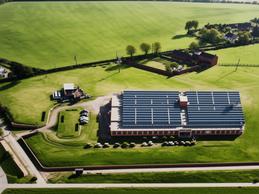
Ferenka was a steel‑cord factory established at Annacotty on the outskirts of Limerick city in the late 1960s and opened for production in 1970. The plant was built to manufacture tyre reinforcing wire and related products for domestic and export markets and formed part of a wider programme of industrial investment in County Limerick. The company employed many local workers and drew staff from Limerick and surrounding towns. Its physical complex occupied a riverside site beside the Mulkear and a new road access linked the works to the regional transport network and to nearby housing estates and local suppliers regularly.

At its height Ferenka employed around fourteen hundred people, offering skilled and semi skilled jobs that changed the local labour market. The workforce included machinists, metallurgists, maintenance teams and clerical staff drawn from Annacotty, Limerick city and nearby villages. Industrial relations were often difficult, with disputes over pay, safety and management decisions leading to strikes and long negotiations involving trade union representatives. These conflicts affected production and investor confidence. By the late 1970s financial losses, global market pressures and continuing labour unrest contributed to the company reducing output and eventually deciding to close the Annacotty works, leaving many unemployed locally.

In October 1975 the company and city became the focus of national attention when Dutch managing director Tiede Herrema was abducted by two men seeking political leverage. The kidnapping prompted a Garda response and a prolonged siege at a location that dominated national broadcasts for weeks. Community organisations, clergy and neighbours tracked developments and supported the Herrema family through anxious days. His release after negotiations ended the immediate crisis but the event remained seared into local memory. Former workers and residents still recount the disruption and the way the incident altered attitudes towards industry, security and management locally ever since.

After closure in the late 1970s the Annacotty site stood empty for several years while local agencies sought solutions for economic recovery. Parts of the works were cleared and the land was later redeveloped as an industrial estate, accommodating smaller firms and light manufacturing that generated employment. Original buildings were repurposed while others were demolished to make way for new units. The community remembered the lost jobs and the social cost through oral histories, commemorative events and local coverage that recorded families affected by unemployment, migration and changing patterns of work in County Limerick during the 1980s and 1990s publicly.

Ferenka remains significant in Limerick history because of its scale and the traumatic events linked to the Herrema kidnapping, which became a national story in 1975 and influenced policing and public debate. Researchers can trace factory records, local newspapers, Dail debates and oral testimony to reconstruct the company story and its social impact. The site today has new businesses but memories persist in family stories and trade union archives. Further study should compare company accounts, employment records and contemporary press to avoid conclusions and to explain how global markets, industrial relations and local policy combined to shape the plant’s life.

Primary Sources

  1. Limerick Leader, contemporary reporting on Ferenka factory opening, recruitment drives and closure, 1972–1977 (local newspaper editions, relevant issues October 1972; 1977).
  2. Irish Press and Irish Independent contemporaneous articles reporting the kidnapping of Tiede Herrema and subsequent siege, October–November 1975 (national newspaper editions).
  3. RTÉ Television news footage and archive report ‘Dutchman Tiede Herrema Kidnapped by IRA’, broadcast October 1975, RTÉ Archives collection, item catalogue: RTÉ Archives 1975 Herrema coverage. Source Link
  4. Garda Síochána operational reports and contemporaneous internal correspondence concerning the Herrema abduction and siege, October–November 1975, holdings referenced in national security collections (contemporary Garda records).
  5. National Archives State papers and files relating to the Herrema kidnapping and government correspondence, 1975 (State papers and departmental files held at the National Archives).
  6. Tiede Herrema personal papers and deposited documents relating to his time in Limerick and the 1975 abduction, donated to the University of Limerick or national repositories, including diaries and correspondence, 1973–1976.
  7. Ferenka (Ireland) Ltd company records and correspondence, employment registers and production returns, corporate archives or Companies Registration Office files, 1970–1977 (original corporate documents).
  8. Annacotty parish and local council records including planning permissions, site maps and minutes relating to the construction and later redevelopment of the Ferenka site, Limerick local authority archives, 1970–1990.
  9. Contemporary oral history interviews recorded with former Ferenka employees and local residents collected by local history projects and stored in the University of Limerick Archives and Limerick Museums oral history collections, recorded 1980s–2000s.
  10. Ordnance Survey historical six‑inch and 25 inch maps showing the Annacotty site and industrial development before and after Ferenka, surveyed and published editions c.1960s–1980s (OSI map series held in national map collections).
Associated Archives

Limerick Generations through timeLimerick Generations
Business and Commerce in LimerickBusiness and Commerce
Buildings and Streets in LimerickBuildings and Streets

Related Articles

LimerickCommerceBusinessCompanyOctoberRecords

Books Supporting the Archive

Profits from every book help fund the continuing preservation, restoration and free public sharing of Limerick’s history.

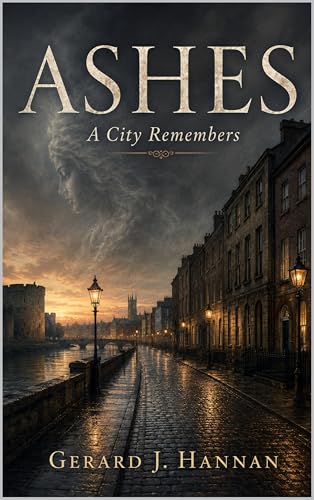
Cover of Ashes

Ashes

The Ashes Trilogy, Book One

Ashes begins the story of a group of children growing up in the streets and lanes of Limerick, where poverty and hardship are balanced by humour, imagination and fierce friendship. Their city is more than a setting: it watches, remembers and gives voice to lives often absent from official history. As the children explore their neighbourhood, they encounter family pressures, faith, hunger, danger and the first signs of a changing world. Through their adventures and loyalties, the novel captures the resilience of ordinary people and introduces the characters whose lives will unfold across the three volumes of The Ashes Trilogy.

All Books Available As Instant E-Books, Paperbacks & Hardbacks Worldwide.

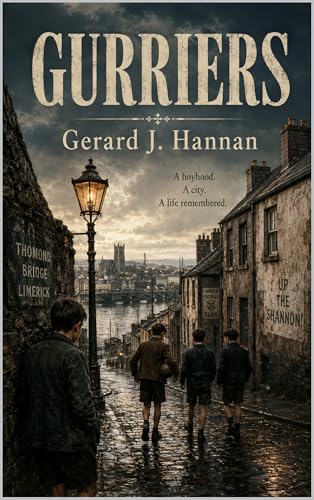
Cover of Gurriers

Gurriers

The Ashes Trilogy, Book Two

Gurriers continues the lives of the Limerick children introduced in Ashes as childhood freedom begins to give way to work, responsibility and harsher choices. Their friendships remain strong, but poverty, family expectations, faith and the pressures of growing older test loyalties once taken for granted. The streets and lanes still offer humour, adventure and belonging, yet the wider world increasingly intrudes upon their lives. Through vivid dialogue, memorable characters and the watchful voice of Limerick itself, the novel explores resilience, identity and change while showing how even the closest companions can be drawn towards futures by circumstances beyond their control.

All Books Available As Instant E-Books, Paperbacks & Hardbacks Worldwide.

Cover of Scattered

Scattered

The Ashes Trilogy, Book Three

Scattered concludes The Ashes Trilogy as the friends who once shared Limerick’s streets and lanes face adulthood, work, hunger, faith, family duty and emigration. Time has altered their ambitions, tested their loyalties and carried some beyond the city that formed them. Yet memory continues to bind Louie, Seamus, Joe, Sean, Peter, Tony, Bardy, Maura, Eileen, Nora, Lingo and the mysterious Gleamer. Narrated through the enduring presence of Limerick itself, the novel explores separation, sacrifice and survival while recognising the humour and affection that remain. Together, their scattered lives complete a moving portrait of friendship, community and change across changing generations.

All Books Available As Instant E-Books, Paperbacks & Hardbacks Worldwide.

Cover of Threshold

Threshold

The Troubles Trilogy, Book One

Threshold opens in Belfast in 1968, where the Catholic Devlins and Protestant Morrows confront a city divided by religion, memory and fear. Civil rights marches, police violence, riots and internment transform ordinary streets into dangerous frontiers while political conflict enters homes, workplaces and schools. At the centre are Aileen Devlin and Thomas Morrow, whose relationship challenges the boundaries their families regard as essential to survival. As loyalty hardens into suspicion, both must decide whether inherited allegiance excuses injustice. Through family arguments, upheaval and private courage, the novel explores love, conscience, division and survival during the opening years of the Troubles.

All Books Available As Instant E-Books, Paperbacks & Hardbacks Worldwide.

Cover of Hunger

Hunger

The Troubles Trilogy, Book Two

Hunger is Book Two of The Troubles Trilogy, set in Belfast during the 1980s. Aileen Devlin and Thomas Morrow have built a fragile life across the city’s sectarian divide, but the conflict threatens the home they created for their daughter, Claire. As hunger strikes, the Anglo Irish Agreement and violence reshape Northern Ireland, republican Declan and loyalist Billy exploit fear, grief and vulnerable young men. Against them stand Aileen, Kathleen and Elsie, whose quiet strength keeps their families human. This is a story of love, survival and the courage to place people before causes in a divided society under pressure.

All Books Available As Instant E-Books, Paperbacks & Hardbacks Worldwide.

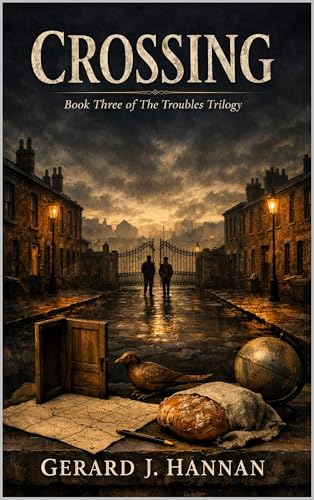
Cover of Crossing

Crossing

The Troubles Trilogy, Book Three

Crossing concludes The Troubles Trilogy during the decade from 1990 to 2000, as Belfast moves from violence towards negotiation, ceasefires and uncertain peace. The Devlin and Morrow families face political change alongside grief, ageing, divided loyalties and the consequences of choices made across three decades. Relationships once threatened by religious boundaries are tested by memory, mistrust and the fear that compromise may betray the dead. As the peace process gathers momentum, ordinary people must decide whether reconciliation is possible. The trilogy closes with a story of endurance, forgiveness, loss and hope beyond inherited division, proving that peace begins with courage.

All Books Available As Instant E-Books, Paperbacks & Hardbacks Worldwide.

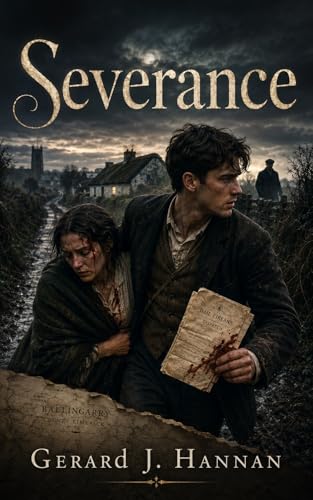
Cover of Severance

Severance

Historical Novel

Severance is a historical novel set in Ballingarry, County Limerick, during Ireland’s struggle for independence. A torn and bloodied dispatch passes through fields, kitchens, lofts and hidden routes, placing everyone who handles it in danger. Michael Enright carries the burden of trust, while Mary, Molly and their neighbours struggle to preserve the message and protect one another. Against them, Captain Edward Harcourt studies every delay, wound and fragment for clues. As loyalty, fear and betrayal tighten around the hidden network, ordinary people must decide what they are willing to risk when history enters their homes and silence itself becomes dangerous.

All Books Available As Instant E-Books, Paperbacks & Hardbacks Worldwide.

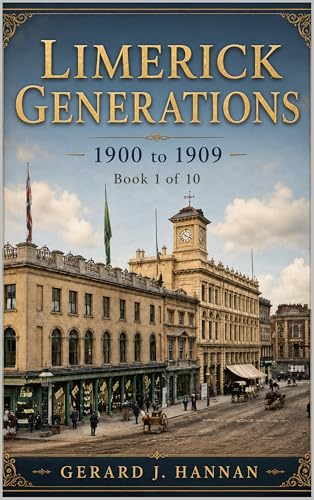
Cover of Limerick Generations: 1900 to 1909

Limerick Generations

1900 to 1909

Limerick Decalogy, Book One

Limerick Generations: 1900 to 1909 opens the decade by documenting a city and county entering the twentieth century amid political debate, commercial activity, poverty, faith and technological change. Month by month, the book connects major Irish developments with local events, institutions, streets and communities. Public meetings, labour, transport, education, sport, business and everyday life reveal how national questions were experienced in Limerick. Historical reports and carefully reconstructed narratives bring forgotten moments and ordinary people into focus. As Book One of Limerick Decalogy, it establishes the foundation for a ten volume journey through one hundred years of local history and memory.

All Books Available As Instant E-Books, Paperbacks & Hardbacks Worldwide.

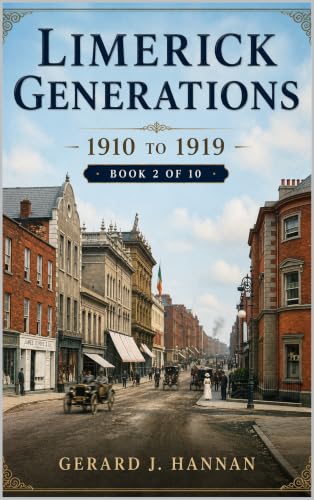
Cover of Limerick Generations: 1910 to 1919

Limerick Generations

1910 to 1919

Limerick Decalogy, Book Two

Limerick Generations: 1910 to 1919 traces a decade of political transformation, labour conflict, war, revolution and social change across Limerick city and county. Home Rule, unionist resistance, trade union organisation and the First World War entered streets, farms, schools, workplaces and family life. The Easter Rising, conscription crisis, influenza pandemic and general election altered public loyalties and expectations. The decade culminated in the Limerick Soviet of 1919, when workers challenged military restrictions through organised collective action. As Book Two of Limerick Decalogy, the volume preserves local experiences of hardship, courage, grief, endurance and change during years of intense historic upheaval.

All Books Available As Instant E-Books, Paperbacks & Hardbacks Worldwide.