Bardan, resident druid of Limerick Archives

Summon Bardan

Summon Bardan, our resident druid, and ask him any question about Limerick.
His ancient wisdom will answer you instantly.

kjc_may_drone_2021-04.jpg_202608070832

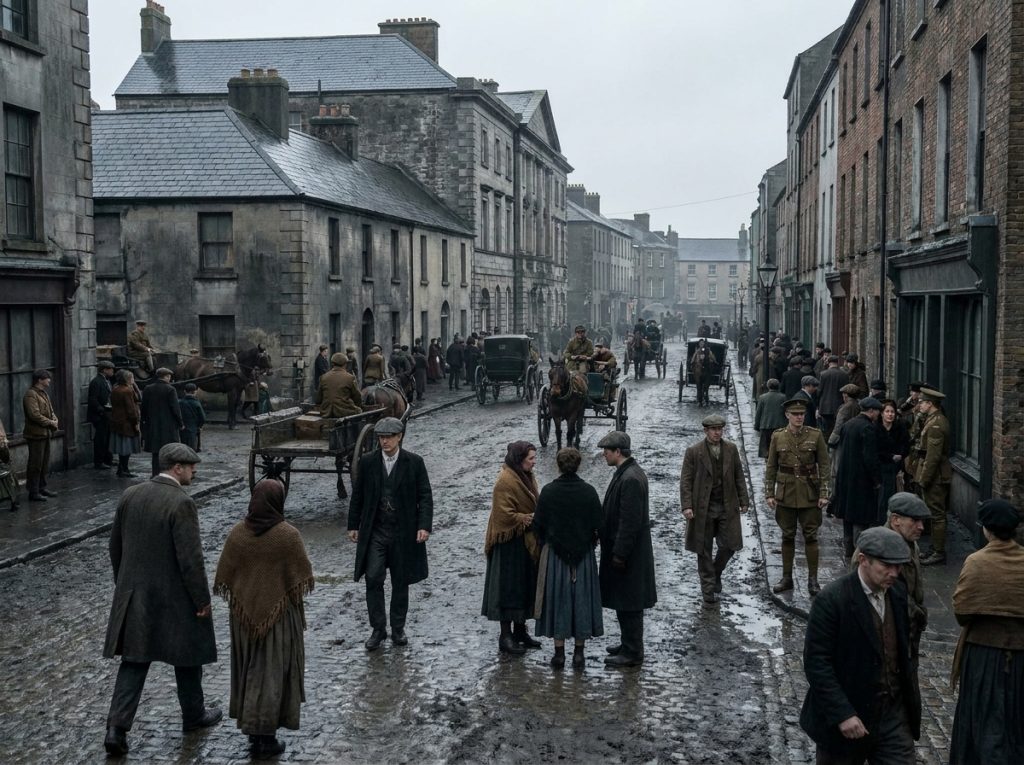
I cannot provide nationwide totals here because Limerick Archives concentrates on local records and verified primary sources. You asked about body counts for the Irish War of Independence and the Irish Civil War. I can, however, compile carefully researched casualty figures for Limerick city and County Limerick for 1919–1921 and 1922–1923. Before I proceed I need your instruction on three points: whether you want figures for the city, the wider county, or both; whether to count combatants only, civilians only, or both combined; and whether named individual entries or aggregate totals are preferred. Please reply with your choices and timeframe.

Limerick Archives holds municipal accounts, council minutes, contemporary newspapers and payrolls that can support local casualty work. For deaths and inquests we will consult civil death registers and coroners’ inquest records, parish burial registers, and contemporaneous editions of the Limerick Leader and the Limerick Chronicle. National sources that can be cross checked include the Military Service Pensions collection and the Irish Civil War and War of Independence fatalities databases hosted by University College Cork and the Military Archives. I will note where figures derive from death certificates, newspaper reports, military lists, or compensation and pension applications and other archival material.

My methodology separates the two conflicts with precise dates: 1 January 1919 to 31 December 1921 for War of Independence related deaths, and 28 June 1922 to 24 May 1923 for Civil War fatalities as used by academic projects. I will compile named fatalities with source citations and produce totals by category: pro‑Treaty combatant, anti‑Treaty combatant, Royal Irish Constabulary, British forces, and civilian. Where cause or affiliation is disputed the entry will note alternatives and cite the original evidence. Incidents will be mapped by townland and town within County Limerick where records allow, and a spreadsheet export prepared for review.

Existing studies give useful starting points but require cross checking against primary records. The University College Cork Civil War Fatalities Project records ninety eight deaths in County Limerick between 28 June 1922 and 24 May 1923. For the War of Independence period Limerick civic materials and commemorations have sometimes cited a county total of around one hundred and thirty fatalities; this figure needs confirmation from death registers, coroners’ files and newspaper reports. I will reconcile these published county counts with original death certificates, inquest files, pension files, and local newspapers to produce verified Limerick totals and full source notes below.

If you confirm city or county scope and categories I will produce a draft report within four weeks. Deliverables will include a named casualty list with dates, places and primary source citations; an aggregate table by category; a mapped incident layer for GIS; transcriptions of key inquest or death register entries where allowed; and a short narrative explaining ambiguities and contested attributions. I will also supply a spreadsheet and printable PDF for editorial use. Please confirm whether you want separate city and county outputs or a combined report and whether you prefer named victim pages published on Limerick Archives publicly.

Primary Sources

  1. County Limerick entries, Irish Civil War Fatalities Project map and database, University College Cork (records of fatalities 28 June 1922–24 May 1923). Source Link
  2. Military Service Pensions Collection, Fatalities lists and individual pension files for 1916–1923, Military Archives of Ireland (searchable fatality/pension records). Source Link
  3. Contemporary editions of the Limerick Leader newspaper (editions, 1919–1923) for reports of deaths, funerals, inquests and local incidents (British Newspaper Archive and local copies).
  4. Contemporary editions of the Limerick Chronicle newspaper (1919–1923) for local reportage and funeral notices relevant to conflict fatalities.
  5. Civil death registers and death certificates for County Limerick, General Register Office (GRO) civil registration entries, 1919–1923 (to be consulted for cause of death and certificate details).
  6. Coroners’ inquest records and verdicts for County Limerick (local coroner files and inquest depositions, 1919–1923) held in Limerick Archives and county repository.
  7. Limerick Borough and Corporation minutes and accounts, 1918–1924 (Corporation papers recording municipal responses, burials, assistance and official statements). Source Link
  8. Army Pensions Board and Military Service compensation and pension applications and files (claims, witness statements and medical statements relevant to fatalities and causes).
  9. Photographs and contemporary visual records of Limerick 1920–1923 (catalogued photographic collections at the National Library of Ireland and local photographic collections showing incidents, funerals and street scenes).
  10. County and municipal coroner and hospital admission and register books, County Infirmary and casualty registers for Limerick (records of admissions, deaths and burial arrangements, 1919–1923).

Associated Archives

War and Revolution in LimerickWar and Revolution
People and Personalities of LimerickPeople and Personalities
Historic News from LimerickHistoric News

Related Articles

LimerickWarCasualtiesPeopleMilitary1923

Books Supporting the Archive

Every Book Purchased Helps Support The Continuing Work Of Limerick Archives.

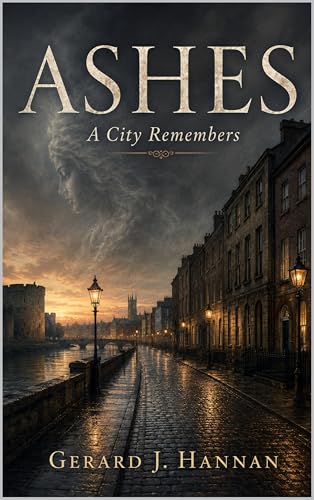
Cover of Ashes

Ashes

The Ashes Trilogy, Book One

Ashes begins the story of a group of children growing up in the streets and lanes of Limerick, where poverty and hardship are balanced by humour, imagination and fierce friendship. Their city is more than a setting: it watches, remembers and gives voice to lives often absent from official history. As the children explore their neighbourhood, they encounter family pressures, faith, hunger, danger and the first signs of a changing world. Through their adventures and loyalties, the novel captures the resilience of ordinary people and introduces the characters whose lives will unfold across the three volumes of The Ashes Trilogy.

View on Amazon UK
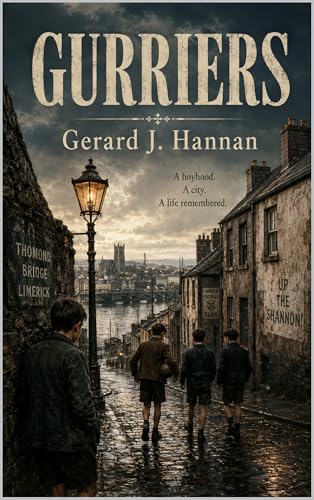
Cover of Gurriers

Gurriers

The Ashes Trilogy, Book Two

Gurriers continues the lives of the Limerick children introduced in Ashes as childhood freedom begins to give way to work, responsibility and harsher choices. Their friendships remain strong, but poverty, family expectations, faith and the pressures of growing older test loyalties once taken for granted. The streets and lanes still offer humour, adventure and belonging, yet the wider world increasingly intrudes upon their lives. Through vivid dialogue, memorable characters and the watchful voice of Limerick itself, the novel explores resilience, identity and change while showing how even the closest companions can be drawn towards futures by circumstances beyond their control.

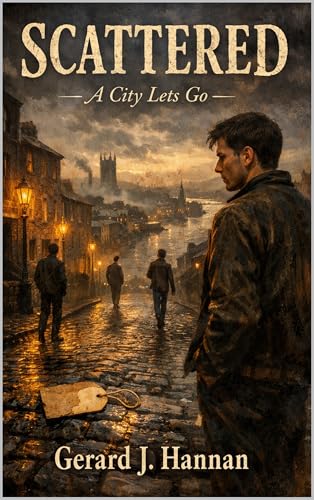
Cover of Scattered

Scattered

The Ashes Trilogy, Book Three

Scattered concludes The Ashes Trilogy as the friends who once shared Limerick’s streets and lanes face adulthood, work, hunger, faith, family duty and emigration. Time has altered their ambitions, tested their loyalties and carried some beyond the city that formed them. Yet memory continues to bind Louie, Seamus, Joe, Sean, Peter, Tony, Bardy, Maura, Eileen, Nora, Lingo and the mysterious Gleamer. Narrated through the enduring presence of Limerick itself, the novel explores separation, sacrifice and survival while recognising the humour and affection that remain. Together, their scattered lives complete a moving portrait of friendship, community and change across changing generations.

Cover of Threshold

Threshold

The Troubles Trilogy, Book One

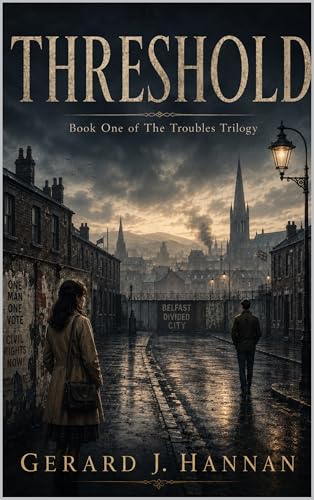
Threshold opens in Belfast in 1968, where the Catholic Devlins and Protestant Morrows confront a city divided by religion, memory and fear. Civil rights marches, police violence, riots and internment transform ordinary streets into dangerous frontiers while political conflict enters homes, workplaces and schools. At the centre are Aileen Devlin and Thomas Morrow, whose relationship challenges the boundaries their families regard as essential to survival. As loyalty hardens into suspicion, both must decide whether inherited allegiance excuses injustice. Through family arguments, upheaval and private courage, the novel explores love, conscience, division and survival during the opening years of the Troubles.

Cover of Hunger

Hunger

The Troubles Trilogy, Book Two

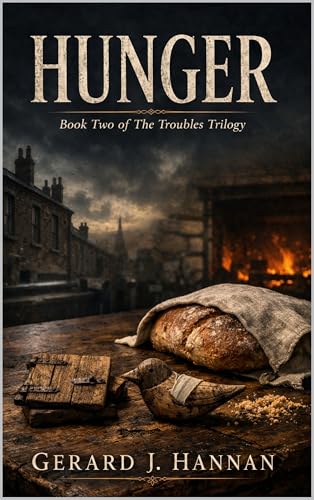
Hunger is Book Two of The Troubles Trilogy, set in Belfast during the 1980s. Aileen Devlin and Thomas Morrow have built a fragile life across the city’s sectarian divide, but the conflict threatens the home they created for their daughter, Claire. As hunger strikes, the Anglo Irish Agreement and violence reshape Northern Ireland, republican Declan and loyalist Billy exploit fear, grief and vulnerable young men. Against them stand Aileen, Kathleen and Elsie, whose quiet strength keeps their families human. This is a story of love, survival and the courage to place people before causes in a divided society under pressure.

Cover of Crossing

Crossing

The Troubles Trilogy, Book Three

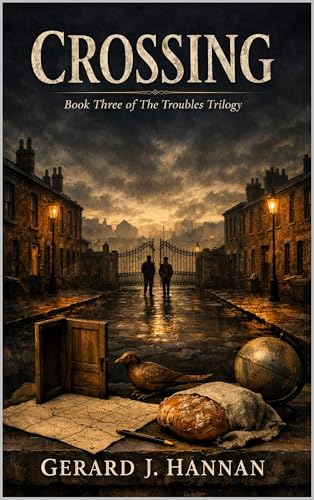
Crossing concludes The Troubles Trilogy during the decade from 1990 to 2000, as Belfast moves from violence towards negotiation, ceasefires and uncertain peace. The Devlin and Morrow families face political change alongside grief, ageing, divided loyalties and the consequences of choices made across three decades. Relationships once threatened by religious boundaries are tested by memory, mistrust and the fear that compromise may betray the dead. As the peace process gathers momentum, ordinary people must decide whether reconciliation is possible. The trilogy closes with a story of endurance, forgiveness, loss and hope beyond inherited division, proving that peace begins with courage.

Cover of Severance

Severance

Historical Novel

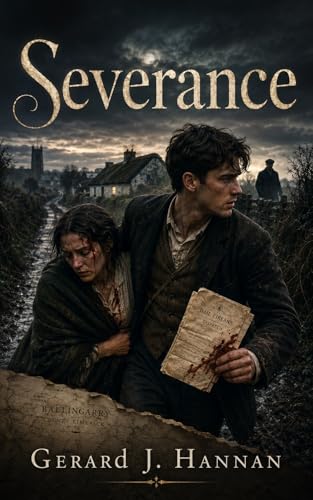
Severance is a historical novel set in Ballingarry, County Limerick, during Ireland’s struggle for independence. A torn and bloodied dispatch passes through fields, kitchens, lofts and hidden routes, placing everyone who handles it in danger. Michael Enright carries the burden of trust, while Mary, Molly and their neighbours struggle to preserve the message and protect one another. Against them, Captain Edward Harcourt studies every delay, wound and fragment for clues. As loyalty, fear and betrayal tighten around the hidden network, ordinary people must decide what they are willing to risk when history enters their homes and silence itself becomes dangerous.

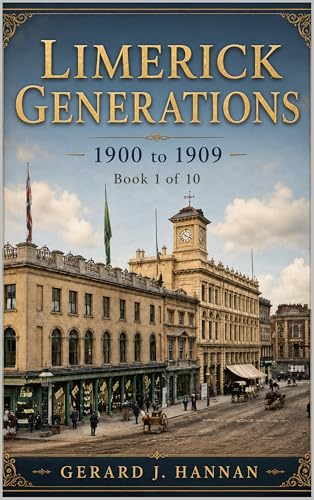
Cover of Limerick Generations: 1900 to 1909

Limerick Generations: 1900 to 1909

Limerick Decalogy, Book One

Limerick Generations: 1900 to 1909 opens the decade by documenting a city and county entering the twentieth century amid political debate, commercial activity, poverty, faith and technological change. Month by month, the book connects major Irish developments with local events, institutions, streets and communities. Public meetings, labour, transport, education, sport, business and everyday life reveal how national questions were experienced in Limerick. Historical reports and carefully reconstructed narratives bring forgotten moments and ordinary people into focus. As Book One of Limerick Decalogy, it establishes the foundation for a ten volume journey through one hundred years of local history and memory.

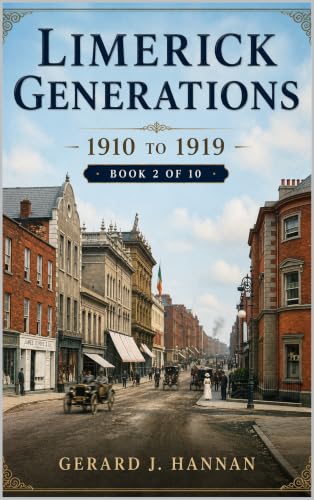
Cover of Limerick Generations: 1910 to 1919

Limerick Generations: 1910 to 1919

Limerick Decalogy, Book Two

Limerick Generations: 1910 to 1919 traces a decade of political transformation, labour conflict, war, revolution and social change across Limerick city and county. Home Rule, unionist resistance, trade union organisation and the First World War entered streets, farms, schools, workplaces and family life. The Easter Rising, conscription crisis, influenza pandemic and general election altered public loyalties and expectations. The decade culminated in the Limerick Soviet of 1919, when workers challenged military restrictions through organised collective action. As Book Two of Limerick Decalogy, the volume preserves local experiences of hardship, courage, grief, endurance and change during years of intense historic upheaval.

Restoring History

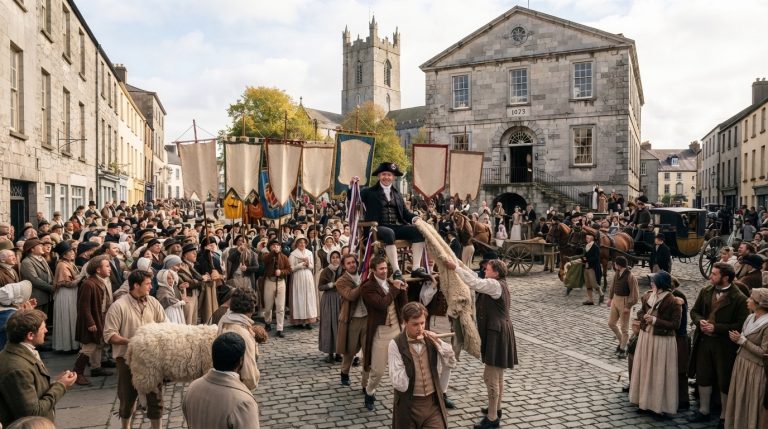
Limerick Archives preserves, enhances, restores and colourises historic photographs, sometimes presenting fresh angles on familiar scenes. When no suitable public-domain image exists, we create carefully researched AI illustrations for archive articles. We also invite the public to submit photographs for restoration and possible publication, with ownership always remaining entirely theirs.