Veteran Dies

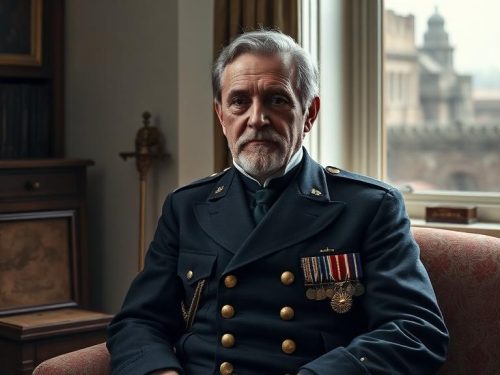
Lieutenant-Colonel Abraham Boulger, one of Ireland’s earliest recipients of the Victoria Cross, died at Moate, County Westmeath, on 23 January 1900, aged sixty-four. Born at Kilcullen, County Kildare, on 4 September 1835, he entered the British Army and rose from the ranks during a long career of active service. His reputation rested principally upon his conduct during the Indian Rebellion of 1857, when, as a young lance-corporal in the 84th Regiment of Foot, he repeatedly placed himself in exposed positions during the campaign associated with Cawnpore and the relief and defence of Lucknow.
The Monument Gathering

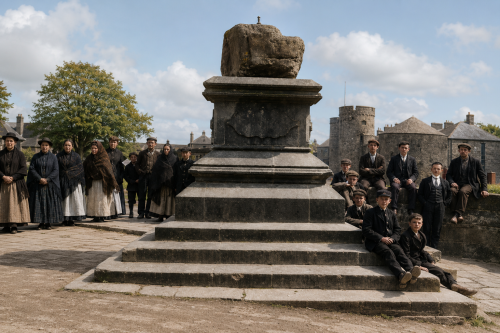
This reconstructed image depicts the Treaty Stone in Limerick as it may have appeared around 1880, standing on its substantial stepped pedestal as a powerful emblem of the city’s past. Groups of townspeople, including men, women and children in period clothing, gather around the monument in a lively public setting. In the background, traditional buildings, stone walls and the nearby tower reinforce the historic atmosphere of the riverside area. Long associated with the Treaty of Limerick of 1691, the stone remained an important civic landmark, meeting place and symbol of memory, identity and local heritage in nineteenth-century Limerick.

The Heart of Edwardian Limerick

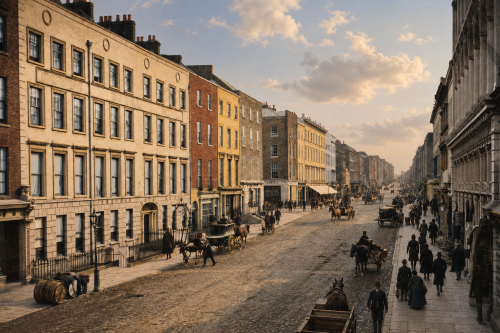
At the beginning of the twentieth century, George Street stood at the centre of commercial life in Limerick. Today known as O’Connell Street, it was bordered by impressive Georgian buildings housing hotels, shops, offices and established local businesses. Horse-drawn carts, private carriages and crowds of pedestrians moved constantly along the busy thoroughfare, while traders brought additional noise and colour to the scene. Landmarks included the Royal Hotel, MacMahon’s Temperance Hotel and firms such as O’Mahony & Company. The street’s elegant architecture and lively commerce made it one of Edwardian Limerick’s most important and recognisable urban spaces for residents and visitors.

Thomond Gate Distillery

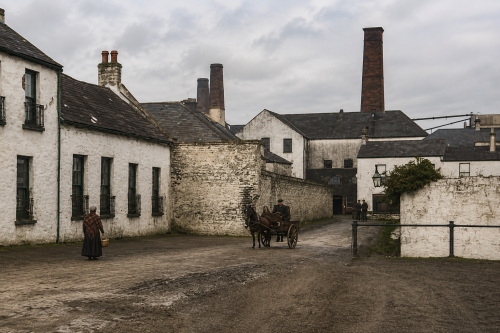
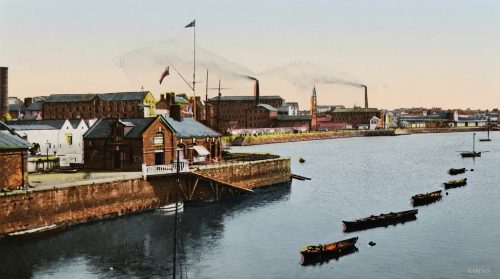
Thomond Gate Distillery stood beside the River Shannon from 1809 until 1919, forming an important part of Limerick’s industrial and distilling heritage. During the nineteenth century, the complex operated three copper pot stills and produced traditional Irish whiskey under several owners, including Stein Brown & Co. and Archibald Walker’s Limerick Distillery. These reconstructed scenes imagine the surrounding streets, workers, carts, buildings and towering chimneys during the distillery’s active years. Although production eventually ceased, the Thomond Gate name has been revived through an independent Limerick whiskey brand dedicated to preserving the memory and traditions of the original enterprise for future generations.

Baker Place, Limerick c.1900

At Baker Place in early twentieth-century Limerick, Saint Saviour’s Dominican Church stands at the centre of a broad cobbled streetscape, its Gothic stone façade, rose window, pointed arches, and carved doorways giving the scene a strong ecclesiastical presence. To the right, Tait’s Clock rises above the roadway as a civic landmark, balanced by red-brick industrial buildings and smoking chimneys behind it. Period pedestrians, a horse-drawn cart, street lamps, and a small wooden kiosk add everyday activity. The view captures a city shaped by faith, industry, commerce, public memory, and the architectural confidence of Edwardian urban life in Limerick’s historic core.

Thomond Bridge and Castle, 1881

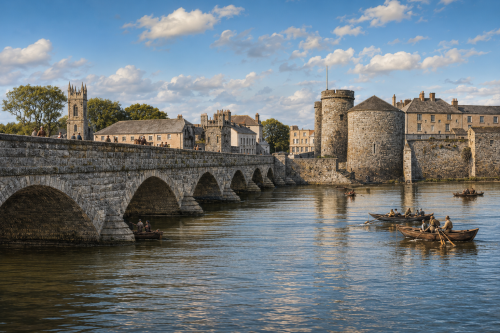
This 1881 reconstructed image is based on an engraving and depicts Thomond Bridge and King John’s Castle overlooking the River Shannon in Limerick, County Limerick. The original was published in Élisée Reclus’s geographical work The Earth and Its Inhabitants, the image presents one of the city’s most recognisable historic views. The medieval castle dominates the riverbank, while the bridge connects the city across the Shannon. Boats, buildings, and figures add detail to the busy riverside setting. The engraving reflects both the architectural importance of the castle and the strategic role of the crossing, preserving a valuable nineteenth-century representation of Limerick’s urban landscape and historic waterfront for future generations to appreciate.

Limerick Horse Brake, 1900

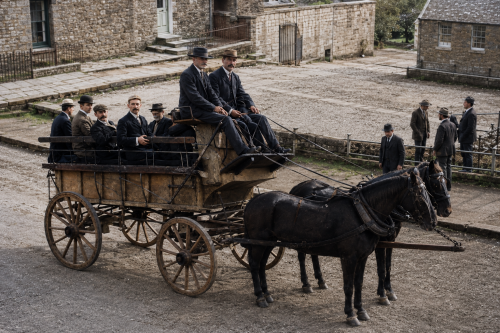
By 1900, Limerick’s great long-distance stagecoach era had largely disappeared, replaced by the expanding railway network. Horse-drawn vehicles nevertheless remained essential throughout the city and surrounding countryside. Large brakes and passenger wagons carried groups on local journeys, outings and transfers, while hackney cars, jaunting cars, drays and private carriages crowded the streets. Horses also transported goods from the docks, breweries, distilleries and railway station. This reconstructed scene captures a group of formally dressed men aboard a substantial horse-drawn vehicle, reflecting a transitional age when steam powered intercity travel, but horses still firmly supported Limerick’s everyday commercial, urban and social life.

Knockaderry House

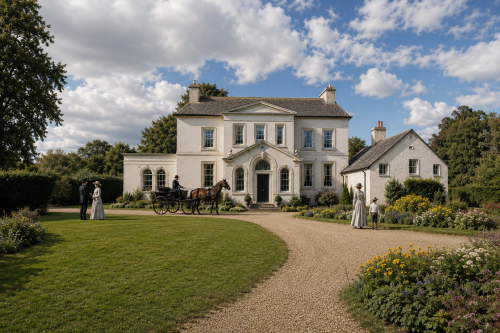
Knockaderry House, near Newcastle West in County Limerick, is an eighteenth-century country residence built around 1780. The detached, three-bay, two-storey house is distinguished by its balanced proportions, limestone eaves course and an attached architectural folly. Although now derelict, much of the original structure and historic fabric survives, allowing the building to retain a strong sense of its former character. The house is also remembered as the birthplace of pioneering Irish aviator Sophie Peirce-Evans. Set within the rural Limerick landscape, Knockaderry House remains an important reminder of the county’s architectural, social and aviation heritage for future generations to study and appreciate.

A Busy Day On George Street

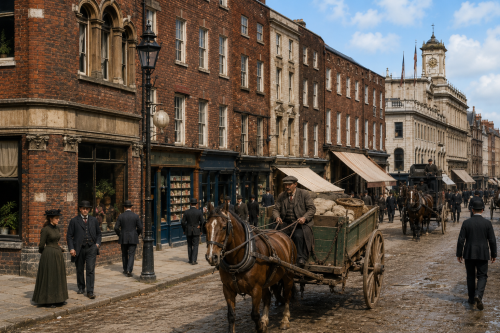
George Street, now O’Connell Street, formed the bustling commercial and social heart of Limerick around 1900. Elegant Georgian and Victorian façades lined the thoroughfare, their ornate shopfronts illuminated by gaslight and filled with goods for local shoppers. Horse-drawn carriages, jaunting cars and merchant carts crowded the roadway, while pedestrians in heavy coats and hats moved between businesses and hotels. The grand Cruises Royal Hotel stood among the street’s most prominent landmarks, welcoming merchants, travellers and visitors. This scene reflects the energy of late-Victorian Limerick before motor traffic transformed the city’s principal shopping street and historic urban centre during a changing era.

Now Sharing: Articles (154) Images (578) Total Items Archived (732)
Our Mission: 100,000 Items Total Percentage Achieved (0.73%)