
Bardan

Summon Bardan

Summon Bardan, our resident druid, and ask him any question about Limerick.
His ancient wisdom will answer as soon as the search is complete.

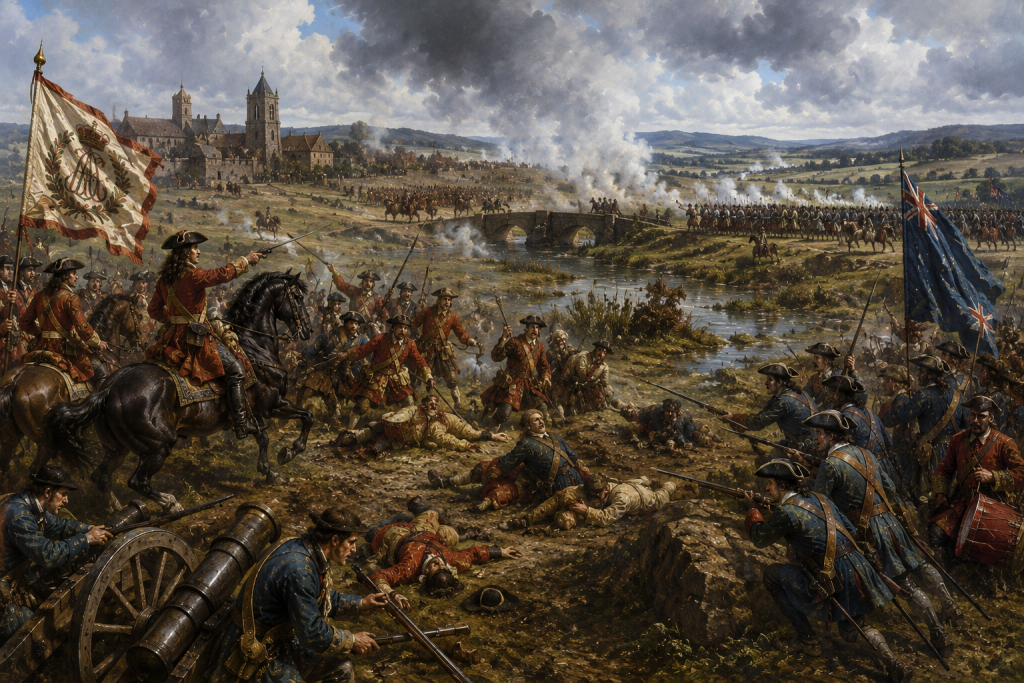
ChatGPT Image Jul 31, 2026, 09_56_48 PM

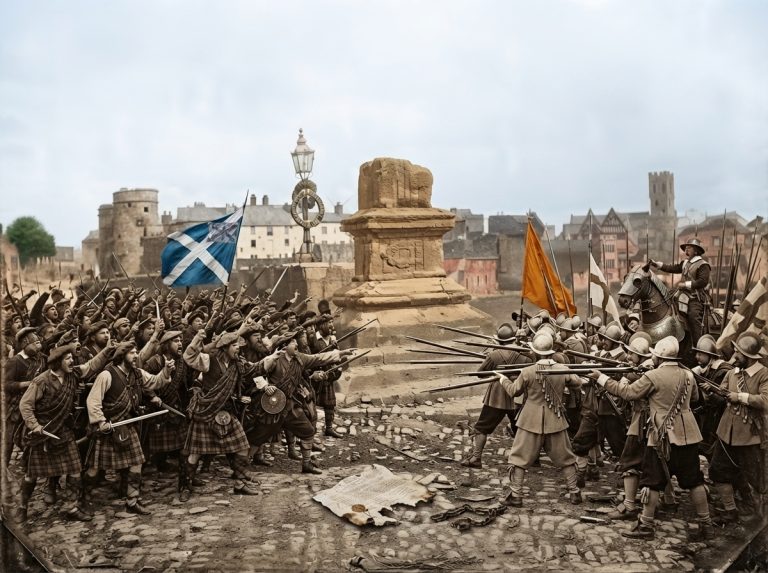
For Limerick, the collapse of the Jacobite campaign around Enniskillen and Derry in the summer of 1689 marked another decisive step towards the later struggle on the Shannon. Every defeat weakened James II’s ability to defend Ireland and increased the likelihood that Limerick would eventually become the principal refuge of his remaining army. The events in Ulster exposed the Jacobites’ shortages of arms, artillery, money and coordinated leadership.

After Lord Galmoy withdrew from Enniskillen, raids and counter-raids continued across the surrounding counties. Enniskillen’s Williamite forces gathered cattle, provisions and recruits, while Galmoy attempted to keep roads open for Jacobite communications. Tyrconnell therefore planned a combined campaign. Lord Mountcashel would advance from Dublin, the Duke of Berwick would approach from the north, and Brigadier Southerland would move from the west.

Patrick Sarsfield initially cleared territory near Lough Erne, but he was redirected towards Omagh to protect the army besieging Derry. Southerland, left with a smaller force, withdrew safely towards Sligo after learning that a much larger enemy intended to surround him. The rearguard at Belturbet fought stubbornly but surrendered, losing horses, muskets and gunpowder.

Berwick raided Donegal, destroyed enemy supplies and established himself near Enniskillen. After defeating an ambush, he believed the town might be captured despite the shortage of ammunition. However, he was recalled to Derry by the French commander de Rosen. This decision allowed the Enniskilleners to strengthen their defences and receive additional troops, artillery and supplies from England.

Mountcashel arrived at Belturbet with approximately 3,600 men and seven guns. He attacked Crom Castle before learning that Colonel Berry and larger Williamite forces were approaching. Fighting near Lisnaskea and Newtownbutler ended disastrously for the Jacobites. Confused orders broke their formation, panic spread, and the army was routed. Mountcashel was wounded and captured, while large numbers of his soldiers were killed, drowned or taken prisoner.

At Derry, conditions inside the city were becoming desperate. The defenders suffered hunger and repeatedly looked towards the English fleet for relief. De Rosen attempted to force displaced civilians towards the walls, but Irish soldiers refused to carry out the order, and James commanded that the people be released. The defenders used the opportunity to send away dependants and admit stronger men.

On 28 July, English ships entered the River Foyle and broke the defensive boom. Supplies reached Derry, and the Jacobite army soon abandoned the siege. The campaign had failed despite months of effort and considerable sacrifice.

The northern setbacks also deprived the Jacobites of the rapid victory needed before a larger Williamite expedition could land. Their commanders had shown courage, but divided authority repeatedly disrupted promising operations. Without secure finances or dependable French support, Ireland’s defence increasingly rested upon exhausted troops and fortified cities farther west and south.

The loss of Derry and defeat at Newtownbutler transformed the war. Williamite resistance survived, English reinforcements could now enter Ireland, and Jacobite morale declined. The consequences would ultimately reach Limerick, whose walls, river and western position would become increasingly vital as James’s cause retreated southward..

Primary Sources

These five records directly support the account of the Enniskillen campaign, Newtownbutler, the suffering inside Derry and the breaking of the boom on the River Foyle. The supplied narrative describes Sarsfield’s redeployment, Southerland’s retreat and the loss of arms and supplies at Belturbet.

  1. Andrew Hamilton, A True Relation of the Actions of the Inniskilling-Men — 1690.
    Written by a clergyman who described himself as both an eyewitness and participant, this is the most important primary source for the Enniskillen forces. It covers their organisation, raids, military supplies and victory over Mountcashel’s Jacobite army at Newtownbutler. (Folger Catalog)
  2. George Walker, A True Account of the Siege of London-Derry — 1689.
    Walker served as one of Derry’s governors. His published diary records the siege, shortages within the city, military engagements, negotiations, the relief fleet and the arrival of Major-General Percy Kirke after the Jacobite withdrawal. (Quod)
  3. John Mackenzie, A Narrative of the Siege of London-Derry — 1690.
    Mackenzie was a Presbyterian minister and regimental chaplain inside Derry. His account was written partly to correct what he considered mistakes and omissions in Walker’s narrative. It provides valuable evidence concerning command disputes, conditions within the garrison and the conduct of the siege. (National Library of Ireland Catalogue)
  4. Joseph Bennet, A True and Impartial Account of the Most Material Passages in Ireland Since December 1688 — 1689.
    Based on notes taken by an eyewitness who had resided in Derry, this contemporary publication describes the city’s forces, defensive preparations and the wider military situation in Ulster. It originally included a description and map of Derry. (Quod)
  5. James FitzJames, Duke of Berwick, Memoirs of the Marshal Duke of Berwick.
    Berwick, the son of James II, personally commanded Jacobite forces during the Irish campaign. His memoirs provide the opposing Jacobite perspective on operations around Derry, his march towards Enniskillen, shortages of ammunition and disagreements with the French commander de Rosen. The English edition was published in 1779 from Berwick’s own memoirs. (Google Books)

Hamilton, Walker, Mackenzie and Bennet largely represent the Williamite viewpoint. Berwick provides essential evidence from within the Jacobite command.
Explore Emerald Archives

Share Your Thoughts

We welcome your thoughts, memories and local knowledge about this article. Perhaps you recognise a person, place, building or event, remember a related story, or can provide additional names, dates or details. Every contribution helps improve the historical record and may reveal information that would otherwise be lost. Please share your comments, corrections and personal recollections with us, whether they are brief observations or detailed accounts. Your knowledge can help connect families, communities and generations while strengthening Emerald Archives for future visitors. By taking part, you become an important contributor to preserving and sharing Limerick’s history with everyone worldwide today.

Your email address will not be published. Required fields are marked *

Books Supporting the Archive

Every Book Purchased Helps Support The Continuing Work Of Emerald Archives.

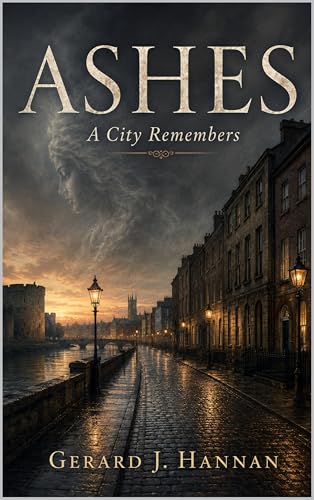
Cover of Ashes

Ashes

The Ashes Trilogy, Book One

Ashes begins the story of a group of children growing up in the streets and lanes of Limerick, where poverty and hardship are balanced by humour, imagination and fierce friendship. Their city is more than a setting: it watches, remembers and gives voice to lives often absent from official history. As the children explore their neighbourhood, they encounter family pressures, faith, hunger, danger and the first signs of a changing world. Through their adventures and loyalties, the novel captures the resilience of ordinary people and introduces the characters whose lives will unfold across the three volumes of The Ashes Trilogy.

View on Amazon UK
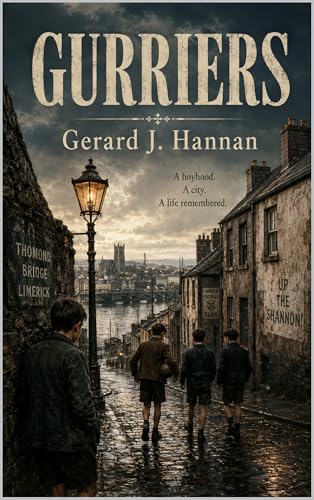
Cover of Gurriers

Gurriers

The Ashes Trilogy, Book Two

Gurriers continues the lives of the Limerick children introduced in Ashes as childhood freedom begins to give way to work, responsibility and harsher choices. Their friendships remain strong, but poverty, family expectations, faith and the pressures of growing older test loyalties once taken for granted. The streets and lanes still offer humour, adventure and belonging, yet the wider world increasingly intrudes upon their lives. Through vivid dialogue, memorable characters and the watchful voice of Limerick itself, the novel explores resilience, identity and change while showing how even the closest companions can be drawn towards futures by circumstances beyond their control.

Cover of Scattered

Scattered

The Ashes Trilogy, Book Three

Scattered concludes The Ashes Trilogy as the friends who once shared Limerick’s streets and lanes face adulthood, work, hunger, faith, family duty and emigration. Time has altered their ambitions, tested their loyalties and carried some beyond the city that formed them. Yet memory continues to bind Louie, Seamus, Joe, Sean, Peter, Tony, Bardy, Maura, Eileen, Nora, Lingo and the mysterious Gleamer. Narrated through the enduring presence of Limerick itself, the novel explores separation, sacrifice and survival while recognising the humour and affection that remain. Together, their scattered lives complete a moving portrait of friendship, community and change across changing generations.

Cover of Threshold

Threshold

The Troubles Trilogy, Book One

Threshold opens in Belfast in 1968, where the Catholic Devlins and Protestant Morrows confront a city divided by religion, memory and fear. Civil rights marches, police violence, riots and internment transform ordinary streets into dangerous frontiers while political conflict enters homes, workplaces and schools. At the centre are Aileen Devlin and Thomas Morrow, whose relationship challenges the boundaries their families regard as essential to survival. As loyalty hardens into suspicion, both must decide whether inherited allegiance excuses injustice. Through family arguments, upheaval and private courage, the novel explores love, conscience, division and survival during the opening years of the Troubles.

Cover of Hunger

Hunger

The Troubles Trilogy, Book Two

Hunger is Book Two of The Troubles Trilogy, set in Belfast during the 1980s. Aileen Devlin and Thomas Morrow have built a fragile life across the city’s sectarian divide, but the conflict threatens the home they created for their daughter, Claire. As hunger strikes, the Anglo Irish Agreement and violence reshape Northern Ireland, republican Declan and loyalist Billy exploit fear, grief and vulnerable young men. Against them stand Aileen, Kathleen and Elsie, whose quiet strength keeps their families human. This is a story of love, survival and the courage to place people before causes in a divided society under pressure.

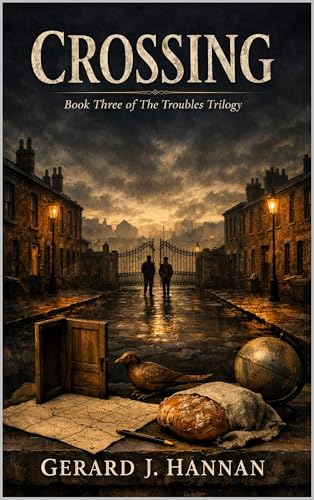
Cover of Crossing

Crossing

The Troubles Trilogy, Book Three

Crossing concludes The Troubles Trilogy during the decade from 1990 to 2000, as Belfast moves from violence towards negotiation, ceasefires and uncertain peace. The Devlin and Morrow families face political change alongside grief, ageing, divided loyalties and the consequences of choices made across three decades. Relationships once threatened by religious boundaries are tested by memory, mistrust and the fear that compromise may betray the dead. As the peace process gathers momentum, ordinary people must decide whether reconciliation is possible. The trilogy closes with a story of endurance, forgiveness, loss and hope beyond inherited division, proving that peace begins with courage.

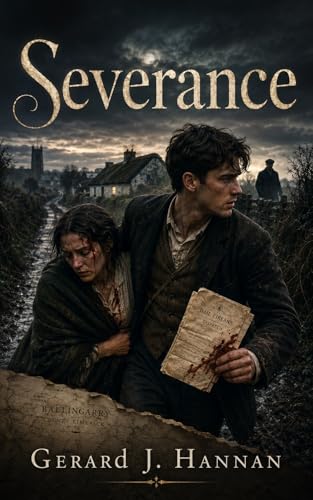
Cover of Severance

Severance

Historical Novel

Severance is a historical novel set in Ballingarry, County Limerick, during Ireland’s struggle for independence. A torn and bloodied dispatch passes through fields, kitchens, lofts and hidden routes, placing everyone who handles it in danger. Michael Enright carries the burden of trust, while Mary, Molly and their neighbours struggle to preserve the message and protect one another. Against them, Captain Edward Harcourt studies every delay, wound and fragment for clues. As loyalty, fear and betrayal tighten around the hidden network, ordinary people must decide what they are willing to risk when history enters their homes and silence itself becomes dangerous.

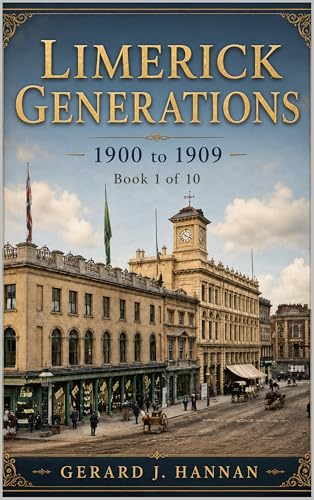
Cover of Limerick Generations: 1900 to 1909

Limerick Generations: 1900 to 1909

Limerick Decalogy, Book One

Limerick Generations: 1900 to 1909 opens the decade by documenting a city and county entering the twentieth century amid political debate, commercial activity, poverty, faith and technological change. Month by month, the book connects major Irish developments with local events, institutions, streets and communities. Public meetings, labour, transport, education, sport, business and everyday life reveal how national questions were experienced in Limerick. Historical reports and carefully reconstructed narratives bring forgotten moments and ordinary people into focus. As Book One of Limerick Decalogy, it establishes the foundation for a ten volume journey through one hundred years of local history and memory.

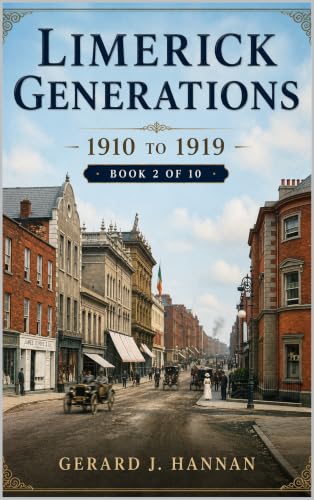
Cover of Limerick Generations: 1910 to 1919

Limerick Generations: 1910 to 1919

Limerick Decalogy, Book Two

Limerick Generations: 1910 to 1919 traces a decade of political transformation, labour conflict, war, revolution and social change across Limerick city and county. Home Rule, unionist resistance, trade union organisation and the First World War entered streets, farms, schools, workplaces and family life. The Easter Rising, conscription crisis, influenza pandemic and general election altered public loyalties and expectations. The decade culminated in the Limerick Soviet of 1919, when workers challenged military restrictions through organised collective action. As Book Two of Limerick Decalogy, the volume preserves local experiences of hardship, courage, grief, endurance and change during years of intense historic upheaval.

Associated Archives

War and Revolution Disasters and Accidents Politics and Government Agriculture and Rural Life Transport Arts and Entertainment

Restoring History

Emerald Archives preserves, enhances, restores and colourises historic photographs, sometimes presenting fresh angles on familiar scenes. When no suitable public-domain image exists, we create carefully researched AI illustrations for archive articles. We also invite the public to submit photographs for restoration and possible publication, with ownership always remaining entirely theirs.