c793fb79-b2b5-4bc8-b3a3-71efb54aeed8.jpeg_202608142315

Michael Hogan was a nineteenth century Limerick poet known locally as the Bard of Thomond. Born in Thomondgate in 1828, he lived and worked among the city’s streets, inns and riverbanks, composing ballads and humorous narrative verse that celebrated local characters and events. His writing mixed comic storytelling with historical and antiquarian notes, addressing everyday life, municipal stories and the Shannon landscape. Hogan published collections titled Lays and Legends of Thomond and shorter pamphlets. Though never widely canonised, he gained firm popular esteem in Limerick and became a public figure whose name is still remembered in city placemaking and traditions.

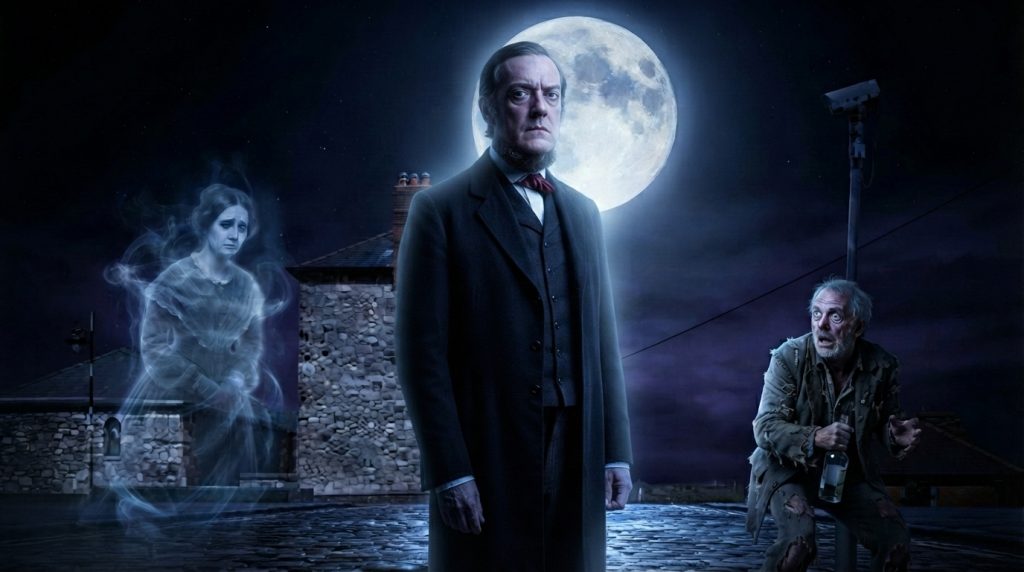
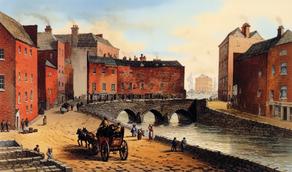
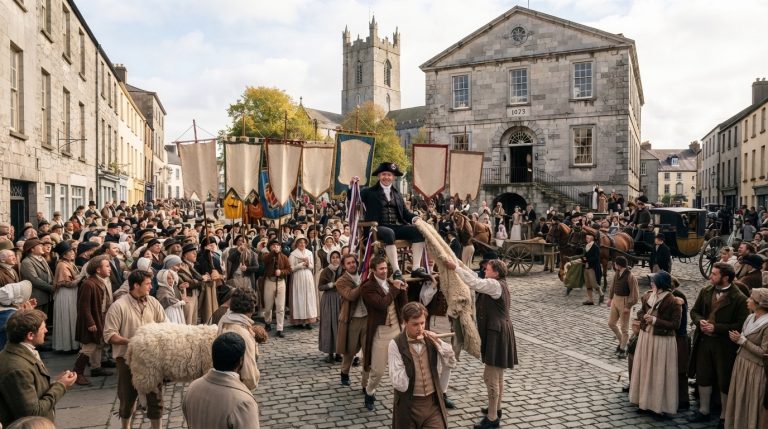
His best known composition is the comic narrative poem Drunken Thady and the Bishop’s Lady, a long humorous tale set around Thomond Bridge that circulated in local print and recitation. Hogan also collected legends and historical sketches into Lays and Legends of Thomond, blending folklore with topographical observation. Contemporary newspapers printed his verses and reported readings and public entertainments where his recitations drew crowds. He wrote in Hiberno English with local idiom and jokes, aiming at popular entertainment rather than high literary experiment. This accessible tone helped fix his works in oral memory and community culture across Limerick neighbourhoods today.
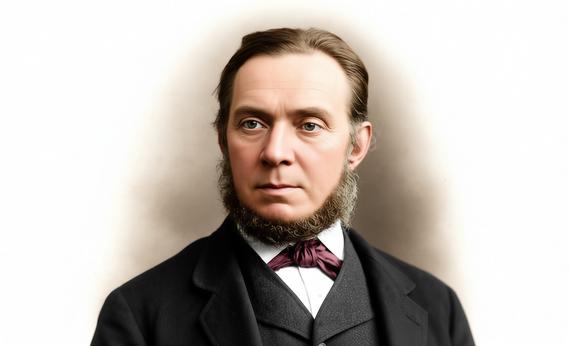
Michael Hogan lived for most of his life in Thomondgate, the north bank neighbourhood known locally as sodacakes, and his poems register its trades, taverns and characters. Contemporary directories and parish registers show a working class household and civic belonging rather than genteel patronage. He married, raised a family and continued public readings; local press notices record his death in April 1899 and obituaries honoured his popular verse. Late twentieth century revivalists and descendants promoted his book reprints and, with civic support, a life size bronze statue by Jim Connolly was erected near King John’s Castle to celebrate local culture.

Critics have rarely placed Hogan among Ireland’s national poets, yet his local esteem in Limerick remained consistent through fairs, sporting events and commemorations. Schools and choirs sometimes adapted his shorter ballads for local performances and civic programmes, while newspapers reprinted his humorous pieces for anniversaries. Collectors of dialect verse and regional historians have used his work as evidence for nineteenth century urban speech and popular humour. Folklore informants and oral histories recorded lines from his poems long after his death, demonstrating transmission across generations. His writings therefore function as social source material as much as literary artefact within Limerick study.

Today Michael Hogan’s name appears on walking tours, civic plaques and local publishing projects that reissue his Lays and Legends of Thomond. Scholars of local history consult his descriptions alongside trade directories, maps and municipal minutes for social detail about Thomondgate life. The statue at King John’s Castle and readings keep his memory visible to residents. While debates about taste and literary merit continue, Hogan’s poems remain valuable for cultural historians charting working class identity, local humour and urban change. Editors and volunteers in Limerick archives preserve editions, pamphlets and press cuttings that support study of the Bard of Thomond.

Primary Sources

  1. Limerick Chronicle, obituary and death notice for Michael Hogan, April 1899 (contemporary press report).
  2. Freeman’s Journal, printed poem or report of public recitation by Michael Hogan, nineteenth century issue (contemporary newspaper item).
  3. Lays and Legends of Thomond by Michael Hogan, original edition (publisher imprint, nineteenth century edition held in national and local libraries).
  4. Local trade directory listing for Thomondgate and Limerick, mid to late nineteenth century (commercial directory entry noting residence or occupation in Thomondgate).
  5. Parish registers for Thomondgate/St Munchin’s or nearest Church of Ireland/Roman Catholic register, baptism and marriage entries relating to Michael Hogan, 1828 onward (church register).
  6. Civil registration death entry for Michael Hogan, April 1899, General Register Office, Ireland (civil death register entry for Limerick).
  7. Photograph and municipal record of the life size bronze statue of Michael Hogan by Jim Connolly, erected near King John’s Castle (Limerick City Council minutes or press release concerning the unveiling).
  8. Contemporary Limerick Leader or Limerick Reporter columns reprinting Hogan’s verses and reporting readings, nineteenth and early twentieth century editions (local newspaper coverage).
  9. Oral history interview transcripts and local folklore collection entries citing lines or memories of Hogan’s poems from Thomondgate informants (local folklore archive or National Folklore Collection submissions).
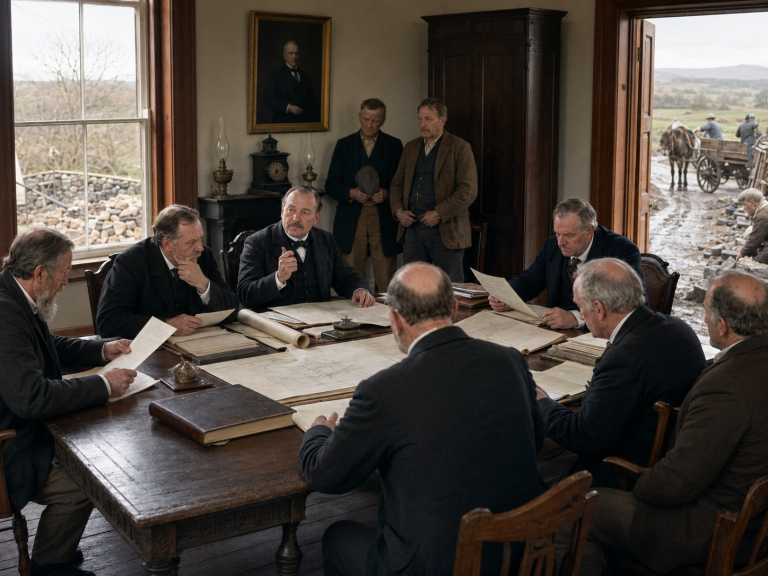
  10. Maps and municipal minutes for Thomondgate and King’s Island, mid to late nineteenth century (town plans, corporation minutes used to contextualise places named in Hogan’s poems).
Explore Limerick Archives

Books Supporting the Archive

Every Book Purchased Helps Support The Continuing Work Of Limerick Archives.

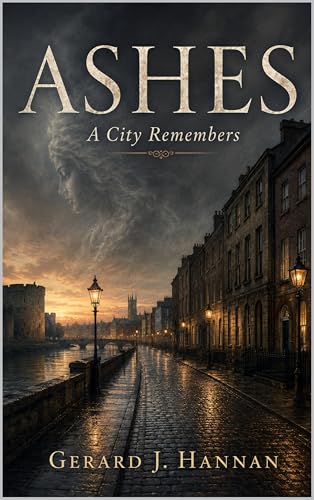
Cover of Ashes

Ashes

The Ashes Trilogy, Book One

Ashes begins the story of a group of children growing up in the streets and lanes of Limerick, where poverty and hardship are balanced by humour, imagination and fierce friendship. Their city is more than a setting: it watches, remembers and gives voice to lives often absent from official history. As the children explore their neighbourhood, they encounter family pressures, faith, hunger, danger and the first signs of a changing world. Through their adventures and loyalties, the novel captures the resilience of ordinary people and introduces the characters whose lives will unfold across the three volumes of The Ashes Trilogy.

View on Amazon UK
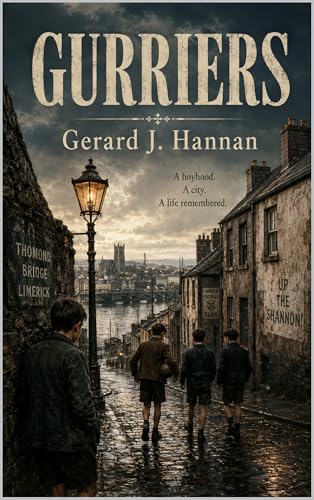
Cover of Gurriers

Gurriers

The Ashes Trilogy, Book Two

Gurriers continues the lives of the Limerick children introduced in Ashes as childhood freedom begins to give way to work, responsibility and harsher choices. Their friendships remain strong, but poverty, family expectations, faith and the pressures of growing older test loyalties once taken for granted. The streets and lanes still offer humour, adventure and belonging, yet the wider world increasingly intrudes upon their lives. Through vivid dialogue, memorable characters and the watchful voice of Limerick itself, the novel explores resilience, identity and change while showing how even the closest companions can be drawn towards futures by circumstances beyond their control.

Cover of Scattered

Scattered

The Ashes Trilogy, Book Three

Scattered concludes The Ashes Trilogy as the friends who once shared Limerick’s streets and lanes face adulthood, work, hunger, faith, family duty and emigration. Time has altered their ambitions, tested their loyalties and carried some beyond the city that formed them. Yet memory continues to bind Louie, Seamus, Joe, Sean, Peter, Tony, Bardy, Maura, Eileen, Nora, Lingo and the mysterious Gleamer. Narrated through the enduring presence of Limerick itself, the novel explores separation, sacrifice and survival while recognising the humour and affection that remain. Together, their scattered lives complete a moving portrait of friendship, community and change across changing generations.

Cover of Threshold

Threshold

The Troubles Trilogy, Book One

Threshold opens in Belfast in 1968, where the Catholic Devlins and Protestant Morrows confront a city divided by religion, memory and fear. Civil rights marches, police violence, riots and internment transform ordinary streets into dangerous frontiers while political conflict enters homes, workplaces and schools. At the centre are Aileen Devlin and Thomas Morrow, whose relationship challenges the boundaries their families regard as essential to survival. As loyalty hardens into suspicion, both must decide whether inherited allegiance excuses injustice. Through family arguments, upheaval and private courage, the novel explores love, conscience, division and survival during the opening years of the Troubles.

Cover of Hunger

Hunger

The Troubles Trilogy, Book Two

Hunger is Book Two of The Troubles Trilogy, set in Belfast during the 1980s. Aileen Devlin and Thomas Morrow have built a fragile life across the city’s sectarian divide, but the conflict threatens the home they created for their daughter, Claire. As hunger strikes, the Anglo Irish Agreement and violence reshape Northern Ireland, republican Declan and loyalist Billy exploit fear, grief and vulnerable young men. Against them stand Aileen, Kathleen and Elsie, whose quiet strength keeps their families human. This is a story of love, survival and the courage to place people before causes in a divided society under pressure.

Cover of Crossing

Crossing

The Troubles Trilogy, Book Three

Crossing concludes The Troubles Trilogy during the decade from 1990 to 2000, as Belfast moves from violence towards negotiation, ceasefires and uncertain peace. The Devlin and Morrow families face political change alongside grief, ageing, divided loyalties and the consequences of choices made across three decades. Relationships once threatened by religious boundaries are tested by memory, mistrust and the fear that compromise may betray the dead. As the peace process gathers momentum, ordinary people must decide whether reconciliation is possible. The trilogy closes with a story of endurance, forgiveness, loss and hope beyond inherited division, proving that peace begins with courage.

Cover of Severance

Severance

Historical Novel

Severance is a historical novel set in Ballingarry, County Limerick, during Ireland’s struggle for independence. A torn and bloodied dispatch passes through fields, kitchens, lofts and hidden routes, placing everyone who handles it in danger. Michael Enright carries the burden of trust, while Mary, Molly and their neighbours struggle to preserve the message and protect one another. Against them, Captain Edward Harcourt studies every delay, wound and fragment for clues. As loyalty, fear and betrayal tighten around the hidden network, ordinary people must decide what they are willing to risk when history enters their homes and silence itself becomes dangerous.

Cover of Limerick Generations: 1900 to 1909

Limerick Generations: 1900 to 1909

Limerick Decalogy, Book One

Limerick Generations: 1900 to 1909 opens the decade by documenting a city and county entering the twentieth century amid political debate, commercial activity, poverty, faith and technological change. Month by month, the book connects major Irish developments with local events, institutions, streets and communities. Public meetings, labour, transport, education, sport, business and everyday life reveal how national questions were experienced in Limerick. Historical reports and carefully reconstructed narratives bring forgotten moments and ordinary people into focus. As Book One of Limerick Decalogy, it establishes the foundation for a ten volume journey through one hundred years of local history and memory.

Cover of Limerick Generations: 1910 to 1919

Limerick Generations: 1910 to 1919

Limerick Decalogy, Book Two

Limerick Generations: 1910 to 1919 traces a decade of political transformation, labour conflict, war, revolution and social change across Limerick city and county. Home Rule, unionist resistance, trade union organisation and the First World War entered streets, farms, schools, workplaces and family life. The Easter Rising, conscription crisis, influenza pandemic and general election altered public loyalties and expectations. The decade culminated in the Limerick Soviet of 1919, when workers challenged military restrictions through organised collective action. As Book Two of Limerick Decalogy, the volume preserves local experiences of hardship, courage, grief, endurance and change during years of intense historic upheaval.

Associated Archives

Social Life and Customs People and Personalities Historic News Childhood and Family Life Arts and Entertainment Buildings and Streets

Restoring History

Limerick Archives preserves, enhances, restores and colourises historic photographs, sometimes presenting fresh angles on familiar scenes. When no suitable public-domain image exists, we create carefully researched AI illustrations for archive articles. We also invite the public to submit photographs for restoration and possible publication, with ownership always remaining entirely theirs.