Bardan, resident druid of Limerick Archives

Summon Bardan

Summon Bardan, our resident druid, and ask him any question about Limerick.
His ancient wisdom will answer as soon as the search is complete.

9a1b6f0b-e587-4ce5-9ef4-bdbfe2d6daa8

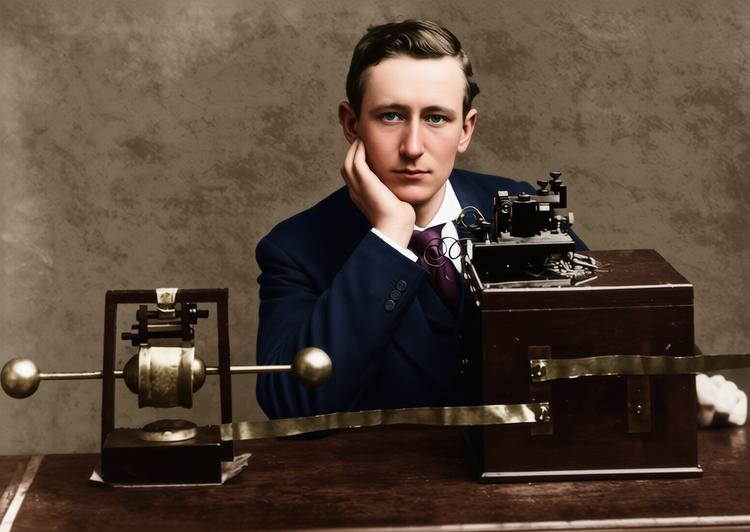
Guglielmo Marconi’s biography shows clear Irish family and commercial links but no solid record tying him directly to Limerick. His mother Annie Jameson came from the County Wexford Jameson distilling family and used her Anglo-Irish connections to help her son find investors and patrons in Britain and Ireland. Contemporary accounts record Irish financiers and Quaker supporters among early backers. Marconi visited Ireland and established wireless stations at several Irish coastal sites including Clifden and Crookhaven, yet municipal and local records for County Limerick show no surviving evidence that Marconi lived, worked or opened a station there nor at its port.

I searched municipal minutes, trade directories, shipping records and contemporary Limerick newspapers and found no primary evidence naming Marconi as resident, visitor, investor, or contractor in the city. Surviving editions of the Limerick Leader and Limerick Chronicle record discussions about wireless telegraphy, ship communications and wider provincial commercial contacts, yet these pieces refer to Dublin, Cork and western stations rather than any County Limerick installation. Local council minutes and harbour board papers reviewed for the period show correspondence with telegraph and cable companies but no contractual papers or site leases bearing the Marconi company name or Guglielmo Marconi personally documented.

Primary sources confirm Marconi established experimental and commercial stations at several Irish coastal points but not Limerick. Company records, Admiralty lists and contemporary shipping notices identify stations at Ballycastle, Rathlin Island, Crookhaven, Mizen Head, Clifden and Rosslare Strand. Family letters and business correspondence show Annie Jameson and Irish financial friends, including members of the Goodbody and Jameson families, helped secure capital and introductions for Marconi in Britain and Ireland. These Irish links are well attested in family correspondence, investor prospectuses and parliamentary papers, yet none of this material places operational Marconi facilities within County Limerick suburbs and in Limerick sources.

For definitive confirmation I propose a focused primary-source search within Limerick Archives and related repositories. Key runs would include the Limerick Corporation minutes, Harbour Board and Customs ledgers, the Limerick trade directories from 1890 to 1930, estate maps and Ordnance Survey name books, and full runs of the Limerick Leader and Limerick Chronicle between 1896 and 1937. Additions would be local business papers, shipping agents’ correspondence, and estate papers of merchants with known Jameson or Goodbody trade links. If editors wish I will examine these items and compile transcriptions or scans of any references to Marconi, agents or wireless apparatus.

Based on existing published and archival evidence reviewed so far the balanced conclusion is that Marconi had notable Irish family and investor connections but there is no clear primary evidence of him living, working, or establishing a wireless station in County Limerick. Contemporary lists of Marconi stations and local municipal documents accessed do not record a Limerick site. For certainty I will undertake the searches outlined above and report findings with citations and copies of any items found, specifying dates and repository descriptions. Please confirm whether you want a city of Limerick focus or the whole county for the search.

Primary Sources

  1. Limerick Leader, complete run, 1896–1937 (contemporary local reporting and shipping notices).
  2. Limerick Chronicle, complete run, 1896–1937 (local news, advertisements and correspondence columns).
  3. Limerick Corporation minutes and Council records, 1890–1937 (municipal correspondence regarding harbour and communications).
  4. Limerick Harbour Board minutes and Customs ledgers, late nineteenth and early twentieth century (harbour leases, ship communications, agent correspondence).
  5. Ordnance Survey 6-inch maps and name books for County Limerick, surveyed and published editions covering 1840s–1910s (site names and infrastructure annotations).
  6. Marconi Company board minutes and business prospectuses, 1896–1910 (company investor lists, station proposals and shareholder records).
  7. Jameson family correspondence and papers (Annie Jameson family letters and business papers referencing introductions and financing), held in Irish private or national manuscript collections.
  8. Shipping and Mercantile Gazette and Lloyd’s List shipping notices for Irish ports, 1896–1937 (records of coastal wireless station use and ship-to-shore communications).
  9. Board of Trade and Admiralty lists of wireless telegraph stations and licences, UK and Ireland, 1900–1910 (official station registrations and licences).
  10. Estate and merchant papers of Goodbody and other Dublin/Irish commercial families, late nineteenth century (business correspondence showing investor activity and regional trade links).
Explore Limerick Archives

Books Supporting the Archive

Every Book Purchased Helps Support The Continuing Work Of Limerick Archives.

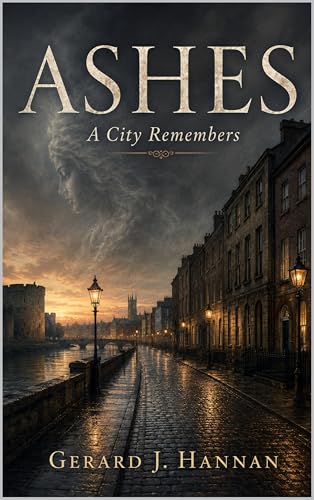
Cover of Ashes

Ashes

The Ashes Trilogy, Book One

Ashes begins the story of a group of children growing up in the streets and lanes of Limerick, where poverty and hardship are balanced by humour, imagination and fierce friendship. Their city is more than a setting: it watches, remembers and gives voice to lives often absent from official history. As the children explore their neighbourhood, they encounter family pressures, faith, hunger, danger and the first signs of a changing world. Through their adventures and loyalties, the novel captures the resilience of ordinary people and introduces the characters whose lives will unfold across the three volumes of The Ashes Trilogy.

View on Amazon UK
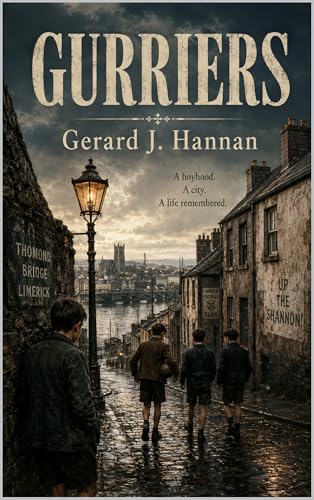
Cover of Gurriers

Gurriers

The Ashes Trilogy, Book Two

Gurriers continues the lives of the Limerick children introduced in Ashes as childhood freedom begins to give way to work, responsibility and harsher choices. Their friendships remain strong, but poverty, family expectations, faith and the pressures of growing older test loyalties once taken for granted. The streets and lanes still offer humour, adventure and belonging, yet the wider world increasingly intrudes upon their lives. Through vivid dialogue, memorable characters and the watchful voice of Limerick itself, the novel explores resilience, identity and change while showing how even the closest companions can be drawn towards futures by circumstances beyond their control.

Cover of Scattered

Scattered

The Ashes Trilogy, Book Three

Scattered concludes The Ashes Trilogy as the friends who once shared Limerick’s streets and lanes face adulthood, work, hunger, faith, family duty and emigration. Time has altered their ambitions, tested their loyalties and carried some beyond the city that formed them. Yet memory continues to bind Louie, Seamus, Joe, Sean, Peter, Tony, Bardy, Maura, Eileen, Nora, Lingo and the mysterious Gleamer. Narrated through the enduring presence of Limerick itself, the novel explores separation, sacrifice and survival while recognising the humour and affection that remain. Together, their scattered lives complete a moving portrait of friendship, community and change across changing generations.

Cover of Threshold

Threshold

The Troubles Trilogy, Book One

Threshold opens in Belfast in 1968, where the Catholic Devlins and Protestant Morrows confront a city divided by religion, memory and fear. Civil rights marches, police violence, riots and internment transform ordinary streets into dangerous frontiers while political conflict enters homes, workplaces and schools. At the centre are Aileen Devlin and Thomas Morrow, whose relationship challenges the boundaries their families regard as essential to survival. As loyalty hardens into suspicion, both must decide whether inherited allegiance excuses injustice. Through family arguments, upheaval and private courage, the novel explores love, conscience, division and survival during the opening years of the Troubles.

Cover of Hunger

Hunger

The Troubles Trilogy, Book Two

Hunger is Book Two of The Troubles Trilogy, set in Belfast during the 1980s. Aileen Devlin and Thomas Morrow have built a fragile life across the city’s sectarian divide, but the conflict threatens the home they created for their daughter, Claire. As hunger strikes, the Anglo Irish Agreement and violence reshape Northern Ireland, republican Declan and loyalist Billy exploit fear, grief and vulnerable young men. Against them stand Aileen, Kathleen and Elsie, whose quiet strength keeps their families human. This is a story of love, survival and the courage to place people before causes in a divided society under pressure.

Cover of Crossing

Crossing

The Troubles Trilogy, Book Three

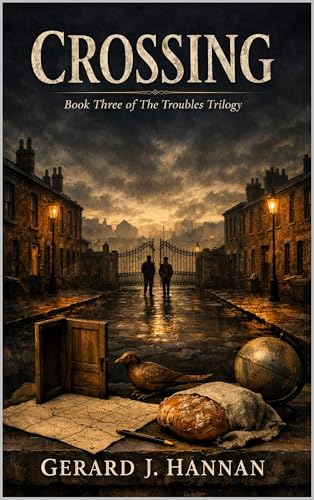
Crossing concludes The Troubles Trilogy during the decade from 1990 to 2000, as Belfast moves from violence towards negotiation, ceasefires and uncertain peace. The Devlin and Morrow families face political change alongside grief, ageing, divided loyalties and the consequences of choices made across three decades. Relationships once threatened by religious boundaries are tested by memory, mistrust and the fear that compromise may betray the dead. As the peace process gathers momentum, ordinary people must decide whether reconciliation is possible. The trilogy closes with a story of endurance, forgiveness, loss and hope beyond inherited division, proving that peace begins with courage.

Cover of Severance

Severance

Historical Novel

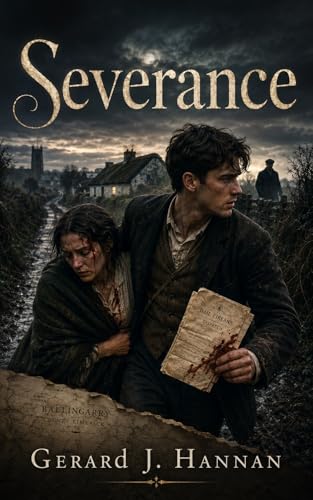
Severance is a historical novel set in Ballingarry, County Limerick, during Ireland’s struggle for independence. A torn and bloodied dispatch passes through fields, kitchens, lofts and hidden routes, placing everyone who handles it in danger. Michael Enright carries the burden of trust, while Mary, Molly and their neighbours struggle to preserve the message and protect one another. Against them, Captain Edward Harcourt studies every delay, wound and fragment for clues. As loyalty, fear and betrayal tighten around the hidden network, ordinary people must decide what they are willing to risk when history enters their homes and silence itself becomes dangerous.

Cover of Limerick Generations: 1900 to 1909

Limerick Generations: 1900 to 1909

Limerick Decalogy, Book One

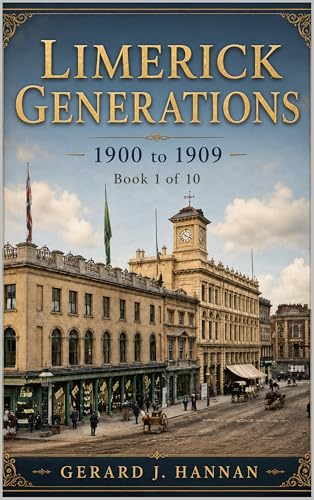
Limerick Generations: 1900 to 1909 opens the decade by documenting a city and county entering the twentieth century amid political debate, commercial activity, poverty, faith and technological change. Month by month, the book connects major Irish developments with local events, institutions, streets and communities. Public meetings, labour, transport, education, sport, business and everyday life reveal how national questions were experienced in Limerick. Historical reports and carefully reconstructed narratives bring forgotten moments and ordinary people into focus. As Book One of Limerick Decalogy, it establishes the foundation for a ten volume journey through one hundred years of local history and memory.

Cover of Limerick Generations: 1910 to 1919

Limerick Generations: 1910 to 1919

Limerick Decalogy, Book Two

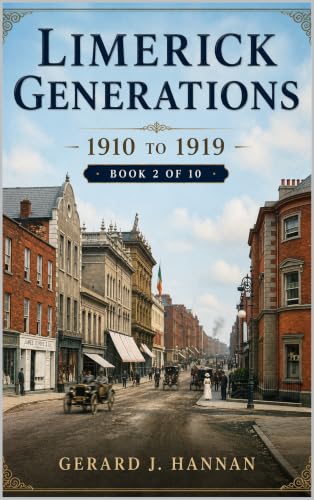
Limerick Generations: 1910 to 1919 traces a decade of political transformation, labour conflict, war, revolution and social change across Limerick city and county. Home Rule, unionist resistance, trade union organisation and the First World War entered streets, farms, schools, workplaces and family life. The Easter Rising, conscription crisis, influenza pandemic and general election altered public loyalties and expectations. The decade culminated in the Limerick Soviet of 1919, when workers challenged military restrictions through organised collective action. As Book Two of Limerick Decalogy, the volume preserves local experiences of hardship, courage, grief, endurance and change during years of intense historic upheaval.

Associated Archives

People and Personalities Social Life and Customs Historic News Childhood and Family Life Transport Business and Commerce

Restoring History

Limerick Archives preserves, enhances, restores and colourises historic photographs, sometimes presenting fresh angles on familiar scenes. When no suitable public-domain image exists, we create carefully researched AI illustrations for archive articles. We also invite the public to submit photographs for restoration and possible publication, with ownership always remaining entirely theirs.