
c.1922
609 archived items
January 10 items
Limerick Castle
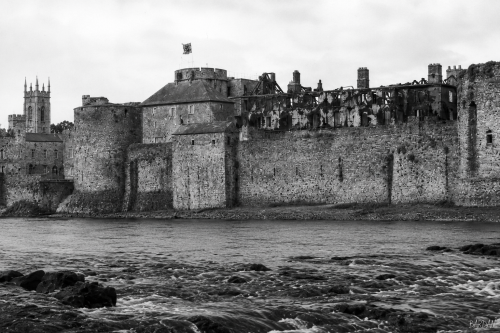
King John’s Castle stands beside the River Shannon at Curragower Falls, with broken water, river rocks and the castle’s stone frontage visible across the scene. The round towers, curtain walls and riverside defences remain central, while the burned Castle Barracks appears roofless and blackened within the enclosure. Thomond Bridge is visible to the left, with nearby trees, older buildings and a church tower rising beyond the castle walls. The river surface shows ripples, reflections and shallow movement below the fortifications. The image presents the castle after damage, set within the wider early twentieth century Limerick urban riverside landscape after 1922.
View Image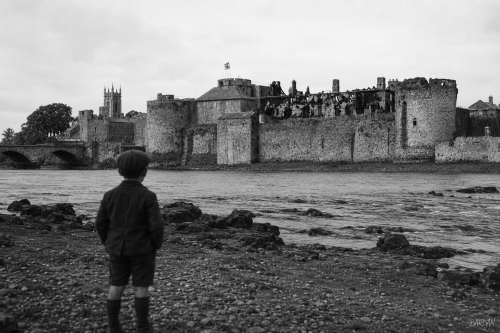
Limerick Castle
King John’s Castle stands beside the River Shannon at Curragower Falls, with broken water, river rocks and the castle’s stone frontage visible across the scene. The round towers, curtain walls and riverside defences remain central, while the burned Castle Barracks appears roofless and blackened within the enclosure. Thomond Bridge is visible to the left, with nearby trees, older buildings and a church tower rising beyond the castle walls. The river surface shows ripples, reflections and shallow movement below the fortifications. The image presents the castle after damage, set within the wider early twentieth century Limerick urban riverside landscape after 1922.
View Image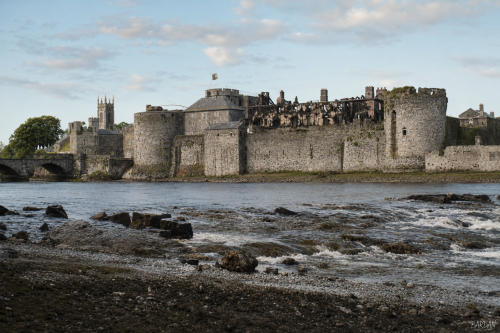
Limerick Castle
King John’s Castle stands beside the River Shannon at Curragower Falls, with broken water, river rocks and the castle’s stone frontage visible across the scene. The round towers, curtain walls and riverside defences remain central, while the burned Castle Barracks appears roofless and blackened within the enclosure. Thomond Bridge is visible to the left, with nearby trees, older buildings and a church tower rising beyond the castle walls. The river surface shows ripples, reflections and shallow movement below the fortifications. The image presents the castle after damage, set within the wider early twentieth century Limerick urban riverside landscape after 1922.
View Image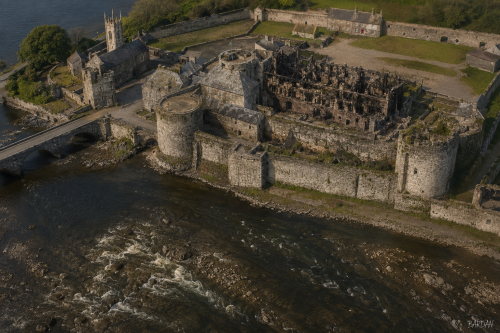
Limerick Castle
King John’s Castle stands beside the River Shannon at Curragower Falls, with broken water, river rocks and the castle’s stone frontage visible across the scene. The round towers, curtain walls and riverside defences remain central, while the burned Castle Barracks appears roofless and blackened within the enclosure. Thomond Bridge is visible to the left, with nearby trees, older buildings and a church tower rising beyond the castle walls. The river surface shows ripples, reflections and shallow movement below the fortifications. The image presents the castle after damage, set within the wider early twentieth century Limerick urban riverside landscape after 1922.
View Image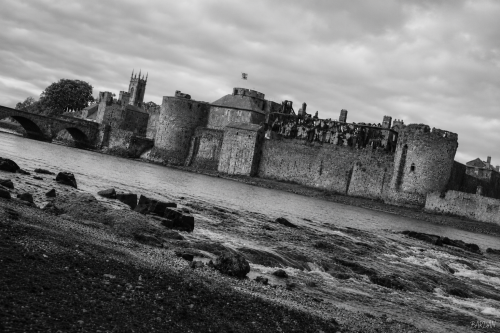
Limerick Castle
King John’s Castle stands beside the River Shannon at Curragower Falls, with broken water, river rocks and the castle’s stone frontage visible across the scene. The round towers, curtain walls and riverside defences remain central, while the burned Castle Barracks appears roofless and blackened within the enclosure. Thomond Bridge is visible to the left, with nearby trees, older buildings and a church tower rising beyond the castle walls. The river surface shows ripples, reflections and shallow movement below the fortifications. The image presents the castle after damage, set within the wider early twentieth century Limerick urban riverside landscape after 1922.
View Image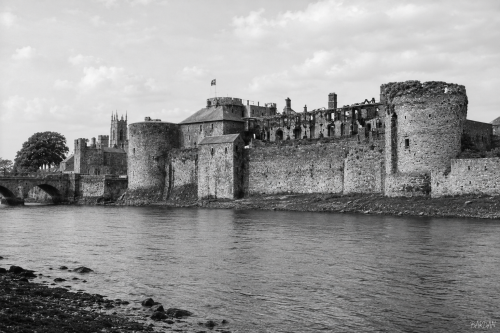
Limerick Castle
King John’s Castle stands beside the River Shannon at Curragower Falls, with broken water, river rocks and the castle’s stone frontage visible across the scene. The round towers, curtain walls and riverside defences remain central, while the burned Castle Barracks appears roofless and blackened within the enclosure. Thomond Bridge is visible to the left, with nearby trees, older buildings and a church tower rising beyond the castle walls. The river surface shows ripples, reflections and shallow movement below the fortifications. The image presents the castle after damage, set within the wider early twentieth century Limerick urban riverside landscape after 1922.
View Image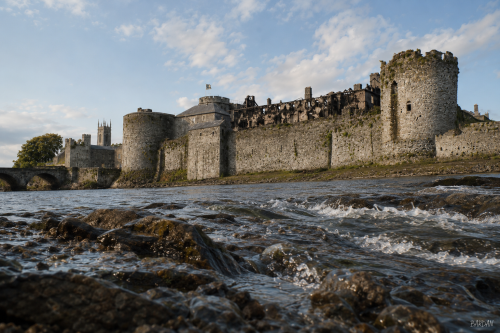
Limerick Castle
King John’s Castle stands beside the River Shannon at Curragower Falls, with broken water, river rocks and the castle’s stone frontage visible across the scene. The round towers, curtain walls and riverside defences remain central, while the burned Castle Barracks appears roofless and blackened within the enclosure. Thomond Bridge is visible to the left, with nearby trees, older buildings and a church tower rising beyond the castle walls. The river surface shows ripples, reflections and shallow movement below the fortifications. The image presents the castle after damage, set within the wider early twentieth century Limerick urban riverside landscape after 1922.
View Image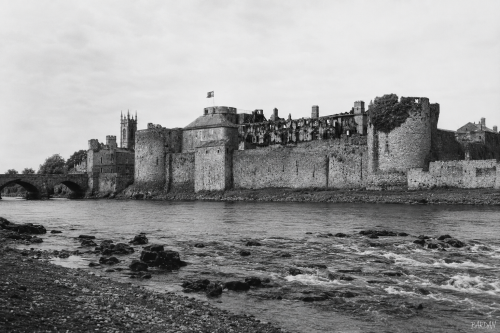
Limerick Castle
King John’s Castle stands beside the River Shannon at Curragower Falls, with broken water, river rocks and the castle’s stone frontage visible across the scene. The round towers, curtain walls and riverside defences remain central, while the burned Castle Barracks appears roofless and blackened within the enclosure. Thomond Bridge is visible to the left, with nearby trees, older buildings and a church tower rising beyond the castle walls. The river surface shows ripples, reflections and shallow movement below the fortifications. The image presents the castle after damage, set within the wider early twentieth century Limerick urban riverside landscape after 1922.
View Image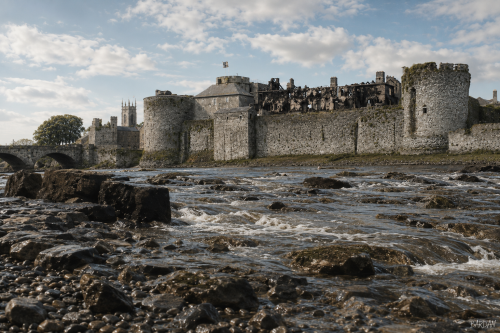
Limerick Castle
King John’s Castle stands beside the River Shannon at Curragower Falls, with broken water, river rocks and the castle’s stone frontage visible across the scene. The round towers, curtain walls and riverside defences remain central, while the burned Castle Barracks appears roofless and blackened within the enclosure. Thomond Bridge is visible to the left, with nearby trees, older buildings and a church tower rising beyond the castle walls. The river surface shows ripples, reflections and shallow movement below the fortifications. The image presents the castle after damage, set within the wider early twentieth century Limerick urban riverside landscape after 1922.
View Image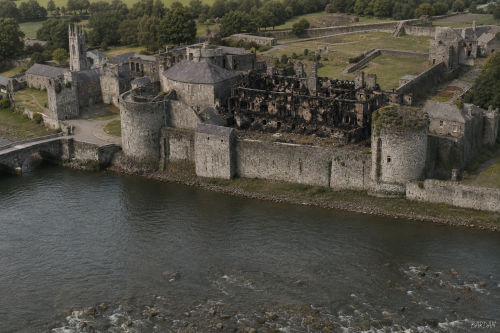
Limerick Castle
King John’s Castle stands beside the River Shannon at Curragower Falls, with broken water, river rocks and the castle’s stone frontage visible across the scene. The round towers, curtain walls and riverside defences remain central, while the burned Castle Barracks appears roofless and blackened within the enclosure. Thomond Bridge is visible to the left, with nearby trees, older buildings and a church tower rising beyond the castle walls. The river surface shows ripples, reflections and shallow movement below the fortifications. The image presents the castle after damage, set within the wider early twentieth century Limerick urban riverside landscape after 1922.
View ImageFebruary 0 items
No published items are currently assigned to this period.
March 0 items
No published items are currently assigned to this period.
April 0 items
No published items are currently assigned to this period.
May 0 items
No published items are currently assigned to this period.
June 20 items

Castle Restored
Glenduff Castle is shown restored to its former splendour, standing proudly amid landscaped gardens in rural County Limerick. Built around 1840 for the Ievers family, the castellated country house incorporated an earlier tower house dating from about 1600. Its battlements, flanking towers, arched entrance and long stone façade created a striking Gothic Revival residence. The scene imagines the estate before its destruction, with residents, visitors and a horse-drawn carriage bringing the grounds to life. Glenduff Castle was burned during the Irish Civil War on 29 June 1922, leaving the picturesque ivy-covered ruin that survives on private farmland near Broadford today.
View Image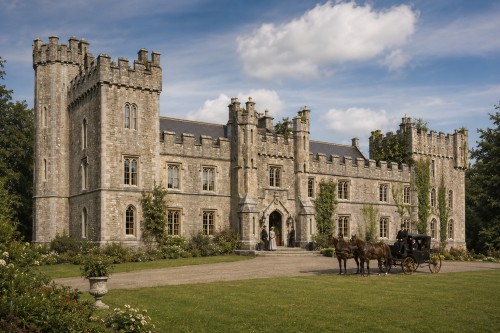
Castle Restored
Glenduff Castle is shown restored to its former splendour, standing proudly amid landscaped gardens in rural County Limerick. Built around 1840 for the Ievers family, the castellated country house incorporated an earlier tower house dating from about 1600. Its battlements, flanking towers, arched entrance and long stone façade created a striking Gothic Revival residence. The scene imagines the estate before its destruction, with residents, visitors and a horse-drawn carriage bringing the grounds to life. Glenduff Castle was burned during the Irish Civil War on 29 June 1922, leaving the picturesque ivy-covered ruin that survives on private farmland near Broadford today.
View Image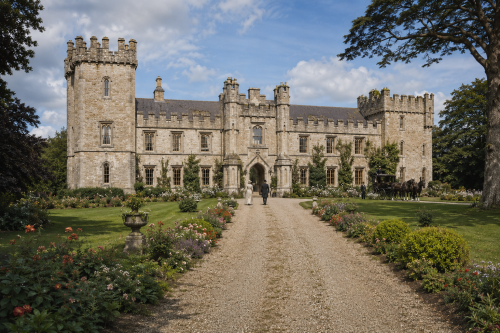
Castle Restored
Glenduff Castle is shown restored to its former splendour, standing proudly amid landscaped gardens in rural County Limerick. Built around 1840 for the Ievers family, the castellated country house incorporated an earlier tower house dating from about 1600. Its battlements, flanking towers, arched entrance and long stone façade created a striking Gothic Revival residence. The scene imagines the estate before its destruction, with residents, visitors and a horse-drawn carriage bringing the grounds to life. Glenduff Castle was burned during the Irish Civil War on 29 June 1922, leaving the picturesque ivy-covered ruin that survives on private farmland near Broadford today.
View Image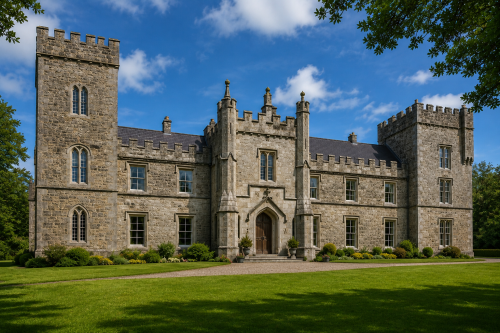
Castle Restored
This reconstructed view presents Glenduff Castle in County Limerick as it may have appeared before its destruction in 1922. The imposing residence combines the fortified character of an earlier seventeenth-century tower house with the Gothic Revival additions created for the Ievers family around 1840. Tall crenellated towers, pointed windows, battlements and a formal central entrance give the building a commanding presence. Set within carefully maintained lawns and mature woodland, the castle reflects the scale and confidence of a nineteenth-century Irish country estate. The image offers a plausible visual impression rather than a definitive record of its original appearance or grandeur.
View Image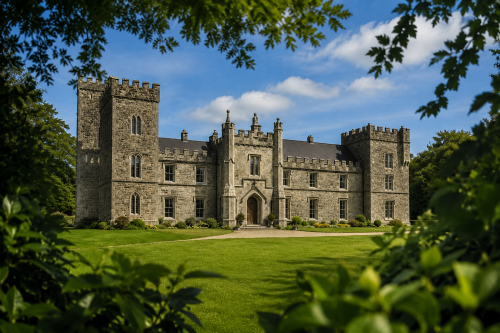
Castle Restored
This reconstructed view presents Glenduff Castle in County Limerick as it may have appeared before its destruction in 1922. The imposing residence combines the fortified character of an earlier seventeenth-century tower house with the Gothic Revival additions created for the Ievers family around 1840. Tall crenellated towers, pointed windows, battlements and a formal central entrance give the building a commanding presence. Set within carefully maintained lawns and mature woodland, the castle reflects the scale and confidence of a nineteenth-century Irish country estate. The image offers a plausible visual impression rather than a definitive record of its original appearance or grandeur.
View Image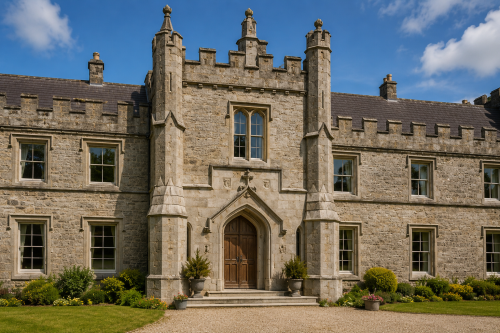
Castle Restored
This reconstructed view presents Glenduff Castle in County Limerick as it may have appeared before its destruction in 1922. The imposing residence combines the fortified character of an earlier seventeenth-century tower house with the Gothic Revival additions created for the Ievers family around 1840. Tall crenellated towers, pointed windows, battlements and a formal central entrance give the building a commanding presence. Set within carefully maintained lawns and mature woodland, the castle reflects the scale and confidence of a nineteenth-century Irish country estate. The image offers a plausible visual impression rather than a definitive record of its original appearance or grandeur.
View Image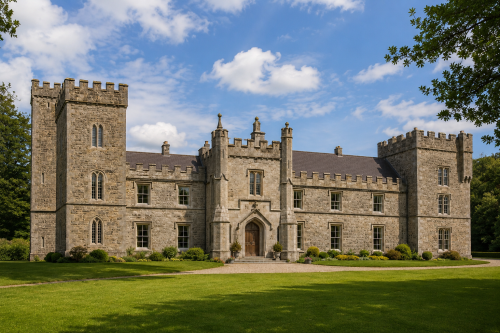
Castle Restored
This reconstructed view presents Glenduff Castle in County Limerick as it may have appeared before its destruction in 1922. The imposing residence combines the fortified character of an earlier seventeenth-century tower house with the Gothic Revival additions created for the Ievers family around 1840. Tall crenellated towers, pointed windows, battlements and a formal central entrance give the building a commanding presence. Set within carefully maintained lawns and mature woodland, the castle reflects the scale and confidence of a nineteenth-century Irish country estate. The image offers a plausible visual impression rather than a definitive record of its original appearance or grandeur.
View Image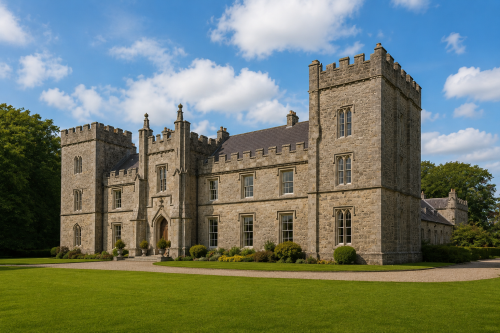
Castle Restored
This reconstructed view presents Glenduff Castle in County Limerick as it may have appeared before its destruction in 1922. The imposing residence combines the fortified character of an earlier seventeenth-century tower house with the Gothic Revival additions created for the Ievers family around 1840. Tall crenellated towers, pointed windows, battlements and a formal central entrance give the building a commanding presence. Set within carefully maintained lawns and mature woodland, the castle reflects the scale and confidence of a nineteenth-century Irish country estate. The image offers a plausible visual impression rather than a definitive record of its original appearance or grandeur.
View Image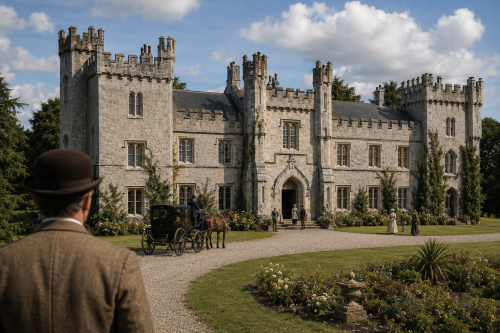
Castle Restored
Glenduff Castle is shown restored to its former splendour, standing proudly amid landscaped gardens in rural County Limerick. Built around 1840 for the Ievers family, the castellated country house incorporated an earlier tower house dating from about 1600. Its battlements, flanking towers, arched entrance and long stone façade created a striking Gothic Revival residence. The scene imagines the estate before its destruction, with residents, visitors and a horse-drawn carriage bringing the grounds to life. Glenduff Castle was burned during the Irish Civil War on 29 June 1922, leaving the picturesque ivy-covered ruin that survives on private farmland near Broadford today.
View Image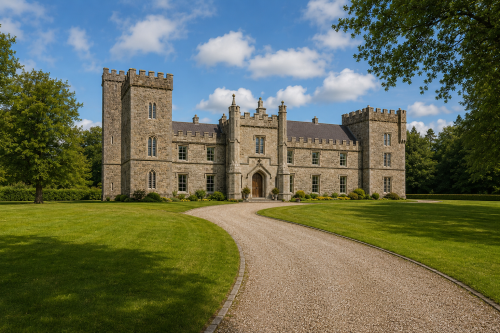
Castle Restored
This reconstructed view presents Glenduff Castle in County Limerick as it may have appeared before its destruction in 1922. The imposing residence combines the fortified character of an earlier seventeenth-century tower house with the Gothic Revival additions created for the Ievers family around 1840. Tall crenellated towers, pointed windows, battlements and a formal central entrance give the building a commanding presence. Set within carefully maintained lawns and mature woodland, the castle reflects the scale and confidence of a nineteenth-century Irish country estate. The image offers a plausible visual impression rather than a definitive record of its original appearance or grandeur.
View Image
Castle Restored
Glenduff Castle is shown restored to its former splendour, standing proudly amid landscaped gardens in rural County Limerick. Built around 1840 for the Ievers family, the castellated country house incorporated an earlier tower house dating from about 1600. Its battlements, flanking towers, arched entrance and long stone façade created a striking Gothic Revival residence. The scene imagines the estate before its destruction, with residents, visitors and a horse-drawn carriage bringing the grounds to life. Glenduff Castle was burned during the Irish Civil War on 29 June 1922, leaving the picturesque ivy-covered ruin that survives on private farmland near Broadford today.
View Image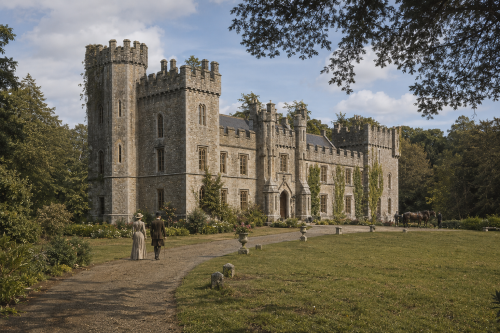
Castle Restored
Glenduff Castle is shown restored to its former splendour, standing proudly amid landscaped gardens in rural County Limerick. Built around 1840 for the Ievers family, the castellated country house incorporated an earlier tower house dating from about 1600. Its battlements, flanking towers, arched entrance and long stone façade created a striking Gothic Revival residence. The scene imagines the estate before its destruction, with residents, visitors and a horse-drawn carriage bringing the grounds to life. Glenduff Castle was burned during the Irish Civil War on 29 June 1922, leaving the picturesque ivy-covered ruin that survives on private farmland near Broadford today.
View Image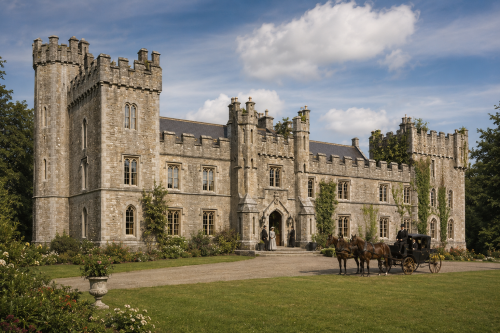
Castle Restored
Glenduff Castle is shown restored to its former splendour, standing proudly amid landscaped gardens in rural County Limerick. Built around 1840 for the Ievers family, the castellated country house incorporated an earlier tower house dating from about 1600. Its battlements, flanking towers, arched entrance and long stone façade created a striking Gothic Revival residence. The scene imagines the estate before its destruction, with residents, visitors and a horse-drawn carriage bringing the grounds to life. Glenduff Castle was burned during the Irish Civil War on 29 June 1922, leaving the picturesque ivy-covered ruin that survives on private farmland near Broadford today.
View Image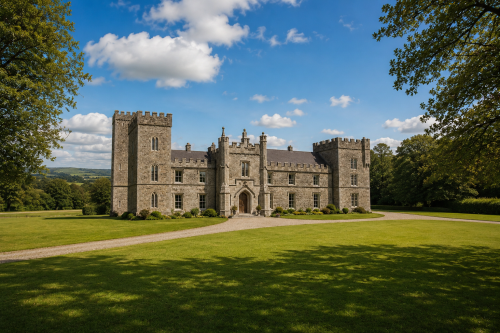
Castle Restored
This reconstructed view presents Glenduff Castle in County Limerick as it may have appeared before its destruction in 1922. The imposing residence combines the fortified character of an earlier seventeenth-century tower house with the Gothic Revival additions created for the Ievers family around 1840. Tall crenellated towers, pointed windows, battlements and a formal central entrance give the building a commanding presence. Set within carefully maintained lawns and mature woodland, the castle reflects the scale and confidence of a nineteenth-century Irish country estate. The image offers a plausible visual impression rather than a definitive record of its original appearance or grandeur.
View Image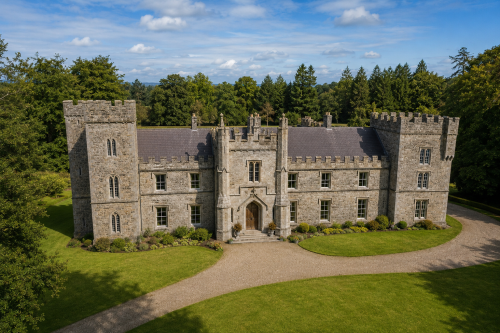
Castle Restored
This reconstructed view presents Glenduff Castle in County Limerick as it may have appeared before its destruction in 1922. The imposing residence combines the fortified character of an earlier seventeenth-century tower house with the Gothic Revival additions created for the Ievers family around 1840. Tall crenellated towers, pointed windows, battlements and a formal central entrance give the building a commanding presence. Set within carefully maintained lawns and mature woodland, the castle reflects the scale and confidence of a nineteenth-century Irish country estate. The image offers a plausible visual impression rather than a definitive record of its original appearance or grandeur.
View Image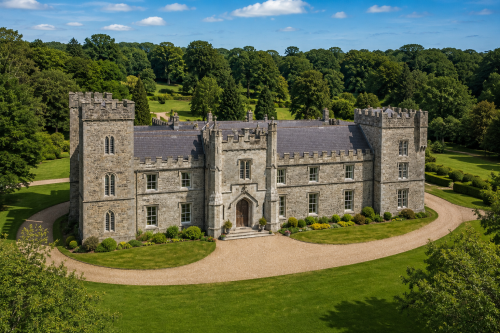
Castle Restored
This reconstructed view presents Glenduff Castle in County Limerick as it may have appeared before its destruction in 1922. The imposing residence combines the fortified character of an earlier seventeenth-century tower house with the Gothic Revival additions created for the Ievers family around 1840. Tall crenellated towers, pointed windows, battlements and a formal central entrance give the building a commanding presence. Set within carefully maintained lawns and mature woodland, the castle reflects the scale and confidence of a nineteenth-century Irish country estate. The image offers a plausible visual impression rather than a definitive record of its original appearance or grandeur.
View Image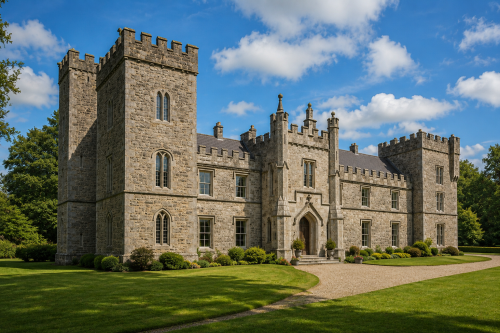
Castle Restored
This reconstructed view presents Glenduff Castle in County Limerick as it may have appeared before its destruction in 1922. The imposing residence combines the fortified character of an earlier seventeenth-century tower house with the Gothic Revival additions created for the Ievers family around 1840. Tall crenellated towers, pointed windows, battlements and a formal central entrance give the building a commanding presence. Set within carefully maintained lawns and mature woodland, the castle reflects the scale and confidence of a nineteenth-century Irish country estate. The image offers a plausible visual impression rather than a definitive record of its original appearance or grandeur.
View Image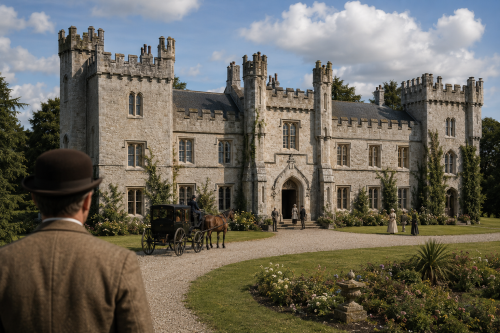
Castle Restored
Glenduff Castle is shown restored to its former splendour, standing proudly amid landscaped gardens in rural County Limerick. Built around 1840 for the Ievers family, the castellated country house incorporated an earlier tower house dating from about 1600. Its battlements, flanking towers, arched entrance and long stone façade created a striking Gothic Revival residence. The scene imagines the estate before its destruction, with residents, visitors and a horse-drawn carriage bringing the grounds to life. Glenduff Castle was burned during the Irish Civil War on 29 June 1922, leaving the picturesque ivy-covered ruin that survives on private farmland near Broadford today.
View Image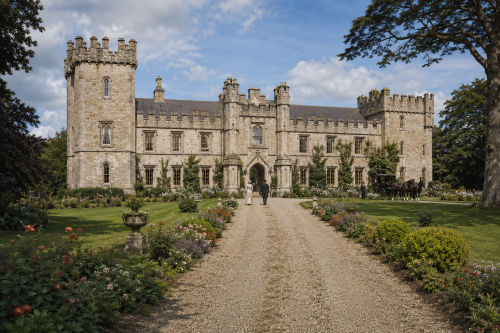
Castle Restored
Glenduff Castle is shown restored to its former splendour, standing proudly amid landscaped gardens in rural County Limerick. Built around 1840 for the Ievers family, the castellated country house incorporated an earlier tower house dating from about 1600. Its battlements, flanking towers, arched entrance and long stone façade created a striking Gothic Revival residence. The scene imagines the estate before its destruction, with residents, visitors and a horse-drawn carriage bringing the grounds to life. Glenduff Castle was burned during the Irish Civil War on 29 June 1922, leaving the picturesque ivy-covered ruin that survives on private farmland near Broadford today.
View Image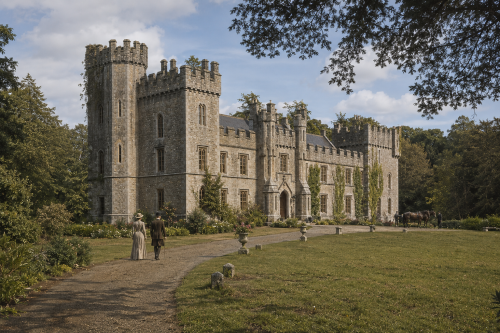
Castle Restored
Glenduff Castle is shown restored to its former splendour, standing proudly amid landscaped gardens in rural County Limerick. Built around 1840 for the Ievers family, the castellated country house incorporated an earlier tower house dating from about 1600. Its battlements, flanking towers, arched entrance and long stone façade created a striking Gothic Revival residence. The scene imagines the estate before its destruction, with residents, visitors and a horse-drawn carriage bringing the grounds to life. Glenduff Castle was burned during the Irish Civil War on 29 June 1922, leaving the picturesque ivy-covered ruin that survives on private farmland near Broadford today.
View ImageJuly 0 items
No published items are currently assigned to this period.
August 0 items
No published items are currently assigned to this period.
September 0 items
No published items are currently assigned to this period.
October 0 items
No published items are currently assigned to this period.
November 0 items
No published items are currently assigned to this period.