Mountshannon House in Splendour

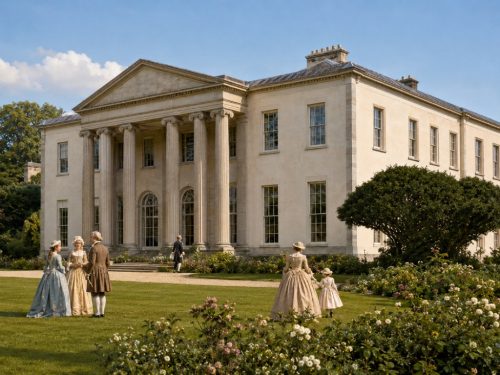
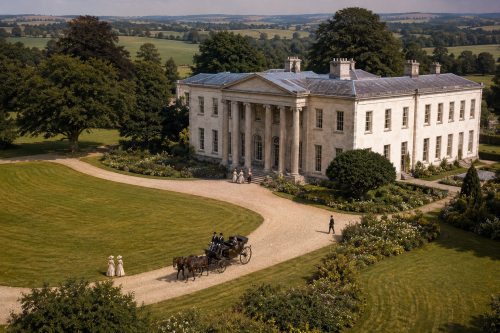
Mountshannon House, near Castleconnell in County Limerick, was one of Ireland’s grandest eighteenth-century mansions. Built around 1750, it later gained a monumental Ionic portico during an 1813 remodelling by architect Lewis Wyatt. Tradition claimed the house contained 365 windows, while its vast entrance hall could accommodate a horse-drawn carriage. Surrounded by a 900-acre demesne between the River Shannon and Mulkear River, its celebrated gardens were designed by John Sutherland. Home to the powerful FitzGibbon family, including John “Black Jack” FitzGibbon, 1st Earl of Clare, the mansion became a renowned centre of political influence, hospitality, wealth, political power, and aristocratic life.
Hartstonge Legacy

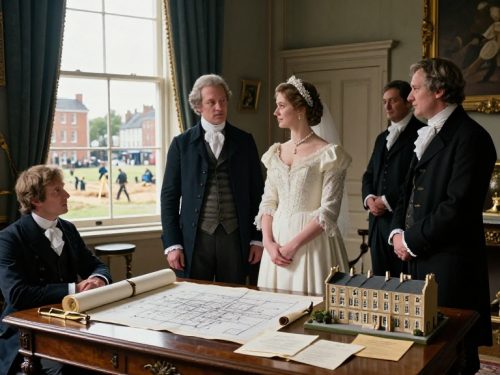
The Hartstonge and Pery families became closely bound through two marriages that brought together political influence, landed property and urban ambition in eighteenth-century Limerick. Sir Henry Hartstonge, third baronet of Bruff and Court, married Lucy Pery in 1751. She was the sister of Edmond Sexten Pery and the Reverend William Cecil Pery, whose parliamentary, ecclesiastical and property interests increasingly shaped the city. The marriage produced no children, but it placed Hartstonge firmly within the Pery family circle. He became both a political ally and a participant in the development of property connected with Newtown Pery.

Garrison Announced

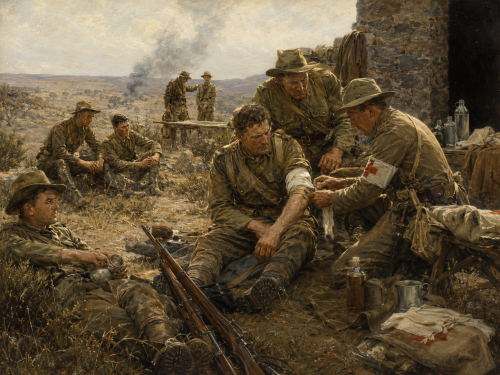
A new military garrison was announced for Limerick on 2 January 1900, although the arrangement proved provisional. Contemporary reports stated that the 3rd Battalion, Oxfordshire Light Infantry, formerly the Royal Bucks Militia, would be embodied at High Wycombe and sent to Limerick for garrison duty during the South African War. The announcement also noted that the home details left behind by the regiment’s 1st Battalion, which had departed Aldershot for active service, had already reached the city. Within days, however, the proposed destination was altered, and the militia battalion was directed to Buttevant rather than Limerick.

Factional Legacy

The legacy of the Parnell split continued to govern personal relationships within Irish nationalism nearly a decade after the parliamentary rupture of December 1890. Charles Stewart Parnell’s refusal to surrender the party leadership during the O’Shea divorce crisis divided former colleagues into Parnellite and anti-Parnellite camps. Political argument became inseparable from accusations of loyalty, betrayal, clerical interference and personal ambition. Parnell’s death in October 1891 removed the leader around whom the conflict had formed, but it did not reconcile the men who had defended or rejected him. Those memories endured within parliamentary factions, newspapers, constituencies and private correspondence.

Shoppers On William Street

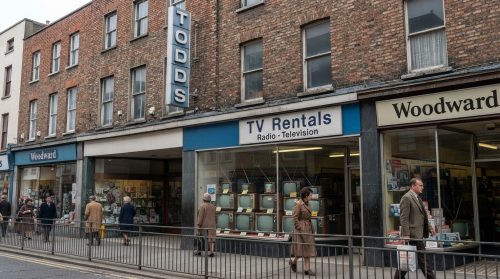
William Street, Limerick, appears busy and energetic in this view from 1975. Shoppers crowd the pavements beneath traditional shopfronts, while cyclists, buses and family cars compete for space along the roadway. Georgian buildings on the left stand opposite the modern commercial blocks of the period, including the prominent Lifts sign. Overhead street lighting and central pedestrian railings reflect changing approaches to traffic management in the city centre. The scene captures a transitional moment when long-established local businesses, older architecture and everyday street life existed beside post-war redevelopment, growing car ownership and a more modern retail environment within central Limerick itself.

Mountshannon House in Splendour

Mountshannon House, near Castleconnell in County Limerick, was one of Ireland’s grandest eighteenth-century mansions. Built around 1750, it later gained a monumental Ionic portico during an 1813 remodelling by architect Lewis Wyatt. Tradition claimed the house contained 365 windows, while its vast entrance hall could accommodate a horse-drawn carriage. Surrounded by a 900-acre demesne between the River Shannon and Mulkear River, its celebrated gardens were designed by John Sutherland. Home to the powerful FitzGibbon family, including John “Black Jack” FitzGibbon, 1st Earl of Clare, the mansion became a renowned centre of political influence, hospitality, wealth, political power, and aristocratic life.
Shanagolden Through the Ages

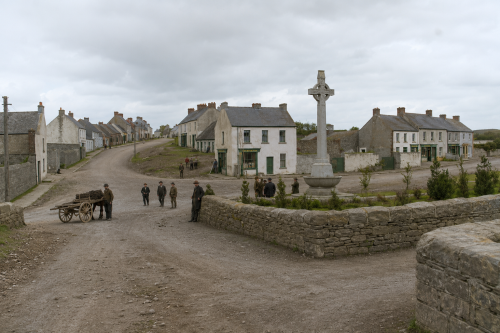
Shanagolden, whose Irish name Seanghualainn means “old shoulder,” possesses a history stretching from early medieval warfare to plantation settlement and modern political struggle. Nearby lands witnessed Mahon’s victory over Norse forces in 968, while Shanid Castle later became a major FitzGerald stronghold. St Katherine’s Abbey reflects the district’s medieval religious heritage. Following the Desmond conflicts, the village was reshaped as an Elizabethan plantation settlement, leaving its broad street, square and central green. During the nineteenth century, policing, trade, farming and creamery production shaped local life. Shanagolden also played a remembered role during Ireland’s War of Independence in the twentieth century.

The Carnegie Library

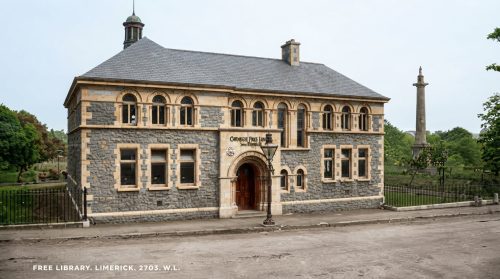
The Carnegie Library on Pery Square is one of Limerick’s most distinctive civic buildings. Funded by a £7,000 donation from Scottish-American philanthropist Andrew Carnegie, its foundation stone was laid by Carnegie himself in October 1903. Designed by Dublin architect George Patrick Sheridan, the limestone building opened in 1908 as a combined free library and museum. It later housed Limerick Museum and the growing Limerick City Collection of Art. After the library and museum relocated in 1985, the building became home to Limerick City Gallery of Art. Modern extensions have expanded its exhibition spaces while preserving its historic Neo-Hiberno-Romanesque character today.

Blossom Gate, Kilmallock

Blossom Gate is the last surviving medieval gateway of Kilmallock, County Limerick, once one of Ireland’s most strongly fortified towns. Originally one of five entrances through the defensive walls, it alone remains; St John’s, Water, Ivy and Friary gates have disappeared. Standing on Emmet Street, the three-storey stone tower spans the roadway above a pointed arched vault, marking where the town walls formerly joined it. The name may derive from “Blae Gate” or from the Irish word blá, meaning flower or blossom, combined with the French porte, meaning gate. Today, it is a prominent reminder of Kilmallock’s medieval importance and heritage.

Home Rule Deferred

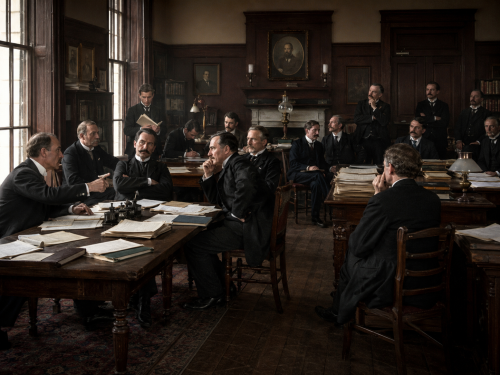
The opening of the new Parliament has confirmed that Home Rule remains outside the immediate programme of the government, despite the strong electoral recovery of John Redmond’s reunited Irish Parliamentary Party. Nationalists returned seventy-seven members from Ireland’s 103 constituencies, giving the demand for an Irish legislature a commanding parliamentary voice. Yet the administration of Lord Salisbury, strengthened by its general-election victory, has offered no proposal for restoring domestic government in Dublin. In Limerick city and county, where nationalist representatives were returned and Home Rule remains central to organised political life, the omission will be received as a deliberate refusal to recognise Ireland’s electoral verdict.