Archived: 13 October 2026
Abstract
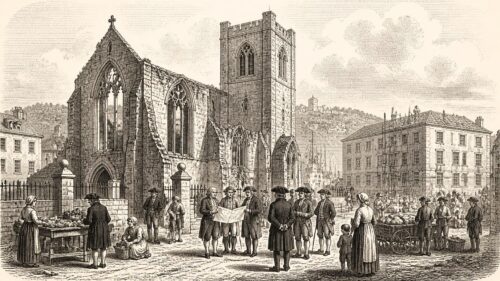
In 1735, Ireland’s Protestant governing system addressed poverty, security and economic improvement through parliamentary proposals, proclamations and print. Dublin’s parliament, constrained by Poynings’ Law and dominated by property-owning Protestants, considered measures reinforcing Catholic exclusion from juries and restricting mixed marriages. Cork advanced plans for St Fin Barre’s reconstruction and a workhouse combining relief, labour discipline, foundling care and Protestant instruction; legislation passed in 1736. Road schemes and liquor-credit regulation reflected social concerns. Proclamations pursued robbers across counties. George Berkeley’s Querist promoted debate on employment, consumption and national resources, while Protestant schooling and Ulster Scots print illustrated confessional and cultural currents.
Read Article
Archived: 13 October 2026
Abstract
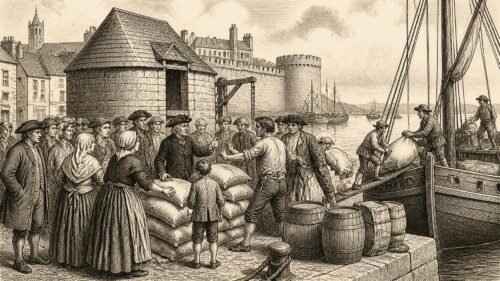
In 1727, Ireland experienced political continuity alongside acute social insecurity. George II succeeded George I, and a new Irish parliament assembled under a Protestant establishment managed through Dublin and London. Qualified Catholic freeholders still voted in the election, although legislation passed in 1728 subsequently disfranchised them. Harvest weakness and dear grain provoked resistance at Youghal and elsewhere to exports and interregional shipments, exposing conflict between commerce and subsistence. Linen exports did not ensure welfare. Swift criticised structural poverty, while Dublin’s workhouse expanded foundling provision amid uncertainty over dates. The year revealed unequal access to political rights, food, care and markets.
Read Article
Archived: 13 October 2026
Abstract
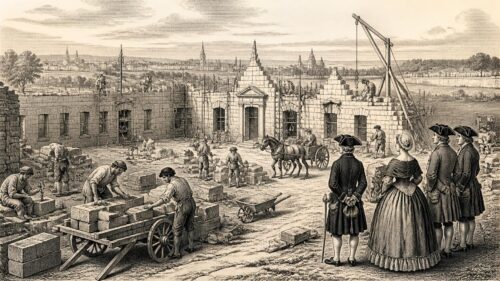
In 1720, Westminster's Sixth of George I asserted Britain's power to legislate for Ireland and made the British Lords Ireland's final appellate court, deepening dependency. Ireland's Anglican ascendancy governed a population restricted by penal laws; James Cotter's execution heightened sectarian tensions. Jonathan Swift's Irish Manufacture pamphlet urged consumers to reject English goods, articulating economic patriotism amid mercantilist constraints. A proposed national bank reflected commercial ambition, but the South Sea Bubble's collapse brought banking panic. Construction began on Dr Steevens' Hospital, promoted by Grizelda Steevens, while Cork Harbour's Water Club was founded. Together they exposed dependence, inequality, charity and elite sociability.
Read Article

Archived: 14 October 2026
Abstract
In 1696, Williamite Ireland consolidated its post-war authority through military, fiscal and municipal controls rather than major conflict. Alarm over French-backed Jacobitism prompted proclamations against fugitives, alleged tories and absent officers, while Catholic disarmament authorised searches and deepened inequality. At Clonmel, the corporation ordered soldiers quartered in Catholic homes to prevent meetings, illustrating domestic surveillance despite continued Catholic trading. Poll and hearth taxes, regulated measures and proclamations sustained administration. Investigations into forfeited estates exposed continuing uncertainty over Catholic property rights. State-appointed fasts and thanksgivings reinforced Protestant political culture, while action against pirate Henry Every reflected Ireland’s place in imperial policing.
Read Article

Archived: 14 October 2026
Abstract
In 1670, under Lord Lieutenant John Berkeley, Ireland remained dominated by the Protestant land settlement and military power established after Cromwellian conquest, yet experienced limited religious latitude. Oliver Plunkett returned as Catholic archbishop of Armagh, rebuilding clerical discipline and hierarchy. Bishops met in Dublin, issued pastoral statutes and declared civil loyalty, despite rivalries between Plunkett and Dublin’s Peter Talbot. Plunkett’s Clones council extended reform and he mediated pardons for Tyrone tories. William Penn defended Quakers while managing Cork estates. Trade adapted to English livestock restrictions, Dublin gained Barrack Bridge, and rebuilding, estate consolidation and constrained negotiation reshaped society across Ireland.
Read Article
Archived: 14 October 2026
Abstract
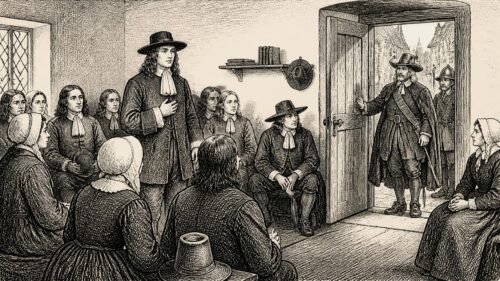
In 1667, Restoration Ireland experienced postwar settlement as courts and officials resolved contested land claims under the Acts of Settlement and Explanation. Ormond’s administration stressed legal procedure, military discipline and strained finances, while English restrictions on Irish cattle threatened trade and exposed Ireland’s dependence on Westminster. Dutch naval successes prompted defensive preparations at Kinsale before the Treaty of Breda ended the war. Protestant institutions strengthened, yet religious conformity was enforced: William Penn was arrested with Friends at a Cork meeting. Jeremy Taylor died, Jonathan Swift was born, and Alice Barry’s death marked elite change. The year revealed a fragile order.
Read Article

Archived: 14 October 2026
Abstract
In 1661, Restoration Ireland began translating conquest and upheaval into law, yet landownership, religion and authority remained unsettled. Charles II’s Irish parliament met in Dublin, advancing legislation that anticipated, but did not enact, the 1662 Act of Settlement. Proclamations regulated rents, protected occupiers and required Catholic innocence claims, while Crown revenue and cattle exports received attention. James Butler, duke of Ormond, was appointed lord lieutenant but arrived only in 1662. The Church of Ireland was reconstituted as Catholics faced pressure and debated loyalism. Events included Book of Kells’ transfer and Florence Newton’s witchcraft trial. Procedures, not peace, defined the year.
Read Article
Archived: 14 October 2026
Abstract
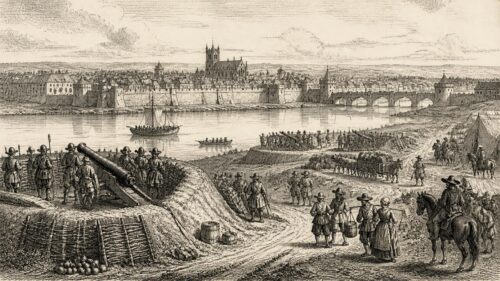
In 1651 Commonwealth forces tightened control of Ireland through campaigns in Munster and Connacht. Henry Ireton besieged Limerick, while Lord Broghill defeated Muskerry’s attempted relief army at Knocknaclashy, ending prospects of substantial support. Blockade, artillery, hunger and disease devastated Limerick’s inhabitants, provoking divisions between defenders, clergy and civilians seeking terms. The city surrendered on 27 October after internal betrayal opened key positions. Although many received quarter, leading military, civic and Catholic figures were excluded, imprisoned or executed. Ireton envisaged a more English, Protestant city. Meanwhile Galway came under blockade, becoming the remaining major centre of organised Catholic and royalist resistance.
Read Article
Archived: 14 October 2026
Abstract
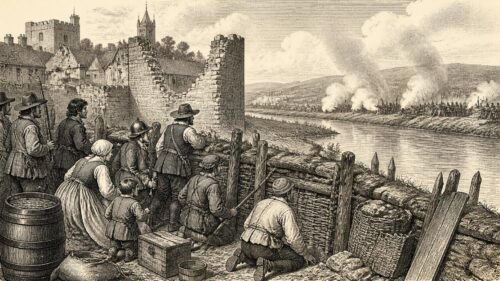
In 1650, the Cromwellian conquest advanced despite continuing resistance in Connacht, Limerick and Ulster. Cromwell’s agreement with Protestant royalists weakened Ormond’s Catholic–royalist coalition. At Clonmel, Hugh Dubh O’Neill’s improvised inner defence repelled a costly assault, although shortages enabled the garrison’s escape and the town’s surrender. Broghill defeated a relief force at Macroom, while Scarrifholis destroyed the Ulster Catholic army and led to Heber MacMahon’s execution. After Cromwell departed, Henry Ireton captured plague-stricken Waterford and Duncannon, pressured Athlone and failed before Limerick. Clergy repudiated Ormond; garrisons, blockade, disease and resource seizures established groundwork for further conquest and settlement in Ireland thereafter.
Read Article
Archived: 15 October 2026
Abstract
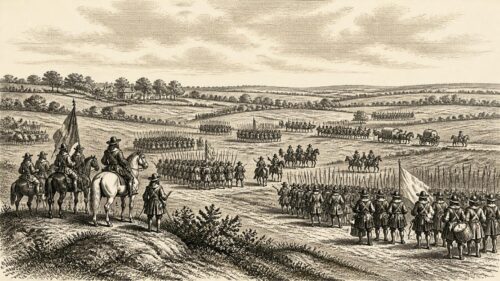
In 1647, the Catholic Confederation’s position collapsed after political division, logistical weakness and military reverses. Parliament gained Dublin when Ormond transferred the city in June, providing a strategic base. Michael Jones destroyed Thomas Preston’s Leinster army at Dungan’s Hill in August, ending any prospect of taking Dublin. In Munster, Inchiquin’s forces devastated communities and stormed Cashel, killing defenders and civilians, plundering the religious complex and deepening Catholic fears. In November, Inchiquin defeated Taaffe’s army at Knocknanuss, killing Alasdair MacColla. Although Kilkenny and O’Neill’s Ulster army survived, these disasters encouraged royalist negotiation and transformed Confederate ambitions into a struggle for survival.
Read Article

Archived: 15 October 2026
Abstract
In 1644, Confederate Ireland governed extensive territory from Kilkenny while negotiating with Charles I’s administration for Catholic worship, property, officeholding and parliamentary freedoms. Ormond pursued peace, but no settlement emerged. A major Confederate expedition under Castlehaven and Owen Roe O’Neill failed to dislodge Robert Monro’s Covenanter forces in Ulster, exposing divisions and supply weaknesses. Meanwhile, Alasdair MacColla’s troops crossed to Scotland to support royalists, prompting Westminster’s no-quarter ordinance. In Munster, Lord Inchiquin repudiated the cessation, joined Parliament, and expelled Catholics from Cork, Youghal and Kinsale. Trade continued amid war, but requisitioning, displacement and insecurity afflicted civilians deeply throughout the island.
Read Article
Archived: 16 October 2026
Abstract
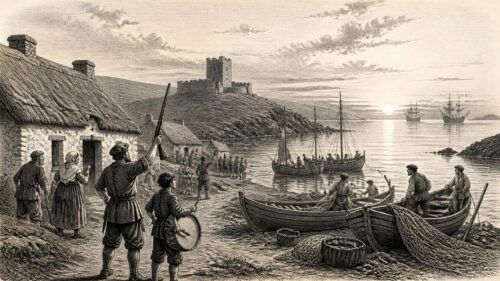
In 1631, Baltimore, a West Cork fishing settlement shaped by plantation, local rivalries and Atlantic commerce, suffered a corsair raid. Before dawn on 20 June, forces led by Murad Reis the Younger seized 107 inhabitants, chiefly women and children, after landing from vessels sailing from Algiers. The captives entered North African systems of sale, labour, ransom and household service; few are known to have returned. Suspicions of local collusion remain unproven. The raid exposed limited coastal protection. Elsewhere, royal honours reinforced hierarchy, Patrick Fleming founded a college in Prague and died in Bohemia, and Sir Henry Docwra died in Dublin.
Read Article
Archived: 16 October 2026
Abstract
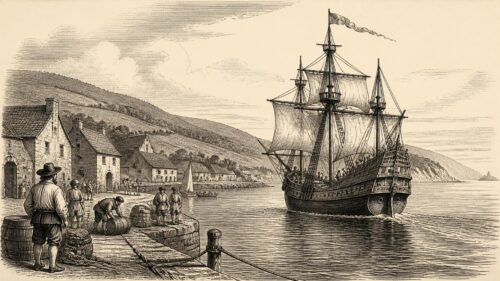
In 1617 Ireland was being reshaped by Atlantic commerce, plantation, religious pressure and cultural debate. Sir Walter Ralegh’s Guiana fleet provisioned at Cork before departing, demonstrating the port’s capacity. The Crown, under Lord Deputy Oliver St John, extended administration through land disputes, grants and titles, including Hamilton’s Strabane barony within the incomplete Ulster Plantation. In Munster, the Barrymore family shifted its seat to Castlelyons. An October proclamation renewed action against Catholic clergy, though Catholic practice endured. Gaelic poets contested regional honour and historical authority, while Barnabe Rich’s satire criticised colonial society. These developments reveal negotiated change rather than settled peace.
Read Article
Archived: 16 October 2026
Abstract
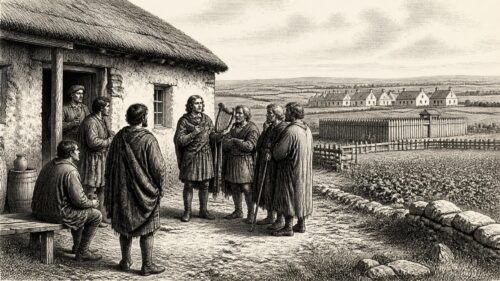
In 1615, Chichester’s government confronted the abortive Macosquin conspiracy amid Ulster Plantation’s insecure transformation. Alleged Gaelic plotters lacked arms, coordination and foreign support, yet officials feared renewed war and used torture, trials and executions; eleven of seventeen defendants were acquitted. Plantation surveys revealed incomplete settler obligations and continuing dependence on Irish tenants, while landholding and local life were nonetheless changing profoundly. The final 1613 parliament passed a highways measure before dissolution, as proclamations regulated markets and currency. Church convocation adopted 104 strongly Calvinist Irish Articles, probably shaped by James Ussher, while visitation exposed the established church’s weak reach. Coercion persisted.
Read Article
Archived: 17 October 2026
Abstract
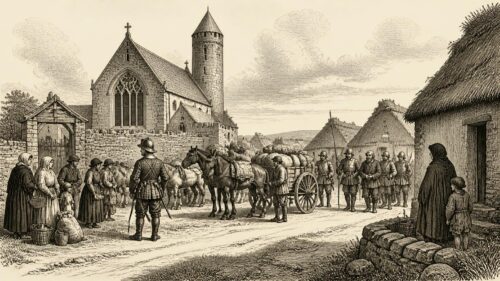
In 1582, the Second Desmond Rebellion persisted as a destructive Munster war despite John of Desmond’s death near Castlelyons. Raiding, military reprisals and disrupted cultivation produced famine and disease; contemporary reports described catastrophic mortality, affecting loyalists and rebels alike. At Ardfert, Captain Zouch’s garrison burdened local communities and took hostages; after a raid killed Captain Houghton, annals allege children hostages were hanged. Desmond remained militarily active, while reduced crown forces combined pardons with coercion. Political change followed Arthur Grey’s departure, Ormond’s enhanced Munster authority, and wider instability in Wicklow, Connacht and Ulster. Gaelic learned traditions nevertheless endured amid ongoing conflict.
Read Article

Archived: 17 October 2026
Abstract
In 1579, a small landing at Smerwick transformed Munster’s unrest into an international Catholic challenge to Elizabeth I’s government. James fitz Maurice FitzGerald returned from continental exile with Spanish and Italian soldiers, papal support and hopes of assistance. Their limited force mattered chiefly for the alliances and expectations it represented. Local grievances could now connect with European religious conflict. Gerald FitzGerald, earl of Desmond, hesitated before entering open rebellion, widening the crisis. The year marked the beginning of the Second Desmond Rebellion, linking regional lordship, exile politics and overseas intervention in a struggle with increasingly destructive consequences for Munster’s communities.
Read Article
Archived: 17 October 2026
Abstract
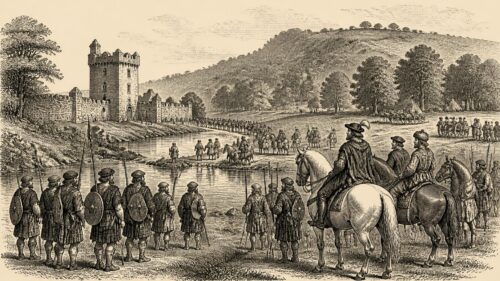
In 1570, Tudor efforts to extend authority in Ireland exposed the limits of provincial government. Sir Edward Fitton’s new Connacht presidency clashed with Conor O’Brien in Thomond, where negotiated submission followed resistance, and campaigned with Clanricarde against John Burke at Shrule. The battle involved English, Irish and Scottish troops, artillery and traditional forces; its outcome remained contested, though government troops held the field. Campaigns imposed demands through cess, supplies, hostages and destruction. In Munster, rebellion persisted despite expeditions and Desmond’s detention. Papal excommunication heightened international anxieties, yet allegiance remained shaped by kinship, territory, employment and rivalry as much as religion.
Read Article

Archived: 18 October 2026
Abstract
In 1555 An Calbhach Ó Domhnaill, aided by Archibald Campbell’s Scottish troops and artillery, overthrew and imprisoned his father Manus, lord of Tír Chonaill, initiating prolonged conflict and devastation in Donegal. The coup demonstrated Gaelic rulers’ reliance on maritime alliances, mercenaries, castles and gunpowder. Elsewhere, Hugh Ó Néill of Upper Clandeboye was killed by Scottish gunfire, amid enduring MacDonnell expansion in Ulster. Dublin’s authority remained limited, while annalistic dating of official campaigns requires caution. Marian restoration included papal recognition of Philip and Mary and St Patrick’s cathedral’s revival. Notices from Thomond and Youghal reveal negotiated regional politics and overseas links.
Read Article
Archived: 18 October 2026
Abstract
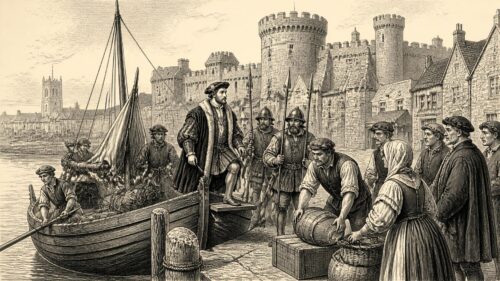
In 1520 Henry VIII appointed Thomas Howard, earl of Surrey, lieutenant of Ireland, replacing the influence of detained earl of Kildare. Landing at Wood Quay with English troops, Surrey repaired Dublin Castle, defended the Pale and pursued negotiated submissions from Gaelic and Anglo-Irish rulers. His campaigns, truces and oaths brought gains, but depended on allies, coercion and shifting interests. Disease disrupted government, while troop concentrations caused shortages and coign and livery burdened communities. Insufficient revenue, poor logistics and warfare restricted policy. Annalistic evidence reveals lordships, succession disputes and learned institutions. Surrey's expedition exposed the limits of crown authority beyond Dublin.
Read Article
Archived: 20 October 2026
Abstract
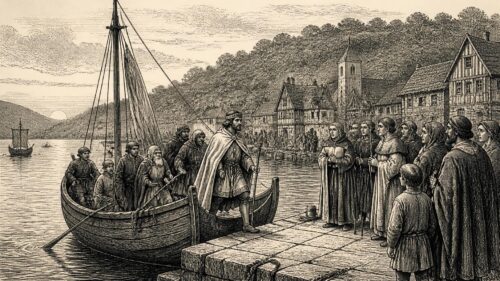
In 1428, Irish annals recorded no single national crisis but interconnected regional events. Aedh Mag Uidhir, a Fermanagh lord returning from pilgrimage to Compostela, died at Kinsale on 11 August and was buried at Cork, illustrating maritime, religious and political links. His death coincided with Maguire dynastic violence, including seizure of his sons’ castle and the killing of Aedh Óg. In Leinster, Donnchadh Mac Murchadha Caomhánach’s ransom, return and cooperation with English authority reflected negotiated power. Deaths of ecclesiastical and local rulers, notably a Mac Conmara chief, reveal hereditary offices, patronage, protection and peace as foundations of Ireland’s diverse lordships.
Read Article

Archived: 26 September 2026
Abstract
In 1219, Ireland’s power remained fragmented among Gaelic kings, Anglo-Norman lordships, churches and Henry III’s wider dominions. William Marshal died, prompting a managed succession in Leinster under Isabel de Clare’s continuing inheritance, supported by officials including seneschal Walter Purcell. In Munster, Diarmait Mac Carthaig captured Henry Butler’s Timoleague castle and its hostages, exposing colonial vulnerabilities. Domnall Mór Ó Domnaill secured submissions in northern borderlands, while Cathal Crobderg Ua Conchobair exercised authority in Connacht amid Richard de Burgh’s competing claims. Ecclesiastical deaths and succession, alongside papal involvement in the Ferns dispute, underscored church influence. Events revealed shifting, contested lordships throughout Ireland.
Read Article

Archived: 26 September 2026
Abstract
In 1206, Ireland remained divided among Gaelic kingdoms, Anglo-Norman lordships, church lands and towns under uneven royal influence. Bishop Simon Rochfort transferred Meath’s see to Newtown beside Trim, aligning ecclesiastical authority with a colonial centre. King John negotiated Connacht’s status with Cathal Crobderg, without settlement. A castle was built at Cork, while Desmond faced succession conflict after Domnall Mór Mac Carthaig’s death. Raids in Tyrone and Ciannachta destroyed churches, crops and cattle but failed to secure submission. Annals also record widespread human and livestock losses, clerical deaths, and Armagh’s appeal to England against settlers, revealing contested, localised power and negotiation.
Read Article

Archived: 26 September 2026
Abstract
In 1185, eighteen-year-old John, Lord of Ireland, landed with an Anglo-Norman expedition intended to strengthen royal authority and curb magnates such as Hugh de Lacy. His poor diplomacy, disputed by Gerald of Wales in detail but evident in outcome, alienated Gaelic rulers and settlers alike. Castles in Munster provoked resistance and military losses, while dynastic wars continued across Connacht and Ulster independently of John’s aims. Town charters, notably Cork’s, and grants to newcomers including Theobald Walter encouraged lasting colonial institutions. Churches, learning, trade and cattle-based livelihoods persisted amid warfare. John’s December departure secured no general obedience, but strengthened royal footholds.
Read Article

Archived: 26 September 2026
Abstract
In 1127, Tairdelbach Ua Conchobair, king of Connacht, invaded Munster by land and sea, plundered Cork, displaced Cormac Mac Carthaig and partitioned the province. Cormac’s restoration from Lismore, backed by Ua Briain allies, quickly overturned this settlement, while hostage threats and naval conflict exposed its brutality. Tairdelbach’s son was expelled from Dublin and Leinster, and disputes in Kildare and Ulaid demonstrated persistent regional autonomy. Churchmen mediated politics, religious centres remained influential, and sacred objects expressed power. Warfare burdened ordinary communities, despite continuing trade, scholarship and artistic patronage, confirming limits to Tairdelbach’s high-kingship across Ireland during the unstable and contested year.
Read Article

Archived: 26 September 2026
Abstract
In 1088, Muirchertach Ua Briain’s Munster faced renewed rivals after his father’s death. While he campaigned in Leinster, Connacht forces defeated Munster fleets, and his brother Diarmait’s coastal raid ended disastrously after relics were seized. Leinster’s attack on Waterford failed, while southern townsmen suffered defeat near Cork. Domnall Ua Lochlainn secured Connacht’s submission from Ruaidrí Ua Conchobair, then led a northern-Connacht invasion deep into Munster, devastating settlements and destroying Kincora, the Ua Briain stronghold. Raiding damaged cattle-based rural livelihoods, while ports supplied maritime power. Scholarly and dynastic deaths reflected Ireland’s fractured kingship and interlinked political, ecclesiastical, commercial and agricultural worlds.
Read Article

Archived: 26 September 2026
Abstract
In 1081, Tairdelbach Ua Briain, Munster's dominant king, secured Ulaid's submission, though authority remained negotiated and unstable. Donn Sléibe Ua hEochada killed Ua Mathgamna, king of Ulaid, at Downpatrick, amid wider northern dynastic violence. In Mide, Máel Sechnaill killed a Calraige chief, later linked to alleged plunder of Clonmacnoise. Hiberno-Norse or Scandinavian-background raiders plundered Aran, while fires devastated Cork, Killaloe, Mungret and churches. Clerical obituaries illustrate ecclesiastical learning and saintly successions. Beyond annalistic elites, rural farming, craft production and Hiberno-Norse trade sustained interconnected communities despite political conflict, maritime raiding and local disasters throughout the island's diverse, layered social order overall.
Read Article

Archived: 8 October 2026
Abstract
Ireland around 30,117 BCE lay within the climatically unstable Late Pleistocene, as the British–Irish Ice Sheet expanded unevenly and low sea levels reshaped coasts and possible dispersal routes. Derryvree, County Fermanagh, preserves freshwater organic deposits between glacial tills, indicating a treeless, wet tundra-like mosaic during a local ice-free interval. Castlepook Cave, County Cork, contains a time-spanning fauna including reindeer, mammoth, giant deer, predators and cold-adapted small mammals, demonstrating ecological richness but not a single contemporary assemblage. A cut-marked reindeer bone may suggest human carcass processing, yet no secure evidence proves settlement. Regional records reveal ice, water, vegetation and animal movements.
Read Article

Archived: 8 October 2026
Abstract
Labelled 30,118 BCE, this horizon represents an uncertain Late Pleistocene interval, not a precise Irish date. During Marine Isotope Stage 3, Ireland contained shifting ice, periglacial terrain, wetlands and open grazing country as the British–Irish Ice Sheet expanded towards its later maximum. Derryvree sediments indicate local ice-free freshwater environments, while Castlepook Cave preserves cold-adapted fauna including mammoth, reindeer, giant deer, hyaena and wolf. An incised reindeer femur may indicate early human butchery, but its insecure context and lack of associated tools prevent firm conclusions. Later glaciation destroyed much evidence, requiring cautious interpretations based on dated deposits, animal remains and landforms.
Read Article
Archived: 8 October 2026
Abstract
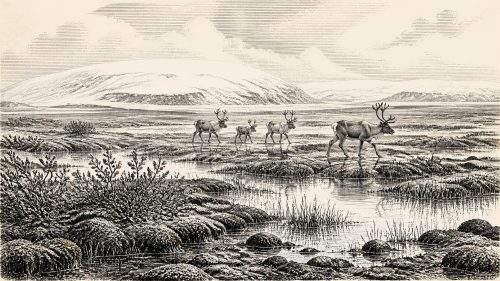
At approximately 30,119 BCE, Ireland lay within the climatically unstable later Marine Isotope Stage 3, beyond precise calendar dating or historical record. At Derryvree, County Fermanagh, organic sediments between two glacial tills document an ice-free local landscape of shallow pools, mosses, sedges, herbs and tundra-like vegetation. They demonstrate regional climatic fluctuation, not an ice-free island. Lower seas and shifting ice altered coasts, while Crag Cave records intermittent conditions. Faunal remains at Castlepook Cave indicate open-country mammals. A marked reindeer bone suggests tentative Upper Palaeolithic human activity, but no secure settlement evidence exists. Environmental change and renewed glaciation define this period.
Read Article

Archived: 8 October 2026
Abstract
Although 30,120 BCE lies within Derryvree’s calibrated radiocarbon range, no year-specific Irish history can be recovered. During unstable Marine Isotope Stage 3, Fermanagh’s Derryvree deposits record an ice-free interval between glacial advances: cold, treeless wetlands of pools, sedges, grasses, mosses, juniper and herbs. Later ice buried and preserved this evidence. Castlepook Cave in Cork contains remains of diverse Ice Age animals, but mixed deposits prevent a single contemporary reconstruction. A modified reindeer bone may indicate brief human butchery, not settlement. Ireland was periodically habitable amid shifting ice and sea conditions, yet lacks evidence for societies, economies, culture or enduring occupation.
Read Article

