
Archived: 26 September 2026
Abstract
In 1065, Ireland’s fragmented kingdoms saw raids, succession struggles and reprisals. Forces led by Áed Ua Ruairc and Diarmait Ua Cellaig plundered Clonmacnoise and Clonfert, using vessels moved from the western sea to the Shannon. Áed Ua Conchobair of Connacht defeated them, recovered boats and pursued rival dynasties; church chroniclers presented this as saintly judgement. Killings in Ulster, including Donnchad Ua Mathgamna at Bangor, reflected internal conflict and contested sacred authority. In Mide and Munster, further deaths and Murchad Ua Briain’s attack at Kincora exposed political instability. Ecclesiastical obituaries, trade, farming and nut abundance reveal a connected society beyond warfare.
Read Article

Archived: 26 September 2026
Abstract
In 1062, Ireland remained divided among competing dynasties. In Connacht, Áed Ua Conchobair defeated western rivals but lost his son in retaliatory violence, before Ardgar Mac Lochlainn raided the province for cattle and captives. Killings destabilised successions in Mughdorna, Fernmag and Ulaid. In Munster, campaigns by Diarmait of Leinster and Toirdelbach Ua Briain further undermined Donnchad mac Briain. Deaths of leading Columban and northern churchmen marked ecclesiastical change. Annalistic dating varies, particularly for Connacht events. Warfare damaged households through livestock seizures, captivity, destruction and disrupted farming, while urban trade and church networks linked Ireland to Britain, Alba and maritime worlds.
Read Article

Archived: 26 September 2026
Abstract
In 1060, Donnchad mac Briain, weakened by earlier defeats, apparently submitted to Diarmait mac Maíl na mBó of Leinster, transferring treasure and acknowledging his supremacy, though Ireland remained politically fragmented. Diarmait’s family projected power through Dublin and the Irish Sea. Ecclesiastical centres were contested and vulnerable: Armagh’s abbacy provoked armed conflict, Kells and Leighlin burned, and Clonmacnoise suffered a raid. Regional rulers died or were killed, while religious figures, notably Conn na mBocht, were remembered for charity and administration. A plentiful mast crop supported pig husbandry within a rural economy where cattle, churches and trading towns underpinned wealth and authority.
Read Article

Archived: 26 September 2026
Abstract
In 1059, Irish annals record widespread warfare, raiding and dynastic upheaval amid a politically fragmented island. Diarmait mac Máel na mBó of Leinster campaigned in Mide and pressured Munster, while his son Murchad killed rival heirs but was defeated by Conchobar Ua Máelshechlainn at Durrow. Northern rulers seized cattle and captives in Airgíalla and Dál Araide. Connacht and neighbouring regions saw multiple killings and deaths among ruling lineages. Obituaries of church leaders underline ecclesiastical power and learning. Despite conflict, rural farming, herding, crafts, trade and Dublin’s Norse-Gaelic economy sustained society, supplying the wealth and resources contested by kings across Ireland.
Read Article
Archived: 26 September 2026
Abstract
In 1057, Ireland remained divided among provincial dynasties, Norse-Irish towns and local rulers, with Donnchad mac Briain’s Munster supremacy increasingly challenged by Diarmait mac Maíl na mBó, Tairdelbach Ua Briain and other rivals. Killings of Munster claimants and neighbouring kings exposed unstable succession. Dublin-linked forces plundered Inis Cathaig but suffered heavy losses, while raids and conflicts occurred across Connacht, Leinster, the midlands and north. Church communities also suffered, notably the murder of Cork churchman Mugrón Ua Mútáin. Abundant woodland mast coincided with livestock disease, threatening rural livelihoods. These pressures foreshadowed Donnchad’s defeat in 1058 and wider political upheaval soon afterwards.
Read Article
Archived: 26 September 2026
Abstract
In 1056, Ireland remained divided among competing provincial rulers, as Diarmait of Leinster, Donnchad of Munster, Áed of Connacht and Conchobar of Mide pursued fragile power. Annals record dynastic killings, disputed raids and major cattle seizures, including captives, while a Christmas raid ended in drownings. Churches were influential communities, marked by deaths of prominent clergy, notably Armagh's Áed Ua Forréid. Scholar Flann Mainistrech of Monasterboice died, whereas Marianus Scotus joined Cologne's Irish monastery, illustrating international learned links. Rural farming supported cattle wealth, while Dublin's trade underpinned Leinster. Lightning deaths and storm-related disaster underscored life's vulnerability. Sources vary in reliability, dating.
Read Article

Archived: 26 September 2026
Abstract
In 1050 Ireland remained politically fragmented, with Donnchad mac Briain of Munster pursuing overlordship through hostages, alliances and force, while rival rulers strengthened elsewhere. He proclaimed a law at Killaloe, intended to curb violence, protect agreements and demonstrate royal guardianship of Christian order amid scarcity. Clonmacnoise was repeatedly plundered by neighbouring Irish groups, while Kildare, Emly and Lann Léire suffered fires or attacks, revealing ecclesiastical centres’ wealth and vulnerability. Kings died violently, rivals were imprisoned, and churchmen continued teaching and collecting renders. Rural livelihoods depended on livestock and crops alongside trading towns. Muirchertach Ua Briain, a future king, was born.
Read Article

Archived: 26 September 2026
Abstract
In 1044 Ireland remained politically fragmented, with provincial kings, local dynasties, Norse-Irish Dublin and influential churches competing through raids, tribute, hostages and violence. Northern rulers avenged the unexplained profanation of Patrick’s Bell by seizing cattle and captives, demonstrating how sacred legitimacy supported political gain. Dublin’s Ímar mac Arailt attacked Patrick’s shrine and campaigned in the north. Clonmacnoise suffered plundering, while later tradition reports restitution by Donnchad mac Briain. Dynastic killings, blinding and regional defeats reshaped alliances across Ireland. Annals also record religious deaths, learning and rural life, revealing cattle, captives and monasteries as central sources of wealth, authority and conflict.
Read Article

Archived: 26 September 2026
Abstract
In 1043 Ireland remained politically fragmented, with Donnchad mac Briain’s prestige contested and Diarmait mac Máel na mBó consolidating Leinster. Annals record local warfare, killings and cattle raids, including violence at Glendalough, where sanctuary was breached, and fighting around the Suir. Northern conflicts involved Uí Méith, Ua Ruairc, and competing Uí Néill dynasties. Churches were both targets and political actors: Ciarán’s community ritually denounced Aed Ua Con Fhiacla, whose subsequent death was viewed as saintly vengeance. Cathal of Connacht died while pilgrim at Armagh. Despite insecurity, ecclesiastical centres sustained learning, wealth, pilgrimage and networks alongside rural farming and maritime trade.
Read Article
Archived: 26 September 2026
Abstract
In 1040, Ireland remained politically divided after the decline of overarching high kingship. Donnchad mac Briain of Munster issued a Sunday law restricting theft, armed activity, labour and cattle movements, linking royal order with Christian observance. Rivalries continued through battle, assassination, imprisonment and raiding. Hiberno-Norse forces allied with a Mac Briain against Cerball mac Fáeláin, reflecting integrated Irish Sea politics. In Leinster, Diarmait mac Máel na mBó plundered churches and seized captives. Fires devastated Kildare, Kells, Downpatrick and other churches. Ecclesiastical leaders and scholars remained influential, while rural cattle wealth, ports, trade and warfare shaped society throughout this turbulent year.
Read Article
Archived: 26 September 2026
Abstract
In 1037, Ireland remained a fragmented political landscape, where provincial kings, local dynasties and churches competed for power. Annals, despite differing dates and detail, record blinding, assassination, raiding and ecclesiastical violence across Leinster, Meath, Connacht and the north. Osraige’s Donnchad mac Gilla Pátraic displaced a Leinster rival, while Diarmait mac Máel na mBó strengthened his position and was linked to Waterford’s burning. Waterford’s ruler died amid internal and external conflict. Kings made pilgrimages, but churches were also plundered and sanctuary violated at Lorrha. Trade, farming and craft continued despite disorder. Exceptionally wet, stormy weather compounded an unstable year for communities.
Read Article
Archived: 26 September 2026
Abstract
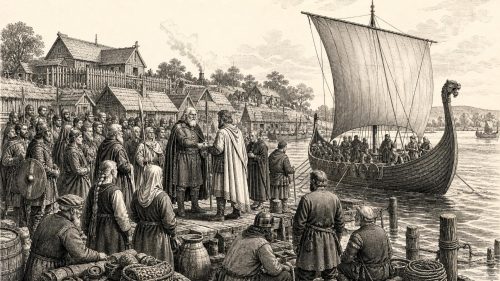
In 1036, Ireland experienced regional political upheaval rather than a single national conflict. Sitriuc Silkbeard left Dublin’s kingship after a long reign, and Echmarcach son of Ragnall succeeded him, weakening Sitriuc’s dynasty across the Irish Sea. In Leinster, Donnchad mac Gilla Pátraic blinded and fatally disabled a rival, while Diarmait mac Maíl na mBó blinded another, strengthening Osraige and Uí Chennselaig. Killings removed rulers and heirs in several regions, while Flaithbertach Ua Néill died after religious penitence. Church leaders also died, and fires affected Kildare, Kells and Lathrach. Rural society and Dublin’s trade continued amid instability, shaping later eleventh-century politics.
Read Article

Archived: 26 September 2026
Abstract
Irish annals portray 1033 as a fragmented year of regional rivalry, ecclesiastical authority and economic pressure. Donnchad mac Gilla Pátraic of Osraige asserted Leinster kingship by holding the Fair of Carman, a public demonstration of rule, clerical support, trade and legal order. In Mide, Ua Máel Sechnaill conflicts brought battlefield deaths, plundering and Murchad's assassination. Áed Ua Néill, heir designate to Ireland’s high-kingship, died, while killings destabilised Ciarraige, Éile, Munster and northern territories. Church obituaries and a reported bleeding shrine at Armagh underlined sacred authority. Cattle disease, farming and Hiberno-Norse maritime networks shaped everyday life amid political uncertainty across Ireland.
Read Article
Archived: 26 September 2026
Abstract
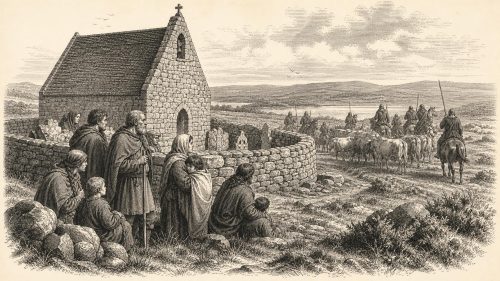
In 1031 Ireland remained politically fragmented after Brian Bóruma, as northern, southern and Hiberno-Norse rulers pursued power through raids, booty and captives. Flaithbertach Ua Néill returned from Rome while Aed Ua Néill campaigned against Cenél Conaill. Dublin’s Sitriuc Silkbeard was linked to Ardbraccan’s devastating plunder, and Waterford’s king was killed in Dublin. Churches at Ardbraccan, Swords, Kildare, Cell Chomair and Clonfert suffered burning, robbery or violence. Donnchad mac Briain raided Osraige but lost men; conflict also afflicted the Déisi. Obituaries emphasised learning, hospitality, piety and ecclesiastical office, revealing society’s religious resilience amid warfare, trade and local rivalry throughout Ireland alike.
Read Article

Archived: 26 September 2026
Abstract
In 1029, Ireland remained divided among competing Gaelic dynasties, church centres and Hiberno-Norse Dublin. Mathgamain Ua Riagáin of Brega captured Amlaíb, Dublin’s prince, whose release required an exceptional ransom of cattle, horses, silver, gold, hostages and a renowned sword, demonstrating links between rural and maritime economies. Killings of rulers in Uí Fhailgi, Fernmag, Conaille, Connacht and Cenél Conaill exposed persistent succession disputes and regional rivalries. At Inis na Lainne, a fire killed nobles and Drumcliff’s superior. Pilgrimage and church patronage connected elites to wider Christianity, while the death of master craftsman Máel Brigte Ua Brolcháin attests to skilled ecclesiastical culture.
Read Article

Archived: 26 September 2026
Abstract
In 1024, Ireland remained fragmented after Máel Sechnaill’s death, with authority contested among provincial dynasties, Norse-Gaelic towns and church interests. Leinster suffered upheaval when Úgaire, king of Leinster, and Máel Mórda of Uí Cheinnselaig were killed during Donn Sléibe’s seizure and burning of a house; Donn Sléibe was later slain. Fighting marked Corann, Ulster and the midlands, while Irish forces raided Foreigners for hostages and wealth. Ecclesiastical deaths, pilgrimages and attacks on Slane and Kildare demonstrated churches’ scholarly, economic and political importance. Cúán ua Lothcháin, Ireland’s chief poet-historian, was murdered, emphasising the learned class’s prestige amid endemic violence and instability.
Read Article

Archived: 26 September 2026
Abstract
In 1020, Ireland remained politically fragmented after Clontarf. Máel Sechnaill mac Domnaill led a coalition including Uí Néill, Donnchad mac Briain and Art Ua Ruairc to the Shannon, receiving Connacht hostages and asserting overkingship. Northern and eastern lesser kingdoms experienced blinding, killings and rapid succession disputes. Fires devastated Kildare, Glendalough, Clonard, Clonmacnoise, Swords and Armagh, damaging churches, treasures and settlement districts. Armagh’s blaze then preceded Máel Muire’s death and Amalgaid’s installation as Patrick’s successor; Patrick’s shrine and bell were also plundered. Annals additionally commemorate learned clerics, revealing churches as centres of wealth, scholarship, authority and vulnerability amid violent political competition.
Read Article

Archived: 26 September 2026
Abstract
In 1012, Brian Bórama’s high-kingship remained powerful yet required constant military, religious and material reinforcement. Northern rulers Flaithbertach Ua Néill and Máel Sechnaill raided rival territories, burning centres and seizing cattle, captives and plunder, while succession fighting continued in Ulaid. Brian campaigned in Mag Muirtheimne, granting immunity to Patrick’s churches, and fortified Cenn Corad and other strategic sites. Armagh suffered a prolonged sickness that killed clergy, students and others. Heavy rainfall damaged cereal crops, worsening pressures on communities already exposed to armies. The annals portray rivalry, fragile overlordship and hardship, anticipating the crises that culminated at Clontarf two years later.
Read Article

Archived: 26 September 2026
Abstract
In 1008, Irish annals recorded no battle but revealed pressures shaping Brian Boru's overkingship. Chronological discrepancies require caution, yet Inisfallen and Ulster agree on a severe winter, ecclesiastical deaths and political violence. Muiredach son of Matudán, heir designate of Ulaid, was killed by his own people, exposing dynastic division amid northern rivalries. The deaths of abbots and coarbs, including Ferdomnach of Colum Cille's familia, prompted transitions in institutions controlling land, relics, learning and legitimacy. Frost and snow from January to Easter threatened livestock, farming and communications. Together, events illuminate a weather-vulnerable society governed through churches, dynasties, tribute, negotiation and force.
Read Article

Archived: 26 September 2026
Abstract
Brian Boru’s northern campaign of 1005 demonstrated his contested claim to high-kingship over Ireland. After establishing dominance in the south and securing Máel Sechnaill’s submission, he led an army, including Gaelic and Norse-Irish forces, to Armagh and Ulaid. At Patrick’s altar he gave twenty ounces of gold, strengthening ties with Armagh’s primatial church; the Book of Armagh associated him with title imperator Scotorum. His expedition sought hostages from northern dynasties, but accounts differ over whether Cenél Conaill and Cenél nEógain submitted. Ulaid suffered dynastic killings, external attacks and scarcity that dispersed its population. The year showed kingship dependent on campaigns.
Read Article

Archived: 26 September 2026
Abstract
In 1003, Brian Bórama sought to turn his newly acquired high-kingship into authority, relying on cooperation with Máel Sechnaill of Mide. Their northern Connacht expedition was checked by the Northern Uí Néill, demonstrating limits to Brian’s power. Brian deposed Leinster’s Donnchad and installed Máel Mórda, holding provincial hostages as guarantees. Across Ireland, raids, killings and disputed successions showed persistent instability. Ecclesiastical deaths and sanctuary violations emphasised churches’ political importance, while learned figures preserved claims and status. Uncertainly dated northern warfare further revealed regional fragmentation. Ireland was consolidating under Brian, yet rule remained dependent on force, alliances, tribute and religious legitimacy.
Read Article

Archived: 26 September 2026
Abstract
In 1002 Brian Bórama transformed Irish politics by bringing an army to Athlone and taking hostages from Connacht and Mide, publicly demonstrating Máel Sechnaill mac Domnaill’s submission. Annals differ slightly in dating and emphasis, but confirm the event. Brian’s earlier successes over Leinster and Dublin enabled wider mobilisation, including Norse-Gaelic allies. Yet his subsequent northern expedition to Dundalk failed to secure hostages from Áed of Ailech and Eochaid of Ulaid, ending in truce. Raids, captives and ecclesiastical deaths reveal regional conflict. Coastal towns, trade and church institutions underpinned power. Brian emerged as leading king, but his island-wide overlordship remained incomplete.
Read Article

Archived: 26 September 2026
Abstract
In 1000, Ireland's annalists marked the millennium through sophisticated calendrical scholarship, without evidence of apocalyptic anxiety. After Brian Bórama and high-king Máel Sechnaill defeated Leinster and Dublin at Glenn Máma in late 999, Brian burned Dublin but restored it after Sitriuc Silkbeard submitted hostages, preserving its strategic trade and military value. Their alliance soon collapsed: Brian's coalition advanced towards Tara, but Máel Sechnaill destroyed its advance force in Brega, forcing withdrawal. Elsewhere deaths, blinding and killings exposed dynastic instability. Rural farming, raiding, urban craft and trade, Christianity and learning continued, while Brian's growing coalition foreshadowed his eventual high-kingship over Ireland.
Read Article
Archived: 26 October 2026
Abstract
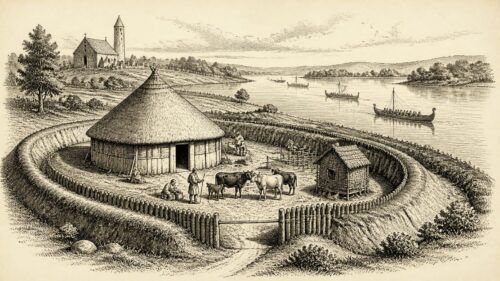
Annals conventionally place 993 amid a major mortality of people, cattle and bees, though its cause, scale and chronology remain uncertain. This crisis threatened subsistence, wealth and ecclesiastical resources. Political violence killed several local rulers in the midlands, Connacht and west, revealing fragmented lordship and Máel Sechnaill’s interventions. Brian of Munster led a naval expedition from Lough Ree towards Bréifne, while Mide suffered devastation and Dublin’s Norse-Gaelic politics remained unsettled. Meanwhile, Muirecán, Patrick’s successor, visited Cenél nÉogain and publicly affirmed Áed’s royal standing. The notices portray interconnected warfare, church authority, riverine mobility and vulnerable rural life throughout Ireland in 993.
Read Article
Archived: 26 October 2026
Abstract
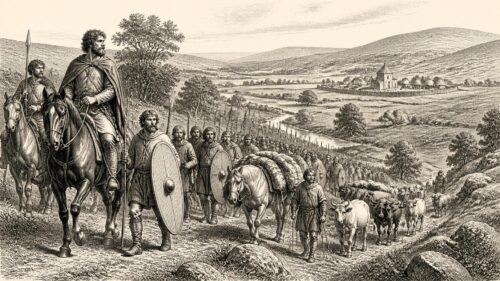
In 991, Brian son of Cennétig led an armed hosting from Munster into Leinster, where Tadc son of Donnchadh died and Cerrán Cnámchaille was killed in vengeance. The campaign demonstrated Brian’s expanding reach, although no conquest or settlement is recorded. Annals also report the treacherous killing of a prominent Tara-centred heir, but differ over his identity and the perpetrators, reflecting contested midland politics. Domnall Ua Dúngalaig died, as did Scandlán son of Tadc, erenagh of Cell Dá Lua, or Killaloe. These notices reveal power exercised through warfare, kinship, tribute, ecclesiastical offices and regional rivalries, rather than a unified Irish state.
Read Article
Archived: 26 October 2026
Abstract
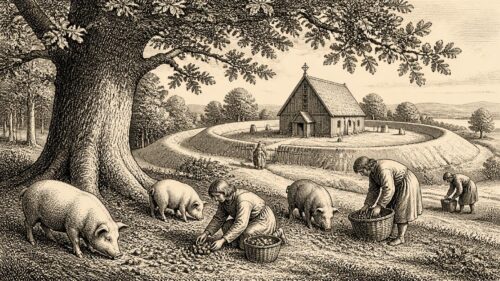
In 981, Irish annals recorded local political, ecclesiastical and environmental developments rather than a unified national story. Domnall ua hAitid, king of Uí Echach, and Loingsech son of Fogartach of Uí Nialláin killed one another, exposing fragility of regional lordship. Anmchad, elderly bishop of Kildare, died, confirming that church’s wide authority. Deaths also included successors of saints Feichín, Brendan and Comgall, whose communities sustained property, ritual and learning across Ireland. Although Máel Sechnaill’s previous victory had strengthened midland overkingship, regional rivalries endured. An unusual mast-crop highlighted woodland’s economic importance for pigs, provisioning and seasonal resources throughout early medieval Irish society.
Read Article
Archived: 26 October 2026
Abstract
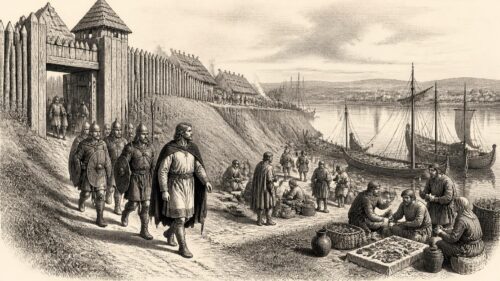
For Ireland, 979 is a year best approached through a small but unusually revealing cluster of annalistic notices. No surviving source supplies a continuous narrative, and none explains every motive or consequence. Yet the recorded capture of Domnall Claen, king of Leinster, by the foreigners of Dublin exposes the political weight of the Hiberno-Norse town at the mouth of the Liffey. Deaths and killings among rulers in Offaly, Dál Araide and Cenél Conaill show, at the same time, that power remained fragmented across many regional kingdoms. Notices of a Kildare church leader, a Clonmacnoise scholar-cleric and a foremost man of
Read Article
Archived: 26 October 2026
Abstract
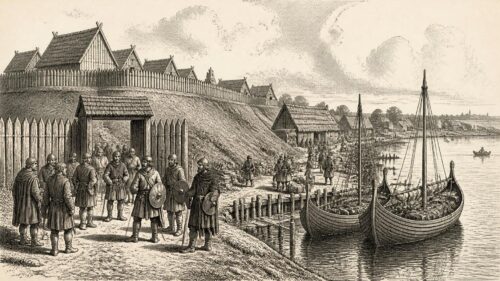
In 977, Amlaíb Cuarán, Scandinavian-Gaelic ruler of Dublin, killed Muirchertach son of Domnall ua Néill and Congalach son of Domnall, both designated royal heirs of Ireland. Their deaths weakened Domnall, king of Tara, amid contested Uí Néill succession, illustrating Dublin’s influence within intertwined Irish and Viking dynasties. Domnall also killed Gilla Coluim ua Canannáin, lord of Cenél Conaill. Annals record Conaing, successor of Moedóc, dying, while Chronicon Scotorum chronologically associates Domnall’s plundering of Adomnán’s shrine with 977. Irish sources also noted a Scottish royal killing, reflecting Irish Sea connections. Misdated records exclude Leinster and Kildare events from this calendar year.
Read Article
Archived: 26 October 2026
Abstract
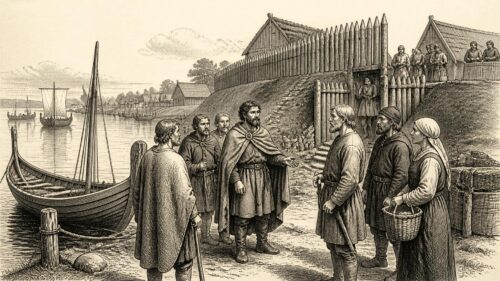
In 972, Mathgamain son of Cennétig led a Munster coalition that imposed three ordinances on Limerick: expelling Norse officials, driving foreigners from the town, and burning their fortress. The action transferred control of a strategic commercial centre without ending Scandinavian influence. Elsewhere, Domnall Claen treacherously killed Murchad, overking of Leinster; Áed of Ulaid died in battle against Dál nAraide; and Domnall Ua Néill burned and plundered major churches. Tuathal, abbot of Clonmacnoise, died. These events demonstrate Ireland’s fragmented politics, where dynastic rivalry, alliances, military force, resources, routes and ecclesiastical institutions shaped contested regional power, although annalistic dating requires careful interpretation.
Read Article
Archived: 26 October 2026
Abstract
In 968, Domnall ua Néill, king of Tara, campaigned in Leinster, ravaged territory between the Barrow and the sea, exacted cattle tribute, and blockaded the Leinstermen and Dublin’s Scandinavian rulers for two months. The annals do not record Dublin’s capture. In Munster, Mathgamain son of Cennétig raided Uí Énna Áine, where Cathal son of Fogartach died, continuing Dál Cais expansion after successes against Limerick. Imlech Ibuir, or Emly, was plundered by unnamed forces. Deaths of prominent ecclesiastical successors and King Flaithbertach highlighted political and religious change. The records depict fragmented authority exercised through warfare, tribute, mobility and control of resources.
Read Article

