Archived: 28 October 2026
Abstract
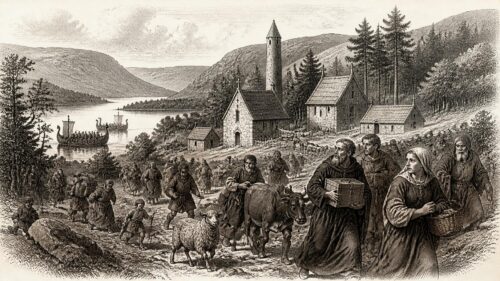
In 890, Scandinavian raiders, described in the annals as Gaill, plundered the ecclesiastical centres of Ardbraccan, Donaghpatrick, Dulane and Glendalough. Although the record supplies few details, the attacks exposed the vulnerability of wealthy, politically connected monasteries in Meath, Leinster and the Wicklow uplands. Probably operating within Dublin’s sphere, the raiders exploited river, coastal and overland routes amid shifting Irish-Scandinavian alliances. The raid occurred during Flann Sinna’s contested kingship and demonstrated limits to Tara’s influence. Plundering disrupted religious, economic and social life without proving wholesale destruction. Further raids followed in 891, while Dublin’s Scandinavian settlement was expelled in 902 by allies.
Read Article
Archived: 28 October 2026
Abstract
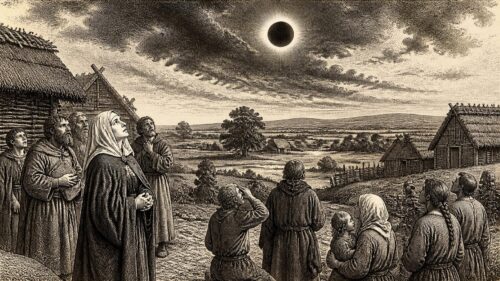
On 16 June 885, a total solar eclipse, recorded as daylight darkening and stars appearing, provides a secure chronological anchor for conflicting Irish annalistic dates. The year also brought major losses at Kildare: Abbess Tuileflaith, Bishop Scannal and Muiredach son of Bran, king of Leinster and abbot, died, while a secret killing was reported without explanation. Máel Pátraic, king of Airgialla, was slain by associates. Other royal and ecclesiastical deaths affected Brega, Meath, Clonfert and Glasnevin. No campaign or Viking raid is attested. An alleged speaking infant at Craeb Laisre shows annalists preserved marvels alongside wider political and religious change.
Read Article
Archived: 28 October 2026
Abstract
In 884, Domnall mac Muirecáin, king of the Leinstermen and member of the Uí Fháeláin branch of Uí Dúnlainge, was killed by his associates in circumstances unrecorded by the annals. His death destabilised Leinster’s contested overkingship; Muiredach mac Brain succeeded briefly, while Domnall’s brother Cerball later gained power. Cairpre mac Dúnlaing, ruler of western Life, also died, though no connection is known. Scannlán, bishop of Kildare, died, affecting a major ecclesiastical institution. These changes occurred amid pressure from Osraige, Tara and Dublin’s Scandinavian power. The sparse records reveal political vulnerability but provide no evidence for a wider campaign or conspiracy.
Read Article
Archived: 28 October 2026
Abstract
In 876, the Annals of Inisfallen record the deaths of Rechtabra son of Bran, king of Leinster, and Eógan, abbot of Clonmacnoise. Rechtabra’s death potentially unsettled Leinster’s contested kingship, where succession depended upon kinship, alliances and support rather than primogeniture. Eógan’s death affected a major church whose religious, economic and political influence extended across Ireland. Rural production, estate obligations and riverine communications nevertheless continued. Uncertain Annals of Ulster notices, conventionally placed in 877 but internally dated 876, describe Rhodri of Gwynedd’s flight to Ireland and Scandinavian conflict at Strangford Lough. Records portray institutional transition within a changing Irish Sea world.
Read Article
Archived: 28 October 2026
Abstract
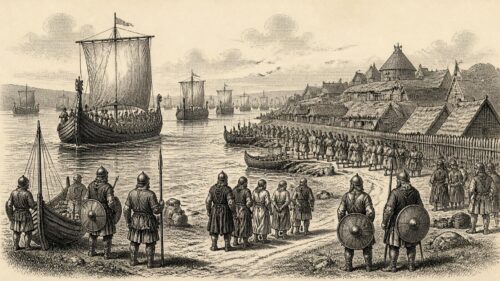
In 871, Amlaíb and Ímar returned to Dublin from Alba with an annalistically reported fleet of 200 ships and captives from Britain, demonstrating Scandinavian maritime power and forced human movement. Dún Sobairche, probably Dunseverick, was stormed in an unprecedented assault involving foreigners and Cenél nEógain, though its circumstances remain unclear. Cathalán, joint king of Ulaid, was deceitfully killed, while Ailill of Leinster died at Norse hands. Annals also recorded prominent ecclesiastical deaths, including the historian Cú Raí. These sparse, uneven records collectively depict regional political instability, enduring church networks, and Dublin’s growing role in Irish Sea warfare, commerce, and communication.
Read Article
Archived: 28 October 2026
Abstract
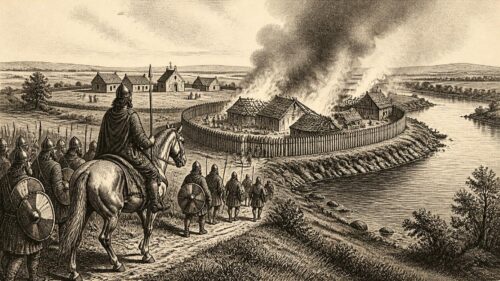
In 867, Cennétig mac Gaíthéne of Loígis and Máel Ciaráin son of Rónán burned Amlaíb’s fort at Clondalkin, near Viking Dublin, reportedly killing one hundred foreign leaders. The attack, recorded with chronological variation in Irish annals, followed or coincided with dynastic division among Dublin’s Scandinavian rulers after Auisle’s killing. It checked, but did not end, Viking power; Dublin remained active and any subsequent assault is uncertain. Clondalkin’s monastic setting illustrates competition for resources and communications. The year also saw Gaelic succession conflicts and clerical deaths, while churches, literacy, trade, craft production and maritime networks endured amid political fragmentation and warfare.
Read Article
Archived: 28 October 2026
Abstract
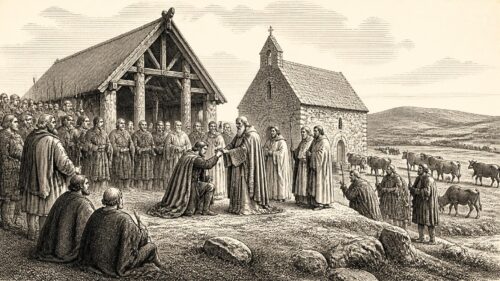
For Ireland, 861 is a year best approached through a small number of sharply focused annalistic notices rather than a continuous national narrative. The surviving records do not permit a day-by-day reconstruction, and their year-numbering sometimes differs between compilations. Yet several entries securely associated with this year illuminate the pressures shaping Irish political life: a change of ruler at Cashel, contention in the midlands involving Áed son of Niall and foreign allies, a victory claimed for the high king Máel Sechnaill, and the continued importance of royal assemblies. Together they show an island governed not by a single settled state,
Read Article
Archived: 28 October 2026
Abstract
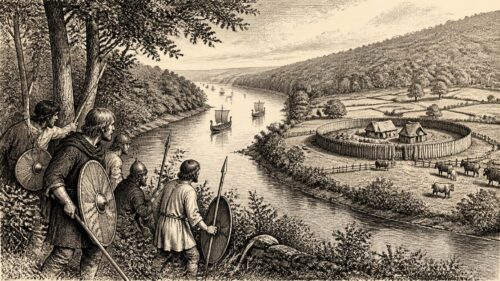
In 860, Irish politics were shaped by warfare, alliance and contested authority. Cerball mac Dúnlainge of Osraige defeated raiders associated with Port Láirge at Achad mic Erclaige, probably Agha near Kilkenny, protecting inland routes and royal prestige. Máel Sechnaill mac Máele Ruanaid assembled a broad coalition for a northern campaign against Áed Findliath, but failed to secure lasting supremacy. Annalistic accounts, especially the Fragmentary Annals, combine historical evidence with pro-Cerball literary embellishment. Armagh’s church leadership mediated oaths and legitimised power, while Scandinavian groups remained political actors. Notices of deaths among rulers and scholars reveal interconnected secular, ecclesiastical and local communities.
Read Article
Archived: 29 October 2026
Abstract
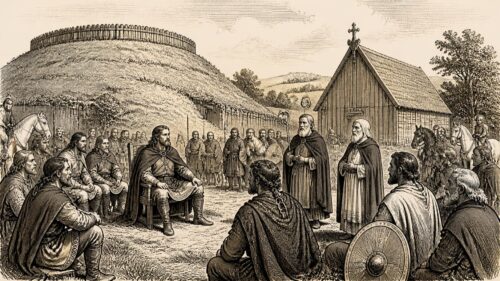
In 859, Máel Sechnaill mac Máele Ruanaid, king of Tara, faced an invasion of Mide by Osraige's Cerball mac Dúnlainge allied with Scandinavian leaders Amlaíb and Ímar. A royal assembly at Ráith Áeda Meic Bric, probably Rahugh, negotiated peace under ecclesiastical witness. Cerball accepted dues to Patrick's community, and Osraige was reoriented from Munster towards Leth Cuinn, strengthening Máel Sechnaill while preserving Cerball's rule. Munster's king, Máel Gualae, guaranteed the settlement but was later killed by Scandinavians. Conflicting annalistic chronologies and narratives complicate details. The settlement demonstrated church-backed negotiation amid shifting Irish-Scandinavian alliances, yet failed to end warfare and instability.
Read Article
Archived: 29 October 2026
Abstract
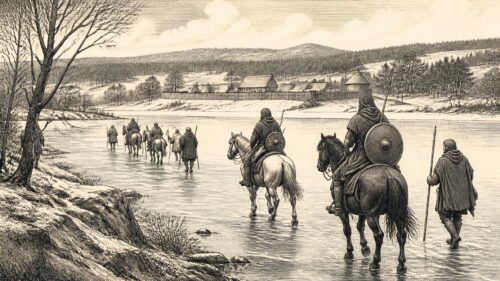
In 856, Ireland experienced severe frost, political coercion and dispersed conflict. Frozen lakes and rivers altered travel across the island. Máel Sechnaill mac Máele Ruanaid visited Cashel and took Munster hostages, demonstrating temporary dominance rather than permanent conquest. He also fought heathen forces with Gall-Goídil allies, reflecting fluid Irish Sea loyalties. Áed son of Niall routed Norse-Irish troops at Glenn Foichle. Norse violence struck ecclesiastical centres, including Lusk’s oratory and Slane’s bishop Sodomna, while Lismore and other churches recorded clerical deaths. Horm, a Scandinavian leader, was killed in Wales, underscoring the wider maritime political world. Annalistic dating remains chronologically uncertain.
Read Article
Archived: 29 October 2026
Abstract
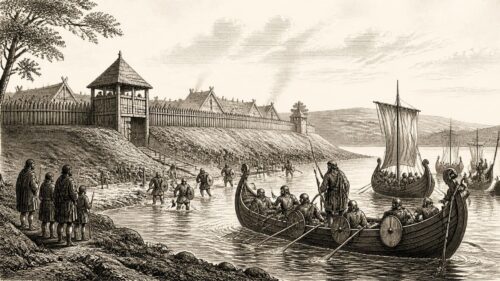
In 851, rival Viking groups contested Ireland’s eastern seaways. The Dubgenti attacked Dublin’s Finngenti, killing many and plundering their longphort, but suffered heavy losses when attacking the defended base at Linn Duachaill near Annagassan. These events reveal competition for ships, wealth, captives and strategic ports rather than a unified Viking campaign. Meanwhile, Máel Sechnaill mac Máele Ruanaid, king of Tara, convened rulers and churchmen at Armagh, strengthening northern alliances and authority. He also helped kill Cináed of Cianachta, a rebellious regional rival, despite guarantees. Foreign violence killed Eochu of Fir Rois. The year illustrates contested military, political and ecclesiastical power.
Read Article
Archived: 29 October 2026
Abstract
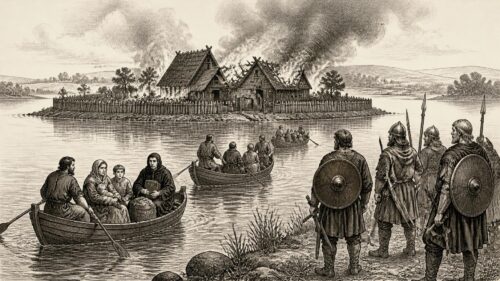
In 850, Irish annals record Cináed son of Conaing, king of Cianachta, rebelling against Máel Sechnaill, king of Tara, with overseas warriors described as foreigners. His forces devastated Uí Néill territories from the Shannon to the sea, attacking churches and secular lordships. They captured and destroyed Loch Gabair, identified with Lagore crannóg, a politically significant elite residence in southern Brega. Nearby oratories at Treóit and possibly Nuarrach were burned, causing casualties. Obituaries and local killings reveal ecclesiastical and regional politics. A notice of Loch Laig draining highlights environmental change. The year depicts rural Ireland under pressure, interconnected yet politically fragmented.
Read Article
Archived: 29 October 2026
Abstract
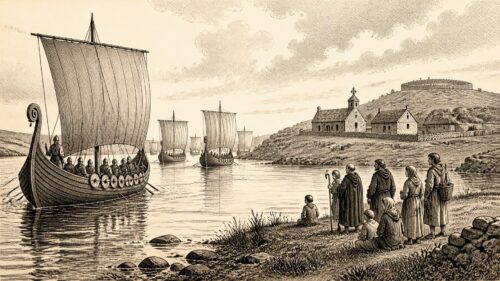
In annalistic year 849, a fleet of seven score ships arrived in Ireland to compel obedience from Scandinavian groups already established there, causing disruption. The evidence does not identify its leader, landing place or achievements. Meanwhile, Máel Sechnaill of Tara maintained an encampment at uncertain Crufaid, while regional rulers died or were killed, including Flannacán of Dál Araidi. Ecclesiastical notices recorded deaths, Robartach of Sláine's voluntary exile, and Indrechtach of Iona's arrival carrying Colum Cille's sacred objects. Máel Bresail, king of Mugdorna turned cleric, was killed by heathens. The annals depict overlapping political, religious and Scandinavian conflicts, not a campaign.
Read Article
Archived: 29 October 2026
Abstract
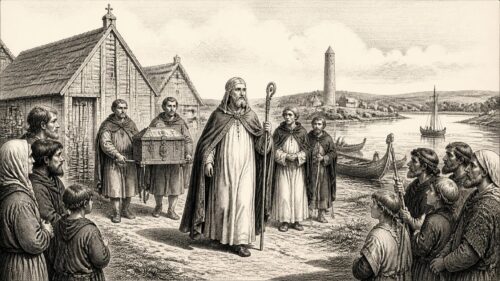
In 846, Ireland experienced dynastic change and Viking violence amid disputed annalistic dating. Niall Caille, northern Uí Néill king of Tara, drowned in the Callan near Armagh, enabling Máel Sechnaill of Clann Cholmáin to claim Tara, though opposition persisted. Scandinavian raiders defeated Connachtmen and plundered Baislec in Roscommon, demonstrating their growing ability to use waterways and strike inland. Forannán, abbot of Armagh, returned from Munster with Patrick’s relics after earlier abduction, reinforcing Armagh’s authority. Deaths of abbots and regional rulers reveal interconnected ecclesiastical and local political structures. The year showed Ireland divided yet resilient under intensified external pressure and uncertainty.
Read Article
Archived: 29 October 2026
Abstract
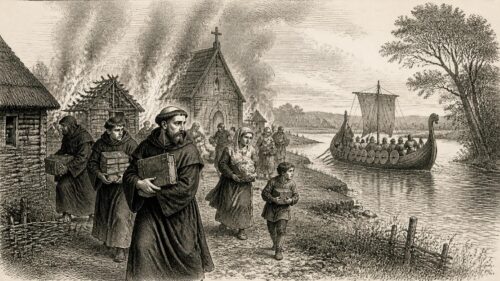
In 844, raiders described as heathens from Loch Rí burned Clonfert, an important Shannon ecclesiastical settlement associated with St Brendan. The campaign also killed Tolarc, lord of Fella, while his kinsman Finnechán escaped; Máel Mithig son of Cináed likewise died at heathen hands. Annals securely date Clonfert’s burning but do not justify a detailed unified narrative. Rónán, former abbot of Clonmacnoise, and Cairpre son of Cathal, king of Leinster, also died. These sparse records reveal inland waterborne raiding, vulnerability among churches and rulers, and Ireland’s interconnected yet politically fragmented communities. Clonfert survived, though the immediate destruction remains unknown in detail.
Read Article
Archived: 29 October 2026
Abstract
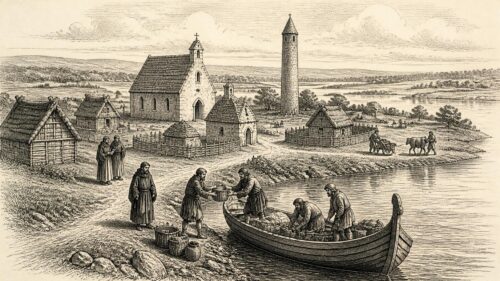
Conventionally dated to 843, despite annalistic chronological discrepancies, the year is chiefly recorded through deaths that affected Irish political, ecclesiastical and scholarly life. Máel Ruanaid son of Donnchad, king of strategically important Mide, died, leaving his dynasty poised for the later rise of his son Máel Sechnaill. Fergus son of Fothaid, king of Connacht, also died, creating uncertainty in another major province. Conglach, vice-abbot of Clonmacnoise, died after the monastery’s recent Viking plundering. Donnacán, an Irish scribe and anchorite, died in Italy, demonstrating enduring continental links. Viking pressure remained a background threat, although no battle is securely recorded for 843.
Read Article
Archived: 29 October 2026
Abstract
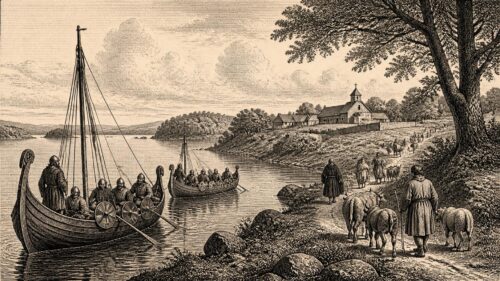
In 842, Ireland experienced political turnover, local conflict and Scandinavian pressure. Máel Ruanaid of Mide, Fergus of Connacht and Cairbre of south Leinster died, raising uncertain questions of succession within a fragmented system of dynasties and overlordship. Annals record killings among Irish groups. Foreigners associated with Loch Rí killed Tolorg, chief of Féli, while his kinsman Finnacán escaped, demonstrating raiders’ reach along the Shannon. The Four Masters date their burning of Clonfert to 842, although Ulster places it in 843. Clerical deaths and an Irish scribe’s death in Italy reveal ecclesiastical networks amid insecurity, while sources remain incomplete and problematic.
Read Article
Archived: 29 October 2026
Abstract
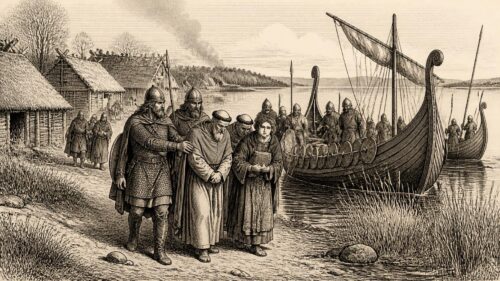
In 840, Viking raiders operating from Lough Neagh plundered Lugbad, capturing bishops, priests and scholars, demonstrating an inland capacity to hold prisoners. Armagh was also burned, although earliest evidence does not identify those responsible. Simultaneously, Feidlimid mac Crimthainn of Munster invaded the midlands and reached Tara, challenging Niall Caille’s northern Uí Néill authority; Niall countered in contested border districts. The year exposed links between waterways, churches, learning and royal power. Annalistic chronology remains uncertain, particularly regarding Viking camps at Dublin and Linn Duachaill, conventionally dated to 841. Nevertheless, 840 marked a transition towards sustained Viking operations and intensified interprovincial rivalry.
Read Article
Archived: 29 October 2026
Abstract
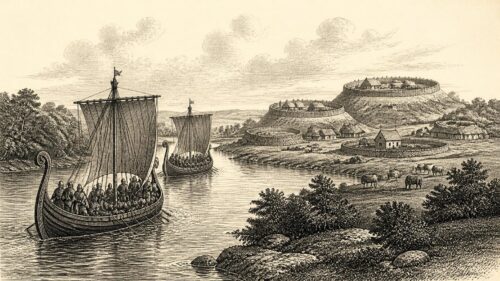
In 837, coordinated Scandinavian forces markedly intensified attacks on Ireland. Two fleets of sixty ships operated on the Boyne and Liffey, plundering Mag Life and Brega, including churches, forts and settlements. Brega's men defeated raiders at Deoninne and killed leader Saxolb, but the foreigners routed the Uí Néill at Inber na mBárc. Inland ecclesiastical centres, including Inis Cealtra and Lough Erne churches, suffered destruction or plunder. The heathens first took Áth Cliath, though no permanent Dublin settlement is proven before the 841 longphort. Political rivalries and provincial deaths compounded a fragmented response, making 837 an exceptional escalation in river-based raiding.
Read Article
Archived: 29 October 2026
Abstract
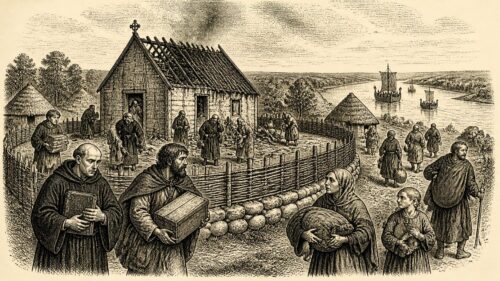
In 836, annalistic evidence depicts Ireland facing overlapping political, ecclesiastical, raiding and environmental pressures. Feidlimid mac Crimthainn of Munster seized and blockaded Kildare, apparently supporting Diarmait’s rival claim to Armagh against Abbot Forannán. Diarmait meanwhile carried Patrick’s law and insignia through Connacht, asserting Patrician authority. Scandinavian raiders plundered and partly burned Kildare, attacked southern Brega, devastated Connacht and defeated the northern Déisi. Connacht also suffered internal conflict at Drong. A remarkable abundance of nuts and acorns obstructed streams. Death notices for leading clerics reveal institutional continuity amid disruption, without suggesting permanent Viking settlement or Irish political unity at this time.
Read Article
Archived: 29 October 2026
Abstract
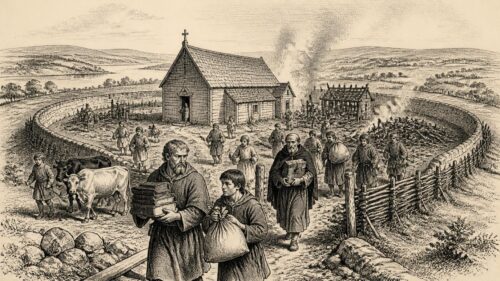
In annalistic 835, Ireland experienced intertwined political, ecclesiastical and military pressures. Niall Caille, northern Uí Néill ruler, installed Bran son of Fáelán in Leinster and devastated Mide, asserting northern influence against rival powers. Deaths of regional kings and churchmen reflected widespread instability. Foreign raiders plundered Ferns, Clonmore and Druim Ing, while burning Mungret and other western Munster churches, exposing wealthy religious centres. On 6 March, one third of Clonmacnoise burned, though its cause remains unknown. Forannán succeeded Diarmait as abbot of Armagh. Fragmentary annals reveal communities whose political authority, resources and security were vulnerable to violence throughout the island alike.
Read Article
Archived: 29 October 2026
Abstract
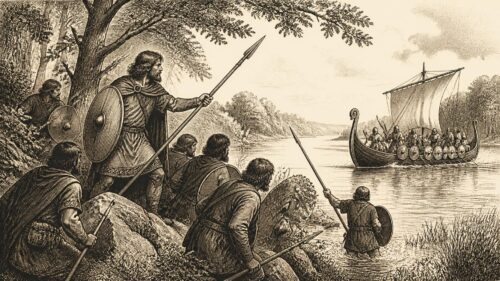
In 834, Irish annals recorded Scandinavian raids, local resistance, political killings, ecclesiastical deaths and a destructive fire, though their chronology and detail remain uncertain. Dúnadach son of Scannlán, king of Uí Fidgenti, defeated foreigners, demonstrating that Munster rulers could repel raiders. Glendalough, Slane and Finnabair Abha were plundered, illustrating the vulnerability of wealthy church communities across Ireland. Much of Clonmacnoise burned, but the cause is unknown. Deaths of Leinster’s king Cellach and other rulers altered local politics, while leading clerics died. Fragmentary records portray overlapping violence, instability and institutional continuity rather than a simple Viking conquest of Ireland in 834.
Read Article
Archived: 29 October 2026
Abstract
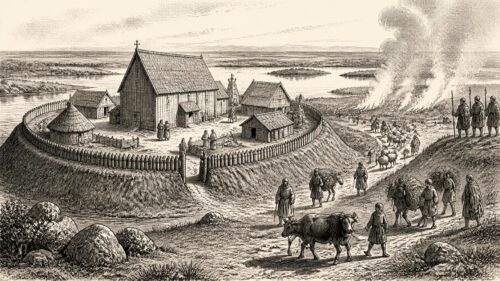
In 832, Irish annals recorded contested kingship, monastic violence and Scandinavian raids. Conchobor of Tara and Artrí of Armagh died, succeeded in Tara by Niall Caille, who defeated foreigners near Derry. Feidlimid of Cashel killed members of Clonmacnoise and Durrow and burned their protected territories, demonstrating that Irish rulers also threatened ecclesiastical centres. Cellach son of Bran attacked Kildare’s community. Foreign raiders plundered Clondalkin, burned Drumiskin and raided Loch Bricrenn, where Congalach died near ships. Regional rulers and churchmen also died, while Lismore and southern Munster suffered violence. The sources preserve consequences, but often omit motives, perpetrators and ordinary experience.
Read Article
Archived: 29 October 2026
Abstract
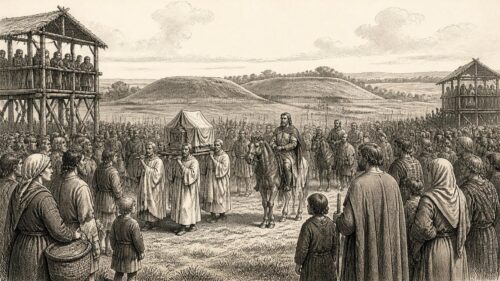
In annalistic 831, Ireland faced converging religious, political and maritime crises. At Tailtiu, dissension over Mac Cuilinn’s shrine and Patrick’s relics caused deaths during the royal fair. Scandinavian raiders defeated Armagh’s community at unidentified Aignig, taking many captives, and seized Conaille’s king Máel Brigte and his brother for removal by ship. Armagh also suffered royal coercion under Conchobor of Tara. Conchobor plundered Life, while Feidlimid of Cashel advanced against Brega with Munster and Leinster forces. Ecclesiastical deaths and relic movements underline church networks. The fragmented annals reveal contested authority, linking sacred prestige, warfare, captivity and seaborne travel across the island.
Read Article
Archived: 29 October 2026
Abstract
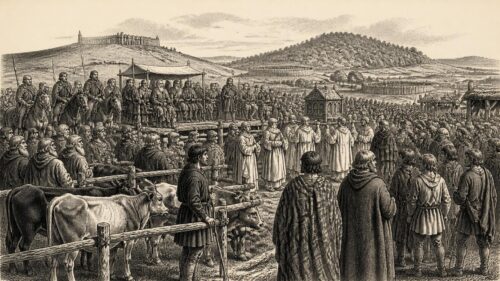
In 830, Ireland’s fragmented political and ecclesiastical powers collided at Tailtiu, where a dispute over Mac Cuilinn’s shrine and Patrick’s relics caused many deaths during the major assembly. Diarmait, abbot of Iona, returned with Columban sacred objects, illustrating ecclesiastical connections across the North Channel. Scandinavian raiders captured Conaille’s king and brother, and defeated Armagh’s community at Aignig. Armagh also suffered royal coercion from Conchobor of Tara. Feidlimid of Cashel campaigned into Meath, provoking Conchobor’s counter-raid. Death notices for Kildare, Movilla and Armagh leaders, alongside Óengus’s Martyrology, reveal enduring religious learning amid instability. The annalistic chronology itself remains uncertain and reconstructed.
Read Article
Archived: 29 October 2026
Abstract
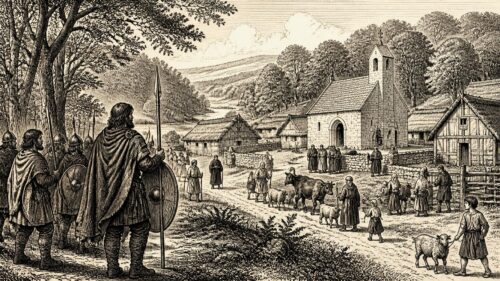
In 829, as dated by the Annals of Ulster despite its U830 heading, Feidlimid mac Crimthainn, king of Munster, projected power into the midlands and Connacht. He burned Foire, probably Fore in Westmeath, and inflicted a major defeat on the southern Uí Briúin, though details remain unknown. Munstermen also killed Folloman, brother of Conchobor mac Donnchada, king of Tara, intensifying their rivalry. Deaths of abbots, bishops and local kings underline the interdependence of ecclesiastical institutions, dynasties and regional politics. No Viking attack is recorded that year; Irish warfare itself threatened settlements and churches. The year showed expansionist pressure, without resolution.
Read Article
Archived: 29 October 2026
Abstract
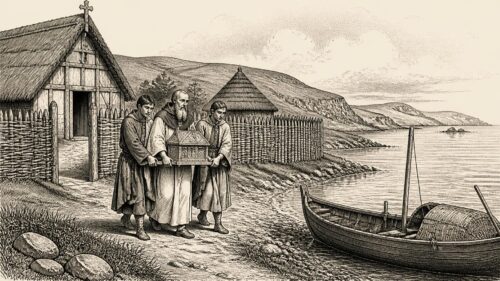
In 828, as calibrated in the Annals of Ulster rather than the displaced Viking material assigned to 827, Ireland’s record combines deaths, violence and religious travel. Muiredach of Leinster and several lesser kings died, alongside leading churchmen and an ecclesiastical steward, illustrating layered political and institutional authority. Conaing was treacherously killed, while Mide defeated Connacht in an otherwise unexplained battle. Diarmait, abbot of Iona, carried Colum Cille’s relics to Scotland, demonstrating maritime links within the Columban world, although no motive is recorded. The sparse evidence depicts a fragmented yet connected society shaped by rulership, warfare, churches, economy and sea routes.
Read Article
Archived: 29 October 2026
Abstract
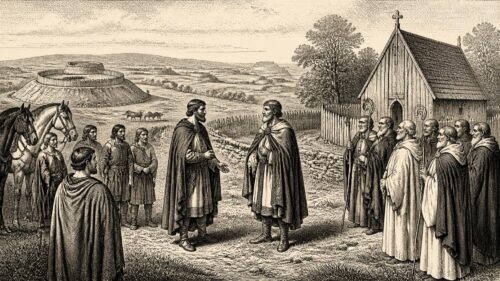
In 827, Irish annals recorded conflict, church politics, Viking raids and royal diplomacy across a divided island. Niall Caille of Cenél nÉogain defeated forces of Ulaid and Airgialla at Leth Cam near Armagh, strengthening his influence and supporting Éogan Mainistrech’s ecclesiastical position. Church leaders also died at Tallaght, Fir Rois and Cell Achaid. Viking raiders burned Lusk, ravaged eastern districts and defeated a Leinster encampment, killing Conall of the Fortuatha. Violence disrupted fairs at Tailtiu and Colmán. Finally, Munster’s Feidlimid and Tara’s Conchobor held a royal conference at Birr, acknowledging competing powers amid instability within Ireland’s political and religious life.
Read Article
Archived: 29 October 2026
Abstract
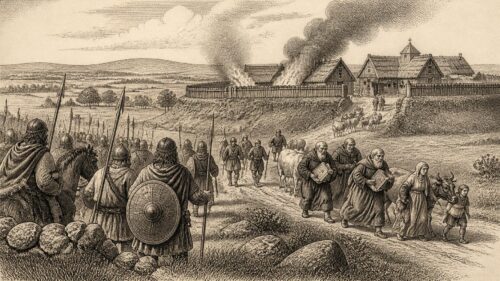
In 826, as conventionally dated despite annalistic discrepancy, Feidlimid mac Crimthainn, king of Munster, led an army into the midlands and burned Delbna Bethra, threatening Mide and estates linked to Clonmacnoise. His campaign challenged Conchobar mac Donnchada’s authority at Tara amid rivalry later followed by negotiations at Birr. Deaths of kings in Brega and Mide, and the deceitful killing and wounding of rulers in Tethba, exposed fractured local lordship. Ecclesiastical leaders died at Armagh, Clonard and Clonfert. A plague warning caused widespread fear, while Daire’s law was renewed in Connacht. No securely dated Viking raid is recorded in principal annals.
Read Article
Archived: 29 October 2026
Abstract
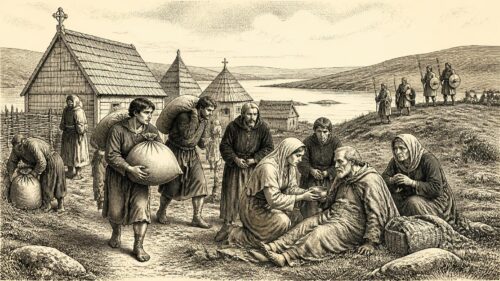
Conventionally dated 825, though annalistic chronologies vary, this cluster of Irish events records pestilence, famine and bread scarcity affecting vulnerable people across Ireland. Raiders plundered Downpatrick, Movilla and Inis Daimle, but Ulaid defeated them at Mag Inis; elsewhere raiders routed Osraige. Blathmac son of Flann was killed on Iona, later commemorated as a martyr. Numerous prominent clerics and several kings died, highlighting fragile religious and political networks. Armagh’s bishop Artrí extended Patrick’s law over Connacht, asserting ecclesiastical authority. The notices do not describe a unified national crisis but reveal overlapping hardship, violence, leadership losses and competing regional authority within Ireland.
Read Article

