Archived: 19 September 2026
Abstract
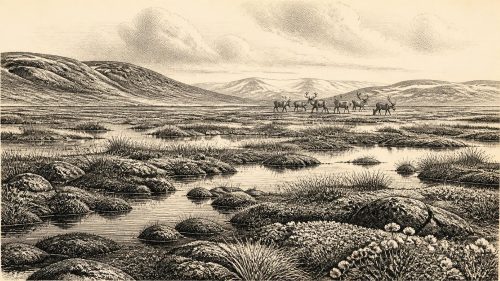
Labelled 31,212 BCE, this Late Pleistocene interval cannot be dated precisely in Ireland. Derryvree, County Fermanagh, preserves freshwater silts between glacial tills, indicating an ice-free, treeless periglacial wetland sometime within a broad calibrated range encompassing the notional year. Ireland was environmentally varied, with shifting ice margins, wetlands and intermittent ecological links to north-west Europe. Castlepook Cave in County Cork yielded MIS 3 remains including mammoth, reindeer, giant deer, predators and lemmings, though they need not have been contemporaneous. A cut-marked reindeer bone may indicate an early human visit, but no secure occupation evidence exists. Later glaciation destroyed evidence, leaving uncertainty.
Read Article

Archived: 19 September 2026
Abstract
Castlepook Cave in County Cork preserves evidence for Ireland in Marine Isotope Stage 3, before the Last Glacial Maximum. Re-dated animal bones show that mammoth, reindeer, giant deer, brown bear, spotted hyaena and other cold-adapted mammals occupied parts of a variable, open landscape. Improved radiocarbon methods corrected overly recent dates, placing finds further back in time. A marked reindeer femur, about 33,000 years old, may indicate butchery by people, yet cannot prove settlement, identity or culture. Disturbed cave deposits, glacial erosion and missing habitation evidence require caution. Castlepook reveals animal dispersal and possible human visits, not a documented Palaeolithic community.
Read Article
Archived: 19 September 2026
Abstract
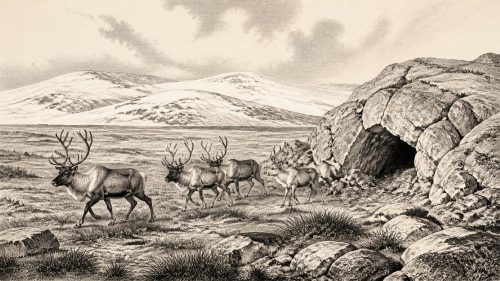
Circa 31,220 BCE is a notional date within the volatile Late Pleistocene, not a precisely recorded Irish year. Before the Last Glacial Maximum, Ireland contained shifting cold, open habitats supporting reindeer, mammoth, giant deer and carnivores. Castlepook Cave in County Cork preserves remains from this fauna, though early excavation and disturbed deposits limit interpretation. A reindeer femur, dated roughly 33,000 years ago, bears a possible stone-tool cut mark. If confirmed, it may indicate brief Upper Palaeolithic human carcass processing, rather than settlement. Expanding ice later transformed landscapes and erased evidence, leaving a rare record of prehistoric ecology and human presence.
Read Article
Archived: 19 September 2026
Abstract
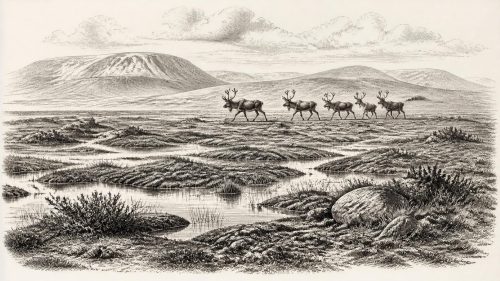
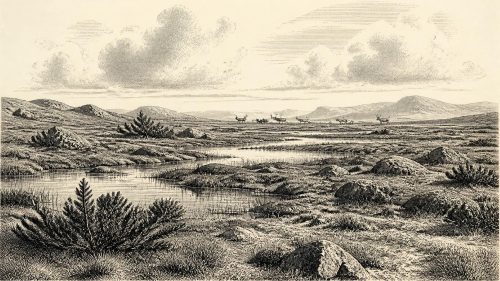
Although 31,223 BCE cannot identify an Irish event, it falls within unstable Marine Isotope Stage 3. Derryvree, County Fermanagh, preserves freshwater sediments dated broadly to 36,900–31,700 years before present, between glacial tills, demonstrating a local ice-free interval. Plant and insect remains reconstruct treeless, frost-affected tundra wetland with pools, sedges and mosses. Castlepook Cave fauna indicates periodic access for reindeer, mammoth, giant deer, predators and scavengers. No secure evidence proves human settlement; a possibly tool-marked reindeer bone suggests only tentative brief visitation. Later ice expansion destroyed or buried landscapes, leaving sparse evidence of ecological change rather than society, politics or culture.
Read Article
Archived: 18 September 2026
Abstract
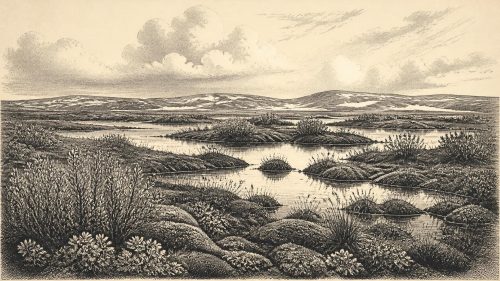
Around 31,241 BCE, Ireland was a cold, fluctuating Late Pleistocene landscape, not a historical society with known peoples or events. At Derryvree, County Fermanagh, freshwater silts between glacial tills preserve evidence of an interval between ice advances. Water-milfoil, bogbean, sedges, mosses, dwarf willow and insects indicate a wet, open tundra basin shaped by frost, pools and short summers. Elsewhere, cave remains show that cold-stage animals, including reindeer, mammoth and hyaena, reached Ireland at various times. Possible early human evidence remains disputed. Changing ice sheets, low sea levels and altered coastlines created varied conditions, while later glaciation sealed this ecological archive.
Read Article
Archived: 18 September 2026
Abstract
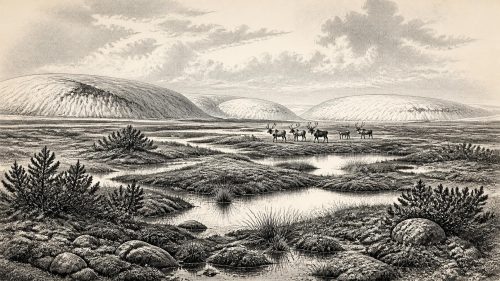
At the notional date of 31,248 BCE, Ireland’s evidence cannot support an annual history, but illuminates a broad, variable Late Pleistocene interval. Derryvree, County Fermanagh, preserves freshwater sediments between glacial tills, dated broadly to 36,900–31,700 years BP, indicating locally ice-free, open wet tundra with sedges, mosses, juniper and bogbean. Ice-sheet extent and sea levels varied regionally before the later Last Glacial Maximum. Castlepook Cave, County Cork, contains cold-climate fauna, including reindeer and mammoth. A cut-marked reindeer femur may indicate human carcass processing, but cannot prove settlement. Glaciation and erosion have left Ireland’s ecological past clearer than its human history alone.
Read Article
Archived: 18 September 2026
Abstract
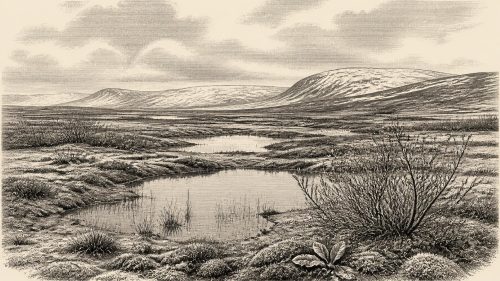
31,255 BCE is a chronological label, not a datable event. Derryvree, County Fermanagh, preserves freshwater sediments between two glacial tills, radiocarbon-dated broadly to a period encompassing this date. Its pollen, plants, mosses and insects indicate cold, treeless tundra wetlands with pools, seasonal productivity and severe periglacial conditions. Castlepook Cave in County Cork records MIS 3 fauna including mammoth, reindeer, giant deer, hyena and Arctic species, although its deposits are mixed. A marked reindeer bone may signal early human butchery, but cannot prove settlement. Ireland's history here is reconstructed from fragmentary environmental evidence amid changing ice, uncertain routes and no polities.
Read Article
Archived: 18 September 2026
Abstract
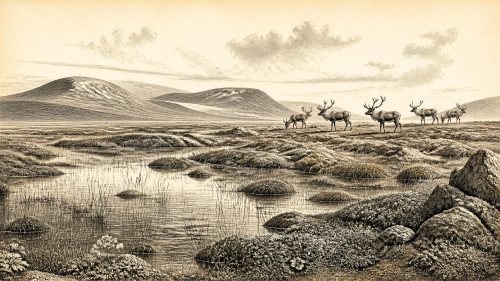
Although 31,263 BCE cannot denote a precise Irish historical year, it falls broadly within MIS 3, before the Last Glacial Maximum. Ireland experienced fluctuating ice, low sea levels and patchy, cold open environments. Derryvree sediments in Fermanagh record an ice-free freshwater wetland between glacial advances, supporting tundra-like vegetation, insects and seasonal water. Castlepook Cave in Cork preserves re-dated MIS 3 fauna including mammoth, reindeer, giant deer, predators and lemmings, demonstrating rich cold-stage ecosystems. A purported stone-tool cutmark on a reindeer bone may indicate human butchery, but remains contested. No secure evidence establishes settlement, institutions; environmental change is the clearest history.
Read Article
Archived: 18 September 2026
Abstract
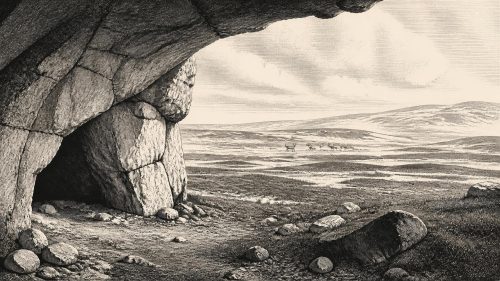
Around 33,200 calibrated years before present, Ireland lay within the climatically unstable Late Pleistocene, although no evidence can identify conditions in 31,280 BCE precisely. Ice sheets, sea levels and coastlines changed unevenly, while later glaciation destroyed much terrestrial evidence. Castlepook Cave in County Cork preserves Ireland’s richest relevant fauna, including mammoth, giant deer, reindeer, bear and hyena, accumulated across extended periods rather than a single moment. Redating places some remains in MIS 3, supporting intermittent animal occupation. A reportedly cut-marked reindeer bone may indicate human visitation, but remains contested and cannot demonstrate settlement. Evidence remains fragmentary, not an annual narrative.
Read Article
Archived: 18 September 2026
Abstract
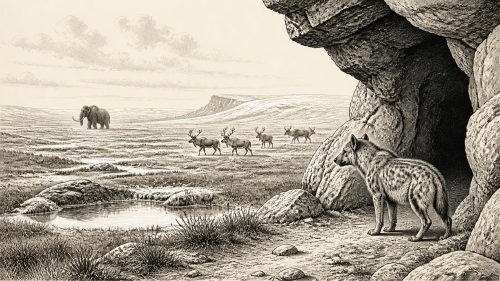
Around 31,298 BCE, Ireland cannot be reconstructed as a dated historical event, but evidence places it within variable MIS 3 Ice-Age conditions. Castlepook Cave, County Cork, preserves fauna accumulated over millennia, including mammoth, reindeer, giant deer, bears, wolves and spotted hyenas, indicating cold open steppe habitats and continental connections before the Last Glacial Maximum. Derryvree, County Fermanagh, records tundra wetlands in a related period. Changing sea levels, ice margins and glaciation shaped access and preservation. A disputed modified reindeer bone suggests possible human activity, but no secure settlement exists. Ancient DNA may clarify faunal links; permanent occupation there remains unproven.
Read Article
Archived: 18 September 2026
Abstract
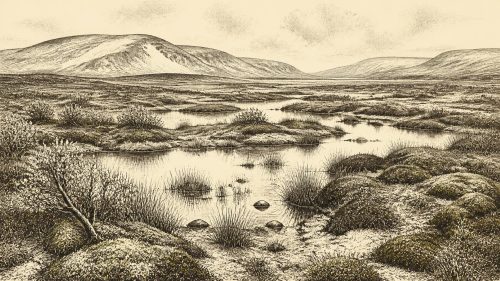
31,301 BCE is a modern label within MIS 3, not a recoverable Irish year. Derryvree, County Fermanagh, provides evidence: organic freshwater sediments between tills, dated by BIRM-166 to 36,900–31,700 calibrated BP, record an ice-free interval before glaciation. Tundra wetlands supported cold-adapted plants and insects. Castlepook Cave, County Cork, preserves MIS 3 fauna including mammoth, giant deer, reindeer and hyaena, indicating varied open habitats. A possibly cut-marked reindeer bone suggests, but does not establish, human presence. No settlement, institutions, ritual, agriculture or continuous occupation is evidenced. The period is best understood through uncertain ranges, changing ice margins, ecosystems and transient visitors.
Read Article

Archived: 18 September 2026
Abstract
Around 33,300 calibrated years before present, Ireland lay within the climatically unstable Late Pleistocene, before the Last Glacial Maximum. Lower seas and shifting ice created changing routes for mammals, though no specific land bridge or event can be identified. Castlepook Cave, County Cork, preserves major faunal evidence, including reindeer, mammoth, giant deer, predators and lemmings, but its accumulated bones do not represent a single community. Revised dating complicates species chronologies. A possibly tool-marked reindeer bone suggests early human activity, yet remains unconfirmed. No contemporary settlement evidence exists. Vegetation records indicate cold, open, wet habitats; later glaciation subsequently destroyed much evidence.
Read Article

Archived: 18 September 2026
Abstract
31,349 BCE is not a recoverable Irish historical year but a point within unstable Late Pleistocene MIS 3. At Derryvree, County Fermanagh, organic sediments between glacial tills record a locally ice-free, cold, wet, treeless landscape of freshwater pools, mosses, sedges, grasses, juniper and insects, later buried by ice. Comparable northern sites confirm alternating glacial conditions. Castlepook Cave, County Cork, preserves diverse Ice Age fauna, including mammoth and reindeer, while a possibly cut-marked reindeer bone suggests, but does not prove, human activity. No settlement or polity is evidenced. The date chiefly illuminates shifting habitats, uncertain chronologies and survival of environmental evidence.
Read Article
Archived: 18 September 2026
Abstract
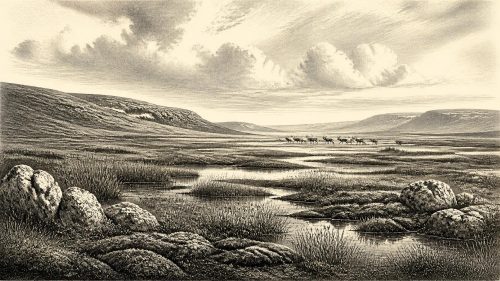
Circa 31,353 BCE, Ireland lay within an unstable Late Pleistocene cold phase, not a datable historical year. Derryvree, County Fermanagh, preserves a wetland between glacial tills, dated broadly enough to encompass this period, indicating open, treeless tundra with freshwater habitats, grasses, sedges, mosses and cold-adapted plants. Castlepook Cave, County Cork, yielded mammoth, reindeer, giant deer and predators, demonstrating intermittent cold-open habitats and ecological links with north-western Europe. An incised reindeer femur may record stone-tool butchery and brief Upper Palaeolithic human presence, but cannot prove settlement. Glaciation, erosion and sea-level change likely destroyed evidence, requiring cautious interpretation of Ireland's early record.
Read Article

Archived: 17 September 2026
Abstract
Although 31,367 BCE is a modern label, Derryvree, County Fermanagh, illuminates a broader MIS 3 interval. Organic silts between glacial tills, dated BIRM-166 to 30,500 ± 1,100 radiocarbon years BP, indicate a cold freshwater wetland amid shifting ice. Plants reveal largely treeless, tundra-like vegetation, while regional conditions varied rapidly. Castlepook Cave fauna demonstrate that reindeer, mammoth, hyaena and other Ice Age animals reached Ireland, though deposits span different times. A cut-marked reindeer bone may indicate Upper Palaeolithic human activity, but does not prove settlement. Evidence supports temporary environmental opportunity, not a permanently inhabited or historically organised Ireland during this period.
Read Article

Archived: 17 September 2026
Abstract
Around 31,369 BCE, Ireland lay within the climatically unstable Late Pleistocene MIS 3 interval, not a datable historical year. Derryvree, County Fermanagh, preserves freshwater silts between glacial tills, indicating a locally ice-free, periglacial tundra environment during roughly 36,900–31,700 calibrated years before present. Open vegetation and freshwater habitats supported cold-adapted life. Castlepook Cave, County Cork, records MIS 3 fauna including mammoth, reindeer, giant deer, hyaena, wolf and Arctic fox, demonstrating ecological connections during lower sea levels. Human occupation remains unproven: a possibly butchered reindeer bone is contested. Evidence chiefly reveals changing climate, ice, habitats and animals, rather than societies or events.
Read Article

Archived: 17 September 2026
Abstract
At the notional date of 31,373 BCE, Ireland lay within the climatically unstable Late Pleistocene, for which evidence permits only broad ranges rather than annual history. At Derryvree near Maguiresbridge, freshwater organic sediments between tills, radiocarbon dated broadly to this period, demonstrate an ice-free or ice-marginal interval with cold wetlands, bogbean, mountain avens, insects and active water. Castlepook Cave records a diverse cold-climate fauna, including reindeer, mammoth and predators, but mixed deposits prevent a single-date reconstruction. A possibly cut-marked reindeer bone suggests disputed transient Upper Palaeolithic human activity. No evidence supports settlement, farming or society; climate and glaciation reshaped Ireland.
Read Article
Archived: 17 September 2026
Abstract
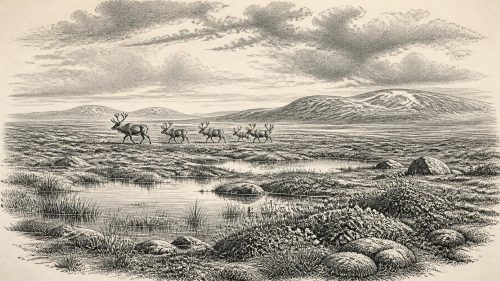
Modern labels such as 31,392 BCE cannot identify a single recorded Irish year; they denote a broad Late Pleistocene, MIS 3 interval. At Derryvree, County Fermanagh, freshwater silts between glacial tills, dated roughly 36.9–31.7 thousand cal BP, show locally ice-free muskeg and tundra wetlands with cold-adapted plants and aquatic life. Other deposits indicate shifting regional ice and open water. Castlepook Cave fauna, including mammoth, reindeer and predators, confirms ecological links with north-west Europe. A possibly cut-marked reindeer bone suggests limited Upper Palaeolithic human activity, but no settlement. Ireland remained environmentally unstable, repeatedly reshaped by ice, water and erosion over millennia.
Read Article

Archived: 17 September 2026
Abstract
The notional date 31,393 BCE approximates a Late Pleistocene MIS 3 interval, not a recoverable Irish year. Ireland experienced cold, unstable conditions before the Last Glacial Maximum, with changing ice, sea levels, exposed land and open vegetation. Derryvree sediments in Fermanagh preserve evidence of tundra-steppe wetlands, freshwater, mosses, sedges and cold-adapted plants. Castlepook Cave in Cork contains a mixed assemblage of Ice Age animals, including reindeer, mammoth and hyaena, accumulated across periods. A marked reindeer femur may indicate early human butchery, but cannot prove permanent occupation. Later glaciation and submergence obscured evidence, leaving a chiefly environmental history for Ireland today.
Read Article
Archived: 17 September 2026
Abstract
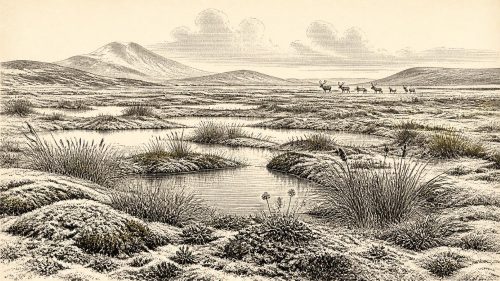
Around 31,394 BCE, Ireland was a fluctuating Late Pleistocene landscape, not a recorded historical society. Freshwater sediments at Derryvree, County Fermanagh, formed between glacial episodes, preserving evidence of treeless wetlands, sedges, grasses, mosses and aquatic plants. They indicate locally exposed, cold, wet ground before the later expansion of the British–Irish Ice Sheet. Cave remains show that mammoth, reindeer, horse, giant deer and predators reached Ireland during the broader Middle Midlandian period, though not necessarily simultaneously. Possible human activity at Castlepook remains unconfirmed as evidence of settlement. No communities, politics, monuments or traditions can be securely assigned to this remote interval.
Read Article
Archived: 17 September 2026
Abstract
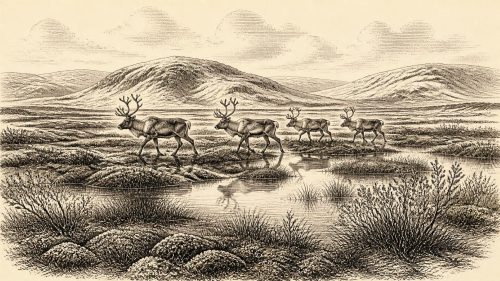
31,396 BCE is not a recoverable Irish historical year but falls within an unstable Late Pleistocene interval. Derryvree, County Fermanagh, preserves freshwater silts between glacial tills, indicating a locally ice-free, treeless wetland with tundra vegetation during part of MIS 3. Castlepook Cave, County Cork, contains a mixed, long-lived fauna including mammoth, reindeer, giant deer, hyaena and Arctic species, evidencing open cold landscapes. A cut-marked reindeer femur may represent Ireland’s earliest humanly processed animal, though it proves neither settlement nor identity. Later glaciation obscured much evidence there, leaving only cautious indications of changing climates, animal movements and possible brief human visits.
Read Article
Archived: 17 September 2026
Abstract
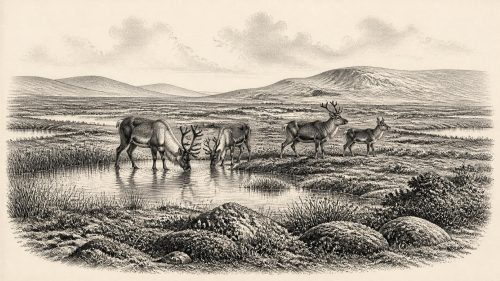
31,423 BCE is a modern chronological label within unstable MIS 3, not a recorded Irish year. At Derryvree, County Fermanagh, freshwater organic sediments between glacial tills indicate a temporary ice-free, treeless wetland landscape, dated broadly to 36,900–31,700 calibrated years BP. Plant and insect remains show pools, mosses and open periglacial ground. Comparable Ulster deposits demonstrate fluctuating ice cover. Castlepook Cave’s MIS 3 fauna, including reindeer, mammoth and hyaena, shows periodic ecological connections with Europe, while ancient-DNA findings remain provisional. Possible tool damage on a reindeer bone suggests, but does not establish, human visitation. Later glaciation buried or destroyed older evidence.
Read Article

Archived: 17 September 2026
Abstract
31,427 BCE is a modern label for a volatile Middle Midlandian phase of the last Ice Age, not a documented Irish year. Around this period, abrupt North Atlantic climatic shifts affected ice, drainage, vegetation and sea levels, while Ireland remained regionally varied rather than uniformly glaciated. Derryvree, County Fermanagh, preserves organic beds between tills, revealing cold, treeless freshwater wetlands with mosses, sedges and specialised plants. Castlepook Cave, County Cork, contains cold-adapted fauna, including mammoth and reindeer. A marked reindeer femur may indicate Palaeolithic butchery, but lacks corroborating archaeological context. Evidence supports intermittent habitats and possible human visits, not settled society.
Read Article
Archived: 17 September 2026
Abstract
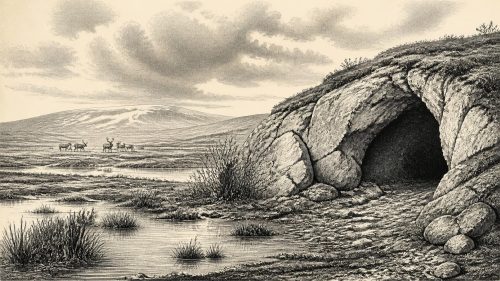
At c. 31,436 BCE, Ireland cannot be described through annual events or human history, but through uncertain Late Pleistocene environmental evidence. Derryvree, County Fermanagh, preserves freshwater sediments between glacial tills, indicating episodically ice-free, cold, treeless wetlands with tundra plants during Marine Isotope Stage 3. Castlepook Cave near Doneraile contains remains of mammoth, reindeer, horse, bear, hyaena and other cold-stage fauna, although collections span long periods. A marked reindeer bone may indicate early human butchery, but sustained occupation is unproven. Dynamic ice, changing coasts and later erosion shaped intermittently habitable landscapes, while preventing reconstruction of societies, politics, settlement, or exact chronology.
Read Article
Archived: 17 September 2026
Abstract
Around 31,441 BCE, Ireland lay within Marine Isotope Stage 3, a fluctuating prelude to the Last Glacial Maximum rather than a uniformly ice-covered landscape. Derryvree sediments in Fermanagh indicate cold, treeless wetlands of sedges, grasses, juniper, mosses and arctic-alpine plants, alongside regional variation. Castlepook Cave in Cork preserves MIS 3 fauna including mammoth, reindeer, giant deer, bears, wolves, Arctic foxes, lemmings and spotted hyaenas, which used the cave as a den. A marked reindeer femur may indicate human butchery about 33,000 years ago, but cannot prove permanent settlement. Later glaciation erased much evidence, leaving deposits and bones as Ireland’s witnesses.
Read Article

Archived: 17 September 2026
Abstract
31,444 BCE is not a recordable Irish year but falls within the climatically unstable Late Pleistocene. Deposits beneath a drumlin at Derryvree, County Fermanagh, reveal an ice-free interval containing freshwater sediments, mosses, sedges, aquatic plants, insects and pollen, indicating cold, largely treeless tundra wetland. Later ice buried and eroded much evidence. Castlepook Cave, County Cork, preserves cold-adapted fauna including mammoth, reindeer, giant deer, hyena and lemmings, though its deposits span episodes. A marked reindeer bone may indicate early human butchery, but remains unconfirmed. No secure contemporary settlement, tools, culture or institutions are known; the evidence instead documents a changing landscape.
Read Article

Archived: 17 September 2026
Abstract
31,448 BCE is a modern label for a broad Late Pleistocene interval, rather than a recordable Irish year. Sediments beneath Derryvree, County Fermanagh, document an ice-free freshwater wetland during MIS 3, later sealed by advancing ice. Mosses, pollen and insects indicate cold, open, wet, periglacial terrain with local ecological variety. Southern caves, especially Castlepook in County Cork, preserve diverse fauna including reindeer, mammoth, giant deer and predators. A cut-marked reindeer bone may indicate brief human carcass processing, but cannot prove settlement. Before the Last Glacial Maximum, Ireland's evidence chiefly reveals dynamic environments, scarce archaeological traces, and possible transient human presence.
Read Article

Archived: 17 September 2026
Abstract
31,456 BCE is not a precise Irish historical date but falls within a broad MIS 3 interval. At Derryvree, County Fermanagh, organic sediments between glacial tills record an ice-free phase, dated roughly 36,900–31,700 calibrated years BP, with cold, treeless freshwater wetlands. Castlepook Cave, County Cork, preserves diverse open-country fauna, including mammoth, reindeer, giant deer, hyaena and Arctic fox, accumulated across multiple periods. A marked reindeer femur may indicate human butchery around 31,000 BC, but cannot prove settlement or continuity. No evidence supports prehistoric polities or culture. Later ice expansion destroyed much evidence, leaving ecological archive and possibilities of human presence.
Read Article

Archived: 17 September 2026
Abstract
Around 31,467 BCE, Ireland lacked written records, so evidence offers only calibrated reconstructions. During Marine Isotope Stage 3, before the Last Glacial Maximum, conditions were cold, open and harsh, though not uniformly ice-covered. Organic sediments at Derryvree, County Fermanagh, between glacial tills, preserve sedges, aquatic plants and treeless wetlands, demonstrating an ice-free interval later sealed by glaciation. Cave remains at Castlepook, County Cork, show Late Pleistocene fauna including reindeer, mammoth and hyaena. A cut-marked reindeer femur may indicate human activity, but proves neither settlement nor continuous occupation. These records reveal changing landscapes capable of sustaining wildlife and perhaps mobile hunter-gatherers.
Read Article

Archived: 17 September 2026
Abstract
31,470 BCE is a modern label for an uncertain MIS 3 interval, rather than a recoverable Irish calendar year. Before the Last Glacial Maximum, climatically variable Ireland included open, cold landscapes that intermittently supported mammoth, reindeer, giant deer, bears, hyaenas, wolves, foxes and lemmings. Castlepook Cave, County Cork, preserves these remains, although early excavation, disturbed deposits and revised radiocarbon dates require caution: its fauna accumulated across multiple phases, not one scene. A cut-marked reindeer femur may indicate Upper Palaeolithic butchery about 33,000 years ago, but cannot prove settlement or permanent population. Castlepook instead documents ecological change and possible human presence.
Read Article


