Bardan, resident druid of Emerald Archives

Summon Bardan

Summon Bardan, our resident druid, and ask him about Ireland’s history and heritage.
His ancient wisdom will answer as soon as the search is complete.

16f4e9c9-5708-4623-8c9d-c6c5a6c32fa7

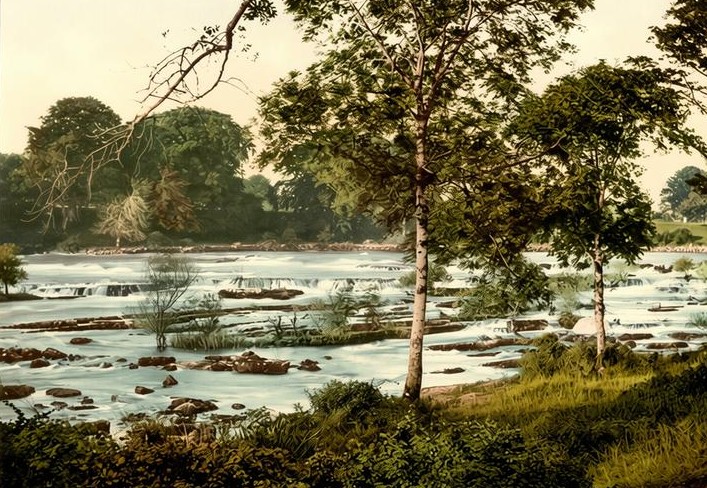
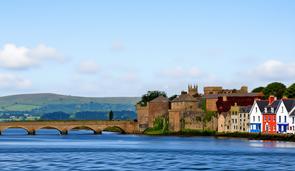
The Shannon Rapids at Castleconnell, County Limerick, form one of the most visually dynamic and historically significant landscapes along Ireland’s longest river. Spanning a dramatic six-kilometre stretch and dropping some 30 metres, this section of the Lower Shannon is famed for its powerful whitewater, swift currents, and the legendary Falls of Doonass. Just 10 kilometres northeast of Limerick City, the rapids have shaped the region’s recreational life, angling heritage, and natural environment for generations.

Castleconnell’s rapids are a magnet for outdoor sports. The area’s tumultuous waters offer premier conditions for whitewater kayaking, drawing adventure groups and youth training programs from across Munster. The Limerick Kayaking Academy and Kilfinane Outdoor Education Centre are among those who regularly challenge the swirling currents, honing their skills in a setting both beautiful and demanding.

Historically, Castleconnell achieved international renown as a centre for Atlantic Salmon angling. Its reputation for producing massive salmon—often exceeding 40 or even 50 pounds—attracted sportsmen from Ireland, Britain, and beyond. The “Castleconnell rod,” a long and flexible salmon rod, was developed here to master the powerful fish and fast-flowing water. Local anglers also used unique flat-bottomed “fishing cots,” boats perfectly suited for navigating the rapids and pools.

The construction of the Ardnacrusha hydroelectric scheme in the late 1920s marked a turning point in the history of the Shannon rapids. The massive power station, built upstream, diverted much of the river’s flow, permanently altering the rapids’ volume and intensity. This intervention severely impacted salmon migration routes and spawning beds, with the population now estimated at just 3% of its historical peak. Once a mecca for anglers, Castleconnell’s fisheries faced severe decline—a story that echoes in river communities nationwide.

Despite these challenges, conservation and restoration efforts are ongoing. The Castle Connell River Association works to maintain spawning beds, support broodstock preservation, and restore sections of the river to health. Modern anglers and environmentalists are united in their desire to see the rapids and their iconic salmon thrive once again.

Biodiversity remains one of Castleconnell’s greatest strengths. Birdwatchers frequent the area, which acts as a corridor for species such as the Common Kingfisher, Bank Swallow, and Long-tailed Tit. The ever-changing waters, even in their altered state, continue to provide habitat for a wide variety of fish, birds, and aquatic life, ensuring the rapids’ place as a living symbol of Limerick’s natural heritage.

Primary Sources

  1. “The Falls of Doonass and the Shannon Rapids,” Illustrated London News, 19th century.
  2. Limerick Kayaking Academy and Kilfinane Outdoor Education Centre records, 20th–21st century.
  3. “The Castleconnell Rod and Salmon Fishery,” Irish Angler’s Journal, 1880s–1930s.
  4. ESB Archives, Ardnacrusha Hydroelectric Scheme, 1925–1930.
  5. Castle Connell River Association conservation reports, 1990s–present.
  6. Birdwatch Ireland, Castleconnell biodiversity surveys, recent years.
Explore Emerald Archives

Share Your Thoughts

We welcome your thoughts, memories and local knowledge about this article. Perhaps you recognise a person, place, building or event, remember a related story, or can provide additional names, dates or details. Every contribution helps improve the historical record and may reveal information that would otherwise be lost. Please share your comments, corrections and personal recollections with us, whether they are brief observations or detailed accounts. Your knowledge can help connect families, communities and generations while strengthening Emerald Archives for future visitors. By taking part, you become an important contributor to preserving and sharing Limerick’s history with everyone worldwide today.

Your email address will not be published. Required fields are marked *

Books Supporting the Archive

Every Book Purchased Helps Support The Continuing Work Of Emerald Archives.

Cover of Ashes

Ashes

The Ashes Trilogy, Book One

Ashes begins the story of a group of children growing up in the streets and lanes of Limerick, where poverty and hardship are balanced by humour, imagination and fierce friendship. Their city is more than a setting: it watches, remembers and gives voice to lives often absent from official history. As the children explore their neighbourhood, they encounter family pressures, faith, hunger, danger and the first signs of a changing world. Through their adventures and loyalties, the novel captures the resilience of ordinary people and introduces the characters whose lives will unfold across the three volumes of The Ashes Trilogy.

View on Amazon UK
Cover of Gurriers

Gurriers

The Ashes Trilogy, Book Two

Gurriers continues the lives of the Limerick children introduced in Ashes as childhood freedom begins to give way to work, responsibility and harsher choices. Their friendships remain strong, but poverty, family expectations, faith and the pressures of growing older test loyalties once taken for granted. The streets and lanes still offer humour, adventure and belonging, yet the wider world increasingly intrudes upon their lives. Through vivid dialogue, memorable characters and the watchful voice of Limerick itself, the novel explores resilience, identity and change while showing how even the closest companions can be drawn towards futures by circumstances beyond their control.

Cover of Scattered

Scattered

The Ashes Trilogy, Book Three

Scattered concludes The Ashes Trilogy as the friends who once shared Limerick’s streets and lanes face adulthood, work, hunger, faith, family duty and emigration. Time has altered their ambitions, tested their loyalties and carried some beyond the city that formed them. Yet memory continues to bind Louie, Seamus, Joe, Sean, Peter, Tony, Bardy, Maura, Eileen, Nora, Lingo and the mysterious Gleamer. Narrated through the enduring presence of Limerick itself, the novel explores separation, sacrifice and survival while recognising the humour and affection that remain. Together, their scattered lives complete a moving portrait of friendship, community and change across changing generations.

Cover of Threshold

Threshold

The Troubles Trilogy, Book One

Threshold opens in Belfast in 1968, where the Catholic Devlins and Protestant Morrows confront a city divided by religion, memory and fear. Civil rights marches, police violence, riots and internment transform ordinary streets into dangerous frontiers while political conflict enters homes, workplaces and schools. At the centre are Aileen Devlin and Thomas Morrow, whose relationship challenges the boundaries their families regard as essential to survival. As loyalty hardens into suspicion, both must decide whether inherited allegiance excuses injustice. Through family arguments, upheaval and private courage, the novel explores love, conscience, division and survival during the opening years of the Troubles.

Cover of Hunger

Hunger

The Troubles Trilogy, Book Two

Hunger is Book Two of The Troubles Trilogy, set in Belfast during the 1980s. Aileen Devlin and Thomas Morrow have built a fragile life across the city’s sectarian divide, but the conflict threatens the home they created for their daughter, Claire. As hunger strikes, the Anglo Irish Agreement and violence reshape Northern Ireland, republican Declan and loyalist Billy exploit fear, grief and vulnerable young men. Against them stand Aileen, Kathleen and Elsie, whose quiet strength keeps their families human. This is a story of love, survival and the courage to place people before causes in a divided society under pressure.

Cover of Crossing

Crossing

The Troubles Trilogy, Book Three

Crossing concludes The Troubles Trilogy during the decade from 1990 to 2000, as Belfast moves from violence towards negotiation, ceasefires and uncertain peace. The Devlin and Morrow families face political change alongside grief, ageing, divided loyalties and the consequences of choices made across three decades. Relationships once threatened by religious boundaries are tested by memory, mistrust and the fear that compromise may betray the dead. As the peace process gathers momentum, ordinary people must decide whether reconciliation is possible. The trilogy closes with a story of endurance, forgiveness, loss and hope beyond inherited division, proving that peace begins with courage.

Cover of Severance

Severance

Historical Novel

Severance is a historical novel set in Ballingarry, County Limerick, during Ireland’s struggle for independence. A torn and bloodied dispatch passes through fields, kitchens, lofts and hidden routes, placing everyone who handles it in danger. Michael Enright carries the burden of trust, while Mary, Molly and their neighbours struggle to preserve the message and protect one another. Against them, Captain Edward Harcourt studies every delay, wound and fragment for clues. As loyalty, fear and betrayal tighten around the hidden network, ordinary people must decide what they are willing to risk when history enters their homes and silence itself becomes dangerous.

Cover of Limerick Generations: 1900 to 1909

Limerick Generations: 1900 to 1909

Limerick Decalogy, Book One

Limerick Generations: 1900 to 1909 opens the decade by documenting a city and county entering the twentieth century amid political debate, commercial activity, poverty, faith and technological change. Month by month, the book connects major Irish developments with local events, institutions, streets and communities. Public meetings, labour, transport, education, sport, business and everyday life reveal how national questions were experienced in Limerick. Historical reports and carefully reconstructed narratives bring forgotten moments and ordinary people into focus. As Book One of Limerick Decalogy, it establishes the foundation for a ten volume journey through one hundred years of local history and memory.

Cover of Limerick Generations: 1910 to 1919

Limerick Generations: 1910 to 1919

Limerick Decalogy, Book Two

Limerick Generations: 1910 to 1919 traces a decade of political transformation, labour conflict, war, revolution and social change across Limerick city and county. Home Rule, unionist resistance, trade union organisation and the First World War entered streets, farms, schools, workplaces and family life. The Easter Rising, conscription crisis, influenza pandemic and general election altered public loyalties and expectations. The decade culminated in the Limerick Soviet of 1919, when workers challenged military restrictions through organised collective action. As Book Two of Limerick Decalogy, the volume preserves local experiences of hardship, courage, grief, endurance and change during years of intense historic upheaval.

Associated Archives

People and Personalities Social Life and Customs Historic News Childhood and Family Life Buildings and Streets Transport

Restoring History

Emerald Archives preserves, enhances, restores and colourises historic photographs, sometimes presenting fresh angles on familiar scenes. When no suitable public-domain image exists, we create carefully researched AI illustrations for archive articles. We also invite the public to submit photographs for restoration and possible publication, with ownership always remaining entirely theirs.