Sloane Legacy(c.1680s)
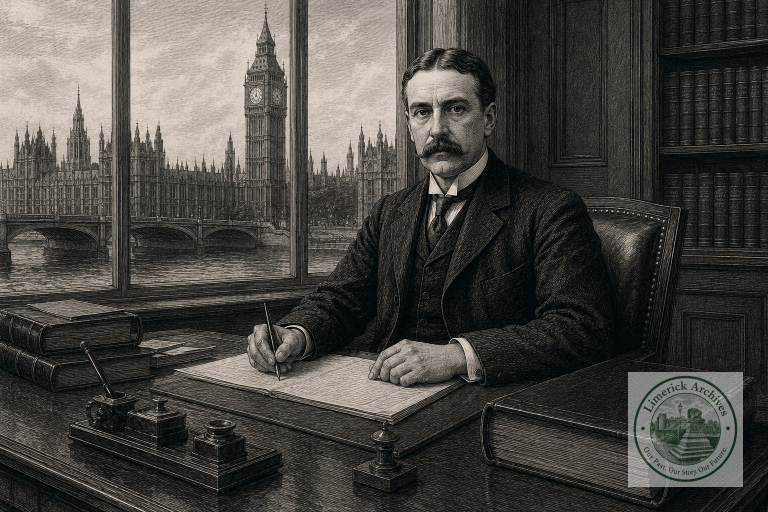
On Thursday, 11 January 1753, Sir Hans Sloane, the County Down-born physician, naturalist and collector, died at his home in Chelsea, London, aged ninety-two. Born at Killyleagh on 16 April 1660, Sloane had travelled extraordinarily far from his Ulster beginnings. By the time of his death he had been physician to royalty, president of both the Royal College of Physicians and the Royal Society, and owner of one of the greatest private collections of books, manuscripts, natural specimens and antiquities assembled in eighteenth-century Europe. His death triggered arrangements that ultimately transformed his private collection into a great public institution.
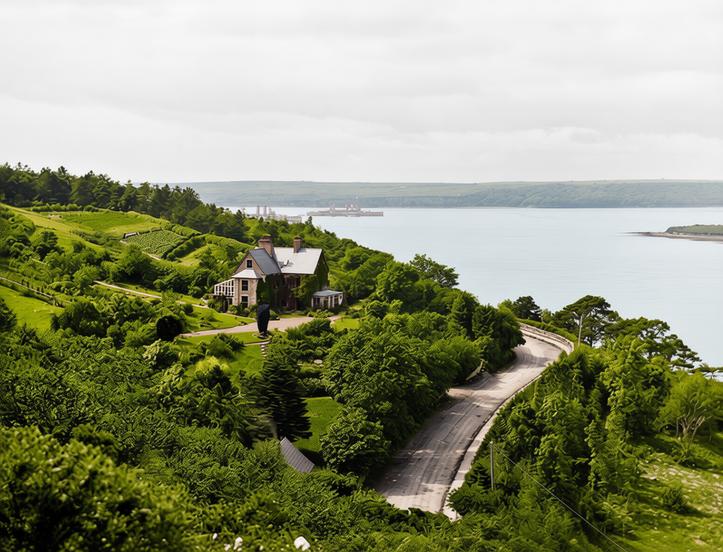
Sloane was the youngest son of Alexander Sloane, a member of a Scottish family established in Ulster. His childhood at Killyleagh placed him close to the Hamilton family and the intellectual resources associated with Killyleagh Castle. From an early age he displayed an interest in plants and medicine. After suffering a serious illness in adolescence, he eventually left Ireland and pursued medical and botanical studies in London and continental Europe, studying in France and receiving his medical degree at Orange. He returned to London and was elected a Fellow of the Royal Society in January 1685, beginning a relationship with organised science that would last almost seven decades.
In 1687 Sloane accepted an appointment as physician to Christopher Monck, Duke of Albemarle, who was travelling to Jamaica as governor. The expedition transformed Sloane’s scientific career. During roughly fifteen months in the Caribbean he collected hundreds of plant species together with animal specimens, observations and information supplied through a colonial society dependent upon enslaved labour. His later publications described Jamaica’s natural history in remarkable detail. Modern interpretation must also recognise the circumstances in which this knowledge was acquired: Sloane worked among slave plantations, obtained information and specimens with assistance from enslaved Africans and planters, and later benefited financially from a family fortune connected with Jamaican slavery.
Returning to Britain in 1689, Sloane established a highly successful medical practice while continuing his scientific work. His Catalogus Plantarum appeared in 1696, followed in 1707 and 1725 by the two volumes of his monumental Voyage to the Islands Madera, Barbados, Nieves, St Christophers and Jamaica. Medicine and natural history remained intertwined throughout his career. He treated wealthy and royal patients, became physician-general to the army and was created a baronet in 1716. He also maintained an enormous correspondence with physicians, botanists, travellers and collectors across Europe and beyond, exchanging specimens and information through the networks that sustained eighteenth-century natural philosophy.
Institutionally, few physicians of his generation achieved comparable prominence. Sloane became president of the Royal College of Physicians in 1719 and remained in that office until 1735. In 1727 he succeeded Isaac Newton as president of the Royal Society, serving until 1741. The Royal Society had become one of Europe’s leading organisations devoted to experimental and observational knowledge, and its Philosophical Transactions distributed discoveries internationally. Sloane had previously served as its secretary and helped oversee publication of the journal. His correspondence preserved by the Society includes exchanges with such figures as Antoni van Leeuwenhoek and demonstrates the international scientific network in which the Irish-born physician operated.
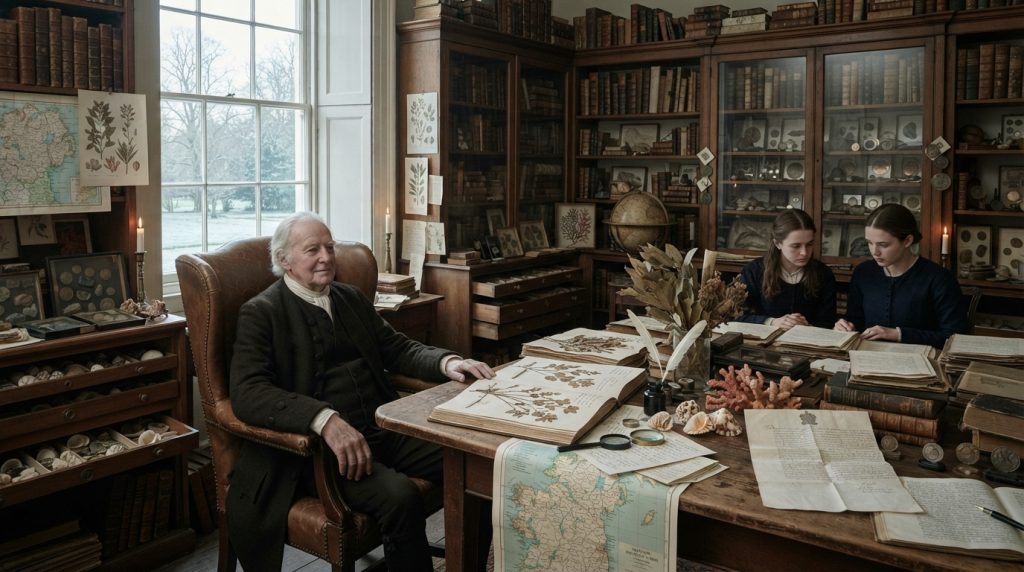
Collecting gradually became the achievement for which Sloane would be remembered most strongly. His Chelsea residence contained books, manuscripts, coins, medals, drawings, antiquities, shells, minerals, dried plants, animal specimens and objects gathered from cultures around the world. By his death the collection contained more than 71,000 objects, alongside a vast library and thousands of manuscripts. Some he gathered personally; many others came through purchase, correspondence, gifts and acquisition of earlier collections. The scale was such that Sloane feared it would be dispersed after his death. His solution was to devise a legal arrangement intended to preserve it intact and make it available for public benefit.
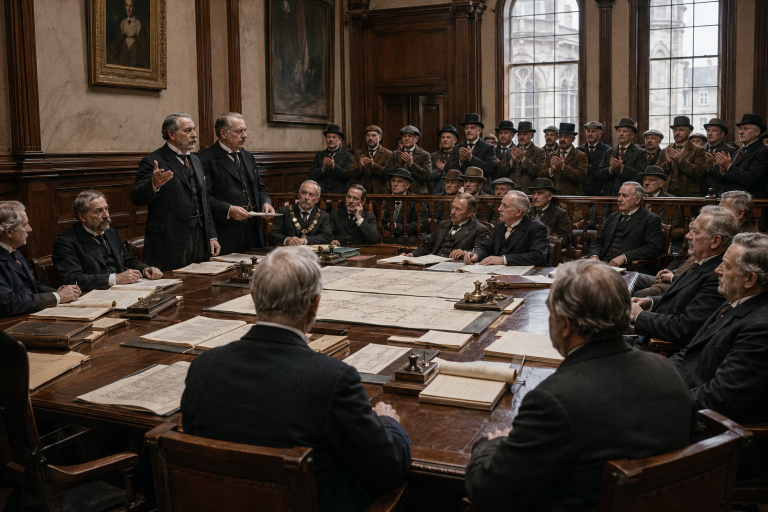
Sloane’s will, dated 20 July 1749, therefore became as consequential as many of his scientific publications. He directed that the collection should remain together and offered it to the nation provided that £20,000 was paid to his heirs, considerably less than the amount he said it had cost him to assemble. The printed will and its codicils appeared in 1753, allowing contemporaries to examine his intentions. When Sloane died on 11 January, the proposal ceased to be merely testamentary planning and became a practical question for Parliament and his executors: would the nation accept responsibility for preserving this extraordinary accumulation of knowledge?
Parliament answered later in 1753. The British Museum Act 1753 authorised the purchase of Sloane’s museum and combined it with the Cottonian and Harleian manuscript collections to create a general repository. Sloane’s books, manuscripts, natural-history specimens, antiquities and curiosities therefore became the principal founding collection of the British Museum. Much of his manuscript material eventually became part of the British Library, while vast natural-history holdings became associated with what is now the Natural History Museum. A private collection assembled by a man born in a small County Down town consequently became foundational to several of the world’s great research institutions.
His legacy, however, is more complicated than the traditional image of a benevolent collector. Sloane’s work in Jamaica took place within a plantation economy based upon enslaved Africans, whose labour and knowledge contributed to the world he documented. His wife Elizabeth was the widow of Jamaican plantation owner Fulke Rose and inherited wealth connected to slavery, while Sloane himself invested in companies involved in the slave trade. Modern institutions holding his collections increasingly examine both the intellectual significance of his work and the colonial systems through which some specimens, objects and wealth were acquired. Recognising those connections does not erase his scientific importance; it makes the historical record more complete.
Thus 11 January 1753 marks more than the death of one eminent physician. It marks the point at which the lifetime collection of an Irish-born naturalist began its transformation from private property into a national museum. Sloane had left Killyleagh decades earlier, but his Irish origin remained part of a remarkable life that connected Ulster with London, Jamaica, European medicine and international scientific correspondence. Within months Parliament acted upon his bequest; within years the public could enter the British Museum created around his collection. Few deaths recorded in 1753 produced such enduring institutional consequences. From one County Down childhood grew a collection that continues to shape libraries, museums and scientific research today.
Primary Sources
Primary Sources
- Sir Hans Sloane — The Will of Sir Hans Sloane, Bart. Deceased — will dated 20 July 1749; printed London, 1753.
The fundamental primary source for understanding what happened to Sloane’s collection following his death. It sets out his intention that the collection remain together and be offered to the nation. Wellcome Collection, public-domain digital copy.
https://wellcomecollection.org/works/ezd6ttdj - Sir Hans Sloane — Authentic Copies of the Codicils Belonging to the Last Will and Testament of Sir Hans Sloane, Bart. Deceased, Which Relate to His Collection of Books and Curiosities — 1753.
Printed by order of Sloane’s executors and directly concerned with the disposition of his collections following his death. - Chelsea parish burial records — Burial of Sir Hans Sloane — 18 January 1753.
Ecclesiastical evidence for Sloane’s burial a week after his death. He was interred at Chelsea Old Church beside his wife Elisabeth. The surviving monument also records his death in 1753. - Edward Cave, publisher — The Gentleman’s Magazine — January 1753.
Contemporary periodical containing notice and obituary material following Sloane’s death, valuable for examining how contemporaries assessed his medical career and enormous collection. - Parliament of Great Britain — British Museum Act 1753, 26 Geo. II c.22 — 1753.
The original statute providing for the purchase of Sir Hans Sloane’s museum and establishing the institutional framework of the British Museum. It is the direct legislative consequence of the arrangements activated by his death. - Executors of Sir Hans Sloane — Instrument transferring Sloane’s collection to the Trustees of the British Museum — 20 December 1753.
Surviving British Museum archival document formally transferring the collection after Parliament accepted the bequest. - Sir Hans Sloane — Catalogus Plantarum quae in Insula Jamaica Sponte Proveniunt — London, 1696.
Sloane’s own catalogue of Jamaican plants, created from the botanical observations and collections that established his early scientific reputation. - Sir Hans Sloane — A Voyage to the Islands Madera, Barbados, Nieves, S. Christophers and Jamaica, Volume I — London, 1707.
Sloane’s major first-hand published account of Caribbean natural history, geography, medicine and society. Wellcome Collection digital holdings.
https://wellcomecollection.org/works/y2ym68gd - Sir Hans Sloane — A Voyage to the Islands Madera, Barbados, Nieves, S. Christophers and Jamaica, Volume II — London, 1725.
Continuation of Sloane’s extensive first-hand natural-history record, containing descriptions and illustrations derived from his Caribbean investigations. - Sir Hans Sloane — An Account of a Most Efficacious Medicine for Soreness, Weakness, and Several Other Distempers of the Eyes — London, 1745.
Sloane’s own medical publication and direct evidence of his medical practice and therapeutic thinking late in his career. Wellcome Collection. - Sir Hans Sloane — Medical Recipe Book — c.1750.
Manuscript collection of medical preparations associated with Sloane, providing primary evidence of eighteenth-century medical practice close to the end of his life. U.S. National Library of Medicine / Internet Archive.
https://archive.org/details/2931172R.nlm.nih.gov - Sir Hans Sloane — Letter to Martin Folkes concerning serpent stones and the rhinoceros bezoar — eighteenth century; published in Philosophical Transactions.
Sloane’s own scientific communication to his successor as president of the Royal Society, illustrating his continuing interest in natural-history specimens. - Sir Hans Sloane — Letter to Antoni van Leeuwenhoek — Royal Society Early Letters Collection.
Original manuscript correspondence documenting Sloane’s participation in the international scientific network surrounding the Royal Society. Royal Society, Making Science archive. - Antoni van Leeuwenhoek — Letter to Hans Sloane — Royal Society Early Letters Collection.
Original manuscript correspondence to Sloane from one of Europe’s most important microscopists, illustrating the international flow of scientific information through Sloane. - James Cunningham — Letter to Hans Sloane from the Cape of Good Hope — Royal Society Early Letters Collection.
Original scientific correspondence showing how travellers and naturalists supplied Sloane with observations and information from around the world. - Sir Hans Sloane — Manuscript Collection Catalogues — British Library, Sloane MS 3972B and associated catalogue volumes — seventeenth–eighteenth centuries.
Sloane’s working catalogues document the organisation and growth of his collections before his death. They are fundamental primary evidence for understanding how he classified and managed his museum. - Sloane Manuscripts — British Library, Sloane MS 1–4100 — c.1100–1750, assembled by Hans Sloane.
More than four thousand manuscripts collected by Sloane, including material in numerous European and non-European languages. The collection itself constitutes primary evidence of his collecting practices and intellectual interests. - Sloane Herbarium — plant specimens assembled by Hans Sloane and other collectors — seventeenth and eighteenth centuries.
Original dried botanical specimens, including material associated with Sloane’s Jamaica expedition, now preserved within the Natural History Museum collections. These physical objects are primary scientific sources from his lifetime. - Royal Society — Fellowship and institutional records concerning Hans Sloane — 1685–1741.
Contemporary institutional records document his election as a Fellow on 21 January 1685, his service as secretary and his presidency following Isaac Newton. Royal Society archives. - Royal College of Physicians — Annals and institutional records concerning Hans Sloane — 1687–1735.
Contemporary College records document his admission as a Fellow on 12 April 1687, subsequent offices and election as president in 1719. These records provide direct evidence of his medical career and professional standing.