Daughters Founded
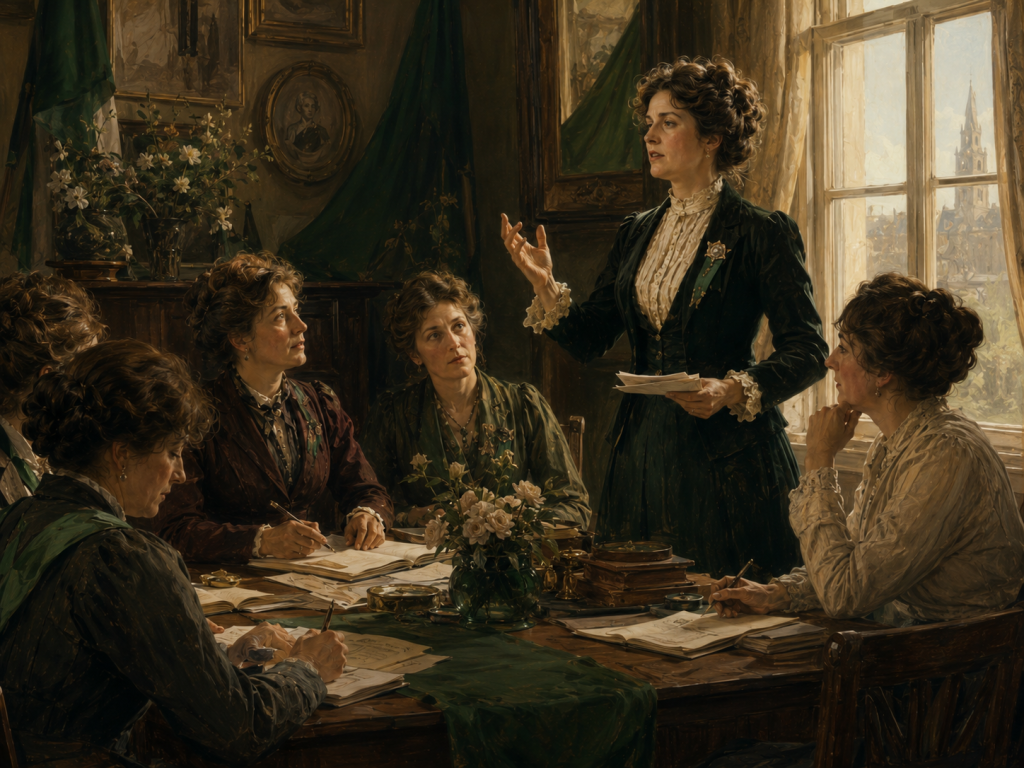
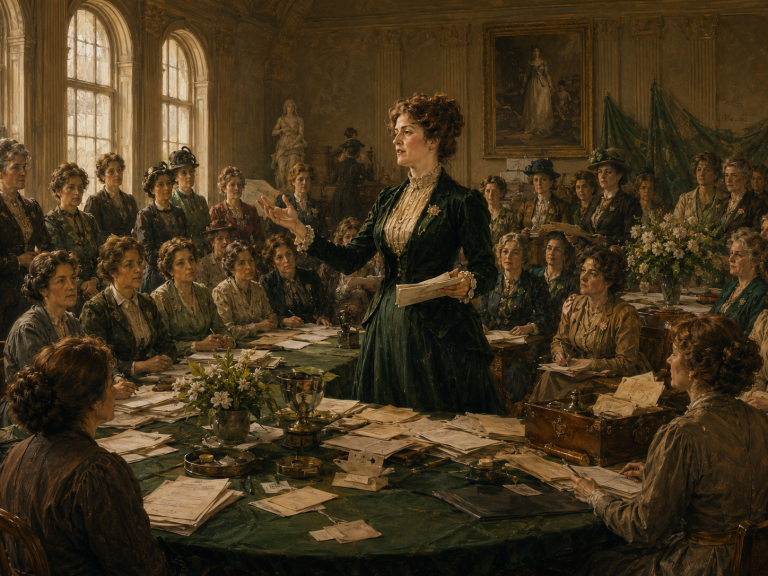
Inghinidhe na hÉireann, translated as the Daughters of Ireland, has been established in Dublin under the leadership of Maud Gonne. The women’s nationalist organisation emerged from a meeting held in the rooms of the Celtic Literary Society on Easter Sunday, where participants discussed practical opposition to Queen Victoria’s visit and its accompanying children’s celebrations. The founders intend to give women an independent place within advanced nationalism rather than restricting them to supporting roles in organisations directed by men. News of the initiative will attract attention in Limerick among women already active in cultural, charitable and political life.
The immediate concern of the meeting was the organisation of a Patriotic Children’s Treat as an alternative to the official gathering held for schoolchildren in Phoenix Park. Gonne and her colleagues objected to the association of childhood, education and public generosity with loyalty to the British Crown. They proposed instead to provide children with food, recreation, music and instruction centred upon Irish history and national identity. The project required fundraising, donated provisions and extensive voluntary labour. Its planning demonstrated that nationalist women could organise a large public undertaking independently and turn opposition to royal ceremony into practical community activity.
Inghinidhe na hÉireann adopted Saint Brigid as its patron and committed itself to the complete independence of Ireland. Its programme encouraged the study of the Irish language, literature, history, music and art, particularly among younger people. Members also intended to support Irish manufacture and resist cultural influences they believed weakened national self-respect. These aims placed political separatism beside education, economic self-reliance and cultural revival. The organisation rejected the limited objective of Home Rule and sought a sovereign Irish nation. Its work would therefore challenge both British administration and the more cautious constitutional methods pursued by the reunited Irish Parliamentary Party.
The new organisation also marks an important development in women’s public participation. Women remain excluded from parliamentary voting and from many political bodies, despite their extensive work in education, charity, labour organisation and nationalist campaigning. Gonne’s leadership offers women an organisation through which they can speak, raise funds, teach, publish and arrange demonstrations in their own name. Jennie Wyse Power, Anna Johnston, Annie Egan, Alice Furlong and other activists helped shape its early direction. Their involvement shows that nationalist politics is no longer confined to male parliamentarians, councillors and public speakers, but is extending into autonomous female organisation.
Limerick women have long sustained families, schools, religious societies, shops, workshops and charitable work, yet their political influence is rarely acknowledged formally. The creation of the Daughters of Ireland may encourage local women to connect national independence with education, culture, employment and the welfare of children. Critics will regard the organisation as excessively separatist, while constitutional nationalists may fear that it will deepen divisions within the movement. Nevertheless, its formation gives advanced nationalism a disciplined women’s voice. The opposition to one royal visit has produced an organisation whose ambitions extend far beyond the ceremonies of April 1900.
Primary Sources
- Helena Molony, Bureau of Military History Witness Statement No. 321, stating that Inghinidhe na hÉireann was founded on Easter Sunday 1900 in the rooms of the Celtic Literary Society. Exact page should be confirmed before formal citation.
- Maud Gonne MacBride Papers, National Library of Ireland, MS 49,531/33, containing early membership lists, rules, objectives and documents concerning Inghinidhe na hÉireann.
- Maud Gonne MacBride, manuscript and typescript writings on the history, activities and aims of Inghinidhe na hÉireann, National Library of Ireland, Maud Gonne MacBride Papers. Exact manuscript and folio should be confirmed before formal citation.
- United Irishman, Dublin, April–May 1900, reports concerning Maud Gonne, the formation of the women’s organisation and preparations for the Patriotic Children’s Treat. Exact issue, page and column should be confirmed before formal citation.
- Inghinidhe na hÉireann, second annual report and early membership documents, circa 1900–1902, National Library of Ireland, MS 49,531/33.