Women Organise
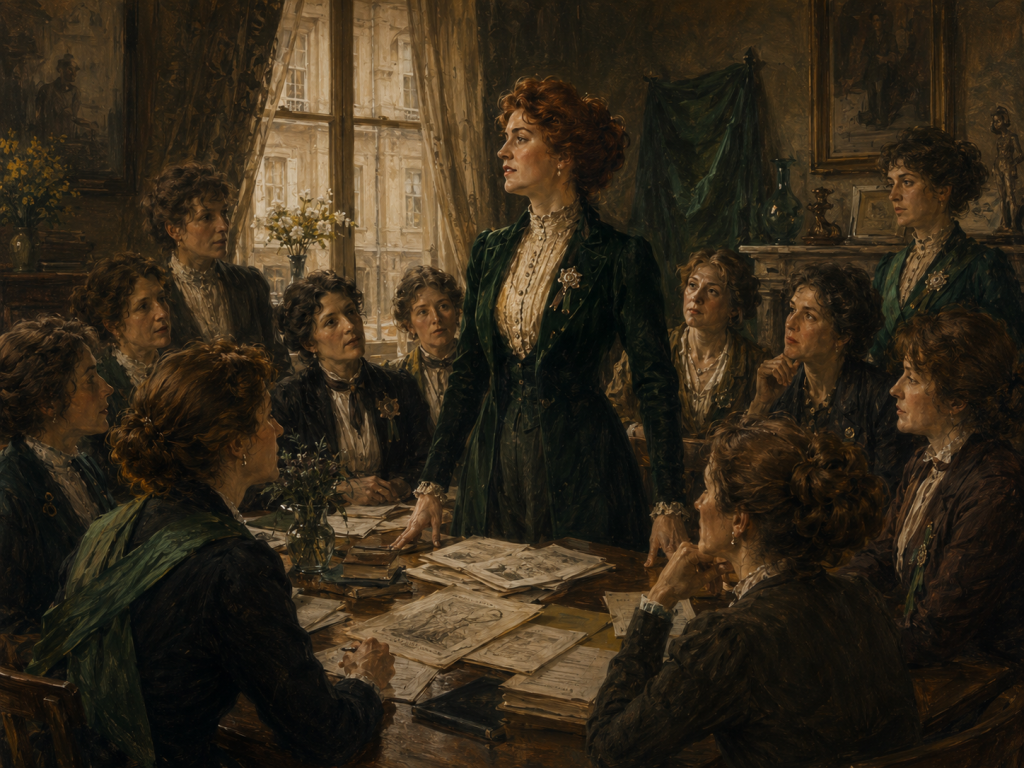
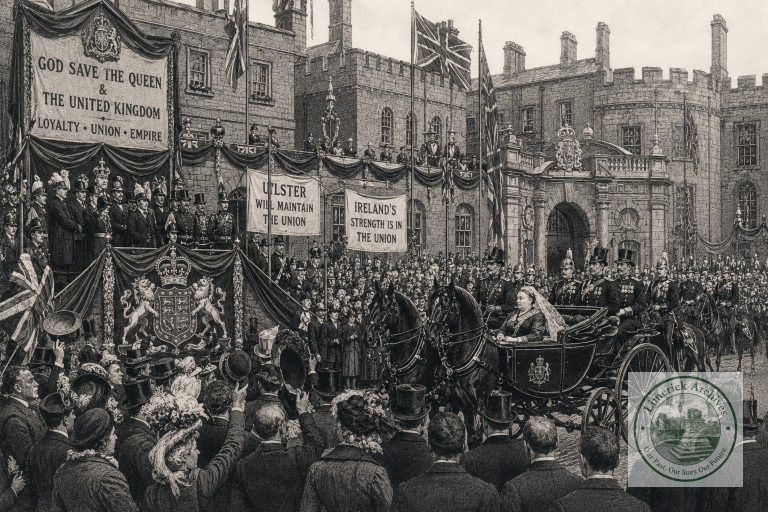
The establishment of Inghinidhe na hÉireann has provided women with a distinct and independent place in advanced-nationalist politics. Founded under the leadership of Maud Gonne, the Daughters of Ireland differs from political organisations in which women are permitted only to collect subscriptions, prepare refreshments or assist male speakers. Its members intend to organise, educate and campaign in their own name. The organisation’s appearance during opposition to Queen Victoria’s visit demonstrates that women are no longer willing to remain silent observers of Ireland’s constitutional struggle. Nationalist women in Limerick will watch closely as this new political association develops.
Membership is reserved exclusively for women, allowing its officers and committees to determine their own programme without direction from parliamentary leaders. The organisation supports complete Irish independence rather than the limited restoration of an Irish legislature under Home Rule. It also intends to promote national self-reliance, women’s suffrage, Irish manufacture and relief for impoverished children. These objectives unite political separatism with social reform and cultural revival. By adopting Saint Brigid as its patron, the organisation connects contemporary female activism with an Irish historical tradition while asserting that women possess responsibilities to the nation extending beyond domestic and charitable work.
The Daughters of Ireland will use education and public culture as political instruments. Members plan to arrange Irish-language classes, lectures, dramatic performances, historical commemorations and activities for children intended to strengthen national awareness. Their organisation grew directly from preparations for a Patriotic Children’s Treat challenging the royal celebration held in Phoenix Park. That undertaking required women to raise money, secure provisions, coordinate volunteers and address large public gatherings. Such work demonstrated administrative ability normally denied recognition within political life. It also offered working and middle-class women opportunities to cooperate across social divisions through a shared commitment to Irish independence.
The new organisation challenges the structure of nationalism as well as British authority. Parliamentary politics remains overwhelmingly controlled by men, while women cannot vote in Westminster elections or stand as parliamentary candidates. Even nationalist movements often describe women as symbols of Ireland rather than political actors capable of shaping strategy. Inghinidhe na hÉireann rejects that passive role. Its members may speak publicly, publish political arguments, organise demonstrations and train younger women in nationalist activity. Their independence may create disagreement with male leaders who welcome women’s labour but remain reluctant to share authority, particularly when female activists advance more radical political and social demands.
For Limerick women, the development carries significance beyond Dublin. Women already sustain households, schools, shops, factories, religious societies, charitable organisations and cultural associations throughout the city and county. The Daughters of Ireland offers a model through which such experience can be directed towards political organisation. Its separatist programme will not attract every nationalist woman, and constitutional supporters may consider its methods too uncompromising. Nevertheless, the organisation has created a recognised female space within advanced nationalism. Women who were previously expected to assist from the margins may now determine policy, organise campaigns and speak publicly as political representatives of their own national convictions.
Primary Sources
- Maud Gonne MacBride, writings on the history, activities and aims of Inghinidhe na hÉireann, Maud Gonne MacBride Papers, National Library of Ireland, MS 49,531/19.
- Helena Molony, Bureau of Military History Witness Statement No. 391, recollections of her involvement with Inghinidhe na hÉireann and advanced-nationalist women’s organisation.
- Inghinidhe na hÉireann, early rules, objectives, membership records and annual reports, Maud Gonne MacBride Papers, National Library of Ireland. Exact manuscript numbers and folios should be confirmed before formal citation.
- United Irishman, Dublin, April–July 1900, reports concerning the Patriotic Children’s Treat, Maud Gonne and the organisation of nationalist women. Exact issue, page and column should be confirmed before formal citation.
- Margaret Ward, Irish Nationalist Women, 1900–1918, Manchester: Manchester University Press, 1983; consult the chapter concerning the Daughters of Ireland and women’s autonomous nationalist organisation.