Archived: 28 September 2026
Abstract
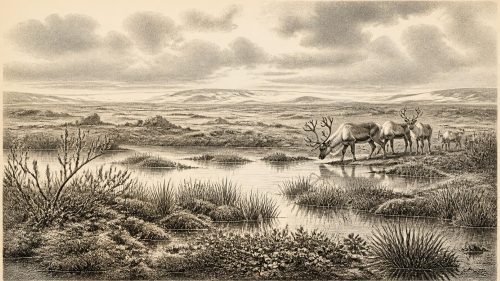
About 30,552 BCE cannot be treated as a recoverable Irish year, but falls within the broad calibrated range of the Derryvree freshwater deposit near Maguiresbridge, County Fermanagh. There, organic wetland sediments between two glacial tills demonstrate a local ice-free interval, supporting tundra-like vegetation, shallow water and severe seasonality. Ireland remained climatically unstable before the Last Glacial Maximum, as ice later expanded and destroyed many earlier landscapes. Cave fauna indicate open habitats supporting mammals including reindeer, mammoth and hyaena. A marked reindeer bone may suggest brief human activity, yet provides no proof of settlement, society or routes of arrival at all.
Read Article

Archived: 27 September 2026
Abstract
Labelled 30,591 BCE, this period cannot be reconstructed as a specific year but lies within Marine Isotope Stage 3’s Late Pleistocene climate. At Derryvree near Maguiresbridge, County Fermanagh, freshwater deposits between two tills, dated broadly 34,950–29,750 BCE, record an ice-free interval before renewed glaciation. Water-milfoil, bogbean, sedges, grasses, mosses and Arctic-alpine plants indicate treeless, cold wetlands with seasonal thaw. Ireland’s ice cover, coastlines and animal movements remained uneven and uncertain. Cave finds show varied fauna over long periods, not a single contemporary community. No secure human occupation is known; possible tool-marked bone evidence remains inconclusive. Surviving evidence documents environmental change.
Read Article

Archived: 27 September 2026
Abstract
Around 30,600 BCE, Ireland lay within a climatically unstable Late Pleistocene interval as the British-Irish Ice Sheet expanded. Lower seas linked it to Britain and Europe, though coasts and ice margins shifted. At Derryvree, County Fermanagh, organic deposits between glacial tills record a cold, treeless wetland supporting hardy plants during an interval between ice advances. Castlepook Cave fauna indicates that reindeer, mammoth and predators could occupy or reach Ireland. A marked reindeer femur may indicate human butchery, but disturbed context and absent associated artefacts prevent confirmation of Palaeolithic settlement. Evidence therefore depicts a shifting ecological frontier, not a settled landscape.
Read Article

Archived: 25 September 2026
Abstract
30,712 BCE is a modern label for an uncertain point in Ireland’s climatically unstable MIS 3, not a date tied to a recorded event. Ireland’s ice margins, sea levels and exposed lowlands changed, while later glaciation destroyed or disturbed much earlier evidence. Castlepook Cave, County Cork, preserves Ireland’s richest pre-Last Glacial Maximum vertebrate archive, including mammoth, reindeer, giant deer, lemmings, wolves and hyenas, indicating cold, open environments. Its mixed deposits cannot date all species to one moment. No evidence demonstrates settlement, politics or culture. A possibly tool-marked reindeer bone suggests fleeting human contact, but requires confirmation and cannot establish population.
Read Article

Archived: 21 September 2026
Abstract
30,910 BCE is a modern label for a broad later MIS 3 interval, not a recoverable Irish historical year. Before the Last Glacial Maximum, Ireland experienced severe, fluctuating periglacial conditions rather than uniform ice cover. At Derryvree, Fermanagh, freshwater sediments between glacial tills preserve evidence of treeless tundra, wet hollows, aquatic plants and insects. Castlepook Cave, Cork, records a long-accumulated fauna including reindeer, mammoth, giant deer, bears and hyaenas. A possibly cut-marked reindeer bone suggests, but cannot prove, brief Upper Palaeolithic human visitation. Later glaciation destroyed much evidence; surviving deposits provide ecological probabilities, not settled communities or precise calendar-year events.
Read Article
Archived: 21 September 2026
Abstract
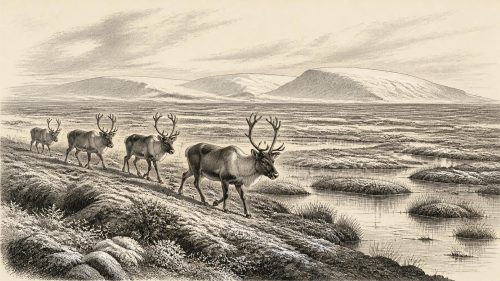
At 30,944 BCE, Ireland lay within the climatically unstable Late Pleistocene, not a datable historical year. Derryvree in County Fermanagh preserves freshwater silts between glacial tills, indicating locally ice-free, open, tundra-like wetlands with sparse vegetation. Castlepook Cave, County Cork, contains a mixed, long-lived MIS 3 fauna, including mammoth, giant deer, reindeer, bear, hyena and smaller cold-adapted mammals. Its bones document changing ecosystems, not a single community or date-specific census. A possibly butchered reindeer bone suggests human visits, but no secure evidence establishes settlement. Approaching glaciation later erased much evidence, leaving exceptional deposits to reveal life amid advancing ice and change.
Read Article
Archived: 21 September 2026
Abstract
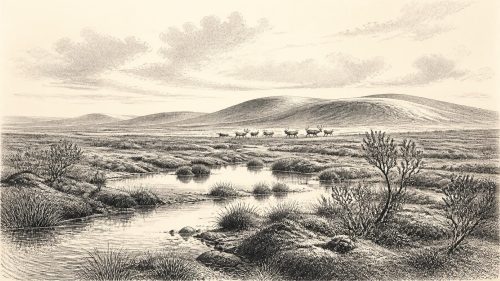
At the notional date of 30,957 BCE, Ireland lay within the Midlandian glacial cycle, without annual historical evidence. Derryvree in County Fermanagh preserves freshwater sediments broadly assigned to Marine Isotope Stage 3, revealing an ice-free periglacial tundra of wetlands, sedges, grasses, dwarf shrubs and few trees. Later glaciation sealed this ecosystem beneath till. Southern caves, especially Castlepook, yielded mammoth, giant deer, reindeer, bears, hyenas and other cold-adapted fauna. A cut-marked reindeer femur may indicate an Upper Palaeolithic human visit, but disturbance and uncertain context prevent claims of settlement or society. Together, these records show shifting ecological opportunities before advancing ice.
Read Article
Archived: 21 September 2026
Abstract
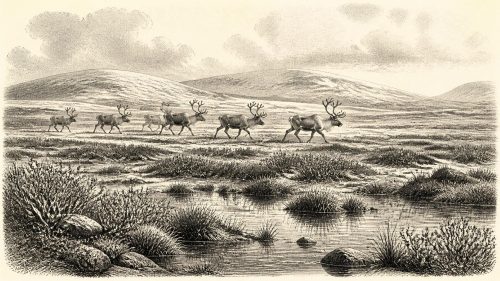
Around 30,981 BCE, Ireland lay within the climatically unstable Marine Isotope Stage 3, before the Last Glacial Maximum. Dates remain broad rather than annual. At Derryvree, County Fermanagh, freshwater sediments between tills preserve evidence of a treeless periglacial wetland, with tundra flora and aquatic life. Castlepook Cave in north Cork records reindeer, mammoth, giant deer and predators, indicating open cold-country habitats linked to north-west Europe. A marked reindeer femur may represent stone-tool butchery and Ireland’s earliest human activity, but lacks archaeological context. Human settlement, society and access routes remain unproven; the period is known through sediments, fossils and uncertain interpretation.
Read Article
Archived: 20 September 2026
Abstract
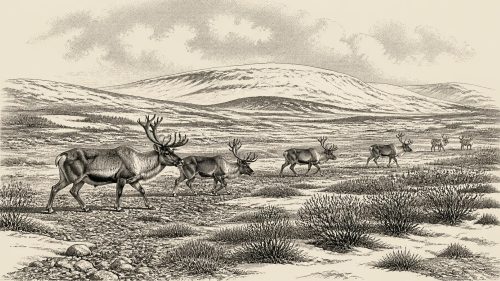
31,018 BCE marks a poorly dated Late Pleistocene interval, not a recorded Irish event. Ireland was experiencing unstable cold conditions as the British–Irish Ice Sheet expanded towards its later maximum, though coverage remained uneven. Castlepook Cave in County Cork preserves diverse pre-maximum fauna, including mammoth, reindeer, giant deer, bear, wolves, foxes, lemmings and hyena, indicating open tundra-steppe habitats and continental connections. Buried Fermanagh deposits demonstrate cold but biologically active wetlands during less glaciated phases. A possibly tool-marked reindeer bone raises an unconfirmed possibility of human presence, but no secure settlement evidence exists. Bones, sediments and landforms instead reveal fragmentary environments.
Read Article

Archived: 20 September 2026
Abstract
31,021 BCE is not a recoverable Irish year but falls within the fluctuating Marine Isotope Stage 3 of the last ice age. Ireland contained ice-free, periglacial and freshwater environments before the later Last Glacial Maximum. Derryvree, County Fermanagh, preserves organic sediments dated broadly across this period, indicating cold open wetland vegetation, insects and water between glacial advances. Castlepook Cave, County Cork, records diverse fauna, including reindeer, mammoth and predators. A marked reindeer femur may indicate human butchery, but remains unconfirmed. No dated settlement, tools or social evidence exists. Glacial erosion has left a selective record, requiring cautious interpretation and research.
Read Article
Archived: 20 September 2026
Abstract
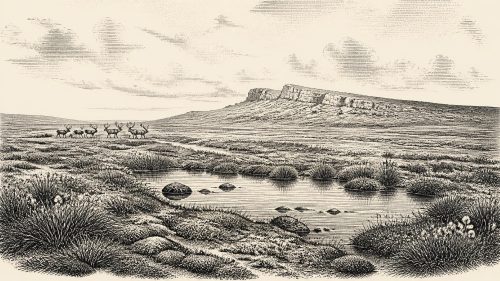
Around 31,025 BCE, Ireland cannot be described through annual events, but evidence from Marine Isotope Stage 3 reveals a cold, changing environment before maximum glaciation. Freshwater sediments at Derryvree, County Fermanagh, preserve pollen and plants from open, treeless wetlands supporting mosses, sedges and aquatic species. Castlepook Cave, County Cork, contains remains of reindeer, mammoth, giant deer, hyaena and other animals accumulated over extended periods. A reindeer femur, broadly dated to this time, bears a possible stone-tool incision, suggesting a brief Upper Palaeolithic human visit. However, no settlement, route, culture or continuous population can be established; later ice destroyed much evidence.
Read Article

Archived: 20 September 2026
Abstract
31,061 BCE is best understood as part of Marine Isotope Stage 3, not a recoverable Irish calendar year. At Derryvree, County Fermanagh, freshwater sediments and organic remains sealed between tills record a local ice-free interval, supporting treeless, tundra-like wetlands. Ireland’s landscapes varied sharply as the British–Irish Ice Sheet advanced and retreated; low sea levels did not guarantee a land bridge to Britain. Castlepook Cave, County Cork, preserves remains of mammoth, reindeer, giant deer and predators, demonstrating intermittent cold-climate fauna. A possibly stone-cut reindeer bone suggests early visitors, but no secure evidence establishes human settlement, society or island-wide conditions at once.
Read Article

Archived: 20 September 2026
Abstract
31,070 BCE is a modern label for a Late Pleistocene, climatically unstable Ireland approaching glaciation. Evidence indicates varied local conditions rather than uniform ice cover. Derryvree silts in Fermanagh preserve treeless tundra wetland plants, showing that cold, productive habitats existed between glacial episodes. Castlepook Cave in Cork yielded reindeer, mammoth, giant deer, predators and other cold-stage fauna, though mixed deposits complicate interpretation. A marked reindeer bone may indicate human butchery around 33,000 radiocarbon years ago, but remains unconfirmed without associated tools or settlements. Changing sea levels affected possible movement routes. The period’s secure history is environmental, not political or cultural.
Read Article
Archived: 20 September 2026
Abstract
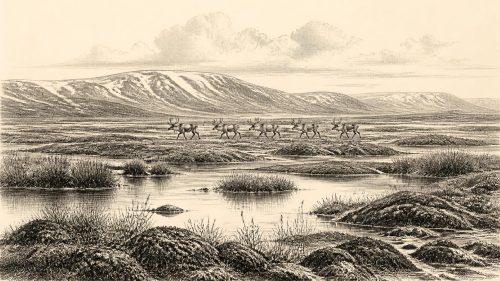
Around 31,078 BCE, Ireland lay within the volatile Midlandian cold stage, before the Last Glacial Maximum, rather than a datable historical year. Changing ice, sea levels and land connections created an environmentally varied, intermittently accessible landscape. Derryvree sediments in Fermanagh preserve evidence of treeless tundra wetland, including mosses, sedges and cold-adapted insects, during an ice-free interval. Castlepook Cave in Cork contains mammoth, reindeer, giant deer, predators and smaller mammals, documenting a diverse cold-stage fauna. A possibly cut-marked reindeer bone suggests fleeting Upper Palaeolithic human activity, but lacks secure context. No evidence supports permanent settlement, institutions or society; uncertainty remains essential.
Read Article
Archived: 20 September 2026
Abstract
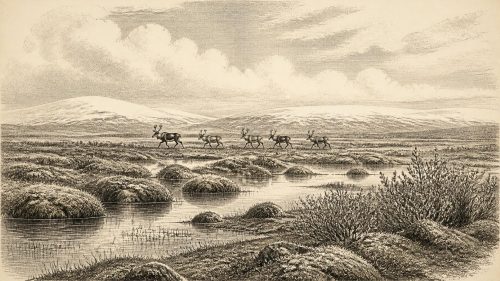
About 31,085 BCE, Ireland lay within the unstable Marine Isotope Stage 3, not a precisely datable historical year. At Derryvree, County Fermanagh, freshwater silts between glacial tills record an ice-free interval of wet, treeless tundra, supporting sedges, mosses, herbs and cold-adapted plants. Ice conditions elsewhere remain uncertain. Castlepook Cave, County Cork, preserves mixed faunal remains, including mammoth, reindeer, giant deer and predators, from several episodes. A marked reindeer femur may indicate stone-tool butchery, suggesting brief human visits, but this remains unproven. No settlements, polities, beliefs or exchange networks can be identified. Ireland was an environmentally dynamic, intermittently habitable cold-stage landscape.
Read Article
Archived: 20 September 2026
Abstract
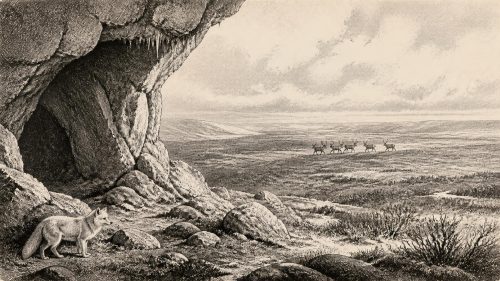
31,087 BCE is an imprecise label for a period near the onset of Ireland’s Last Glacial Maximum. Evidence, centred on Castlepook Cave in County Cork, depicts a cold, open tundra-steppe environment inhabited intermittently by mammoth, reindeer, giant deer, wolves, Arctic foxes and spotted hyaenas. Cave bones, coprolites and feeding damage demonstrate carnivore activity within a wider Eurasian-connected fauna. A marked reindeer femur may indicate human stone-tool use around 33,000 years ago, but disturbed deposits and uncertain taphonomy prevent conclusions. No settlements or cultural evidence are securely known. Subsequent ice expansion transformed Ireland, leaving Castlepook as evidence of early human passage.
Read Article

Archived: 19 September 2026
Abstract
At roughly 31,131 BCE, Ireland formed part of a changing pre-Last Glacial Maximum environment, not a recorded historical year. Derryvree in County Fermanagh preserves freshwater sediments dated broadly to 36,900–31,700 cal BP, indicating cold tundra-steppe wetland with Arctic-alpine plants and open water between glacial advances. Castlepook Cave in Cork yielded a long, complex assemblage spanning about 45,700–19,950 BP, including mammoth, reindeer, giant deer, brown bear and spotted hyaena. These remains demonstrate ecological connectivity with north-west Europe, but not simultaneous species or events. A possibly cut-marked reindeer bone suggests an early human visit, yet lacks supporting tools or secure settlement evidence.
Read Article
Archived: 19 September 2026
Abstract
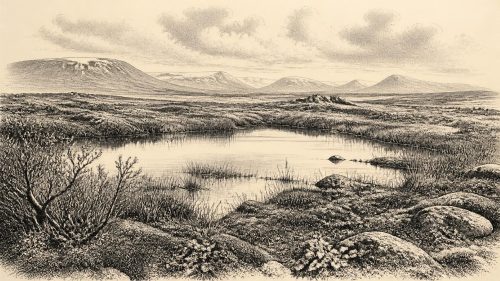
31,152 BCE is a modern approximation within a broad calibrated radiocarbon range, not a precisely recoverable Irish date. At Derryvree near Maguiresbridge, organic freshwater sediments between tills record a local ice-free MIS 3 interval, supporting treeless tundra wetland vegetation amid fluctuating cold conditions. Castlepook Cave preserves diverse pre-Last Glacial Maximum fauna, including mammoth, reindeer, giant deer, predators and scavengers, though remains accumulated over long periods. A possibly tool-marked reindeer femur may indicate brief Upper Palaeolithic human activity, but no settlement is proven. Ireland was nearing expanding glaciation, ecologically linked intermittently to north-west Europe through uncertain routes and changing sea margins.
Read Article

Archived: 19 September 2026
Abstract
31,155 BCE is an imprecise modern label for a late Marine Isotope Stage 3 interval, rather than a date with recorded events. Derryvree in Fermanagh preserves freshwater sediments, tundra plants and evidence of ice-free conditions within a cold, unstable landscape later overridden by glaciers. Castlepook Cave, County Cork, contains a complex, redated fauna including reindeer, mammoth, giant deer, predators and cold-adapted species, demonstrating changing ecological links with north-west Europe. A possibly cut-marked reindeer bone may indicate transient human activity, but no settlement is proven. Ireland was environmentally diverse, intermittently habitable and moving towards extensive glaciation over the following several millennia.
Read Article
Archived: 19 September 2026
Abstract
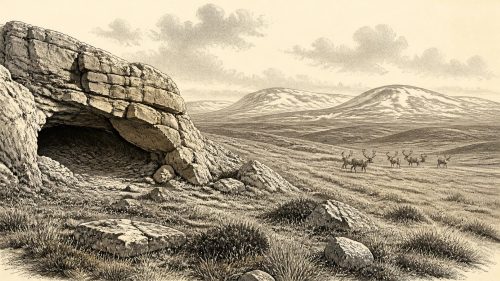
At 31,170 BCE, Ireland lay in the climatically unstable later Marine Isotope Stage 3, approaching expansion of the British–Irish Ice Sheet. Precise local conditions cannot be reconstructed: radiocarbon dating provides calibrated ranges, while glaciation erased much earlier evidence. Models suggest regional ice development, becoming extensive later. Southern caves, especially Castlepook, preserve remains of fauna including reindeer, mammoth and hyaena, but mixed deposits and revised dates prevent their attribution to one year. Possible tool damage on a reindeer bone is inconclusive evidence of early people. Secure human evidence is far later, leaving environmental change and uncertainty as this period’s principal record.
Read Article

Archived: 19 September 2026
Abstract
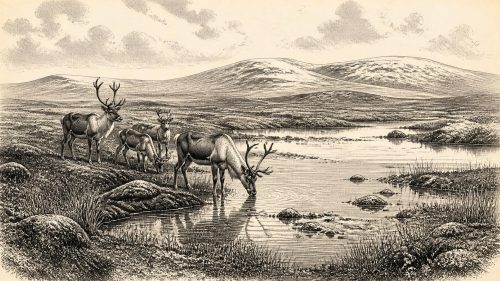
Castlepook Cave in County Cork preserves evidence for Ireland in Marine Isotope Stage 3, before the Last Glacial Maximum. Re-dated animal bones show that mammoth, reindeer, giant deer, brown bear, spotted hyaena and other cold-adapted mammals occupied parts of a variable, open landscape. Improved radiocarbon methods corrected overly recent dates, placing finds further back in time. A marked reindeer femur, about 33,000 years old, may indicate butchery by people, yet cannot prove settlement, identity or culture. Disturbed cave deposits, glacial erosion and missing habitation evidence require caution. Castlepook reveals animal dispersal and possible human visits, not a documented Palaeolithic community.
Read Article
Archived: 18 September 2026
Abstract
Labelled 31,238 BCE, this period cannot be reconstructed as a specific Irish year, but falls within a broad Late Pleistocene interval of climatic instability. At Derryvree, County Fermanagh, freshwater organic sediments between glacial tills indicate a locally ice-free, cold periglacial wetland, dated broadly to 36,900–31,700 calibrated years before present. Castlepook Cave, County Cork, preserves diverse cold-stage fauna, including mammoth, reindeer and hyaena, although its accumulated remains are chronologically complex. A cut-marked reindeer femur may indicate Upper Palaeolithic human activity, but remains contested. Later ice expansion reshaped Ireland and obscured evidence, leaving only limited environmental and possible human traces for researchers.
Read Article
Archived: 18 September 2026
Abstract
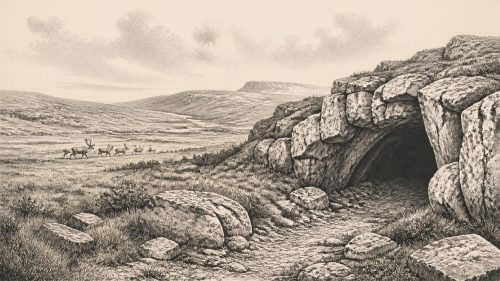
Around 31,285 BCE, Ireland lay within the fluctuating cold conditions of Marine Isotope Stage 3, before the Last Glacial Maximum. Southern landscapes probably comprised open tundra and steppe supporting reindeer, mammoth, giant deer, predators and smaller mammals. Castlepook Cave, County Cork, preserves a disturbed, repeatedly accumulated fauna rather than a single contemporary scene. A reindeer femur, dated approximately 31,000 BCE, bears a mark interpreted as possible stone-tool butchery, potentially Ireland’s earliest evidence of human activity. Yet no sealed occupation, tools, hearths or human remains confirm settlement. Later glaciation and sea-level change destroyed evidence; further dating and excavation remain especially essential.
Read Article

Archived: 17 September 2026
Abstract
Around 31,424 BCE, Ireland lay within the unstable cold conditions of Marine Isotope Stage 3, before the Last Glacial Maximum. Lower sea levels and fluctuating ice created changing connections with Britain and continental Europe. Castlepook Cave, County Cork, preserves a complex, re-dated assemblage including mammoth, giant deer, reindeer, hyena, wolves and lemmings, demonstrating a rich, intermittent cold-stage fauna. Improved radiocarbon methods placed some remains far earlier than formerly believed, though dates remain ranges, not precise anniversaries. A cut-marked reindeer femur may indicate Upper Palaeolithic butchery, yet cannot prove settlement. Evidence depicts shifting Ice Age ecosystem; future research may clarify presence.
Read Article

Archived: 17 September 2026
Abstract
31,442 BCE lies within Marine Isotope Stage 3, a climatically unstable Late Pleistocene interval for which precise annual dating is impossible. At Derryvree, County Fermanagh, organic freshwater sediments between glacial tills indicate locally ice-free tundra, with dwarf willow, mountain avens, sedges, mosses and bogbean. Southern Irish caves preserve remains of reindeer, mammoth, hyaena, bear, fox, hare and lemmings, although their chronology and associations require caution. A possibly tool-marked Castlepook reindeer bone suggests, but cannot confirm, human visitation. Later ice expansion destroyed much evidence, leaving sediment, seeds and bones as fragmentary records of cold ecosystems in Ireland and possible human contact.
Read Article

Archived: 16 September 2026
Abstract
At the nominal date of 31,594 BCE, Ireland’s evidence is environmental and archaeological, not historical in the political sense. Derryvree, County Fermanagh, preserves wetland sediments between glacial tills, indicating a locally ice-free MIS 3 interval with cold, open, treeless vegetation of mosses, sedges, grasses and shrubs. Castlepook Cave, County Cork, records a time-mixed cold-stage fauna including mammoth, reindeer, giant deer, predators and smaller mammals. Possible cut marks on reindeer bone suggest fleeting human activity, but cannot establish settlement. Changing sea levels and advancing ice shaped access and survival of evidence before extensive later glaciation erased much of Ireland’s earlier landscape.
Read Article

Archived: 16 September 2026
Abstract
Around 31,599 BCE, Ireland lay within the unstable Late Pleistocene climate of Marine Isotope Stage 3, approaching but preceding maximum glaciation. Derryvree, County Fermanagh, preserves freshwater sediments indicating cold, open tundra wetlands temporarily free from overriding ice. Ice-sheet advances later buried such deposits, leaving a fragmentary record. Castlepook Cave, County Cork, contains remains of reindeer, mammoth, giant deer, bears, wolves, foxes, lemmings and hyaenas, reflecting varied cold-stage ecosystems. A cut-marked reindeer bone may indicate human activity, but remains inconclusive. Lower sea levels altered regional geography and access. Evidence supports environmental reconstruction, not claims of permanent settlement, society or political history.
Read Article

Archived: 15 September 2026
Abstract
At the modern date 31,627 BCE, Ireland lay in the climatically unstable later Pleistocene, approaching the Last Glacial Maximum. Evidence is sparse and disrupted by later ice. Buried organic beds at Derryvree, County Fermanagh, indicate an ice-free interval with treeless, cold muskeg of mosses, sedges, herbs, dwarf willow and juniper. Castlepook Cave, County Cork, preserves remains of mammoth, hyaena, reindeer, giant deer and other fauna, indicating varied open habitats and links with wider Europe. A cut-marked reindeer femur may record human carcass processing, but cannot prove permanent settlement. No political, cultural or social history is recoverable; environmental change dominates here.
Read Article

Archived: 15 September 2026
Abstract
Around 31,628 BCE, a modern and necessarily imprecise label, Ireland lay in the fluctuating late Pleistocene MIS 3 interval, before the Last Glacial Maximum. Derryvree, near Maguiresbridge, preserves organic silts between glacial tills, showing an ice-free freshwater mosaic of tundra-like, largely treeless vegetation, insects and wet peaty ground. Castlepook Cave in Cork contains a chronologically mixed assemblage including mammoth, reindeer, giant deer and predators, demonstrating intermittent cold-stage animal communities. A marked reindeer bone may indicate brief Upper Palaeolithic human activity, but remains contested. Evidence cannot establish permanent settlement, routes, social life or events; later ice severely obscured much earlier landscapes.
Read Article
Archived: 15 September 2026
Abstract
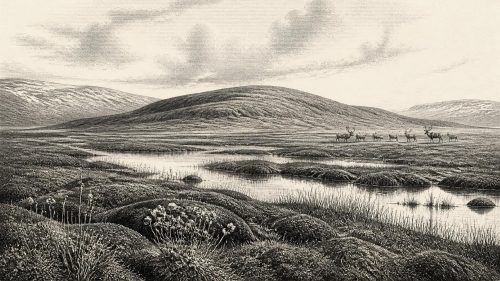
About 31,640 BCE, Ireland lay in a climatically unstable Late Pleistocene interval before maximum glaciation. Organic sediments beneath a Derryvree drumlin in County Fermanagh, dated broadly to 36,900–31,700 calendar years BP, show an ice-free but severe landscape of open tundra, wetlands, sedges, mosses and cold-adapted plants. Southern caves preserve evidence of mammoth, reindeer, giant deer, predators and scavengers, though dates and contexts vary. Advancing ice later erased much evidence. Possible stone-tool butchery marks on a Castlepook reindeer bone suggest human visits, but no secure settlement, tools, hearths, society or culture is demonstrated. Environmental evidence remains firmer than the human record.
Read Article




