Ornamented Relief(c.1840s)
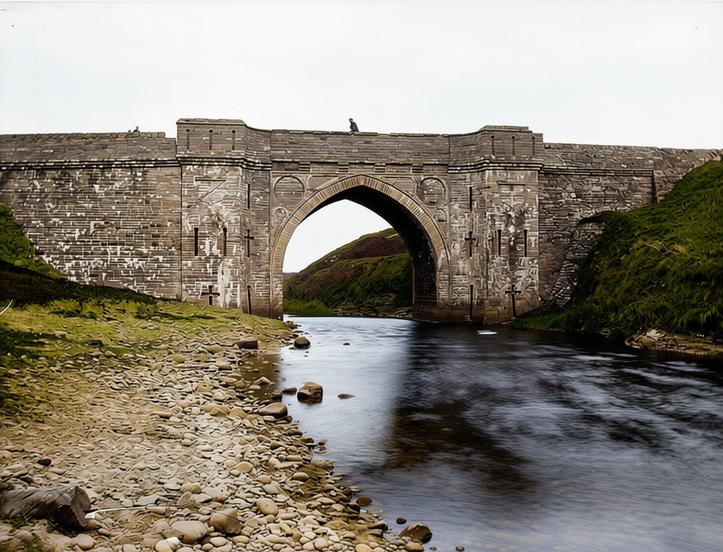
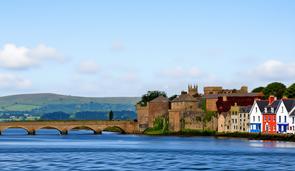
The elegant early 19th-century bridge near Spanish Point, County Clare—often linked to nearby Miltown Malbay—stands as a testament to both the ingenuity and the hardship of its era. Captured in evocative photographs by Robert French, the bridge’s refined ornamentation and distinctive loopholes reveal a surprising level of care and artistry for a structure associated with public works and famine relief. Its construction in 1822, predating the more infamous 1840s famine, highlights a lesser-known chapter of Irish history in which infrastructural projects were deployed as emergency employment measures.
While the Loopholes and decorative coats-of-arms carved into the bridge’s parapets might appear to suggest military or aristocratic purposes, their inclusion was more likely a reflection of both civic pride and a desire to dignify relief work with a sense of permanence and status. Many such bridges and roads—built during periods of acute scarcity—were intended not only to provide immediate sustenance through employment but also to serve as lasting improvements to local transport and communications. The coats-of-arms, if authentic, may have referenced benefactors, local landlords, or even the British Crown, though in many cases the iconography was stylized or purely decorative.
The year 1822 was itself a time of significant hardship in the west of Ireland. Crop failures and food shortages compelled authorities to initiate extensive public works, particularly in Clare and Limerick. As reported by Griffiths, over 10,000 people in County Limerick alone were employed on road and bridge projects, exclusive of farming labourers. Such schemes were vital lifelines for rural families, providing wages in a cash-poor economy and helping stave off destitution.
That so much effort was put into the bridge’s ornamentation, despite the urgency of its construction, speaks to the values of the time. Even as men and women laboured under difficult conditions, there was a conscious attempt to infuse these utilitarian structures with dignity and aesthetic value. The fanciful loopholes—unlikely to ever be used in defense—suggest a playful nod to military architecture, or simply a desire for visual interest.
Today, this Spanish Point bridge endures as both infrastructure and monument. Its elegant form and surprising details invite us to look beyond the scars of famine and poverty, to see the resilience, hope, and pride that shaped its creation. The bridge, photographed in all weathers and seasons, remains a silent witness to the labour and agency of thousands—an enduring legacy of relief, survival, and community aspiration in the west of Ireland.
Primary Sources
- Photographic Collection, Robert French, Lawrence Collection, National Library of Ireland.
- “Report on Public Works in Ireland, July 1822,” by Richard Griffiths, Parliamentary Papers.
- Clare County Council, Bridge Construction Records, 1820s.
- Oral history interviews, “Bridges and Relief Works,” Clare Local Studies Project.
- Landlord estate papers, Spanish Point and Miltown Malbay, 19th century, National Archives of Ireland.