
Lugh Arrives
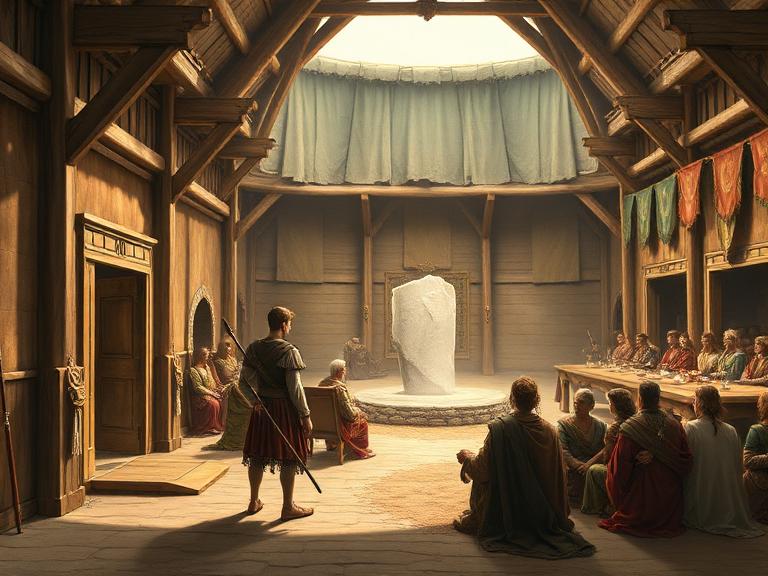
After Nuada regained the kingship, he held a magnificent feast at Tara, the legendary centre of Irish sovereignty. A young stranger named Lugh arrived at the gate and requested admission. The gatekeeper demanded to know what useful skill he possessed, because no person without an art could enter the royal enclosure. Lugh identified himself as the son of Cian of the Tuatha Dé Danann and Ethniu, daughter of the Fomorian king Balor. His ancestry joined the two peoples approaching war, while his fosterage by Tailtiu connected him with the land. Yet lineage alone would not open Tara’s guarded door successfully.
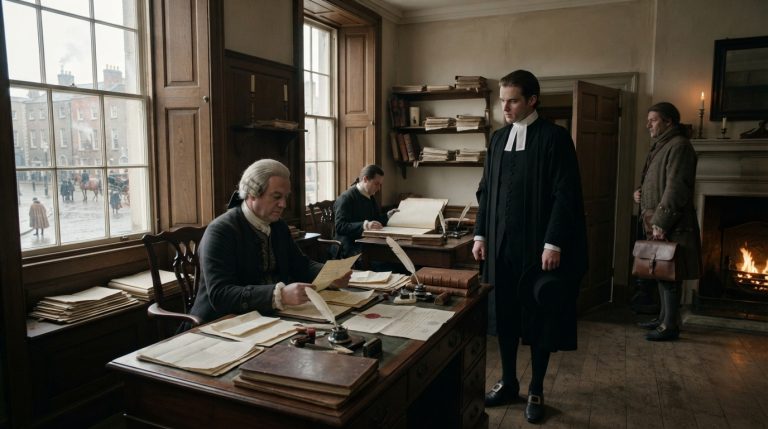
Lugh first offered his services as a carpenter, but Tara already possessed one. He then named smithcraft, championship, harp playing, poetry, storytelling, magic, medicine, cup-bearing, and metalworking. Each claim received the same answer: someone at Nuada’s court already practised that particular art. The exchange initially appears comic, but it expresses an important idea about an organised royal household. Tara contained specialists representing every valued branch of knowledge and service. Lugh’s distinction was not that he possessed an unprecedented individual talent. He alone combined all those talents within one person, earning the title Samildánach or Ildánach, the master of many arts.
The gatekeeper carried Lugh’s remarkable claim to Nuada, who ordered that the newcomer be tested. Lugh defeated Tara’s finest players at a strategic board game, demonstrating intelligence rather than mere confidence. After entering the hall, he answered Ogma’s challenge by lifting a tremendous flagstone that the champion had thrown outside and hurling it back into place. Lugh then played the harp, producing music that made the company weep, laugh, and finally sleep. These trials proved mastery of strategy, strength, and artistic emotion. Nuada recognised that such combined abilities might liberate Ireland from the taxation and oppression imposed by the Fomorians.
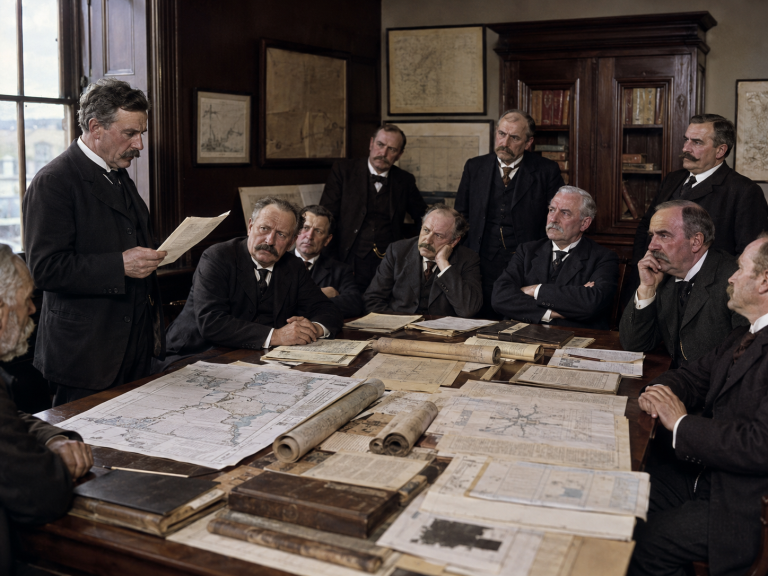
Nuada temporarily surrendered his seat to Lugh so the assembled leaders could hear his advice. This gesture did not immediately transfer permanent kingship; it recognised the authority of exceptional knowledge during a national emergency. Lugh gathered Nuada, the Dagda, Ogma, Goibniu, and Dian Cécht for a secret council at Grellach Dollaid. For a year they assessed their strength and planned resistance, attempting to conceal their intentions from the Fomorians. The place became remembered as the Whisper of the Men of Dea. Their strategy demonstrates that Lugh’s heroism depended upon preparation, consultation, specialised labour, and coordination rather than reckless bravery alone.
Lugh’s extraordinary position was foreshadowed by the story of his birth. His grandfather Balor possessed a destructive eye whose gaze brought death. A prophecy warned Balor that his grandson would kill him, so he confined his daughter Ethniu within an isolated tower and attempted to prevent her meeting any man. Such efforts to defeat prophecy commonly ensure its fulfilment in mythology. Balor’s theft of the marvellous cow Glas Gaibhnenn brought Cian, the cow’s owner, into the story. Assisted by the druidess Biróg, Cian entered Ethniu’s tower in disguise, and their meeting led to the conception of the child Balor feared.
When Ethniu gave birth, Balor ordered the infant thrown into the sea. The child escaped the cloth intended to imprison him and was rescued by Biróg, who returned him to Cian. Lugh was then fostered by Tailtiu, a figure associated with the Irish landscape and the assembly later called Lughnasa. His survival established the central irony of Balor’s actions: violence delayed but could not prevent the foretold challenger. Lugh inherited connections with both the Tuatha Dé Danann and Fomorians, yet chose to oppose oppression. His identity therefore complicated any simple division between two supposedly separate supernatural races or moral camps.
When Lugh returned to an assembly at Uisneach, tradition describes his face shining like the setting sun. He arrived with companions and treasures associated with Manannán mac Lir, including the horse Aonbharr, protective armour, and the formidable sword Fragarach. These objects magnified his heroic appearance, but his earlier admission to Tara had already established the foundation of his authority: comprehensive knowledge. Lugh was neither simply a warrior nor merely a magician. He could organise every craft necessary for collective victory. The radiant procession represented the arrival of confidence among a people accustomed to submission, taxation, and fear of Fomorian retaliation.
That fear became visible when tax collectors approached the assembly. Nuada and the Tuatha Dé Danann rose before them, explaining that even a minor sign of disrespect could provoke killing. Lugh condemned this humiliating submission and attacked the collectors, destroying most of their company. He deliberately spared nine under Nuada’s protection so they could carry news to their rulers. The violence marks a decisive change in the narrative. The Tuatha Dé Danann no longer endure tribute but announce resistance. Lugh combines force with calculated communication, ensuring that the Fomorians understand both the challenge and the identity of its young leader.
The survivors returned to the Fomorians and described the master of arts who had ended their authority in Ireland. Balor’s wife, Cethlenn, recognised him as their grandson and recalled the prophecy that Fomorian power would fail after his coming. The Fomorian leaders assembled a council of kings, warriors, druids, and poets. Bres, recently removed from the Irish kingship for injustice, was already seeking their military support. He offered to lead seven battalions against Lugh, kill him, and restore Fomorian dominance. Thus Bres’s personal grievance joined Balor’s fear of prophecy, transforming political resentment into preparation for a vast invasion of Ireland.
The Fomorian fleet sailed towards Ireland carrying warriors, provisions, and ambition. Balor demanded not merely victory but Ireland’s destruction and removal, an image expressing the absolute hostility attributed to the invaders. They landed near the harbour of Eas Dara and devastated western Connacht. The Second Battle of Mag Tuired was now approaching, but the conflict had already acquired its central opposition. Bres and Balor represented coercion, tribute, fear, and destructive power. Lugh represented skilled cooperation, courageous resistance, and the creative intelligence of every art. His arrival at Tara therefore marks the moment Ireland’s liberation becomes possible within this mythological cycle.
Primary Sources
- University College Cork, CELT: Cath Maige Tuired
https://celt.ucc.ie/published/T300010.html - CODECS, Cath Maige Tuired
https://codecs.vanhamel.nl/Cath_Maige_Tuired - Lady Augusta Gregory, Gods and Fighting Men
https://www.gutenberg.org/ebooks/14465 - Whitley Stokes, “The Second Battle of Moytura,” Revue Celtique
https://archive.org/details/revueceltiqu12pari - Elizabeth A. Gray, Cath Maige Tuired: The Second Battle of Mag Tuired
https://archive.org/details/cathmaigetuiredt0000unse - R. A. Stewart Macalister, Lebor Gabála Érenn: The Book of the Taking of Ireland
https://archive.org/details/leborgablare04macauoft - John Carey, “Myth and Mythography in Cath Maige Tuired”
https://www.jstor.org/stable/30070824 - Kim McCone, “A Tale of Two Ditties: Poet and Satirist in Cath Maige Tuired”
https://archive.org/details/sagessaintsstory0000unse - James MacKillop, A Dictionary of Celtic Mythology
https://www.oxfordreference.com/display/10.1093/acref/9780198804840.001.0001/acref-9780198804840 - Dáithí Ó hÓgáin, The Lore of Ireland: An Encyclopaedia of Myth, Legend and Romance
https://books.google.com/books?id=ZcYwAAAAYAAJ