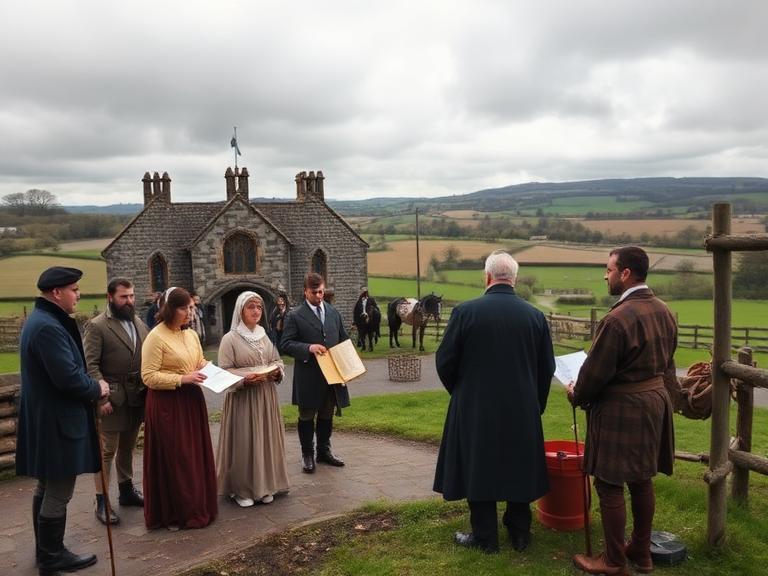

GPO Reborn(c.1910s)
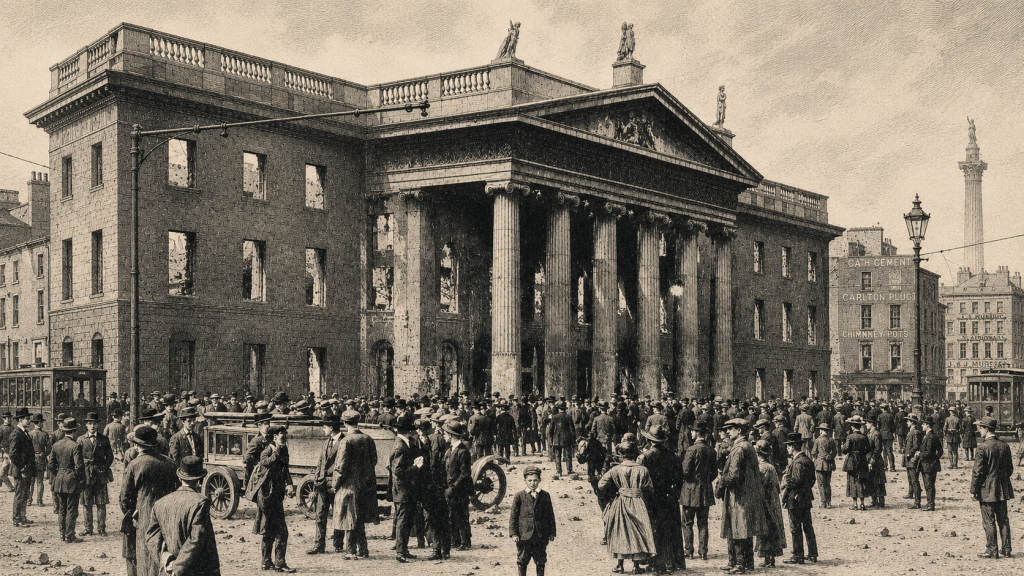
When the Easter Rising ended in April 1916, Dublin’s General Post Office stood as one of the most dramatic ruins in the city. The building had served as headquarters of the insurgent leadership, but artillery fire, gunfire and flames devastated its interior during the final days of fighting. Roofs collapsed, floors burned, offices disappeared, and the great public hall was reduced to wreckage. Yet Francis Johnston’s monumental frontage facing Sackville Street survived with extraordinary stubbornness. The classical portico, its six Ionic columns, portions of the outer walls, and the sculptural figures above remained standing, scarred but recognisable amid surrounding destruction.
The surviving façade gave the ruin a presence. From Sackville Street, citizens could still recognise the building that had dominated Dublin’s thoroughfare since 1818, but behind its columns there was little resembling a functioning post office. Contemporary photographs show empty windows, heaps of debris, broken masonry and open sky where roofs and rooms had existed. Crowds gathered to inspect the damage, while postcards and press photographs circulated images of the gutted structure throughout Ireland and abroad. The ruined GPO became more than damaged property: it was a physical reminder of insurrection, military suppression, political transformation and the deaths that followed.
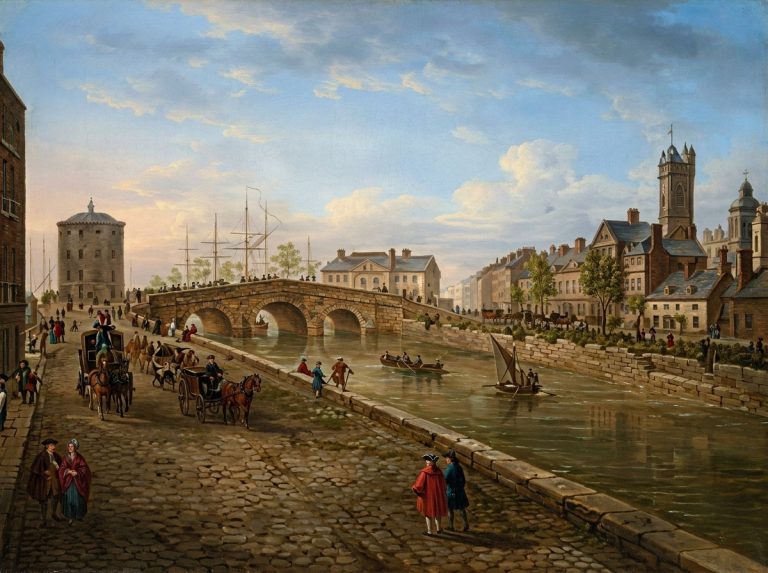
Postal administration could not wait for the landmark to be restored. Soon after the Rising, services were transferred to temporary accommodation, including premises at Amiens Street, allowing the postal system to resume while headquarters remained unusable. Photographs taken by GPO assistant engineer J. W. O’Neill recorded both the destruction and the improvised return of postal work elsewhere. This relocation contrasted sharply with the abandoned shell on Sackville Street. For years, Dubliners encountered a building that had once represented imperial communications but now stood silent, boarded and damaged, while postal business continued in substitute offices scattered through the recovering city.
Reconstruction was delayed by circumstances far larger than architecture. Ireland passed through the revolutionary years of the War of Independence, the Anglo-Irish Treaty, the establishment of the Irish Free State and the Civil War before sustained rebuilding could become realistic. Government finances were limited, Dublin contained many damaged public and commercial buildings, and priorities competed. The GPO therefore remained a ruin long after the fighting of 1916 had ended. Its continued presence on the capital’s main street gave it an unusual political meaning. The Free State inherited not merely a wrecked government building, but a site inseparable from the revolution.
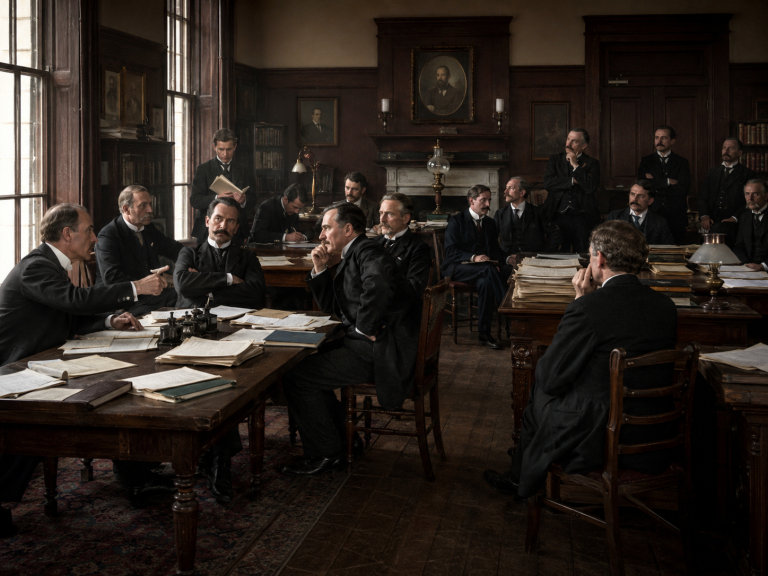
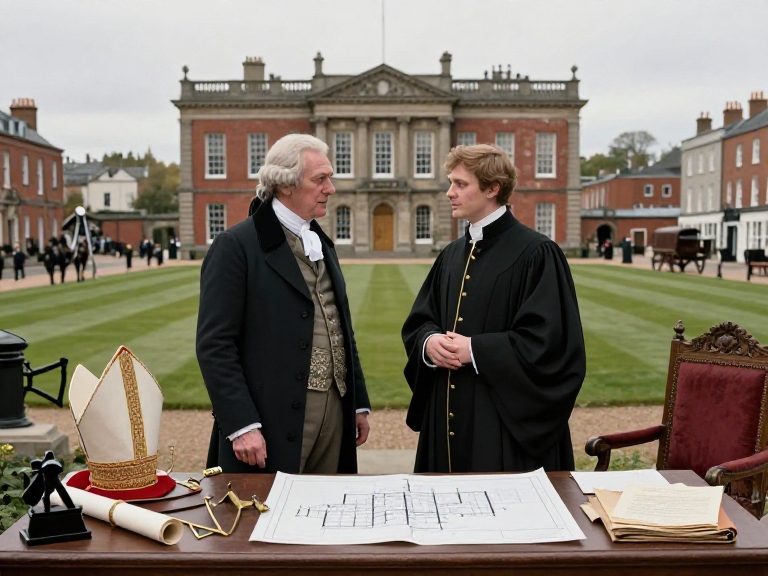
By 1924 and 1925, the Free State government had committed itself to rebuilding the GPO on its site rather than abandoning the location. The Office of Public Works directed the project, with architect Thomas Joseph Byrne leading a design team that included J. Fairweather and specialists. Early expenditure concentrated on clearing, demolition and structural preparation, including work on the Henry Street frontage. Official appropriation accounts reveal allocations for rebuilding the Henry Street front, constructing a new central block and reinstating the surviving front block. Reconstruction was therefore not a simple repair, but a large coordinated programme of rebuilding and expansion.
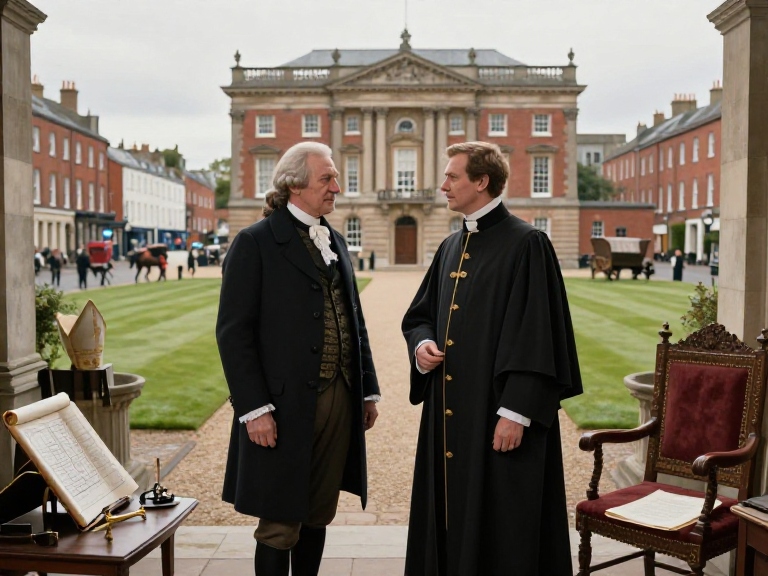
The architects preserved the most important surviving element: Johnston’s celebrated O’Connell Street façade and portico. Behind it, however, they created a substantially enlarged complex suited to the needs of the Free State’s postal and communications services. New wings extended along Henry Street and Prince’s Street, while internal arrangements were redesigned rather than recreated room for room. The rebuilt public office retained a neoclassical character compatible with the old exterior, but twentieth-century details appeared throughout the work. The project represented a deliberate balance between continuity and change: the familiar national landmark was saved, while the working institution behind it was transformed.
One of the most distinctive additions was the GPO Arcade, a covered commercial passage linking Henry Street and Prince’s Street through the enlarged complex. Designed as part of reconstruction, it incorporated shop units, stone detailing, glazed roofing and architectural features associated with the late 1920s. The arcade demonstrated that the rebuilt GPO was intended to participate in commerce in central Dublin, rather than exist solely as an administrative monument. At the same time, expanded accommodation supported postal, telegraph and related services. The new building combined public office, communications infrastructure, commercial space and national symbolism within one reconstructed urban complex.
The restored GPO was ceremonially reopened on 11 July 1929 by W. T. Cosgrave, President of the Executive Council of the Irish Free State. Contemporary reporting treated the occasion as an important landmark in Dublin’s recovery from the destruction of the revolutionary period. Thirteen years had passed since the Rising, and the return of the GPO to public service carried meaning beyond the reopening of a post office. A building once occupied in rebellion, shelled under British rule and left as a ruin was now reopened by the government of an independent Irish state. Reconstruction had become a statement.
The reopening did not mean that every element of the enormous rebuilding programme was finished. State accounts show expenditure on GPO reconstruction continuing into the early 1930s, and architectural records place completion of the wider project after the 1929 ceremony. This distinction matters because photographs and film from 1929 can give the impression of a single dramatic transformation from ruin to finished building. In reality, reconstruction proceeded in stages, shaped by budgets, building work and administrative requirements. The public reopening marked restoration of the institution’s central function, while additional work continued within the expanded complex after dignitaries celebrated its return.
The GPO that emerged from reconstruction carried two histories at once. Its surviving portico and battle scars preserved evidence of 1916, while the enlarged interior represented the ambitions of the new state that followed the revolution. Unlike many ruins cleared from Dublin, the GPO was neither replaced by an unrelated structure nor restored as a frozen memorial. It resumed the purpose for which it had been built. That continuity gave the building power. From burned rebel headquarters to functioning post office, its thirteen-year passage through ruin, delay and reconstruction turned the GPO into an enduring symbol of Ireland’s political transformation.
Primary Sources
- J. W. O’Neill, General Post Office, Dublin 1916 Album — National Library of Ireland. Twenty-nine photographs taken immediately after the surrender, including the ruined GPO and temporary postal operations at Amiens Street. NLI collection vtls000283784.
- J. W. O’Neill, Another View of the Public Office, G.P.O. Dublin, 1916 — National Library of Ireland, ALB107/10. Contemporary photograph showing extensive destruction inside the public office.
- Edward C. Chandler, Ruins of the Interior of the General Post Office, following the 1916 Rising, 1916 — National Library of Ireland, NPA CHA23.
- Edward C. Chandler, General Post Office, Dublin, in Ruins, with Crowd Gathered, 1916 — National Library of Ireland, NPA CHA13.
- Dublin Post Office as it Appeared after the Republican Forces Vacated It — Joseph McGarrity Photographic Collection, National Library of Ireland, NPA JMG20.
- Irish Rebellion May 1916: The General Post Office Dublin (Rebel Headquarters) Destroyed — Manchester Daily Sketch photograph/postcard, National Library of Ireland, ALB73/209.
- Chancellor, Ruins of G.P.O., Dublin: As Seen from Top of Nelson’s Pillar — National Library of Ireland, NPA DOCG58. Contemporary photographic postcard showing the extent of the ruined complex.
- The Fighting in Dublin: Looking Down from the Nelson Pillar on the Portico of the Gutted Post Office, c.1916 — National Library of Ireland, NPA DUPR5.
- Keogh Brothers, G.P.O. Shelled, Nelson’s Pillar, Busy O’Connell Street, Trams, May 1916 — National Library of Ireland, Ke 121. Contemporary glass-negative photograph.
- W. J. Brennan-Whitmore, “How the Irish Troops Took the GPO,” An t-Óglach, Vol. 4, No. 1, 16 January 1926 — first-person retrospective account published by the Irish Defence Forces journal.
- M. J. Staines and M. W. Reilly, “The Defence of the Dublin GPO in 1916,” An t-Óglach, Vol. 4, No. 2, 23 January 1926 — eyewitness-based account of the GPO garrison and fighting.
- Charles Steinmayer, “The Evacuation of the GPO,” An t-Óglach, Vol. 4, No. 7, 27 February 1926 — primary participant account of the abandonment of the burning headquarters.
- Diarmuid Lynch, Bureau of Military History Witness Statement, WS0004 — supplementary statement concerning Easter Week and the GPO. Military Archives of Ireland.
- James Kenny, Bureau of Military History Witness Statement, WS0141, “G.P.O. 1916” — first-hand testimony of a member of E Company, 4th Battalion.
- J. Rowan, Bureau of Military History Witness Statement, WS0871 — testimony of a fifteen-year-old GPO telegraph messenger who witnessed the occupation of the building.
- The GPO After 13 Years, 1929 — contemporary newsreel preserved by the Irish Film Institute Archive, recording the restored GPO and its return to service after thirteen years.
- The Irish Times, 12 July 1929, “Dublin’s Post Office” — contemporary report/editorial published immediately after the ceremonial reopening on 11 July 1929, describing the GPO as having been a ruin for thirteen years.
- Saorstát Éireann, Appropriation Accounts 1924–25, Vote 11, Public Works and Buildings — official government financial record documenting expenditure on rebuilding the Henry Street front of the Dublin GPO.
- Saorstát Éireann, Appropriation Accounts 1925–26, Vote 11, Public Works and Buildings — official accounts recording separate expenditure for the Henry Street front, central courtyard block and reinstatement of the front block.
- Saorstát Éireann, Appropriation Accounts 1932–33, Vote 11, “Dublin, General Post Office: Reconstruction” — official record showing that expenditure continued after the 1929 ceremonial reopening; the authorised reconstruction estimate was £300,000 and work was still recorded as in progress.