
Military Accounts(c.1750s)
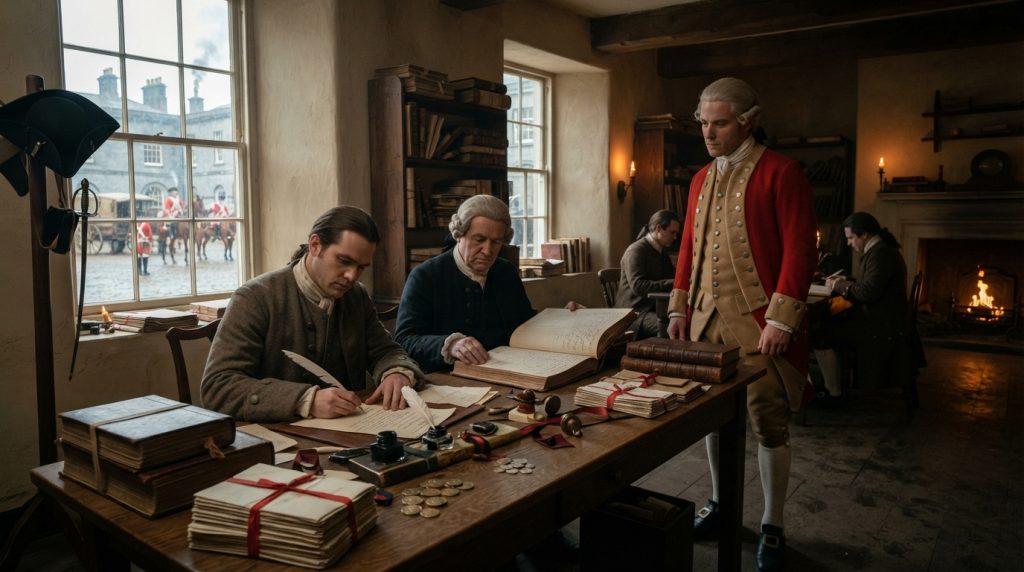
On Wednesday, 10 January 1753, an administrative order was prepared concerning Captain Roger Pedley, an officer serving within the military establishment connected with Ireland. The surviving catalogue entry states that orders were prepared for the “removal of cheques standing against Capt Roger Pedley.” The original wording is important. Without the complete underlying papers, it would be unsafe to assume precisely why those cheques had been entered or what circumstances caused their removal. What can be established is that Pedley’s military account or administrative standing required formal action and that the matter entered the machinery of Irish government on this exact date.
The document survives among the extensive Wilmot-Horton papers preserved at Derbyshire Record Office. These papers are exceptionally valuable for eighteenth-century Irish history because Sir Robert Wilmot served as resident secretary in England for successive Irish administrations. From 1737, a substantial proportion of government business passing between Ireland and Britain crossed his desk. His Dublin counterpart, under-secretary Thomas Waite, became a frequent correspondent. Consequently, matters that might otherwise have disappeared — appointments, military cases, requests, accounts and administrative instructions — survive within this correspondence. The Pedley order is one such fragment, preserving a routine governmental action that nobody involved could have expected historians to examine centuries later.
Military administration generated enormous quantities of paperwork. Maintaining an army required far more than recruiting men and issuing weapons. Officers and officials had to manage pay, deductions, appointments, promotions, absences, equipment, quarters, disciplinary cases and accounts. The archival language concerning Pedley appears within a sequence containing similar entries. Only one day earlier, an order had been prepared concerning the removal of cheques standing against the late Ensign Robert Fairholme. The recurrence of this terminology demonstrates that the Pedley document belonged to an established administrative practice rather than an isolated phrase. Precisely what each individual cheque represented, however, depended upon the circumstances of the officer concerned.
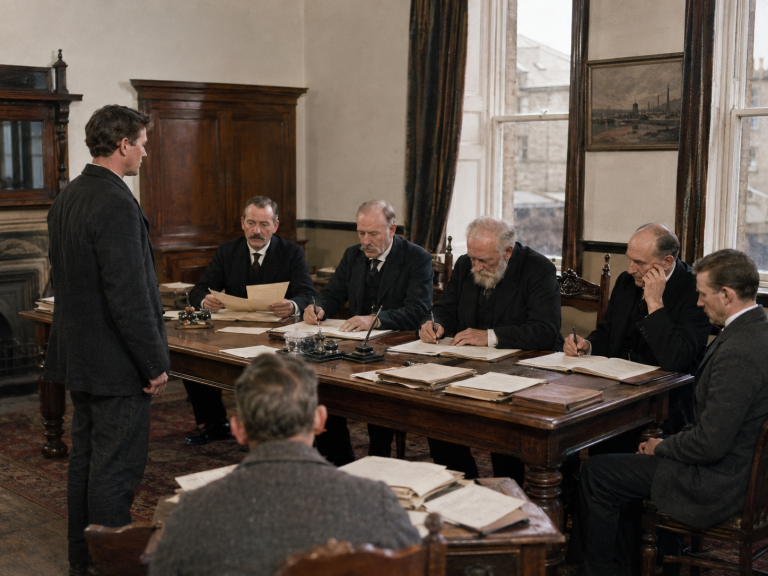
The papers from the opening days of January reveal just how busy this military bureaucracy was. On 8 January, Thomas Waite reported that the Dublin garrison was to be reviewed before its tours began. On 9 January, Dublin Castle dealt with the court-martial proceedings of Cornet Nugent and Ensign Harriott. Then, on 10 January, the surviving order concerning Captain Pedley addressed another aspect of military administration. These records show an army being continuously inspected, disciplined and accounted for. No war was taking place in Ireland on these dates, yet soldiers and officers still required an elaborate system of supervision to keep the military establishment functioning.
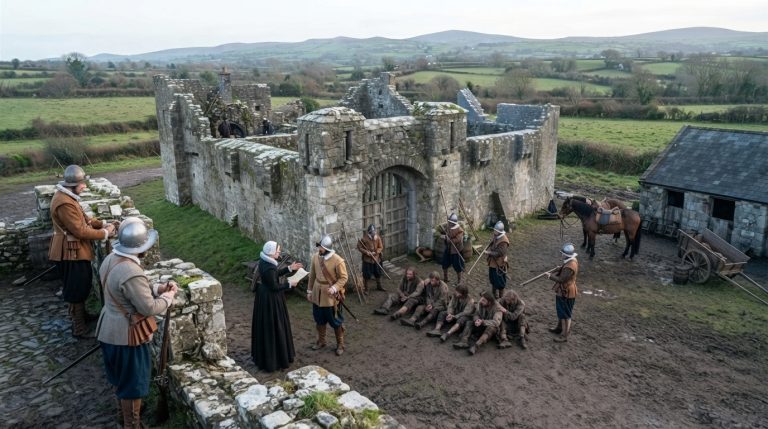
Ireland in 1753 formed an important component of the British military system. Troops were stationed in Dublin and numerous provincial towns, and their presence connected local communities to the wider affairs of the crown. Barracks, guards, officers and soldiers became familiar features of urban life. Dublin Castle stood at the administrative centre, while instructions and correspondence moved between Ireland and officials such as Wilmot in England. This was government conducted at the pace of horses, packet boats and handwritten letters. A decision taken in Dublin might have to cross the Irish Sea before further authority could be obtained, making accurate paperwork and dependable officials essential to the operation of the state.
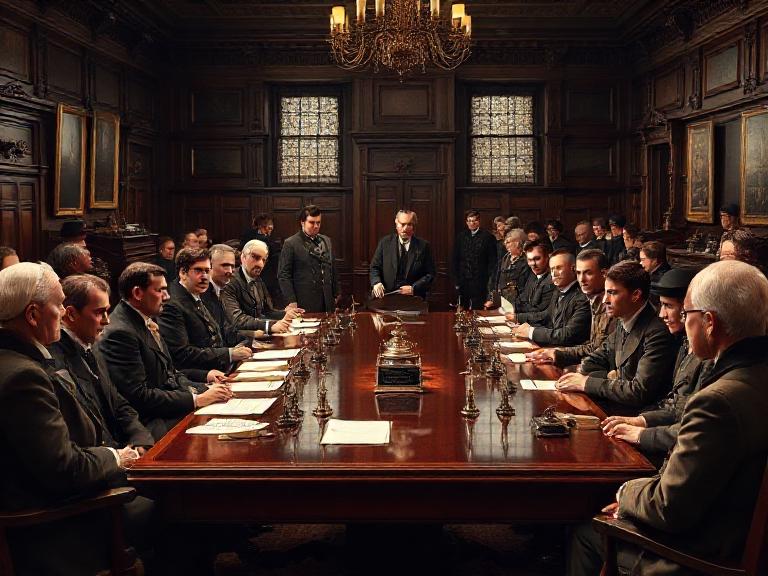
The political administration overseeing these arrangements was headed by Lionel Sackville, first Duke of Dorset, during his second term as lord lieutenant. His son, Lord George Sackville, served as chief secretary. The Irish Parliament was not sitting during these early January days, but executive government continued without interruption. Military administration provides particularly clear evidence of that continuity. Courts martial proceeded, garrisons were reviewed, accounts were adjusted and correspondence travelled between officials. Later in 1753 Ireland would enter a serious constitutional dispute over control of a revenue surplus, but those famous political arguments should not be projected backwards onto 10 January. On this date the surviving evidence concerns administration rather than constitutional confrontation.
A second documentary witness to the day came from the press. The Dublin Gazette, Number 248, had appeared on 9 January and covered the period through 13 January, meaning that it was the official Gazette in circulation on 10 January. The Gazette was published by authority and formed a continuing printed record of official Ireland. Its contents ranged well beyond elite politics and could include appointments, legal matters, proclamations, local information, prices, shipping and crime. The survival of the Gazette beside manuscript correspondence gives historians two complementary perspectives: information deliberately made public and government business retained within administrative channels.
Most people in Ireland, however, were far removed from the accounting concerns of military officers. The kingdom remained predominantly rural, and January brought practical anxieties surrounding food, livestock, fuel, rents, roads and weather. Urban tradesmen, servants, labourers and shopkeepers likewise experienced government principally through taxes, laws, markets and local authority rather than correspondence between senior officials. The army itself intersected with this civilian world. Soldiers needed food, uniforms, accommodation and transport, while officers spent money and formed part of local social networks. Behind every administrative entry concerning military finance therefore stood a much larger economy of suppliers, landlords, servants, craftsmen and ordinary working people.
The surviving record should also remind us to respect the limits of historical evidence. It would be tempting to turn Captain Pedley’s case into a story of debt, misconduct or financial difficulty, but the catalogue does not establish any of those things. It records only that orders were prepared to remove cheques standing against him. Historical reconstruction becomes more trustworthy when uncertainty is preserved rather than concealed. The most useful question is therefore not what scandal might have occurred, but what the document itself demonstrates: an officer’s administrative position could be formally recorded, altered and communicated through a governmental system capable of leaving a precise dated trace.
The importance of 10 January 1753 lies in this small surviving act of administration. Captain Roger Pedley’s name entered the record because an official order needed to be prepared. Around that document operated a much larger world of clerks, military officers, government secretaries, messengers and accountants. Elsewhere, Dublin newspapers circulated and ordinary people continued another winter day almost entirely beyond the surviving written record. A complete day-by-day history of Ireland must preserve such moments alongside battles and rebellions. The Pedley order demonstrates that history was continually being created in offices and account books, through decisions that appeared routine at the time but now allow one otherwise forgotten day in eighteenth-century Ireland to be recovered.
Primary Sources
Primary Sources
- Irish administration — Order concerning Captain Roger Pedley — 10 January 1753.
Orders were prepared for the removal of cheques standing against Captain Roger Pedley. This is the principal exact-date source for the article. Derbyshire Record Office, Wilmot-Horton Papers, D3155/C/H/1408. - Richard James and John Butler — The Dublin Gazette, No. 248 — 9–13 January 1753.
The official Irish government newspaper in circulation on the exact date. Houses of the Oireachtas Library and Research Service / Virtual Treasury of Ireland. - Thomas Waite — Order concerning the late Ensign Robert Fairholme — 9 January 1753.
An immediately preceding military-administrative order for the removal of cheques standing against another officer, making it particularly useful for understanding the terminology used in Pedley’s case. Derbyshire Record Office, Wilmot-Horton Papers. - Thomas Waite — Letter concerning Cornet Nugent — 9 January 1753.
Orders that a court martial proceed with Nugent’s trial, documenting military justice immediately before the target date. Derbyshire Record Office, D3155/C/H/1404. - Thomas Waite — Letter concerning Ensign Harriott — 9 January 1753.
Orders a court martial to reassemble and reconsider Harriott’s sentence. Derbyshire Record Office, D3155/C/H/1405. - Thomas Waite — Letter to Sir Robert Wilmot — 8 January 1753.
Reports that the Dublin garrison was to be reviewed before its tours began, providing direct context for military administration during the same week. Derbyshire Record Office, D3155/C/H/1402. - Captain Robert Dobson — Letter to Lord Cadogan — 6 January 1753.
Dublin correspondence concerning Dobson’s involvement in administering Major Douglas’s will, illustrating the military correspondence handled during the same week. Derbyshire Record Office, D3155/C/H/1440. - Thomas Waite — Letter to Lord George Sackville — 4 January 1753.
Dublin Castle administrative correspondence concerning communication with the Lords Justices. Derbyshire Record Office, Wilmot-Horton Papers. - Richard James and John Butler — The Dublin Gazette, No. 247 — 6–9 January 1753.
The official newspaper immediately preceding Number 248. Houses of the Oireachtas Library / Virtual Treasury of Ireland. - Richard James and John Butler — The Dublin Gazette, No. 246 — 2–6 January 1753.
Official Irish government newspaper from the opening week of 1753. Houses of the Oireachtas Library / Virtual Treasury of Ireland. - Richard James and John Butler — The Dublin Gazette, No. 249 — 13–16 January 1753.
The next official issue after Number 248, useful for continuing the sequence of Irish governmental information through January. - George Faulkner — Faulkner’s Dublin Journal — January 1753 issues.
Contemporary newspaper containing advertisements, commercial information, public notices and reports from Dublin during the target month. - Publishers of Pue’s Occurrences — Pue’s Occurrences — January 1753 issues.
Contemporary Dublin newspaper providing an additional view of Irish commercial and social life during the period. - James Simon — An Account of the Barometer, and the State of the Weather, at Dublin, from the 7th of March 1752 to the 28th of February 1753 — observations including 10 January 1753.
Contemporary meteorological observations encompassing the exact date, published through the Royal Society. - James Simon — A Journal of the Weather in Dublin for the Year 1753.
Contemporary daily record of Dublin weather during the target year, useful for reconstructing the physical environment. - Ireland, Parliament, House of Commons — Journals of the House of Commons of the Kingdom of Ireland — 1753 proceedings.
Official parliamentary record providing the political and financial context of the year. - Ireland, Parliament, House of Lords — Journals of the House of Lords of Ireland, Volume IV — proceedings beginning in 1753.
Official upper-house record for the same parliamentary period. - Lionel Sackville, Duke of Dorset — His Speech to Both Houses of Parliament at Dublin — 9 October 1753.
The lord lieutenant’s own address when Parliament reconvened later that year, providing direct evidence of the administration under which the January military orders were issued. - Charles O’Conor of Belanagare — Dissertations on the Antient History of Ireland — Dublin, 1753.
A contemporary Irish publication from the target year documenting the intellectual and historical culture of Ireland. The National Library of Ireland holds the 1753 edition. - Parliament of Great Britain — Calendar (New Style) Act 1750, 24 Geo. II c.23 — implemented in 1752.
The original statutory authority for the calendar system under which 10 January 1753 was recorded.