
Waterside Livelihoods(c.1000s)
On 6 March AD 1000, Ireland’s rivers, lakes, estuaries and surrounding seas provided food, transport and employment to communities across the island. No surviving source records a significant Irish event occurring on this exact day, so the date must be treated as a historical snapshot. Annals concentrate upon kings, battles and church leaders, leaving routine fishing largely unrecorded. Archaeological discoveries of hooks, net-making tools, fish bones, boats and landing places provide more direct evidence. These remains reveal that aquatic resources supplemented agriculture and helped connect inland settlements with coastal ports and distant trading networks.
Ireland’s extensive coastline contained sheltered bays, tidal inlets, exposed headlands and estuaries supporting varied forms of fishing. Coastal practice depended upon local geography, weather, tides and available vessels. People could gather shellfish and seaweed along the shore, set nets in shallow water or fish from boats farther offshore. The precise seasonal availability of species varied. No evidence records the weather or catch on 6 March 1000, and it would be wrong to invent a storm, calm sea or unusually abundant shoal for the date.
Rivers and lakes offered additional resources. Salmon and eels were particularly valuable migratory fish, while trout and other freshwater species could be taken locally. Nets, traps, weirs, lines and hooks allowed communities to exploit different waterways. Fishing structures had to be positioned with knowledge of currents and seasonal movement. Ownership or control of a productive fishery could become an important economic privilege. Churches, rulers and neighbouring landholders all had interests in access to water, making fishing rights part of wider relationships involving territory, tribute and customary law.
Archaeological equipment illustrates the practical knowledge involved. Iron fish-hooks occurred in various sizes, while bone netting needles helped make and repair nets. Wooden floats held the upper edge near the surface, and stone or lead weights kept the lower edge extended. Lines, nets and traps were made from organic materials that survive only under favourable conditions. Their manufacture required time and continued maintenance. A damaged net could represent a considerable economic loss, particularly for a household depending upon fishing during periods when agricultural food stores were limited.
Boats likewise varied according to purpose and environment. Logboats hollowed from large tree trunks remained suitable for rivers and lakes. Hide-covered craft may have served some local journeys, while clinker-built vessels associated with Scandinavian maritime technology operated around the coast and on major waterways. A small fishing boat did not resemble an ocean-going warship, even when both drew upon related construction knowledge. Boats required timber, tools, caulking, rope and regular repair. Their owners also needed secure landing places and somewhere to store or draw up vessels during poor conditions.
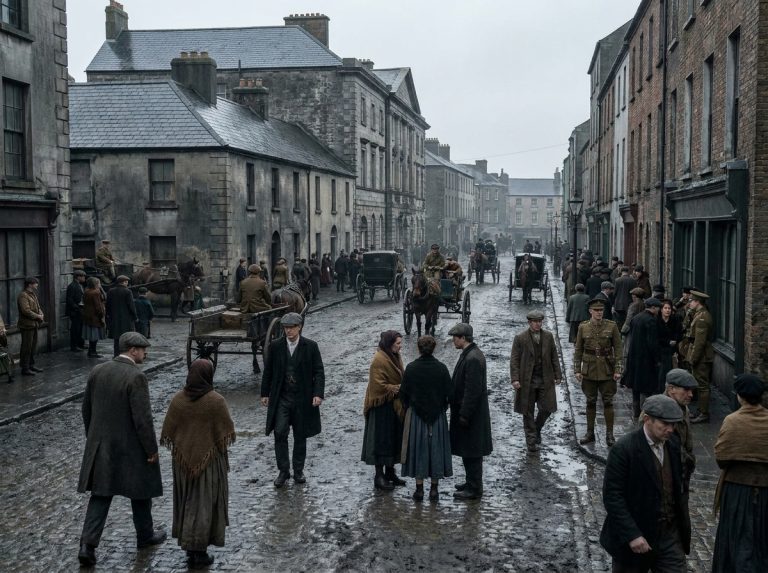
Hiberno-Norse Dublin possessed an especially developed maritime economy. Excavations produced fish-hooks, net needles, wooden floats, line sinkers, harpoons, ship timbers and representations of vessels. The town’s position beside the River Liffey and Dublin Bay supported fishing, commerce and communication across the Irish Sea. Fish supplied urban households whose density limited direct agricultural production. Preserved fish could also be transported beyond the immediate catch area, although the scale and organisation of such trade around 1000 remain difficult to measure precisely.
Dublin’s political survival depended greatly upon its ships and maritime connections. Following defeat at Glenn Máma in 999, Munster forces entered and burned the settlement. The Annals of Ulster record under 1000 that the Hiberno-Norse inhabitants returned and gave hostages to Brian Boru. Their return allowed workshops, trade and fishing to resume within a politically altered environment. These events cannot be assigned to 6 March, but they show why Brian may have preferred control of an inhabited port to the permanent destruction of its useful maritime community.
Waterford and Limerick were also established Hiberno-Norse centres. Waterford occupied a strategic position on the River Suir near routes leading into the south-east, while Limerick controlled access between the Shannon estuary and the river system extending deep into Ireland. The Annals of Ulster record the death of Ímar, king of Waterford, under the year 1000, without specifying a day or month. The political importance of such towns came partly from their capacity to move people and goods between inland territories and overseas markets.
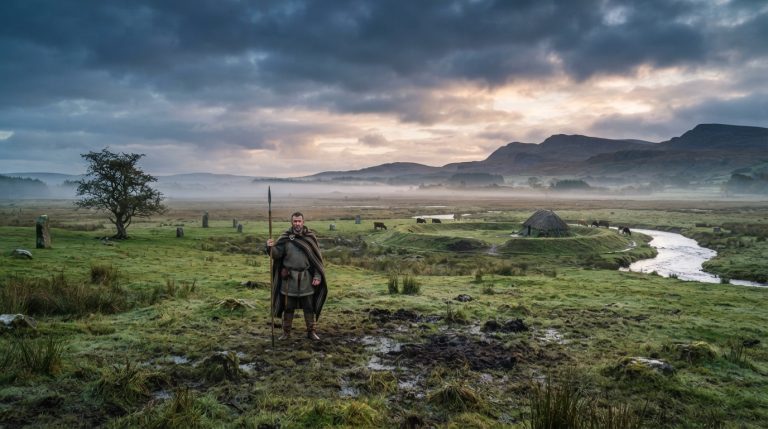
Fishing was not confined to towns or Scandinavian communities. Rural farmsteads near rivers and lakes could combine livestock and cereal production with seasonal fishing. Crannog occupants necessarily maintained close relationships with water. Finds from sites such as Lagore, Ballinderry and Moynagh Lough demonstrate boats, fishing equipment and domestic occupation within lake environments. The ability to obtain fish reduced dependence upon one source of food, but it did not guarantee security. Flooding, dangerous currents, equipment failure and poor catches could all disrupt a household’s plans.
Ecclesiastical communities also exploited aquatic resources. Many important churches stood beside rivers, lakes, islands or coastlines. Fish had practical value within Christian dietary practice, particularly during periods when meat consumption was restricted. Waterways carried pilgrims, clerics, manuscripts and supplies between foundations. Island communities such as Inishmurray and High Island required maritime knowledge merely to maintain contact with the mainland. Hagiographical texts consequently contain frequent voyages and crossings, although their miracle narratives cannot be treated as technical records of ordinary fishing.
Marine mammals were hunted or exploited when circumstances allowed. Archaeological harpoons and animal remains indicate knowledge of seals and possibly whales. Some whales may have been hunted, while stranded animals offered valuable meat, oil, bone and baleen. Such resources could supply tools and raw materials as well as food. The legal ownership of a stranded whale later attracted careful regulation because its value encouraged competing claims. Evidence must be assessed regionally, since the discovery of one object does not establish uniform hunting practice around every Irish coast.
Fish had to be processed rapidly. It could be cooked fresh, but preservation through drying, smoking or salting extended its usefulness. Salt was valuable and its production or acquisition influenced preservation choices. Wooden vessels, baskets and barrels supported handling and storage. Fish bones recovered from settlement deposits help identify consumption, although preservation and excavation methods affect what survives. Small bones are easily missed, making apparent differences between sites partly dependent upon archaeological recovery techniques.
Waters could also be dangerous. Boats capsized, tides trapped shoreline gatherers and sudden weather threatened coastal crews. Few people possessed specialised rescue equipment. Experience, local knowledge and careful judgement offered the best protection. Travel by water could nevertheless be faster than difficult overland movement, especially when carrying heavy goods. Rivers and coasts were therefore not edges separating communities. They were working landscapes along which food, information, military forces and commercial cargo travelled.
The Ireland of 6 March 1000 depended upon water as fully as it depended upon fields and pasture. Fishers, boatbuilders, net-makers, merchants and household workers transformed rivers and seas into sources of sustenance and connection. Dublin’s recovery, Waterford’s kingship and Limerick’s strategic importance all reflected the political value of maritime locations. Yet most fishing activity remains anonymous, preserved through broken hooks, net weights and discarded bones rather than written names. These modest remains reveal a skilled population whose knowledge of tides, currents, fish and boats formed an essential part of early medieval Irish life.
Primary Sources
1. Anonymous Irish annalists — Annals of Ulster, entry U1000 and surrounding years — Earlier material compiled principally in the fifteenth century — Trinity College Dublin, MS 1282, with additional witnesses; edition by Seán Mac Airt and Gearóid Mac Niocaill; CELT — Records the maritime rulers of Dublin and Waterford and the political value of port settlements.
2. Anonymous Munster annalists — Annals of Inisfallen, entries AI999–AI1002 — Earlier records preserved in a manuscript begun during the late eleventh century — Bodleian Library, MS Rawlinson B 503; edition by Seán Mac Airt; CELT — Provides evidence for Dublin, Limerick and Munster’s river-based political world.
3. Anonymous Clonmacnoise-tradition annalists — Chronicon Scotorum, entries surrounding AD 1000 — Medieval annalistic material surviving in a seventeenth-century transcription — Trinity College Dublin, MS 1292; edition by William M. Hennessy; CELT — Supplies comparative references to fleets, waterways and maritime rulers.
4. Anonymous annalists — Annals of Tigernach — Medieval compilation preserved in later manuscripts and fragments — Bodleian Library, MS Rawlinson B 488, and associated witnesses; edition by Whitley Stokes; CELT — Records naval expeditions and events involving Ireland’s ports and rivers.
5. Anonymous compiler — Cogad Gáedel re Gallaib — Probably composed during the early twelfth century from older traditions — Later manuscripts including Trinity College Dublin, MS 1319; edition by James Henthorn Todd; CELT — A partisan account containing descriptions of fleets, ports and river warfare.
6. Adomnán of Iona — Vita Columbae, or Life of Columba — Composed around AD 697 — Early witness in Schaffhausen, Stadtbibliothek, MS Generalia 1 — Contains accounts of boats, voyages, fishing and island travel within the Irish-Ionan world.
7. Anonymous author — Navigatio Sancti Brendani, or Voyage of Saint Brendan — Composed by approximately the ninth or tenth century — Preserved in numerous medieval manuscripts — Demonstrates Irish literary knowledge of seafaring and Atlantic environments.
8. Anonymous Irish legal scholars — Coibnes Uisci Thairidne — Early Irish tract concerning water relationships — Preserved in later manuscripts; edition in D. A. Binchy, Corpus Iuris Hibernici — Provides evidence for rights and responsibilities involving shared water resources.
9. Anonymous Irish legal scholars — Bretha Comaithchesa — Early Irish tract concerning neighbours and land — Preserved in later manuscript witnesses; edition in Corpus Iuris Hibernici — Illuminates disputes over boundaries and access affecting riverside communities.
10. Anonymous Dublin fishers — Iron fish-hooks from Viking Age Dublin — Principally ninth- to eleventh-century deposits — National Museum of Ireland collections — Direct evidence for line fishing within the Hiberno-Norse settlement.
11. Anonymous Dublin net-makers — Bone netting needles from Viking Age deposits — National Museum of Ireland collections — Physical evidence for manufacturing and repairing fishing nets.
12. Anonymous Dublin fishers — Wooden net floats from waterlogged excavations — Viking Age deposits — National Museum of Ireland and Dublin excavation archives — Rare preserved components of working fishing nets.
13. Anonymous Dublin fishers — Lead-alloy and stone line or net sinkers — Viking Age contexts — National Museum of Ireland collections — Evidence for controlling fishing lines and submerged nets.
14. Anonymous hunters and fishers — Iron harpoons from Hiberno-Norse Dublin — Viking Age deposits — National Museum of Ireland collections — Evidence for hunting large fish or marine mammals.
15. Anonymous shipbuilders and inhabitants — Reused ship timbers from Dublin structures — Viking Age and early medieval contexts — National Museum of Ireland and excavation archives — Direct evidence for clinker-built vessels and the recycling of maritime timber.
16. Anonymous Dublin inhabitants — Ship sketches carved upon wooden planks — Viking Age deposits — National Museum of Ireland collections — Contemporary representations of vessels familiar to Dublin’s maritime population.
17. Anonymous boatbuilders — Early medieval logboats recovered from Irish rivers and lakes — Early medieval period — Examples documented in Irish archaeological archives and national collections — Physical evidence for inland fishing and transport.
18. Anonymous artists — Boat carving on the Kilnaruane pillar stone — Early medieval period — Kilnaruane ecclesiastical site near Bantry, County Cork — Visual evidence for an early medieval vessel and the cultural importance of seafaring.
19. Anonymous settlement inhabitants — Fish bones and marine animal remains from Wood Quay and Fishamble Street — Viking Age deposits — Archaeozoological collections in Dublin excavation archives — Direct evidence for fish consumption and the exploitation of aquatic resources.
20. Anonymous crannog occupants — Fishing and boating remains from Lagore, Ballinderry and Moynagh Lough — Early medieval occupation phases — Excavation archives and National Museum of Ireland collections — Evidence for lake-based settlement, transport and food gathering.