
Healing Duties(c.1000s)

No surviving Irish chronicle records an event occurring specifically on 23 March 1000. The annals describe deaths, injuries and epidemics during surrounding centuries, but rarely explain how ordinary patients were treated. Early medieval Ireland nevertheless possessed recognised healers, detailed laws governing injury and established duties of sick-maintenance. Medicine combined practical observation, learned tradition, household care, religious belief and the remedies available within the local environment.
The Old Irish term liaig could describe a physician or healer. Practitioners varied greatly in education and experience. A respected physician serving a king or important church occupied a different position from a household member treating a minor wound. Some medical knowledge circulated within specialist families and learned communities, while ordinary adults possessed practical understanding of nursing, plants, food and common injuries.
Early Irish law treated medical care as a serious legal responsibility. When one person unlawfully injured another, compensation did not necessarily end with a single payment. The injured person might require sick-maintenance, during which the offender or responsible kindred contributed to accommodation, food and treatment. The purpose was both medical and legal: recovery had to be supported while liability for the injury was assessed.
Bretha Crólige, the tract on sick-maintenance, considered the treatment owed to patients of different status. Like much early Irish law, it did not assume modern equality. Rank influenced the quality of accommodation, number of attendants and provisions a patient could claim. The text therefore reveals organised care while also exposing the hierarchy governing access to resources.
A patient might be moved to a suitable place of recovery if the household where the injury occurred was inadequate. Rest, warmth, food and protection from further disturbance were essential. The law discouraged activities likely to upset the patient, including quarrelling, excessive noise and dangerous behaviour nearby. Such provisions show recognition that environment could affect recovery even without a modern understanding of infection or trauma.
Bretha Déin Chécht, named after the legendary physician Dian Cécht, assessed wounds and medical liability. Injuries were examined according to location, seriousness and likely consequences. A wound that appeared small could be dangerous if it damaged a joint, organ or major vessel. The text’s classifications arose from accumulated observation of bodies injured through farming accidents, interpersonal violence and warfare.
The physician had to judge whether a wound was curable and determine appropriate treatment. An incompetent practitioner who worsened an injury could face consequences. Conversely, the healer required protection when undertaking a difficult case in good faith. Law attempted to distinguish unavoidable failure from negligence, though the surviving texts present technical problems and cannot be treated as a complete medical handbook.
Treatment of wounds involved cleaning, binding and monitoring. Linen or other cloth could be used as dressings, while pressure helped control bleeding. Honey, fats and plant preparations may have been applied in particular circumstances. Some substances possessed genuine soothing or antimicrobial properties, although medieval explanations of their effects differed from modern science. Dirty tools, contaminated water and severe blood loss remained grave dangers.
Surgery was limited but not absent. Healers could remove foreign objects, open certain swellings, set fractures and stabilise damaged limbs. Splints made from wood held bones in position. Needles and thread allowed some wounds to be closed, while cauterisation could control bleeding or destroy tissue. These procedures caused considerable pain and carried serious risks without modern anaesthesia or sterile conditions.
Evidence for trepanation demonstrates that openings were sometimes made in the skull and that some patients survived long enough for bone healing to begin. Such operations were exceptional and should not be presented as routine. Their existence nevertheless shows that early practitioners occasionally attempted difficult interventions based upon anatomical experience and a calculated hope of survival.
Herbal remedies formed part of care. Ireland’s fields, woods, wetlands and cultivated gardens provided plants used for poultices, washes, drinks and dietary preparations. Early legal material refers to garden herbs being supplied during sick-maintenance. Plant identification and dosage mattered because a substance believed beneficial in one quantity could be dangerous in another.
Later Irish medical manuscripts preserve a much more extensive learned tradition influenced by Latin, Greek and Arabic authorities. These fifteenth- and sixteenth-century compilations cannot be projected unchanged back to 1000. They do, however, demonstrate the long development of medical learning in Irish and the ability of specialist scholars to translate international material into a Gaelic professional context.
Food was itself part of treatment. Broth, grain preparations, dairy produce and garden herbs could sustain a weakened person. The patient’s condition determined what could be digested. Clean water, warmth and regular attendance were often more useful than elaborate remedies. Nursing labour—preparing meals, changing bedding and observing symptoms—was indispensable, although those performing it were seldom named.
Religious care accompanied physical treatment. A patient might seek prayer, blessing or contact with a saint’s relic. Holy wells and ecclesiastical sites were associated with healing traditions. Medieval Christians did not necessarily perceive prayer and practical medicine as opposing choices. A healer could dress a wound while a cleric prayed, each action addressing a different understanding of suffering and recovery.
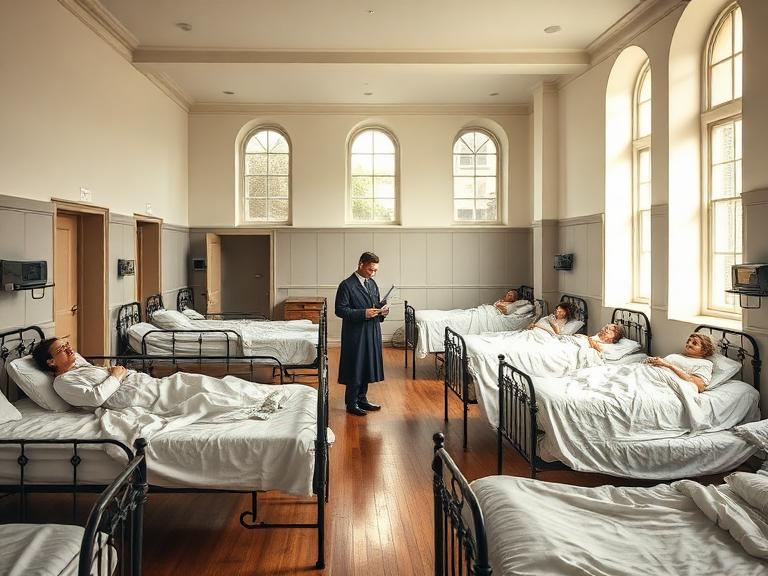
Major monasteries could support infirmaries or designated areas for sick members and guests, although surviving evidence does not justify imagining a modern hospital at every church. Ecclesiastical estates possessed food, gardens, literate personnel and networks through which remedies circulated. Rules emphasising charity encouraged care for sick and poor people, but actual provision depended upon resources and institutional priorities.
War generated enormous medical need. The campaigns recorded in 1000 involved spears, swords, axes, arrows and mounted movement. Survivors could suffer fractures, penetrating wounds, concussion and infection. Annals generally recorded prominent deaths rather than the prolonged recovery of ordinary warriors. Behind every brief report of battle stood injured adults carried home to relatives, healers or religious communities.
Blindness appears explicitly in the year’s record: the Annals of Ulster state that Aed ua Ciardai was blinded. The entry supplies no exact date or medical detail. Political blinding deliberately rendered a rival physically ineligible or less capable of exercising kingship. Treatment might preserve life after the mutilation, but it could not restore sight. The notice exposes the close relationship between bodily condition and political power.
Disease presented challenges beyond injury. Respiratory illness, digestive disease, skin infections and fevers could spread through households. Contaminated food or water caused sickness whose mechanism was unknown. Epidemics periodically entered the annals when mortality became exceptional. Ordinary illness remained largely invisible unless it killed an important ruler, abbot or scholar.
Childbirth was another major source of risk, although the present reconstruction concerns adult patients only. Experienced women possessed practical knowledge of pregnancy, delivery and recovery. Their expertise rarely received the formal recognition granted to learned male professionals in surviving texts. Medieval healthcare depended upon a much wider community of knowledge than legal titles alone reveal.
Social position strongly affected survival. A king could command skilled attendants, abundant food and a protected place of recovery. A poor dependant might continue working while ill and possess little access to specialised treatment. Enslaved people were especially vulnerable because their welfare was governed partly by their economic value to owners. The existence of medical law did not guarantee equal care.
On 23 March 1000, an adult healer somewhere in Ireland may have examined a swollen joint, cleaned a wound or instructed relatives to keep a patient warm and quiet. Treatment took place without modern diagnosis, antibiotics or hospitals, yet it was not devoid of method. Observation, legal responsibility and sustained nursing combined to give an injured person the best chance that contemporary knowledge could provide.
Primary Sources
1. Annals of Ulster — medieval chronicle recording deaths, epidemics, injuries and the blinding of Aed ua Ciardai during the year 1000.
2. Annals of Inisfallen — Munster-centred annals containing notices of disease, violent injury and prominent deaths.
3. Chronicon Scotorum — annalistic compilation recording epidemics, mortality and physical affliction.
4. Annals of Tigernach — medieval chronicle containing evidence for disease, injury and the deaths of rulers and clerics.
5. Annals of the Four Masters — later compilation based upon earlier sources and containing extensive notices of illness and medical practitioners.
6. Bretha Crólige — early Irish legal tract governing sick-maintenance, accommodation and provisions owed to injured people.
7. Bretha Déin Chécht — early Irish medico-legal tract classifying wounds, treatment and professional responsibility.
8. Críth Gablach — early Irish status tract establishing the rank and material qualifications of social grades.
9. Uraicecht Becc — early Irish legal tract discussing the status and honour-price of recognised professionals.
10. Bretha Nemed Toísech — early Irish status text concerning privileged learned professions.
11. Senchas Már — major corpus of early Irish law containing provisions governing injury, compensation and responsibility.
12. Collectio Canonum Hibernensis — early Irish church-law collection concerning illness, charity and care for vulnerable people.
13. Adomnán, Vita Columbae — seventh-century Life of Columba containing accounts of illness, healing, death and communal care.
14. Muirchú, Vita Sancti Patricii — seventh-century Life of Patrick containing healing narratives and descriptions of physical affliction.
15. Tírechán, Collectanea — Patrician traditions containing accounts of healing, wells and ecclesiastical communities.
16. The Rule of Saint Carthage — Irish monastic rule containing instructions concerning illness, diet, labour and compassion.
17. The Rule of Ailbe — medieval Irish monastic rule addressing food, discipline and care within a religious community.
18. Táin Bó Cúailnge — medieval Irish narrative containing descriptions of wounds, treatment and recovery after combat.
19. Cath Maige Tuired — medieval narrative associating Dian Cécht and his family with specialist healing.
20. Irish human remains displaying healed fractures and trepanation — archaeological evidence for survival after serious injury and medical intervention.