Archived: 14 October 2026
Abstract
In 1677 James Butler, duke of Ormond, resumed the lord lieutenancy, succeeding Essex amid consequences of war, conquest and Restoration land settlement. His authority was constrained by control of revenue through Ranelagh’s undertaking, while his hoped-for parliament did not meet. Government addressed claims of 1649 royalist officers, currency regulation, night watches, local crime, fortifications and property disputes. Honours and ecclesiastical appointments reinforced Protestant authority, while Catholics remained restricted but not yet subject to later repression. Francis O’Molloy published the printed Irish grammar in Rome, exemplifying Catholic scholarship abroad. The deaths of Bellings, Lynch and Taaffe marked a passing political generation.
Read Article
Archived: 14 October 2026
Abstract
In 1675, Ireland remained shaped by unresolved consequences of Cromwellian conquest and Restoration land legislation. On 22 September, Charles II appointed commissioners to decide individual Connacht transplanters’ claims, addressing disputed assignments without reversing Protestant property gains. Lord Lieutenant Essex left for England amid conflict over revenue farming, military finance and Dublin’s dependence on Whitehall; Boyle and Forbes governed as lords justices. Catholic clergy faced continuing, uneven pressure under banishment policy, while parallel Protestant and Catholic hierarchies endured. English restrictions on Irish cattle trade encouraged commercial redirection towards continental and Atlantic markets. Together, these issues exposed an incomplete post-conquest settlement still.
Read Article

Archived: 14 October 2026
Abstract
On 5 May 1674, the Hospital and Free School of King Charles II opened at Oxmantown, Dublin, admitting sixty poor children, including three girls, and combining education, clothing, food and Protestant instruction. Its civic charity symbolised Restoration order amid poverty and uneven urban recovery. Lord Lieutenant Essex sought administration despite disputed land settlements, financial arrears, unpaid troops and Dublin Castle, where he built lodgings. Government reinforced Protestant authority by expelling Catholic clergy, though worship persisted covertly. Grain restrictions revealed concern over supplies and prices, especially in Ulster, despite peace with the Dutch. Proclamations against robbers and Redmond O’Hanlon exposed insecurity.
Read Article

Archived: 14 October 2026
Abstract
In 1673, Lord Lieutenant Essex’s proposed trade report portrayed Restoration Ireland through estimates of land, rents, livestock, housing, goods and scarce circulating coin, privileging taxable wealth over poorer households and local life. English restrictions on cattle imports encouraged exports of processed provisions, wool and fish through Dublin, Cork and Atlantic markets, although benefits were uneven. Essex governed within Protestant political dominance amid English anti-Catholic pressures. Investigation and hostility prompted Archbishop Peter Talbot’s departure for France, while October proclamations targeted Catholic arms, offices, clergy and institutions. Enforcement varied, but Catholic worship became more precarious. Presbyterians retained favour, illustrating selective confessional policy.
Read Article

Archived: 14 October 2026
Abstract
In 1672 Arthur Capel, earl of Essex, became lord lieutenant, seeking to centralise Restoration government by curbing provincial power, notably suppressing Munster’s presidency. Ireland supported the Third Anglo-Dutch War through transport, harbour defence, fortification surveys, customs regulation and garrison discipline. Charles II’s Declaration of Indulgence enabled limited, uncertain Catholic activity: bishops and clergy organised synods, appointments and disputes, while Protestant authority remained entrenched. Corporate officeholders faced the Oath of Supremacy, restricting Catholic civic participation. William Petty’s Political Anatomy assessed land, population and resources, reflecting a country still shaped by conquest, redistribution, taxation and religious division. Government combined flexibility with ascendancy.
Read Article

Archived: 14 October 2026
Abstract
In 1670, under Lord Lieutenant John Berkeley, Ireland remained dominated by the Protestant land settlement and military power established after Cromwellian conquest, yet experienced limited religious latitude. Oliver Plunkett returned as Catholic archbishop of Armagh, rebuilding clerical discipline and hierarchy. Bishops met in Dublin, issued pastoral statutes and declared civil loyalty, despite rivalries between Plunkett and Dublin’s Peter Talbot. Plunkett’s Clones council extended reform and he mediated pardons for Tyrone tories. William Penn defended Quakers while managing Cork estates. Trade adapted to English livestock restrictions, Dublin gained Barrack Bridge, and rebuilding, estate consolidation and constrained negotiation reshaped society across Ireland.
Read Article
Archived: 14 October 2026
Abstract
In 1667, Restoration Ireland experienced postwar settlement as courts and officials resolved contested land claims under the Acts of Settlement and Explanation. Ormond’s administration stressed legal procedure, military discipline and strained finances, while English restrictions on Irish cattle threatened trade and exposed Ireland’s dependence on Westminster. Dutch naval successes prompted defensive preparations at Kinsale before the Treaty of Breda ended the war. Protestant institutions strengthened, yet religious conformity was enforced: William Penn was arrested with Friends at a Cork meeting. Jeremy Taylor died, Jonathan Swift was born, and Alice Barry’s death marked elite change. The year revealed a fragile order.
Read Article
Archived: 14 October 2026
Abstract
In 1665, Ireland’s Restoration government strengthened its political, economic and institutional framework. The Act of Explanation addressed competing land claims after conquest, requiring many Cromwellian grantees to surrender interests while restricting Catholic restitution. Ormond supervised this fraught settlement, while Michael Boyle’s appointment as lord chancellor reinforced Protestant authority. Dublin’s mayor became lord mayor, reflecting the capital’s growing administrative importance. Charles II authorised Sir Robert Reading’s six coastal lighthouses, linking navigation, commerce and royal privilege during the Second Anglo-Dutch War. Land insecurity affected wider society, investment and local life. These measures established enduring structures while leaving conflict, inequality and uncertainty unresolved.
Read Article

Archived: 14 October 2026
Abstract
In 1664, Restoration Ireland was reshaped through administrative and cultural initiatives rather than decisive events. Dublin Corporation divided the marshy St Stephen’s Green common into ninety-six building plots, retaining a reduced central green to generate revenue. Land settlement negotiations continued without resolution, as Ormond and rival claimants sought to reconcile confiscated estates; legislation followed in 1665. Londonderry Corporation gained responsibility for its Foyle port, while Portmore Castle symbolised elite estate improvement in Antrim. Sir James Ware published Latin annals of Ireland, and Roger Boyle’s plays reached London. These developments strengthened corporate and proprietary control amid Protestant ascendancy and Catholic exclusion.
Read Article
Archived: 14 October 2026
Abstract
In 1663, Ireland’s Restoration settlement remained unstable amid competing land claims, religious divisions and memories of war. Ormond’s administration faced Thomas Blood’s failed Protestant radical conspiracy to seize Dublin Castle and abduct the lord lieutenant, exposing divisions within Protestant interests. The Court of Claims issued 829 decrees, including 714 innocence declarations, but lacked land to reconcile restored Catholic proprietors with Cromwellian soldiers and adventurers. Government reinforced authority through registration rules, proclamations and Church of Ireland office requirements, while Margetson became primate. Dublin’s cultural life expanded with Katherine Philips’s Pompey. Trade continued amid imperial uncertainty, while property insecurity constrained uneven recovery.
Read Article

Archived: 14 October 2026
Abstract
In 1661, Restoration Ireland began translating conquest and upheaval into law, yet landownership, religion and authority remained unsettled. Charles II’s Irish parliament met in Dublin, advancing legislation that anticipated, but did not enact, the 1662 Act of Settlement. Proclamations regulated rents, protected occupiers and required Catholic innocence claims, while Crown revenue and cattle exports received attention. James Butler, duke of Ormond, was appointed lord lieutenant but arrived only in 1662. The Church of Ireland was reconstituted as Catholics faced pressure and debated loyalism. Events included Book of Kells’ transfer and Florence Newton’s witchcraft trial. Procedures, not peace, defined the year.
Read Article

Archived: 14 October 2026
Abstract
In 1660, Ireland’s Protestant leaders used the General Convention to support Charles II’s restoration, proclaiming him king before his return to England while seeking to preserve parliamentary influence, episcopacy and Cromwellian landholdings. Former Commonwealth figures, notably Charles Coote and Roger Boyle, became royal brokers and regional magnates, while commissioners governed amid uncertainty. Charles’s November Declaration addressed competing claims of Catholic former proprietors, Adventurers and soldiers, protecting many possessors while offering limited restoration through proof of innocence. The Church of Ireland revived under bishops, yet Catholics remained excluded. Restoration restored monarchical institutions but postponed conflict over land, religion, loyalty and power.
Read Article

Archived: 15 October 2026
Abstract
In 1640, Ireland remained formally peaceful, but Charles I’s war against Scotland exposed mounting political divisions. Parliament granted four subsidies and discussed an enlarged army, then challenged the government’s methods of taxation and collection. Christopher Wandesford, succeeding Strafford as lord deputy, lacked his authority and repeatedly prorogued parliament. The Commons’ November remonstrance denounced Strafford’s arbitrary administration, monopolies, financial exactions and land policies, linking Irish grievances to his Westminster impeachment. Wandesford’s removal of parliamentary journal entries worsened distrust. His death in December, followed by Bishop John Atherton’s execution, weakened government further. Theatre and Gaelic scholarship continued amid crisis, foreshadowing 1641’s upheaval.
Read Article

Archived: 16 October 2026
Abstract
In 1639, Thomas Wentworth’s Dublin administration treated Ulster’s Scottish settlers as a security threat amid the Covenanters’ revolt. Commissioners imposed a compulsory loyalty oath, later called the Black Oath, requiring Scots to reject unauthorised covenants; 1,500 troops enforced compliance. Although no uprising occurred, departures, religious division and distrust deepened. Ireland also figured in Charles I’s abortive war plans against Scotland, including Randal MacDonnell’s ambitions, but no expedition sailed. Wentworth’s land policies faced resistance in Connacht, while Catholic grievances remained unresolved. Despite political strain, Dublin produced scholarly works by James Ussher and James Ware, revealing a brittle yet culturally active kingdom.
Read Article

Archived: 16 October 2026
Abstract
In 1638, Wentworth’s administration strengthened revenue, episcopal authority and executive power through monopolies, revenue farms, land investigations and prerogative courts. His suspension and imprisonment of Lord Chancellor Adam Loftus demonstrated the vulnerability of even senior opponents, while proposed Connacht plantations heightened landowners’ fears. Scottish resistance to Charles I’s religious policies brought anxiety to Ulster, where Scottish settlers maintained links with Covenanting communities. Troops moved north as a precaution. Bishop Henry Leslie’s Lisnagarvey sermon and Antrim communion records revealed pressure for conformity. Meanwhile, church revenues expanded and Dublin’s theatre flourished. Ireland remained peaceful, but coercive government and religious division presaged crisis.
Read Article
Archived: 16 October 2026
Abstract
In 1637 Thomas Wentworth’s administration strengthened royal control in Ireland through ceremony, land investigations, economic regulation and institutional reform. His provincial progress projected authority, while the Commission for Defective Titles unsettled proprietors and enabled Christopher Wandesford’s crown-backed acquisition of Castlecomer, displacing the Brennan community. Proclamations regulated cloth, currency, land titles and licensed trade, supporting revenue and English commercial standards. Dublin gained building projects and a chartered Goldsmiths’ Company; Trinity received Laudian statutes. Church discipline pressured Presbyterians, despite William Bedell’s Irish-language work. Meanwhile, Mícheál Ó Cléirigh and Franciscan patrons sustained Gaelic Catholic scholarship through Leuven. Apparent order masked grievances and insecurity.
Read Article
Archived: 16 October 2026
Abstract
In 1636, Thomas Wentworth’s administration intensified royal control in Ireland through land, religion, economic regulation and culture. Galway jurors who rejected the Crown’s Connacht title were fined and imprisoned, demonstrating the coercive defence of plantation policy. Although Wentworth departed for England in July, trusted officials maintained his programme with royal support. Linen regulations sought to standardise rural spinning and promote exports. In Ulster, Bishop Henry Leslie silenced five ministers refusing Anglican canons, narrowing religious latitude. Meanwhile, the Four Masters completed their Irish annals, and Dublin’s Werburgh Street theatre flourished. These developments revealed an apparently peaceful kingdom under mounting centralised pressure.
Read Article
Archived: 16 October 2026
Abstract
In 1635, Thomas Wentworth’s Dublin administration intensified efforts to reshape Ireland through parliamentary legislation, religious conformity, economic regulation and investigations of land title. Parliament passed measures on correction houses, alehouses, husbandry, clergy and Protestant schools, but failed to secure promised protections for established estates. Crown pressure reached Ulster when London plantation companies lost their charter, and peaked in Connacht, where Galway jurors at Portumna rejected the king’s claimed title and were fined and imprisoned. Wentworth also crushed Lord Mountnorris politically. Meanwhile, Hugh Ward’s death at Louvain marked a loss to Irish scholarship. The year revealed widening distrust of coercive government.
Read Article

Archived: 16 October 2026
Abstract
In 1634, Thomas Wentworth convened Charles I’s first Irish parliament, tightly managing elections, procedure and debate from Dublin Castle. Parliament unanimously granted six subsidies, expecting enactment of the Graces, concessions sought by Catholic and Old English elites, especially secure land titles. Wentworth subsequently refused the crucial land-security measure, confirming that revenue did not purchase limits on royal power. He also constrained parliamentary action over Sir Vincent Gookin’s inflammatory letter. Church convocation adopted the English Thirty-Nine Articles under pressure, advancing conformity despite resistance. Meanwhile, Geoffrey Keating completed Irish-language history; customs, trade and emigration to Spanish Flanders linked Ireland to Stuart Europe.
Read Article
Archived: 16 October 2026
Abstract
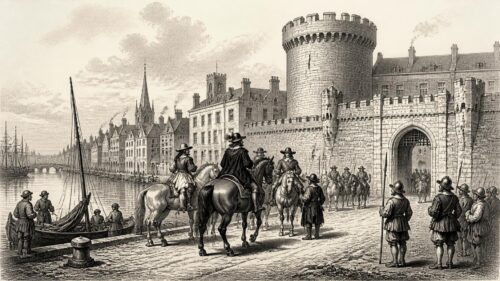
In 1633 Thomas Wentworth arrived as Charles I’s lord deputy, replacing interim rule by the lords justices and initiating a centralised Irish administration. Facing heavy debts and limited revenue, he prioritised customs, trade regulation, provincial accounts and a self-financing government, while cautiously managing Catholic and Protestant interests. He promoted allies, including Christopher Wandesford, John Bramhall and the earl of Ormond, and prepared for a future parliament. Church developments included St Columb’s Cathedral’s completion and inquiries into ecclesiastical resources. Meanwhile, the Four Masters continued preserving Gaelic history in Donegal. The year established stronger royal direction amid confessional, social and cultural divisions.
Read Article
Archived: 16 October 2026
Abstract
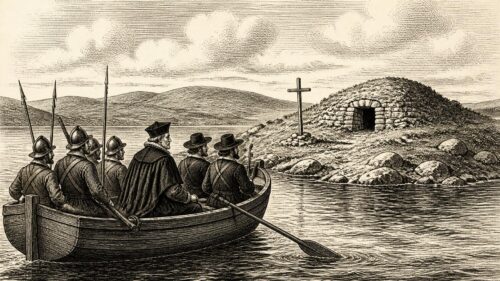
In 1632, Ireland experienced mounting political, fiscal and religious strain under Lords Justices Adam Loftus and Richard Boyle, while Charles I appointed Thomas Wentworth as future lord deputy. Government need for army revenue prompted Boyle’s proposed recusancy fines, but Loftus and Wentworth favoured negotiation, preserving fragile Catholic expectations surrounding the Graces. In October, Bishop James Spottiswood destroyed St Patrick’s Purgatory cave at Lough Derg, forcefully suppressing a major Catholic pilgrimage. Meanwhile Catholic synodical discipline, Ussher’s historical scholarship, plantations and planned towns reflected competing religious and colonial visions. The year exposed an uneasy peace, foreshadowing Wentworth’s more rigorous administration in Ireland.
Read Article

Archived: 16 October 2026
Abstract
In 1630, Ireland experienced contested government, religion and cultural memory rather than a single decisive event. Lords Justices Adam Loftus and Richard Boyle governed after Falkland’s departure, amid rivalries, plantation ambitions and uncertainty over Catholic concessions. Authorities suppressed visible Catholic houses in Dublin, although household networks sustained recusant worship. Malachy Ó Queely’s appointment as Tuam archbishop demonstrated continuing Catholic organisation. On 19 April, Franciscan scholar Mícheál Ó Cléirigh completed the Martyrology of Donegal, preserving Irish sacred learning and helping establish collaboration later associated with the Four Masters. Cork’s tomb commission highlighted elite Protestant power, Catholic insecurity, and uneven state authority.
Read Article
Archived: 16 October 2026
Abstract
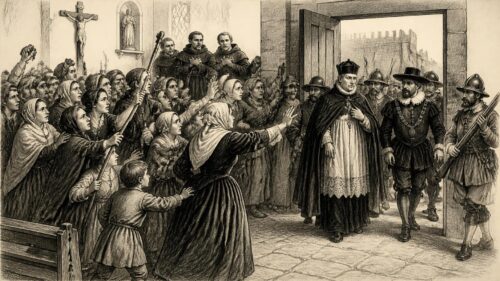
In 1629, Ireland experienced administrative change, religious tension and renewed Catholic confidence. Henry Cary’s recall left Richard Boyle and Adam Loftus as lords justices, committed to royal order and Protestant ascendancy. Despite pressure on recusancy, Dublin’s Catholic networks expanded, exemplified by Poor Clares returning from Flanders to found a convent. On St Stephen’s Day, officials led by Archbishop Lancelot Bulkeley raided the Franciscan chapel in Cook Street. Congregants, notably merchant widow Elinor Nugent and other women, rescued friars and drove raiders into hostile streets. The incident exposed Catholic urban solidarity, women’s agency, transnational links, and the limits of state coercion.
Read Article
Archived: 16 October 2026
Abstract
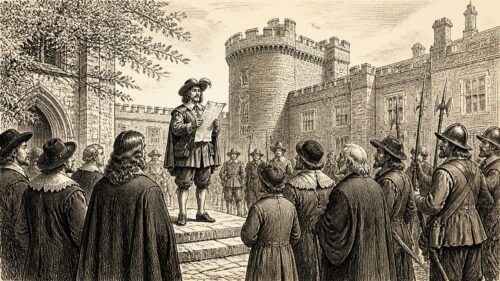
In 1628, Charles I’s government negotiated the Graces with Irish Catholic and Old English elites, exchanging reforms for £120,000 towards the army. The package sought security of land titles, limits on martial law, billeting, monopolies and administrative abuses, and relief from Catholic disabilities. Lord Deputy Falkland prepared an Irish parliament to ratify these measures, but procedural defects under Poynings’ Law caused its October deferral, leaving guarantees unconfirmed. Official proclamations revealed concern over grain supply, poverty and disorder. Catholic life gained an Irish College in Rome, while William Daniel died. The unresolved settlement deepened tensions over land, religion and Crown authority.
Read Article
Archived: 16 October 2026
Abstract
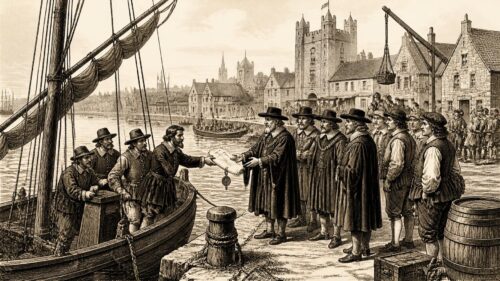
In 1626, Lord Deputy Falkland governed Ireland amid fiscal, religious and landholding tensions. Charles I restored Waterford’s charter, withdrawn after civic officers refused the oath of supremacy, enabling Catholic municipal leadership within Protestant legal constraints for an alleged £3,000. The Crown advanced plantation in Upper Ossory, reshaping contested Fitzpatrick lands. To fund 5,500 troops during war with Spain, Falkland offered proposed Graces, including land-title security, reduced recusancy penalties and officeholding opportunities for Catholics. Protestant bishops, led intellectually by James Ussher, opposed toleration. Aodh Mac Cathmhaoil became Catholic archbishop of Armagh, dying in Rome; Niall Garvach O’Donnell died imprisoned in Tower.
Read Article
Archived: 16 October 2026
Abstract
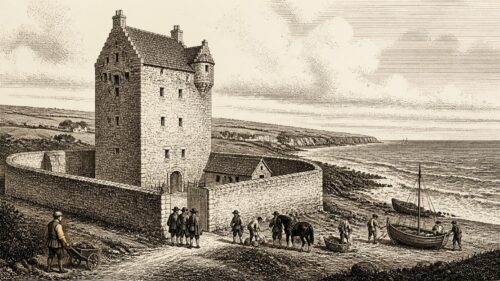
Charles I’s accession in 1625 retained Henry Cary, Viscount Falkland, as lord deputy of an Irish administration dependent on London yet weakened by faction, financial shortages and religious division. Fears of war with Spain exposed decayed coastal defences and unpaid troops; Falkland’s cess shifted military costs onto communities. James Ussher became archbishop of Armagh, strengthening the Protestant establishment despite enduring Catholic networks and no settlement on toleration. Oaths imposed on Connacht officeholders demonstrated administrative expansion. Land disputes after Robert Ponte’s killing in Wicklow illustrated plantation pressures. Ballygally Castle reflected continuing settlement in Ulster, while Moryson’s writing preserved conquest-era attitudes enduring.
Read Article

Archived: 16 October 2026
Abstract
In 1624, Lord Deputy Falkland’s government used proclamations to extend royal control over Irish religion, commerce, arms, dress and settlement, although enforcement proved uneven. A January order expelling Catholic clergy was soon suspended, revealing resilient networks sustained by patrons and continental links. Regulations on logwood, cattle markets, customs, weights and measures sought more governable trade and communities. Ulster policy balanced Protestant plantation ambitions with dependence on Irish tenants, while reforms targeted deficiencies in the Londonderry scheme. Elite succession and peerage reinforced crown connections. Ussher and Messingham mobilised Irish Christian history for Protestant and Catholic claims, amid continuing Gaelic cultural debate.
Read Article

Archived: 16 October 2026
Abstract
In 1623, Lord Deputy Viscount Falkland sought to reduce Irish administration’s costs while reinforcing royal control over revenue, land and religion. Correspondence recorded poverty and efforts to improve customs income. June orders promoted Protestant conformity through oaths, regulated school staff and action against recusants, though obedience remained uneven. Malcolm Hamilton’s consecration as Church of Ireland archbishop of Cashel demonstrated reliance on Protestant networks shaped by Ulster settlement; James Ussher’s republished scholarship supported confessional claims. In October, commissioners investigated timber waste in crown-claimed Ranelagh, linking woodland, survey, law and income. These measures reveal tensions beneath apparent peace, not a settled kingdom.
Read Article

Archived: 16 October 2026
Abstract
In 1622, James I’s Irish Commission investigated administration, revenue, courts, church provision, military costs, landholding and plantation policy during the replacement of Lord Deputy Oliver St John by Viscount Falkland. Commissioners documented Ulster’s plantation, where British settlement, construction and Protestant institutions often fell short, while Irish tenants remained important. Complaints revealed insecurity among Gaelic landholders and elites. Falkland arrived in September amid demands for economy and authority. At his inauguration, Bishop James Ussher urged enforcement against recusancy, provoking Catholic opposition and criticism within the Church of Ireland. The year exposed financial weakness, contested power, incomplete colonisation and persistent religious division.
Read Article
Archived: 16 October 2026
Abstract
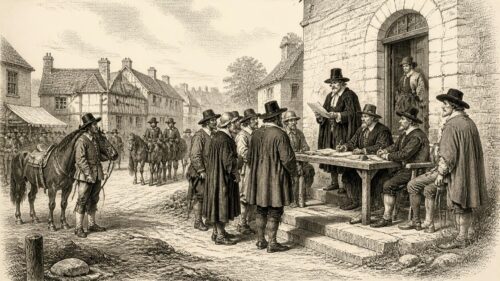
In 1621, Ireland remained unsettled despite the absence of war, as Crown policies on land, religion, revenue and loyalty generated grievances. Parliamentary criticism of Deputy Oliver St John, together with the Pale gentry’s petition, prompted investigations leading towards the Commission of 1622. Plantation patents and the Crown inquest asserting title to Upper Ossory, including Offerlane, extended ambitions beyond Ulster. Preparations to inspect the Ulster Plantation exposed doubts about settlement and administration. James Ussher’s advancement to Meath symbolised strengthened Protestant authority amid Catholicism. Galway’s detention of a privateering vessel revealed Atlantic diplomatic entanglements, while reports of starlings reflected contemporary providential anxieties.
Read Article




