
c.1690s
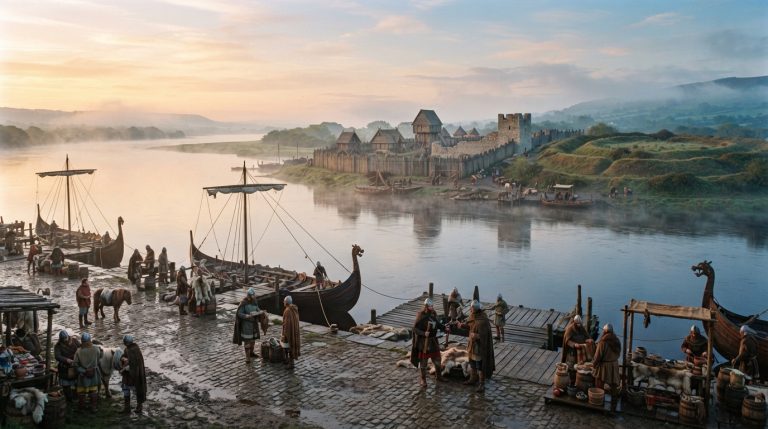
The 1690s section gathers all articles and images assigned to this period within Emerald Archives. Together, these records show how developments within Limerick interacted with political, economic, social and cultural changes across Ireland and the wider world. They reveal how public decisions, employment, transport, trade, conflict, migration, technology, religion and changing customs reached ordinary homes and communities. Some evidence records major events, while other material preserves quieter details of streets, workplaces and family life. As additional records are published and classified, this decade will expand automatically, providing a fuller picture of Limerick experience during these important years for future visitors.
1690 6 items

Boyne Defeat
For Limerick, the Battle of the Boyne was the decisive defeat that sent the Jacobite cause westward and made the Shannon frontier increasingly important. Although the battle was fought near Drogheda on 1 July 1690, its consequences reached directly towards Athlone, Galway and Limerick. The failure of James II to stop William of Orange at the Boyne meant that Limerick would soon become one of the last great centres of organised resistance in Ireland.
View Article
Royal Departure
For Limerick, the aftermath of the Boyne transformed the city from an important western stronghold into the principal gathering place of the Jacobite cause. After the defeat, James II ordered the surviving army to rendezvous there, placing Limerick at the centre of Ireland’s continuing resistance. His decision to leave the country, however, meant that the defence of the kingdom would now depend upon Tyrconnell, Sarsfield and the soldiers who remained behind.
View Article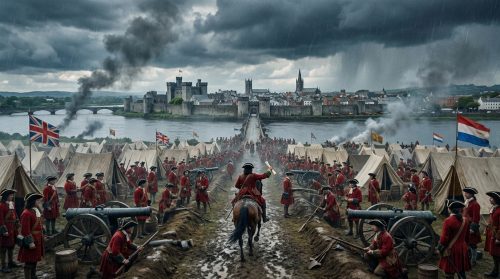
Surrender Refused
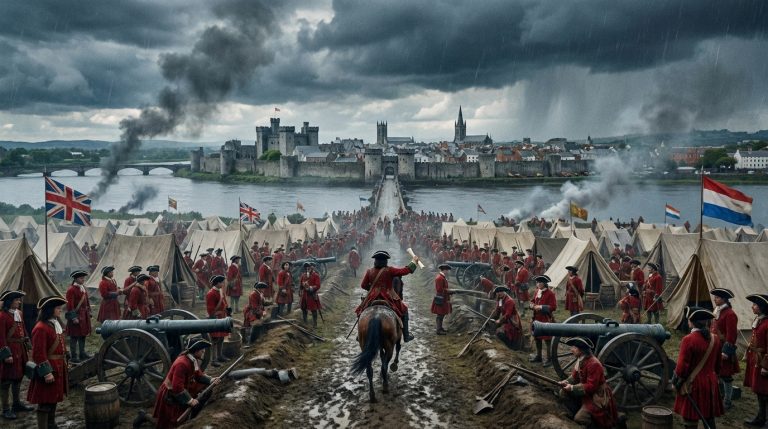
Limerick formally entered a state of siege on 9 August 1690 when William III’s army moved from its camp near Cahirconlish and established itself before the city. William sent a summons demanding surrender to Alexandre de Rainier de Droué, Marquis de Boisseleau, the French officer entrusted with commanding the Jacobite infantry within Limerick. The decision placed the city’s inhabitants, soldiers and defences at the centre of the war following the Boyne. William expected the remaining Jacobite resistance to collapse, but Limerick’s position behind the Shannon and the presence of a substantial garrison offered the defenders a final opportunity to continue the campaign.
View Article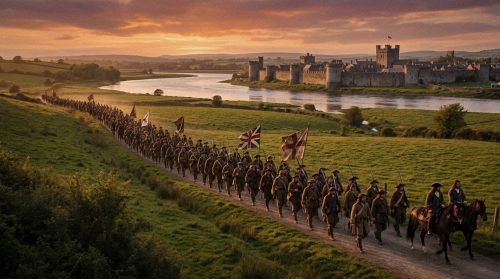
Shannon Retreat
Limerick became one of the principal centres of Jacobite resistance after William III’s victory at the Boyne on 1 July 1690 forced the Irish army to abandon the eastern approaches to Dublin. James II departed for France, but most of his surviving soldiers remained under arms and withdrew westwards towards the River Shannon. Some gathered around Athlone, which guarded an important crossing into Connacht, while the larger concentration developed around Limerick. The city’s walls, river position and access to the western counties offered the Jacobites a defensible base from which the war might continue despite the loss of Dublin.
View Article
Boyne Approaches
For Limerick, the events of 1690 marked the beginning of the campaign that would eventually drive the Jacobite army towards the Shannon and make the city central to Ireland’s resistance. The fall of Charlemont, the arrival of French troops and William of Orange’s decision to command the invasion personally transformed the war. From this point onward, every strategic mistake brought the conflict closer to Limerick’s walls.
View Article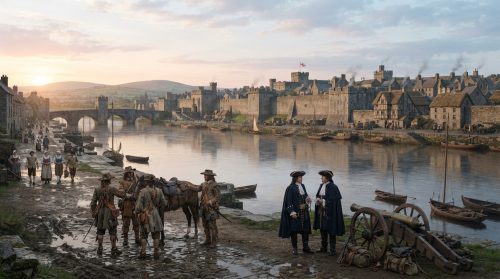
Patrick Sarsfield
Patrick Sarsfield was a late seventeenth century Irish soldier from a Munster gentry family who became the most prominent Irish cavalry commander in the Williamite War in Ireland. Born about 1655, he remained a committed Roman Catholic during an age of confessional conflict and rose by service and personal energy into command among the Irish horse. He first attracted wider notice in operations across Ulster and Connacht and then returned towards Munster where his energy and reputation made him a central figure at Limerick. Contemporaries described him as daring, practical and willing to use surprise against better equipped enemies frequently.
View Article1691 25 items

Treaty Stone
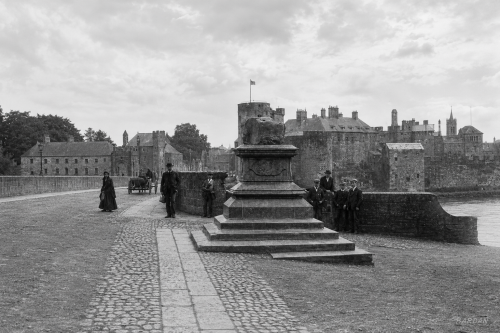
AI-assisted archival reconstruction showing the Treaty Stone on Thomond Bridge, Limerick, with the riverside castle buildings and historic bridge approach in the background. The scene presents the monument, cobbled roadway, bridge parapet, pedestrians, and horse-drawn traffic in a restored early twentieth-century setting, preserving the atmosphere of the original historical source image.
View Image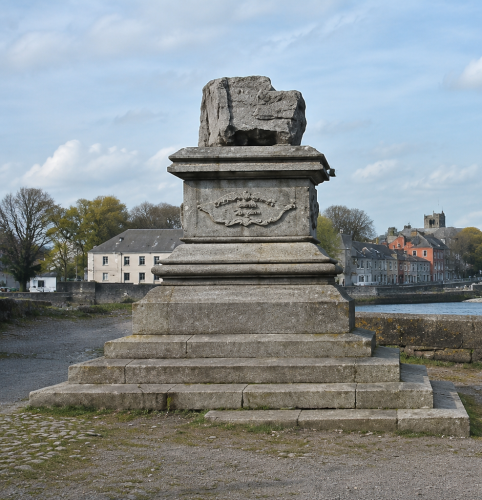
Treaty Stone
The Treaty Stone on Clancy’s Strand is traditionally believed to have served as the table upon which the Treaty of Limerick was signed on 3 October 1691. Concluded after the Siege of Limerick, the agreement ended the Williamite War in Ireland. Its military articles permitted Patrick Sarsfield’s Jacobite army to depart for France in the Flight of the Wild Geese, while the civil articles promised protections for Catholics. These promises were later undermined by the Penal Laws. Originally a mounting block outside the Black Bull Inn, the stone was placed on its decorated pedestal by Mayor John Rickard Tinslay in 1865.
View Image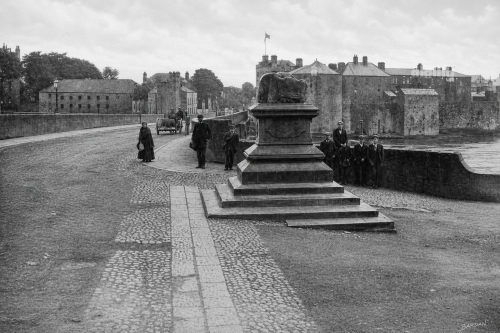
Treaty Stone
AI-assisted archival reconstruction showing the Treaty Stone on Thomond Bridge, Limerick, with the riverside castle buildings and historic bridge approach in the background. The scene presents the monument, cobbled roadway, bridge parapet, pedestrians, and horse-drawn traffic in a restored early twentieth-century setting, preserving the atmosphere of the original historical source image.
View Image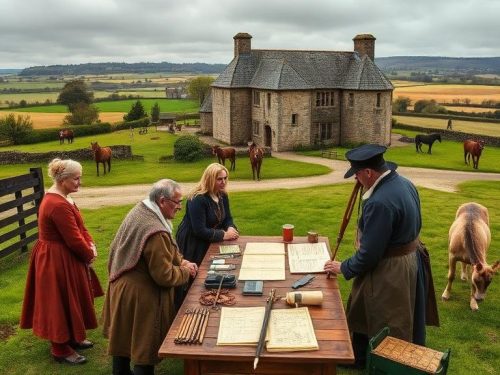
Land Restrictions
Limerick’s Catholic landholders emerged from the 1691 settlement expecting that qualifying families would retain their estates, inheritances and lawful interests. Yet subsequent legislation steadily restricted how Catholics could purchase, inherit, lease or preserve property. These measures mattered greatly in Limerick city and county, where land supported family wealth, commercial credit, social standing and political influence. A household might remain physically secure while its legal capacity to build an estate was deliberately weakened. Property law therefore became one of the principal instruments through which the post-treaty order reshaped Catholic life, transferring opportunity toward those prepared to conform to the established church.
View Article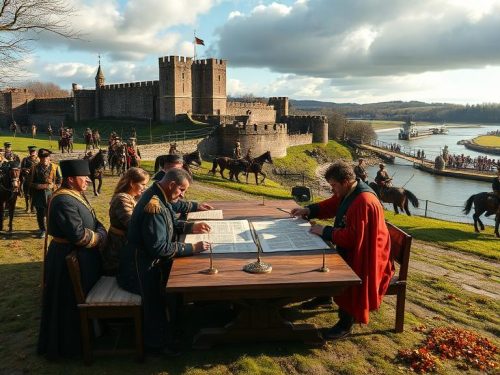
Broken Treaty
Limerick stood at the centre of Ireland’s postwar settlement when the city surrendered on 3 October 1691. Its defenders accepted civil and military articles promising religious protection, property security, pardons and continued access to trades and professions. Those terms covered inhabitants and residents of Limerick, soldiers serving King James, and qualifying people across several western counties. The agreement ended resistance at a moment when the garrison remained strong and French assistance was approaching. For Catholic families in Limerick, surrender was therefore not unconditional defeat. It was a negotiated exchange, based upon solemn assurances that peace would preserve rights already possessed.
View Article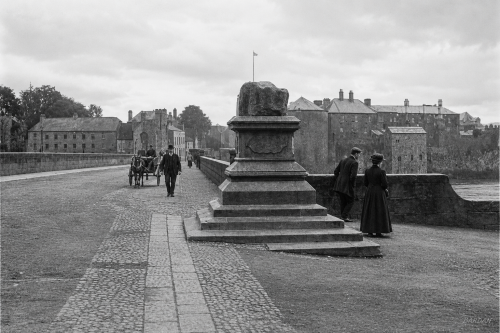
Treaty Stone
AI-assisted archival reconstruction showing the Treaty Stone on Thomond Bridge, Limerick, with the riverside castle buildings and historic bridge approach in the background. The scene presents the monument, cobbled roadway, bridge parapet, pedestrians, and horse-drawn traffic in a restored early twentieth-century setting, preserving the atmosphere of the original historical source image.
View Image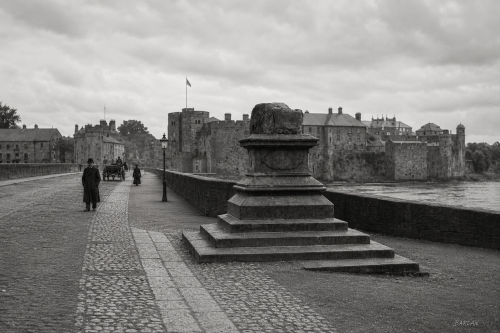
Treaty Stone
AI-assisted archival reconstruction showing the Treaty Stone on Thomond Bridge, Limerick, with the riverside castle buildings and historic bridge approach in the background. The scene presents the monument, cobbled roadway, bridge parapet, pedestrians, and horse-drawn traffic in a restored early twentieth-century setting, preserving the atmosphere of the original historical source image.
View Image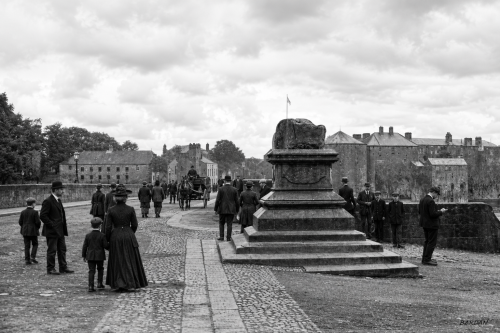
Treaty Stone
AI-assisted archival reconstruction showing the Treaty Stone on Thomond Bridge, Limerick, with the riverside castle buildings and historic bridge approach in the background. The scene presents the monument, cobbled roadway, bridge parapet, pedestrians, and horse-drawn traffic in a restored early twentieth-century setting, preserving the atmosphere of the original historical source image.
View Image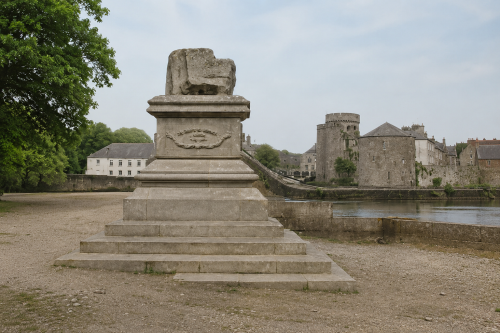
Treaty Stone
The Treaty Stone on Clancy’s Strand is traditionally believed to have served as the table upon which the Treaty of Limerick was signed on 3 October 1691. Concluded after the Siege of Limerick, the agreement ended the Williamite War in Ireland. Its military articles permitted Patrick Sarsfield’s Jacobite army to depart for France in the Flight of the Wild Geese, while the civil articles promised protections for Catholics. These promises were later undermined by the Penal Laws. Originally a mounting block outside the Black Bull Inn, the stone was placed on its decorated pedestal by Mayor John Rickard Tinslay in 1865.
View Image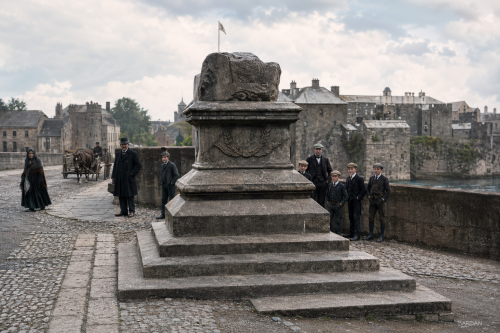
Treaty Stone
AI-assisted archival reconstruction showing the Treaty Stone on Thomond Bridge, Limerick, with the riverside castle buildings and historic bridge approach in the background. The scene presents the monument, cobbled roadway, bridge parapet, pedestrians, and horse-drawn traffic in a restored early twentieth-century setting, preserving the atmosphere of the original historical source image.
View Image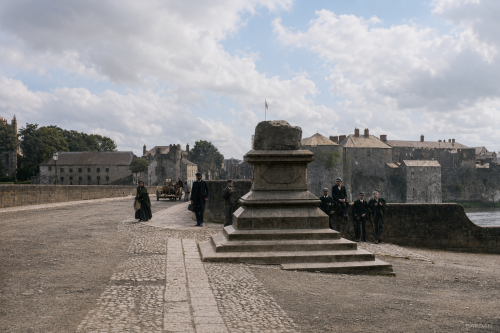
Treaty Stone
AI-assisted archival reconstruction showing the Treaty Stone on Thomond Bridge, Limerick, with the riverside castle buildings and historic bridge approach in the background. The scene presents the monument, cobbled roadway, bridge parapet, pedestrians, and horse-drawn traffic in a restored early twentieth-century setting, preserving the atmosphere of the original historical source image.
View Image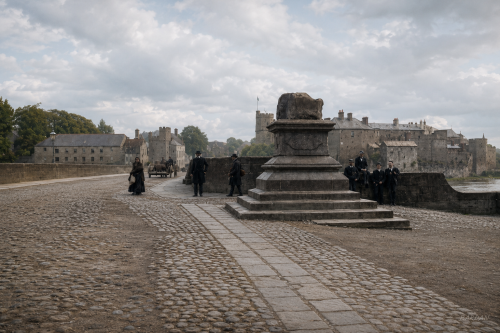
Treaty Stone
AI-assisted archival reconstruction showing the Treaty Stone on Thomond Bridge, Limerick, with the riverside castle buildings and historic bridge approach in the background. The scene presents the monument, cobbled roadway, bridge parapet, pedestrians, and horse-drawn traffic in a restored early twentieth-century setting, preserving the atmosphere of the original historical source image.
View Image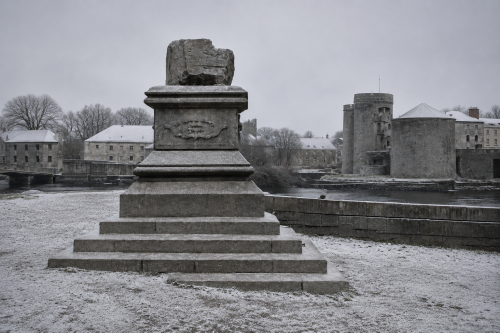
Treaty Stone
The Treaty Stone on Clancy’s Strand is traditionally believed to have served as the table upon which the Treaty of Limerick was signed on 3 October 1691. Concluded after the Siege of Limerick, the agreement ended the Williamite War in Ireland. Its military articles permitted Patrick Sarsfield’s Jacobite army to depart for France in the Flight of the Wild Geese, while the civil articles promised protections for Catholics. These promises were later undermined by the Penal Laws. Originally a mounting block outside the Black Bull Inn, the stone was placed on its decorated pedestal by Mayor John Rickard Tinslay in 1865.
View Image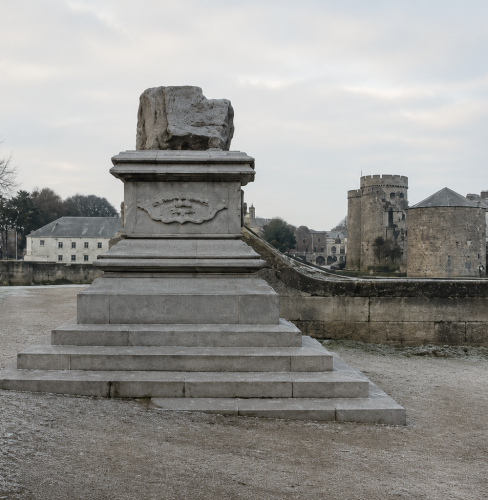
Treaty Stone
The Treaty Stone on Clancy’s Strand is traditionally believed to have served as the table upon which the Treaty of Limerick was signed on 3 October 1691. Concluded after the Siege of Limerick, the agreement ended the Williamite War in Ireland. Its military articles permitted Patrick Sarsfield’s Jacobite army to depart for France in the Flight of the Wild Geese, while the civil articles promised protections for Catholics. These promises were later undermined by the Penal Laws. Originally a mounting block outside the Black Bull Inn, the stone was placed on its decorated pedestal by Mayor John Rickard Tinslay in 1865.
View Image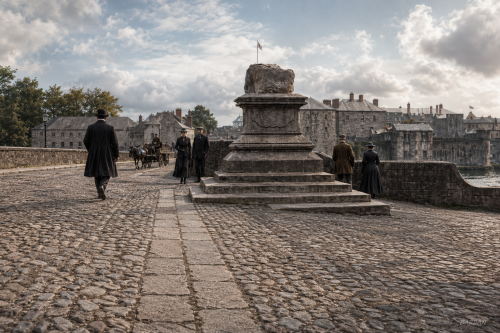
Treaty Stone
AI-assisted archival reconstruction showing the Treaty Stone on Thomond Bridge, Limerick, with the riverside castle buildings and historic bridge approach in the background. The scene presents the monument, cobbled roadway, bridge parapet, pedestrians, and horse-drawn traffic in a restored early twentieth-century setting, preserving the atmosphere of the original historical source image.
View Image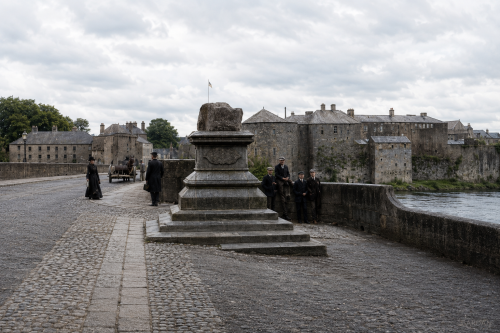
Treaty Stone
AI-assisted archival reconstruction showing the Treaty Stone on Thomond Bridge, Limerick, with the riverside castle buildings and historic bridge approach in the background. The scene presents the monument, cobbled roadway, bridge parapet, pedestrians, and horse-drawn traffic in a restored early twentieth-century setting, preserving the atmosphere of the original historical source image.
View Image1692 0 items
No published items are currently assigned to this period.
1693 0 items
No published items are currently assigned to this period.
1694 0 items
No published items are currently assigned to this period.
1695 0 items
No published items are currently assigned to this period.
1696 0 items
No published items are currently assigned to this period.
1697 0 items
No published items are currently assigned to this period.
1698 1 item

Banished Clergy
Limerick’s treaty promised Catholic residents protection in the exercise of their religion, but worship depended upon clergy who could celebrate Mass, administer sacraments and organise parish life. In 1697 Parliament enacted a law banishing Catholic archbishops, bishops, vicars-general, deans, Jesuits, monks, friars and other regular clergy from Ireland. They were ordered to leave before May 1698 through designated ports. For Catholics in Limerick city and county, this threatened the practical survival of the faith whose security had influenced surrender. A legal promise concerning religion meant little if the people authorised to sustain that religion were imprisoned, transported or driven underground.
View Article1699 0 items
No published items are currently assigned to this period.