
Archived: 10 October 2026
Abstract
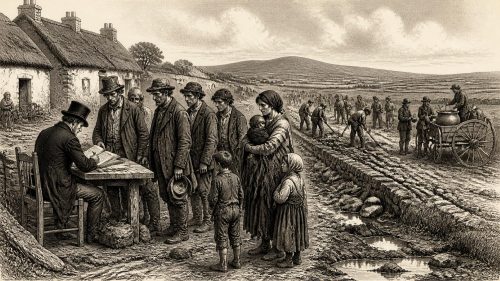
In 1851, Ireland’s census recorded 6,552,385 inhabitants, a decline of 1,659,330 since 1841, exposing famine mortality, disease, eviction and emigration while imperfectly distinguishing deaths from departures. Losses were greatest in western and southern potato-dependent districts, accelerating the disappearance of poor cabins and weakening Irish-speaking communities. Emigration remained immense, reshaping families and local economies. Estate sales under the Encumbered Estates Act, limited tenant-improvement legislation and Tenant Right agitation intensified land questions. The Medical Charities Act expanded dispensary provision. John Henry Newman’s appointment advanced plans for a Catholic university. Meanwhile, Ulster linen exhibitors at the Great Exhibition displayed industrial strength amid devastation.
Read Article
Archived: 10 October 2026
Abstract
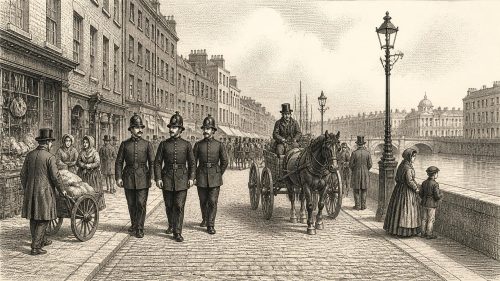
In 1846, a second, devastating potato blight transformed Ireland’s food crisis into catastrophe, destroying the staple relied upon by labourers, cottiers and smallholders. Although food continued to be produced and imported, poverty and rising prices denied many access. After Peel resigned, Russell’s government prioritised market supply and paid public works over direct food provision. The Labour Rate Act rapidly expanded employment schemes, but delayed wages, harsh outdoor labour, local debt and administrative failures deepened suffering and disease. Political division split the Repeal movement, while local and Quaker relief networks emerged. By winter, conditions had laid the foundations for Black ’47.
Read Article
Archived: 11 October 2026
Abstract
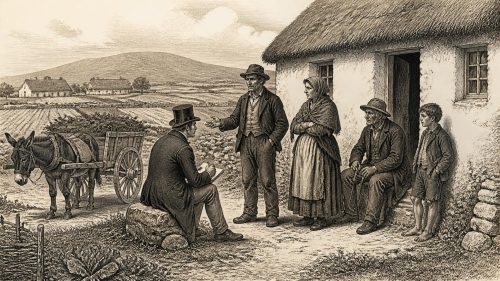
In 1836, Ireland experienced contested administrative reform rather than a decisive settlement. Westminster strengthened policing through the Constabulary and Dublin Police Acts, while licensing rules extended supervision of public houses. Tithe arrears remained unresolved: the Tithe Compositions Act merely suspended recovery proceedings, and church reforms scrutinised ecclesiastical revenues. O’Connell’s Catholic organisation demonstrated popular political strength despite a narrow franchise, notably in Longford. Municipal reform largely stalled. The Poor Inquiry documented severe, varied poverty but produced no agreed remedy; poor law followed in 1838. Crop failures heightened anxiety, while banks, newspapers and Mount Jerome cemetery reflected emerging institutional and urban change.
Read Article
Archived: 11 October 2026
Abstract
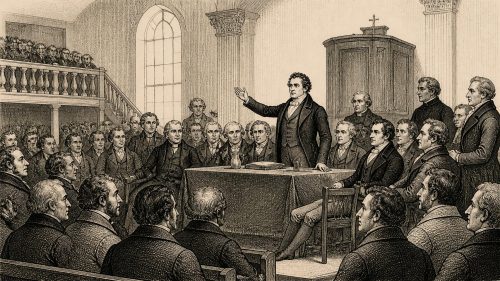
In 1833, Irish government combined coercion, church reform and social investigation amid unrest and poverty. The Suppression of Disturbances Act expanded powers over meetings, movement and suspected rural disorder, constraining constitutional mobilisation associated with Daniel O’Connell. Tithe resistance persisted despite legislation adjusting arrangements, while the Church Temporalities Act abolished levies, reorganised bishoprics and revenues, but preserved Protestant establishment and endowments. O’Connell continued to advocate repeal, tithe reform and redress. In September, Archbishop Richard Whately began a Royal Commission examining poorer classes, inaugurating systematic inquiry into labour, land, charity and deprivation. The year left Ireland’s religious, political and economic crises unresolved.
Read Article
Archived: 11 October 2026
Abstract
In 1823 Daniel O’Connell and fellow Catholic leaders founded the Catholic Association at Townsend Street Chapel, Dublin, creating a constitutional organisation to pursue emancipation through petitions, publicity and meetings. Initially limited to wealthier subscribers, it preceded the mass Catholic Rent of 1824. Its campaign developed amid exclusion of Catholics from Parliament and office, parliamentary debates on Irish justice, and renewed coercive legislation against rural disorder. The Composition for Tithes Act replaced payments in kind with monetary assessments but preserved an unpopular burden supporting the established church. Population pressure, poverty and potato-crop failure intensified grievances, making the Association’s political framework significant.
Read Article

Archived: 11 October 2026
Abstract
In 1819, Ireland faced continuing fever, hunger and unemployment after the post-war downturn and bad seasons. Sir John Newport’s Commons committee investigated contagious disease and labouring poverty, linking epidemic conditions to destitution while favouring regulated charity, fever hospitals and work over an Irish poor law. The Fisheries Act sought employment and food through managed fisheries, but offered limited immediate relief. Henry Grattan’s Catholic emancipation motion narrowly failed, confirming enduring political exclusion. John Devereux recruited an Irish Legion for Bolívar’s cause, though recruits suffered overseas. Belfast founded the Irish Harp Society, while Ribbonism reflected rural tension. The year exposed persistent insecurity.
Read Article
Archived: 11 October 2026
Abstract
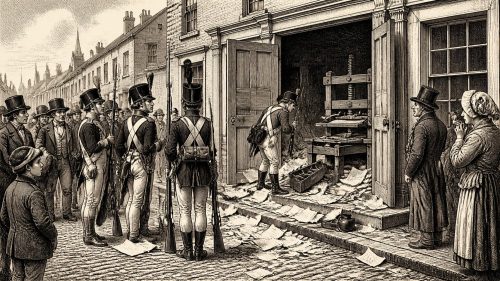
In 1797, Ireland faced mounting tension between the clandestine United Irishmen and a government anticipating rebellion and French invasion. General Gerard Lake’s Ulster disarmament campaign seized weapons, intimidated communities and weakened northern radical networks. After Monaghan militiamen implicated in United Irish activity were executed at Blaris, fellow soldiers destroyed Belfast’s Northern Star, silencing a major radical newspaper. Arrests also disrupted Cork organisers, while calls for constitutional conciliation gained little ground. William Orr’s contested conviction and hanging made him a powerful martyr. Meanwhile, parliamentary limitations and bank restrictions exposed wider political and economic insecurity, foreshadowing the 1798 rebellion in Ireland itself.
Read Article
Archived: 13 October 2026
Abstract
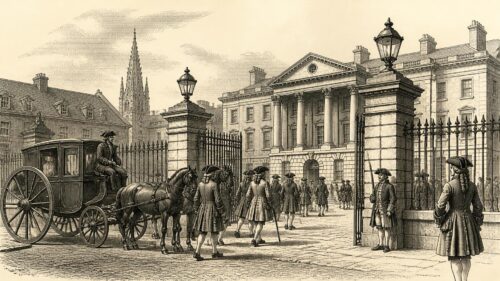
In 1716, Ireland’s Hanoverian administration responded to the Jacobite rising’s aftermath through security measures, religious enforcement, ceremony and legislation. Proclamations targeted Ormond, restricted Catholic enlistment, recruited soldiers, pursued alleged rural outlaws and renewed penalties against Catholic clergy. Public thanksgiving proclaimed loyalty to George I and the established church. Parliament abolished the Duke of Ormond’s palatine jurisdiction in Tipperary and vested his estates in the Crown, while later recovery remained possible for his family. It also promoted drainage, linen, commodity standards and labour dispute settlement. Church finances and appointments reinforced Protestant institutions, while Dublin’s music and print culture retained Jacobite connections.
Read Article

Archived: 14 October 2026
Abstract
In 1699, post-war Ireland remained shaped by land redistribution, Protestant security and contested trade. The Irish parliament concluded legislation imposing woollen export duties, supporting Church of Ireland clerical residences, protecting timber and regulating butter casks. Westminster's Woollen Act then barred most Irish wool and woollen exports to foreign markets, restricting a vital, widespread industry and encouraging, but not immediately replacing it with, linen. A parliamentary commission investigated Williamite forfeitures, reporting thousands attainted and over one million plantation acres affected, deepening uncertainty over titles. Anti-Catholic laws and proclamations restricted solicitors, arms and clerical jurisdiction. Dublin's print trade nevertheless demonstrated wider connections.
Read Article

Archived: 14 October 2026
Abstract
In 1686, James II’s government rapidly reshaped Ireland’s confessional political order. Lord Lieutenant Clarendon’s administration was increasingly challenged by Richard Talbot, earl of Tyrconnell, whose influence advanced Catholic participation in government and the army. Royal payments to Catholic bishops, appointments of Catholic judges and officials, and military recruitment signalled a reversal of longstanding exclusion. These changes alarmed Protestant proprietors, whose security depended on Restoration land settlements. Richard Nagle’s Coventry Letter linked Catholic political advancement to restitution of confiscated estates, intensifying fears of property redistribution. Despite revenue and commerce, uncertainty affected confidence. Swift’s Trinity degree marked the year’s life amid tensions.
Read Article
Archived: 16 October 2026
Abstract
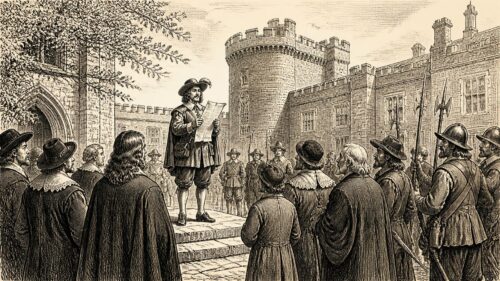
In 1628, Charles I’s government negotiated the Graces with Irish Catholic and Old English elites, exchanging reforms for £120,000 towards the army. The package sought security of land titles, limits on martial law, billeting, monopolies and administrative abuses, and relief from Catholic disabilities. Lord Deputy Falkland prepared an Irish parliament to ratify these measures, but procedural defects under Poynings’ Law caused its October deferral, leaving guarantees unconfirmed. Official proclamations revealed concern over grain supply, poverty and disorder. Catholic life gained an Irish College in Rome, while William Daniel died. The unresolved settlement deepened tensions over land, religion and Crown authority.
Read Article
Archived: 16 October 2026
Abstract
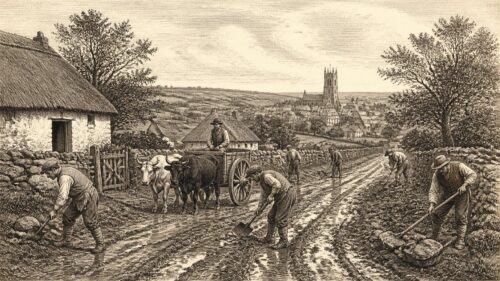
In 1614, James I’s government consolidated authority in Ireland through parliamentary management, anti-Catholic proclamations, trade regulation and parish responsibility for roads. Catholic representatives were rebuffed over the 1613 parliament’s new boroughs and religious exclusions, while priests and Jesuits faced expulsion orders. Yet Catholic organisation persisted: the Kilkenny synod reinforced Tridentine discipline and pastoral provision. Ulster Plantation reached a financial milestone when undertakers’ rents became due, accelerating changes in landholding, settlement and power. Deaths of William Bathe, Bonaventure O’Hussey and Thomas Butler, tenth earl of Ormond, highlighted transnational Catholic culture, Gaelic learning and the importance of aristocratic inheritance amid deepening divisions.
Read Article
Archived: 17 October 2026
Abstract
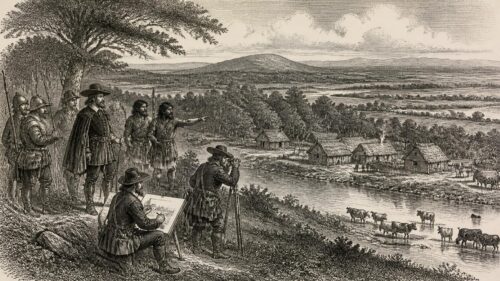
In 1609, following the Flight of the Earls and O’Doherty’s rising, James I’s government surveyed six Ulster counties to prepare their plantation. Sir Josias Bodley’s commissioners recorded townlands, resources, church lands and strategic sites, converting Gaelic territories into proposed estates. The scheme favoured English and Scottish undertakers, servitors and selected Irish proprietors, linking Protestant settlement, fortified building, common law and economic development to security. Most settlers and plantation towns arrived later, while native inhabitants remained but faced mounting insecurity. London was courted for north-western colonisation, Scottish migration encouraged, and soldiers removed. Kilkenny received a city charter, diocesan cathedrals gained status.
Read Article
Archived: 17 October 2026
Abstract
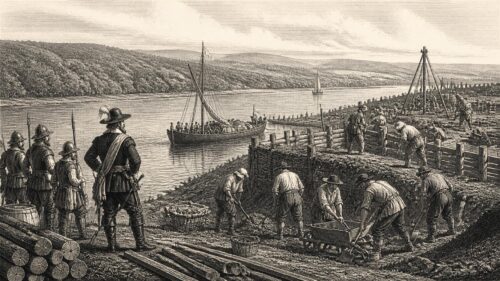
In 1600, the Nine Years’ War shifted strategically without decisive resolution. Lord Mountjoy and Sir George Carew restored English military organisation and recovered much of Munster through garrisons, raiding and coercion, while Ormond’s capture exposed continuing instability. Hugh O’Neill’s southern expedition demonstrated confederate reach but cost him Hugh Maguire and intensified internal disputes. Sir Henry Docwra’s landing at Lough Foyle created a vulnerable but enduring northern bridgehead, strengthened by Niall Garbh O’Donnell’s defection. At Moyry Pass, O’Neill blocked Mountjoy’s advance into Ulster. By year’s end, pressure on the confederacy had grown, making Spanish intervention at Kinsale increasingly urgent in 1601.
Read Article
Archived: 18 October 2026
Abstract
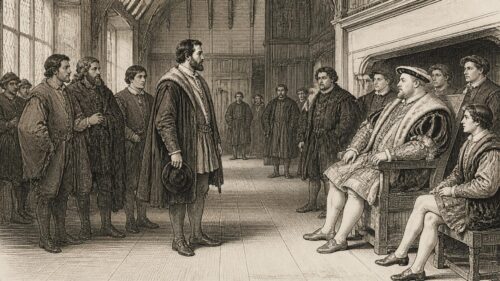
In 1542, Henry VIII’s Irish monarchy relied on negotiated submission rather than direct control. Conn Bacach O’Neill travelled to Greenwich, renounced his Gaelic title’s authority, and became earl of Tyrone; Matthew O’Neill’s recognition as heir intensified succession conflict. Parliament met at Limerick, while Murchadh O’Brien, Ulick Burke and the earl of Desmond engaged with royal policy, though promised earldoms for O’Brien and Burke followed in 1543. Campaigns and alliances demonstrated limited royal reach. Religious change included friary suppression, marriage legislation, and a Jesuit mission, yet Gaelic learning and worship endured. The kingdom remained diverse, contested, and dependent on local lordships.
Read Article
Archived: 18 October 2026
Abstract
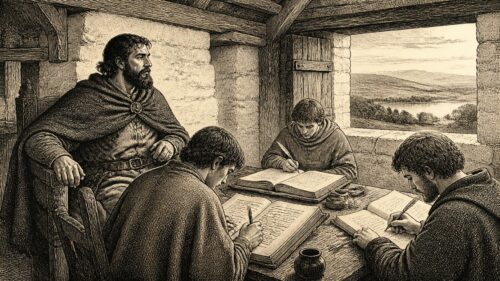
In 1532 Gerald FitzGerald, ninth earl of Kildare, regained the deputyship, yet royal authority remained dependent on alliances with Anglo-Irish and Gaelic lords. Campaigning in Ulster, disputed in date between 1531 and 1532, devastated Tír Eógain through burning, plunder and cattle seizure. In Ely, Kildare supported his son-in-law Ferganainm Ó Carroll during the Birr succession struggle, where he was seriously wounded by gunfire. Feuds continued across Ossory, Connacht and the north-west, occasionally violating sanctuary. Amid violence, Manus Ó Domhnaill compiled Betha Colaim Chille at Lifford, affirming Catholic learning, Irish vernacular culture, dynastic prestige and Colum Cille’s regional importance, lasting significance.
Read Article
Archived: 18 October 2026
Abstract
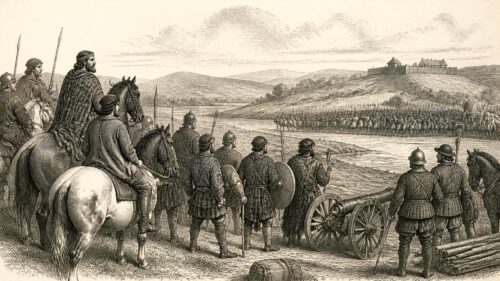
In 1531, Sir William Skeffington’s government, supported by the earl of Kildare and Aodh Dubh O’Donnell, campaigned in Tír Eoghain against Conn Bacach O’Neill after O’Donnell’s submission at Drogheda. The coalition devastated territory and halted at Kinard, but failed to secure O’Neill’s defeat or lasting royal control. Ulster remained divided: O’Donnell faced conflict with his son Manus, while lordship disputes, raids, captivity and fosterage shaped local power. Skeffington’s authority also weakened as relations with Kildare deteriorated and parliament rejected a subsidy. Annalistic obituaries nevertheless record medical learning, hospitality and patronage, underscoring a society sustained by networks of care alongside warfare.
Read Article
Archived: 18 October 2026
Abstract
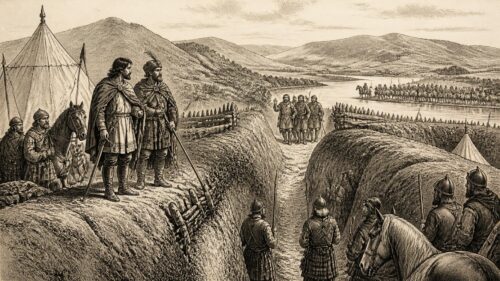
In 1524, severe weather and cattle losses heightened insecurity across Ireland, where raiding, dynastic conflict and magnate rivalry shaped political life. Henry VIII restored Gerald FitzGerald, ninth earl of Kildare, as lord deputy, ending Piers Butler’s tenure but not their feud. Allied with Conn Bacach O’Neill, Kildare campaigned in Tír Chonaill against Aodh Dubh O’Donnell. After night fighting, negotiation produced a peace guaranteed by Kildare and reinforced by spiritual kinship. Violence nevertheless continued in Ulster, Breifne and Munster. Annalistic obituaries stressed hospitality, patronage and charity as essential marks of lordship, while warfare’s costs fell upon rural communities throughout the island.
Read Article
Archived: 18 October 2026
Abstract
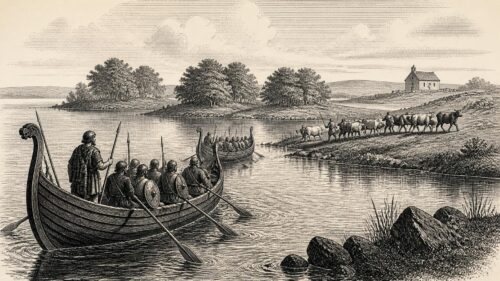
Annals for 1515 depict a politically fragmented Ireland shaped by cattle raiding, dynastic rivalry, fortified lordships and ecclesiastical life. Aodh Dubh Ó Domhnaill raided MacDermot territory, suffered a wound, and attacked Maguire lands by fleet on Lough Erne; Art Óg Ó Néill exploited his weakness in Clandeboye and campaigned in Oriel. On 25 November, Domnall Ó Domhnaill, tánaiste of Tír Chonaill, was fatally wounded by a kinsman, intensifying succession tensions. Desmond relatives contested castles in Munster, while bishops and clerics died or faced violence. Kildare retained royal favour, whereas Ormond’s death without a male heir sharpened future political rivalry thereafter.
Read Article

Archived: 19 October 2026
Abstract
In 1513, Ireland experienced interconnected struggles over lordship, succession and regional power. Gearóid Mór FitzGerald’s death weakened his extensive political system, although his son Gerald succeeded as earl and deputy governor. In Tír Eógain, Art Óg O’Neill secured inauguration with local and Kildare support amid contested succession. Aodh Dubh O’Donnell besieged Sligo, influenced control of Dunluce and visited James IV of Scotland before Flodden ended Scottish royal intervention. Raiding, burning and maritime violence affected coastal and rural communities. Meanwhile, Franciscan scholarship, ecclesiastical deaths and aristocratic patronage demonstrated enduring religious, learned and charitable networks across a politically fragmented yet connected Ireland.
Read Article

Archived: 19 October 2026
Abstract
In 1497, Ireland remained divided among competing Gaelic and Anglo-Irish lordships despite Henry VII’s nominal authority and Kildare’s Dublin administration. Perkin Warbeck briefly landed at Cork but gained no support before departing for Cornwall. In the south-east, Piers Ruadh Butler killed Sir James Ormond, strengthening his territorial position. Conn Ó Domhnaill succeeded in Tír Chonaill in May, yet succession conflict, defeat and invasion brought his death in October. Local peace-making and raiding continued elsewhere. A severe island-wide famine caused hunger, mortality and extraordinary food prices for communities. Religious developments included regulation of Lough Derg pilgrimage and Franciscan reform at Carrickfergus.
Read Article
Archived: 19 October 2026
Abstract
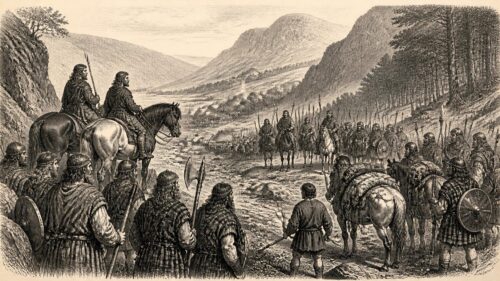
In 1493, Conn Ó Néill’s treacherous killing by his brother Henry Óg triggered a contested succession in Tír Eóghain. Backed respectively by Ó Domhnaill and by Uí Chatháin and Uí Mhealláin, Domhnall Clárach and Henry Óg fought at Glasdromainn, where Henry prevailed, though instability continued. Ó Domhnaill’s later Ulster hosting ravaged territories but won no settlement. Across Ireland, killings, raids, burnings and changes of lordship affected Leinster, Offaly, Breifne and Connacht. Gerald FitzGerald, earl of Kildare, visited Henry VII amid political scrutiny. Annals also recorded deaths of clerics, poets and aristocratic women, revealing cultural ties and piety during the year.
Read Article
Archived: 19 October 2026
Abstract
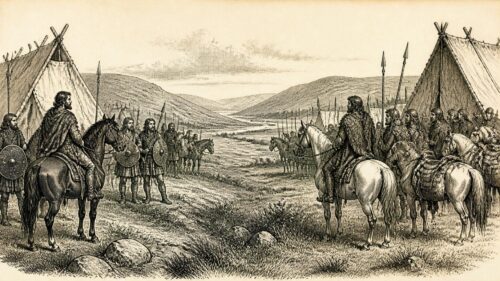
In 1490, Ireland’s fragmented political order was shaped by local warfare, disputed succession and negotiated authority. Feidhlimidh Fionn Ó Conchobhair Ruadh defeated rival kinsmen near Croghan before dying, prompting Ruaidhrí’s election and further instability in Connacht. Raids, cattle seizures and crop destruction burdened communities. In Ulster, Ó Néill factions fought over castles, Aodh Óg Ó Domhnaill seized Ballyshannon, and Conn Ó Néill and Aodh Ruadh Ó Domhnaill maintained an armed stalemate. Henry VII summoned Kildare, whose indispensability reflected Dublin’s limited reach. Papal appointments, learned deaths, maritime links and a cautiously reported earthquake reveal an interconnected, unsettled society across the island.
Read Article
Archived: 19 October 2026
Abstract
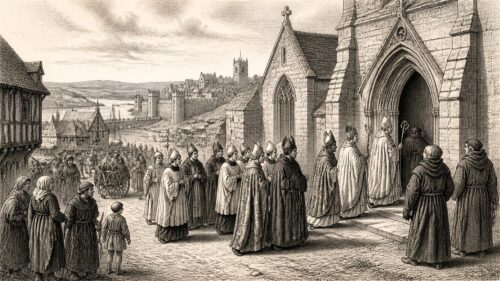
In 1486 Ireland remained politically fragmented, with Kildare dominating the English lordship around Dublin while Gaelic and Anglo-Irish powers contested local authority. Ulster saw raids, killings, captures and burnings among Maguire, MacMahon, Ó Néill and allied groups, including the capture of a castle at Belfast. Connacht experienced disputed kingship, lordship successions and a significant battle involving Aodh Ruadh Ó Domhnaill and Mac William. Archbishop Octavian de Palatio convened a northern synod at Drogheda, while Roland FitzEustace founded an Observant Franciscan friary near Kilcullen. Abundant apples contrasted with severe salt scarcity and high horse prices, linking conflict, markets and everyday life.
Read Article
Archived: 19 October 2026
Abstract
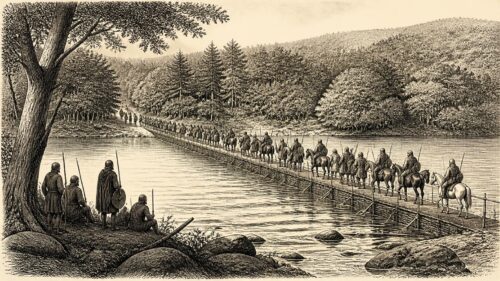
In 1483, Conn O’Neill was released from captivity, inaugurated lord of Tír Eógain, and entered a major conflict with Aodh Ruadh O’Donnell. O’Donnell’s coalition, including Clandeboye forces, raided the Dundalk district, burned Traghbhaile and Baile-Lugh-mhaigh, defeated Kildare’s pursuing army, and exacted protection payments. Returning through Tír Eógain, it cleared woodland and built a wicker bridge across the Abhann Mór, escaping pursuit. Other conflicts occurred across Ireland, while bishops and learned hereditary officials died or succeeded. English dynastic change brought Richard III’s accession, but Kildare remained deputy. The annals depict interconnected lordships, warfare, landscape, church institutions, learning, and local livelihoods alike.
Read Article
Archived: 19 October 2026
Abstract
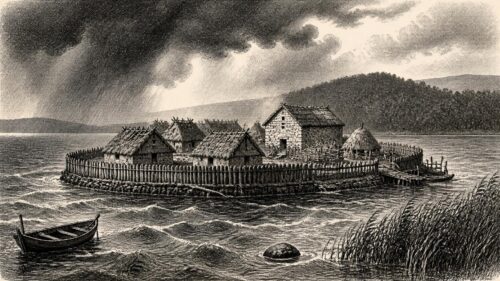
In 1477, annals depict Ireland as a patchwork of contested lordships, where kinship, land, ecclesiastical institutions and armed followings shaped power. In Tír Chonaill, Aodh Ruadh O’Donnell fought Neachtan O’Donnell’s sons, while Énrí O’Neill, supporting the rivals, devastated and burned Tírhugh. Fermanagh saw several Maguire deaths, alongside passing learned erenagh Matthew Ua Luinín and Ailbhe Maguire’s monastic association. Cormac Mac Carthaigh’s capture helped spread war across Munster; other dynastic killings occurred in Connacht and Leinster. A great wind damaged buildings, crannógs and stored produce nationwide. Kildare’s accession belongs to 1478, not 1477, according to contemporary annalistic and modern scholarly evidence.
Read Article
Archived: 20 October 2026
Abstract
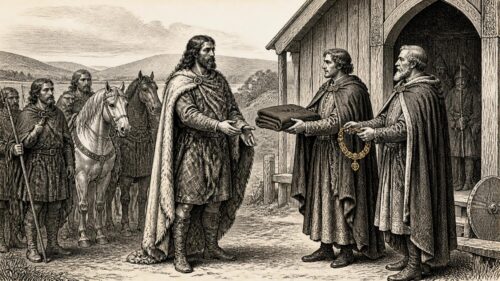
In 1463, Ireland’s political geography was not governed from a single centre. The lordship claimed by Edward IV had institutions, courts, ports and mints, but its effective reach was uneven. Beyond and across the English-controlled districts, Gaelic and Gaelicised dynasties exercised authority through kinship, clientship, tribute, military followings and negotiated alliances. The year’s surviving records are especially rich in such local dealings. They do not describe one national crisis; rather, they reveal an island linked by gifts, cattle-raids, ransoms, church offices, coinage and the movement of armed men.Most events below come from annals compiled within learned Irish traditions. Annalists normally
Read Article

Archived: 20 October 2026
Abstract
In 1461 Ireland experienced famine, warfare and contested lordship rather than a unified national event. At Ceann Maghair, Aodh Ruadh Ó Domhnaill, aided by the Mac Suibhnes of Fanad, defeated and mutilated Toirdhealbhach Cairbreach Ó Domhnaill, securing recognition as ruler of Tír Chonaill. Connacht saw deaths, captures, ransoms and inauguration rituals amid Ó Conchobair rivalries. Raids devastated districts across the Midlands, Meath and Connacht, worsening the recorded nationwide dearth. Annals also commemorated poets, scholars and clergy, revealing learned and ecclesiastical networks dependent on patronage. English dynastic upheaval brought Edward IV's accession and weakened Butler connection through Ormond's execution and attainder.
Read Article
Archived: 20 October 2026
Abstract
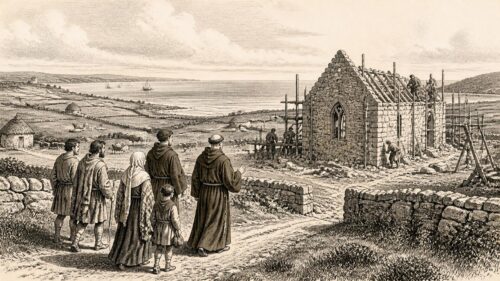
In 1460, Richard of York’s Drogheda parliament affirmed his lieutenancy and declared that Ireland was governed by laws accepted in its own parliament, while regulating defence, finance and local administration. Conflict exposed fragile frontiers: Conn O’Conor Faly defeated lordship forces, and English troops killed John O’Reilly of East Breifne, prompting Cathal O’Reilly’s succession. Captivity and maritime warfare further shaped regional politics. Franciscan patronage and Observant reform expanded through Moyne, Sherkin and Enniscorthy, although foundation dates remain uncertain. The killing of Killaloe’s bishop showed clerical vulnerability. Overall, the year revealed overlapping jurisdictions, military households, contested lordship power and resilient religious networks.
Read Article

Archived: 20 October 2026
Abstract
In 1443, Muirchertach Ó Cellaigh briefly captured Athlone Castle, a key Shannon crossing, before James Dillon and William Boy Dillon recovered it; William Boy was killed, while Muirchertach received safe conduct. The episode illustrated contested authority and negotiated frontier politics. Annals also record deaths, feuds, raids, restitution and killings among Irish lordships, notably in Oriel, Ulster, Connacht, Ossory and the midlands. Aengus Mac Gilla-Fhinnein, abbot of Lisgoole, died on 17 September. Legal scholars Gilla na Naem Mac Aodhagáin and Hugh Mac Aodhagáin were commemorated. Differing annalistic dates complicate events in Thomond, showing Ireland's connected institutions amid persistent conflict and rivalry.
Read Article

