Archived: 23 October 2026
Abstract
In 1332, Ireland’s lordship faced acute political and social strain. Sir William de Bermingham was executed in Dublin after politically charged conspiracy proceedings, while his son Walter was released. Thomond forces destroyed Bunratty Castle, whereas Anthony de Lucy recovered and garrisoned Arklow. Hostages seized castles at Limerick and Nenagh, exposing fragile authority; civic action restored Limerick. Raids, rivalries and warfare affected Munster, Leinster, Connacht and Ulster. Disease and exceptionally expensive wheat compounded hardship after famine. Edward III’s planned expedition was abandoned for Scotland, weakening government and leading to Lucy’s replacement by John Darcy. Richard FitzRalph’s Oxford chancellorship illustrated Irish connections.
Read Article

Archived: 24 October 2026
Abstract
In 1313, Thomond faced a contested O’Brien succession after Diarmait Cléirech Ó Briain died and was buried in the Franciscan habit at Ennis. Donnchad Ó Briain asserted his claim through destructive campaigns in Uaithne and Ara, while Muirchertach Ó Briain entered from Connacht, defeated his rivals and ravaged the Limerick district. Their conflict ended in a territorial partition, though warfare resumed in 1314. Regional struggles involved O’Brien factions, Mac Conmaras and Anglo-Irish magnates, notably Richard de Clare and the de Burghs. In Dublin, acting justiciar Edmund Butler held a feast and knighted thirty men, asserting royal authority amid political instability.
Read Article

Archived: 24 October 2026
Abstract
In 1299, Ireland saw dispersed developments rather than a single national event. Theobald Butler died childless at Turvey, passing his office and lands to Edmund. John Wogan’s government relied on Richard de Burgh as deputy justiciar during his Scottish absence, following settlement of magnate conflict. Edward I protected the Curragh’s pasture by banning swine. In Annaly, Sefraid Ó Fearghail killed Meath knight Seoán de la Mare during a livestock pursuit, illustrating frontier tensions. Irish annals also noted Scottish conflict and Bishop Muiris Ó hÓcáin’s death. Misdated annalistic entries concerning Armagh and Tír Chonaill properly belong to 1303, not 1299 itself.
Read Article
Archived: 24 October 2026
Abstract
In 1298, Irish records reveal fragmented yet connected authority. Brian Bregach Mag Samradain, chief of Tullyhaw, was killed at Coologe, illustrating violent dynastic politics in Breifne. Thomas fitz Maurice FitzGerald, the Crooked Heir, died, prompting valuations of his extensive but unevenly productive estates, including decayed Dungarvan Castle and its active market economy. Dublin government supplied Edward I’s Scottish war while maintaining administration through officials and inquiries. Deaths and appointments among bishops and abbots underline ecclesiastical influence. Conflicting reports of Domnall Ruad Mac Carthaig’s death demonstrate the need to compare annals. The year exposes power’s local, negotiated and fragile political character.
Read Article

Archived: 26 September 2026
Abstract
In 1205, Ireland remained a patchwork of Gaelic kingdoms, Anglo-Norman lordships, church jurisdictions and Irish Sea alliances. Severe winter weather disrupted rural life. King John created Hugh de Lacy earl of Ulster, but John de Courcy’s Manx-backed invasion showed the region remained contested. In Connacht, William de Burgh’s disappearance reduced pressure on Cathal Crobderg, who negotiated an emerging tributary accommodation with the Crown. Theobald fitz Walter founded Woney Abbey in Limerick, while annals recorded ecclesiastical appointments, local deaths and violence. These events demonstrate that authority depended on negotiation, warfare, kinship, patronage and maritime connections, with ordinary communities bearing political disruption.
Read Article

Archived: 26 September 2026
Abstract
In 1203, conflict over Connacht revealed Ireland’s overlapping Gaelic, Anglo-Norman and royal authorities. William de Burgh campaigned from Munster and Meath, fortifying Mílec and ravaging western Connacht, including Clonfert and Clonmacnoise. King John curbed him by removing Limerick from his control; Meiler fitz Henry and Walter de Lacy enforced submission and mediated Connacht’s dynastic disputes. Cathal Crobderg Ua Conchobair retained his kingship despite rivalry with Toirrdelbach, son of Ruaidrí. Elsewhere, dynastic killings and warfare continued. Contemporary annals report famine, worsened by plunder, while churches remained vulnerable targets yet vital centres of learning, shelter, diplomacy and legitimacy. Connacht’s future remained unresolved.
Read Article

Archived: 26 September 2026
Abstract
In 1197 John de Courcy extended his Ulster lordship, building Kilsanctan castle and raiding Ciannachta and the Derry region. After King Flaithbertach Ua Máeldoraid died, de Courcy defeated his successor Echmarcach Ua Dochartaig, killed many Cenél Conaill warriors and seized cattle, though north-western control remained contested. Churches were targets, protectors of authority and repositories of treasure, illustrated by Derry altar’s robbery and punishment. Dynastic warfare also afflicted Thomond and Connacht. Limerick received borough liberties under John, while Archbishop John Cumin contested ecclesiastical property with the justiciar. The year revealed fragmented power, enduring Gaelic resistance, and incomplete conquest across medieval Ireland.
Read Article

Archived: 26 September 2026
Abstract
In 1176, the Treaty of Windsor proved fragile as Anglo-Norman and Irish rulers pursued competing interests. Raymond le Gros relieved Limerick but later surrendered it to Domnall Mór Ua Briain, who destroyed the city after the invaders withdrew. Campaigns in Munster restored Diarmait Mac Carthaig in Desmond, while raids and castle-building provoked resistance in Meath and the north. Strongbow’s death in Dublin transferred his lordship into Henry II’s custody, increasing royal oversight. Maurice fitz Gerald also died. Warfare damaged churches, settlements and livelihoods, revealing unstable conquest amid dynastic conflict, shifting alliances, hostages, and cattle raiding across a politically plural island.
Read Article

Archived: 26 September 2026
Abstract
In 1175 Ireland remained divided between Gaelic kings, Anglo-Norman lords and Henry II’s overlordship. Ruaidrí Ua Conchobair, Strongbow and rulers pursued alliances amid warfare, notably the Anglo-Norman capture of Limerick, which weakened Domnall Mór Ua Briain temporarily. The Treaty of Windsor recognised Ruaidrí as Henry’s liegeman, permitting reduced authority beyond territories reserved for the crown and settlers, in return for tribute, hostages and obedience. Yet violence in Meath and dynastic conflicts elsewhere exposed its weakness. Churchmen brokered diplomacy and appointments, while monasteries retained influence. Warfare disrupted life, livestock and towns. Windsor’s constitutional compromise accompanied conquest, leaving sovereignty and peace unresolved.
Read Article

Archived: 26 September 2026
Abstract
In 1157, following Tairdelbach Ua Conchobair’s death, Muirchertach Mac Lochlainn asserted a contested high kingship through alliances, hostages and campaigns. Mellifont’s church consecration gathered leading clerics and rulers, displayed lavish patronage, and enabled the excommunication and deposition of Donnchad Ua Máel Sechlainn for violating a safeguard. Mac Lochlainn secured submissions in Leinster and Munster, but his settlements remained precarious. Ruaidrí Ua Conchobair raided Tír Eógain, contested Munster and assembled a Shannon fleet. Mac Lochlainn’s Newry charter linked royal authority with ecclesiastical reform. Records also show wealth in cattle and gold, vulnerable communities, fires, deaths, and persistent local conflict across Ireland.
Read Article

Archived: 26 September 2026
Abstract
In 1138, Ireland’s contested political order produced both stalemate and upheaval. Toirdelbach Ua Conchobair’s coalition confronted Meath, Leinster and Dublin without battle, confirming his reach but not supremacy. In Munster, Cormac Mac Carthaig, royal patron of reform and Cashel’s Romanesque chapel, was murdered through an Uí Briain-backed conspiracy, restoring their over-kingship while preserving Mac Carthaig resistance in Desmond. Raids, killings and crop destruction exposed local rivalries and contributed to famine. Armagh’s new primate, Gilla Meic Liac, visited Munster, while clerical deaths and fires affected churches. At Armagh, Máel Brigte completed a Gospel manuscript, demonstrating enduring scholarship amid conflict and instability.
Read Article

Archived: 26 September 2026
Abstract
In 1131, Toirdelbach Ua Conchobair’s contested high-kingship faced coordinated pressure from Munster, northern rulers and midland rivals. Connacht forces raided Uí Conaill Gabra and Desmond, possibly using a fleet to reach Rosscarbery, while Conchobar Ua Briain campaigned through Leinster and Mide, defeated Connacht cavalry, and took hostages. A northern coalition invaded Connacht but was repelled; subsequent raids exposed its fragility. Conflict continued within Munster, and Clonard was plundered twice. Church leadership and reform remained unsettled, while genealogical scholarship may have advanced. Warfare disrupted communities through demands for cattle, transport, provisions and service, without producing permanent territorial change across the island.
Read Article

Archived: 26 September 2026
Abstract
In 1124 Tairdelbach Ua Conchobair, Connacht’s dominant king, faced a broad alliance led by rulers of Desmond, Leinster, Meath and Bréifne. He transported a fleet around Doonass, campaigned along the Shannon, established a longphort, raided rebellious territories and executed Desmond hostages, forcing opponents to disperse. Connachtmen built fortifications at Galway, Cúl Maile and Dún Leodha, strengthening strategic routes. Regional killings, raids and an accident involving Tara’s king reflected continuing instability. Church reform advanced through Malachy’s consecration as bishop of Connor, Bangor’s church and Clonmacnoise’s tower. Limerick suffered a devastating fire. Tairdelbach retained supremacy, but required constant warfare, negotiation and infrastructure.
Read Article

Archived: 26 September 2026
Abstract
In 1108, Ireland remained divided among provincial overkings, lesser dynasties and Hiberno-Norse towns, despite peace between Muirchertach Ua Briain and Domnall Ua Lochlainn. Local conflict persisted: Niall Ua Lochlainn raided Corann, rulers were killed in Ulaid, Bréifne and elsewhere, and strongholds were attacked. Cellach of Armagh visited Connacht, collecting dues and extending Armagh’s primatial authority, while clerical disputes employed fasting and sacred sanctions. Lightning was blamed for Limerick’s fire, which spared its external market. Good weather, plentiful grain and oak-mast aided rural prosperity, yet storms, raids and killings exposed enduring insecurity. The year foreshadowed church reform amid fragmented, competitive power.
Read Article

Archived: 26 September 2026
Abstract
In 1107 Ireland remained divided between powerful regional kings, notably Muirchertach Ua Briain of Munster and Dublin and Domnall Ua Lochlainn in the north. Cellach of Armagh negotiated a year's truce between them, demonstrating growing clerical influence, although local feuds and killings continued across Ulster, the midlands and Munster. Muirchertach imprisoned and released his nephew in Dublin and plundered Mungret. Severe snow, rain, wind and lightning killed people and livestock, ruined crops, and damaged houses and woodland. Lightning burned Kincora and Cashel. Church appointments and reform advanced, while trading towns, scholarship and rural agriculture underpinned society throughout the island alike.
Read Article

Archived: 26 September 2026
Abstract
In 1093, Muirchertach Ua Briain of Munster expanded his influence through Connacht, Mide and reconciliation with his brother Diarmait, but failed to secure lasting control over Connacht after Síl Muiredaig returned from exile. His northern rival, Domnall Ua Lochlainn of Ailech, allied with Ulaid against southern power and blinded a regional rival. Covenants at Lough Neagh, Cashel and Lismore, guaranteed by revered relics, underscored religion’s political role. Annals also record churchmen’s deaths, changing manuscript production, severe frost, wind damage, pestilence and abundant woodland mast. Cattle, agriculture, towns and Irish Sea links shaped society. Ireland remained politically divided despite ambitious overlordship.
Read Article

Archived: 26 September 2026
Abstract
In 1058, Toirdelbach Ua Briain and Diarmait mac Máel na mBó led Leinster, Osraige and Hiberno-Norse forces against Munster’s Donnchad mac Briain. Limerick was burned, perhaps by its defenders, and Diarmait defeated Donnchad at Sliabh gCrot in the Galtees, accelerating his decline. Emly’s church and monastic settlement also burned, while churchmen, regional rulers, poets and ascetics figured in annalistic notices. In Mide, Gallbrat Ua Cerbaill was killed amid dynastic rivalry. Dublin crews joined Magnus Haraldsson’s unsuccessful English expedition, demonstrating Irish Sea connections. The fragmented records portray interconnected warfare, religion, commerce and politics across Ireland and neighbouring lands during the year.
Read Article

Archived: 26 September 2026
Abstract
In 1049, Ireland lacked an uncontested ruler, as provincial kings pursued authority through alliances, hostages, warfare and submission. Ulaid, Leinster and perhaps Norse-Gaelic forces invaded Mide seeking Brega hostages; Conchobar Ua Maelsechlainn killed captives, prompting widespread burning of churches and fortresses. Donnchad mac Briain received Leinster and Osraige’s hostages, signalling temporary southern supremacy. Dynastic killings affected several regions. At Armagh, Amalgaid’s death brought an orderly Clann Sínaig succession, while other church leaders died. Bréifne burned Roscommon around this period. An Irish-based fleet raided Wales and England. Warfare burdened rural communities, despite continuing agriculture, trade, urban craft and monastic learning networks.
Read Article
Archived: 26 October 2026
Abstract
In 975, uneven annalistic evidence records a pressured Ireland where political, maritime, ecclesiastical, cultural and environmental concerns intersected. In Munster, Mathgamain mac Cennétig’s army killed Cormac son of Faelán, demonstrating his contested authority. Ímar escaped overseas while an island stronghold, possibly near Limerick, was retaken, confirming continuing Irish Sea rivalry. Cináed ua hArtacáin, renowned chief poet, died, depriving learned culture of an influential custodian of history and place-lore. Fogartach, abbot of Daire, died, and Ferdal of Rechru was killed by heathens. Exceptionally wet weather damaged crops, worsening vulnerability amid conflict, mobility and competition for resources across the island's linked communities.
Read Article
Archived: 26 October 2026
Abstract
In 969, Ireland remained a fragmented political landscape of competing kingships, churches and Scandinavian towns. Mathgamain son of Cennétig demonstrated Dál Cais ambitions in Munster by leading a hosting against the son of Bran and taking hostages, converting military pressure into overlordship. Despite Limerick’s burning in 967, its ruler Ímar retained power, killing Beólán Litil and his son. Elsewhere, rulers were killed, while Ardgal of Ulaid and Donnocán of Airgialla died in conflict involving Dublin allies. Disputed dates complicate events around Domnall ua Néill’s struggle with Clann Cholmáin. Deaths and campaigning reveal power’s dependence on communities, resources, alliances and coercion.
Read Article
Archived: 27 October 2026
Abstract
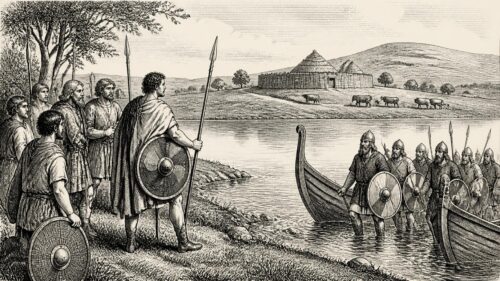
In 940, annalistic records depict Ireland as a politically fragmented but connected island. Donnchad mac Flainn, king of Ireland, and Muirchertach mac Néill led forces through Leinster and Munster, taking hostages to enforce overlordship, while Donnchad also raided Brega and Lann Léire. Connacht forces killed Aralt, grandson of Ímar and a Limerick Scandinavian leader, demonstrating resistance to maritime power. Muirchertach was implicated in the death of Niall, heir of Ailech, amid dynastic rivalry. Deaths included Ailech’s queen and senior churchmen. Rural farming, monasteries, coastal travel and growing Scandinavian towns underpinned society beyond the annals’ focus on rulers and warfare alone.
Read Article
Archived: 27 October 2026
Abstract
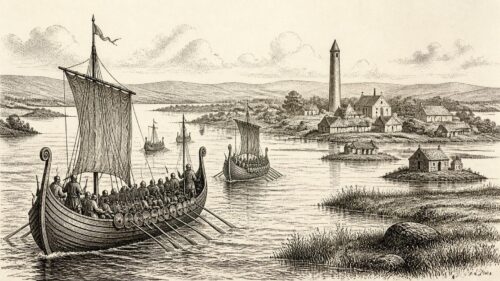
In 922, despite differing annalistic dates, Tomrair son of Elgi led a Limerick-based Scandinavian fleet up the Shannon. The force plundered Inis Cealtra, Muicinis, Clonmacnoise and Lough Ree’s islands, burned Clonmacnoise, and ravaged Mide, carrying away gold, silver and other wealth. The campaign demonstrated the Shannon’s strategic importance and exposed the vulnerability of major ecclesiastical and political networks. Clonmacnoise was a populous, wealthy religious and economic centre, not an isolated monastery. The expedition indicates Limerick’s capacity as a naval base, though not proven urban foundation. Meanwhile, Donnchadh of Tara suffered defeat near Athlone, highlighting Ireland’s fragmented authority and raiders’ opportunities.
Read Article
Archived: 28 October 2026
Abstract
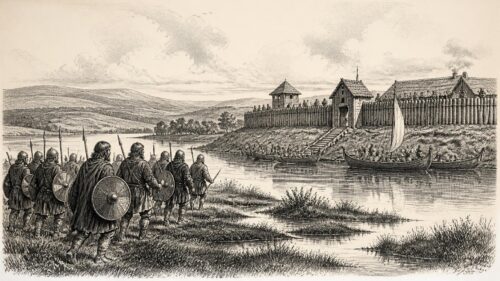
In 887, annalistic records describe a Connacht victory over the foreigners of Limerick, though details and dating remain uncertain. The defeat may have destroyed an early Shannon longphort, disrupting Scandinavian power without ending it. Notices also record the pilgrim Anealoen bringing the Law of Sunday and a divinely authorised leaf, alongside reforms concerning hair and tonsure. Deaths of abbots demonstrate monastic influence, while the obituary of Máel Mura of Othain marks the loss of Ireland’s chief poet-historian. Together these sparse entries reveal a society shaped by warfare, religious reform, learning, and interconnected political, ecclesiastical, and maritime worlds across the island.
Read Article

