Archived: 4 October 2026
Abstract
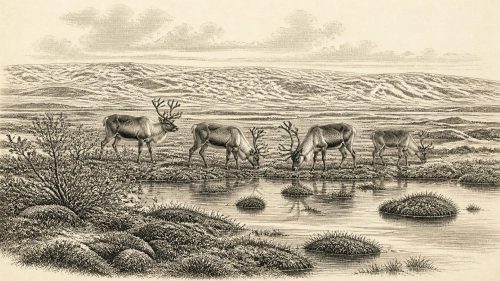
About 30,273 BCE, Ireland lay within the variable Late Pleistocene MIS 3 period, not a datable historical event. At Derryvree near Maguiresbridge, freshwater silts beneath till record a locally ice-free interval between glacial advances, with tundra vegetation, wetlands and severe periglacial conditions. Greenagho confirms regional climatic complexity. Castlepook Cave in Cork yielded diverse MIS 3 mammals, including reindeer, mammoth and hyaena, though deposits are mixed and dates require caution. A cut-marked reindeer bone may indicate human activity, but no secure contemporary settlement exists. Ireland was a changing Ice Age landscape, with uncertain animal and human access routes across north-west Europe.
Read Article
Archived: 4 October 2026
Abstract
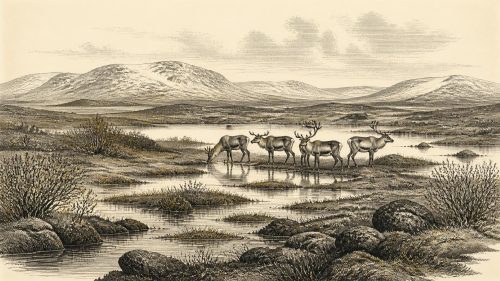
Around 30,276 BCE, Ireland lay within the fluctuating cold conditions of later Marine Isotope Stage 3, before the Last Glacial Maximum. Lower sea levels altered coasts but did not guarantee permanent land connections. At Derryvree, Fermanagh, organic deposits between glacial tills preserve treeless wetlands with sedges, mosses and Arctic-alpine plants, showing intermittent habitable environments. Castlepook Cave, Cork, contains remains of mammoth, reindeer, giant deer, predators and other cold-adapted animals, accumulated over time. A cut-marked reindeer femur may indicate human carcass processing about 33,000 years ago, but cannot prove settlement. Later ice disturbed or buried evidence, leaving an incomplete environmental record.
Read Article

Archived: 4 October 2026
Abstract
30,293 BCE is a modern label within an uncertain Marine Isotope Stage 3 interval, not a datable Irish event. At Derryvree, County Fermanagh, moss-rich freshwater sediments between glacial tills, radiocarbon dated broadly to 34,950–29,750 BCE, show an ice-free episode supporting cold-adapted wetland and open-ground plants. They demonstrate local environmental opportunity, not island-wide conditions. Castlepook Cave, County Cork, preserves pre-Last Glacial Maximum fauna including reindeer, mammoth and carnivores, although deposits span long periods. A cut-marked reindeer femur may indicate early human processing, but cannot establish settlement or society. Lower sea levels altered routes, while ice and climate made mobility uncertain there.
Read Article

Archived: 4 October 2026
Abstract
About 30,301 BCE, Ireland lay within a fluctuating Late Pleistocene cold stage, not a datable historical moment. At Derryvree, County Fermanagh, organic freshwater sediments between glacial tills record an ice-free interval broadly dated to 36,900–31,700 years ago. Mosses, sedges, aquatic plants and Arctic-alpine shrubs indicate wet, treeless tundra, later overridden by advancing ice. Castlepook Cave, County Cork, preserves a disturbed, multi-period fauna including reindeer, giant deer, mammoth, predators and scavengers, demonstrating varied habitats. Neither site proves human settlement: possible modified bone is inconclusive, while firm human evidence is far later. These deposits reveal ecological persistence, diversity and expanding ice-sheet conditions.
Read Article

Archived: 4 October 2026
Abstract
Around 30,305 BCE, Ireland cannot be described through precise events, but Derryvree sediments near Maguiresbridge, County Fermanagh, illuminate a cold interval between glacial advances. Freshwater sands, silts and organic mud, enclosed by tills, indicate an ice-free wetland with sedges, shallow water, open tundra vegetation and severe periglacial conditions. Cave faunas elsewhere show that cold-stage Ireland intermittently supported reindeer and other mammals, although deposits are not contemporaneous snapshots. A possibly cut-marked reindeer bone suggests early human activity, but confirms neither settlement nor population. No political, economic or cultural institutions are evidenced. Ice, meltwater and frost shaped the changing landscape before glaciation.
Read Article
Archived: 4 October 2026
Abstract
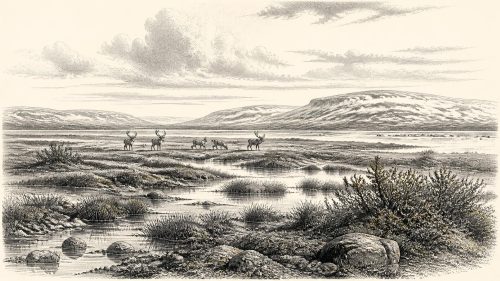
Around 30,307 BCE, Ireland’s history is reconstructed from deposits, fauna and ice rather than recorded events. Derryvree, County Fermanagh, preserves freshwater organic sediments between glacial tills, dated broadly to this interval. Its plants, insects and aquatic remains indicate a cold, treeless mosaic of sedges, mosses, pools and exposed ground during a local ice-free phase. Growing British–Irish ice sheets created unstable, regionally varied conditions. Castlepook Cave, County Cork, contains remains of mammoth, reindeer, giant deer and predators, showing intermittent animal occupation. A marked reindeer bone may indicate human processing, but does not prove settlement. Later glaciation destroyed or buried much evidence.
Read Article
Archived: 4 October 2026
Abstract
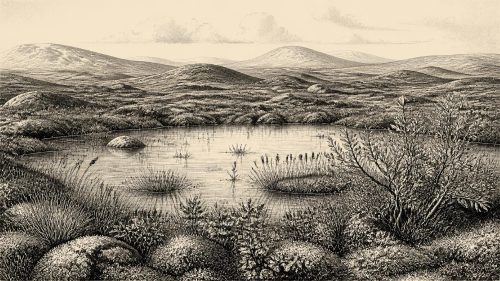
30,309 BCE is not a recoverable Irish historical year but falls within a broadly dated Late Pleistocene interval. At Derryvree, County Fermanagh, roadworks exposed freshwater silts and organic mud between two glacial tills, proving a locally ice-free periglacial phase before renewed glaciation. Fossils of bogbean, water-milfoil, mosses, sedges and cold-adapted plants indicate treeless wetlands amid open, seasonal tundra. Castlepook Cave’s mixed fauna demonstrates intermittent access by Ice Age mammals, while a possibly butchered reindeer bone remains inconclusive evidence of humans. No settlement, polity or annual events can be established. Derryvree preserves fragile environmental evidence of freshwater life during climatic instability.
Read Article

Archived: 4 October 2026
Abstract
Thirty-thousand-three-hundred-and-eleven BCE is not a recoverable Irish historical year but falls within a broad later Pleistocene interval of climatic instability. At Derryvree, County Fermanagh, freshwater organic deposits between tills indicate an ice-free, treeless cold wetland episode, dated imprecisely to approximately 36,900–31,700 calibrated years BP. Castlepook Cave, County Cork, preserves faunal remains from several periods, including mammoth, giant deer, reindeer, predators and smaller cold-adapted animals, demonstrating varied open habitats. Lower sea levels enabled intermittent animal movements to Ireland, though routes remain uncertain. Possible human evidence is contested and cannot establish settlement. Ireland was an environmentally dynamic landscape, repeatedly reshaped by ice.
Read Article
Archived: 3 October 2026
Abstract
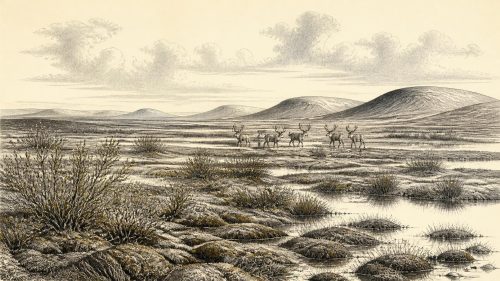
30,327 BCE cannot describe a recoverable Irish year, but provides a broad Late Pleistocene context within Marine Isotope Stage 3. At Derryvree, County Fermanagh, organic freshwater silts between tills record an ice-free or ice-marginal wetland during a fluctuating, cold climate. Tundra plants, shallow water and periglacial conditions supported seasonal ecological diversity. Castlepook Cave, County Cork, preserves remains of mammoth, reindeer, hyaena and other cold-adapted animals, demonstrating varied habitats. A cut-marked reindeer femur may indicate a fleeting human visit, not settlement. Fragmentary evidence reveals climatically volatile, patchy Ice Age Ireland, while excluding claims about annual conditions, society or continuous occupation elsewhere.
Read Article
Archived: 3 October 2026
Abstract
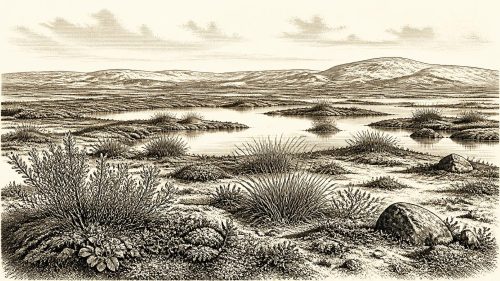
Around 30,333 BCE, Ireland’s evidence belongs to the climatically unstable Marine Isotope Stage 3, not a recoverable historical year. At Derryvree, County Fermanagh, freshwater organic sediments between glacial tills indicate a local ice-free interval within a cold, open, wetland landscape of sedges, mosses, shallow water, low shrubs and insects. Radiocarbon calibration places this deposit broadly between about 34,950 and 29,750 BCE. Castlepook Cave, County Cork, preserves Middle Devensian fauna, including mammoth, reindeer, giant deer, predators and small cold-adapted mammals. A possibly cut-marked reindeer bone suggests human presence, but cannot prove settlement. No camps, tools, hearths or social institutions are known.
Read Article
Archived: 3 October 2026
Abstract
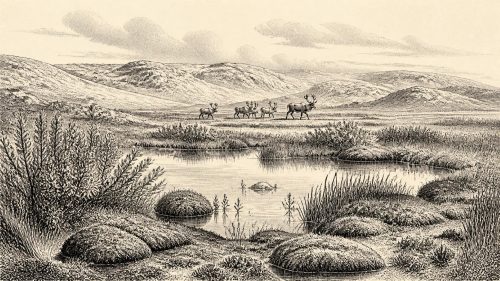
Around 30,335 BCE, Ireland cannot be described through precise annual history, but through fragmentary Ice Age evidence. At Derryvree, County Fermanagh, organic sediments between glacial tills indicate an ice-free, cold, treeless wetland with pools, sedges, mosses and hardy plants, later overridden by advancing ice. Castlepook Cave, County Cork, preserves remains of mammoths, reindeer, giant deer, predators and other cold-climate fauna, showing varied, productive habitats. A modified reindeer bone may indicate human activity, but cannot prove settlement. No social institutions or material culture are securely documented. Together, these sites reveal regionally diverse environments increasingly transformed and obscured by glaciation over time.
Read Article
Archived: 2 October 2026
Abstract
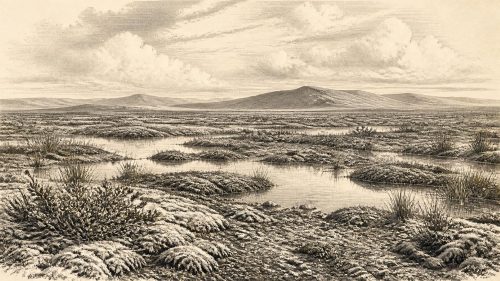
Around 30,350 BCE, Ireland cannot be described through precise events or settlements, but through fragmentary environmental evidence from Marine Isotope Stage 3. At Derryvree, County Fermanagh, freshwater sediments trapped between glacial tills record a cold, treeless wetland of sedges, mosses, aquatic plants and dwarf shrubs during an interval without local overriding ice. Conditions varied regionally as the British–Irish Ice Sheet expanded. Castlepook Cave, County Cork, preserves time-averaged remains of mammoth, reindeer, giant deer and predators, showing changing open habitats and animal movement. A possibly cut-marked reindeer bone suggests, but does not prove, a brief human visit. A volatile landscape overall.
Read Article

Archived: 2 October 2026
Abstract
Around 30,353 BCE, Ireland’s history is environmental rather than political. At Derryvree, County Fermanagh, organic-rich freshwater sediments between glacial tills date broadly to this period, demonstrating an ice-free interval with cold, wet, treeless tundra, pools and hardy vegetation. The sequence records shifting ice conditions, not uniform glaciation. Cave faunas, particularly at Castlepook, indicate changing Late Pleistocene animal communities, though deposits are disturbed and time-averaged. A possibly cut-marked reindeer bone raises the prospect of human presence, but provides no evidence for settlement. No societies, politics or cultures can be reconstructed. The evidence instead reveals life persisting in refuges between ice advances.
Read Article
Archived: 2 October 2026
Abstract
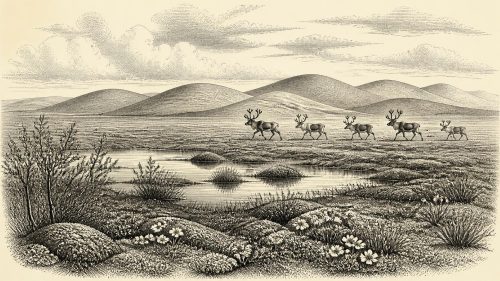
30,363 BCE is best understood as a broad, uncertain Late Pleistocene interval within Marine Isotope Stage 3, rather than a recoverable Irish year. Derryvree, County Fermanagh, preserves freshwater sediments between glacial tills, revealing an ice-free episode of periglacial tundra, wetlands, mosses and cold-adapted plants. Southern caves, particularly Castlepook in County Cork, contain remains of mammoth, reindeer, giant deer, predators and other cold-stage fauna, although old excavations limit precision. A marked reindeer bone may indicate human carcass processing, but remains unconfirmed. No evidence supports settled communities, agriculture or political life. Advancing ice later destroyed evidence, leaving a fragmented, ecologically varied record.
Read Article
Archived: 2 October 2026
Abstract
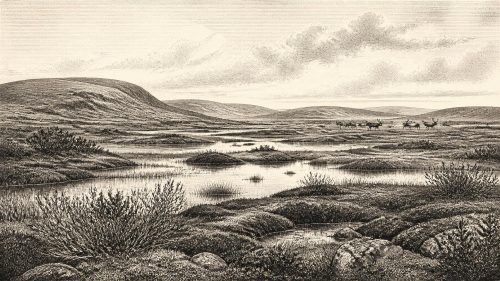
30,364 BCE is not a precisely recoverable Irish year but falls within late Marine Isotope Stage 3. Derryvree, County Fermanagh, preserves freshwater sediments between glacial tills, indicating a cold, treeless, periglacial wetland with tundra vegetation before renewed ice advance. Castlepook Cave, County Cork, contains a long-accumulated fauna including reindeer, mammoth, giant deer, bear, wolf, Arctic fox and hyaena, demonstrating changing cold-stage habitats. A possibly cut-marked reindeer bone suggests, but does not prove, early human presence. No settlement evidence exists. The record depicts a dynamic regional mosaic of wetlands, open ground, animal movement and later glacial destruction across Ireland over millennia.
Read Article
Archived: 2 October 2026
Abstract
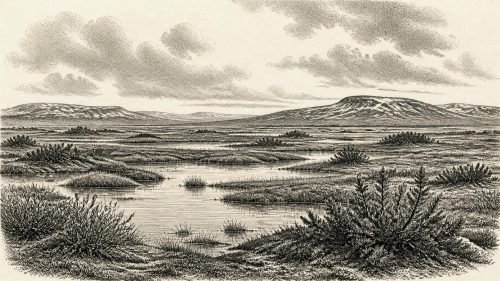
About 30,365 BCE, Ireland was a geographically shifting, climatically unstable late Pleistocene region, not a recorded historical society. Derryvree, County Fermanagh, preserves an organic freshwater layer between glacial tills, indicating cold, open tundra-like wetlands with sedges, mosses, aquatic plants, dwarf willow and juniper before later ice covered the site. Its radiocarbon date provides only a broad calibrated range. Castlepook Cave’s mixed fauna, including mammoth, reindeer and predators, demonstrates intermittent animal presence but no single contemporary ecosystem. No secure human settlement exists. A possibly cut reindeer bone suggests only unconfirmed, fleeting Upper Palaeolithic visits, while politics, culture and population remain unknowable.
Read Article
Archived: 2 October 2026
Abstract
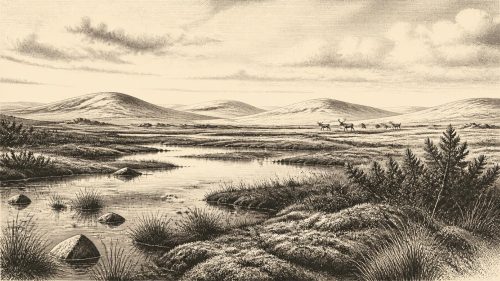
At 30,366 BCE, Ireland’s history can only be reconstructed from uncertain environmental evidence, not records or dated events. Derryvree, County Fermanagh, revealed freshwater silts between glacial tills, preserving plants, insects and aquatic remains from a treeless, cold, waterlogged landscape of grasses, sedges, juniper and mosses. The deposits demonstrate repeated local ice advance and retreat, while wider reconstructions indicate expanding but incompletely mapped British–Irish ice. Cave fauna from Castlepook, County Cork, includes cold-adapted mammals, although bones span long periods. A possibly cut-marked reindeer femur suggests, but does not prove, human presence. No secure settlement evidence exists; environmental change dominates this period.
Read Article
Archived: 2 October 2026
Abstract
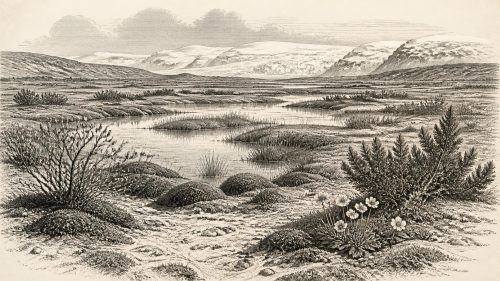
Around 30,367 BCE, Ireland has no year-specific human record; its history is reconstructed from environmental evidence. At Derryvree, County Fermanagh, organic freshwater sediments between glacial tills date broadly to 34,950–29,750 BCE, indicating an ice-free interval within a fluctuating pre-maximum glacial climate. Microfossils reveal treeless tundra, with mosses, sedges, grasses, juniper, bogbean, water-milfoil and mountain avens around pools and wet ground. Expanding British–Irish ice later buried the fen. Castlepook Cave preserves diverse cold-stage fauna, but its disturbed, long-lived deposits cannot date species precisely. No securely contextualised archaeological evidence demonstrates directly human presence with certainty, settlement, society or events in Ireland then.
Read Article
Archived: 2 October 2026
Abstract
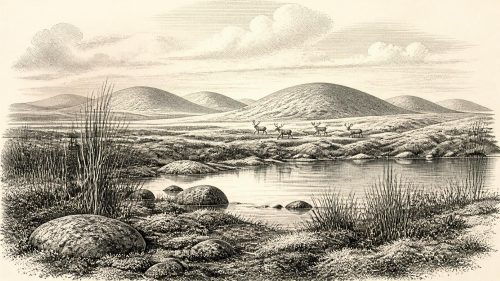
Around 30,368 BCE, Ireland’s environment is best understood through Derryvree, a freshwater organic deposit beneath glacial tills near Maguiresbridge, County Fermanagh. Radiocarbon dating places it broadly within 36,900–31,700 calibrated years BP, rather than at a single year. Pollen, plants, mosses and insects indicate an ice-free, treeless, cold periglacial wetland during Marine Isotope Stage 3, before maximum British-Irish ice cover. Castlepook Cave fauna shows that cold-adapted mammals reached Ireland during this wider period. A possibly butchered reindeer bone suggests, but cannot confirm, brief human presence. No evidence supports permanent settlement, society or economy. Derryvree preserves an ecological record of pre-glacial Ireland.
Read Article

Archived: 2 October 2026
Abstract
About 30,369 BCE is only a modern label within broad dating ranges for late Marine Isotope Stage 3. At Derryvree, County Fermanagh, organic freshwater sediments between glacial tills record an ice-free interval before renewed ice sealed the wetland. Plants, pollen, mosses and insects indicate shallow water, sedges, herbs and cold-adapted, largely treeless periglacial vegetation. Castlepook Cave, County Cork, preserves diverse Ice Age fauna, although remains span uncertain periods and were often modified by carnivores. A possibly cut-marked reindeer bone suggests fleeting Upper Palaeolithic human activity, but proves neither settlement nor population. Together they reveal intermittent habitats, recolonisation, instability, not society.
Read Article
Archived: 2 October 2026
Abstract
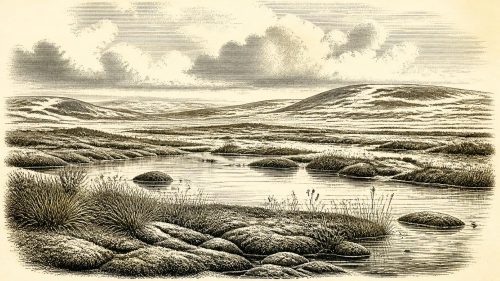
30,375 BCE is a modern label rather than a precisely datable Irish event. Derryvree, County Fermanagh, preserves freshwater sediments between glacial tills, calibrated broadly to 36,900–31,700 cal BP, indicating treeless tundra, wetlands and severe periglacial conditions before renewed ice advance. Castlepook Cave, County Cork, contains MIS 3 remains of cold-adapted, open-country fauna, though its mixed deposits require caution. A possibly cut-marked reindeer bone may indicate brief human activity, but proves neither settlement nor society. No evidence supports agriculture, trade, communities or political life. Later glaciation obscured much evidence; Ireland’s record chiefly reveals changing ice, water, vegetation and animals over time.
Read Article
Archived: 2 October 2026
Abstract
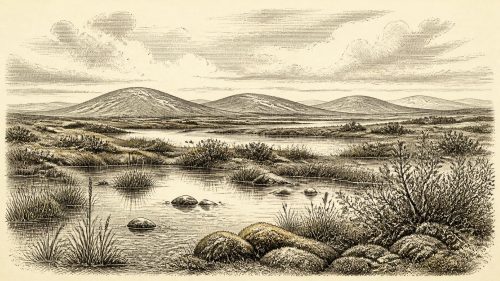
Around 30,385 BCE, Ireland lay within the fluctuating cold conditions of Marine Isotope Stage 3, not a precisely dated historical year. At Derryvree, County Fermanagh, organic silts between glacial tills preserve evidence of treeless tundra, wetland pools, mosses, sedges and hardy plants, showing temporary ice-free habitat. Southern cave deposits demonstrate Late Pleistocene populations of reindeer, giant deer, bears, wolves and other animals, though dates and assemblages require caution. A cut-marked reindeer bone from Castlepook may indicate human activity, but confirms neither settlement nor society. No political, cultural or economic history is known. Environmental change and advancing ice dominated Ireland’s landscape.
Read Article
Archived: 2 October 2026
Abstract
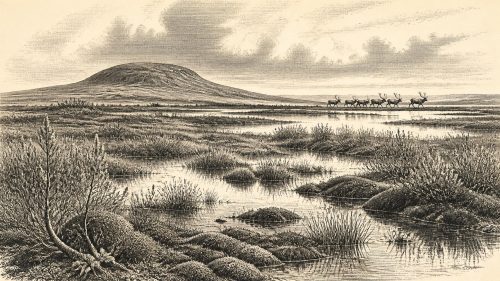
Around 30,387 BCE, Ireland has no recoverable annual history; evidence instead derives from Late Pleistocene sediments, plants and animal bones. At Derryvree, County Fermanagh, freshwater deposits between glacial tills, radiocarbon dated broadly to Marine Isotope Stage 3, indicate ice-free or ice-marginal wetlands with cold-tolerant, treeless vegetation. Castlepook, or Mammoth Cave, County Cork, preserves fauna including mammoth, giant deer, reindeer, bears, wolves, foxes and hyaenas, accumulated over millennia. A marked reindeer femur may indicate human carcass processing, but proves neither settlement nor continuity. Subsequent ice growth transformed and buried these landscapes, leaving a fragmentary record of changing cold-stage environments across Ireland.
Read Article

Archived: 1 October 2026
Abstract
Modern calendar label 30,397 BCE denotes a broad Late Pleistocene interval, not a recordable Irish year. At Derryvree near Maguiresbridge, freshwater organic sediments between glacial tills preserve evidence of an ice-free cold wetland phase. Plants and insects indicate treeless, tundra-like terrain with sedges, mosses, dwarf willow, aquatic vegetation and shallow pools. Other sites show climatic shifts, while Castlepook Cave fauna demonstrate ecological links with north-west Europe. Possible stone-tool damage on a reindeer bone raises but does not prove early human presence. No settlement, farming, art or institutions are demonstrated. Growing ice later transformed landscapes, burying rare evidence beneath till deposits.
Read Article
Archived: 1 October 2026
Abstract
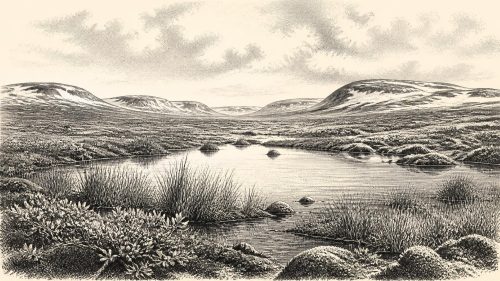
30,409 BCE is best understood through Pleistocene deposits rather than historical events. At Derryvree, County Fermanagh, freshwater silts and organic remains between glacial tills indicate an ice-free interval with open tundra, wetland plants and periglacial conditions, although radiocarbon calibration provides only a broad range encompassing the year. Ireland was approaching, not experiencing, the Last Glacial Maximum. Castlepook Cave, County Cork, preserves evidence of varied Ice Age fauna, including reindeer and mammoth, but its mixed deposits cannot date species to one moment. A possibly butchered reindeer bone suggests human presence, yet no evidence proves permanent settlement, organised society, trade or culture.
Read Article

Archived: 1 October 2026
Abstract
Derryvree, County Fermanagh, preserves freshwater silts and organic remains sealed between glacial tills, documenting an ice-free wetland interval during Marine Isotope Stage 3, broadly 34,950–29,750 BCE. Its plants indicate a cold, treeless mosaic of pools, sedges and Arctic-alpine vegetation, while demonstrating local rather than island-wide conditions. Dynamic ice margins and lower sea levels shaped an uncertain regional landscape. Castlepook Cave’s time-averaged fauna shows that mammoth, reindeer, deer, bears and predators occurred in Pleistocene Ireland. A possibly tool-marked reindeer bone suggests fleeting human presence, but no secure settlement evidence exists. These rare deposits reveal an intermittently habitable, environmentally unstable glacial Ireland.
Read Article
Archived: 1 October 2026
Abstract
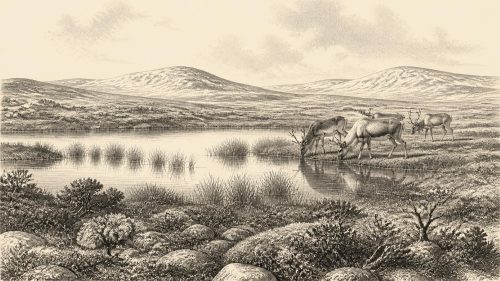
Labelled 30,422 BCE, this period in Ireland belongs to climatically unstable Marine Isotope Stage 3 and cannot be reconstructed as a single year. At Derryvree, County Fermanagh, freshwater sediments between two glacial tills record an interstadial landscape of cold, open wetlands supporting arctic-alpine plants and insects before ice returned. Castlepook Cave, County Cork, preserves diverse cold-stage fauna, including reindeer, mammoth, giant deer, predators and lemmings, accumulated across extended periods. A cut-marked reindeer femur may indicate brief human handling, but proves neither settlement nor continuity. No securely contemporary Irish camps, tools, burials or institutions are known; glaciation severely damaged earlier evidence.
Read Article
Archived: 1 October 2026
Abstract
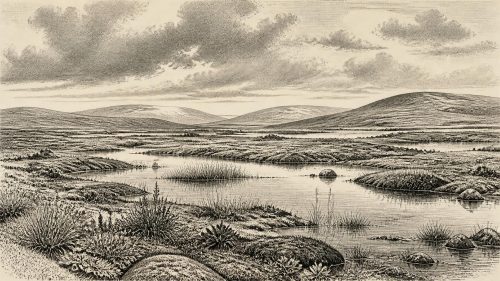
Thirty thousand four hundred and twenty-nine BCE is a retrospective label within a broad, uncertain Late Pleistocene range, not a date for a recorded Irish event. Derryvree, County Fermanagh, preserves freshwater silts and organic deposits between glacial tills, demonstrating an ice-free interval before renewed glaciation. Its pollen, plants and insects indicate a treeless, wet, varied tundra landscape of pools, mosses, sedges and sparse herbs. Castlepook Cave fauna in Cork shows connections with north-west European ecosystems, including reindeer, mammoth and predators. A cut-marked reindeer bone suggests human activity, but cannot establish settlement. Later ice erased evidence, leaving environmental archives, not history.
Read Article
Archived: 1 October 2026
Abstract
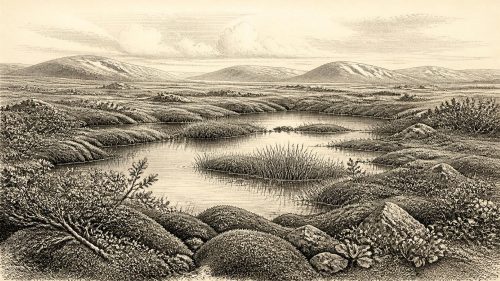
Around 30,430 BCE, Ireland is known only through broad calibrated ranges and fragmentary environmental evidence. At Derryvree, County Fermanagh, freshwater silts between glacial tills show that ice retreated long enough for tundra wetland communities to develop. Pollen, plants and insects indicate treeless ground with grasses, sedges, dwarf willow, arctic-alpine flora and aquatic pools, before later ice returned. Castlepook Cave, County Cork, preserves mixed Middle and Late Pleistocene fauna, including mammoth, reindeer, giant deer and predators, demonstrating cold-stage habitats. A possibly cut-marked reindeer bone suggests brief human visits, but no secure evidence supports settlement, culture or permanent occupation in this period.
Read Article
Archived: 30 September 2026
Abstract
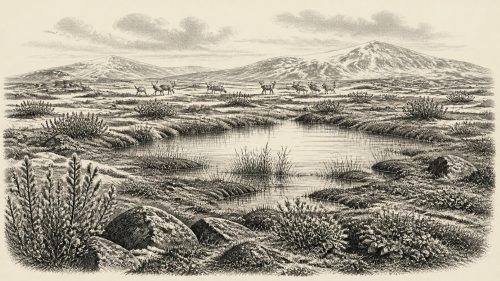
Thirty thousand four hundred and thirty-three BCE is only a modern label within a broad calibrated range for later Marine Isotope Stage 3. At Derryvree, County Fermanagh, sediments between tills preserve an ice-free freshwater basin with tundra vegetation, insects and seasonal periglacial conditions, later buried by returning glacier ice. Comparable deposits indicate complex, localised ice-free episodes, not an island-wide climate. Southern cave faunas demonstrate diverse cold-stage mammals, though their dates and associations are imperfect. No secure evidence establishes human occupation; a possibly cut-marked reindeer bone offers only tentative evidence of brief contact. This interval records fragile environments amid regional glaciation.
Read Article


