Winter Kingdoms(c.1000s)

On 24 February AD 1000, no surviving Irish chronicle records a specific event that can be securely assigned to that exact day. Ireland must therefore be approached through a historical snapshot rather than a fabricated anniversary. The date fell within the Julian calendar then used for ecclesiastical reckoning in western Europe. The Annals of Ulster and Annals of Inisfallen identify AD 1000 as a leap year, although Irish annalists generally organised information by year rather than recording events day by day. Their entries reveal an island experiencing political upheaval, expanding regional kingship and renewed competition between Máel Sechnaill mac Domnaill and Brian mac Cennétig.
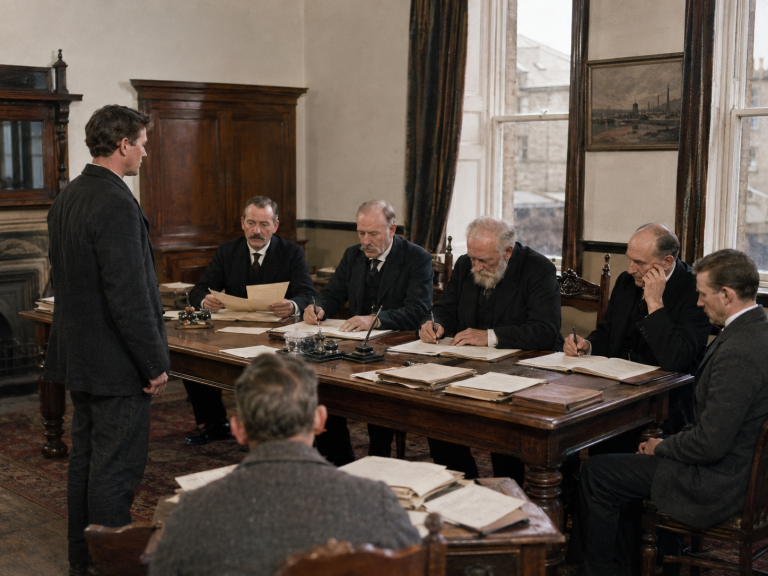
Ireland was not a unified state governed from a permanent national capital. Political authority rested within an intricate hierarchy of kingdoms, subkingdoms, dynasties and local communities. Máel Sechnaill, king of Mide and a member of the Southern Uí Néill, held the kingship of Tara and possessed the strongest traditional claim to the high kingship. His power nevertheless depended upon alliances, hostages, military success and the recognition of other rulers. Kingship was personal and negotiated rather than administered through a central government. A ruler’s influence could expand rapidly after victory but contract just as quickly when subordinate kings withdrew their support or transferred their allegiance.
The greatest challenge to Máel Sechnaill came from Brian mac Cennétig, king of Munster. Brian’s Dál Cais dynasty had displaced older Eóganachta claims to Munster’s provincial kingship and created a formidable military power centred upon the lower Shannon region. In 997, Brian and Máel Sechnaill had reportedly divided their respective spheres of influence between the traditional northern and southern halves of Ireland. That arrangement did not produce lasting stability. By AD 1000, Brian was extending his authority into Leinster, Dublin and territories formerly associated with Máel Sechnaill. Their relationship combined temporary cooperation with an increasingly serious struggle for supremacy.
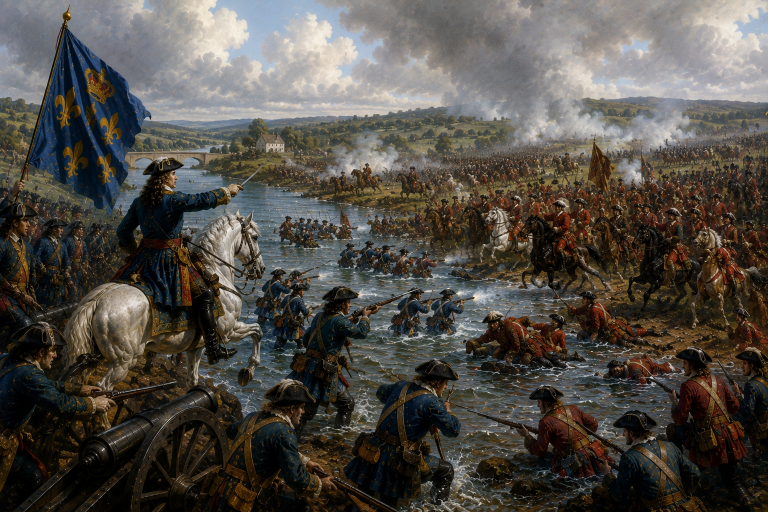
The political landscape of February was shaped by the recent Battle of Glenn Máma and Brian’s subsequent occupation of Dublin. The Annals of Ulster place the battle on 30 December 999, while other annalistic traditions arrange parts of its aftermath under AD 1000. Brian’s forces defeated an alliance of Leinster and Dublin, entered the town and carried away treasure and captives. Sitriuc mac Amlaíb, the Hiberno-Norse king of Dublin, fled but later returned and gave hostages to Brian. Dublin was restored to its inhabitants because its port, merchants, ships, warriors and international connections were more valuable under submission than destroyed or permanently abandoned.
Dublin was one of several important Scandinavian or Hiberno-Norse towns around Ireland’s coast. Waterford, whose king Ímar died during AD 1000, remained another significant maritime centre. Cork, Limerick and Wexford also connected their surrounding regions with trading networks extending across the Irish Sea and towards Britain, Scandinavia and continental Europe. Imported silver, textiles, wine, pottery and other goods moved through these settlements, while livestock, hides, slaves and agricultural produce could be exported. These towns were politically distinct from the predominantly rural Gaelic kingdoms, but interaction, intermarriage, warfare and commercial exchange had created societies that cannot be divided neatly into isolated “Irish” and “Viking” populations.
Máel Sechnaill continued to command substantial power in Mide, Brega and neighbouring territories. Annalistic accounts describe Brian campaigning into Mag Breg during AD 1000 with forces from Munster, southern Connacht, Osraige, Leinster and Dublin. Dublin and Leinster horsemen moved ahead of the main army, but Máel Sechnaill intercepted and heavily defeated them. Brian then withdrew without forcing a decisive battle. The surviving entries do not supply a precise date for this expedition, so it cannot be placed on 24 February. They nevertheless demonstrate that Brian’s expanding coalition had not yet extinguished Máel Sechnaill’s military or political independence.
Elsewhere, regional rulers pursued their own ambitions. The Uí Néill dynasties of the north, the kings of Connacht, the Ulaid, Cenél Conaill, Cenél Eógain, Osraige and the numerous Leinster dynasties retained interests that did not necessarily correspond with those of either leading contender. The annals record the deaths or killings of several kings during AD 1000, including Domnall Ua Domnalláin and Flaithbertach Ua Canannáin. Such notices reveal the instability surrounding local succession, but their brevity conceals the negotiations among kindreds that followed. Royal succession was rarely governed by automatic inheritance from father to eldest son; eligible adult males within a ruling dynasty could compete for recognition.
Christian institutions formed another network of authority. Armagh, Clonmacnoise, Kildare, Glendalough, Kells, Inisfallen and numerous lesser churches possessed lands, relics, dependants and political patrons. Their communities included clerics, scholars, craftspeople, agricultural workers and tenants. Monasteries preserved learning and produced manuscripts, but they were also embedded in dynastic politics and could suffer raiding, burning or contested appointments. Churchmen calculated feast days and the cycles of the Christian year, making the calendar meaningful in religious life. Ordinary people were more likely to understand 24 February through the approach of spring and the liturgical season than as part of a numbered millennium.
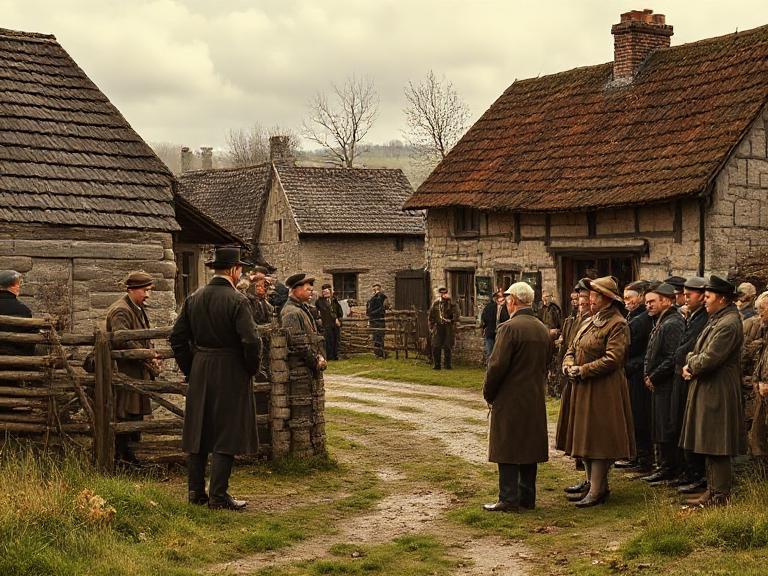
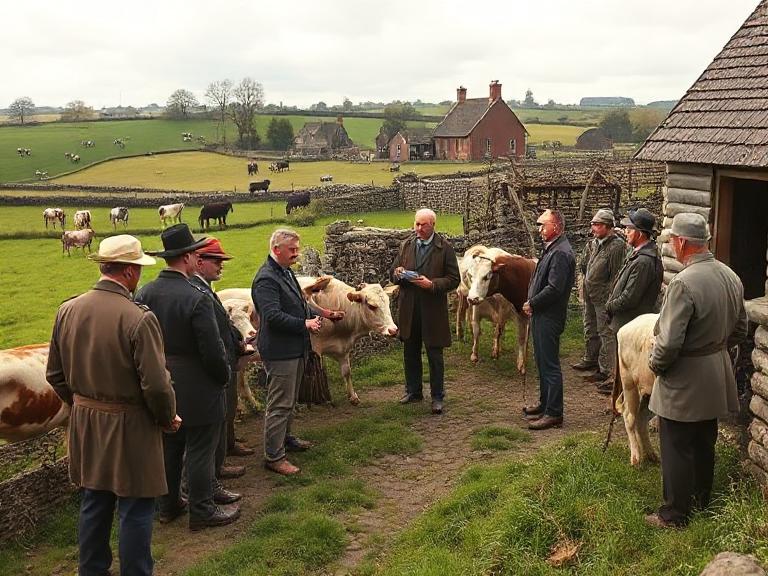
Most inhabitants lived in dispersed rural settlements and depended upon mixed farming. Cattle represented wealth, status and a portable economic resource, while sheep, pigs and grain contributed to household survival. February was a demanding point in the agricultural year. Stored food and fodder had to last until renewed growth, and livestock required protection during unsettled weather. Surviving legal texts illuminate obligations involving land, kinship, marriage, fosterage, clientship and compensation, although those texts frequently describe normative ideals rather than every local practice. Social position affected diet, housing, legal rights and access to property, while unfree labourers and captives occupied particularly vulnerable positions.
The Ireland of 24 February AD 1000 therefore stood between recent upheaval and further political confrontation. Brian had gained control over Munster and influence in Dublin and Leinster, but Máel Sechnaill remained king of Tara and an effective military opponent. Regional kings retained considerable autonomy, churches sustained religious and intellectual life, and maritime towns connected Ireland with a wider commercial world. No evidence allows a particular battle, council or royal decision to be assigned to this day. Its historical value lies instead in the conditions then prevailing: competing kingships, negotiated loyalties, Christian institutions, rural production and coastal trade were collectively shaping the Ireland in which Brian would eventually supplant Máel Sechnaill.
Primary Sources
1. Unknown annalist — Annals of Ulster, entries U999.9 and U1000.1–8 — Events recorded under AD 999–1000 — Survives principally in Trinity College Dublin MS 1282, compiled in the fifteenth century from earlier annalistic material — CELT, University College Cork: https://celt.ucc.ie/document/T100001A/ — Records Glenn Máma, the capture of Dublin, the return of its inhabitants, the year’s calendrical character and Brian’s expedition into Mag Breg.
2. Unknown annalist — Annals of Inisfallen, entries AI997.2 and AI999.4–AI1000.3 — Events recorded for AD 997–1000 — Survives in Oxford, Bodleian Library, MS Rawlinson B 503, written principally during the eleventh and twelfth centuries — CELT: https://celt.ucc.ie/published/T100004.html — Records the division between Brian and Máel Sechnaill, Glenn Máma, Dublin’s submission and AD 1000 as bissextile.
3. Unknown annalist — Annals of Tigernach, entries T999–T1000 — Events recorded for AD 999–1000 — Surviving relevant text in Oxford, Bodleian Library, MS Rawlinson B 488, a fourteenth-century witness preserving earlier material — CELT: https://celt.ucc.ie/published/T100002A.html — Preserves an independent annalistic account of Dublin, Waterford, regional kings and Brian’s movement into Brega.
4. Unknown annalist — Chronicon Scotorum, entries corresponding to AD 997–1001 — Medieval Irish chronicle based upon earlier Clonmacnoise material — Survives in a seventeenth-century copy made by Dubhaltach Mac Fhirbhisigh from a lost manuscript — CELT: https://celt.ucc.ie/published/T100016.html — Supplies comparative evidence for Brian, Máel Sechnaill, Dublin and the political chronology.
5. Mícheál Ó Cléirigh and fellow compilers, drawing upon earlier chronicles — Annals of the Four Masters, entries for AD 999–1000 — Compiled 1632–1636 from medieval sources, some now lost — Royal Irish Academy MS 23 P 6 and CELT: https://celt.ucc.ie/published/T100005B.html — Provides a retrospective compilation of political and ecclesiastical notices relating to the period.
6. Conall Mag Eochagáin, translator — Annals of Clonmacnoise, entries surrounding AD 1000 — English translation completed in 1627 from a subsequently lost Irish chronicle — Surviving manuscript copies held by Trinity College Dublin and the Royal Irish Academy — Preserves material from the Clonmacnoise annalistic tradition relevant to Mide and the central midlands.
7. Unknown author — Cogad Gáedel re Gallaib — Probably composed during the early twelfth century — Survives in later manuscripts, including Trinity College Dublin MS 1319 — CELT: https://celt.ucc.ie/published/T100011.html — A partisan retrospective narrative of Brian’s wars that must be compared cautiously with contemporary annalistic evidence.
8. Unknown compiler — Lebor na Cert, or Book of Rights — Material developed between approximately the eighth and twelfth centuries — Survives in later medieval manuscripts — CELT: https://celt.ucc.ie/published/G102900.html — Describes idealised tribute and obligation relationships among Irish kings and provincial territories.
9. Unknown legal scholars — Críth Gablach — Probably composed during the early eighth century — Survives through later manuscript copies and glosses; edited in D. A. Binchy’s Corpus Iuris Hibernici — Dublin Institute for Advanced Studies — Provides evidence for grades of society, kingship, status and household organisation.
10. Unknown legal scholars — Uraicecht Becc — Early medieval Irish status tract, probably originating before AD 800 — Survives in later manuscripts; edited in Corpus Iuris Hibernici — Dublin Institute for Advanced Studies — Illuminates social rank, professional status and the hierarchical assumptions inherited by eleventh-century communities.
11. Unknown legal scholars — Cáin Lánamna, or Law of the Couple — Early medieval legal tract, probably composed before AD 1000 — Complete text survives in Trinity College Dublin MS 1316, a fourteenth-century manuscript — CELT: https://celt.ucc.ie/document/T102030/ — Provides evidence concerning marriage, property, partnership and legal responsibilities.
12. Unknown legal scholars — Cáin Aigillne — Early medieval Irish clientship tract — Survives in later legal manuscripts and is edited in Corpus Iuris Hibernici — Dublin Institute for Advanced Studies — Describes relationships between lords and clients that underpinned rural political and economic power.
13. Unknown legal scholars — Bretha Nemed Déidenach — Early medieval Irish learned-status tract — Preserved in later manuscript witnesses and edited in Corpus Iuris Hibernici — Dublin Institute for Advanced Studies — Supplies evidence for poets, craftsmen, learned professions and social privilege.
14. Unknown legal scholars — Bechbretha, or Bee Judgements — Early medieval Irish law tract — Survives in later manuscripts and scholarly editions — Trinity College Dublin manuscript collections and Corpus Iuris Hibernici — Reveals agricultural property rights, neighbourhood obligations and the economic value of beekeeping.
15. Unknown ecclesiastical compilers — Collectio Canonum Hibernensis — Compiled in Ireland during the late seventh or early eighth century — Survives in numerous continental manuscripts — Scholarly manuscript collections including Stiftsbibliothek St Gallen — Demonstrates the canon law and ecclesiastical learning available within the Irish church before AD 1000.
16. Óengus of Tallaght, traditionally attributed — Félire Óengusso, or Martyrology of Óengus — Probably composed around AD 800 — Survives in later manuscripts including the Leabhar Breac, Royal Irish Academy MS 23 P 16 — CELT: https://celt.ucc.ie/published/G200001.html — Illuminates the saints, feast days and liturgical culture governing religious time.
17. Unknown compiler — Martyrology of Tallaght — Probably compiled during the eighth or ninth century — Survives principally in the twelfth-century Book of Leinster, Trinity College Dublin MS 1339 — Trinity College Dublin Digital Collections — Provides evidence for the Irish ecclesiastical calendar and commemorative observance.
18. Multiple scribes — Book of Kells — Created approximately AD 800 — Trinity College Dublin MS 58 — Trinity College Dublin Digital Collections: https://digitalcollections.tcd.ie/concern/works/hm50tr726 — Material evidence for Insular Gospel production, artistic skill and the manuscript culture preserved in major Irish churches.
19. Ferdomnach and other scribes — Book of Armagh — Written principally in the early ninth century — Trinity College Dublin MS 52 — Trinity College Dublin Digital Collections — Preserves biblical texts, writings connected with Patrick and evidence for Armagh’s ecclesiastical authority.
20. Máel Suthain, scribe — Inscription in the Book of Armagh naming Brian as “Emperor of the Irish” — Added in AD 1005 — Trinity College Dublin MS 52 — Trinity College Dublin Library — Though five years later than the selected date, it provides near-contemporary material evidence for the culmination of Brian’s expanding political claims.