Silver Routes(c.1000s)

On February 24, 1000 AD, operating under the Julian calendar then standard across the region, Ireland participated in complex networks of trade, dynastic rivalry, and cultural exchange stretching across the Irish Sea, Atlantic Europe, and the wider Scandinavian world. No surviving contemporary Irish chronicle or annal records a distinct, major political event occurring on this precise calendar day. Consequently, the date is best understood through a historical snapshot of the island at the turn of the second millennium. Ireland during this epoch was politically fragmented into dozens of competing petty kingdoms, known as tuatha, yet it was simultaneously bound together by shared legal traditions, linguistic ties, and increasingly active coastal trading ports.
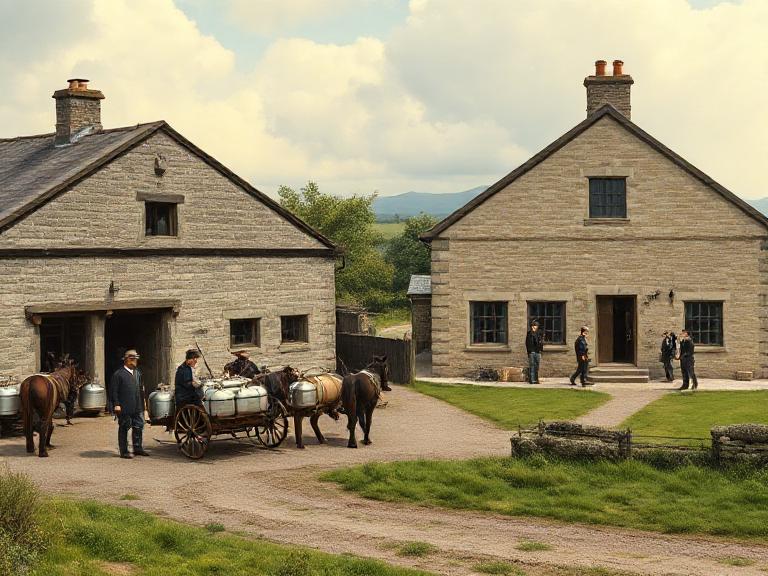
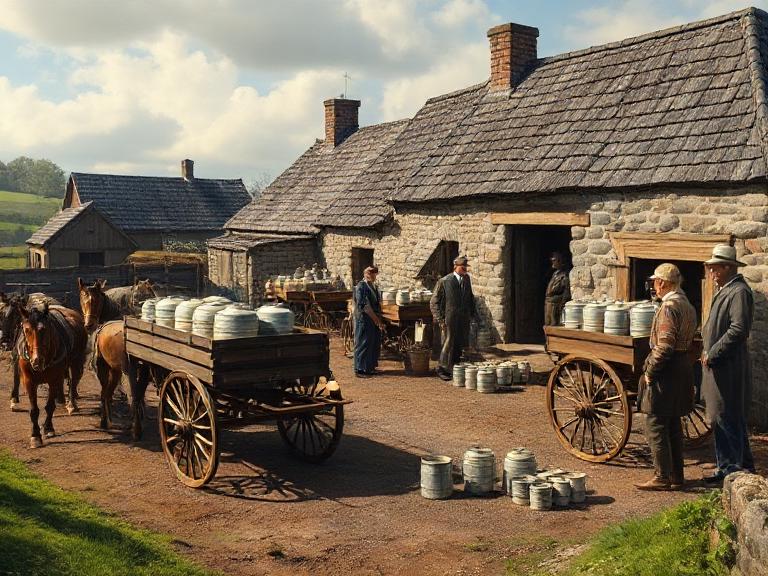
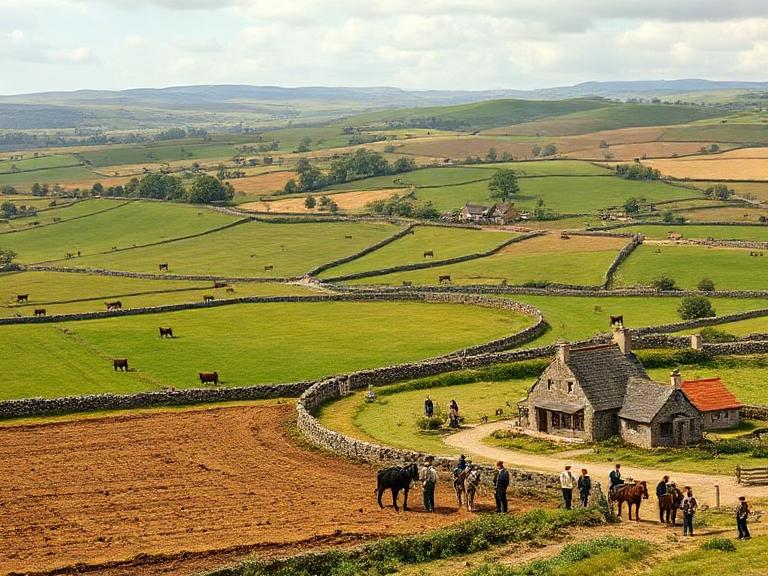
Most economic and social activity across the island remained overwhelmingly rural, local, and agricultural. Rural households produced food, coarse wool clothing, and everyday implements primarily for their own subsistence or for local exchange within neighbouring communities. Cattle held exceptional economic, legal, and social importance, functioning as the primary measure of wealth, a standard unit for legal fines, and a supplier of dairy, meat, and hides. Sheep, pigs, and cereal crops such as oats and barley also contributed significantly to the agrarian economy. Obligations under customary law, including dynastic tributes and clerical dues, were frequently discharged through livestock, foodstuffs, manual labor, or formalized hospitality.
Minted coinage was not yet the normal basis of everyday transactions across the Irish countryside. Instead, value was often measured in weighed quantities of silver, livestock, or specialized commodities. Provincial kings and regional lords utilized the redistribution of wealth—often acquired through cattle raids, tribute, or overseas trade—to secure the loyalty of subordinate chiefs, reward professional poets and warriors, and support major monastic foundations. Accepting tribute or gifts from a subordinate ruler was a vital political ritual that acknowledged a hierarchy of authority, whereas refusing such payments invariably provoked retaliatory warfare.
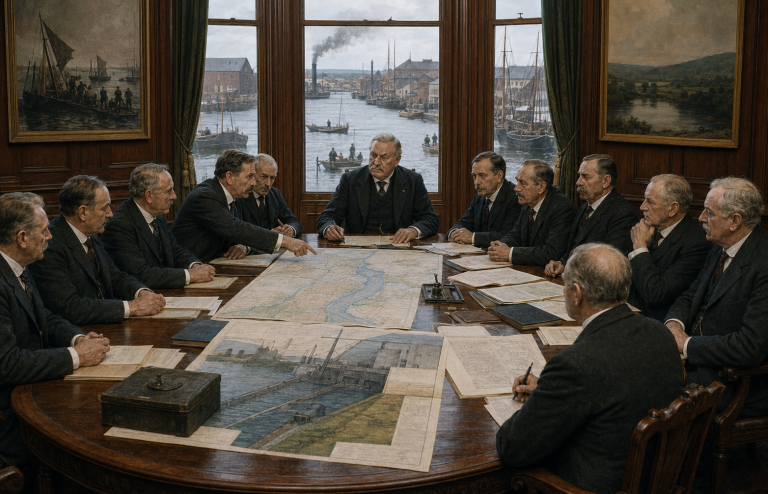
In contrast to the rural interior, Ireland’s emerging Hiberno-Norse coastal towns introduced different concentrations of craft production, population density, and maritime commerce. Dublin was by far the largest and most politically significant urban center, but Waterford and Limerick were also well-established Scandinavian foundations by the year 1000. Wexford and Cork were developing concurrently as vital maritime nodes, though their precise scale during this period is less fully detailed in surviving records. These coastal settlements occupied strategic positions beside navigable river estuaries or protected bays, allowing merchant fleets to connect the Irish economy with Britain, the Isle of Man, and Viking networks spanning the North Atlantic.
Dublin had recently experienced a dramatic political and military reversal. In the closing months of 999, the combined forces of Brian Boru of Munster and Máel Sechnaill mac Domnaill, the reigning Uí Néill High King, decisively defeated the allied forces of Leinster and Dublin at the Battle of Glenn Máma. Following this victory, the victorious armies entered and temporarily burned Dublin, compelling its Norse king, Sitriuc Silkbeard, to submit to Brian’s overarching authority. Although the principal native annals assign these developments generally to the opening of the new millennium, they do not tie them specifically to the late winter date of February 24.
Archaeological excavations of Dublin from this era reveal an intensively occupied town characterized by closely packed timber-framed structures, fenced plot boundaries, narrow pathways, and active craft workshops. Houses were predominantly constructed with post-and-wattle walls and thatched roofs, while local woodlands supplied raw material for carved wooden bowls, barrels, furniture, and structural pins. Specialized metalworkers forged iron tools, bronze ornaments, and silver jewelry, catering both to domestic consumers and the demands of long-distance traders who brought foreign goods into Irish ports.
In many rural districts far from these coastal emporiums, cattle, dairy produce, and silver bullion remained far more practical than foreign coins. Ireland around 1000 AD thus contained overlapping systems of exchange rather than a single unified monetary market. Trade routes carried itinerant merchants, clerics, slaves, and precious metals alongside bulk merchandise. Ships crossing the hazardous waters of the Irish Sea linked Dublin, Wexford, and Limerick with trading centres such as Chester, Bristol, and western Britain. Inland, major river systems such as the Shannon, the Barrow, and the Suir facilitated regional movement, though travel remained heavily dependent on political permissions and military protection.
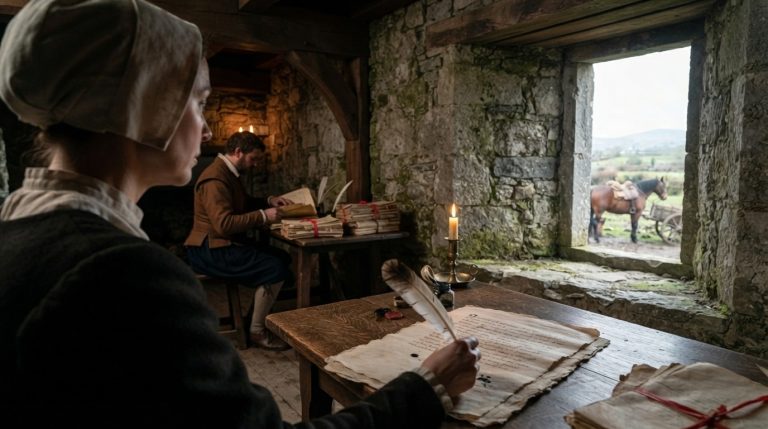
Ecclesiastical institutions played a central role in preserving literacy, recording history, and shaping the cultural identity of Christian Ireland. Monasteries functioned not only as centres of prayer and scholarship but also as major economic landowners controlling vast estates, herds, and dependent laborers. Despite periodic Viking raids in previous decades, monastic scriptoria continued to produce illuminated manuscripts and legal tracts, maintaining a scholarly tradition deeply rooted in both Latin learning and vernacular Irish culture. These religious centres frequently served as diplomatic meeting places and sanctuaries amidst the relentless cycle of inter-kingdom warfare.
The broader political landscape of the island was standing on the precipice of a monumental transformation. Brian Boru’s relentless military campaigns from his base in Munster were actively challenging the centuries-old monopoly on the High Kingship traditionally held by the southern and northern Uí Néill dynasties. By pushing his military forces northward along the Shannon and asserting dominance over both regional kings and coastal towns, Brian was laying the groundwork for a centralized royal authority that would temporarily unify the island under a single sovereign banner before his death at the Battle of Clontarf in 1014.
Thus, the ordinary winter day of February 24, 1000 AD, captured an island balancing deep-seated agrarian traditions with emerging commercial and political dynamism. While ordinary cultivators labored across the rural townlands to secure basic subsistence, kings and merchants maneuvered within an expanding web of international trade and dynastic ambition. The convergence of Gaelic political expansion, urban Hiberno-Norse commerce, and monastic scholarship defined a pivotal transitional era in medieval Irish history, setting forces into motion that would permanently reshape the island’s destiny.
Primary Sources
1. Annals of Inisfallen — Entry for the year 1000 AD — Original compilation c. 11th century; surviving manuscript held in the Bodleian Library, Oxford (MS. Rawl. B. 503) — Contemporary provincial annalistic record noting political shifts, military actions, and the submission of regional groups in southern Ireland.
2. Annals of Ulster — Entry covering the turn of the millennium (1000 AD) — Compiled in the late 15th century from earlier records; Trinity College Dublin (MS 1282) — Essential chronicle detailing political events, deaths of notable clerics, and dynastic interactions in northern and central Ireland.
3. Chronicon Scotorum — Chronicle of the Scots and Irish up to 1135 AD — 17th-century copy of an earlier medieval manuscript; Trinity College Dublin (MS 1281) — Provides chronological corroboration of political developments, battles, and weather events surrounding the turn of the millennium.
4. Cogad Gáedel re Gallaib (The War of the Irish with the Foreigners) — Narrative history of Munster rise and Viking conflicts — 12th-century text preserved in later manuscripts such as Trinity College Dublin (MS 1285) — Contemporary-style propaganda and historical narrative detailing Brian Boru’s military campaigns and rise to power.
5. Annals of the Four Masters — Compilation covering the year 1000 AD — Compiled 1632–1636 by Mícheál Ó Cléirigh et al. from earlier lost texts; Royal Irish Academy and Trinity College Dublin — Comprehensive annalistic synthesis capturing traditional dates and historical memory of early eleventh-century Ireland.
6. Fragmentary Annals of Ireland — Political fragments relating to 10th and 11th-century dynastic politics — Surviving in 17th-century transcripts by Dubhaltach Mac Firbhisigh; Royal Library of Belgium, Brussels — Detailed anecdotal evidence regarding regional power struggles, alliances, and warfare among Irish kings.
7. Liber Hymnorum (Book of Hymns) — Ecclesiastical manuscript containing early Irish and Latin hymns — 11th-century manuscript; Trinity College Dublin (MS 1441) — Illustrates contemporary religious life, liturgical practices, and linguistic traditions within Irish monasteries around the year 1000.
8. Cáin Domnaig (The Law of Sunday) — Legal and religious tract regulating Sabbath observance — Surviving in medieval manuscript compilations such as Rawlinson B 512 (Bodleian Library) — Demonstrates the intersection of canon law, moral control, and societal regulation in early Christian Ireland.
9. Senchas Már — Corpus of early Irish legal tracts and customs — Compiled into major manuscript witness Lebor na hUidre (Book of the Dun Cow, c. 1100), Royal Irish Academy — Essential primary witness for property laws, status by cattle ownership, and judicial procedures prevalent in the year 1000.
10. Lebor na hUidre (Book of the Dun Cow) — Vernacular literary and historical compilation — Written c. 1100 at Clonmacnoise; Royal Irish Academy (MS 23 E 25) — Preserves sagas, genealogies, and historical traditions current among the Irish literary elite close to the transition of the millennium.
11. The Book of Armagh (Liber Ardmachanus) — Ecclesiastical codex containing early Patrician documents — Written c. 807 by Ferdomnach, with 11th-century additions; Trinity College Dublin (MS 52) — Details the legal claims, jurisdictional reach, and territorial property of the monastic federation of Armagh.
12. Archaeological Excavation Reports: Dublin (Wood Quay and Fishamble Street sites) — Structural timber remains, leather goods, and metalwork deposits dated c. 1000 AD — National Museum of Ireland, Dublin — Physical material evidence documenting urban layout, housing structures, and craft specialization in Viking-Age Dublin.
13. Numismatic Collection: Hiberno-Norse Coinage Hoards — Silver pennies and bullion fragments minted or circulated around 1000 AD — National Museum of Ireland, Dublin — Provides concrete economic data on early monetary circulation and trade connections with Anglo-Saxon England.
14. Annals of Loch Cé — Chronicle of Connacht and Irish history — Compiled from earlier sources in the 16th century; Trinity College Dublin (MS 1293) — Records regional events, weather patterns, and dynastic succession in the western half of the island.
15. Saltair na Rann (The Psalter of the Verses) — Middle Irish biblical and historical poem cycle — Composed c. 988; surviving in 12th-century manuscripts like Bodleian Library (MS. Rawl. B. 502) — Illustrates the sophisticated literary culture, theological poetry, and linguistic standards of the turn of the millennium.
16. The Book of Leinster (Lebor Laignech) — Genealogical and historical corpus compiled c. 1160 — Trinity College Dublin (MS 1339) — Preserves extensive king-lists, dynastic poems, and territorial claims of Leinster and Munster families active in 1000 AD.
17. Dindshenchas (Lore of Places) — Topographical and etymological poems explaining Irish landmarks — Compiled from 11th-century and earlier traditions; multiple manuscripts including National Library of Ireland — Reflects how medieval Irish scholars conceptualized their physical landscape and ancient history.
18. Penitential of Cummean — Early Irish ecclesiastical law and penance guidelines — Preserved in medieval manuscript copies (e.g., St. Gall Codex 150) — Demonstrates moral frameworks, social controls, and judicial penalties enforced within Irish monastic networks.
19. Anglo-Saxon Chronicle (Manuscript C, D, and E) — Contemporary English records mentioning relations with Ireland — Mid-to-late 11th-century manuscripts; British Library — Provides external perspective on Irish Sea trade, maritime raids, and diplomatic contacts with British kingdoms.
20. Insular Metalwork Artifacts (e.g., Tara Brooch and related dress pins) — Personal ornaments recovered from Irish crannogs and settlement sites — National Museum of Ireland, Dublin — Physical evidence of elite status display, craftsmanship, and aesthetic culture during the period.