Start Exploring
Choose a route into Ireland’s past: follow the newest additions, find a particular year or subject, or browse every available period.

Day By Day
Welcome to Emerald Archives, where Ireland’s past awaits discovery. Our homepage brings you the latest additions to our growing collection, from remarkable people and historic places to pivotal events and forgotten traditions. Browse our newest discoveries and follow the archive’s progress day by day.
Deep Research
When you ask, we listen and respond. Enter a question about any aspect of Irish history in our search box (above) to initiate Deep Research. Give us a few moments, and we’ll prepare a detailed, illustrated article with sources and citations to answer your question. Your article becomes a permanent part of Emerald Archives.
Archived: 11th November 2026
Public Culture
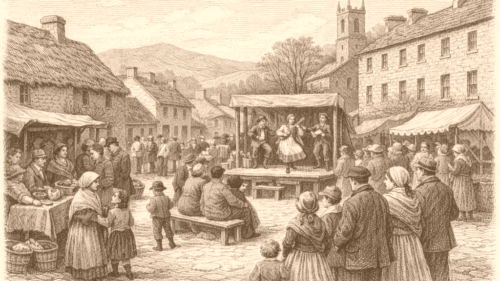
In 2026, Seachtain na Gaeilge is presented as a wide public festival rather than a single event, running from 1 to 17 March and described as international in reach. Its website frames participation as open to fluent speakers, learners, and people with only a few words. The programme emphasizes local organisers, schools, libraries, and community groups, while the archive places current activity beside a long record stretching back to 1902. The available material also shows how public culture is built through media, ambassadors, and printed guides.
Saint Ruadhán of Lorrha
Archived: 11 November 2026
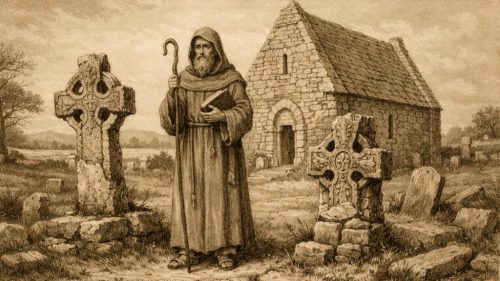
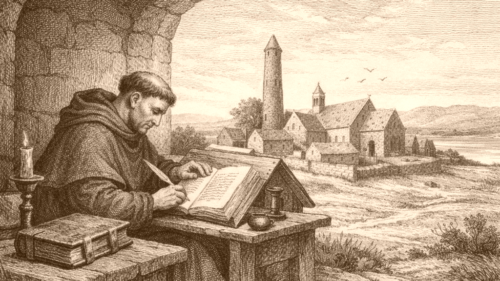
Saint Ruadhán of Lorrha, also rendered Ruadhán or Ruadhan, is remembered in Irish ecclesiastical tradition as a saint associated with Lorrha in County Tipperary. The surviving evidence presents him through a combination of liturgical memory, later historical writing, and the devotional life of the site that bears his name. The record is not a full contemporary biography, but it does preserve several points that recur in the sources: his association with Lorrha, his links with early Irish ecclesiastical tradition, and the commemoration of his death on 5 April. The Catholic Encyclopedia describes Ruadhán as one of the twelve “Apostles of Erin” and states that he studied under Saint Finian of Clonard.
Archived: 11th November 2026
Archive Memory
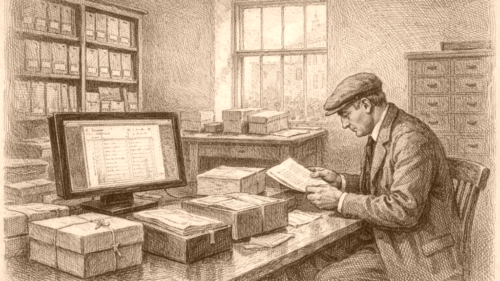
Archival descriptions of the Troubles present public memory through access, selection, and display. National Archives guidance notes that most records remain unavailable online, while related portals gather digitised files, research guidance, and educational material. Separate accession lists show the continuing acquisition of records, including prison-memory projects and advocacy papers. Web archive references add another layer, preserving a site that mixes source material, databases, and contextual sections. Together these records reveal an archive that is both custodial and interpretive.
Archived: 11th November 2026
Migration Movements
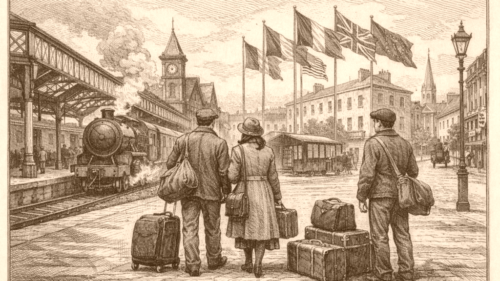
Ireland’s migration history in the European Union is visible in both law and population change. European free movement rules were transposed into Irish regulations in 2006, following the Union’s 2004 directive on residence and movement rights. Statistical releases show that inward migration rose strongly in the 2000s, with a later 2023 profile including other EU nationals, UK nationals, returning Irish nationals, and other groups. Recent reporting also shows that the Common Travel Area remains distinct from EU free movement. The sources together document legal framework, demographic change, and contemporary administrative pressure.
Archived: 11th November 2026
Chandra Flood
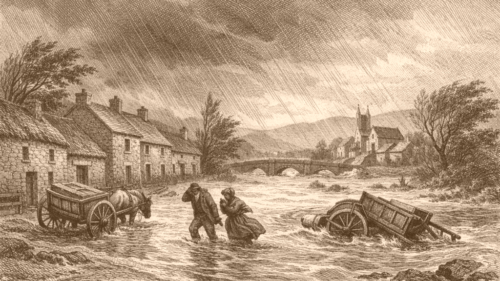
Storm Chandra brought a pronounced flooding emergency to eastern and southeastern Ireland in January 2026, with rivers bursting banks, roads closing, and saturated ground worsening the impact of rain. Contemporary reporting stressed that flooding, not wind, defined the event. When set beside older Irish weather records, Chandra appears as part of a long archive of storm descriptions that includes river floods, rain, sleet, hail, and other damaging weather. The comparison is limited to what the texts explicitly record, without assuming broader causes or meanings.
Archived: 11th November 2026
Climate Data
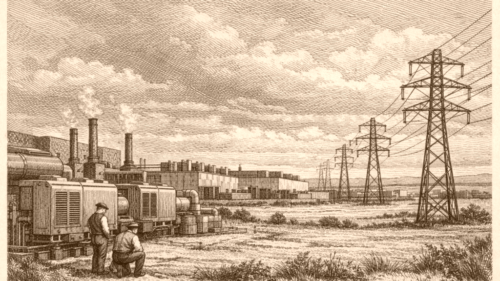
Irish climate and energy documents place data centres within a wider framework of observation, risk, and electricity system planning. The EPA describes Ireland as an island well positioned to assess climate change, while also noting continuing needs for sustained funding, better data access, and stronger observation networks. Later EPA and CRU documents show data centres as large electricity users with on-site generation, grid constraints, and policy rules linked to renewable energy, system adequacy, and emissions. Together these texts show an administrative effort to connect climate evidence with infrastructure oversight.
Archived: 11th November 2026
Neutrality Lock
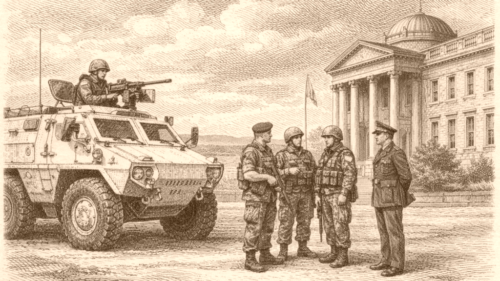
Irish neutrality and the Triple Lock are linked in law and argument, but not in identical form. Constitutional text affirms peace, arbitration, international law, and European commitments, while legislation governs overseas deployment through Government, Dáil, and United Nations authorisation. Later reporting shows that the Triple Lock became a named shorthand for that process and remained contested when governments considered changing it. Academic discussion also distinguishes claims of neutrality, nonalignment, and a distinct Irish position. The evidence here traces those overlapping frames without treating them as the same thing.
Archived: 11th November 2026
Ireland Europe
The cited texts place Irish historical writing within a network of manuscripts and editions spread across Dublin, Oxford, London, and Brussels. They describe the Annals of Ulster, Tigernach, Inisfallen, and the Fragmentary Annals as works preserved in specific manuscripts, some incomplete and some copied from earlier witnesses. The annals themselves record entries for the ninth to twelfth centuries and include references to attacks by heathens. Read together, the excerpts show Ireland as both the subject of annalistic record and part of a broader European scholarly and archival geography.
Saint Senan
Archived: 11 November 2026
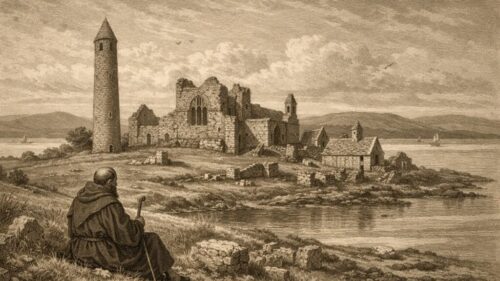
Saint Senan is remembered in Irish religious tradition as the saint most closely associated with Scattery Island in the Shannon estuary. The evidence supplied for his life is not a contemporary biography, but a mix of later medieval miracle literature, antiquarian description, and modern heritage interpretation. For that reason, only a limited historical outline can be stated with confidence: Scattery was a major monastic site linked with Senan, the island’s sacred identity remained tied to his name, and later writers continued to present it as a place of devotion and antiquity. The strongest evidence in the supplied sources concerns Scattery itself.
Archived: 11th November 2026
Boer Private
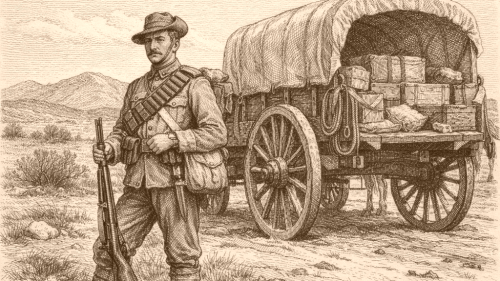
Archival guidance on the South African War, or Second Boer War, shows how records for an individual soldier must often be reconstructed from separate series rather than from one complete file. The National Archives notes that Boer War material is arranged by creating department, especially the War Office, Colonial Office, and Dominions Office, and that online searching depends on varied terms. Related guidance on British Army soldiers explains that self-contained service records are rare before 1914, so muster books, pay lists, discharge papers, and pension files often do the main work.
Archived: 11th November 2026
Industry Traces
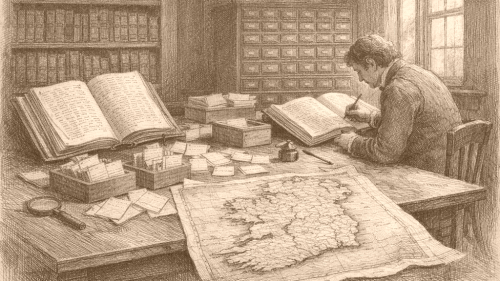
Irish historical research now moves through several digital gateways that describe and host annals, translated texts, and bibliographic listings. The annals sites identify major medieval chronicle collections, while university resources explain how digitised texts and research tools are arranged for access. A separate history index returns many results for industry as a keyword, ranging across articles, theses, and books. Together these records show a layered research environment, but they do not themselves provide a single unified narrative of industry; instead, they map routes into different kinds of historical material.
Archived: 11th November 2026
Council Records
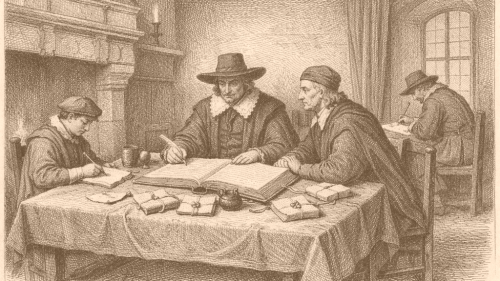
These excerpts trace the word council across three distinct settings: a manuscript catalogue notice, printed proclamations issued by Ireland’s Lords Justices and Council, and a nineteenth-century parliamentary debate about the Lord Lieutenant. The evidence is narrow, so the account stays close to what each passage explicitly states. It compares how authority is named, how records are described, and how responsibility is discussed, while avoiding claims about motives, policy outcomes, or the wider history of any council body.
Archived: 11th November 2026
Broadcasting Private
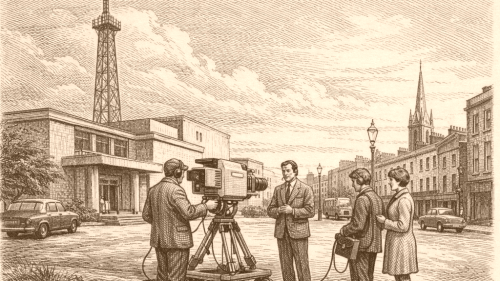
The records trace Irish broadcasting through two connected but different institutional settings: the state system built around radio and later RTÉ, and the commercial television history represented by UTV. The statutory framework of 1926 defines broadcasting, licences, and state stations; later accounts describe radio from 1926 and television from 1961, together with periods of political pressure and restriction. UTV is shown as the first commercial television broadcaster on the island of Ireland, launched in 1959 and later preserved through archival partnership. The excerpts also show how broadcasting archives now preserve, catalogue, and make accessible this material.
Archived: 11th November 2026
Conflict Records
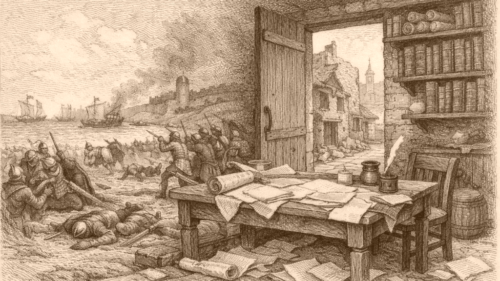
These selected texts place conflict within two different kinds of record: medieval annalistic tradition and modern museum interpretation. The annals described here survive through manuscript witnesses with gaps, fragmentary sections, and later editorial reconstruction. The museum texts identify specific moments of conflict, including Clontarf in 1014, the Four Courts fighting in 1922, and violence in Ulster during the War of Independence. Read together, the passages show different ways conflict is dated, framed, and preserved, while also preserving clear limits on what each excerpt actually states.
Archived: 11th November 2026
Housing Services
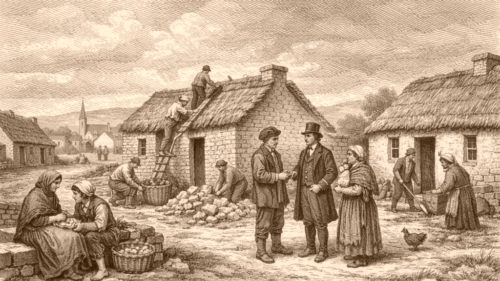
This narrative traces selected moments in Irish housing history through evidence on land reform, tenant purchase, and contemporary social housing governance in Northern Ireland. The earlier material describes a nineteenth-century struggle over landlord and tenant relations, the spread of land purchase schemes, and the transfer of ownership to occupying tenants under state-backed finance. The later material shows housing support and new developments delivered through collaborative arrangements among public, private, and voluntary bodies after devolution. The comparison is limited to the passages available and avoids claims beyond them.
Archived: 11th November 2026
Garvaghy Road
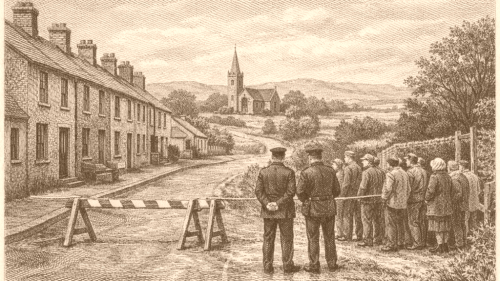
Garvaghy Road appears in these texts as a predominantly Nationalist area of Portadown that became central to the Drumcree dispute from 1995 onward. The material traces earlier local tensions in 1985, when a St Patrick’s Day band route and a loyalist demonstration raised objections around Garvaghy Road and Obins Street. It then shows the 1995 stand-off, mediation, police routing decisions, and the repeated re-routing of Orange parades in 1996, 1998, 1999, and 2000. The passages also note attempts at negotiation and the continuing focus on consent.
Yearly Notices
Archived: 11 November 2026
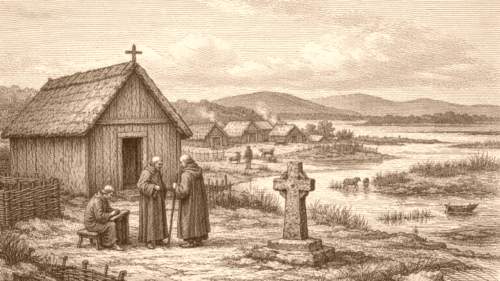
The annalistic record for 611 CE is brief but not empty. One Irish chronicle places the year as the first year of Suibhne Meann and records the burning of the church of Beannchair Uladh. The Annals of Inisfallen also preserve a 611-dated notice, including the deaths of Colmán Daimíne and Aengus, son of Aed Sláine. A nearby Inisfallen entry assigns lightning destruction of the army of Ulaid to AU 611. These notices allow a cautious year-specific account, but not a fuller narrative.
Ireland Observed
Archived: 11 November 2026
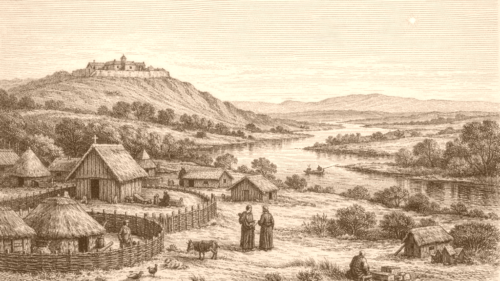
The annalistic record for 612 CE is brief and uneven, but it still allows a cautious reconstruction of what each text preserves. In the Fragmentary Annals, the year opens with the beginning of Mael Coba’s reign and a statement about its length. In Tigernach, the year contains the repose of To-Lua and a star seen in daylight. In Inisfallen, the 612 sequence records deaths, burials, and a lightning strike on the Ulaid. Ulster places similar royal material in a neighboring year label, which makes chronology a central issue. The surviving notices support comparison, not harmonisation.
Archived: 11th November 2026
Tricolour Commemoration
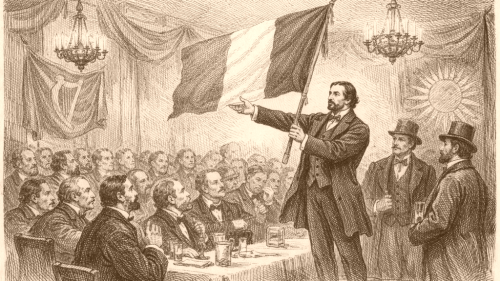
These records place the Irish tricolour in several distinct commemorative settings. One text preserves Thomas Francis Meagher’s 1848 presentation of the flag in Dublin, where he links its colours to truce and brotherhood. A later newspaper report describes a tricolour placed in Belfast’s official parlour and set beside a union flag. Institutional pages from the National Museum and National Library of Ireland frame flags, documents, and other materials within archival and commemorative collections, while presidential pages describe a public art commission and a speech on remembering ethically. Together, the excerpts show varying, directly recorded ways the flag enters public memory and display.
Saint Moling
Archived: 11 November 2026
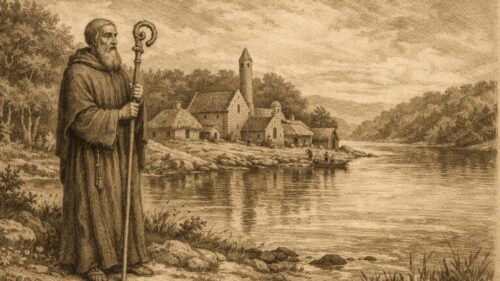
Saint Moling, also known in Irish tradition as Mo Ling and sometimes identified with the name Dairchilla, belongs to the early medieval world of Irish monastic saints. The historical record for his life is limited and much of what survives comes from later hagiography rather than from contemporary seventh-century documentation. For that reason, the safest way to describe him is as a saint remembered in tradition as an abbot and bishop associated with south-eastern Ireland, especially the monastery of Tech Moling, later St Mullins, on the River Barrow. Later biographical tradition places his birth in County Wexford, but the exact date of his birth is not securely known.
Archived: 11th November 2026
Defence Reform
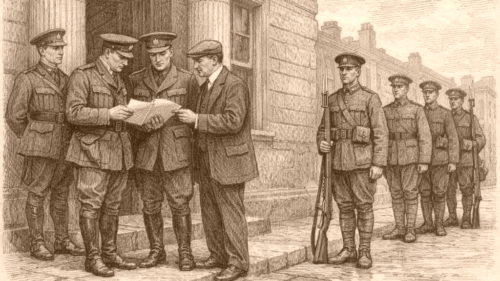
The records trace an early phase of defence reform in the Irish Free State through administrative files, parliamentary reports, and archival descriptions. They show a movement from wartime improvisation toward organised control: demobilisation after the Civil War, the establishment of departmental machinery, and the work of an Army Organisation Board in 1925. The evidence also records concern with accounts, organisation, training, and command. What can be observed most clearly is the sequence of institutional adjustment, rather than any single settled reform programme or complete administrative outcome.
Archived: 11th November 2026
Annal Reunion
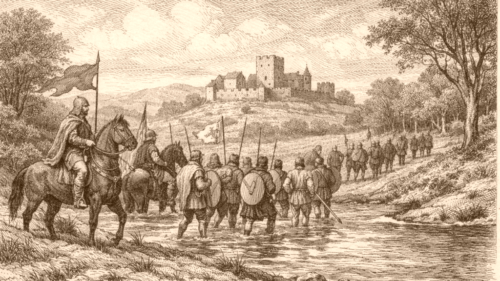
This study reads a single annalistic entry in the Annals of Ulster for 1510, where the term reunion appears in the middle of a longer description of armed movement, mustering, and withdrawal. The narrative names Gerald, Earl of Kildare, Aodh Ua Domnaill, James son of the Earl of Desmond, and other local groups, then follows the host toward Limerick and back again. The same year also contains notices of deaths and a pilgrimage to Rome. Editorial notes and manuscript descriptions provide the textual frame, but the paragraph sequence itself remains the main evidence.
Archived: 11th November 2026
Defective Housing
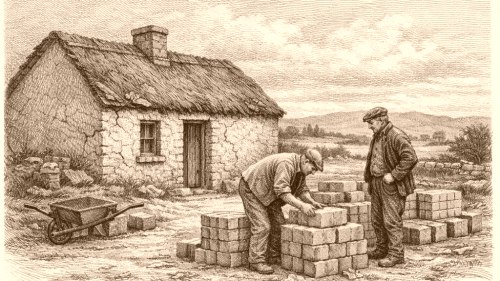
Irish housing redress for defective concrete blocks was set out in the 2022 Act, which established grants for the remediation of affected dwellings, named local authorities for administration, and assigned a central role to the Housing Agency. The statutory scheme also provided for applications, damage thresholds, appeals, second grants, charging orders, and recovery in specified circumstances. Contemporary professional material from the Society of Chartered Surveyors Ireland shows how rebuilding costs were calculated within the scheme, including regional updates and the exclusion of foundations from costings. Taken together, these records show a structured response focused on assessment, grant administration, and rebuilding parameters.
Archived: 11th November 2026
Carbon Burden
Irish research on carbon taxation consistently finds a tension between emissions reduction and household burden. Across studies from 2004 to 2024, carbon taxes are described as regressive when households are compared by income, because lower-income households spend a larger share of income on energy and transport and can face higher relative losses. Later work adds that recycling revenue through transfers or tax cuts can soften or reverse those effects. The studies also compare different recycling designs, showing that outcomes differ across efficiency, equity, and household welfare.
Archived: 11th November 2026
Kenova Legacy
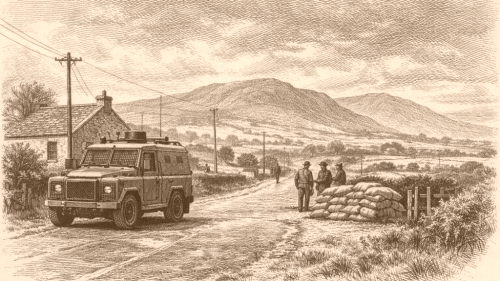
Operation Kenova is presented in PSNI material as a series of legacy investigations and reviews built around events from the Troubles and the needs of victims and families. The final and interim reports stress the difficulty of investigating decades-old crimes, the importance of trust, and the harm caused by secrecy and non-disclosure. Related Kenova pages show a wider review structure, including independent and professional scrutiny. Government statements in 2024 and 2025 place Kenova within a changing legacy policy debate, linking it to reforms on inquests, disclosure, and future investigations while acknowledging outstanding legal and procedural issues.
