1100–1199 CE

Frontiers of Kingship
In 1100 Ireland remained divided among local and provincial kings, as Muirchertach Ua Briain of Munster and Domnall Ua Lochlainn of Ailech contested supremacy. Muirchertach’s northern expedition to Eas Ruaidh failed, Leinster raided Airgialla, and Dublin’s fleet was destroyed in Inis Eógain. Domnall retaliated by ravaging Brega and Fine Gall and captured Donnchad Ua hEochada, king of Ulaid. Deaths of rulers and churchmen altered regional politics. Warfare burdened rural communities, while Dublin’s maritime economy remained important. Monasteries sustained learning, pilgrimage and mediation. Neither overking prevailed; their struggle intensified before Muirchertach’s major 1101 campaign, which devastated Ailech and displayed southern power.

Cashel and Aileach
In 1101, Ireland remained divided between Muirchertach Ua Briain of Munster and Domnall Ua Lochlainn of Aileach, neither an uncontested high king. Muirchertach enhanced his authority by granting Cashel’s royal site to the Church, supporting reform and weakening Éoganachta claims. His coalition’s circuit through Connacht and the north destroyed Aileach, extracted hostages, and ravaged communities, yet failed to defeat Domnall. Local cattle raids, dynastic killings and church attacks continued. Armagh secured release of Ulaid king under sacred oaths. Seaborne raiders plundered Inis Cathaig amid Scandinavian pressure. Good harvests coexisted with cattle disease, while religious and learned institutions sustained collective memory.

A Year of Truces
In 1102, Ireland experienced negotiated truces rather than unity, as Muirchertach Ua Briain and Domnall Ua Lochlainn balanced competing claims to national authority. Armagh held hostages securing their one-year agreement, although raids and killings continued across Ulster, Connacht, Bréifne and Meath. Muirchertach also confronted Magnus Barelegs’ fleet before forging a marriage alliance with Magnus’s son Sigurd, and linked his dynasty to Norman rebel Arnulf de Montgomery. Churches served as guarantors, learning centres and targets for attack. Rural communities bore warfare’s economic burden, while ports sustained Irish Sea trade. These fragile personal settlements reorganised conflict, preceding renewed campaigns thereafter in 1103.

Victory at Mag Coba
In 1103, Ireland remained divided between Muirchertach Ua Briain, dominant in the south, and Domnall Ua Lochlainn of Ailech. Muirchertach led a coalition from several kingdoms, including Dublin, against the Ulaid and Domnall, but divided his forces after campaigning near Armagh. On 5 August Domnall defeated the remaining coalition at Mag Coba, killing regional kings and nobles and capturing royal insignia. The victory checked southern ambitions without ending Muirchertach’s power. Later that month Ulaid killed Norway’s King Magnus Barelegs, ending his Irish expansion. Annals also note churchmen, learning, scholarship, rural life, economies, Dublin trade, local conflicts, and a rare birth.

Power After Mag Coba
In 1104, Ireland remained unsettled after Domnall Ua Lochlainn’s victory over Muirchertach Ua Briain’s coalition at Mag Coba. Domnall strengthened northern influence, possibly taking Ulaid hostages and raiding towards Tara, although later sources make dating uncertain. Muirchertach reportedly retaliated in Mag Muirthemne by destroying crops, illustrating warfare’s economic damage. Ulaid defeated Dál Araide, while local rulers died through accidents, feud and conflict. Ecclesiastical life continued through bishops’ and scholars’ deaths, church roofing at Clonmacnoise, manuscript culture, and gradual reform. Ports, agriculture, tribute, alliances and hostage-taking underpinned shifting regional power; no ruler permanently controlled Ireland across its competing kingdoms at all.

Snow, Hostages and Reform
In 1105, rivalry between Muirchertach Ua Briain of Munster and Domnall Ua Lochlainn of the north continued without decisive resolution. Muirchertach campaigned in Mide, expelled Donnchad Ua Máel Sechlainn, seized livestock, secured hostages and sought to reshape midland politics. Dynastic killings and deaths underlined regional instability. Armagh’s head, Domnall son of Amalgaid, attempted mediation in Dublin but died; his successor Cellach began an important, though gradual, reforming ecclesiastical leadership. Heavy snow devastated livestock, exposing rural vulnerability. Meanwhile, a camel from Alba, a huge fish near Limerick, and clerical notices reveal maritime links, economic activity and enduring learned religious communities alike.

Kingship and Reform
In 1106, Ireland’s annals reveal political and ecclesiastical change rather than a single decisive event. In Mide, Donnchad Ua Máel Sechlainn was killed after seeking Domnall Mac Lochlainn’s aid against Muirchertach Ua Briain, while Murchad son of Domnall became king. In Connacht, the young Tairdelbach Ua Conchobair succeeded his brother, beginning a long, influential reign. Cellach of Armagh toured northern and southern territories, collecting dues and receiving episcopal dignity, strengthening Armagh’s primacy and church reform. Recorded clerical deaths, violence at Clonmacnoise, and a fire at Dísert Diarmata illuminate monastic organisation, insecurity and material life, amid tribute, livestock and regional commerce.

Peace Amid Storms
In 1107 Ireland remained divided between powerful regional kings, notably Muirchertach Ua Briain of Munster and Dublin and Domnall Ua Lochlainn in the north. Cellach of Armagh negotiated a year's truce between them, demonstrating growing clerical influence, although local feuds and killings continued across Ulster, the midlands and Munster. Muirchertach imprisoned and released his nephew in Dublin and plundered Mungret. Severe snow, rain, wind and lightning killed people and livestock, ruined crops, and damaged houses and woodland. Lightning burned Kincora and Cashel. Church appointments and reform advanced, while trading towns, scholarship and rural agriculture underpinned society throughout the island alike.

Fire and Fragmented Power
In 1108, Ireland remained divided among provincial overkings, lesser dynasties and Hiberno-Norse towns, despite peace between Muirchertach Ua Briain and Domnall Ua Lochlainn. Local conflict persisted: Niall Ua Lochlainn raided Corann, rulers were killed in Ulaid, Bréifne and elsewhere, and strongholds were attacked. Cellach of Armagh visited Connacht, collecting dues and extending Armagh’s primatial authority, while clerical disputes employed fasting and sacred sanctions. Lightning was blamed for Limerick’s fire, which spared its external market. Good weather, plentiful grain and oak-mast aided rural prosperity, yet storms, raids and killings exposed enduring insecurity. The year foreshadowed church reform amid fragmented, competitive power.

Armies and Intercession
In 1109, rival Irish overkings Muirchertach Ua Briain and Domnall Ua Lochlainn mobilised major coalitions, while Murchad Ua Máel Sechlainn of Mide, allied to Ua Briain, raided Bréifne. The invaders seized cattle, captives and booty but failed to secure hostages; Aed Ua Ruairc retaliated, and Ardbraccan was burnt. Cellach of Armagh prevented confrontation between the principal armies at Sliab Fuait, arranging a one-year truce. Ua Lochlainn subsequently compelled Ulaid submission through hostages, amid continuing local feuds. Annals also note clerical deaths, church learning, severe weather, fasting, plentiful apples, crop-destroying mice, and vulnerability to warfare and environmental disruption throughout the island.

Power Across Provinces
In 1110, Ireland remained divided among local and provincial rulers, dominated by Muirchertach Ua Briain of Munster and Domnall Ua Lochlainn of Ailech. Ua Lochlainn raided Connacht, taking many cattle and captives, while its young king, Tairdelbach Ua Conchobair, won at Ros but suffered defeat at Mag Brengair. Elsewhere, the Ulaid plundered Mucnám and regional kings were killed. Dynastic deaths affected Munster and northern alliances. Cellach of Armagh visited Mide, collecting dues and advancing church reform. Learned churchmen also died. Annals chiefly preserve elite violence and religion, while rural farming, trade, craftsmanship and learning sustained wider society throughout the year.

Synod of Ráith Bressail
In 1111 Ireland remained divided among competing rulers, notably Muirchertach Ua Briain in the south and Domnall Ua Lochlainn in the north, while Tairdelbach Ua Conchobair extended Connacht’s influence. Raids, hostage-taking, dynastic conflict and attacks on churches, including Clonmacnoise, demonstrated political instability. The Synod of Ráith Bressail, attended by leading clerics and royal patrons, promoted ecclesiastical discipline and a territorial diocesan framework under Armagh and Cashel, though implementation was uneven. A Meath synod also negotiated church boundaries. Ulaid’s conflict with Cenél nÉogain, harsh winter conditions, and fires at several settlements further affected society, trade and rural livelihoods across Ireland broadly.

Fire and Foray
In 1112, rivalry between northern overking Domnall Ua Lochlainn and Munster’s Muirchertach Ua Briain shaped Irish politics. Domnall raided Fine Gall near Dublin, seizing cattle and captives, demonstrating northern power in a prosperous region. Armagh’s enclosure, church and neighbouring quarters burned on 23 March, amid implementation of diocesan reforms agreed at Ráith Bressail. Deaths included leading officers of Derry, Kildare and Clonfert, illustrating enduring ecclesiastical and dynastic institutions. Terryglass and Fore also suffered fires, while a local aristocrat was killed. Conversely, an abundant mast crop aided rural households and pig husbandry, underscoring countryside wealth vulnerable to warfare and disruption alike.
Armies Held Apart
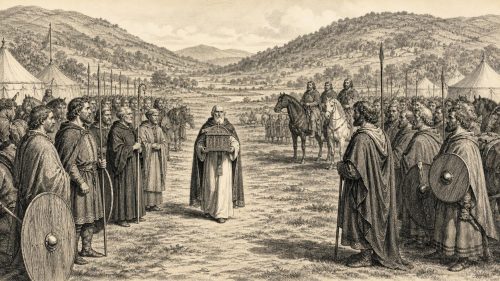
In 1113, Ireland was dominated by rivalry between Muirchertach Ua Briain of Munster and Domnall Ua Lochlainn of Ailech, whose coalitions threatened conflict. Domnall expelled Donnchad Ua hEochada and partitioned Ulaid, while Muirchertach mobilised Leinster and Connacht forces in response. On two occasions Cellach, successor of Patrick at Armagh, prevented battle, ultimately securing a year’s truce with the sacred Bachall Ísu. The events demonstrated Armagh’s ecclesiastical authority amid church reform. Local dynastic killings, cattle mortality, pilgrimage deaths on Croagh Patrick, and shrine-work at Clonmacnoise also reveal instability, devotion, economic vulnerability, and patronage. Neither overking prevailed before Muirchertach’s illness in 1114.
A Kingship Unravels
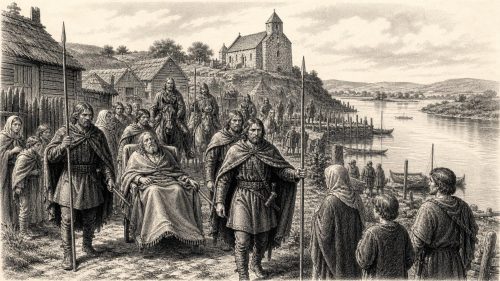
In 1114, Muirchertach Ua Briain’s illness shattered his dominance of Ireland, enabling his brother Diarmait to seize Munster and confine him at Killaloe. Domnall Ua Lochlainn led a northern coalition into Munster, but its campaign ended in a year’s truce, influenced by the independent Connacht king, Tairdelbach Ua Conchobair. Tairdelbach suppressed rivals, raided Meath and consolidated Connacht. Elsewhere, warfare, killings, depositions and blinding exposed unstable successions. Church reform coexisted with monastic institutions, whose leaders’ deaths and fires were recorded. Raids, forced provisioning and livestock disease damaged communities. No settlement emerged: Uí Briain power waned as Connacht became a decisive rival.

Winter of Rival Kings
In 1115, severe frost and snow caused widespread hunger, livestock deaths and disruption across Ireland, particularly Leinster. Muirchertach Ua Briain recovered from illness, regained Munster after his brother Diarmait’s capture, and reasserted influence through campaigns in Brega and Dublin, where his son’s forces defeated Leinster leaders. Yet attacks on churches at Ardbraccan and Clonmacnoise exposed warfare’s damage to sacred centres. Tairdelbach Ua Conchobair raided Thomond, removed a Ua Briain claimant, survived internal opposition, deployed a Shannon fleet and allied with Mide. His gifts at Clonmacnoise combined piety and political display. Despite Muirchertach’s recovery, Connacht’s growing power signalled a shifting balance.

Famine and Fracture
In 1116, Ireland faced intertwined dynastic, military and environmental crises. Munster’s Uí Briain kingship fractured as Diarmait displaced the ailing Muirchertach, enabling Connacht’s Toirdelbach Ua Conchobair to raid Thomond, burn Kincora and challenge Munster forces. Severe winter weather produced famine and pestilence, especially in Leinster and southern Ireland, causing mortality, displacement and abandoned settlements; warfare worsened shortages through plunder and captivity. Fires damaged major ecclesiastical centres, including Armagh, Killaloe, Cork, Emly, Lismore, Aghaboe and Clonard, while attacks struck church communities. Despite disruption, Cellach of Armagh completed a Connacht visitation, demonstrating enduring ecclesiastical authority and institutional resilience amid severe widespread hardship.

Power in Transition
Ireland in 1117 remained fragmented as Muirchertach Ua Briain’s illness and family rebellion weakened Munster, while Tairdelbach Ua Conchobair of Connacht expanded his influence. Connacht forces defeated Munstermen at Lettracha Odráin after destructive reciprocal raids, and Tairdelbach took hostages from Mide’s king. Leinster and Dublin lost their shared ruler, Diarmait son of Énna, while northern kindreds continued violent rivalries. Church life was marked by numerous clerical deaths, notably reformer Máel Muire Ua Dúnáin, and the killing of Kells’ coarb and community. Following the 1116 famine, warfare intensified hardship for communities, more clearly exposing shifting overlordship, ecclesiastical vulnerability and regional interdependence.

Munster Divided
In 1118, Diarmait Ua Briain’s death intensified Munster’s succession crisis and enabled Toirdelbach Ua Conchobair of Connacht to reshape southern politics. After fighting near Glanmire, where Brian Ua Briain was killed, Toirdelbach allied with Tadc and Cormac Mac Carthaig. He allocated Desmond to Mac Carthaig and Thomond to Diarmait’s sons, securing obedience through hostages and weakening Uí Briain supremacy. He also attacked Kincora and extended influence over Dublin, Leinster and Osraige. Regional warfare continued elsewhere. Royal deaths, church affairs, learning and burdens of military hostings reflected a society unsettled by conflict. The unstable partition nevertheless established Munster’s enduring political division.

A Kingship Transformed
In 1119, Muirchertach Ua Briain died at Killaloe, ending a weakened southern bid for island-wide overlordship as Tairdelbach Ua Conchobair expanded Connacht influence across Munster. Ireland remained divided: Domnall Ua Lochlainn retained northern power, while Ua Briain successors faced rivalry, partition and Connacht intervention. Tairdelbach’s Shannon fleet, supported by Leinster, Osraige and Dublin allies, depleted Munster’s resources, though Thomond forces suffered defeat in Kerry. The year also saw massacre of poet Cú Collchaille Ua Baigelláin’s household and Niall Ua Lochlainn’s killing, threatening northern succession. Church reform, monasteries, farming, towns and waterways underpinned political, economic and cultural life in significant ways.

Bridges and Broken Peace
In 1120, Ireland remained divided among competing rulers rather than subject to a single high king. Toirdelbach Ua Conchobair of Connacht invaded Meath, expelling Murchad Ua Máel Sechlainn despite disputed ecclesiastical guarantees, before confronting Domnall Mac Lochlainn at Athlone; their peace proved fragile. Toirdelbach reinforced power by building three strategic bridges and celebrating Tailtiu’s royal assembly. In Munster and Osraige, hostage-taking, payments and imprisonment exposed overlapping claims. Cellach of Armagh visited Munster, collecting dues and affirming church influence in diplomacy and reform. Regional killings, trade, agriculture and labour underpin the annals’ portrait of political conflict, mobility and contested authority throughout.

Power Shifts West
In 1121, Domnall Ua Lochlainn’s death ended the northern overking’s role as Connacht’s principal counterweight, strengthening his son-in-law Toirdelbach Ua Conchobair’s claim to wider supremacy. Toirdelbach invaded Munster, devastating territories, churches and Lismore’s protected lands, taking cattle and hostages, and attempting to balance Mac Cárthaigh and Uí Briain interests. His forces nevertheless suffered notable losses. Church politics saw Armagh’s Cellach temporarily assume Dublin’s bishopric amid reform and Canterbury connections. Regional feuds killed several rulers, including one at Bangor cemetery. Fires and storms damaged ecclesiastical settlements at Telach Inmainne and Armagh, revealing communities vulnerable to warfare, disaster, tribute and shifting lordship.

Connacht Ascendant
In 1122, Tairdelbach Ua Conchobair of Connacht emerged as Ireland’s foremost overking, exploiting northern weakness after Domnall Ua Lochlainn’s death. He secured Munster’s division through submission, capture and installation of rival rulers, campaigned in Mide and towards Lough Erne, and received Leinster-Dublin recognition. Nevertheless, northern raids, Ulaid dynastic conflict and midlands warfare showed authority remained contested. Annals also record cattle raiding’s human and economic burden, revealing rural wealth and royal logistics. Ecclesiastical life saw relic discovery at Lann, prominent clerical deaths, pilgrimage, learning and gradual reform alongside older offices. Connacht’s ascendancy was influential, but Ireland remained politically fragmented in practice.

Cross and Kingship
In 1123, Tairdelbach Ua Conchobair, Connacht’s dominant king, campaigned through southern Ireland, securing Desmond hostages amid Mac Carthaig succession disputes and asserting, rather than fully controlling, high-kingship. In Mide, Gailenga attackers burned Murchad Ua Máelshechlainn’s residence at Duleek, exposing regional instability. Violence also struck Emly’s church and Osraige. A fragment of the True Cross reached Ireland; Tairdelbach secured part for Roscommon and commissioned the Cross of Cong, combining devotion, patronage and artistry. Clerical deaths and pilgrimage reflected church reform. Annals also reveal warfare’s effects on agrarian life, urban trade, maritime travel, and fragile local allegiances throughout Ireland’s contested political order.

Castles, Fleets and Hostages
In 1124 Tairdelbach Ua Conchobair, Connacht’s dominant king, faced a broad alliance led by rulers of Desmond, Leinster, Meath and Bréifne. He transported a fleet around Doonass, campaigned along the Shannon, established a longphort, raided rebellious territories and executed Desmond hostages, forcing opponents to disperse. Connachtmen built fortifications at Galway, Cúl Maile and Dún Leodha, strengthening strategic routes. Regional killings, raids and an accident involving Tara’s king reflected continuing instability. Church reform advanced through Malachy’s consecration as bishop of Connor, Bangor’s church and Clonmacnoise’s tower. Limerick suffered a devastating fire. Tairdelbach retained supremacy, but required constant warfare, negotiation and infrastructure.

Tairdelbach Divides Meath
In 1125 Tairdelbach Ua Conchobair, king of Connacht, extended his supremacy across central and southern Ireland through campaigns, tribute and political appointments. After southern revolts, warfare affected Limerick, Lismore and coastal Munster. He exacted compensation at Aghaboe, asserted influence over Leinster and Dublin, then invaded Meath after Murchad Ua Mael Sechlainn destroyed Shannon bridges. Tairdelbach expelled Murchad and partitioned Meath among dependent rivals, provoking immediate killings and continued instability. Fighting also affected Brega, Airgialla and Connacht. Meanwhile Armagh’s church received a new roof, prominent clerics died, and warfare burdened farming, trade and local communities. His authority remained powerful but insecure.

A King on Campaign
In 1126, Toirdelbach Ua Conchobair exploited the death of Leinster’s king to secure hostages, obtain Dublin’s submission and install his young son Conchobar as ruler of Dublin and, according to some annals, Leinster. From a long encampment in Ormond, he campaigned against Desmond, Osraige and other regions, taking cattle, captives and tribute. Raiding and counter-raiding also affected Connacht, Tír Conaill and the north-east, revealing unstable alliances and local conflict. Cellach of Armagh sought to restrain warfare while advancing church reform and consecrating a stone church. Cork burned, learned clerics died, and Toirdelbach’s extensive but coercive ascendancy remained fragile throughout Ireland.

Cormac’s Return from Lismore
In 1127, Tairdelbach Ua Conchobair, king of Connacht, invaded Munster by land and sea, plundered Cork, displaced Cormac Mac Carthaig and partitioned the province. Cormac’s restoration from Lismore, backed by Ua Briain allies, quickly overturned this settlement, while hostage threats and naval conflict exposed its brutality. Tairdelbach’s son was expelled from Dublin and Leinster, and disputes in Kildare and Ulaid demonstrated persistent regional autonomy. Churchmen mediated politics, religious centres remained influential, and sacred objects expressed power. Warfare burdened ordinary communities, despite continuing trade, scholarship and artistic patronage, confirming limits to Tairdelbach’s high-kingship across Ireland during the unstable and contested year.

War and Patrick’s Peace
In 1128 Ireland was marked by warfare, shifting alliances and ecclesiastical intervention. Toirdelbach Ua Conchobair raided Leinster, Wexford and Dublin, reaffirming Connacht’s reach after resistance to his rule. Tigernán Ua Ruairc suffered defeats amid northern and midland conflicts, while attacks on Cellach of Armagh’s entourage brought moral condemnation. Conchobar Mac Lochlainn expanded power through hostages and victories but was censured for burning Trim’s churches. Local rulers also faced violent succession struggles. Cellach negotiated a temporary Connacht–Munster peace, demonstrating Armagh’s diplomatic influence. Church offices remained politically contested, while ports, cattle wealth, monasteries and the Cross of Cong reflected Ireland’s connected culture.

Power Across the Shannon
In 1129, Toirdelbach Ua Conchobair strengthened his contested high-kingship by building a timber-and-earth castle, and probably a bridge, at Athlone, commanding the Shannon crossing into Meath. Northern politics remained unstable as Magnus Mac Lochlainn briefly displaced Conchobar before being killed, while raids and killings marked wider local conflicts. A severe summer drought caused animal deaths and threatened livestock wealth. Cellach of Armagh died, prompting a prolonged succession dispute between Muirchertach mac Domnaill and reformers backing Malachy. Robbery of Clonmacnoise's rich altar treasures highlighted monastic wealth and vulnerability. These events intertwined royal ambition, warfare, environmental strain, ecclesiastical reform, and regional authority.

Fleets, Hostages and Harvest
In 1130, Ireland remained politically fragmented, as provincial kings used alliances, hostages, tribute and warfare to extend authority. Toirdelbach Ua Conchobair of Connacht mounted naval raids to Tory Island, Ros Guill and Desmond, demonstrating reach without securing conquest. Conchobar Ua Lochlainn defeated Ulaid, plundered its lands and obtained hostages through a peace at Armagh. Tigernán Ua Ruairc defeated Mide forces, advancing Bréifne's interests. Swords was burned, while Clonmacnoise treasures were recovered in Limerick. Church reform remained contested at Armagh. Warfare damaged communities through captivity and livestock seizure, though annals record an abundant fruit harvest and poet Gilla Pátraic Ua hAireachtaigh.

A Kingdom Under Pressure
In 1131, Toirdelbach Ua Conchobair’s contested high-kingship faced coordinated pressure from Munster, northern rulers and midland rivals. Connacht forces raided Uí Conaill Gabra and Desmond, possibly using a fleet to reach Rosscarbery, while Conchobar Ua Briain campaigned through Leinster and Mide, defeated Connacht cavalry, and took hostages. A northern coalition invaded Connacht but was repelled; subsequent raids exposed its fragility. Conflict continued within Munster, and Clonard was plundered twice. Church leadership and reform remained unsettled, while genealogical scholarship may have advanced. Warfare disrupted communities through demands for cattle, transport, provisions and service, without producing permanent territorial change across the island.

War Across the Shannon
In 1132, Toirdelbach Ua Conchobair’s high-kingship faced coordinated resistance from Munster, Meath, Bréifne, Conmaicne and northern rivals. Using fleets and fortified crossings, he raided Munster, installed Muirchertach Ua Maelsechlainn in Meath and repelled attacks on Athlone. However, Munster forces destroyed Bun Gaillimhe, defeated Iar Connacht and killed leading western nobles, exposing Connacht’s vulnerability. Raiding devastated communities and cattle wealth. In Leinster, Uí Chennselaig attacked Kildare, burning its church, killing many and abducting its female leader. Malachy Ua Morgair was consecrated for Armagh amid reform conflict. The year demonstrated interconnected warfare, dynastic competition, ecclesiastical rivalry and the limits of Toirdelbach’s authority.

War, Truce and Murrain
In 1133, Toirdelbach Ua Conchobair’s disputed high-kingship faced a Munster invasion of Connacht, which killed an heir but secured no submission. He later agreed a year’s truce with Conchobar Ua Briain, while Mide and Bréifne destroyed his Athlone bridge and fort. Feuds in Mide, Leinster and Fine Gall brought assassinations, reprisals, raids and the burning of Lusk church. Regional conflicts, deaths and accidents continued. Armagh’s succession remained divided between reformer Malachy and Muirchertach mac Domnaill. Clerical visits, learned figures and burnings featured in the annals. A devastating cattle and pig murrain damaged Ireland’s economy; an August solar eclipse was recorded.

Chapel, Campaigns and Cattle
In 1134, Tairdelbach Ua Conchobair’s dominance faced a broad southern challenge led by Cormac Mac Carthaig of Desmond, though church mediation prevented renewed invasion of Connacht. Cormac’s alliance with Uí Briain collapsed into Munster conflict, while Diarmait Mac Murchada pursued campaigns in Osraige with Dublin’s support against rivals including Waterford. Cormac also consecrated the Romanesque chapel at Cashel, asserting royal and ecclesiastical prestige. At Armagh, Saint Malachy’s accession advanced reform against hereditary control. Deaths of clerics reflected monastic institutions and wider Christian connections. Cattle disease, destructive weather, killings and warfare impoverished rural communities, revealing Ireland’s political ambition and social fragility.

Tairdelbach’s Divided Ireland
In 1135, Ireland remained politically fragmented despite Toirdelbach Ua Conchobair’s strong, contested overlordship. Murchad Ua Máelshechlainn asserted Mide’s strategic river power by receiving hostages on the Shannon. Connacht endured dynastic killings, battles, raids and the destruction of Roscommon, while northern Uí Néill rivals, Munster factions and smaller kingdoms pursued warfare and shifting alliances. Malachy strengthened his disputed authority at Armagh by acquiring the Bachall Ísu, advancing church reform. Deaths of leading bishops and clerics, notably at Lismore, marked generational change. Fires damaged ecclesiastical centres, lightning struck towers, and plentiful mast harvest supported food supplies amid rural, maritime and market-based society.

Kings, Croziers and Raids
In 1136 Ireland remained divided among kings, church jurisdictions and raiding forces. Tairdelbach Ua Conchobair, pre-eminent king of Connacht, faced dynastic threats, imprisoning Ruaidrí despite clerical guarantees, while another son, Áed, was blinded and a rival claimant killed. In the north, Conchobar Ua Lochlainn’s murder enabled Muirchertach Mac Lochlainn’s accession. Conflict devastated Mide and Bréifne, where cattle raids and attacks included Clonard’s plundering. Leinster, Dublin and Munster saw disputed campaigns. Malachy of Armagh advanced church reform and relinquished office amid succession. Clerics, monasteries and men remained vulnerable yet influential. Annals reveal power founded on kinship, livestock, violence, authority and memory.

Tairdelbach’s Waterford Fleet
Ireland in 1137 remained politically fragmented, as Tairdelbach Ua Conchobair of Connacht asserted contested overlordship through warfare and naval power on the Shannon. Rivalries involved Bréifne, Mide, Leinster, Munster and Hiberno-Norse towns. An allied fleet from Leinster, Dál Cais, Dublin and Wexford besieged Waterford, gaining hostages but not conclusively conquering it. Dynastic killing and raids destabilised Mide and Connacht. In the church, Malachy yielded Armagh to reformer Gilla meic Liac. A severe storm and widespread fires damaged communities. Despite violence, trade, maritime capacity, scholarship, artistic patronage and ecclesiastical reform demonstrated a dynamic, connected society within a rapidly changing medieval world.

Kings, Clerics and Fire
In 1138, Ireland’s contested political order produced both stalemate and upheaval. Toirdelbach Ua Conchobair’s coalition confronted Meath, Leinster and Dublin without battle, confirming his reach but not supremacy. In Munster, Cormac Mac Carthaig, royal patron of reform and Cashel’s Romanesque chapel, was murdered through an Uí Briain-backed conspiracy, restoring their over-kingship while preserving Mac Carthaig resistance in Desmond. Raids, killings and crop destruction exposed local rivalries and contributed to famine. Armagh’s new primate, Gilla Meic Liac, visited Munster, while clerical deaths and fires affected churches. At Armagh, Máel Brigte completed a Gospel manuscript, demonstrating enduring scholarship amid conflict and instability.
Power and Reform
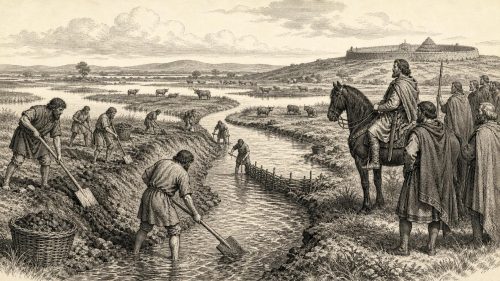
In 1139, Ireland remained politically fragmented, with Tairdelbach Ua Conchobair’s high-kingship dependent on force, alliances and hostages. He demonstrated authority by diverting the River Suck through marshes, strengthening Connacht’s eastern frontier, and by blinding a rival. Across Ireland, dynastic feuds brought killings, church burnings, plundering and violated sanctuary, while Munster’s Uí Briain exploited Cormac Mac Carthaig’s recent death. Church leaders negotiated peace between Munster and Leinster, and Malachy began his journey towards Rome, linking reformers with continental Christianity. Dublin’s religious life developed, poets and clerics died, and ordinary people directly bore warfare, tribute and labour demands during the troubled year.
Bridges and Primacy
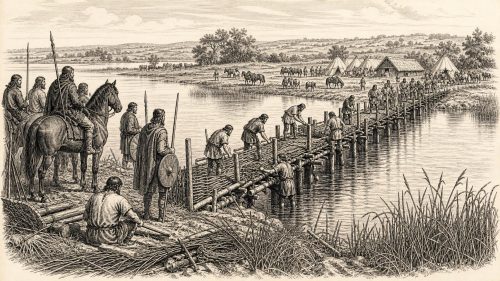
Ireland in 1140 saw contests for political control and ecclesiastical reform. Toirdhealbhach Ua Conchobhair of Connacht sought dominance through Shannon bridges, campaigns, raids and negotiated settlements, but faced resistance from Meath, Bréifne and local peoples. Murchadh Ua Maeleachlainn strengthened his Meath kingship, while Tighearnán Ua Ruairc briefly lost and regained leadership. Gelasius of Armagh visited Connacht, asserting Patrician primacy with royal support. Malachy Ua Morgair pursued papal recognition and continental monastic links, preparing for Cistercian expansion. Dublin defeated Waterford's Hiberno-Norse forces. Warfare, cattle-raiding, church offices, learning and urban trade reflected a politically fragmented yet increasingly connected Ireland during that year.
Diarmait’s Leinster Purge
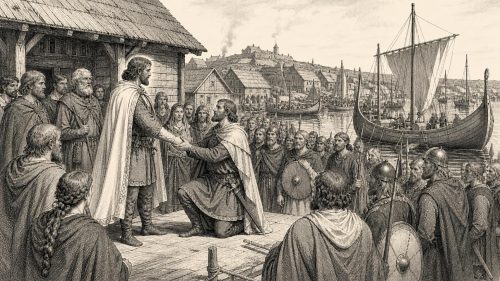
In 1141, Ireland remained a polity where Tairdelbach Ua Conchobair exercised contested high-kingship through raids, fortifications, hostages and submissions. His campaign in the midlands coincided with dynastic killings in Meath and lordships. Leinster’s Diarmait Mac Murchada ordered, or authorised, a purge that killed or blinded leading nobles, securing power but weakening provincial cohesion; he was defeated while raiding Laois. Conchobar Ua Briain gained Dublin, then his forces raided Connacht and destroyed Dún Gaillimhe. Church communities suffered and received protection, while monastic penance and burial bound elites to religious institutions. Cattle-raiding, provisioning, Dublin trade and rivalries underpinned an unstable political order.

Mellifont and Rival Kings
In 1142, Ireland remained politically fragmented despite Toirdelbach Ua Conchobair’s claim to high kingship. His coalition army devastated lands en route to Munster but gained neither cattle nor Munster hostages. Conchobar Ua Briain died, enabling his brother Toirdelbach to take Munster amid dynastic conflict, while Muirchertach Mac Lochlainn fought in the north and Ottir from the Hebrides assumed Dublin’s leadership. Raiding, crop destruction, church burnings and clerical deaths exposed insecurity affecting rural and religious life. Mellifont Abbey, founded by Malachy Ua Morgair with Donnchad Ua Cerbaill’s patronage, introduced Ireland’s first Cistercian house, linking native reform, politics and Clairvaux’s continental network.

Kingship and Sacred Guarantees
In 1143 Tairdelbach Ua Conchobair, Connacht’s dominant king, deposed Murchad Ua Máelshechlainn of Mide despite sacred guarantees, installed his son Conchobar, and provoked clerical condemnation. His authority was equally strained by the imprisonment of another son, Ruaidrí, despite ecclesiastical sureties, and by Munster’s contested incursion into south Connacht. In the north, Muirchertach Mac Lochlainn was temporarily expelled. Annals also record raids, destructive fires at major settlements, and church land transactions. The year revealed intertwined kingship, ecclesiastical power and local economies, while highlighting unreliable chronologies and conflicting annalistic accounts. Religious reform advanced through Mellifont and St Malachy alongside older sacred customs.
Conchobar Slain at Bealach
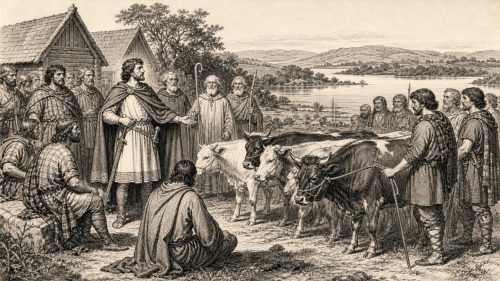
In 1144, Conchobar Ua Conchobair, Tairdelbach of Connacht’s son and king of Meath, was assassinated by Meath conspirators after six months’ rule. Tairdelbach invaded, inflicted heavy losses, accepted 400 cows in compensation, and reorganised Meath between Ua Mael Sechlainn rulers and neighbouring powers. Epidemic claimed his son Tadc and others, while clergy secured the conditional release of imprisoned Ruaidrí Ua Conchobair and mediated peace with Munster. Annals also record aristocratic deaths, kindred violence, Kells burning three times, and losses at Clonard. Events exposed high-kingship’s dependence on local dynasties, hostages, wealth, negotiation and ecclesiastical authority during a year of widespread disruption.
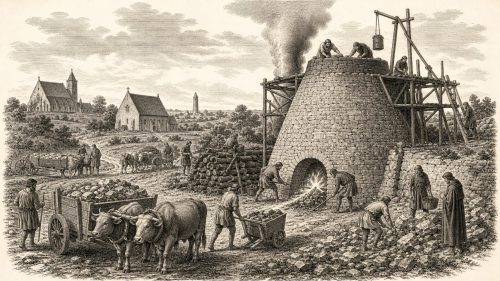
The Trembling Sod
In 1145, Ireland’s contested high-kingship produced widespread warfare, recalled by annalists as a trembling sod. Tairdelbach Ua Conchobair of Connacht faced rebellion from Tigernán Ua Ruairc of Bréifne, Munster offensives and instability in Mide. In the north, Muirchertach Mac Lochlainn regained Cenél nÉogain with support from Cenél Conaill and Airgialla, establishing a powerful rival centre. Campaigns involved battles, cattle raids, burnings, captives and naval conflict on the Shannon, where Connacht defeated Munster and Limerick forces. Amid turmoil, Armagh’s church built a large limekiln, demonstrating ecclesiastical resources, reform and continuing organised construction. The year reshaped, but did not settle, Irish supremacy.

Athlone Bridge Collapse
In 1146, Tairdelbach Ua Conchobair’s contested high-kingship faced warfare across Ireland. After raiding Tethba, his returning army suffered losses when Athlone’s wicker bridge collapsed during an attack, though he retained captured cattle. Connacht defeated a coalition, while Tigernán Ua Ruairc burned Ua Conchobair vessels and Ruaidrí Ua Conchobair campaigned actively. In Brega, Dublin leader Ragnall mac Torcaill was killed, followed by the killing of Cellach Ua Cellaig with Dublin support. Rulers also died in Osraige. Churchman Cormac Ua Cathasaig died amid ecclesiastical reform. Raiding, captives and damaged infrastructure exposed rural communities’ insecurity; a reported December storm remains uncertain in sources.
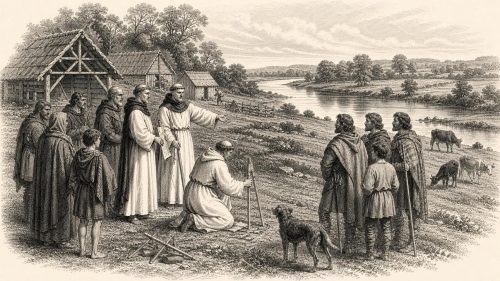
Foundation of Bective Abbey
In 1147, Ireland remained politically fragmented despite Tairdelbach Ua Conchobair’s contested high-kingship. Muirchertach Mac Lochlainn, allied with Donnchad Ua Cerbaill, defeated Ulaid at Dundrum, devastated Lecale and took hostages, signalling northern expansion. At Athlone, Tethba forces defeated Ua Conchobair’s son and Uí Maine, while local killings exposed wider instability. Murchad Ua Máelsechlainn founded Bective Abbey, Mellifont’s first Cistercian daughter house, linking reform, patronage and royal politics. Malachy and other bishops mediated Tadc Ua Briain’s release; churches suffered fire and storm damage. Chronicles also noted the Second Crusade, clerical deaths and an exceptional nationwide harvest, contrasting abundance with warfare and plunder.

Synod of Inispatrick
In 1148, Irish politics combined rivalry, raiding and shifting alliances with major ecclesiastical reform. Tairdelbach Ua Conchobair, king of Ireland with opposition, campaigned in Mide, while Muirchertach Mac Lochlainn intervened in Ulaid, where changing rulers, hostages and a relic-sanctioned peace reflected unstable power. Tigernán Ua Ruairc survived an assassination attempt, and Dublin’s Hiberno-Norse king Óttar was killed. At Inispatrick, Malachy Ua Morgair gathered bishops and clergy, advancing diocesan reform and plans for papal pallia. He consecrated Cnoc na Seangan, while Baltinglass Abbey was founded. Malachy died at Clairvaux, but his reforms helped shape the 1152 settlement at Kells-Mellifont in Ireland.

Hostages and Burning
In 1149, competing Irish rulers pursued authority through raids, alliances, hostages and ceremonial submission. Toirdelbach Ua Conchobair maintained Connacht, while Muirchertach Mac Lochlainn expanded northern influence, receiving hostages from Tigernán Ua Ruairc, Diarmait Mac Murchada and Ulaid leaders, and mediating at Dublin. Warfare devastated Ulaid, Brega and ecclesiastical settlements, bringing cattle, captives and damage to churches. Munster forces under Toirdelbach Ua Briain raided Connacht and destroyed Dún Gaillimhe. Fires affected Clonmacnoise, Derry and Inis Mic Dairen; churchmen also died. Annals reveal pastoral wealth, displacement and the vulnerability of communities sustaining contested kingship. No ruler commanded uncontested authority across the island.

Kings, Clergy and Cattle
In 1150 Ireland remained divided among competing provincial and lesser kings, with Muirchertach Mac Lochlainn strengthening his high-kingship through hostages, alliances and the partition of Mide. Tairdelbach Ua Conchobair retained Connacht, while Tairdelbach Ua Briain raided Mide, gained Dublin’s submission and campaigned in Leinster. Warfare, cattle raiding, killings and dynastic punishments accompanied short-lived negotiated peace. Clergy at Armagh and Derry legitimised rulers, mediated settlements and collected substantial livestock tribute. Church reform advanced alongside older monastic networks; Bishop Muiredach Ua Dubthaig died. Fires damaged religious settlements. Cattle, horses and urban trade underpinned power, exposing warfare’s burden on ordinary households throughout Ireland.

Munster’s Shattered Balance
In 1151, Munster's internal dynastic conflict enabled Tairdelbach Ua Conchobair of Connacht to intervene, supporting rival Uí Briain and Mac Carthaig claimants. His coalition defeated Tairdelbach Ua Briain at Móin Mór, devastating Munster and killing many aristocrats. Ua Conchobair took southern hostages and dominated Munster, but Muirchertach Mac Lochlainn soon compelled submissions from Connacht and Leinster, confirming contested overkingship. Raiding, captivity and treasure redistribution continued. Cardinal Iohannes Paparo arrived to advance church reform before Kells. Ecclesiastical visitations, a new stone church, notable deaths, and a wet winter accompanied warfare's heavy burdens on ordinary people across much of Ireland that year.

Pallia and Partitions
In 1152, Ireland saw ecclesiastical reform and fierce political conflict. The Synod of Kells–Mellifont, led by Cardinal John Paparo, confirmed four metropolitan provinces at Armagh, Cashel, Dublin and Tuam, strengthening papal authority, diocesan organisation and Armagh’s primacy. Tairdelbach Ua Conchobair and Muirchertach Mac Lochlainn allied under sacred relics, divided Mide, and weakened Tigernán Ua Ruairc of Bréifne. During this campaign, Diarmait Mac Murchada seized Ua Ruairc’s wife, Derbfhorgaill, provoking renewed regional warfare. Tairdelbach’s partition of Munster likewise failed, bringing raids, destruction, displacement and famine. The year exposed an interconnected society where church institutions, royal power, warfare and rural life intersected.

Mac Lochlainn at Fordruim
In 1153, rivalry between high king Toirdelbach Ua Conchobair and Muirchertach Mac Lochlainn reshaped Ireland’s political order. Following Murchad Ua Máelshechlainn’s death, his son secured Mide through violence, while Derbfhorgaill returned from Leinster to Tigernán Ua Ruairc amid circumstances. Connacht allies partitioned Munster, expelling Toirdelbach Ua Briain, but Mac Lochlainn restored him, defeated Ruaidrí Ua Conchobair at Fordruim, and imposed settlements across Mide. Control of Shannon crossings, hostages, cattle and alliances underpinned power. Church visitations, monastic developments, rural production and a fatal sea voyage reveal religious, economic and social conditions. Mac Lochlainn ended year strengthened, though no settlement was permanent.

Fleets and Rival Kings
In 1154, Toirdelbach Ua Conchobair of Connacht and Muirchertach Mac Lochlainn of Cenél nÉogain contested Ireland’s high-kingship through fleets, raids, alliances and submissions. Connacht ships attacked Tír Chonaill and Inishowen, fighting an Irish Sea force in a costly, probably Connacht-favoured naval battle. Mac Lochlainn retaliated in Connacht, reshaped power in Bréifne, and gained Dublin’s allegiance. Dynastic killings, expulsions, raids and Munster instability exposed wider political fragmentation. Crop destruction, cattle losses and burned churches harmed communities. Ecclesiastical reform continued, alongside monastic expansion and lively urban trade and learning. Neither king prevailed; indigenous rivalries, not English intervention, defined the year within Ireland.

Adrian IV’s Laudabiliter
In 1155, Ireland’s competing overkings, Tairrdelbach Ua Conchobair and Muirchertach Mac Lochlainn, struggled for influence through Meath, hostages, cattle raids and control of Shannon crossings. Following Maelsechlainn Ua Mael Sechlainn’s death, Mac Lochlainn installed Donnchad, who was deposed by Meathmen. Campaigns destroyed bridges and fortifications, while captives, oaths and restitution shaped alliances. Fires affected major ecclesiastical settlements amid continuing church reform and construction. Rural life depended on farming, livestock and lordly obligations, while coastal towns traded. Henry II considered, but abandoned, an Irish expedition. Laudabiliter’s disputed papal authority later furnished arguments supporting English conquest, although no intervention occurred until 1169.

Toirdelbach Ua Conchobair Dies
In 1156, the death of Toirdelbach Ua Conchobair ended a career of contested island-wide authority and prompted succession struggles. Ruaidrí Ua Conchobair secured Connacht through hostage-taking and blinding rivals, while Muirchertach Mac Lochlainn expanded northern power by compelling submissions in Ulaid, Leinster and Osraige. Warfare and shifting alliances destabilised Mide, involving Leinster, Bréifne and Dublin forces. Power depended on hostages, tribute, raids and military expeditions, despite ecclesiastical protections. Toirdelbach’s burial at Clonmacnoise and gifts affirmed royal patronage. Fires damaged churches, religious reform continued, and learning suffered losses. A plentiful harvest was followed by severe frost, underscoring the year’s political uncertainty.

Kings at Mellifont
In 1157, following Tairdelbach Ua Conchobair’s death, Muirchertach Mac Lochlainn asserted a contested high kingship through alliances, hostages and campaigns. Mellifont’s church consecration gathered leading clerics and rulers, displayed lavish patronage, and enabled the excommunication and deposition of Donnchad Ua Máel Sechlainn for violating a safeguard. Mac Lochlainn secured submissions in Leinster and Munster, but his settlements remained precarious. Ruaidrí Ua Conchobair raided Tír Eógain, contested Munster and assembled a Shannon fleet. Mac Lochlainn’s Newry charter linked royal authority with ecclesiastical reform. Records also show wealth in cattle and gold, vulnerable communities, fires, deaths, and persistent local conflict across Ireland.

Synod and Supremacy
In 1158, Ireland remained politically fragmented, though Muirchertach Mac Lochlainn of Cenél nEógain dominated the high-kingship contest against Connacht’s Ruaidrí Ua Conchobair. Raids, rebellions and struggles in Tethbae, Meath, Tír Conaill and Munster exposed limits of overlordship, while annalistic dating leaves some campaigns uncertain. The Synod of Brí Mic Taidg, led by Armagh’s archbishop and a papal legate, promoted church reform and elevated Derry’s Flaithbertach Ua Brolcháin as arch-abbot of Columban churches. Yet travelling bishops were attacked. Munster saw dynastic violence, whereas Amhlaoibh Ó Donnchadha completed Aghadoe’s church before his death. Cattle-based wealth, rural life, towns, and destructive flooding underpinned.
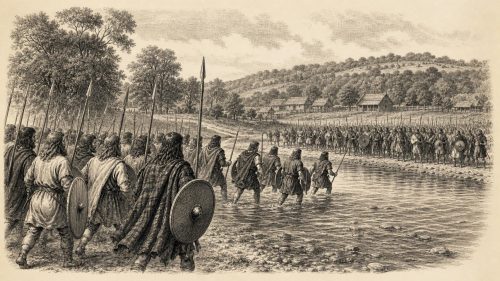
The Struggle at Ardee
In 1159, Muirchertach Mac Lochlainn, Ireland’s leading overking, contested Ruaidrí Ua Conchobair’s power through shifting alliances across Meath, Bréifne, Airgíalla and Thomond. After reshaping Meath’s kingship, Mac Lochlainn faced Ruaidrí’s Connacht-Bréifne coalition, whose campaign was marked by Áed Ua Conchobair’s death at Athlone’s wicker bridge. At Ardee, northern and Airgíalla forces routed Ruaidrí’s army, killing numerous regional leaders. Mac Lochlainn subsequently ravaged Connacht and pressured Meath and Leinster, but gained neither Ruaidrí’s submission nor lasting control. Local raids, church deaths and rural military burdens reflected wider instability. Ardee confirmed his supremacy temporarily, yet preserved rivals and left Ireland’s kingship unresolved.

Ruaidrí’s Meath Intervention
In 1160, Ruaidrí Ua Conchobair exploited the assassination of Meath’s king, installing Diarmait Ua Máel Sechlainn and securing hostages from Meath and Tethbae. His subsequent Shannon expedition compelled Thomond’s rulers to acknowledge his authority, marking Connacht’s recovery against high-king claimant Muirchertach Mac Lochlainn. Rival armies confronted one another without settlement, while Mac Lochlainn’s instigated killings and broken guarantees fostered northern instability. Dublin’s king Brodar was slain amid conflict. Clerical and scholarly deaths reflected reform and learned culture, while institutions including Jerpoint emerged. Burnings, warfare and cattle exactions burdened communities. Ireland remained divided, but rivalry centred upon Ruaidrí and Mac Lochlainn.

A Kingdom Negotiated
In 1161 Ireland comprised competing provincial kingdoms, lordships, churches and towns rather than a unified state. Muirchertach Mac Lochlainn, dominant northern ruler, and Ruaidrí Ua Conchobair of Connacht negotiated authority through campaigns, hostages and assemblies, dividing influence while preserving Mac Lochlainn’s senior kingship. Meath remained contested, with local dynastic violence continuing despite high-level settlements. Church reform and power were marked by bishops’ deaths, Dublin Archbishop Gregory’s death, Columban privileges secured by Flaithbertach Ua Brolcháin, and written guarantees for Ardbraccan. Rural communities supplied armies and suffered plunder; cattle and silver underpinned wealth. Towns, learning and poetry shaped wider Irish cultural life.

Reform and Reckoning
In 1162 Muirchertach Mac Lochlainn’s loose high-kingship united northern, Meath and Connacht forces, yet failed to compel Dublin’s surrender; after plundering Fine Gall, he accepted 120 ounces of gold. Tribute arrangements in Meath and exemptions from coigny showed the political and local economic importance of land and provisioning. At Clane, Gelasius of Armagh led a synod reinforcing clerical discipline, Armagh’s educational primacy and church reform. Laurence O’Toole became archbishop of Dublin, while Derry’s sacred precinct was reorganised. Deaths, fires, relic enshrinement and raids exposed cultural vulnerability. Continuing regional warfare and dynastic rivalry undermined Mac Lochlainn’s seemingly dominant authority across Ireland.

Niall’s Capture in Uí Maine
During 1163, Muirchertach Mac Lochlainn’s high-kingship remained influential but dependent on negotiation, payments and local compliance. Meath’s rulers were reshaped through deposition and gold payment, while his son Niall’s coercive progress ended with his capture in Uí Maine after offences against communities and churches. Assassinations, deaths and cattle-raiding reflected continuing regional rivalries. Ecclesiastical leaders died, yet monastic institutions retained traditional offices alongside diocesan reform. Glendalough suffered a destructive fire, whereas Derry’s Columban community built a huge lime-kiln, signalling organised construction. Learning, agriculture, cattle wealth and Irish Sea trade underpinned society, revealing a politically fragmented but connected Ireland at this time.

Churches, Castles and Conflict
In 1164, Ireland remained politically divided yet interconnected by kingship, churches and Irish Sea networks. High-king Muirchertach Mac Lochlainn sustained authority through alliances, tribute and ecclesiastical patronage, despite northern raids and rebellion. Rival Ruaidrí Ua Conchobair built a major fortified residence at Tuam, while Munster and Leinster saw raids, dynastic killings and blinding. At Derry, royal and clerical resources created an exceptionally large Columban church, amid wider links with Iona and the Isles. Fires damaged several religious centres. Somerled’s Scottish expedition included Dublin forces. Agriculture, livestock, skilled labour and learning underpinned society, although conflict and disaster exposed persistent deep instability.

Hostages and High Kings
In 1165, Muirchertach Mac Lochlainn asserted northern supremacy through warfare, hostage-taking and negotiated settlements. After Ulaid revolted, he devastated the province, expelled Eochaid Mac Duinn Sléibe, installed Donn Sléibe, and later restored Eochaid at Armagh under harsh terms including hostages, treasure and territorial concessions. Elsewhere, Ruaidrí Ua Conchobair expanded Connacht’s influence through raids, grants and southern submissions, while dynastic conflict unsettled Munster and Osraige. Dublin ships joined Henry II’s Welsh expedition, illustrating Irish Sea connections. Churches mediated politics, reform continued, severe snow affected rural life, and manuscript learning flourished. Mac Lochlainn’s apparent triumph remained precarious, foreshadowing his collapse in 1166.

A Kingdom Overturned
In 1166, Muirchertach Mac Lochlainn’s breach of a guaranteed settlement in Ulaid, including the blinding of King Eochaid, destroyed his authority. Abandoned by allies, he was defeated and killed. Ruaidrí Ua Conchobair of Connacht exploited the collapse, securing submissions, hostages and tribute from Dublin and regional rulers, while distributing wealth and arbitrating disputes. Diarmait Mac Murchada, deprived of Mac Lochlainn’s support and opposed within Leinster, was expelled after coalition campaigns destroyed his Ferns residence. He sought Henry II’s permission to recruit overseas, creating conditions for later Anglo-Norman intervention. Fires, church affairs, rural burdens, towns and royal patronage also marked 1166.

Ruaidrí’s Ascendant Kingship
In 1167 Ruaidrí Ua Conchobair consolidated a precarious high-kingship through military campaigning, hostage-taking, assemblies and church patronage. Leading a broad coalition into Tír Eoghain, he secured submissions, divided authority among northern rivals and demonstrated coordination by land and sea. At Athboy and Tailtiu, he projected island-wide rule, promoted peace, protected churches and regulated political obligations. Ireland’s pastoral economy, port towns and ecclesiastical centres underpinned these networks. Diarmait Mac Murchada returned to Leinster with a small overseas force, regained territory, then submitted to Ruaidrí while retaining future foreign support. Deaths, violence and church building revealed continuing instability beneath Ruaidrí’s temporary ascendancy.

Ruaidrí’s Royal Peace
In 1168 Ruaidrí Ua Conchobair strengthened his contested kingship of Ireland through military interventions, hostages, tribute and public assembly. In Meath, he enforced heavy compensation for a protected king’s killing, contributing to political upheaval, and presided over the Óenach Tailten. In Munster, he arbitrated the Ua Briain succession, secured submissions and divided authority between Domnall Mór Ua Briain and Mac Carthaig. Diarmait Mac Murchada remained constrained in Leinster, although overseas alliances were developing. The deaths of Donnchad Ua Cerbaill, churchmen and cultural figures marked the year. Reported prosperity contrasted with divisions that made Ireland vulnerable to the landings of 1169.

The Bannow Landings
In 1169 Diarmait Mac Murchada, seeking to recover Leinster, recruited Cambro-Norman mercenaries from Wales. Robert FitzStephen’s force landed at Bannow, joined Irish allies, captured Wexford and received land, creating a fortified coastal foothold. Diarmait’s subsequent campaign devastated Osraige and secured renewed submission, but prompted High King Ruaidrí Ua Conchobair to negotiate hostages and require dismissal of the foreigners. Ireland remained politically sophisticated, with competing kingdoms, active ports, rural economies and reforming Church institutions. The newcomers initially served an Irish king, not Henry II. Yet grants of territory and Diarmait’s continuing ambitions established a durable bridgehead, enabling larger interventions after 1169.

Ports and Power
In 1170 Diarmait Mac Murchada’s restoration in Leinster escalated through Anglo-Norman intervention. Raymond le Gros secured Baginbun, then Richard Strongbow captured Waterford, married Diarmait’s daughter Aífe, and seized Dublin, ending its independent Hiberno-Norse rule. The ports supplied strategic links to Britain, trade and military resources. Allied forces campaigned across Leinster and Mide, devastating ecclesiastical centres, while Ruaidrí Ua Conchobair retaliated by killing Leinster hostages, including Diarmait’s son. Wider conflicts persisted in Munster and the north. Rural communities, towns and religious houses suffered warfare, although commerce and reform continued. By year’s end, eastern conquests transformed power without establishing durable settled lordship.
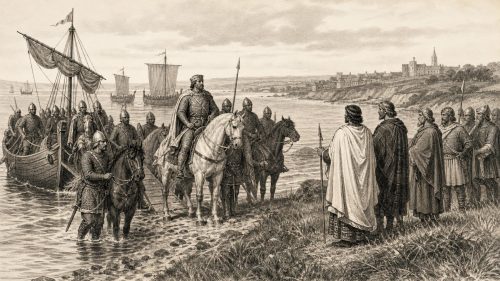
Crown Comes Ashore
In 1171 Diarmait Mac Murchada’s death intensified conflict over Leinster, as Strongbow claimed succession through marriage while Irish dynasties supported Diarmait’s son. Dublin repelled Hiberno-Norse and Irish-led challenges, though Anglo-Norman settlements remained vulnerable. Henry II invaded in October to restrain Strongbow, received his submission, reserved major ports for royal control, and accepted submissions from several Irish rulers. At Dublin he held court, promoted Bristol settlement and displayed Angevin power. Church reform predated his arrival, but royal authority became linked to it. Henry neither conquered Ireland nor displaced Gaelic government, yet transformed a private expedition into enduring English intervention in Ireland.
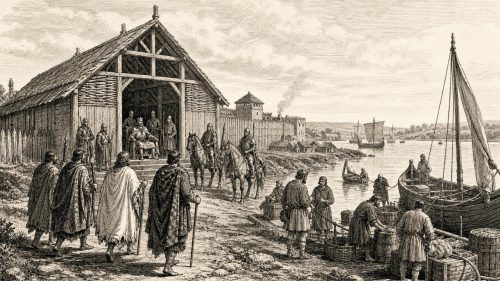
Henry II’s Dublin Court
In 1172 Henry II held a winter court at Dublin, asserting royal control over Strongbow’s Anglo-Norman venture and receiving submissions from Irish rulers, though Ruaidrí Ua Conchobair remained independent. He secured Dublin, Waterford and Wexford, encouraged Bristol settlement, and linked conquest to commerce. The Council of Cashel promoted ecclesiastical order, building upon Irish reforms, while Gaelic church and political authority persisted elsewhere. Henry departed in April, granting Meath and Dublin’s custody to Hugh de Lacy. His forces devastated communities, and Tigernán Ua Ruairc was killed. Papal backing strengthened Henry’s claims, but Ireland remained divided between competing Gaelic and Angevin lordships.

A Fragile Conquest
In 1173, Ireland remained a fragile, contested conquest after Henry II’s intervention. Strongbow governed Leinster under royal authority, while de Lacy held Meath and Ruaidrí Ua Conchobair retained Gaelic overlordship. The Angevin revolt drew leading Anglo-Norman commanders overseas, weakening garrisons, though Strongbow returned as Henry’s representative and supplied troops for the royal war. Domnall Mór Ua Briain, aided by Connacht forces, captured Kilkenny, exposing colonial vulnerability. Leinster dynasts also resisted Strongbow’s inheritance claim. Conflict persisted in Meath and Ulster, alongside church deaths, pestilence, plunder, trade and scholarship. By year’s end, conquest endured but remained insecure across a deeply divided island.
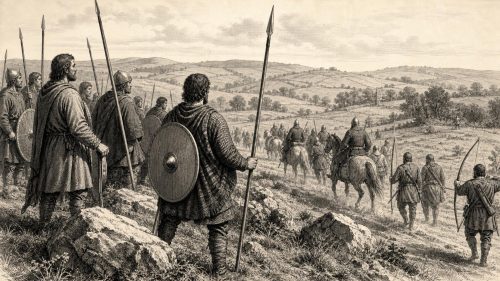
Victory at Thurles
In 1174, Strongbow’s Anglo-Norman army suffered a decisive defeat near Thurles when Domnall Mór Ua Briain and Conchobar Máenmaige led Munster and Connacht forces against an expedition ravaging Munster. The reverse exposed the fragility of Henry II’s new lordship, already weakened by overseas commitments and uneven control beyond coastal towns. Heavy losses forced Strongbow to Waterford, where Hiberno-Norse inhabitants killed garrison members before Raymond le Gros brought reinforcements from Wales. Alliances remained temporary, while dynastic violence continued elsewhere. Church life endured: Gelasius, archbishop of Armagh, died, was succeeded by Cornelius, and a synod met at Birr. Warfare burdened rural communities

Peace and Conquest
In 1175 Ireland remained divided between Gaelic kings, Anglo-Norman lords and Henry II’s overlordship. Ruaidrí Ua Conchobair, Strongbow and rulers pursued alliances amid warfare, notably the Anglo-Norman capture of Limerick, which weakened Domnall Mór Ua Briain temporarily. The Treaty of Windsor recognised Ruaidrí as Henry’s liegeman, permitting reduced authority beyond territories reserved for the crown and settlers, in return for tribute, hostages and obedience. Yet violence in Meath and dynastic conflicts elsewhere exposed its weakness. Churchmen brokered diplomacy and appointments, while monasteries retained influence. Warfare disrupted life, livestock and towns. Windsor’s constitutional compromise accompanied conquest, leaving sovereignty and peace unresolved.

Strongbow’s Death
In 1176, the Treaty of Windsor proved fragile as Anglo-Norman and Irish rulers pursued competing interests. Raymond le Gros relieved Limerick but later surrendered it to Domnall Mór Ua Briain, who destroyed the city after the invaders withdrew. Campaigns in Munster restored Diarmait Mac Carthaig in Desmond, while raids and castle-building provoked resistance in Meath and the north. Strongbow’s death in Dublin transferred his lordship into Henry II’s custody, increasing royal oversight. Maurice fitz Gerald also died. Warfare damaged churches, settlements and livelihoods, revealing unstable conquest amid dynastic conflict, shifting alliances, hostages, and cattle raiding across a politically plural island.

A Frontier Widens
In 1177 Anglo-Norman expansion widened beyond footholds in Leinster, Meath and ports. John de Courcy secured Downpatrick, raiding eastern Ulaid but not conquering Ulster. Henry II’s Oxford council assigned Ireland to his son John and redistributed strategic lordships and speculative grants in Cork and Limerick, asserting authority. Anglo-Norman expeditions into Connacht and Munster encountered resistance, scorched supplies and limited success. Irish dynastic rivalries continued alongside invasion, while church institutions mediated violence and suffered attack. Synodal activity, disasters and deaths of learned figures illuminate religious and economic life. Ireland remained politically fragmented, yet conquest’s frontier and ambitions decisively expanded across Ireland.

Frontiers Under Pressure
By 1178, English lordship in Ireland remained limited to Dublin, parts of Leinster and eastern Meath, while Gaelic kings retained most territories amid rivalries and shifting alliances. Hugh de Lacy raided Clonmacnoise and the midlands, but Connacht resistance constrained him. John de Courcy suffered heavy defeats during northern raids, showing Anglo-Norman arms were vulnerable to terrain, ambushes and supply problems. Warfare across Connacht and Munster damaged settlements, churches and livestock. Dynastic conflicts, ecclesiastical deaths, monastic foundations and learned culture continued alongside violence. Annals also recorded wind damage at Derry and the drying of the River Galway, as conquest remained undecided.

Council and Calamity
1179 Ireland remained politically fragmented despite Henry II’s overlordship, Ruaidrí Ua Conchobair’s western influence, and expanding lordships under Hugh de Lacy and John de Courcy. Laurence O’Toole attended the Third Lateran Council, became papal legate, secured Dublin’s privileges, and convened Clonfert synod to advance church reform against lay control. Henry reprimanded de Lacy following Irish complaints, but settlement continued. In the north, a relic-sworn peace at Ardstraw ended in treacherous killings and devastation. Fires damaged Armagh and several church centres. Annals recorded famine, warfare and destructive snow, exposing vulnerable rural communities amid religious reform, diplomatic engagement, and enduring political instability.
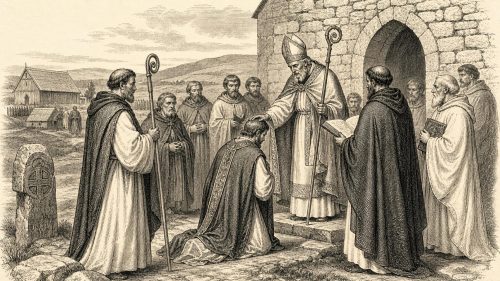
Alliances and Fractures
In 1180 Ireland remained politically fragmented, as Ruaidrí Ua Conchobair’s weakened high-kingship, Henry II’s overlordship and expanding Anglo-Norman lordships overlapped with resilient Gaelic dynasties. Hugh de Lacy’s marriage to Ruaidrí’s daughter demonstrated frontier diplomacy, despite royal suspicion. Connacht’s Battle of the Conors strengthened Ruaidrí’s family but devastated Uí Maine leadership, while local killings reflected persistent instability. Ecclesiastical politics shaped events at Derry and Armagh, where Tommaltach Ua Conchobair’s appointment required negotiation. Archbishop Lorcán Ua Tuathail died in Normandy during diplomacy with Henry. Castles at Carrickfergus and Meath advanced settlement, although Gaelic communities, pastoral economies and established ports retained substantial influence.
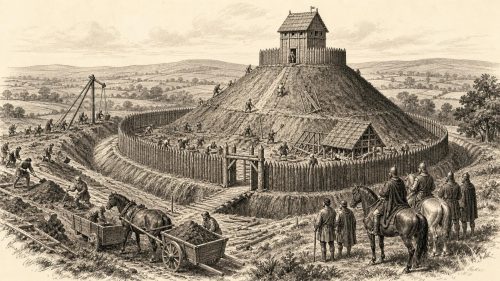
Power and Frontiers
Ireland in 1181 remained politically fragmented among Gaelic kingdoms, Norse-Irish towns, church lordships and expanding Anglo-Norman territories. Henry II recalled Hugh de Lacy, fearing his autonomous power and Connacht marriage alliance, before restoring him under closer scrutiny. Flaithbertach Ua Máel Doraid defeated Connacht forces at Carbury, while killings, campaigns and cattle raids intensified Ulster rivalries. Tommaltach Ua Conchobair asserted Armagh's authority through Cenél Eógain; Henry influenced John Cumin's election to Dublin. Earth-and-timber castles supported settlement and land redistribution. Rural wealth depended on livestock and agriculture, while trade, monastic institutions and Gaelic learning endured. Rulers, churches and colonists contested regional frontiers.

Battle at Dunbo
In 1182, Ireland remained divided among Gaelic kings, Norse-Irish towns and expanding Anglo-Norman lordships. Domnall Ua Lochlainn’s Cenél nEógain force was defeated at Dunbo, probably by John de Courcy’s men, who seized the Gospel of St Martin. In Munster, Miles de Cogan’s killing near Lismore triggered resistance and exposed the weakness of settlement beyond fortified bases. Dynastic conflicts continued in Connacht, Annaly and elsewhere. The deaths of leading churchmen coincided with Kilcooly Abbey’s foundation under Domnall Mór Ua Briain. Hugh de Lacy’s castles and manors transformed Meath, yet trade, Gaelic institutions and local power still endured amid an unsettled frontier.

A Kingship Transferred
Ireland in 1183 remained fragmented between Gaelic kingdoms and expanding Anglo-Norman lordships, with Henry II’s overlordship largely remote. The pivotal event was Conchobar Máenmaige’s accession in Connacht after Ruaidrí Ua Conchobair retired to Cong, initiating or intensifying a dynastic conflict rather than ending Ruaidrí’s influence. Annals also record killings among regional kindreds, illustrating persistent intra-Gaelic rivalry. De Lacy governed Meath and de Courcy defended Ulaid, where his Benedictine foundation at Down combined religious patronage with political consolidation. Anglo-Norman settlements, castles and estates remained vulnerable, while ports, farming, crafts and exchange linked changing lordships with enduring local communities across the island.

Castles and Contested Kingship
In 1184, Ireland remained divided between Anglo-Norman lordships, Irish kings and Henry II’s limited royal administration. Philip of Worcester replaced Hugh de Lacy as governor, signalling efforts to prepare John’s projected lordship and restrain de Lacy’s power. In western Meath, Art Ua Máelshechlainn was murdered amid settler interference, and his successor joined Conchobar Máenmaige in destroying a settler castle, while another rose at Killare. Ruaidrí Ua Conchobair and Conchobar fought for Connacht. Meath settlers plundered Armagh, whose leadership was disputed. Assaroe received patronage, Clones burned, and castles, warfare and changing lordship burdened rural communities in an increasingly unstable frontier landscape.

A Lordship Tested
In 1185, eighteen-year-old John, Lord of Ireland, landed with an Anglo-Norman expedition intended to strengthen royal authority and curb magnates such as Hugh de Lacy. His poor diplomacy, disputed by Gerald of Wales in detail but evident in outcome, alienated Gaelic rulers and settlers alike. Castles in Munster provoked resistance and military losses, while dynastic wars continued across Connacht and Ulster independently of John’s aims. Town charters, notably Cork’s, and grants to newcomers including Theobald Walter encouraged lasting colonial institutions. Churches, learning, trade and cattle-based livelihoods persisted amid warfare. John’s December departure secured no general obedience, but strengthened royal footholds.

Hugh de Lacy’s Death
In 1186, Ireland remained politically fragmented despite expanding Anglo-Norman settlement. Hugh de Lacy, lord of Meath, was killed while inspecting castle works at Durrow, an act Irish annals portrayed as vengeance for violation of Columcille’s sanctuary. His death weakened colonial authority while Crown withheld Meath from heir. In Connacht, Conchobar Máenmaige displaced his father, Ruaidrí Ua Conchobair, amid dynastic warfare. Northern factions deposed Domnall Mac Lochlainn, causing violence. Churches, pilgrimage, hagiography, trade and castle-building shaped life. Gaelic and settler economies interacted, but warfare disrupted communities. The year demonstrated that competing Gaelic, royal, ecclesiastical and Anglo-Norman lordships prevented any unified conquest.

Fire and Frontier
In 1187, Ireland remained politically divided between Gaelic kingdoms and Anglo-Norman lordships, whose frontier was weakened after Hugh de Lacy’s death. Conchobar Máenmaige Ua Conchobair and Máel Sechlainn Bec destroyed Killare castle in western Meath, gaining arms and challenging colonial expansion. Northern dynastic warfare included Ruaidrí Ua Flaithbertaig’s death and reprisals after Drumcliff’s plunder by a mixed Gaelic-Norman force. Lightning or fire devastated the Rock of Lough Key, killing many inhabitants and straining Moylurg’s ruling family during succession. Churchmen, scholars and monastic foundations reflected reform and regional connections, while trade, agriculture and cross-cultural alliances shaped life amid conflict and recovery.
Connacht Holds Firm
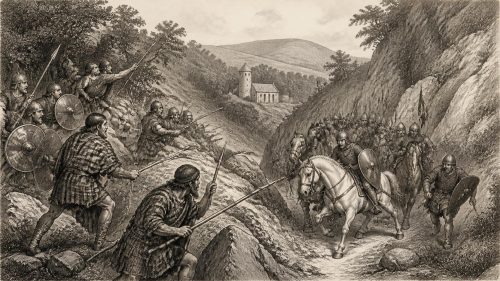
In 1188, John de Courcy led a broad Anglo-Norman expedition into Connacht, supported by Conchobar Ua Diarmata, but Conchobar Máenmaige Ua Conchobair and Domnall Mór Ua Briain defeated it near the Curlew Mountains after destructive raids through north Connacht. The failure confirmed limits to settler power and strengthened Conchobar briefly before his murder in 1189. Elsewhere, raiders from Magh Coba killed Ailech’s king Domnall Ua Lochlainn despite defeat, while Ruaidrí Ua Canannáin was murdered. Annals also record clerical deaths, pilgrimages, and domestic tragedy. Gerald of Wales’s Topographia circulated, promoting colonial assumptions challenged by annalistic evidence of complex, resilient Irish society.
Murder of Conchobar Máenmaige
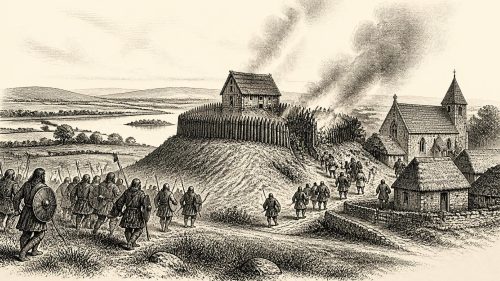
In 1189, Ireland remained divided among Anglo-Norman lordships, Gaelic dynasties and ecclesiastical centres. Conchobar Máenmaige Ua Conchobair, king of Connacht, was murdered by followers directed by a kinsman, provoking revenge and dynastic conflict. Violence spread through the north, midlands and Munster, where raids, deaths and destruction of castles exposed the fragility of colonial control. Armagh was burned and plundered, while Mellifont received the Airgialla overking Murchad Ua Cerbaill. Henry II’s death brought Richard I’s accession; William Marshal’s marriage to Isabel de Clare transferred Leinster’s lordship, though possession remained contested. Irish bishops attended Richard’s coronation, and Gerald of Wales promoted conquest.
Truce and Tempest
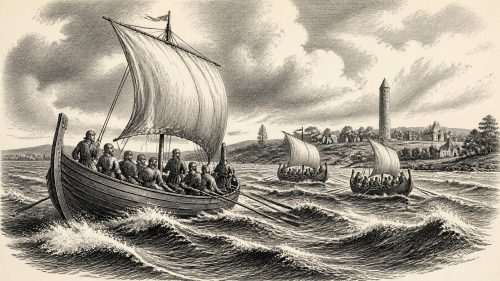
In 1190, Ireland’s politics combined dynastic conflict, local warfare, diplomacy and religious patronage. In Connacht, Cathal Crobderg and Cathal Carrach Ua Conchobair negotiated an inconclusive truce at Clonfert, mediated by churchmen, before a storm on Lough Ree drowned Cathal Crobderg’s son and leading followers. Rival branches of the dynasty remained violent. In Desmond, Domnall mac Carthaig defeated foreign raiders, recovered their spoil and secured peace with Domnall Mór Ua Briain of Thomond. Foundations or endowments at Knockmoy and possibly Killone demonstrated rulers’ religious and political ambitions. Anglo-Norman lordships expanded, but Gaelic rulers and institutions remained decisive across much of Ireland.

Wind and Exile
In 1191, Ireland experienced political fragmentation, local violence and severe environmental disruption. Ruaidrí Ua Conchobair, the displaced former king of Connacht, travelled north and apparently sought wider support to recover power after dynastic conflict, but gained land rather than a decisive coalition. In Munster, Muirchertach son of Cathal Odar was treacherously killed by incoming Anglo-Norman forces, illustrating unstable frontier relations. Annals also record construction of Rath-cuanartaigh castle and deaths of prominent churchmen. Most notably, a great wind destroyed churches, homes and woodland, killing people and livestock, exposing communities’ dependence on vulnerable material resources amid competing Gaelic and foreign rival lordships.

Charters and Castles
In 1192, Ireland remained politically fragmented, with Irish rulers retaining broad authority despite expanding lordship from Dublin and Leinster. John’s Dublin charter, dated 15 May, confirmed civic jurisdiction, trading privileges, guilds and burgess rights, strengthening colonial urban government. Ecclesiastical claims around Glendalough reflected contests over church revenues and authority. Leinster forces raided Thomond, built mottes at Kilfeakle and Knockgraffon, but Domnall Mór Ua Briain resisted successfully. Further castles at Horseleap and Kilbixy, and Geoffrey fitz Robert’s planned Kells settlement, advanced territorial control. Annals also record local killings, resistance, religious construction and an uncertain Dublin fire, illustrating resilient nationwide regional societies.

Affrica Founds Grey Abbey
In 1193, Ireland’s competing Gaelic and Anglo-Norman lordships were reshaped by conflict, patronage and local alliances. Annals record killings among northern, Munster and Leinster rulers, violence by John de Courcy’s followers, and uncertain reports of a castle at Brí Uis authorised against Domhnall Mac Carthaigh. Affrica, wife of de Courcy, founded the Cistercian Grey Abbey on Strangford Lough, linking Ulster to Cumbria and the Irish Sea world. Prince John endowed Crumlin church for St Patrick’s, while Derbfhorgaill died at Mellifont. Inchcleraun was plundered, though sources disagree over the raiders, illustrating fragmented authority and contested evidence across the island's varied regions.

Succession and Pressure
In 1194, Domnall Mór Ua Briain’s death destabilised Munster, where his son Muirchertach’s accession was undermined by capture and blinding, while other Ua Briain and Mac Carthaig kin suffered killings, raids and betrayal. Ecclesiastical authority featured in the death of Killaloe’s bishop and the killing at Cashel despite legatine protection. Elsewhere, resistance expelled foreigners from Uí Fhinntain, Cú Mide Ua Flainn was killed, and Gillibert Mac Goisdelb’s Erne expedition failed. Across the Irish Sea, Richard I’s defeat of John enabled Walter de Lacy to regain Meath, demonstrating how Angevin politics reshaped Irish lordships amid local conflict, rivalry and uncertain authority.

Fragile Frontiers
In 1195, Ireland remained divided between Anglo-Norman lordships and resilient Gaelic kingdoms, with power shaped by warfare, negotiation and local alliances. Cathal Crobderg of Connacht assembled forces at Athlone, made peace with John de Courcy and Walter de Lacy, then campaigned in Munster, destroying castles whose rebuilding demonstrated the limits of his success. Conflict also disrupted Limerick, Connacht and Ulster, while rivalries constrained kings and magnates. Royal politics across the Irish Sea influenced authority. Ecclesiastical deaths, Hugh de Lacy’s reburial, and abundant woodland mast reveal religious, political and rural dimensions. Overall, violence repeatedly altered but did not decisively settle control.

Fractured Power
In 1196, Ireland comprised competing regional lordships, churches and Anglo-Norman centres rather than a unified polity. Armagh’s canonry and precinct were burned, while conflict nearby saw Ruaidrí Mac Duinn Shléibhe’s mixed force defeated and Muirchertach Mac Lochlainn killed despite sacred guarantees. Sanctuary violations, retaliatory killings and dynastic successions demonstrated insecure local power. In Munster, Domnall Mac Carthaigh defeated English forces, challenged Limerick, attacked castles and negotiated over Cork, amid conflicts involving Irish and settler allies. Raids reached Louth and the midlands. Religious institutions remained politically influential, providing oaths, burial and retirement. Annalistic evidence depicts uneven disruption, not an island-wide crisis.

Fortunes of the North
In 1197 John de Courcy extended his Ulster lordship, building Kilsanctan castle and raiding Ciannachta and the Derry region. After King Flaithbertach Ua Máeldoraid died, de Courcy defeated his successor Echmarcach Ua Dochartaig, killed many Cenél Conaill warriors and seized cattle, though north-western control remained contested. Churches were targets, protectors of authority and repositories of treasure, illustrated by Derry altar’s robbery and punishment. Dynastic warfare also afflicted Thomond and Connacht. Limerick received borough liberties under John, while Archbishop John Cumin contested ecclesiastical property with the justiciar. The year revealed fragmented power, enduring Gaelic resistance, and incomplete conquest across medieval Ireland.

A Year of Unsettled Succession
1198 in Ireland saw contested succession, ecclesiastical change and continuing regional conflict, though annalistic sources disagree over dates. Ruaidrí Ua Conchobair died around 1198–99 after retirement, symbolising the decline of an older high-kingship amid divided Connacht and entrenched English lordship. Cathal Carrach killed a dynastic rival, while a temporary peace with Cathal Crobderg sought to restrain their struggle. Gilla-Crist Ua Cernaigh succeeded Gilla Mac Liac Ua Brenáin as comarba of Colum Cille, affirming northern church authority. A castle at Ardpatrick reflected expanding lordship. Gaelic rulers, churches and Anglo-Norman magnates retained competing power across a politically fragmented island during this period.

Frontiers and Fortunes
In 1199, Ireland remained a fragmented landscape of Gaelic lordships, church lands and expanding Anglo-Norman seigneuries rather than a uniform English possession. King John’s accession united the English crown with the lordship of Ireland, though power remained uneven. In Connacht, Cathal Crobhdearg and Cathal Carrach made an uneasy peace as William de Burgh pursued his grant. Northern campaigns exposed colonial limits when Áed Ua Néill defeated foreign forces. Raids damaged communities and churches, including Armagh. Richard de Tiúit built Granard’s motte-and-bailey, strengthening Meath’s frontier. Annals record famine, capture, deaths, cattle-raiding and hostages, revealing conflict’s burden on ordinary populations throughout Ireland.