
Archived: 26 September 2026
Abstract
Annals for 1009 portray Ireland as a contested polity under Brian mac Cennétig’s formidable but limited overlordship. Máel Sechnaill raided Leinster, while Flaithbertach Ua Néill killed rivals, raided Brega and seized cattle tribute. Connacht and Bréifne fought reciprocal campaigns, alongside local dynastic killings. The death of Brian’s Connacht-born wife reflected the political importance of royal marriage. Armagh’s lead-roofed oratory demonstrated ecclesiastical wealth and ambition; deaths of church successors at Kells and Ros Cré marked institutional change. The chief poet Clothna also died. Cattle, warfare, hostages, alliances and religious centres shaped authority, revealing competing kingships rather than a unified Irish state.
Read Article

Archived: 26 September 2026
Abstract
In 1008, Irish annals recorded no battle but revealed pressures shaping Brian Boru's overkingship. Chronological discrepancies require caution, yet Inisfallen and Ulster agree on a severe winter, ecclesiastical deaths and political violence. Muiredach son of Matudán, heir designate of Ulaid, was killed by his own people, exposing dynastic division amid northern rivalries. The deaths of abbots and coarbs, including Ferdomnach of Colum Cille's familia, prompted transitions in institutions controlling land, relics, learning and legitimacy. Frost and snow from January to Easter threatened livestock, farming and communications. Together, events illuminate a weather-vulnerable society governed through churches, dynasties, tribute, negotiation and force.
Read Article
Archived: 26 September 2026
Abstract
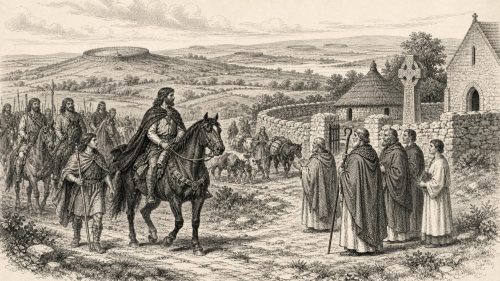
In 1006, Brian Bórama demonstrated the reach yet limits of his Irish overlordship by leading a broad coalition from Munster, Leinster, Mide, Connacht and Dublin through the north. His circuit secured Ulaid hostages and satisfied Armagh's claims, strengthening royal and ecclesiastical legitimacy, but Cenél Conaill and Cenél nEógain withheld submission. Provincial violence continued, including killings of regional kings, revealing unstable local rule. The deaths of Armagh churchmen underline clerical institutions' importance. A mild, food-rich winter offered relief after scarcity, while the army's passage burdened rural communities. Dublin's participation reflected its growing military, commercial and maritime value within Brian's negotiated supremacy.
Read Article

Archived: 26 September 2026
Abstract
In 1004, Brian Bórama’s claim to supremacy over Ireland remained ambitious but incomplete. Having subordinated Máel Sechnaill of Mide, he faced determined northern resistance from Cenél nEógain. The Annals of Ulster record that they obstructed his intended circuit of Ireland. At Cráeb Tulcha on 14 September, Cenél nEógain defeated Ulaid; Ulaid king Eochaid mac Ardgar and Ailech king Áed Ua Néill died, destabilising both powers. Traditions associate this period with Brian’s expedition to Armagh, demands for hostages, and gold offering, linking political display with ecclesiastical authority. Annals record clerical deaths, regional killings, Dublin’s burning, and Máel Sechnaill’s injury, revealing insecurity.
Read Article

Archived: 26 September 2026
Abstract
In 1002 Brian Bórama transformed Irish politics by bringing an army to Athlone and taking hostages from Connacht and Mide, publicly demonstrating Máel Sechnaill mac Domnaill’s submission. Annals differ slightly in dating and emphasis, but confirm the event. Brian’s earlier successes over Leinster and Dublin enabled wider mobilisation, including Norse-Gaelic allies. Yet his subsequent northern expedition to Dundalk failed to secure hostages from Áed of Ailech and Eochaid of Ulaid, ending in truce. Raids, captives and ecclesiastical deaths reveal regional conflict. Coastal towns, trade and church institutions underpinned power. Brian emerged as leading king, but his island-wide overlordship remained incomplete.
Read Article

Archived: 26 September 2026
Abstract
In 1001, rivalry between Brian Boru of Munster and Máel Sechnaill of Mide centred on control of the midlands and Shannon. Brian’s growing power, strengthened by Dublin’s submission, threatened the older Uí Néill order, though Munster raiders were defeated in southern Mide. Máel Sechnaill and Cathal of Connacht constructed a causeway at Athlone to obstruct Munster fleets and defend Leth Cuinn, demonstrating both alliance and anxiety. Deaths among northern rulers exposed unstable regional politics. Changes at Armagh and clerical deaths underscored churches’ political and economic importance. The year remained inconclusive, but marked a defensive attempt to contain Dál Cais expansion.
Read Article




