
Archived: 26 September 2026
Abstract
In 1073, Ireland’s contested kingship was marked by Conchobar Ua Máelshechlainn’s sacrilegious murder beside the Bachall Ísu, followed by conflict in Mide. His severed head was taken from Clonmacnoise to Toirdelbach Ua Briain’s Kincora, then returned with gold. Toirdelbach, expanding after Diarmait mac Máel na mBó’s death, raided Gailenga, killed Brega’s king and demonstrated authority without securing permanent control. Sitriuc son of Amlaíb and Brian Bóruma’s grandsons died on Man. Religious deaths, pilgrimage, and fires at Clonard and Kells highlighted ecclesiastical importance. Annals portray power as dependent on warfare, cattle, alliances, hostages, towns and sacred legitimacy across a divided island.
Read Article

Archived: 26 September 2026
Abstract
In 1072 Diarmait mac Máel na mBó, dominant ruler of Leinster, Osraige and Dublin, was defeated and killed at Odba by Conchobar Ua Máelshechlainn of Mide, probably with Tairdelbach Ua Briain’s support. His death shattered a personal network of alliances rather than a unified kingdom. Tairdelbach swiftly raided and secured hostages in Leinster and Osraige, gained Dublin’s submission, and consolidated Munster authority. Annals also record killings among regional rulers and ecclesiastical leaders, illustrating pervasive conflict. Cattle-raiding, captives, hospitality obligations and Dublin’s trade reveal political power’s economic and social foundations. Odba initiated Tairdelbach’s contested pursuit of Irish overkingship in ensuing years.
Read Article

Archived: 26 September 2026
Abstract
In 1071, Diarmait mac Máel na mBó’s southern Irish dominance weakened after dynastic losses, while his ally and foster-son, Tairdelbach Ua Briain of Munster, increasingly supplied the military force behind their authority. Tairdelbach took Leinster and Mide hostages for Diarmait, raided midland rivals, and mobilised Munster to build Shannon bridges at Áth Caille and Killaloe, improving strategic communications. Violence, depositions and killings affected Ulaid, Donegal and the midlands. Kildare, Glendalough and Clondalkin were burned amid Leinster instability. Despite warfare, farming, craft production, trade and ecclesiastical learning continued, as Tairdelbach’s infrastructure, diplomacy and campaigns foreshadowed his rising power in southern Ireland.
Read Article
Archived: 26 September 2026
Abstract
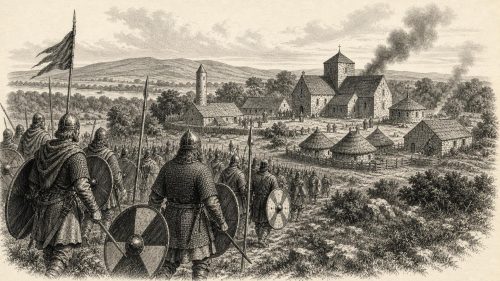
Annals for 1069 record fires, deaths and warfare, while offering only a partial view of Irish society. Diarmait mac Maíl na mBó dominated Leinster and Dublin, where his son Murchad commanded combined forces. Murchad invaded Mide, burning Granard, Fore and Ardbraccan, but suffered severe losses interpreted as saintly vengeance; he died in Dublin in 1070. Fires also damaged Downpatrick, Ardstraw, Lusk and Swords. Clerical and regional rulers died or were killed. Accounts of broken oaths stressed sacred sanctions. Behind annalistic moral judgement lay competing dynasties, vulnerable wealthy churches, rural economies, and Hiberno-Norse Dublin’s commercial, maritime and political power in Ireland.
Read Article

Archived: 26 September 2026
Abstract
In 1068, Irish annals portray Tairdelbach Ua Briain’s growing ascendancy amid fragmented regional kingship. His rival cousin Murchad Ua Briain was killed during a raid in Tethba, strengthening Tairdelbach’s control of Munster. An ordinance credited to him promised security sufficient for livestock to remain unprotected at night. Visiting Leinster, he acquired Brian Bóruma’s sword and a Saxon royal standard from Diarmait mac Maíl na mBó, reflecting dynastic and Irish Sea politics linked to English exiles. Northern rulers died violently, while Armagh’s successor successfully visited Munster. Church deaths, Clonfert’s disruption, trade, farming and manuscript culture reveal political, ecclesiastical and maritime networks.
Read Article

Archived: 26 September 2026
Abstract
In 1067, Leinster, Munster, Osraige and Hiberno-Norse Dublin invaded Connacht, reflecting volatile alliances among Irish rulers. Connacht’s king, Áed Ua Conchobair, initially ambushed the coalition, but was killed about a week later at Turloch Adhnach by Áed Ua Ruairc’s Bréifne army. Ua Ruairc seized Connacht’s kingship, though the Ua Conchobair dynasty later recovered. Annals differ in detail but confirm the campaign’s sequence and significance. Other violence included dynastic killings and blinding in Munster. Kildare’s church burned, while ecclesiastical leaders and poet Murchad Ua Carthaig died. The year exposed political rivalry, military burdens, and enduring religious, learned and economic institutions alike.
Read Article

Archived: 26 September 2026
Abstract
Irish annals portray 1066 as a year of fractured kingship, diplomacy, violence, religious authority and remarkable natural phenomena. Diarmait mac Maíl na mBó, Tairdelbach Ua Briain and Áed Ua Conchobair shaped high politics, with gold payments illustrating competitive alliances. Deaths and killings, particularly in Bréifne, exposed contested succession and conflict involving churches. Annals commemorated leading ecclesiastics, reflecting monasteries’ political, economic and spiritual roles. Observers recorded Halley’s Comet in late April and an exceptional hazelnut harvest. Dublin’s trade and coinage connected Ireland internationally. Irish writers also noted William’s English conquest, though it caused no immediate major transformation in domestic Irish politics.
Read Article

Archived: 26 September 2026
Abstract
In 1065, Ireland’s fragmented kingdoms saw raids, succession struggles and reprisals. Forces led by Áed Ua Ruairc and Diarmait Ua Cellaig plundered Clonmacnoise and Clonfert, using vessels moved from the western sea to the Shannon. Áed Ua Conchobair of Connacht defeated them, recovered boats and pursued rival dynasties; church chroniclers presented this as saintly judgement. Killings in Ulster, including Donnchad Ua Mathgamna at Bangor, reflected internal conflict and contested sacred authority. In Mide and Munster, further deaths and Murchad Ua Briain’s attack at Kincora exposed political instability. Ecclesiastical obituaries, trade, farming and nut abundance reveal a connected society beyond warfare.
Read Article

Archived: 26 September 2026
Abstract
In 1064, annalists recorded a redistribution of power in Ireland. Donnchad mac Briain, son of Brian Bóruma, was deposed from Munster, travelled penitentially to Rome and died there. His nephew Toirdelbach Ua Briain, backed by foster-father Diarmait mac Máel na mBó of Leinster, secured kingship through campaigns, hostage-taking and cattle raids against southern rivals. Diarmait’s authority embraced Dublin and Irish Sea connections following Echmarcach mac Ragnaill’s death. Northern dynastic deaths affected Telach Óc and Ailech, while Armagh lost its successor of Patrick, Dub dá Leithe. Clerical and scholarly deaths underline the year’s cultural change, while warfare inflicted hardship without unity.
Read Article

Archived: 26 September 2026
Abstract
In 1063, Tairdelbach Ua Briain, backed by his foster-father Diarmait of Leinster and Dublin, secured recognised kingship in Munster, although Donnchad mac Briain remained until 1064. Ardgar mac Lochlainn’s military progress through Connacht compelled regional rulers to acknowledge his temporary superiority, while an assault on a refuge at Cera caused heavy loss of life. Deaths among kings and churchmen altered local politics. Pilgrimage and ecclesiastical centres retained political importance. Later annals report sickness and scarcity, cautiously interpreted. Warfare, billeting, hostage-taking and raids, including Limerick’s burning, burdened rural communities, revealing Ireland’s fragmented, coercive kingship and interconnected trade, church and rural life.
Read Article

Archived: 26 September 2026
Abstract
In 1062, Ireland remained divided among competing dynasties. In Connacht, Áed Ua Conchobair defeated western rivals but lost his son in retaliatory violence, before Ardgar Mac Lochlainn raided the province for cattle and captives. Killings destabilised successions in Mughdorna, Fernmag and Ulaid. In Munster, campaigns by Diarmait of Leinster and Toirdelbach Ua Briain further undermined Donnchad mac Briain. Deaths of leading Columban and northern churchmen marked ecclesiastical change. Annalistic dating varies, particularly for Connacht events. Warfare damaged households through livestock seizures, captivity, destruction and disrupted farming, while urban trade and church networks linked Ireland to Britain, Alba and maritime worlds.
Read Article

Archived: 26 September 2026
Abstract
In 1061, Ireland lacked a supreme king and regional rivalries intensified. Connacht’s Áed Ua Conchobair raided Munster, destroying Kincora and damaging Killaloe, thereby exposing Donnchad mac Briain’s weakening authority. Áed was briefly displaced by the Ua Flaithbertaig of western Connacht, but defeated them and killed Ruaidrí. Elsewhere, battles, killings and deaths reshaped northern and eastern lordships, while Diarmait mac Maíl na mBó pressed Munster and projected power towards Man. Severe epidemic disease afflicted Leinster, and Glendalough was burned. Deaths of churchmen highlighted ecclesiastical institutions’ importance. Differing annal dates complicate chronology, but collectively portray fragile power, violence, hardship and political change.
Read Article

Archived: 26 September 2026
Abstract
In 1060, Donnchad mac Briain, weakened by earlier defeats, apparently submitted to Diarmait mac Maíl na mBó of Leinster, transferring treasure and acknowledging his supremacy, though Ireland remained politically fragmented. Diarmait’s family projected power through Dublin and the Irish Sea. Ecclesiastical centres were contested and vulnerable: Armagh’s abbacy provoked armed conflict, Kells and Leighlin burned, and Clonmacnoise suffered a raid. Regional rulers died or were killed, while religious figures, notably Conn na mBocht, were remembered for charity and administration. A plentiful mast crop supported pig husbandry within a rural economy where cattle, churches and trading towns underpinned wealth and authority.
Read Article

Archived: 26 September 2026
Abstract
In 1059, Irish annals record widespread warfare, raiding and dynastic upheaval amid a politically fragmented island. Diarmait mac Máel na mBó of Leinster campaigned in Mide and pressured Munster, while his son Murchad killed rival heirs but was defeated by Conchobar Ua Máelshechlainn at Durrow. Northern rulers seized cattle and captives in Airgíalla and Dál Araide. Connacht and neighbouring regions saw multiple killings and deaths among ruling lineages. Obituaries of church leaders underline ecclesiastical power and learning. Despite conflict, rural farming, herding, crafts, trade and Dublin’s Norse-Gaelic economy sustained society, supplying the wealth and resources contested by kings across Ireland.
Read Article

Archived: 26 September 2026
Abstract
In 1058, Toirdelbach Ua Briain and Diarmait mac Máel na mBó led Leinster, Osraige and Hiberno-Norse forces against Munster’s Donnchad mac Briain. Limerick was burned, perhaps by its defenders, and Diarmait defeated Donnchad at Sliabh gCrot in the Galtees, accelerating his decline. Emly’s church and monastic settlement also burned, while churchmen, regional rulers, poets and ascetics figured in annalistic notices. In Mide, Gallbrat Ua Cerbaill was killed amid dynastic rivalry. Dublin crews joined Magnus Haraldsson’s unsuccessful English expedition, demonstrating Irish Sea connections. The fragmented records portray interconnected warfare, religion, commerce and politics across Ireland and neighbouring lands during the year.
Read Article
Archived: 26 September 2026
Abstract
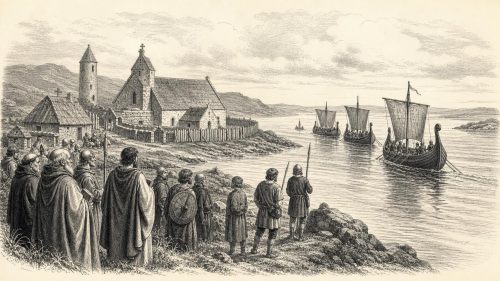
In 1057, Ireland remained divided among provincial dynasties, Norse-Irish towns and local rulers, with Donnchad mac Briain’s Munster supremacy increasingly challenged by Diarmait mac Maíl na mBó, Tairdelbach Ua Briain and other rivals. Killings of Munster claimants and neighbouring kings exposed unstable succession. Dublin-linked forces plundered Inis Cathaig but suffered heavy losses, while raids and conflicts occurred across Connacht, Leinster, the midlands and north. Church communities also suffered, notably the murder of Cork churchman Mugrón Ua Mútáin. Abundant woodland mast coincided with livestock disease, threatening rural livelihoods. These pressures foreshadowed Donnchad’s defeat in 1058 and wider political upheaval soon afterwards.
Read Article

Archived: 26 September 2026
Abstract
In 1055, Ireland lacked an uncontested high king, as provincial dynasties, churches and alliances competed for power. Toirdelbach Ua Briain defeated his cousin Murchad in Corcu Modruad, weakening Munster’s ruler Donnchad; raids, casualties and Kilfenora’s burning marked the campaign. Allied with Toirdelbach, Áed Ua Conchobair raided western Mide, taking spoil and captives. Gilla Pátraic of Osraige died and was succeeded by Domnall. Church leaders fought over Martarthech, where Armagh prevailed. Ecclesiastical deaths illustrate influential religious networks. Farming, cattle wealth, raiding, and Dublin’s trade underpinned politics, while 1055 foreshadowed Toirdelbach’s eventual ascendancy. Annals differ on details but confirm broad nationwide developments.
Read Article

Archived: 26 September 2026
Abstract
In 1054, described by annalists as a year of warfare, Donnchad mac Briain’s Munster faced attacks from Leinster, Osraige, Dublin and Connacht, while his nephew Tairdelbach Ua Briain challenged him internally. Diarmait mac Máel na mBó’s forces burned strongholds near Emly, aided by Dublin’s Norse-Gaelic resources; Connacht raided Thomond. Northern Ireland also saw killings and local conflicts. Deaths of bishops, ecclesiastics, scholars and rulers underscored links between political and religious power. Cattle-raiding reflected economic and military authority. Annals recorded natural wonders and a Scots-English battle. Despite Donnchad’s survival, alliances around Diarmait and Tairdelbach shifted power decisively in Munster against him.
Read Article

Archived: 26 September 2026
Abstract
In 1053, Irish annals depict widespread warfare, raids and political murder rather than a decisive national conflict. Donnchad mac Briain of Munster faced his nephew Toirdelbach Ua Briain, supported by Connacht, while Diarmait mac Máel na mBó defended Dublin’s interests after yielding hostages to an opposing expedition. Diarmait retaliated in Brega and Mide, taking cattle and captives. Killings, betrayals and raids affected Fermanagh, Lurg, Airgialla and Ulster. Churchmen died and ecclesiastical sites suffered, yet churches sustained administration and learning. Rural cattle-based society and maritime towns endured insecurity. The year foreshadowed Donnchad’s eventual displacement from Munster amid continuing political fragmentation thereafter.
Read Article

Archived: 26 September 2026
Abstract
In 1052, Diarmait mac Máel na mBó, overking of Leinster, captured Dublin after raiding and burning Fine Gall, forcing its Hiberno-Norse ruler, Echmarcach mac Ragnaill, overseas. Control of the port gave Diarmait maritime, commercial and military resources, weakening the position of Munster’s Donnchad mac Briain. Elsewhere, Áed Ua Conchobair ravaged Conmaicne, while conflict claimed regional rulers and Domnall Bán Ua Briain was killed around 1051–52. Ecclesiastical rivalry brought murder at Armagh and a contested abbacy at Emly; prominent clergy and ex-king Bran died. A violent December storm damaged houses and woods. Dublin’s seizure reshaped southern Irish power for decades thereafter.
Read Article

Archived: 26 September 2026
Abstract
In 1051 Ireland remained politically fragmented, with regional kings dependent on kinship, warfare, tribute and control of inauguration sites. Áed Ua Conchobair expanded Connacht power by blinding a rival, defeating opponents, resisting Donnchad mac Briain and felling the Dál Cais inauguration tree at Mag Adhair. Munster, the Déisi, Uí Failge and Tulach Óg saw killings, expulsions and disputed succession. Raids demonstrated cattle’s economic and political value, while churches mediated aftermaths of violence. Laidcnén Ua Leocháin and his wife undertook pilgrimage to Rome, dying abroad. Ireland also sheltered Harold Godwinson, demonstrating aristocratic Christianity, maritime connections and involvement in Irish Sea politics.
Read Article

Archived: 26 September 2026
Abstract
In 1050 Ireland remained politically fragmented, with Donnchad mac Briain of Munster pursuing overlordship through hostages, alliances and force, while rival rulers strengthened elsewhere. He proclaimed a law at Killaloe, intended to curb violence, protect agreements and demonstrate royal guardianship of Christian order amid scarcity. Clonmacnoise was repeatedly plundered by neighbouring Irish groups, while Kildare, Emly and Lann Léire suffered fires or attacks, revealing ecclesiastical centres’ wealth and vulnerability. Kings died violently, rivals were imprisoned, and churchmen continued teaching and collecting renders. Rural livelihoods depended on livestock and crops alongside trading towns. Muirchertach Ua Briain, a future king, was born.
Read Article

Archived: 26 September 2026
Abstract
In 1049, Ireland lacked an uncontested ruler, as provincial kings pursued authority through alliances, hostages, warfare and submission. Ulaid, Leinster and perhaps Norse-Gaelic forces invaded Mide seeking Brega hostages; Conchobar Ua Maelsechlainn killed captives, prompting widespread burning of churches and fortresses. Donnchad mac Briain received Leinster and Osraige’s hostages, signalling temporary southern supremacy. Dynastic killings affected several regions. At Armagh, Amalgaid’s death brought an orderly Clann Sínaig succession, while other church leaders died. Bréifne burned Roscommon around this period. An Irish-based fleet raided Wales and England. Warfare burdened rural communities, despite continuing agriculture, trade, urban craft and monastic learning networks.
Read Article

Archived: 26 September 2026
Abstract
In 1048, Ireland’s fragmented politics linked provincial kings, church families and Hiberno-Norse towns through alliance, hostage-taking, raiding and feud. Donnchad mac Briain marched through Mide and Brega, securing hostages from Diarmait mac Máel na mBó and submission from Dublin, though neither proved permanent. Diarmait raided the Déisi and, with Niall mac Eochada, attacked Mide’s churches. Conchobar Ua Máelshechlainn raided Kildare lands and captured Brega’s ruler. Áed Ua Conchobair destroyed Inis Locha Cime, beginning western expansion. Deaths of rulers, churchmen and poet Cenn Fáelad altered local power. Raids exposed cattle-based rural economies, while Dublin’s trade connected Ireland to wider Irish Sea.
Read Article

Archived: 26 September 2026
Abstract
In 1047, Ireland endured exceptional winter weather, remembered as the Great Snow, which persisted into March and killed people, livestock and wildlife. Resulting scarcity devastated Ulster, prompting hungry Ulaid groups to seek refuge in Leinster. Political conflict continued: Áed Ua Conchobair killed Niall Ua Ruairc in Corann, strengthening his Connacht kingship amid a longer dynastic feud; northern forces raided Brega; and Muirchertach of Uí Bresail was treacherously slain at Armagh. Ecclesiastical obits recorded leaders, lectors and a Kildare female coarb, while a bishop died on pilgrimage at Iona. The year clearly reveals regional rule, warfare, religious networks and rural vulnerability.
Read Article
Archived: 26 September 2026
Abstract
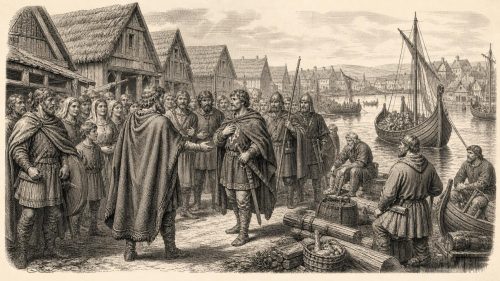
In 1046, Ireland remained politically fragmented, with regional rulers relying on alliances, military strength and lesser kings’ submission. Art Uallach Ua Ruairc, king of Connacht, was killed by Cenél Conaill, enabling Áed in Gaí Bernaig Ua Conchobair’s succession. Northern, midland and Munster elites also suffered killings, exposing conflict beneath provincial overkingship. Dublin’s inhabitants expelled Ímar mac Arailt and restored Echmarcach mac Ragnaill, linking Irish politics to the Irish Sea world. Ecclesiastical life continued through clerical successions, pilgrimage and Ardfert’s lightning damage. Annals preserve elite events, while farming, trade, churches and local communities sustained everyday life amid raids, obligations and insecurity.
Read Article
Archived: 26 September 2026
Abstract
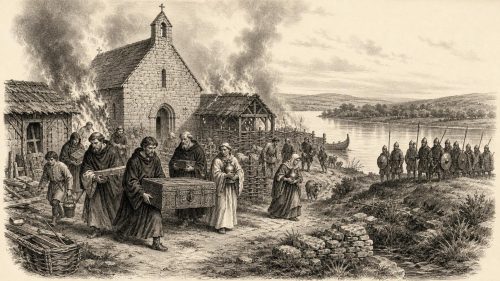
In 1045, Irish annals depict a politically fragmented island ruled by competing Gaelic dynasties and Hiberno-Norse Dublin. Deaths of regional kings destabilised succession, while Ímar of Dublin killed Ulaid forces and heir Ragnall Ua hEochada on Rathlin. Ulaid retaliated or pressured Dublin by burning Swords and Fingal. Muirchertach Ua Néill’s raid in Brega ended in tidal disaster at Casán Linne. Munster saw aristocratic killings and rivalry beneath Donnchad mac Briain. Churches at Clonfert and elsewhere suffered violence, fire and exactions, despite their influence. A crop failure compounded insecurity, although farming, Dublin trade, monastic institutions and scholarly annal-writing sustained durable networks.
Read Article

Archived: 26 September 2026
Abstract
In 1044 Ireland remained politically fragmented, with provincial kings, local dynasties, Norse-Irish Dublin and influential churches competing through raids, tribute, hostages and violence. Northern rulers avenged the unexplained profanation of Patrick’s Bell by seizing cattle and captives, demonstrating how sacred legitimacy supported political gain. Dublin’s Ímar mac Arailt attacked Patrick’s shrine and campaigned in the north. Clonmacnoise suffered plundering, while later tradition reports restitution by Donnchad mac Briain. Dynastic killings, blinding and regional defeats reshaped alliances across Ireland. Annals also record religious deaths, learning and rural life, revealing cattle, captives and monasteries as central sources of wealth, authority and conflict.
Read Article

Archived: 26 September 2026
Abstract
In 1043 Ireland remained politically fragmented, with Donnchad mac Briain’s prestige contested and Diarmait mac Máel na mBó consolidating Leinster. Annals record local warfare, killings and cattle raids, including violence at Glendalough, where sanctuary was breached, and fighting around the Suir. Northern conflicts involved Uí Méith, Ua Ruairc, and competing Uí Néill dynasties. Churches were both targets and political actors: Ciarán’s community ritually denounced Aed Ua Con Fhiacla, whose subsequent death was viewed as saintly vengeance. Cathal of Connacht died while pilgrim at Armagh. Despite insecurity, ecclesiastical centres sustained learning, wealth, pilgrimage and networks alongside rural farming and maritime trade.
Read Article

Archived: 26 September 2026
Abstract
In 1042, Leinster underwent a decisive political upheaval when Murchad mac Dúnlainge, king of Leinster, was killed at Mag Muilchet. His defeat ended the Uí Dúnlainge dynasty’s effective provincial claim and enabled Diarmait mac Máel na mBó of Uí Chennselaig gradually to establish supremacy, supported by Osraige. Conflict included the burning of Ferns and destructive retaliation at Glenn Uissen, illustrating warfare’s assault on ecclesiastical centres. In Mide, Flann mac Máel-Sechnaill was murdered amid dynastic rivalry. Sitriuc Silkbeard died, symbolising Dublin’s changing Hiberno-Norse era. Church deaths, pilgrimage to Rome, and Ailill of Muckno’s death in Cologne demonstrate Ireland’s European religious connections.
Read Article




