-
Unity Resolutions
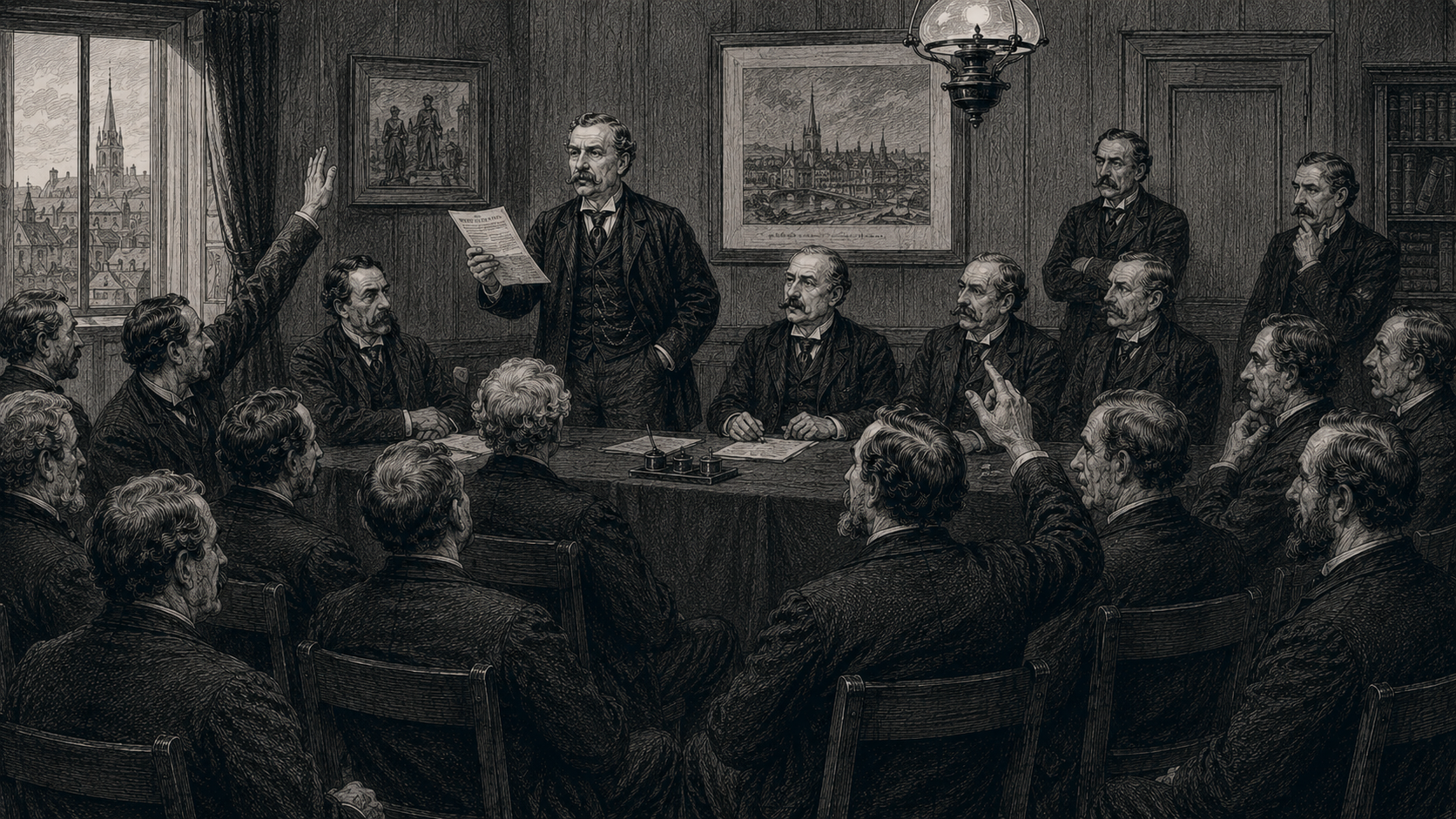
Read Article: Unity ResolutionsLocal political organisations passed resolutions supporting a united Irish parliamentary representation as dissatisfaction deepened with the factional divisions inherited from the fall of Charles Stewart Parnell. United Irish League branches, nationalist associations and constituency bodies increasingly treated reunion as a public obligation rather than a private matter for rival leaders. Their resolutions urged parliamentarians to restore cooperation, accept common discipline and present Ireland’s claims through one organised party at Westminster. Such declarations did not possess formal authority over every MP, but they demonstrated that continued separation risked alienating local supporters whose votes, subscriptions and organisational labour sustained constitutional nationalism.
The campaign gathered force during 1899 as William O’Brien’s United Irish League expanded beyond its western base. Its organisers connected agrarian demands with the reconstruction of national political representation, arguing that land reform and Home Rule required coordinated parliamentary pressure. Meetings gave local activists an opportunity to condemn factional quarrels and instruct representatives to place unity above personal allegiance. Contemporary newspapers recorded repeated public appeals for reconciliation, while correspondence among nationalist leaders reveals their awareness that organised opinion was becoming difficult to disregard. The resolutions helped convert reunion from an abstract hope into a practical test of whether MPs remained answerable to their constituencies.
Local declarations also carried an electoral warning. The approaching general election raised questions about candidates, campaign funds and the possibility that divided nationalist groups might oppose one another in constituencies otherwise secure from unionist competition. A resolution favouring united representation could therefore signal that electors expected one agreed candidate and disciplined voting at Westminster. Established MPs understood that the United Irish League might support challengers where sitting members resisted reunion. The language of harmony consequently concealed a struggle over political authority: local organisations demanded unity, but they also asserted their right to influence who represented the nationalist cause and upon what conditions.
The issue had clear relevance in Limerick, where the first elections under the Local Government (Ireland) Act of 1898 had widened participation in county, urban and rural administration. The surviving evidence does not justify attributing a particular reunion resolution to every Limerick organisation, yet local nationalists operated within the same expanding culture of meetings, resolutions and representative politics. The city and county returned nationalist MPs whose effectiveness depended upon cooperation with colleagues from elsewhere in Ireland. Land purchase, labourers’ housing, public works, local finance and Home Rule all strengthened the practical argument that Limerick interests required a coordinated parliamentary body rather than competing factions.
The accumulating pressure contributed to the formal reunion of the parliamentary sections in January 1900. John Redmond became chairman of the restored Irish Parliamentary Party, while John Dillon, Timothy Healy, William O’Brien and their followers entered a common organisation without abandoning every disagreement. Local resolutions had not settled questions of leadership, finance or control of the United Irish League, but they had helped establish the political cost of continued division. Reunion consequently reflected more than negotiation among prominent men. It also represented the influence of branches, constituency workers and local electors who insisted that Ireland’s representation at Westminster should act collectively if it expected to retain national confidence.
- Freeman’s Journal, 18 April 1899.
- Freeman’s Journal, 6 May 1899.
- Freeman’s Journal, 20 May 1899.
- Freeman’s Journal, 22 May 1899.
- Freeman’s Journal, 3 August 1899.
- Freeman’s Journal, 8 August 1899.
- Mayo News, 21 January 1899.
- Mayo News, 15 April 1899.
- Mayo News, 27 January 1900.
- The Times, 17 January 1900.
- The Times, 31 January 1900.
- Philip Bull, “The United Irish League and the Reunion of the Irish Parliamentary Party, 1898–1900,” Irish Historical Studies, vol. 26, no. 101, May 1988, pp. 51–78.
- F. S. L. Lyons, The Irish Parliamentary Party, 1890–1910, London: Faber and Faber, 1951, pp. 75–89.
- Local Government (Ireland) Act 1898, 61 & 62 Vict., c. 37.
-
Editorial Pressure
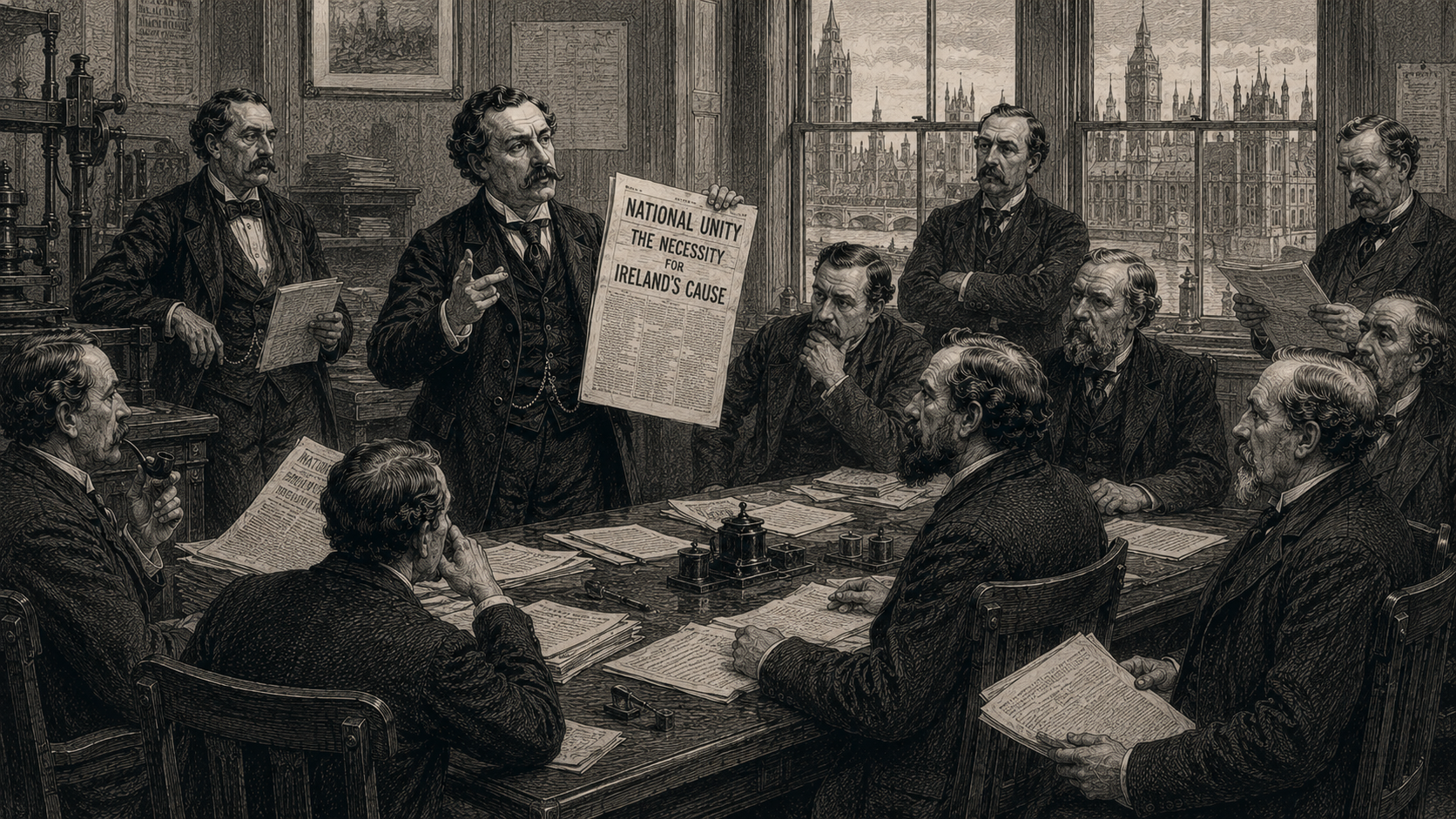
Read Article: Editorial PressureNationalist newspapers increasingly presented reunion as a political necessity if Ireland was to recover influence at Westminster. Nearly ten years of division had left the parliamentary movement broken into Parnellite, Dillonite and Healyite groupings, each claiming to represent the national cause while weakening the collective strength of Irish MPs. Editorial argument did not always conceal sympathy for particular leaders, but a common warning became difficult to ignore: a divided party could neither discipline its members nor exploit opportunities created by close divisions in the House of Commons. Unity was therefore described less as reconciliation between personalities than as an instrument of national effectiveness.
The Freeman’s Journal occupied an especially important position because it had long been associated with constitutional nationalism and had become aligned with the anti-Parnellite majority after the split. Its treatment of reunion was complicated by Thomas Sexton’s influence and the continuing rivalry between John Dillon and Timothy Healy, yet the newspaper remained a major forum in which the movement’s weakness was examined. Other nationalist titles, including William O’Brien’s Irish People and the Mayo News, reflected the growing strength of the United Irish League. Their coverage helped turn parliamentary reunion from a private negotiation among MPs into a public test of political responsibility.
The argument rested upon Westminster arithmetic. Irish nationalist MPs could exert pressure only when they acted together, voted under discipline and negotiated as a recognisable parliamentary force. Continued factional rivalry allowed British governments and opposition leaders to discount demands for Home Rule, land reform and administrative change. Newspaper readers were repeatedly reminded that public meetings and constituency organisation would have limited value if the men elected to Parliament remained divided. Reunion promised a single leadership, coordinated voting and greater bargaining power, though editors differed over whether the restored party should be controlled by its MPs, the United Irish League or organised nationalist opinion throughout Ireland.
For readers in Limerick, the question was directly connected to representation for the city and county at Westminster. Limerick City, East Limerick and West Limerick each returned nationalist members, but their effectiveness depended upon cooperation with colleagues from across Ireland. Land purchase, tenant security, labourers’ housing, local government and Home Rule could not be advanced by isolated representatives acting through competing factions. National newspapers carried these debates into local homes, reading rooms, railway stations and political branches. The surviving evidence does not justify attributing one uniform opinion to every Limerick reader, but the practical case for united parliamentary action was readily understood.
Press advocacy helped create the atmosphere in which the factions met in Committee Room 15 on 30 January 1900 and formally restored a united Irish Parliamentary Party. John Redmond’s election as chairman gave the movement a recognised public leader, while John Dillon, Timothy Healy, William O’Brien and their followers entered an organisation whose unity remained dependent upon compromise. Newspapers could celebrate the recovery of parliamentary strength, but they could not remove the mistrust accumulated since 1890. Reunion nevertheless allowed nationalist Ireland to approach the coming general election with coordinated candidates and a stronger claim to speak at Westminster through one disciplined parliamentary body.
- Freeman’s Journal, 6 May 1899.
- Freeman’s Journal, 20 May 1899.
- Freeman’s Journal, 3 August 1899.
- Freeman’s Journal, 8 August 1899.
- Mayo News, 27 January 1900.
- The Times, 31 January 1900.
- Mayo News, 3 February 1900.
- W. H. Brayden to William O’Brien, 5 February 1900, William O’Brien Papers, University College Cork, AKA.74.
- Philip Bull, “The United Irish League and the Reunion of the Irish Parliamentary Party, 1898–1900,” Irish Historical Studies, vol. 26, no. 101, May 1988, pp. 51–78.
- F. S. L. Lyons, The Irish Parliamentary Party, 1890–1910, London: Faber and Faber, 1951, pp. 79–89.
-
Factional Shadows
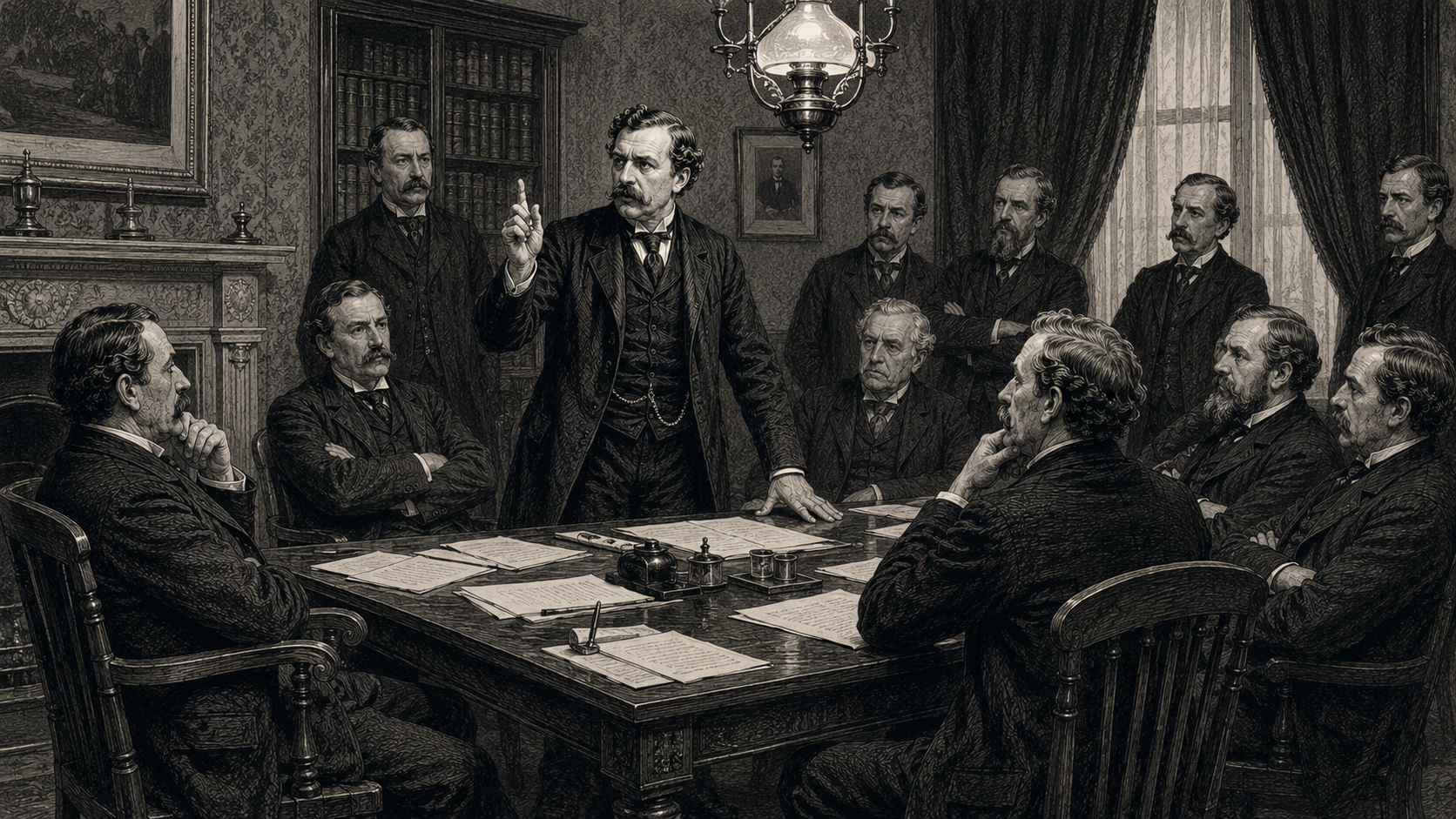
Read Article: Factional ShadowsThe legacy of the Parnell split continued to shape personal rivalries within Irish nationalism nearly a decade after the parliamentary rupture of December 1890. Charles Stewart Parnell’s refusal to surrender the party leadership during the crisis created by the O’Shea divorce case divided former colleagues into Parnellite and anti-Parnellite camps. Political disagreement quickly became entangled with questions of loyalty, honour and betrayal. Parnell’s death in October 1891 removed the central figure but did not settle the quarrel. Memories of who had defended him, abandoned him or challenged his authority remained powerful within parliamentary groups, newspapers, constituency organisations and personal relationships.
John Redmond inherited leadership of the Parnellite minority and presented himself as the guardian of Parnell’s political tradition. John Dillon became one of the strongest figures among the anti-Parnellites, while Timothy Healy, although an opponent of Parnell during the crisis, increasingly pursued an independent course and quarrelled bitterly with former allies. William O’Brien moved between these competing personalities while attempting to rebuild organisation through the United Irish League. Their disputes concerned Home Rule, land reform, party discipline, candidate selection and political strategy, but the language and emotional force of the arguments repeatedly returned to the unresolved wounds of the split.
The United Irish League, founded in 1898, placed new pressure upon leaders whose personal hostility had weakened nationalist representation at Westminster. O’Brien’s organisation mobilised tenant farmers, local activists and constituency branches around agrarian reform and political reunion. Sitting MPs were increasingly expected to place collective action above inherited factional loyalties. Yet reunion negotiations exposed the difficulty of separating policy from personality. Redmond feared domination by the anti-Parnellite majority, Dillon sought dependable parliamentary discipline, and Healy resisted arrangements that might diminish his independence. The League could bring rival leaders towards agreement, but it could not compel them to forget the accusations exchanged during the previous decade.
In Limerick, the consequences of national division were felt through elections, newspapers, political organisations and the work of parliamentary representatives. The surviving evidence does not justify describing one uniform local reaction, but voters in the city and county had practical reasons to resent factional weakness. Land reform, labourers’ housing, local administration and Home Rule required coordinated pressure upon the government. The widening of elected local government under the 1898 legislation also encouraged expectations of greater political accountability. Nationalist representatives who remained absorbed in personal quarrels risked appearing increasingly detached from Limerick electors whose immediate concerns depended upon effective organisation rather than loyalty to old parliamentary camps.
The formal reunion of the Irish Parliamentary Party in January 1900 placed Redmond at the head of a reconstructed organisation, but it did not recreate the personal authority once exercised by Parnell. Redmond had to balance Dillon’s influence, O’Brien’s popular organisation and Healy’s independent strength. Old suspicions continued to affect decisions concerning funds, constituencies, leadership and relations with the United Irish League. The settlement therefore restored outward parliamentary unity without removing the rivalries beneath it. Irish nationalism entered the new century with a recognised chairman and a common party structure, yet the emotional and political inheritance of the Parnell split remained embedded within its leadership.
- Frank Callanan, The Parnell Split, 1890–91, Cork: Cork University Press, 1992.
- F. S. L. Lyons, The Irish Parliamentary Party, 1890–1910, London: Faber and Faber, 1951.
- F. S. L. Lyons, John Dillon: A Biography, London: Routledge and Kegan Paul, 1968.
- T. M. Healy, Letters and Leaders of My Day, 2 vols, London: Thornton Butterworth, 1928.
- William O’Brien, An Olive Branch in Ireland and Its History, London: Macmillan, 1910.
- John Redmond Papers, National Library of Ireland, Collection List No. 118.
- John Dillon Papers, Trinity College Dublin Manuscripts, IE TCD MSS 6455–6909.
- Philip Bull, “The United Irish League and the Reunion of the Irish Parliamentary Party, 1898–1900,” Irish Historical Studies, vol. 26, no. 101, May 1988, pp. 51–78.
-
Difficult Ally
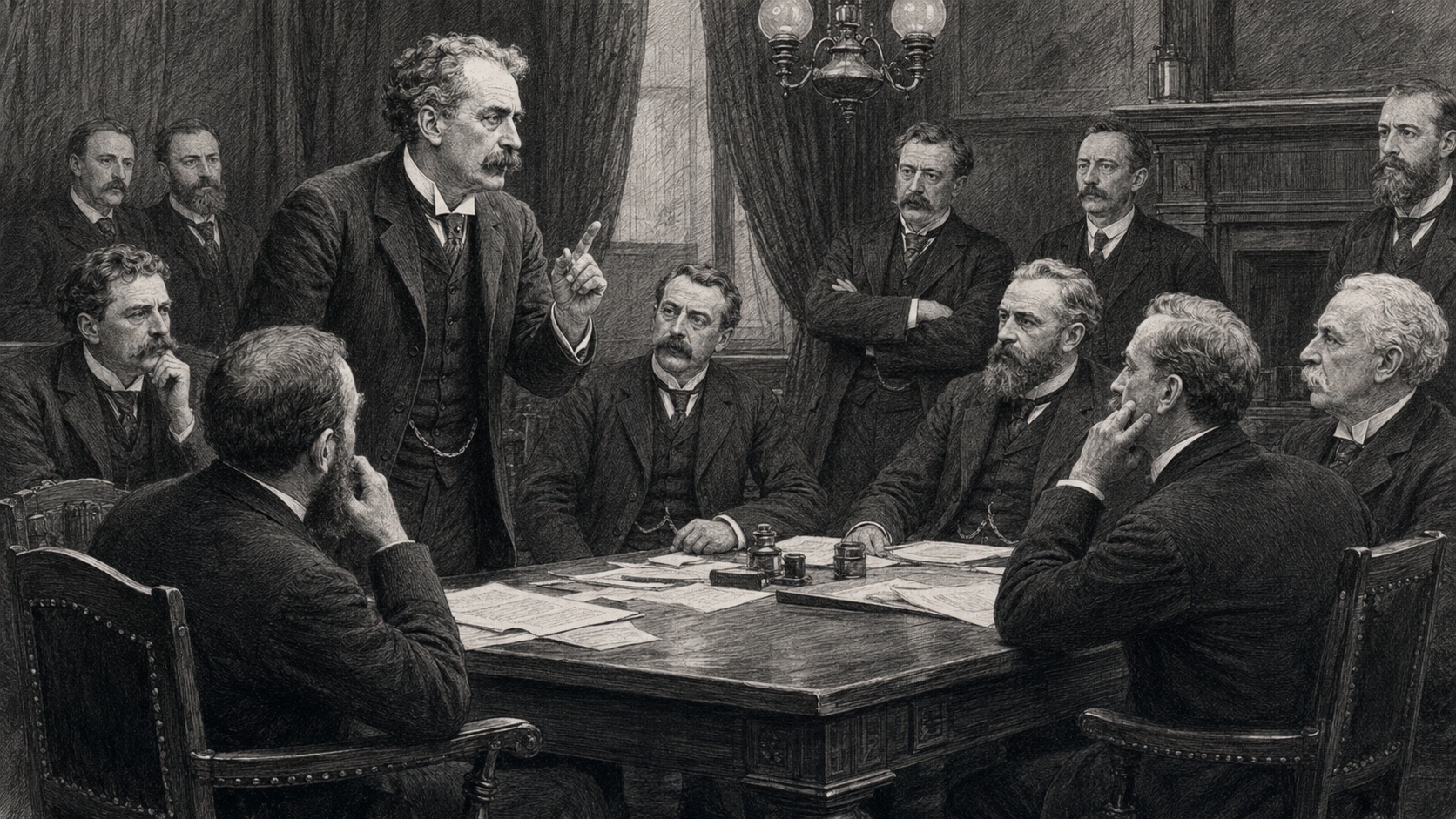
Read Article: Difficult AllyTim Healy remained one of the most influential yet troublesome figures involved in the effort to reunite Ireland’s divided parliamentary nationalists during January 1900. A formidable barrister, experienced Member of Parliament and devastating political speaker, Healy possessed an authority that could not easily be ignored. He had opposed Charles Stewart Parnell during the leadership crisis of 1890 and subsequently quarrelled with leading anti-Parnellites, particularly John Dillon. By the end of the decade, Healy commanded his own following of MPs and local activists. Any credible agreement restoring nationalist unity therefore required his cooperation, even though many former colleagues distrusted his intentions and feared his independence.
The nationalist divisions had weakened the Home Rule movement for almost ten years. John Redmond led the surviving Parnellite minority, while Dillon remained the most prominent leader among the larger anti-Parnellite body. Healy belonged comfortably to neither camp and had established the People’s Rights Association as a separate political organisation. Negotiations during 1899 and January 1900 brought Healy, Redmond and representatives of the rival groups into increasingly serious discussions. Healy encouraged reunion but resisted any settlement that would leave Dillon’s allies controlling parliamentary organisation, candidate selection and party funds. His involvement consequently advanced the negotiations while simultaneously making agreement more difficult to secure.
Healy’s political methods contributed greatly to the suspicion surrounding him. He possessed a remarkable knowledge of parliamentary procedure and the Irish land question, but his sharp tongue, personal feuds and willingness to challenge recognised leaders repeatedly fractured political alliances. Supporters regarded him as an independent defender of constituencies, tenant farmers and Catholic interests. Opponents believed that he placed personal influence before party discipline. During the reunion discussions, both interpretations appeared plausible. He understood that division had damaged nationalism, yet he also sought organisational arrangements that would prevent his followers from being marginalised when the factions were brought together under a common parliamentary leadership.
The dispute was closely watched in Limerick, where nationalist politics had also been shaped by the Parnell split, clerical influence, land agitation and competing loyalties among local organisers. Newspapers circulating in the city and county carried reports of the Mansion House unity discussions and the manoeuvring of Redmond, Dillon, William O’Brien and Healy. For Limerick farmers, workers and Home Rule supporters, reunion promised a stronger Irish voice at Westminster, but the continuing personal rivalry among national leaders showed how fragile that prospect remained. Healy’s prominence reminded local nationalists that unity required more than public declarations; it demanded agreement over leadership, candidates, money and political discipline.
Representatives of the nationalist factions met in Dublin’s Mansion House on 17 January, and the negotiations continued towards the decisive parliamentary gathering held on 30 January. The process eventually enabled the Irish Parliamentary Party to reunite under John Redmond in early February. Healy accepted the broad settlement and helped make reunion possible, but his uneasy relationship with the restored organisation did not disappear. His followers remained a recognisable force, while disputes over election candidates soon revived old resentments. January therefore revealed Healy as both a necessary participant and a persistent source of uncertainty: a politician powerful enough to assist nationalist unity, but too independent and combative to be absorbed without further conflict.
- Philip Bull, “The United Irish League and the Reunion of the Irish Parliamentary Party, 1898–1900,” Irish Historical Studies, vol. 26, no. 101, May 1988, pp. 51–78.
- F. S. L. Lyons, The Irish Parliamentary Party, 1890–1910, London: Faber and Faber, 1951, particularly the discussion of the reunion negotiations of 1899–1900.
- Frank Callanan, T. M. Healy, Cork: Cork University Press, 1996, particularly the chapters covering Healy’s estrangement from the nationalist factions and his part in the 1900 reunion.
- William O’Brien Papers, University College Cork Archives, including correspondence concerning the January 1900 reunion negotiations.
- Michael Davitt Papers, National Library of Ireland, MS 914, including correspondence dated 23 January 1900 concerning Healy and the reunion discussions.
- Freeman’s Journal, Dublin, January 1900, reports of the Mansion House conference, nationalist reunion negotiations and parliamentary preparations.
- Limerick Chronicle and Limerick Leader, January and February 1900, for contemporary Limerick reporting and local reception of nationalist reunion.
-
Discipline Debated
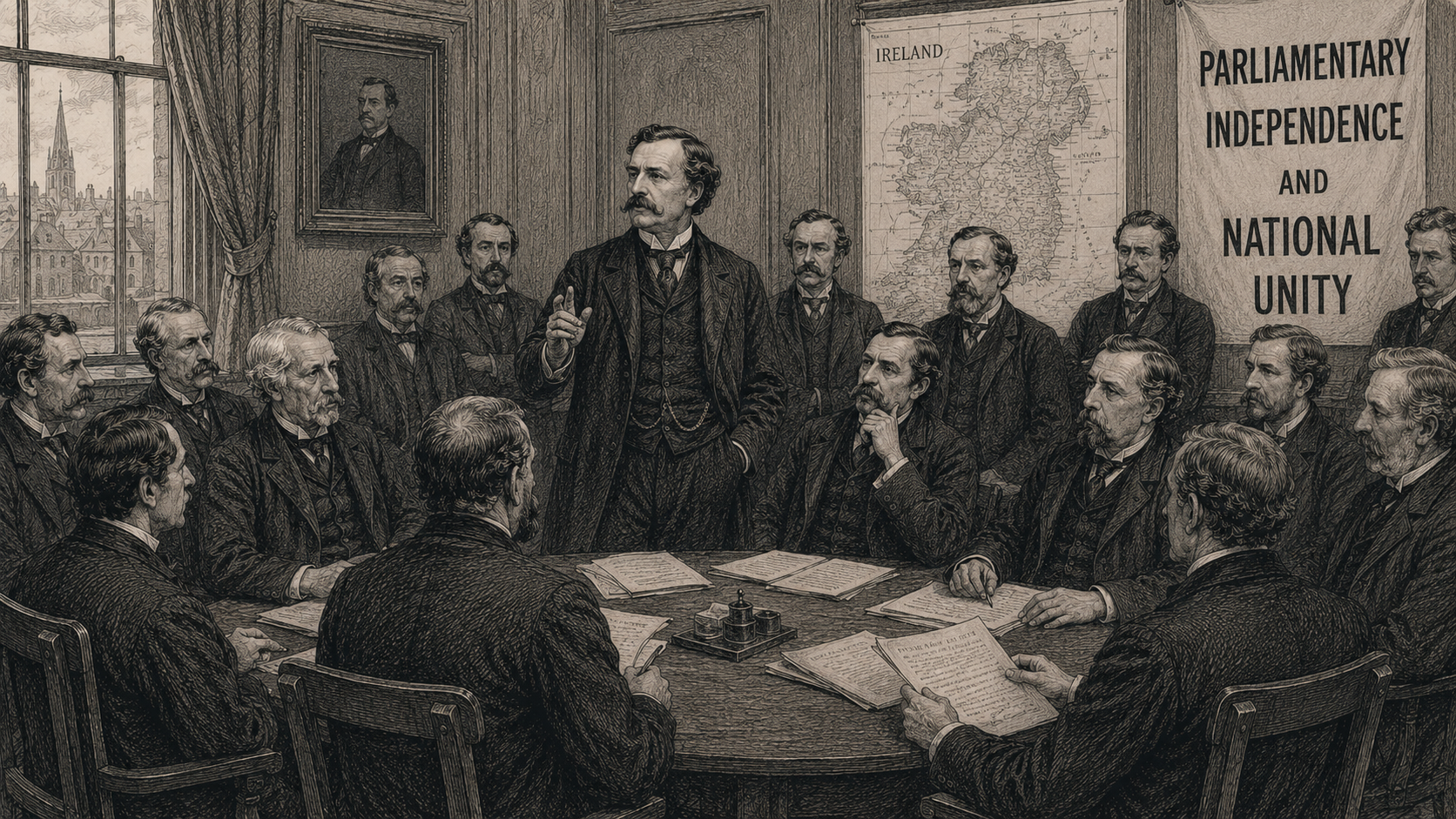
Read Article: Discipline DebatedJohn Dillon’s supporters debated the conditions under which parliamentary discipline could be restored as negotiations advanced towards reunion among Ireland’s constitutional nationalists. Dillon led the Irish National Federation, the larger anti-Parnellite organisation created after the Irish Parliamentary Party divided over Charles Stewart Parnell’s leadership in 1890. Nearly a decade of separate committees, competing election funds and bitter personal rivalries had left nationalist MPs unable to reproduce the cohesion once associated with Parnell. Dillon’s followers wanted unity, but many were reluctant to accept an agreement that might weaken their majority or revive the authority of former Parnellites without firm organisational safeguards.
The central questions extended beyond the selection of a chairman. The anti-Parnellites had to consider whether reunited MPs would accept a common pledge, obey collective decisions, support agreed candidates and submit disputes to a recognised party authority. Control of parliamentary funds and constituency organisation also carried considerable importance, since money and local endorsement could determine whether an established member survived an election challenge. Dillon’s supporters therefore sought a union capable of enforcing loyalty at Westminster while preventing individual MPs or rival groups from acting independently. Without such terms, reunion risked becoming a ceremonial settlement that concealed rather than ended the old division.
William O’Brien’s expanding United Irish League added urgency to the discussion. Its branches demanded an end to factional warfare and attempted to impose unity upon parliamentarians from outside Westminster and below the established leadership. Dillon’s followers recognised that continued division might allow the League to select new candidates, redirect nationalist funds and displace sitting MPs who appeared unwilling to cooperate. Yet accepting the League’s influence also raised questions about whether parliamentary policy would be determined by elected members or by an increasingly powerful national organisation. The debate consequently joined the restoration of discipline to a larger struggle over who possessed the authority to speak for nationalist Ireland.
These arguments carried practical significance in Limerick, where local government had been transformed during 1899. The creation of Limerick County Council, the democratisation of the city authority and the establishment of rural district councils greatly expanded elected participation beyond the narrow system previously dominated by property and appointment. No surviving evidence establishes that Limerick representatives determined the terms of Dillon’s internal debate, but the new political environment strengthened local expectations of accountable national leadership. Electors concerned with land, roads, housing, public health and Home Rule required MPs capable of acting collectively rather than repeating the damaging rivalries of the previous decade.
The negotiations eventually produced reunion in Committee Room 15 at Westminster on 30 January 1900, the same room associated with the original party rupture. John Redmond was chosen to chair the reunited parliamentary movement, while Dillon accepted service beneath a former Parnellite and became the most influential representative of the anti-Parnellite majority. The settlement restored a common party structure, but it did not give Redmond the personal command once exercised by Parnell. He remained obliged to consult powerful colleagues and accommodate the United Irish League. Parliamentary discipline returned through compromise, leaving unresolved tensions over leadership, local organisation and control of nationalist policy.
- Papers of John Dillon, MP, Trinity College Dublin Manuscripts, IE TCD MSS 6455–6909.
- Philip Bull, “The United Irish League and the Reunion of the Irish Parliamentary Party, 1898–1900,” Irish Historical Studies, vol. 26, no. 101, May 1988, pp. 51–78.
- F. S. L. Lyons, John Dillon: A Biography, London: Routledge and Kegan Paul, 1968.
- F. S. L. Lyons, The Irish Parliamentary Party, 1890–1910, London: Faber and Faber, 1951.
- Michael Laffan, “Redmond, John Edward,” Dictionary of Irish Biography, Royal Irish Academy.
- William O’Brien, An Olive Branch in Ireland and Its History, London: Macmillan, 1910.
- The Times, 31 January 1900.
- Martin Walsh, Limerick Local Government 1899–1942: An Online Exhibition Commemorating the 125th Anniversary of the Local Elections, 1899, Limerick Museum and Limerick Library Service, 2024.
-
Reunion Negotiations
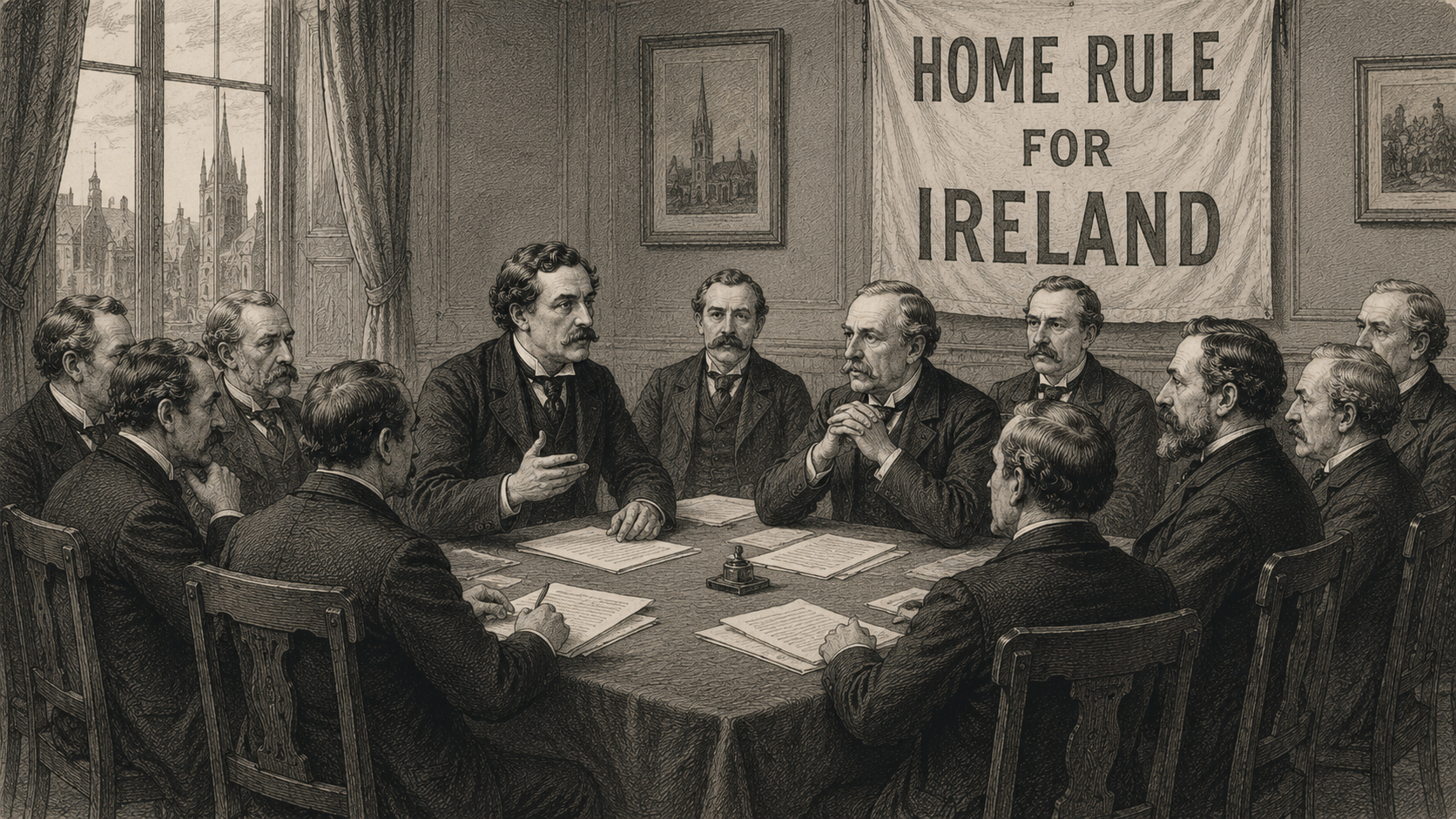
Read Article: Reunion NegotiationsJohn Redmond’s Parnellite followers opened formal communications with their former anti-Parnellite opponents as pressure intensified to repair the divisions created by the fall of Charles Stewart Parnell. Since the parliamentary split of 1890, Irish constitutional nationalism had broken into competing groups whose leaders differed over authority, organisation and political strategy. Redmond led the principal Parnellite body, John Dillon commanded much of the anti-Parnellite majority, and Timothy Healy exercised influence through a separate following. Years of rivalry had weakened nationalist discipline at Westminster and frustrated supporters who believed that factional quarrels were obstructing Home Rule and land reform.
On 24 July 1899, Redmond wrote from the House of Commons to Dillon and Healy, asking whether they would agree to convene representatives of the Irish National Federation and the Irish National League for the purpose of discussing nationalist reunification. Dillon replied on 26 July that he had long been prepared to confer with Redmond or any other Irish nationalist MP and urged cooperation inside Parliament. The exchange did not settle the leadership question, nor did it remove the personal suspicions accumulated during the previous decade, but it provided a documented basis upon which more substantial negotiations could proceed.
The discussions were influenced by forces beyond the parliamentary factions themselves. William O’Brien’s United Irish League, founded in 1898, had begun turning agrarian discontent and impatience with political division into an organised national movement. Its growth threatened established MPs who could no longer assume that loyalty to older organisations would protect them from local challenges. Reunion therefore offered both a means of restoring nationalist effectiveness and a defence against displacement by a vigorous popular organisation. Redmond’s followers had to consider whether continued separation preserved the Parnellite tradition or merely surrendered political influence to men capable of organising the countryside more successfully.
The negotiations also held importance for Limerick, where political participation had recently broadened under the Local Government (Ireland) Act of 1898. The creation of Limerick County Council and the democratisation of urban and rural authorities gave many more householders an opportunity to influence public affairs. No surviving evidence establishes a distinct Limerick role in this particular exchange between Redmond, Dillon and Healy, but local nationalist voters had an obvious interest in its outcome. Parliamentary reunion promised that concerns involving land, local administration, public works and Home Rule might be represented by a movement no longer weakened by competing leaderships and electoral rivalries.
Agreement remained difficult because the factions disputed more than personalities. They differed over party control, election funds, candidate selection and the authority that the expanding United Irish League should exercise over MPs. Nevertheless, the opening of direct discussions helped prepare the settlement reached on 30 January 1900, when the parliamentary sections reunited after almost ten years of formal division. Redmond subsequently became chairman of the reconstructed Irish Parliamentary Party. The reunion restored a recognised national leadership, though it did not permanently end disagreements among Redmond, Dillon, Healy and O’Brien over whether policy should be directed from Westminster or shaped by organised opinion throughout Ireland.
- John Redmond to John Dillon and T. M. Healy, 24 July 1899, copy letter proposing a meeting of the Irish National Federation and Irish National League to discuss nationalist reunification, John Redmond Papers, National Library of Ireland, MS 15,182/2/1.
- John Dillon to John Redmond, 26 July 1899, letter declaring his willingness to confer regarding reunion and parliamentary cooperation, John Redmond Papers, National Library of Ireland, MS 15,182/2/2.
- Philip Bull, “The United Irish League and the Reunion of the Irish Parliamentary Party, 1898–1900,” Irish Historical Studies, vol. 26, no. 101, May 1988, pp. 51–78.
- National Library of Ireland, “John Redmond and the Irish Parliamentary Party,” 1916 Exhibition historical collection.
- Martin Walsh, Limerick Local Government 1899–1942: An Online Exhibition Commemorating the 125th Anniversary of the Local Elections, 1899, Limerick Museum and Limerick Library Service, 2024.
- William O’Brien, An Olive Branch in Ireland and Its History, London: Macmillan, 1910.
-
Reunion Talks
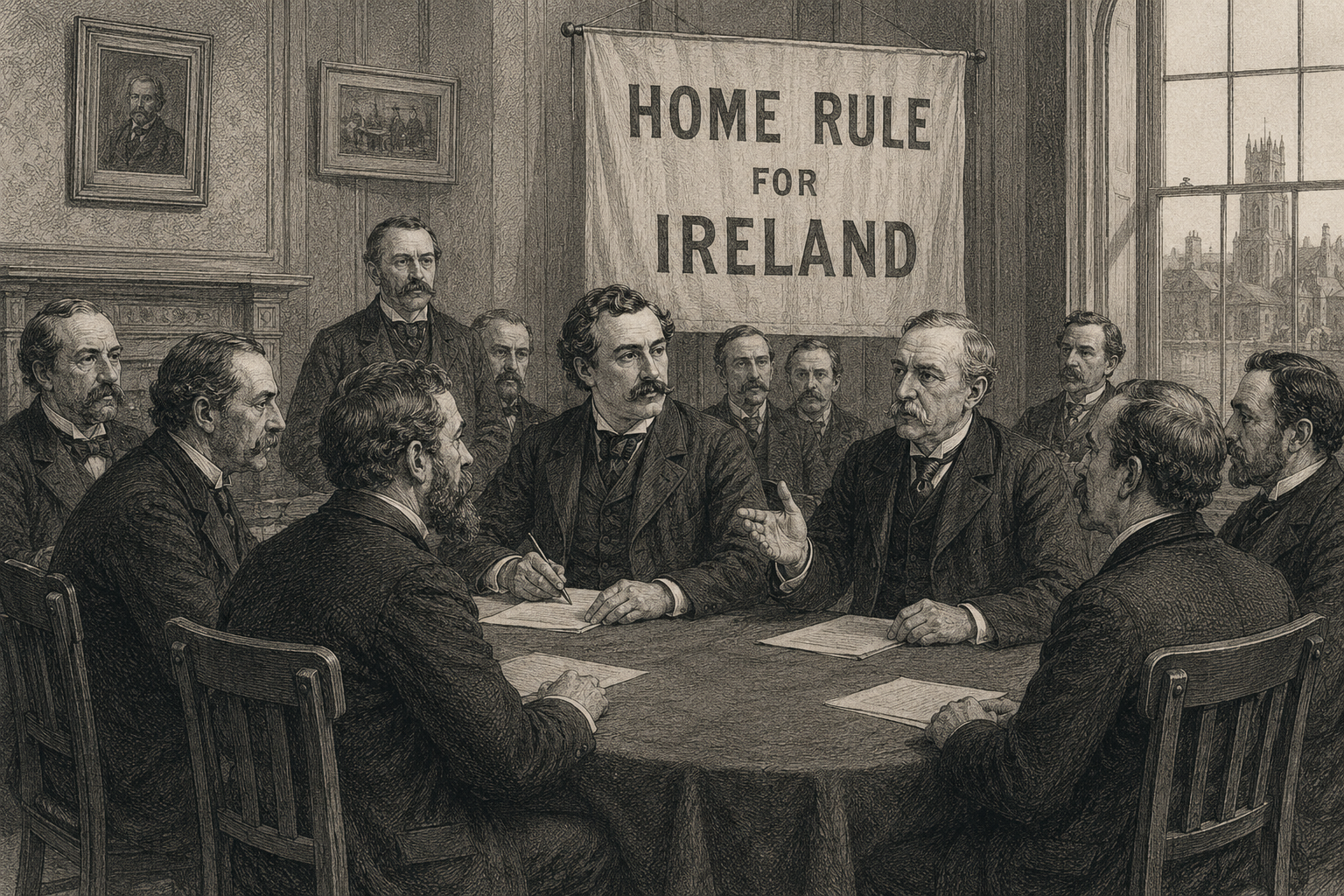
Read Article: Reunion TalksJohn Redmond’s Parnellite followers entered formal discussions with their former anti-Parnellite opponents as pressure mounted to end nearly a decade of nationalist division. Redmond had led the minority that remained loyal to Charles Stewart Parnell after the Irish Parliamentary Party split in December 1890. The larger anti-Parnellite body was principally associated with John Dillon, while Timothy Healy commanded another influential grouping. Their separate organisations had competed for authority, funds and electoral support throughout the 1890s, weakening the parliamentary movement and leaving constitutional nationalism without the concentrated leadership it had possessed under Parnell.
A documented step towards negotiation came on 24 July 1899, when Redmond wrote from the House of Commons to Dillon and Healy, asking whether they would convene representatives of the Irish National Federation and Irish National League to discuss nationalist reunification. Dillon replied two days later that he had long been willing to confer with Redmond or any other nationalist MP and argued for cooperation at Westminster. The correspondence did not erase old suspicions, but it established that the opposing leaderships were prepared to treat reunion as a practical political question rather than merely an aspiration expressed at public meetings.
The discussions unfolded while William O’Brien’s United Irish League was expanding rapidly and challenging the divided parliamentarians from outside their established organisations. Founded in 1898, the League combined agrarian demands with a campaign for national political reconstruction. Its branches gave tenant farmers and local activists a platform from which to condemn factional quarrels and demand effective representation. Redmond and his followers therefore entered negotiations from a position that offered opportunity as well as danger. Reunion could restore parliamentary authority, but it could also become necessary to prevent the newer popular organisation from displacing sitting MPs and controlling future candidate selection.
The negotiations carried clear importance for Limerick, although the available evidence does not establish a distinct local intervention in these particular discussions. Electoral reform had greatly enlarged political participation in the city: Limerick Archives records that the municipal electorate increased from 709 to 5,521 before the local elections of 1899. Constitutional nationalists representing Limerick city and county could not remain untouched by a national settlement governing leadership, discipline and parliamentary cooperation. Local electors concerned with Home Rule, land reform and democratic government had a direct interest in whether competing nationalist organisations would continue exhausting themselves through rivalry or combine their strength at Westminster.
Agreement remained difficult because reunion required more than polite correspondence. The factions disagreed over leadership, organisation, election funds and the relationship between MPs and the United Irish League. Redmond had previously resisted proposals that appeared likely to subordinate the Parnellite tradition, while Dillon and Healy remained divided from one another as well as from him. Nevertheless, the opening of formal discussions helped create the path towards the meeting of 30 January 1900, when the parliamentary factions reunited. Redmond subsequently became chairman of the reconstructed Irish Parliamentary Party, though the compromises that brought unity did not permanently remove the personal and organisational tensions beneath it.
- John Redmond to John Dillon and T. M. Healy, 24 July 1899, copy letter proposing a meeting of the Irish National Federation and Irish National League to discuss nationalist reunification, John Redmond Papers, National Library of Ireland, MS 15,182/2/1.
- John Dillon to John Redmond, 26 July 1899, letter declaring his willingness to confer on reunion and parliamentary cooperation, John Redmond Papers, National Library of Ireland, MS 15,182/2/2.
- Philip Bull, “The United Irish League and the Reunion of the Irish Parliamentary Party, 1898–1900,” Irish Historical Studies, vol. 26, no. 101, May 1988, pp. 51–78.
- F. S. L. Lyons, The Irish Parliamentary Party, 1890–1910, London: Faber and Faber, 1951, pp. 79–88.
- Margaret A. Banks, Edward Blake, Irish Nationalist: A Canadian Statesman in Irish Politics, 1892–1907, Toronto: University of Toronto Press, 1957, pp. 206–229.
- Mayo News, 27 January 1900.
- The Times, 31 January 1900.
- Limerick Archives, Franchise and Elections, 1869–1954, electoral records and historical summary concerning the enlarged Limerick municipal electorate and the local elections of 1899.
-
Redmond Favoured
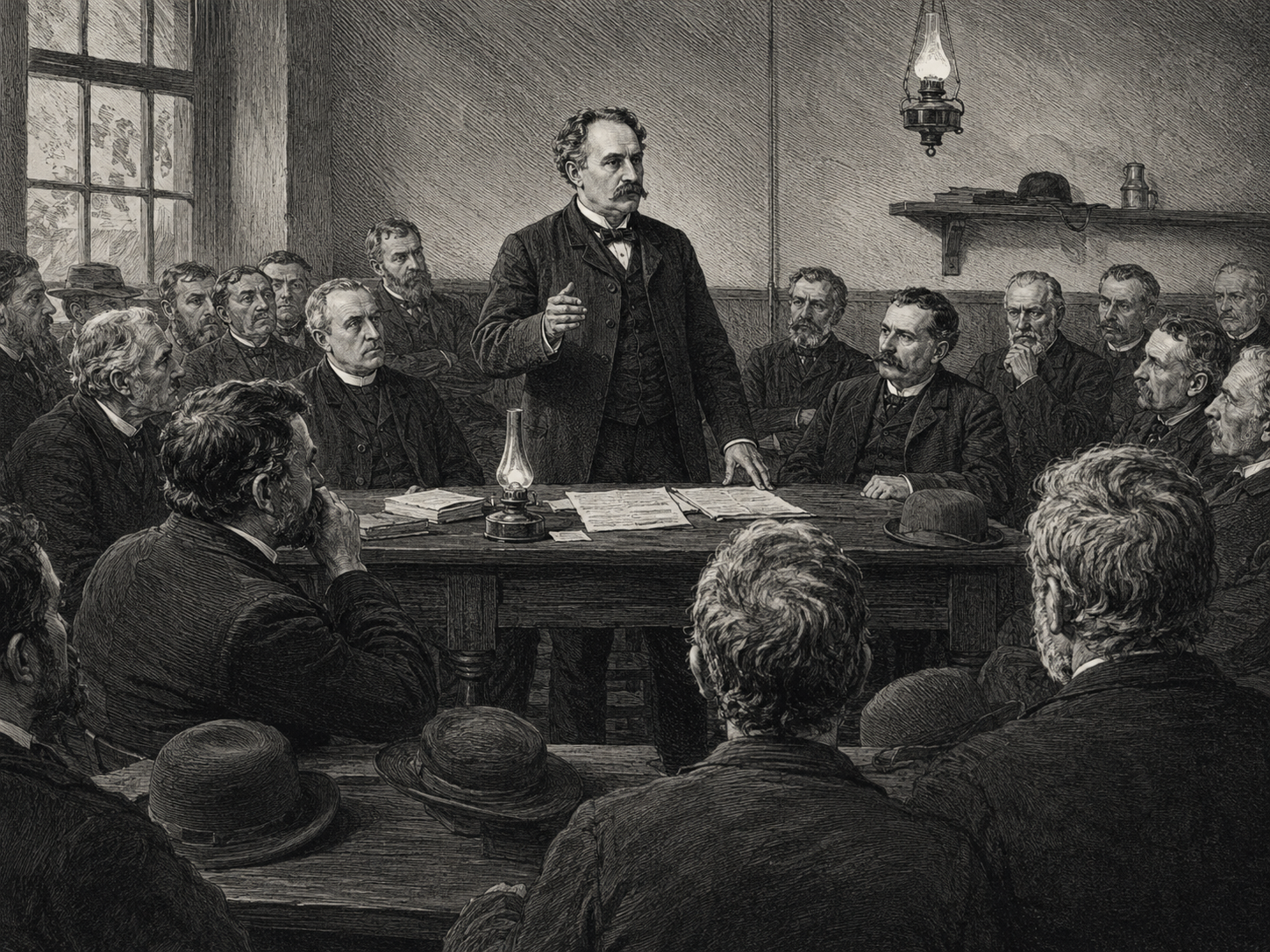
Read Article: Redmond FavouredJohn Redmond emerged during the closing days of January as the principal compromise candidate to lead a reunited Irish Parliamentary Party. His position reflected neither complete trust nor an undisputed personal triumph. Redmond had remained loyal to Charles Stewart Parnell during the political split of 1890 and subsequently led the smaller Parnellite faction. That background made him unacceptable to some former opponents, yet it also placed him outside the bitter rivalries dividing senior anti-Parnellites. As reunion negotiations progressed, delegates increasingly recognised that selecting a leader identified too closely with one majority faction could reopen the quarrel they were attempting to settle.
John Dillon’s willingness to set aside his own leadership claims significantly strengthened Redmond’s prospects. Timothy Healy and William O’Brien also possessed influence, but neither could command sufficiently broad confidence across the competing parliamentary groups. Redmond’s measured manner, experience at Westminster and existing status as leader of the Parnellite minority made him a practical choice. His elevation would allow Parnell’s surviving followers to enter the reunited organisation without humiliation while permitting the larger anti-Parnellite body to claim that unity had been achieved through negotiation rather than surrender. The apparent compromise concealed unresolved personal suspicions that would continue beneath the restored party structure.
The United Irish League’s rapid expansion made agreement increasingly urgent. Founded by William O’Brien, the League had mobilised tenant farmers and local organisers around land reform while demanding an end to parliamentary factionalism. Its success demonstrated that nationalist opinion outside Westminster was becoming impatient with leaders who prolonged disputes inherited from the previous decade. Redmond’s candidacy offered a means of reconnecting the parliamentary movement with this growing popular organisation. Although he had previously expressed reservations about reunion, he now appeared capable of representing a party broad enough to include former rivals while maintaining a recognisable nationalist presence at Westminster.
The developing settlement was followed closely in Limerick city and county, where nationalist voters, United Irish League supporters and local political organisers had experienced the weakening effects of factional division. Reunion promised fewer contests between rival nationalist candidates and a stronger parliamentary campaign for Home Rule, tenant purchase and land reform. Redmond’s emergence would not have satisfied every Limerick activist, but his selection offered the prospect of a single leadership to which local branches and representatives could direct their support. The issue mattered particularly in communities where political disagreements had divided neighbours who otherwise shared broadly similar constitutional and agrarian objectives.
Redmond was formally chosen as chairman when the reunited parliamentary party assembled shortly afterwards. He would retain the leadership until his death in 1918, although his authority never equalled the personal control once exercised by Parnell. His position depended upon balancing Dillon, O’Brien, Healy and other influential figures while preserving unity among members with different political instincts. The compromise that elevated him succeeded because no stronger candidate could unite the factions without provoking renewed resistance. In late January, therefore, Redmond’s greatest qualification was not universal enthusiasm but his ability to occupy the narrow political ground upon which reconciliation had become possible.
- John Redmond Papers, National Library of Ireland, Collection List No. 118, correspondence and political papers concerning nationalist reunion and Redmond’s selection as chairman of the reunited Irish Parliamentary Party.
- John Dillon Papers, Trinity College Dublin Manuscripts, correspondence and political material concerning leadership negotiations and Dillon’s decision not to press his own claim.
- Philip Bull, “The United Irish League and the Reunion of the Irish Parliamentary Party, 1898–1900,” Irish Historical Studies, volume 26, number 101, May 1988, pages 51–78.
- Conor Mulvagh, The Irish Parliamentary Party at Westminster, 1900–18, Manchester University Press, 2016, discussion of Redmond’s emergence as a compromise leader and the internal structure of the reunited party.
- Michael Laffan, “Redmond, John Edward,” Dictionary of Irish Biography, Royal Irish Academy, account of Redmond’s Parnellite leadership, party reunion and election as chairman in 1900.
-
Dillon Concedes
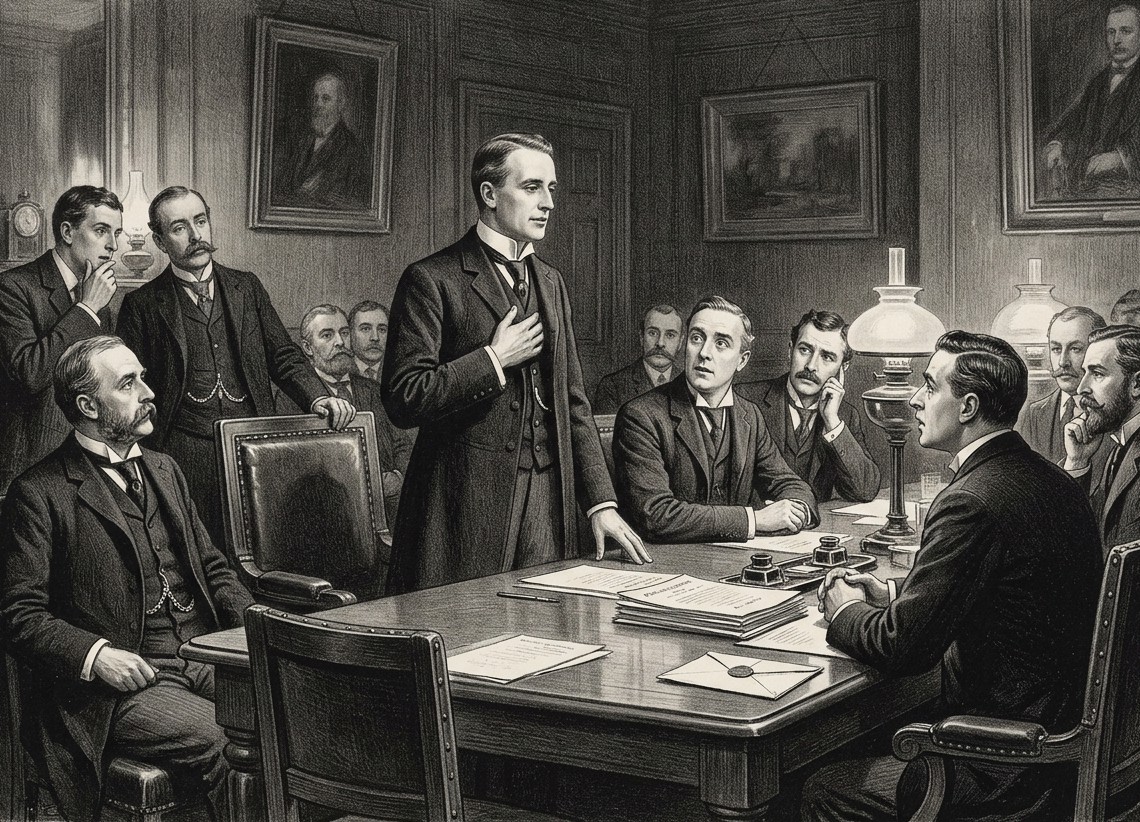
Read Article: Dillon ConcedesJohn Dillon confirmed during the closing days of January that he was prepared to relinquish any personal claim to the leadership of a reunited nationalist parliamentary movement. As chairman of the Irish National Federation and the most influential figure among the majority anti-Parnellites, Dillon might reasonably have expected to compete for control of the restored party. His decision indicated that the negotiations had moved beyond symbolic reconciliation towards a practical settlement. After nearly a decade of factional conflict, unity required senior politicians to sacrifice position, prestige and the expectations of supporters who regarded leadership as confirmation that their side had prevailed.
Dillon’s concession addressed one of the greatest obstacles confronting the reunion negotiations. The Parnellite faction would not readily submit to a leader associated with the removal of Charles Stewart Parnell in 1890, while many anti-Parnellites remained suspicious of John Redmond and those who had defended Parnell until his death. Selecting either Dillon or Redmond risked making reunion appear like a victory for one faction over another. By withdrawing his own leadership ambitions, Dillon created room for Redmond to emerge as a compromise chairman while allowing the larger anti-Parnellite body to enter the reunited organisation without formally repudiating its past conduct.
The decision reflected pressure from William O’Brien’s United Irish League, whose branches had demanded an end to parliamentary division. The League’s expansion demonstrated that tenant farmers, local organisers and nationalist voters were increasingly impatient with disputes inherited from the Parnell crisis. Dillon understood that continued resistance could isolate the parliamentary factions from the popular organisation reviving nationalist activity across Ireland. His concession was therefore both a public act of political restraint and a recognition that leadership could no longer be determined solely through negotiations among Westminster members. Organised opinion outside parliament had become powerful enough to shape the settlement.
In Limerick, the development carried particular importance for nationalist organisers, voters and newspapers following the reunion discussions. The city and county had experienced the effects of factional politics through competing organisations, divided loyalties and contested parliamentary representation. A reunited party promised to concentrate attention upon Home Rule, land purchase, tenant grievances and local government rather than personal disputes among national leaders. Dillon’s willingness to stand aside could consequently be understood in Limerick as evidence that the rival groups were finally prepared to place collective political effectiveness above the ambitions of individual parliamentarians.
Dillon did not withdraw from influence or abandon his strongly held political views. Within the reunited Irish Parliamentary Party he became Redmond’s principal deputy and retained considerable authority over organisation, policy and relations with nationalist opinion in Ireland. His concession nevertheless proved essential to the settlement completed in early February, when Redmond was elected chairman of the united parliamentary body. The decision showed that reconciliation depended upon more than shared resolutions and public handshakes. It required a senior leader to accept a subordinate position so that constitutional nationalism could recover the appearance and practical advantages of unity.
- Freeman’s Journal, late January and early February 1900 editions, reports concerning John Dillon, nationalist reunion and the selection of a chairman for the reunited parliamentary party.
- John Dillon Papers, Trinity College Dublin Manuscripts, correspondence and political material relating to the Irish National Federation and parliamentary reunion in 1900.
- John Redmond Papers, National Library of Ireland, correspondence concerning negotiations among the nationalist factions and the formation of the reunited Irish Parliamentary Party.
- Philip Bull, “The United Irish League and the Reunion of the Irish Parliamentary Party, 1898–1900,” Irish Historical Studies, volume 26, number 101, May 1988, pages 51–78.
- F. S. L. Lyons, John Dillon: A Biography, London, Routledge and Kegan Paul, 1968, discussion of Dillon’s leadership of the anti-Parnellites and acceptance of reunion under John Redmond.
-
Headlines Divided
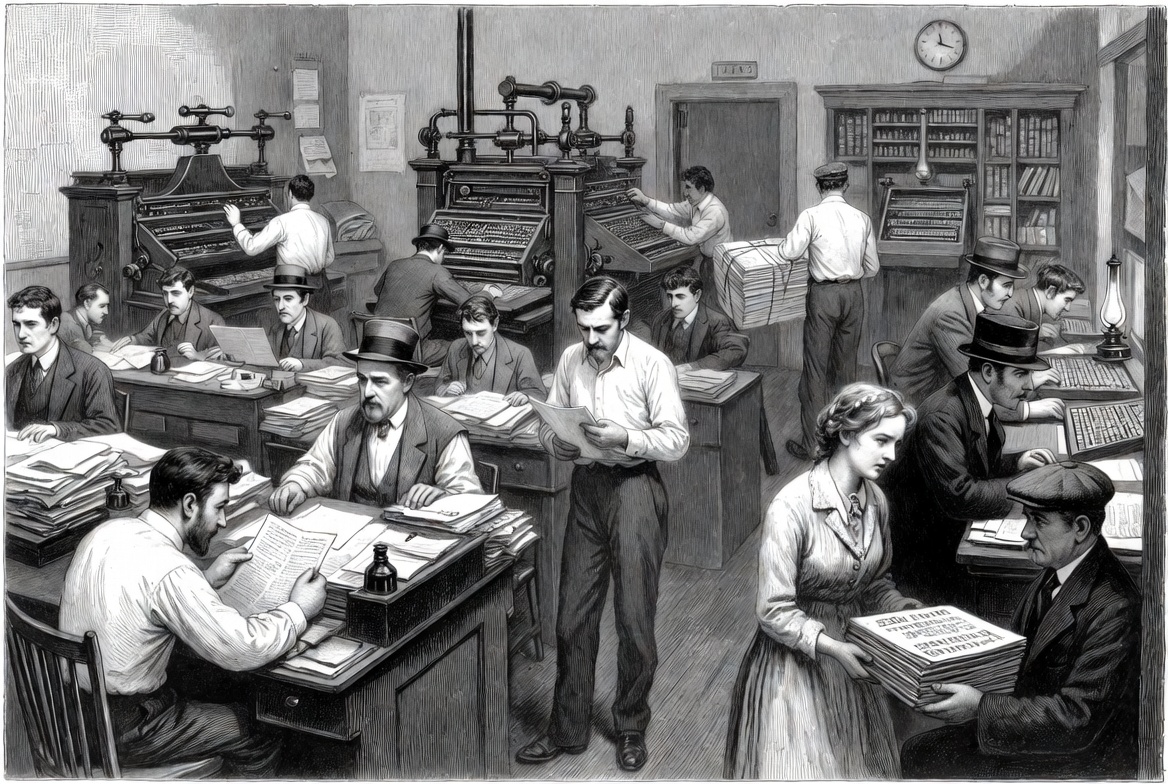
Read Article: Headlines DividedDublin newspapers published extensive political and military coverage on 25 January 1900, placing Ireland’s internal nationalist divisions beside the continuing conflict in South Africa. Reports on the recent Mansion House conference examined attempts to reunite the parliamentary factions separated since the fall of Charles Stewart Parnell. In adjoining columns, readers encountered military dispatches, troop movements and casualty information from a war involving thousands of Irish soldiers. The combination revealed the conflicting pressures shaping Irish public life: demands for national political unity existed alongside intense concern for men serving throughout the British Army and widespread nationalist sympathy for Britain’s Boer opponents.
Coverage of nationalist reunion followed the meeting held at Dublin’s Mansion House on 17 January. Newspapers assessed whether the Parnellite, anti-Parnellite and Healyite groupings could overcome years of hostility and reconstruct an effective Irish Parliamentary Party. The United Irish League’s growing influence gave the negotiations additional urgency, since local branches and tenant activists were demanding that parliamentary leaders abandon factional quarrels. Editorial interpretation differed according to political allegiance, but the scale of attention demonstrated that reunion had become one of Ireland’s central public questions. Readers were encouraged to judge whether reconciliation represented genuine renewal, temporary convenience or another unstable arrangement among competing leaders.
South African War reporting carried a different emotional weight. Military telegrams and correspondence supplied updates concerning British operations, reinforcements and losses after the severe reverses of December 1899. Irish regiments were deeply involved in the campaign, making casualty lists matters of immediate personal concern. A surname, regimental number or brief notice could bring distant warfare into an Irish household without warning. Newspapers often mixed praise for Irish courage with criticism of military leadership or imperial policy. Nationalist readers could oppose the war while anxiously searching the same columns for information about relatives, neighbours and former schoolmates serving under the British flag.
Copies of Dublin newspapers and summaries of their reports reached Limerick through established rail, postal and commercial networks. Local readers encountered the same uneasy combination of nationalist politics and imperial warfare. Limerick city and county had strong traditions of military enlistment, particularly through the Royal Munster Fusiliers, while the United Irish League and constitutional nationalism also commanded considerable local attention. Newsagents, reading rooms, public houses and family kitchens became places where casualty reports and reunion negotiations were discussed together. The day’s newspapers reflected a Limerick reality in which opposition to British government could coexist with concern for local soldiers and their dependants.
The reporting demonstrated the power of newspapers to join events separated by thousands of miles. Parliamentary discussions in Dublin, battles in South Africa and private anxiety within Irish homes became part of the same daily reading experience. Yet newspapers did more than transmit information. Their selection of headlines, editorials and military language influenced how readers interpreted both nationalist reconciliation and the war. On 25 January, the press presented Ireland as a society negotiating several loyalties at once: loyalty to political factions, sympathy with the Boer republics, attachment to serving soldiers and hope that parliamentary unity might restore influence at Westminster.
- Freeman’s Journal, Thursday, 25 January 1900, Dublin edition, reports and commentary concerning nationalist reunion, the South African War and military affairs.
- Dublin Evening Telegraph, Thursday, 25 January 1900, reports concerning Irish politics, war developments and British military operations in South Africa.
- British Newspaper Archive, Dublin newspaper holdings for 25 January 1900, including the Freeman’s Journal and Dublin Evening Telegraph.
- Luke Diver, Ireland and the South African War, 1899–1902, doctoral thesis, Maynooth University, 2014, discussion of Irish newspaper responses, nationalist opinion and Irish soldiers’ experiences.
- Philip Bull, “The United Irish League and the Reunion of the Irish Parliamentary Party, 1898–1900,” Irish Historical Studies, volume 26, number 101, May 1988, pages 51–78.
-
Veteran Dies
Read Article: Veteran DiesSergeant James Pearson, an Irish-born recipient of the Victoria Cross, died at Poonamallee near Madras on 23 January 1900, aged seventy-seven. Born at Rathdowney in Queen’s County on 2 October 1822, he had spent much of his adult life in India. Pearson first entered military service with the 86th Regiment of Foot, later associated with the Royal Irish Rifles, and rose from private soldier to sergeant. His reputation rested upon two acts of gallantry during the violent Central India campaign of 1858, when British forces fought to suppress the widespread uprising against East India Company rule.
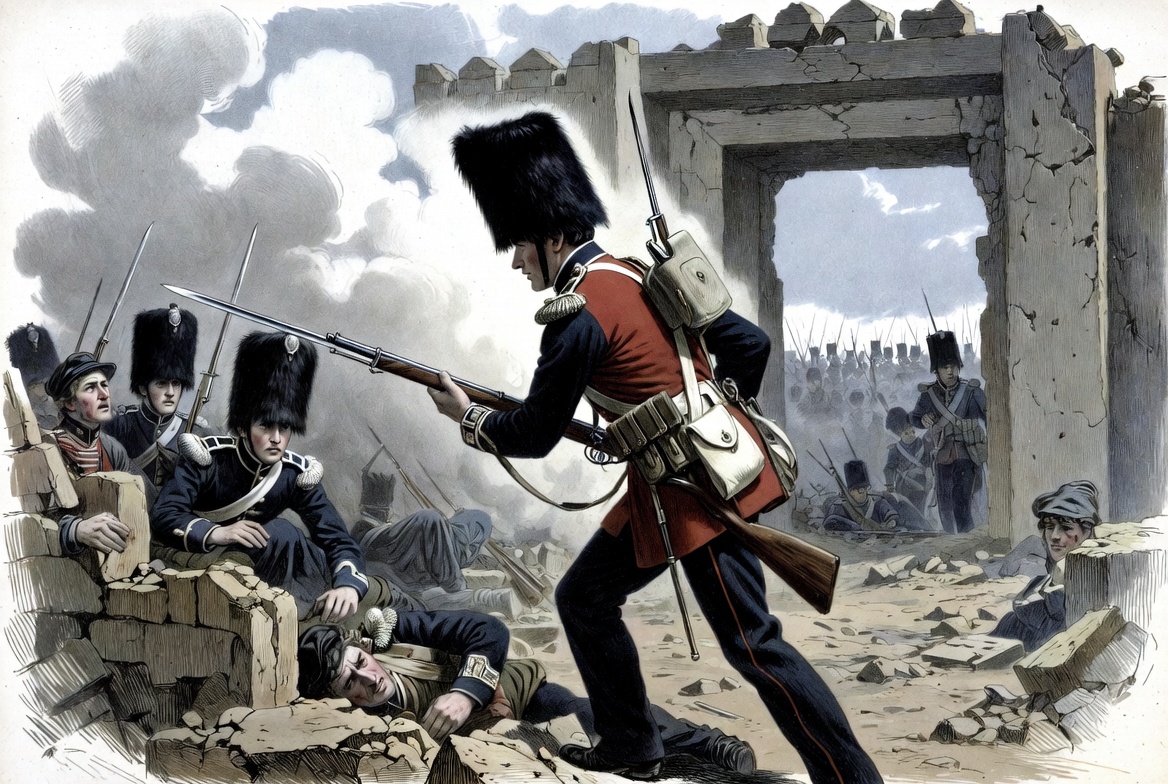
Pearson earned the Victoria Cross during the storming of Jhansi on 3 April 1858. Advancing through close fighting, he attacked several defenders, killing one and bayoneting two others before being wounded. His citation also recognised a separate act at Kalpi, where he crossed exposed ground under heavy fire to rescue the wounded Private Michael Burns. Burns later died from his injuries, but Pearson’s attempt demonstrated the willingness to risk his own life for a fellow soldier. The award was announced in 1860, and Pearson received the decoration from Lieutenant-General Sir William Mansfield in Bombay early the following year.
The 86th Regiment had strong Irish associations and recruited men into a military world extending far beyond their native towns and counties. Pearson’s career reflected the experience of many Irish soldiers who travelled through imperial garrisons, campaigns and unfamiliar climates while serving in the British Army. In Limerick, where barracks, recruiting traditions and military families formed a familiar part of nineteenth-century life, the story of an Irish private rising through courage and long service would have been readily understood. Such careers offered wages and advancement, but also exposed soldiers and their families to separation, illness, injury and distant death.
After leaving the army with the rank of sergeant, Pearson remained in India rather than returning permanently to Ireland. He married there and later became governor of a prison in Madras, exchanging regimental duties for responsibility within the colonial administration. His continued residence illustrated how military service could permanently redirect an Irishman’s life. Men who enlisted from small Irish towns might spend decades abroad, establish families in distant territories and become more closely connected with imperial institutions than with the communities of their birth. Pearson’s later career was quieter than his wartime service but remained shaped by British authority in India.
Pearson was buried in the Madras region, although accounts differ concerning the precise cemetery. His medals were eventually preserved by the Royal Ulster Rifles Museum in Belfast, reconnecting his memory with the Irish regiment in which he had served. His life encompassed enlistment, brutal urban combat, personal bravery, promotion and colonial employment. For Irish observers, including those in Limerick, his record carried the familiar contradictions of nineteenth-century soldiering: exceptional courage performed within a contested imperial war. Pearson’s death removed another surviving veteran of the uprising and left the Victoria Cross as the most visible reminder of his service.
- The London Gazette, issue 22381, 1 May 1860, Victoria Cross citation for Private James Pearson, 86th Regiment of Foot, concerning his actions at Jhansi and Kalpi.
- Victoria Cross and George Cross Association, official biographical record for Sergeant James Pearson VC, including his birthplace, regiment, actions, death and commemoration.
- War Office service records for James Pearson, 86th Regiment of Foot, including enlistment, promotion and discharge documentation.
- Indian Mutiny Medal rolls for the 86th Regiment of Foot, recording Pearson’s campaign service in Central India.
- Royal Ulster Rifles Museum, Belfast, collection records for James Pearson’s Victoria Cross medal group and regimental commemoration.
-
Veteran Dies
Read Article: Veteran DiesLieutenant-Colonel Abraham Boulger, one of Ireland’s earliest recipients of the Victoria Cross, died at Moate, County Westmeath, on 23 January 1900, aged sixty-four. Born at Kilcullen, County Kildare, on 4 September 1835, he entered the British Army and rose from the ranks during a long career of active service. His reputation rested principally upon his conduct during the Indian Rebellion of 1857, when, as a young lance-corporal in the 84th Regiment of Foot, he repeatedly placed himself in exposed positions during the campaign associated with Cawnpore and the relief and defence of Lucknow.
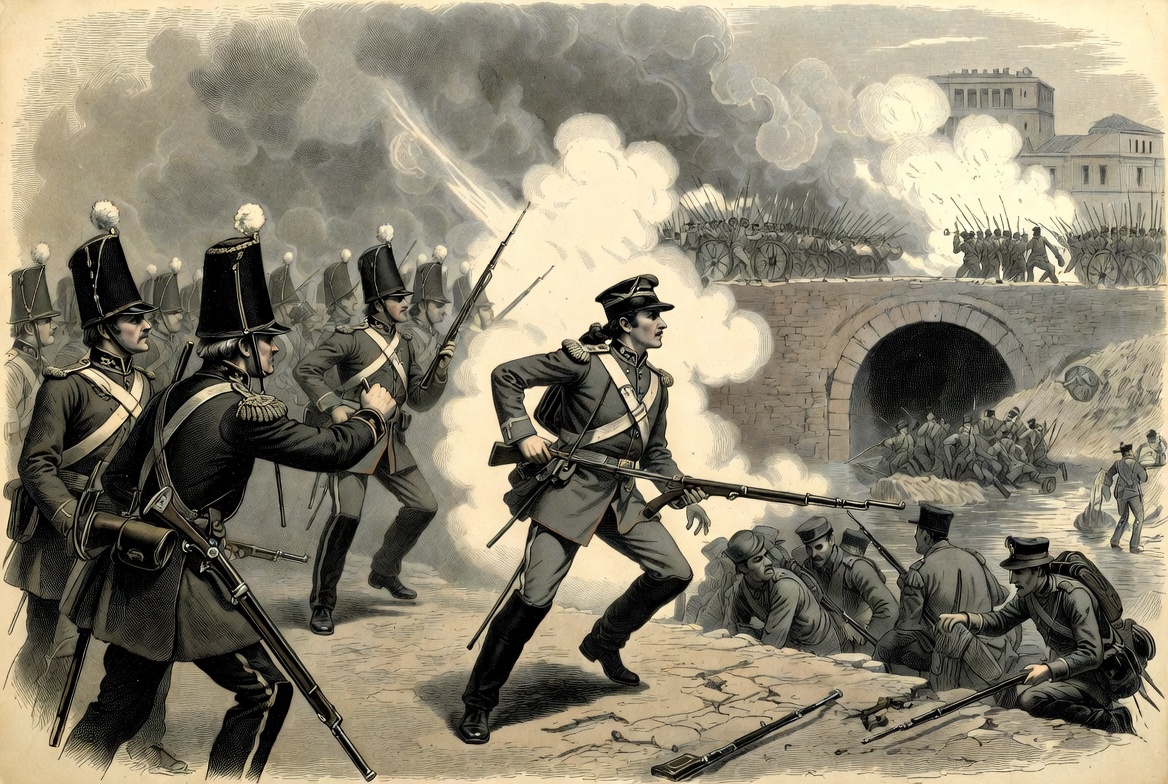
Boulger received the Victoria Cross for conspicuous bravery and determination across twelve separate actions fought between 12 July and 25 September 1857. Serving as a skirmisher, he moved ahead of the main body, where the risk from musketry, artillery and concealed defenders was especially severe. Accounts of the fighting credited him with taking part in the storming of a canal bridge during the advance towards Lucknow and entering a defended battery before many of his comrades. He was seriously wounded during the subsequent defence, but his conduct had already established him as one of the most distinguished soldiers in his regiment.
His progress from lance-corporal to senior rank demonstrated the opportunities and limitations experienced by Irishmen serving in the Victorian army. Boulger became sergeant-major of the 84th Foot before receiving a commission as quartermaster in 1872. He remained responsible for supplies, equipment, transport and the countless administrative details upon which a regiment depended. During the Anglo-Egyptian War of 1882, he again served overseas with the unit, by then incorporated into the York and Lancaster Regiment. His service brought honorary promotion, and he retired from the army in 1887 with the rank of lieutenant-colonel.
Boulger’s career would have been readily understood in Limerick, where military barracks, recruiting offices and generations of army service connected local families with campaigns throughout the British Empire. Men from Limerick city and county entered regiments for regular wages, food, accommodation and the prospect of advancement, even when public opinion remained divided over imperial warfare. His rise from the ranks offered an exceptional example of promotion through experience and bravery. Yet behind the medals stood the realities familiar to military households: long absences, dangerous voyages, serious wounds and families waiting for incomplete news from distant battlefields.
His death closed a career extending from the upheaval in India to the campaigns of Britain’s later Victorian empire. Boulger’s Victoria Cross remained the most visible symbol of his service, but his decades as a non-commissioned officer, quartermaster and regimental administrator were equally important to the army’s daily operation. He belonged to a generation of Irish soldiers whose service was celebrated by military institutions while remaining politically complicated within Ireland itself. Remembered in Kildare, Westmeath and by his former regiment, Abraham Boulger represented both individual courage and Ireland’s long, often uneasy connection with British military power.
- The London Gazette, Victoria Cross award notice for Lance-Corporal Abraham Boulger, 84th Regiment of Foot, recording his distinguished conduct in twelve actions between 12 July and 25 September 1857.
- War Office service record for Abraham Boulger, 84th Regiment of Foot and York and Lancaster Regiment, The National Archives, series WO 97.
- War Office, Hart’s Annual Army List, entries recording Boulger’s commission as quartermaster, honorary promotions and retirement as lieutenant-colonel.
- War Office, Indian Mutiny Medal and Egypt Medal rolls for Abraham Boulger and the 84th Regiment of Foot.
- York and Lancaster Regiment regimental records concerning Boulger’s Victoria Cross, service during the Indian Rebellion and participation in the Anglo-Egyptian campaign of 1882.
-
Ambition Rewarded
Read Article: Ambition RewardedEdmond Henry Pery returned from a prolonged Grand Tour determined to convert education, family connection and social confidence into political influence. Travelling across continental Europe between approximately 1775 and 1779, he encountered courts, scholars, artists and aristocratic society, corresponding with figures including Sir William Hamilton at Naples and Frederick Hervey, Bishop of Derry. His notebooks recorded European constitutions, treaties, antiquities and works of art, giving the young Limerick heir the polish expected of an ambitious gentleman. When he returned to Ireland, he entered public life as a cosmopolitan aristocrat prepared to use family influence and government loyalty to advance himself.
Pery represented Limerick City in the Irish House of Commons and inherited the Glentworth barony from his father in 1794. That same year, he offered to raise a regiment of fencible cavalry for the government during a period of revolutionary anxiety and war with France. Although such corps were often presented as patriotic undertakings financed by wealthy commanders, official correspondence shows close attention to levy money, clothing allowances and the financial terms available to competing noblemen. Pery’s military offer therefore combined public service with calculation, allowing him to demonstrate loyalty while protecting his own interests and future expectations.
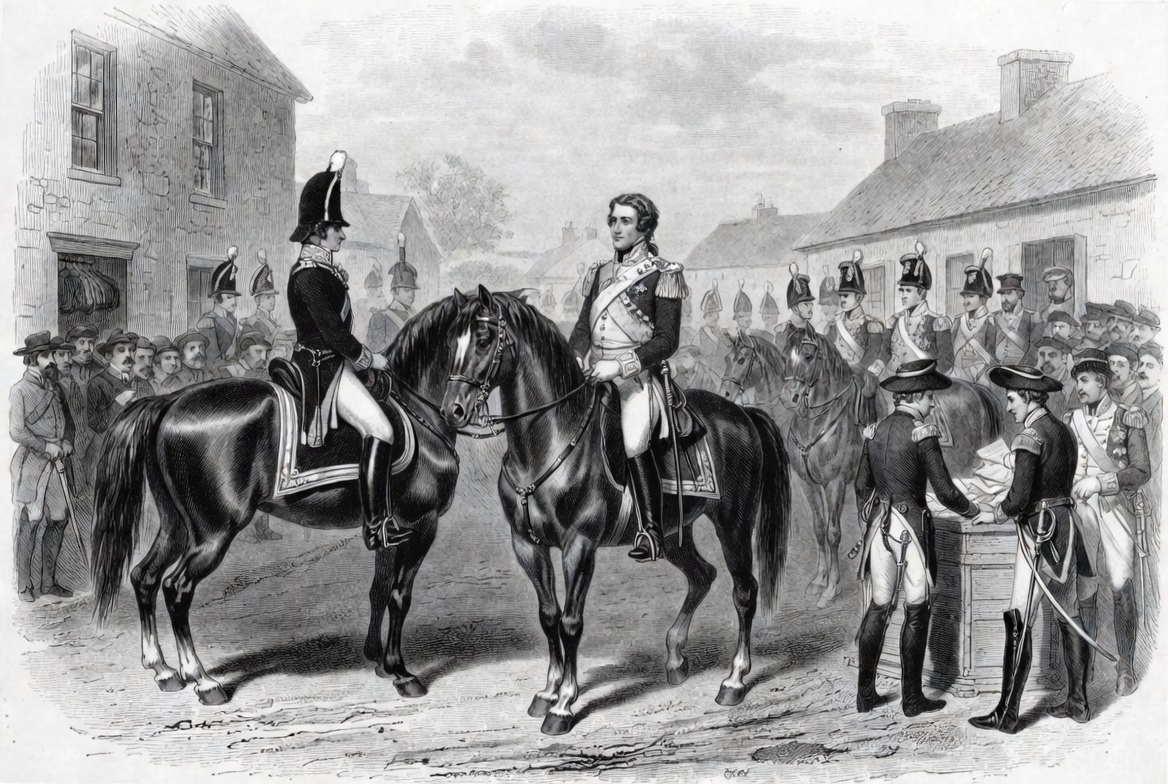
Commissioned colonel commandant of the 2nd Regiment of Fencible Cavalry in Ireland, Lord Glentworth oversaw men stationed at places including Bandon, Cork and Innishannon. The regiment later served during the rebellion of 1798, when cavalry detachments moved against insurgents and took part in operations near Goresbridge and Kilconnel Hill. The conflict sharpened divisions across Ireland and brought government forces, militia and yeomanry into violent confrontation with the United Irishmen. For Limerick families, such regiments represented both employment and coercion, drawing local men into a military system used to defend the established political and religious order.
Pery’s loyalty brought tangible rewards. He received valuable offices connected with the Irish Court of Chancery, including the clerkships of the Crown and Hanaper, along with appointment as Keeper of the Signet and Privy Seal. These posts carried income and prestige while requiring varying degrees of actual labour. His support for the proposed legislative Union between Ireland and Great Britain further strengthened his standing with Dublin Castle. In Limerick, however, advancement based upon patronage and government favour could appear less admirable to those who regarded the Union as a surrender of Ireland’s parliament and a betrayal of local political independence.
After the Union passed, Pery was created Viscount Limerick in 1800 and Earl of Limerick in 1803. His rise from well-connected heir to cavalry commander, officeholder and peer demonstrated the rewards available to an ambitious aristocrat who aligned himself closely with government policy. The title preserved Limerick’s name at the highest level of the peerage, but it also linked the city with a politician whose support for the Union remained controversial. His career joined continental polish, military command, financial calculation and political loyalty, revealing how private ambition and public service often travelled together in late-eighteenth-century Ireland.
- National Library of Ireland, The Limerick Papers, Collection List No. 121, introduction and papers of Edmond Henry Pery, second Lord Glentworth and first Earl of Limerick.
- National Library of Ireland, Manuscript 41,678/11 and Manuscript 41,680/2, correspondence, notebooks and papers from Pery’s Grand Tour, including material connected with Sir William Hamilton and Frederick Hervey.
- National Library of Ireland, Manuscript 41,680/5 and Manuscripts 16,074–16,081, commissions, order books, returns and correspondence relating to the 2nd Regiment of Fencible Cavalry and its service during the 1798 Rebellion.
- National Library of Ireland, Manuscript 41,680/6, royal patents appointing Lord Glentworth to the offices of Clerk of the Crown and Hanaper and Keeper of the Signet and Privy Seal.
- Irish parliamentary and peerage records concerning Pery’s support for the Union and his creations as Viscount Limerick in 1800 and Earl of Limerick in 1803.
-
Hartstonge Legacy
Read Article: Hartstonge LegacyThe Hartstonge and Pery families became closely bound through two marriages that brought together political influence, landed property and urban ambition in eighteenth-century Limerick. Sir Henry Hartstonge, third baronet of Bruff and Court, married Lucy Pery in 1751. She was the sister of Edmond Sexten Pery and the Reverend William Cecil Pery, whose parliamentary, ecclesiastical and property interests increasingly shaped the city. The marriage produced no children, but it placed Hartstonge firmly within the Pery family circle. He became both a political ally and a participant in the development of property connected with Newtown Pery.
A second connection followed when Sir Henry’s sister Mary married Henry Ormsby of Cloghan, County Mayo, in 1757. Their only daughter, Mary Alice Ormsby, later became heir to much of the Hartstonge property in counties Limerick and Tipperary. In 1783 she married Edmond Henry Pery, son and heir of William Cecil Pery and future second Lord Glentworth. Through this union, lands that might otherwise have passed away from the Pery interest returned through marriage into the same expanding family network. The arrangement strengthened a dynasty already enriched by the Sexten, Stacpole, Wray and Clayton inheritances.
When Sir Henry Hartstonge died in 1797, the baronetcy became extinct because he had no children. His niece Mary Alice appears to have succeeded to all or most of his estates, bringing substantial Munster property into her marriage with Edmond Henry Pery. Their eldest surviving son, born in 1789, was named Henry Hartstonge Pery, preserving the inherited family name within the next generation. In 1801, Lord Glentworth formally quartered the Hartstonge arms with those of the Pery family. Heraldry, naming and property inheritance were thus used together to demonstrate continuity between two landed houses whose fortunes had become inseparable.
Sir Henry’s relationship with the Perys was political as well as familial. He represented County Limerick in the Irish House of Commons from 1776 until 1790 and generally supported the influential Pery interest. In 1794, he stood unsuccessfully as the family’s candidate for Limerick City after Edmond Henry Pery inherited the Glentworth title and vacated his parliamentary seat. The contest showed how parliamentary representation, marriage and property operated together within elite politics. Family alliances could determine candidates, patronage and influence, while elections in Limerick reflected rivalries among organised interests rather than simple personal popularity.
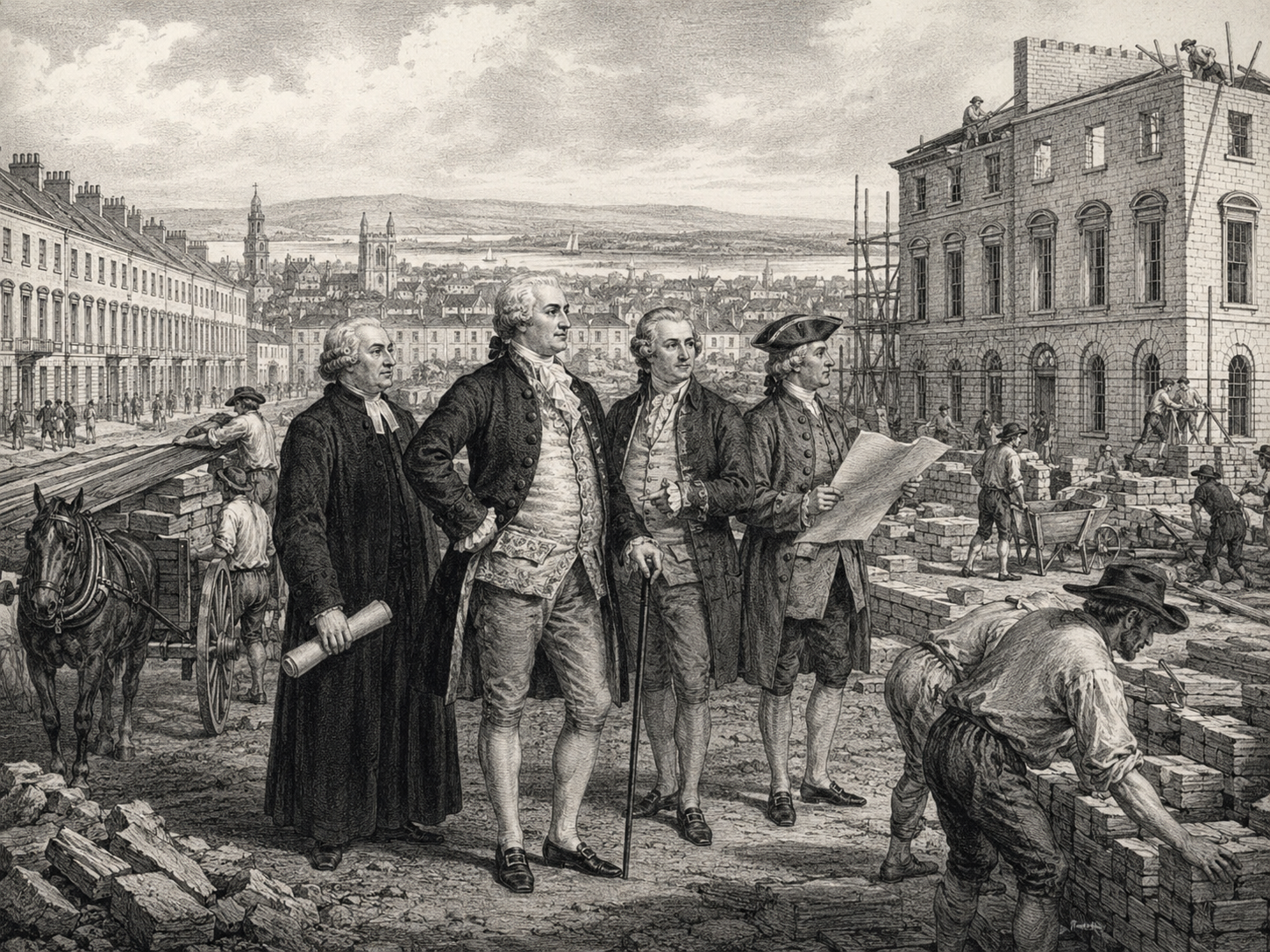
Hartstonge also participated directly in the physical development of Limerick. Edmond Sexten Pery granted him a lease of property on Henry Street, where he developed part of the emerging Georgian district. He may also have been responsible for constructing the new Bishop’s Palace and the adjoining Pery residence, although the precise attribution remains uncertain. These paired buildings became prominent landmarks within Newtown Pery and embodied the alliance between the two families. Hartstonge Street later preserved the name within Limerick’s urban landscape, ensuring that the family’s political service, property inheritance and contribution to the Georgian city remained visible long after the estates had passed to the Perys.
- National Library of Ireland, The Limerick Papers, Collection List No. 121, account of the Hartstonge family, its marriages with the Perys, estate succession and involvement in Newtown Pery.
- National Library of Ireland, Manuscript 41,676, Hartstonge family papers concerning the estates at Bruff, Court and elsewhere in counties Limerick and Tipperary.
- National Library of Ireland, Genealogical Office Manuscript 105, page 11, recording Edmond Henry Pery’s quartering of the Hartstonge arms with those of the Pery family in 1801.
- Irish House of Commons records concerning Sir Henry Hartstonge’s representation of County Limerick from 1776 to 1790 and the Limerick City by-election of 1794.
- National Inventory of Architectural Heritage and Limerick property records concerning the Bishop’s Palace, adjoining Pery residence and Georgian development of Henry Street.
-
Mallow Inheritance
Read Article: Mallow InheritanceWilliam Cecil Pery’s choice of “Mallow” as the territorial designation of his barony appears to have reflected his close relationship with Mrs Theodosia Clayton and a probable inheritance from her family’s County Cork property. The Claytons had long been associated with Annabella, an estate outside Mallow, and retained considerable interests within the manor. When Pery was created Baron Glentworth of Mallow in 1790, the title joined the older Wray connection represented by Glentworth with a Cork property interest that had entered the Pery family’s expanding network of estates, financial responsibilities and social alliances.
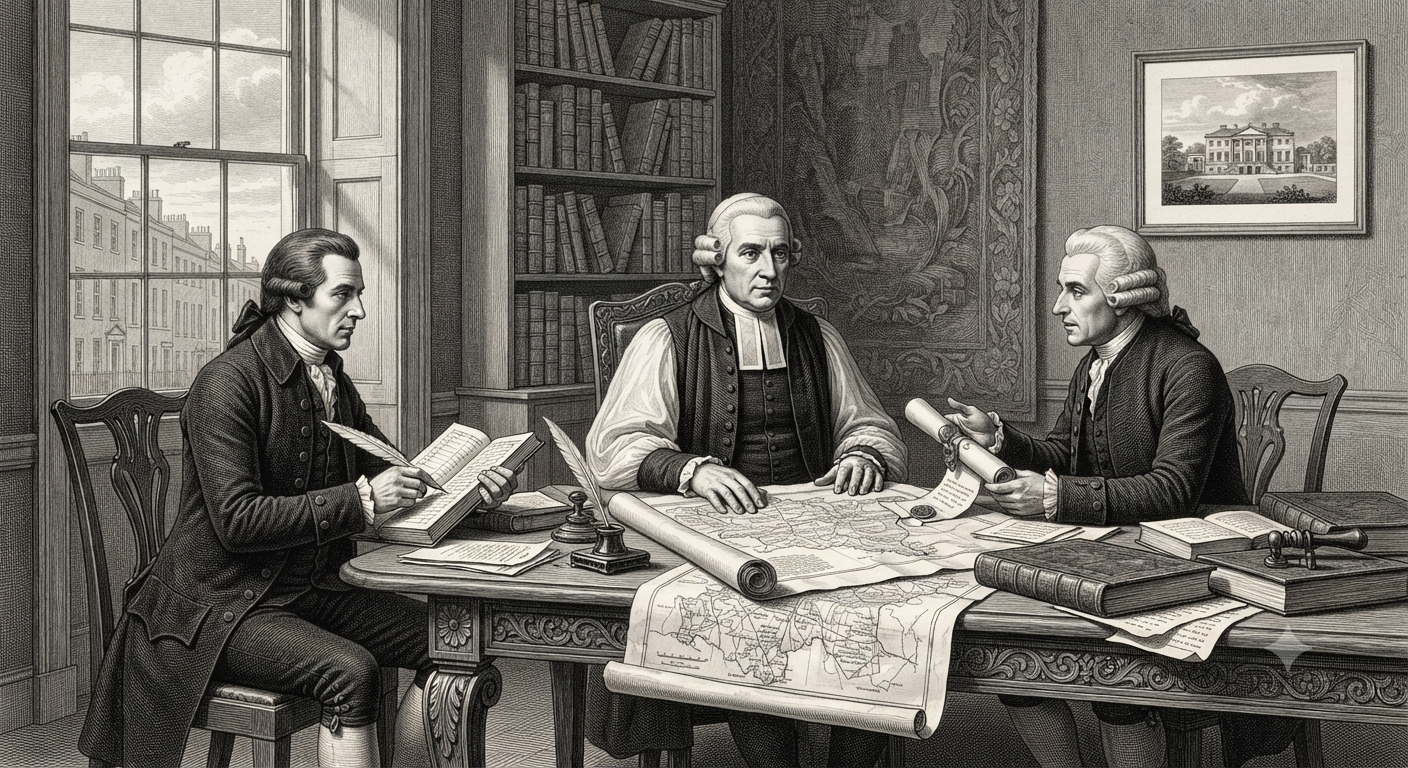
Mrs Clayton lived in Queen Street East, Marylebone, London, but retained Irish property requiring regular supervision. Bishop Pery acted as her agent, managing rents, correspondence and financial affairs connected with Annabella, Tullconrotta, Coolevota and other Cork holdings. Their surviving letters describe a relationship based upon kinship, trust and practical business. Pery’s position in Limerick enabled him to oversee matters that would have been difficult for an absentee owner to manage from England. His service placed him within the familiar eighteenth-century system through which Irish estates were administered by relatives, agents, tenants, attorneys and local intermediaries.
Following Mrs Clayton’s death in 1787, Pery became the active executor of her will. He was responsible for settling accounts, administering legacies and dealing with the remaining property attached to the Clayton estate. The surviving archive indicates that she left benefits to members of the Pery family and probably transferred some interest in the Mallow property to William Cecil Pery himself. Absolute details of the inheritance remain uncertain, but the connection was sufficiently important to explain why a bishop and landowner identified principally with Limerick selected a County Cork town when receiving his hereditary title three years later.
The Clayton papers preserved among the Limerick family archive reveal how closely property beyond the county was tied to the fortunes of prominent Limerick households. Income from Cork lands could support residences, marriages, education, political influence and building projects centred in Limerick. Property administration also created work for legal clerks, estate agents, surveyors and rent collectors moving between the city and neighbouring counties. The Pery family’s power was therefore not confined to Newtown Pery or its County Limerick estates. It rested upon a wider regional web of inheritance, kinship and financial management extending through Clare, Cork and England.
The Clayton connection left no monument in Limerick as obvious as Glentworth Street, Cecil Street or the Bishop’s Palace, yet it contributed to the identity assumed by the dynasty. “Baron Glentworth of Mallow” united two separate lines of inherited association within a single title: Glentworth recalled the Wray family, while Mallow pointed towards Mrs Clayton and the Annabella estate. The designation demonstrated how aristocratic titles could preserve histories of marriage, executorship and property as effectively as family names. Behind the peerage stood years of private correspondence, estate management and obligations undertaken between a Limerick bishop and his London-based kinswoman.
- National Library of Ireland, The Limerick Papers, Collection List No. 121, account of the Clayton family’s property at Annabella, William Cecil Pery’s agency and the probable origin of the territorial designation “of Mallow.”
- National Library of Ireland, Manuscript 41,678/10, correspondence between William Cecil Pery and Mrs Theodosia Clayton, approximately 1770–1787, concerning her Irish estates, finances, commissions and family affairs.
- National Library of Ireland, Manuscript 41,675, Clayton family papers relating to Annabella, the manor of Mallow and associated County Cork property interests.
- Probate and testamentary records concerning the will and estate of Theodosia Clayton, who died in 1787, including William Cecil Pery’s service as executor.
- Records of the Irish peerage concerning the creation of William Cecil Pery as Baron Glentworth of Mallow in 1790.
-
Dynasty Secured
Read Article: Dynasty SecuredEdmond Sexten Pery retired as Speaker of the Irish House of Commons in 1785 after fourteen years in one of the most influential offices in Irish political life. The Commons unanimously appealed to the lord lieutenant to obtain a royal honour for him, acknowledging his authority, parliamentary skill and long public service. The Crown responded by creating him Viscount Pery of Newtown Pery, permanently linking his title with the Georgian district he had helped establish in Limerick. The honour elevated a local political and property-owning family into the peerage while commemorating the urban development that had transformed the city’s southern expansion.
Pery had married twice but had no surviving son to inherit and continue his title. The Viscountcy would therefore expire with him, leaving the family’s dynastic future dependent upon the descendants of his younger brother, the Reverend William Cecil Pery. The brothers had followed different but complementary routes to influence. Edmond dominated parliamentary and civic affairs, while William advanced through the Church of Ireland. The Speaker’s patronage and political connections assisted that progress, demonstrating how ecclesiastical appointments, parliamentary influence and family ambition frequently operated together within the governing establishment of eighteenth-century Ireland.
William Cecil Pery began his clerical career with St John’s in Limerick and Kilkeedy in County Limerick, benefices he held together. He was promoted to the deanery of Killaloe in 1772 and then to the more distant deanery of Derry in 1780. The following year he became bishop of Killala and Achonry. His advancement culminated in 1784 when he was translated to the bishopric of Limerick, Ardfert and Aghadoe. Returning as bishop to the city where his family’s power was concentrated fulfilled a major dynastic ambition and placed ecclesiastical authority beside the Perys’ political and landed influence.
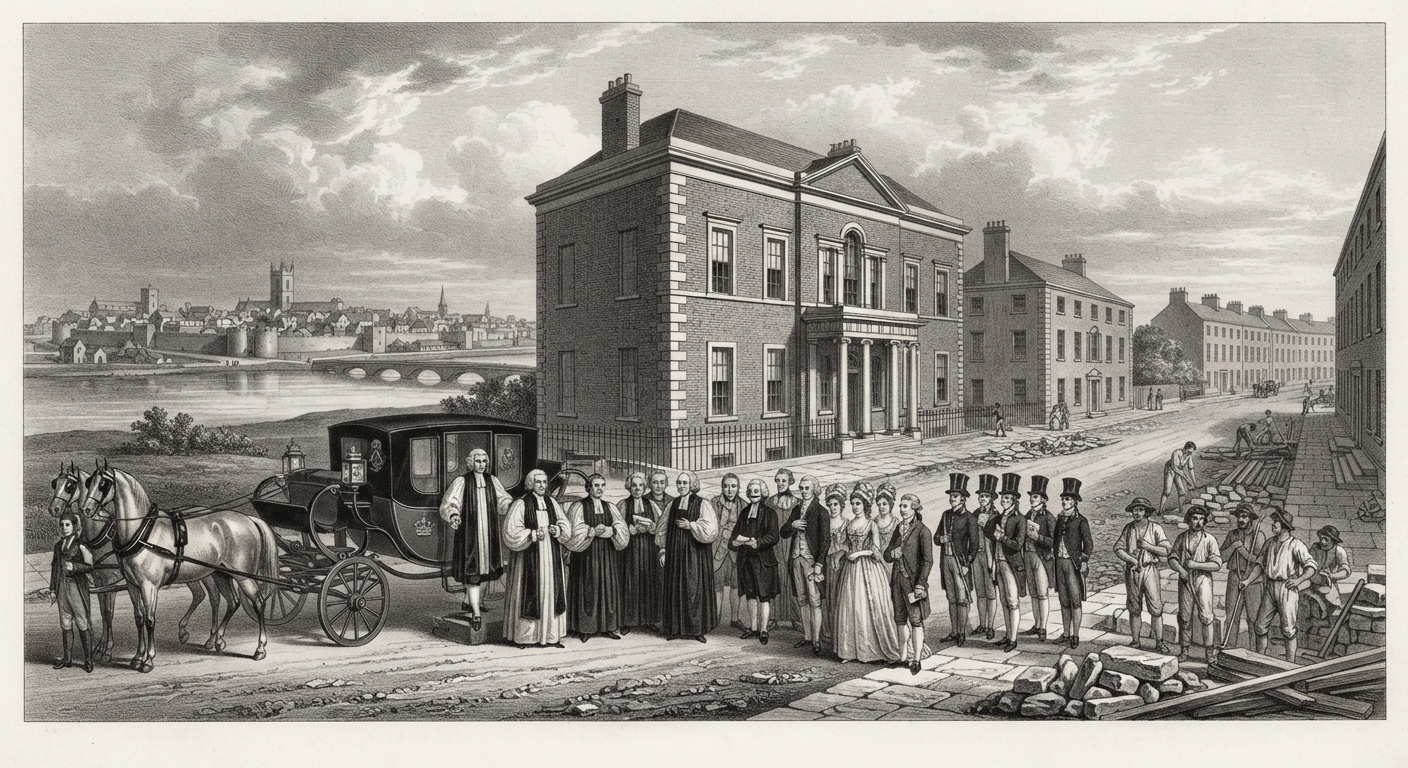
The new bishop soon left the old episcopal residence on King’s Island for a substantial palace in Henry Street, Newtown Pery. The red-brick Palladian house, built within the developing Georgian quarter, stood beside the residence later occupied by the Pery family itself. Its position demonstrated how the family’s urban planning, political connections and church appointments reinforced one another. The bishop’s move also shifted an important institution away from the medieval city and into the expanding district created upon Pery land. Henry Street became a visible centre of clerical, aristocratic and family power within the modernising streetscape of Limerick.
William Cecil Pery received his own peerage in 1790 when he was created Baron Glentworth of Mallow. The title preserved the family’s connection with the Wray inheritance and ensured that a hereditary dignity would pass through his male descendants. When he died in 1794, the barony descended to his son Edmond Henry Pery, who later became Earl of Limerick. The political Speaker without a male heir and the bishop assisted by family patronage had together secured the dynasty’s future. Their titles, residences and street names remained embedded within Newtown Pery, making the Georgian quarter a lasting record of family ambition.
- National Library of Ireland, The Limerick Papers, Collection List No. 121, introduction describing Edmond Sexten Pery’s retirement, creation as Viscount Pery and William Cecil Pery’s ecclesiastical career.
- National Library of Ireland, Manuscript 41,679, papers concerning William Cecil Pery’s clerical appointments, family patronage and advancement within the Church of Ireland.
- Journals of the Irish House of Commons, 1785, proceedings concerning Edmond Sexten Pery’s retirement as Speaker and the unanimous address requesting a royal mark of favour.
- Church of Ireland episcopal and cathedral records concerning William Cecil Pery’s appointments as Dean of Killaloe, Dean of Derry, Bishop of Killala and Achonry, and Bishop of Limerick, Ardfert and Aghadoe.
- National Inventory of Architectural Heritage, The Bishop’s Palace, 104 Henry Street, Limerick, record of the former residence built for William Cecil Pery within Newtown Pery.
-
Georgian Vision
Read Article: Georgian VisionEdmond Sexten Pery emerged as one of the most accomplished Irish parliamentarians and urban improvers of the eighteenth century. Representing Limerick City in parliament, he combined political skill with a practical interest in construction, land development and civic expansion. His election as Speaker of the Irish House of Commons in 1771 placed him in an office of considerable authority during a period when parliamentary procedure, patronage and government policy were closely connected. Returned to the chair three times, Pery remained Speaker until 1785 and used his standing in Dublin to advance measures and obtain public funding that benefited Limerick.
Pery’s first important building enterprise was John’s Square, originally called New Square, developed between 1751 and 1757 within the walled district of Englishtown. The project was unusual because it introduced an orderly residential square into the older fabric of Limerick, where narrow streets and irregular plots reflected centuries of medieval growth. The development displayed Pery’s ability to combine architectural improvement with personal and family advantage. By helping to establish a new parish, the scheme created a clerical position that was filled in 1754 by his younger brother, the Reverend William Cecil Pery, demonstrating how civic improvement, property and patronage could operate together.
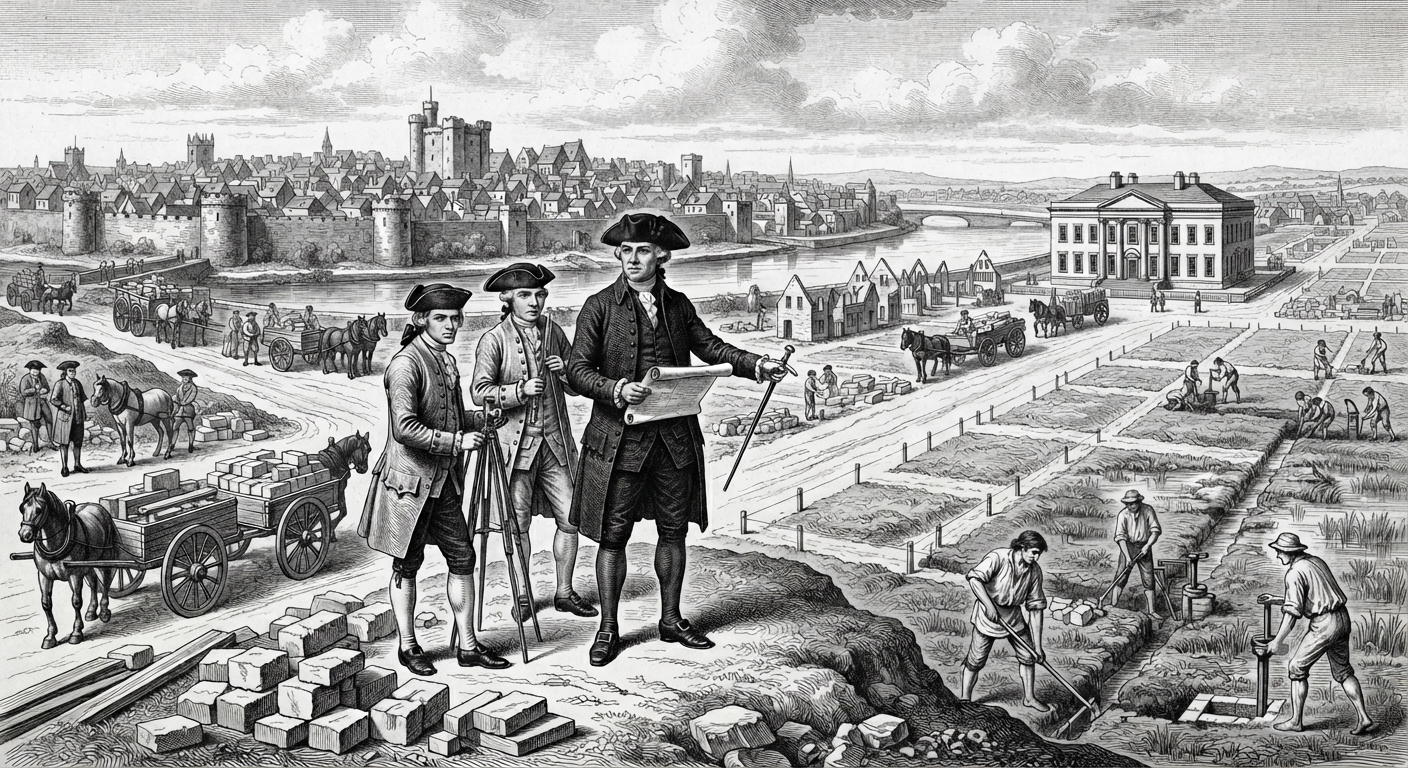
The demolition of Limerick’s walls and fortifications opened new possibilities for development beyond the crowded historic city. Pery turned southwards towards the South Prior’s Land, a low and partly marshy estate inherited through his Sexten ancestors. At the meeting point between the old town and this undeveloped ground, he built the Custom House between 1765 and 1769. The imposing public building served the needs of Limerick’s expanding trade while also raising the value and importance of surrounding Pery property. Its position anticipated the city’s movement away from its medieval centre towards the planned streets that would become Newtown Pery.
After completing the Custom House, Pery began laying out Newtown Pery as a regular Georgian suburb of broad streets, formal plots and spacious residential terraces. The development transformed former monastic land into a new commercial and fashionable district, allowing Limerick to expand southwards in a controlled pattern. Pery’s planning did not arise solely from aesthetic ambition. Every improvement in roads, drainage, public buildings and access increased the value of the family estate. The new district therefore represented both a major civic achievement and a profitable private enterprise, demonstrating how closely eighteenth-century urban improvement could be linked with landed ownership and political influence.
Pery’s position in parliament proved essential because it enabled him to secure substantial sums of public money for Limerick’s improvement. Government-supported works strengthened trade, modernised the city and encouraged building, but they also enhanced his property near the expanding urban centre. His career illustrates the complicated relationship between public service and private advantage in Georgian Ireland. John’s Square, the Custom House and Newtown Pery permanently altered Limerick’s appearance, economy and direction of growth. Though motivated partly by family interest, Pery’s planning created the foundations of the Georgian city whose streets, squares and architecture continue to define central Limerick.
- National Library of Ireland, The Limerick Papers, Collection List No. 121, account of Edmond Sexten Pery’s parliamentary career, property interests and development of Limerick.
- National Library of Ireland, Manuscript 41,679/2, material concerning the creation of the new parish associated with John’s Square and the appointment of the Reverend William Cecil Pery.
- Irish House of Commons journals and parliamentary records, 1771–1785, documenting Edmond Sexten Pery’s repeated election and service as Speaker.
- Limerick Corporation records concerning John’s Square, the demolition of the city fortifications, the Custom House and public improvements during the eighteenth century.
- Pery estate maps, leases and development papers concerning the South Prior’s Land and the planning of Newtown Pery.
-
Civic Inheritance
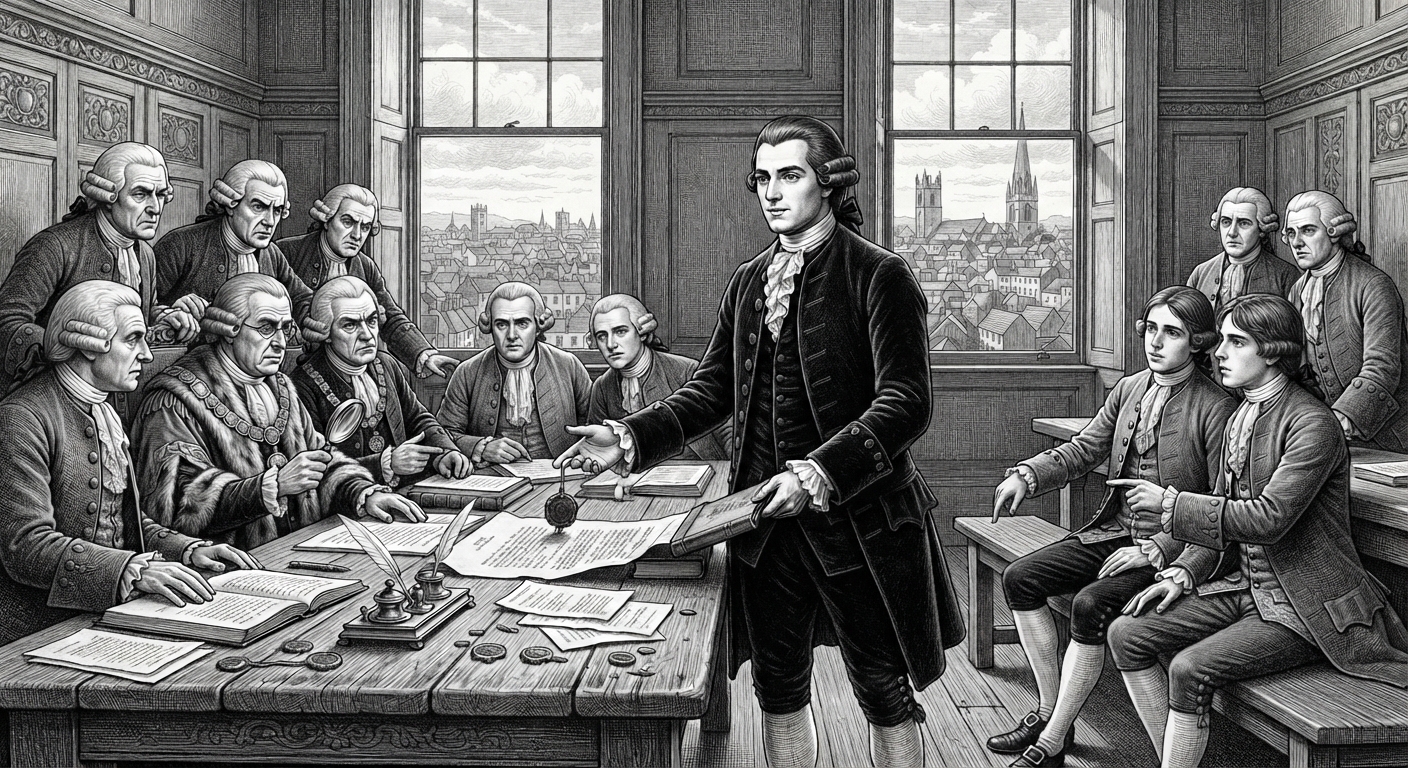
Read Article: Civic InheritanceEdmond Pery successfully asserted a remarkable inherited privilege in 1677 when he claimed two votes in Limerick’s common council. The right was traced through the Sexten family to the former priors of St Mary’s, whose religious property and privileges had passed into private ownership following the dissolution of the monasteries. Pery argued that succession to those lands carried political rights as well as rents and property. His achievement gave the family an unusual position within Limerick’s civic government, where elections for the mayor and common councillors shaped the distribution of authority among merchants, aldermen and established urban families.
The claim demonstrated how privileges once attached to a religious office could survive long after the institution itself had disappeared. St Mary’s had ceased to function as a religious house during the Tudor period, yet its former legal standing continued to influence municipal politics more than a century later. Limerick Corporation had repeatedly disputed the exemptions and voting rights claimed by the Sextens and their Pery descendants. The controversy revealed a city still negotiating the consequences of monastic dissolution, as inherited charters, royal grants and private property rights collided with the corporation’s efforts to control elections, taxation and civic administration.
The Reverend Stacpole Pery later attempted to exercise the same right but failed during the years between approximately 1730 and his death in 1737 or 1738. His inability to reproduce his father’s success suggests that inherited privilege required continual legal and political defence rather than automatic recognition. Municipal officeholders could challenge an old claim when circumstances or alliances changed, while the absence of a favourable decision might weaken a family’s influence. Stacpole Pery nevertheless passed the combined Pery, Sexten and Stacpole estates to his elder son, Edmond Sexten Pery, who possessed both the property and ambition required to renew the contest.
In 1748, Edmond Sexten Pery successfully reasserted the family’s civic right and became a member of Limerick’s common council. His entry into municipal government marked the beginning of a political career that carried him far beyond local office. Trained as a barrister, he understood how inherited legal claims could be converted into practical influence. Membership of the council connected him directly with the government of his native city, including its elections, finances, trade and physical development. He later represented Limerick City in the Irish parliament from 1761 until 1785, ensuring that local interests had an exceptionally influential advocate in Dublin.
Pery became Speaker of the Irish House of Commons in 1771 and remained in that office until his retirement in 1785. His national prominence was rooted partly in the civic position recovered in Limerick decades earlier. He also encouraged improvements to the city and the development of the Georgian district later known as Newtown Pery upon his family’s estate. The two votes first claimed through the former priors of St Mary’s therefore belonged to a much longer history connecting dissolved religious property, municipal authority, parliamentary power and urban expansion. An inherited privilege ultimately helped one Limerick family shape both the government and streets of the city.
- National Library of Ireland, The Limerick Papers, Collection List No. 121, account of Edmond Pery’s successful assertion of two votes in Limerick’s common council in 1677 and the later claims made by his descendants.
- National Library of Ireland, Manuscript 41,678/2, papers concerning the Reverend Stacpole Pery’s unsuccessful attempt to exercise the inherited voting privilege and Edmond Sexten Pery’s later reassertion of the right.
- National Library of Ireland, Pery and Sexten family legal papers, including petitions, grants and documents concerning former property and privileges of St Mary’s in Limerick.
- University of Limerick, Special Collections and Archives, Pery Family Archive, material concerning the Sexten inheritance, Limerick Corporation and the political development of the Pery family.
- Irish parliamentary and municipal records concerning Edmond Sexten Pery’s membership of Limerick’s common council from 1748 and his representation of Limerick City in parliament from 1761 to 1785.
-
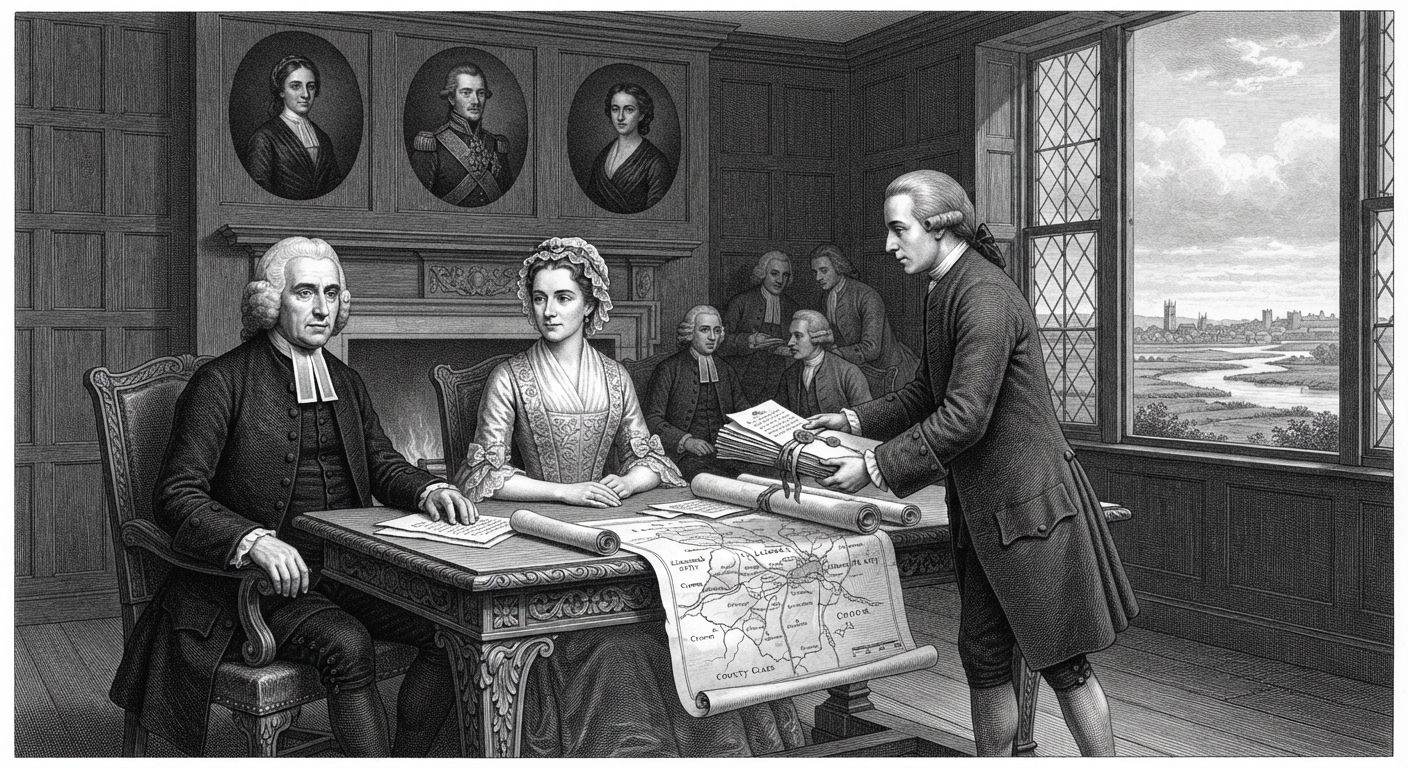
Estates United
Read Article: Estates UnitedThe landed inheritance that later sustained the Pery family’s influence in Limerick was assembled through a succession of marriages connecting the Sexten, Pery, Stacpole, Twigg and Wray families. Susannah Sexten, who died in 1671, was the only daughter of Edmond Sexten and eventually inherited the property of his grandson, another Edmond. Her marriage to Edmond Pery of Croom brought the Sexten estates into the Pery family. Those lands included former religious property in and around Limerick, giving their descendants wealth, rents and a territorial position that would profoundly influence the city’s later development.
Susannah and Edmond Pery’s son, Colonel Edmond Pery, strengthened the family inheritance by marrying Dymphna, daughter and heiress of Bartholomew Stacpole of Stacpole Court in County Clare. This marriage brought the Stacpole property into the expanding Pery estate and connected lands on both sides of the Shannon. By the time Colonel Pery died in 1721, the family’s position rested upon several distinct inheritances rather than one ancestral holding. Marriage among landed families served an economic and political purpose, preserving estates, settling property claims and creating alliances capable of extending influence across county boundaries and municipal jurisdictions.
The surviving son, the Reverend Stacpole Pery, consequently inherited the combined Sexten, Stacpole and Pery properties in 1721. His succession placed in one person estates acquired through Tudor grants, seventeenth-century inheritance and marriage. The consolidation mattered greatly to Limerick because the family now controlled substantial property beside the older city, including land that could later be leased and developed. The wealth was not merely agricultural. It included urban rights, rents and strategically located ground whose value increased as Limerick’s trade, population and built environment expanded beyond the medieval walls during the eighteenth century.
Stacpole Pery had married Jane Twigg in 1716. She was the daughter of the Venerable William Twigg, archdeacon of Limerick, and inherited a modest interest through her mother, Diana. Diana Twigg was the daughter and co-heiress of Sir Drury Wray of Glentworth in Lincolnshire and brought an undivided share of the Wray estate in Ireland. That property lay conveniently near Limerick city, adding another layer to the family’s regional holdings. Through Diana, the Perys could also claim descent from the Cecil family, Viscounts Wimbledon, giving the increasingly prosperous Limerick dynasty an association with established English aristocratic lineage.
The Wray and Cecil connections were later written permanently into Limerick’s streetscape. William Cecil Pery adopted Glentworth as the title of his barony, while Cecil Street and Glentworth Street preserved the names within Newtown Pery. When the Georgian suburb developed across the family estate from the later eighteenth century, its street names became a map of inheritance, marriage and family ambition. Limerick residents walking through the district were moving across land whose ownership had been assembled over generations. The ordered terraces therefore concealed a complicated history of heiresses, clerical families, royal grants and estates gradually united in the Pery name.
- National Library of Ireland, The Limerick Papers, Collection List No. 121, family history of the Pery, Sexten and Stacpole families and the formation of their estates.
- National Library of Ireland, Manuscript 41,678/7, material concerning the Wray inheritance in Ireland and its location near Limerick city.
- National Library of Ireland, Manuscripts 41,677–41,680, family, estate and legal papers concerning the Sexten, Pery, Stacpole, Twigg and Wray inheritances.
- University of Limerick, Special Collections and Archives, Pery Family Archive, records concerning the family’s estates in Limerick city, County Limerick and County Clare.
- Limerick local authority historical records concerning Newtown Pery and the naming of Cecil Street, Glentworth Street and other streets associated with the Pery family.
-
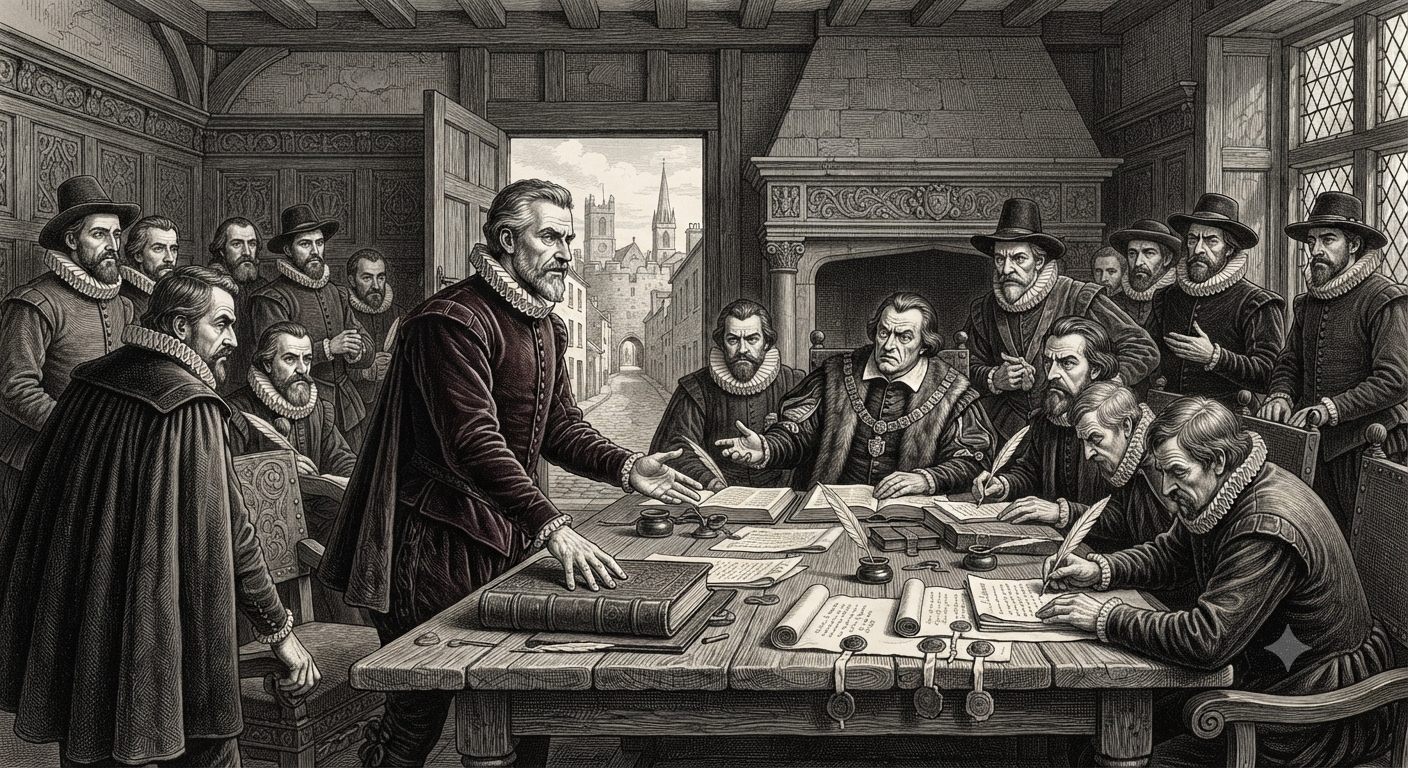
Civic Defiance
Read Article: Civic DefianceEdmond Sexten inherited his family’s extensive Limerick property around 1594 and became one of the most powerful, persistent and controversial figures in the city’s early seventeenth-century government. A grandson and namesake of the Tudor mayor who had acquired the former lands of St Francis’s and St Mary’s religious houses, Sexten served as an alderman, held the mayoralty several times and repeatedly occupied the office of high sheriff. His municipal service did not produce harmony with Limerick Corporation. Instead, much of his adult life was consumed by arguments over whether his inherited lands stood inside or beyond the authority of the city’s mayor and council.
The principal dispute concerned the former estates of the two dissolved religious houses. Sexten insisted that the privileges attached to those properties protected them from ordinary municipal jurisdiction, while the corporation resisted the existence of a powerful private estate possessing exemptions within and around Limerick. The contest was conducted through petitions and counter-petitions rather than open violence. Sexten appealed to the Lord President and Council of Munster and, when necessary, to the lord deputy and Privy Council of Ireland. His opponents answered through the same administrative channels, carrying a local struggle over property, taxation and authority into the highest levels of Irish government.
A royal patent issued in 1609 strengthened Sexten’s position by confirming the grants Henry VIII had made to his grandfather. The document renewed the family’s legal claim to the former Franciscan and St Mary’s properties and gave Sexten a formidable instrument in his dealings with the corporation. Yet confirmation from the Crown did not settle how the inherited privileges should operate within a changing city. Limerick’s civic leaders had responsibilities for order, taxation and urban administration, while Sexten claimed rights rooted in the former authority of religious superiors. The resulting conflict exposed the uncertain boundary between medieval privilege, Tudor confiscation and municipal government.
Sexten also claimed two votes in elections for Limerick’s mayor and common councillors because he considered himself the legal successor to the prior of St Mary’s. The demand was politically significant, since it could give one landholder influence beyond that of an ordinary freeman or alderman. His argument treated the civic privileges of a dissolved religious office as inheritable property, while opponents feared that the arrangement would distort municipal elections. The controversy revealed how the Reformation continued to shape Limerick long after the friars had departed. Former monastic rights had become weapons in struggles among merchants, officeholders, landowners and competing centres of authority.
A further disagreement arose in 1615 over responsibility for maintaining the church of St John the Baptist, whose tithes had belonged to St Mary’s. The corporation and parish faced the practical question of whether Sexten, as holder of the appropriated revenues, should bear the cost alone or whether the wider parish remained responsible. What appeared to be a dispute over repairs therefore touched upon worship, property income and public obligation. Sexten’s prolonged battles left an enduring documentary record of early modern Limerick, showing a city negotiating the consequences of religious dissolution while powerful families defended privileges that would later pass through inheritance into the Pery estate.
- National Library of Ireland, The Limerick Papers, Collection List No. 121, introduction and family history concerning Edmond Sexten the younger, the former monastic estates and his disputes with Limerick Corporation.
- National Library of Ireland, Manuscripts 41,677/1–5, petitions and counter-petitions concerning Edmond Sexten’s disputes with the mayor and corporation of Limerick.
- National Library of Ireland, Manuscript 41,679/1, royal patent of 1609 confirming the earlier grants of the former properties of St Francis’s and St Mary’s to the Sexten family.
- University of Limerick, Special Collections and Archives, Pery Family Archive, IE 2135 P51/1/1, transcripts of letters and petitions by Edmond Sexten the elder and Edmond Sexten the younger.
- Limerick civic and parish records concerning the mayoralty, common council elections and the 1615 dispute over responsibility for maintaining the church of St John the Baptist.