Now Sharing: Articles (154) | Images (441) | Total Items Archived (595)
Our Mission: 100,000 Items | Total Percentage Achieved (0.60%)

Materials Wanted

Long before recycling became a familiar part of everyday life, the English and Continental Company invited Limerick residents to recognise the commercial value hidden in unwanted materials. Operating from 63 and 64 Mungret Street in 1900, the firm advertised for discarded goods that could be purchased, sorted and returned to productive use. Its premises stood within a busy commercial district close to the city’s markets, workshops and riverside trade. The advertisement reveals an organised local business in recovered materials, connecting household remnants and industrial offcuts with merchants prepared to sell them into wider manufacturing and export networks.

Athlunkard Boat Club

Athlunkard Boat Club was founded in 1898, taking its name from its home beside O’Dwyer Bridge at the end of Athlunkard Street. By the 1930s, the club was already firmly woven into Limerick’s rowing tradition, with a proud record on the water. Its greatest distinction came through the Senior Eight Championship, which Athlunkard won twice, in 1913 and 1923. That achievement made it the only Limerick club to secure the title on two occasions. Its riverside presence and competitive success gave Athlunkard Boat Club a lasting place in the sporting history of the city and the wider Shannon rowing community.

Shannon Retreat

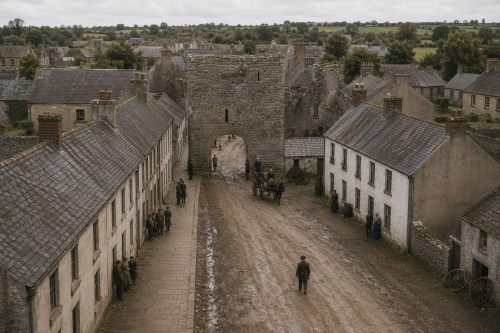
Limerick became one of the principal centres of Jacobite resistance after William III’s victory at the Boyne on 1 July 1690 forced the Irish army to abandon the eastern approaches to Dublin. James II departed for France, but most of his surviving soldiers remained under arms and withdrew westwards towards the River Shannon. Some gathered around Athlone, which guarded an important crossing into Connacht, while the larger concentration developed around Limerick. The city’s walls, river position and access to the western counties offered the Jacobites a defensible base from which the war might continue despite the loss of Dublin.

King John’s Castle (1922)

King John’s Castle stands beside the River Shannon at Curragower Falls, with broken water, river rocks and the castle’s stone frontage visible across the scene. The round towers, curtain walls and riverside defences remain central, while the burned Castle Barracks appears roofless and blackened within the enclosure. Thomond Bridge is visible to the left, with nearby trees, older buildings and a church tower rising beyond the castle walls. The river surface shows ripples, reflections and shallow movement below the fortifications. The image presents the castle after damage, set within the wider early twentieth century Limerick urban riverside landscape after 1922.

Unionist Display

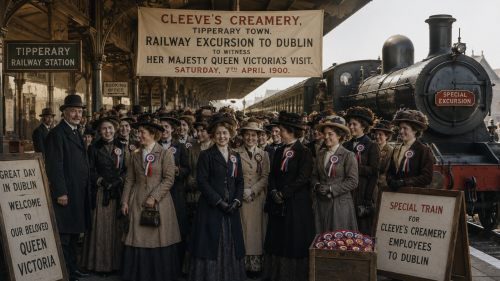
Dublin Castle and unionist organisations have used Queen Victoria’s arrival to affirm Ireland’s constitutional place within the United Kingdom. The administration directed an elaborate programme of ceremonial receptions, military escorts, civic addresses and public decoration intended to display loyalty to the Crown. Reports reaching Limerick describe streets filled with spectators and buildings dressed for the royal occasion. Unionist newspapers and public figures have welcomed the visit as proof that attachment to the monarchy remains substantial despite nationalist demands for Home Rule. The ceremonies present Ireland not as a nation awaiting separation, but as an established and valued part of the Union.

Cannocks, George Street

Before becoming Cannocks, the premises at 134 George Street, now O’Connell Street, housed a successful drapery business dating from around 1814. By the mid-nineteenth century, the shop was operated by Cumine and Mitchell and was regarded as a high-class retail establishment. In 1850, Scottish businessmen George Cannock and John Arnott purchased the property, establishing Cannocks and Company, which developed into one of Limerick’s best-known department stores. The business remained a prominent feature of the city’s commercial life for generations. In 1980, the store was sold to Penneys, which continues to occupy the historic site today on O’Connell Street in Limerick.

A Busy Day On George Street

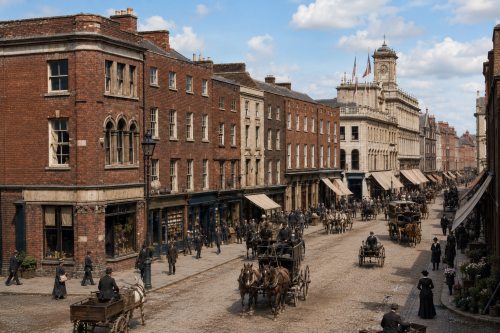
George Street, now O’Connell Street, formed the bustling commercial and social heart of Limerick around 1900. Elegant Georgian and Victorian façades lined the thoroughfare, their ornate shopfronts illuminated by gaslight and filled with goods for local shoppers. Horse-drawn carriages, jaunting cars and merchant carts crowded the roadway, while pedestrians in heavy coats and hats moved between businesses and hotels. The grand Cruises Royal Hotel stood among the street’s most prominent landmarks, welcoming merchants, travellers and visitors. This scene reflects the energy of late-Victorian Limerick before motor traffic transformed the city’s principal shopping street and historic urban centre during a changing era.

Limerick Horse Brake, 1900

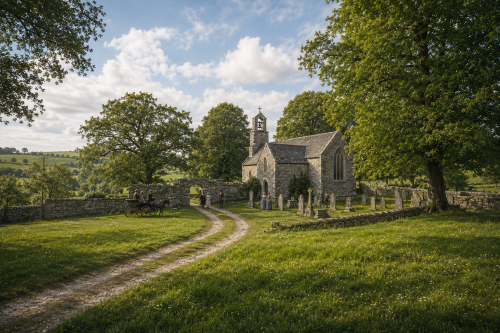
By 1900, Limerick’s great long-distance stagecoach era had largely disappeared, replaced by the expanding railway network. Horse-drawn vehicles nevertheless remained essential throughout the city and surrounding countryside. Large brakes and passenger wagons carried groups on local journeys, outings and transfers, while hackney cars, jaunting cars, drays and private carriages crowded the streets. Horses also transported goods from the docks, breweries, distilleries and railway station. This reconstructed scene captures a group of formally dressed men aboard a substantial horse-drawn vehicle, reflecting a transitional age when steam powered intercity travel, but horses still firmly supported Limerick’s everyday commercial, urban and social life.

Tabanyama Assault

News of the fighting on the Tabanyama ridges carried particular weight in Limerick, where families with connections to British Army service followed the Natal campaign and the fortunes of Irish regiments abroad. Between 20 and 22 January 1900, Lieutenant-General Sir Charles Warren’s force attempted to break the Boer defensive line west of Spion Kop and open a route towards besieged Ladysmith. Major-General FitzRoy Hart’s 5th, or Irish, Brigade formed part of the attacking army, alongside Major-General Edward Woodgate’s Lancashire Brigade. The operation placed Irish soldiers within a difficult imperial campaign whose conduct and purpose remained politically contentious at home.

Adare Manor Colour Print

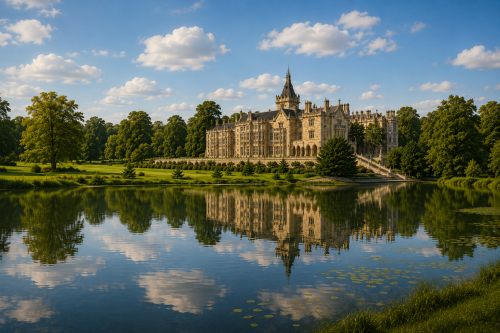
This variation of a colour print depicts Adare Manor beside the River Maigue in Adare, County Limerick. The imposing Gothic Revival residence is shown within landscaped grounds, reflected in the calm water and framed by mature trees. Often described as a calendar house, the manor is associated with 365 windows and 52 chimneys, representing the days and weeks of the year. Published in Francis Orpen Morris’s A Series of Picturesque Views of Seats of the Noblemen and Gentlemen of Great Britain and Ireland, the image celebrates the architecture, setting, and aristocratic character of one of County Limerick’s most recognisable historic estates and landmarks.