Archived: 18 October 2026
Abstract
Ireland in 1523 was governed through competing authorities whose interests extended beyond Dublin. Henry VIII’s administration depended upon negotiation with magnates, towns and Gaelic rulers. Gerald FitzGerald, ninth earl of Kildare, returned from England, renewing his rivalry with the lord deputy, Piers Butler, earl of Ormond. James FitzGerald, earl of Desmond, pursued connections with France, while northern dynasties fought and bargained largely beyond government control. Kildare’s return was intended to strengthen the lordship’s exposed frontier, yet intensified political competition. The year illustrates how royal appointments, rivalries, foreign diplomacy and regional military power shaped the limits of English authority in Ireland.
Read Article
Archived: 18 October 2026
Abstract
In 1521, Thomas Howard, earl of Surrey, sought to extend Henry VIII’s authority in Ireland, but inadequate money, troops and local support exposed the limits of Dublin government beyond the Pale. A June parliament regulated crop burning, wool exports and jury procedure, yet resisted the burdens of billeting and military finance. Surrey’s campaigns and negotiations in the midlands did not end shifting regional alliances. Annals recorded successions, killings, lordship disputes and ideals of hospitality across Ulster and Fermanagh. George Cromer received Armagh, while William Rokeby died. Surrey’s December recall confirmed that Tudor intervention remained costly, partial and showed dispersed power.
Read Article
Archived: 18 October 2026
Abstract
In 1517 Gerald FitzGerald, ninth earl of Kildare and lord deputy, demonstrated both the reach and limitations of Tudor authority in Ireland. After convening a Dublin parliament, he campaigned in Ulster, destroying Dundrum Castle, seizing Félim Magennis’s family and hostages, and burning Dungannon. Yet O’Donnell also raided Tír Eoghain and destroyed Dungannon amid O’Neill succession rivalries, showing regional politics remained autonomous. Elsewhere, inaugurations, killings, cattle raids and castle warfare reshaped local lordships. A severe frost disrupted travel, while a boat from Tory Island vanished at sea. The year reveals a connected but politically fragmented island, rather than unified crown rule.
Read Article

Archived: 19 October 2026
Abstract
Ireland in 1514 remained a landscape of competing lordships and negotiated authority. Gerald FitzGerald, ninth earl of Kildare and the king’s deputy, sought to demonstrate that he had inherited his father’s influence. Campaigns recorded in Laois, Breifne, Munster and Ulster reveal the importance of castles, armed followings, hostages and compensation. Rival rulers could resist, bargain and rebuild their position despite destructive expeditions. A contemporary churchman described abundant food alongside insecurity on land and sea. Cavan Castle’s destruction belongs within this wider pattern of contested government, where royal office offered prestige but power still depended upon local alliances and military resources.
Read Article

Archived: 19 October 2026
Abstract
In 1513, Ireland experienced interconnected struggles over lordship, succession and regional power. Gearóid Mór FitzGerald’s death weakened his extensive political system, although his son Gerald succeeded as earl and deputy governor. In Tír Eógain, Art Óg O’Neill secured inauguration with local and Kildare support amid contested succession. Aodh Dubh O’Donnell besieged Sligo, influenced control of Dunluce and visited James IV of Scotland before Flodden ended Scottish royal intervention. Raiding, burning and maritime violence affected coastal and rural communities. Meanwhile, Franciscan scholarship, ecclesiastical deaths and aristocratic patronage demonstrated enduring religious, learned and charitable networks across a politically fragmented yet connected Ireland.
Read Article
Archived: 19 October 2026
Abstract
In 1510 Gerald FitzGerald, eighth earl of Kildare and justiciar of Ireland, led a expedition into Munster. His authority combined royal office with estates, personal connections and agreements among powerful lords. The campaign demonstrated that government from Dublin depended upon negotiated alliances as much as commands from Henry VIII. Resistance likewise emerged from a coalition of interests rather than a simple division between Gaelic and English communities. Annalistic evidence places the fighting within a wider landscape of overlapping lordships and shifting loyalties. Monabraher’s broken rearguard illustrates the military risks and political limits confronting the Great Earl’s ambitious exercise of power.
Read Article
Archived: 19 October 2026
Abstract
Henry VIII’s accession in 1509 prompted Ireland’s council to retain Gerald FitzGerald, eighth earl of Kildare, as temporary governor, preserving authority in the Pale. Kildare intervened in a disputed O’Neill conflict in Tyrone, campaigning with regional allies, capturing Omagh castle, taking prisoners and demolishing the fortress. Domhnall O’Neill died, and Art O’Neill was inaugurated, illustrating contested Gaelic succession. Uilleag Fionn Burke of Clanricard also died, without ending Burke power. Obituaries for church officers, an erenagh and a learned poet reveal enduring ecclesiastical, hospitable and literary institutions. The year demonstrated that royal change affected Ireland through local alliances, lordships and rivalries.
Read Article
Archived: 19 October 2026
Abstract
In 1504, Gerald FitzGerald, eighth earl of Kildare and king’s deputy, led a broad Gaelic and settler-descended coalition against Uilleag Fionn Burke of Clanricard and Turlough Donn O’Brien. The conflict arose from Burke’s attacks on O’Kelly territory and seizure of Galway, but reflected wider struggles for Connacht. At Knockdoe near Galway on 19 August, Kildare’s army won a devastating battle, with annals reporting nine gallowglass battalions almost destroyed. Burke surrendered hostages, restoring Kildare’s influence without securing lasting royal control. The year’s annals also commemorate clerics, scholars, physicians and patrons, revealing religious, learned and hospitable networks alongside warfare across medieval Ireland.
Read Article
Archived: 19 October 2026
Abstract
In 1499, Gerald FitzGerald, earl of Kildare and royal deputy, campaigned in Connacht, seizing Athleague, Tulsk, Roscommon and Castlerea, redistributing lordship and hostages among allied factions. Mac William Burke and displaced O’Kelly forces soon recovered Athleague and Tulsk, demonstrating the fragility of imposed authority. Succession and conflict reshaped Moylurg, Tír Chonaill, Fermanagh and Thomond, where O’Donnell raided, negotiated with Kildare and suppressed internal rebellion, while an O’Brien force defeated Butler followers. Annals also record religious and aristocratic hospitality, and Pale parliamentary regulation. Warfare, castles, cattle, hostages, tribute and negotiation repeatedly remade Ireland’s overlapping political order across Ireland’s contested regional frontiers.
Read Article
Archived: 19 October 2026
Abstract
In 1496 Henry VII restored Gerald FitzGerald, eighth earl of Kildare, as lord deputy, ending the immediate crisis of direct Tudor rule. Landing at Howth with royal favour and a new marriage, Kildare accepted conditions including Poynings’ Law, while his heir remained in England. Efforts to dig defensive boundaries around the Pale reflected insecure frontier government. Elsewhere, MacMahon feuds in Oriel, O’Donnell conflicts and regional successions demonstrated fragmented authority. Severe weather destroyed crops and cattle, causing widespread dearth and disrupting husbandry. Annals nevertheless recorded musicians, learned families and religious patrons, revealing cultural prestige amid warfare, political competition and agricultural hardship.
Read Article

Archived: 19 October 2026
Abstract
In 1491 Conn Ó Néill of Tír Eógain and Aodh Ruadh Ó Domhnaill of Tír Chonaill sought Gerald FitzGerald, earl of Kildare, to arbitrate their Ulster conflict, but no peace resulted, demonstrating limits to Kildare’s authority. Warfare continued through raids, killings, captivity and contested castles across Ulster, Breifne and borderlands. In east Breifne, John Ua Raghallaigh died, prompting a disputed succession and Kildare’s destructive intervention. Persistent summer and autumn rain ruined Ireland’s grain, particularly in Fermanagh, worsening pressures created by campaigning. Ecclesiastical offices and monasteries remained significant. A post-Christmas wind concluded a year marked by insecurity, authority and environmental hardship.
Read Article
Archived: 19 October 2026
Abstract
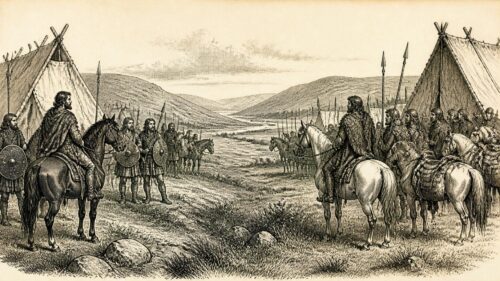
In 1490, Ireland’s fragmented political order was shaped by local warfare, disputed succession and negotiated authority. Feidhlimidh Fionn Ó Conchobhair Ruadh defeated rival kinsmen near Croghan before dying, prompting Ruaidhrí’s election and further instability in Connacht. Raids, cattle seizures and crop destruction burdened communities. In Ulster, Ó Néill factions fought over castles, Aodh Óg Ó Domhnaill seized Ballyshannon, and Conn Ó Néill and Aodh Ruadh Ó Domhnaill maintained an armed stalemate. Henry VII summoned Kildare, whose indispensability reflected Dublin’s limited reach. Papal appointments, learned deaths, maritime links and a cautiously reported earthquake reveal an interconnected, unsettled society across the island.
Read Article
Archived: 19 October 2026
Abstract
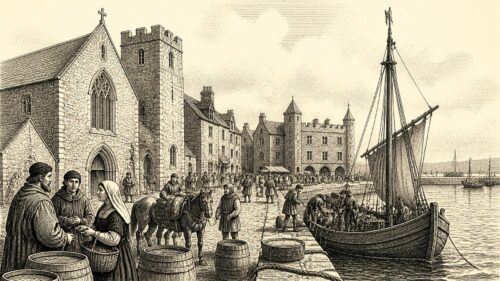
In 1484, Ireland comprised the English lordship, autonomous towns, Anglo-Irish magnates and Gaelic dynasties, each governed through distinct but connected powers. Under Richard III, Gerald FitzGerald, earl of Kildare, dominated Dublin administration, while parliament regulated coinage, revenues, religious property, fortification and urban affairs. Galway strengthened its position when St Nicholas’s became collegiate and Richard granted the town a mayoralty. Elsewhere, insecurity persisted: northern war between O’Neill and O’Donnell coincided with a violent Maguire succession dispute in Fermanagh, involving murder, raids, captives and church attacks. Annals also record deaths, imprisonment and pastoral wealth, revealing fragmented political and social life across Ireland.
Read Article
Archived: 19 October 2026
Abstract
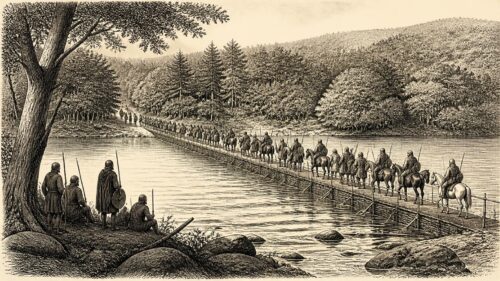
In 1483, Conn O’Neill was released from captivity, inaugurated lord of Tír Eógain, and entered a major conflict with Aodh Ruadh O’Donnell. O’Donnell’s coalition, including Clandeboye forces, raided the Dundalk district, burned Traghbhaile and Baile-Lugh-mhaigh, defeated Kildare’s pursuing army, and exacted protection payments. Returning through Tír Eógain, it cleared woodland and built a wicker bridge across the Abhann Mór, escaping pursuit. Other conflicts occurred across Ireland, while bishops and learned hereditary officials died or succeeded. English dynastic change brought Richard III’s accession, but Kildare remained deputy. The annals depict interconnected lordships, warfare, landscape, church institutions, learning, and local livelihoods alike.
Read Article
Archived: 19 October 2026
Abstract
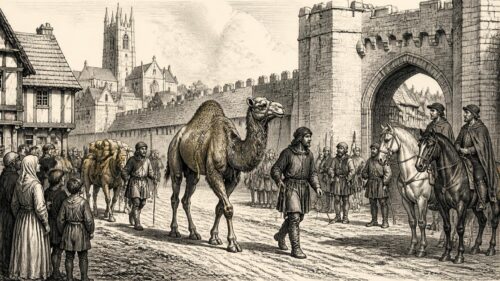
In 1472, Ireland comprised competing Gaelic and Anglo-Irish lordships, while Thomas FitzGerald, earl of Kildare, governed Edward IV’s limited lordship from Dublin. Parliament addressed defence, castles, town property, coinage, trade, religious houses and clerical study, revealing both administrative activity and insecurity in the Pale. Annals record killings, hostage-taking, raids, family struggles and shifting alliances in Ulster, Connacht and Munster, involving Gaelic rulers and Anglo-Irish families alike. Monasteries, pilgrimages and Oxford links connected local society to wider Christian networks. Most strikingly, a yellow camel, probably a royal gift from England, reached Ireland, symbolising international exchange amid fragmented politics across the island.
Read Article
Archived: 21 October 2026
Abstract
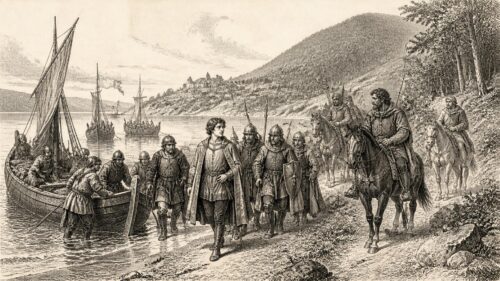
In 1408 Ireland’s political geography remained sharply divided. The English lordship was strongest in and around Dublin, yet its government depended on cooperation from magnates, towns and religious houses, and on money which was chronically scarce. Beyond and across its frontier, Gaelic and Gaelicised lordships pursued their own rivalries, raiding routes and alliances. The year is unusually well illuminated by several annalistic traditions, although they do not all record the same matters. Their entries show an island in which a royal prince could arrive with military purpose, while deaths, cattle-raids, local feuds and new castles continued to shape life far
Read Article
Archived: 22 October 2026
Abstract
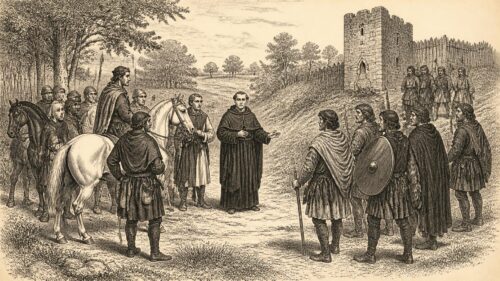
In 1368, Irish authority remained fragmented and precarious. Aed Ó Conchobair, king of Connacht, died at Roscommon and Ruaidri Ó Conchobair succeeded amid partition, contested claims, disease and the killing of Tadc Ó Conchobair, which deepened dynastic hostility. In Oriel, Niall Ó Néill accepted Brian Mac Mathghamhna’s submission, but unauthorised allies attacked and were defeated with heavy losses. In Kildare, Berminghams captured royal chancellor Thomas de Burley and other officials, securing his exchange for an imprisoned kinsman and ransoms. On 17 October, fire destroyed St Mary’s monastic church at Trim. Together, these events show institutions dependent on unstable personal alliances.
Read Article
Archived: 24 October 2026
Abstract
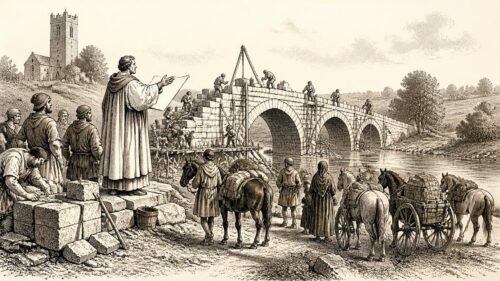
In 1319, Ireland remained unsettled after Edward Bruce’s defeat, with famine, warfare and administrative disruption still affecting lordships and towns. Maurice Jakis, canon of Kildare, built a stone bridge across the Liffey at Kilcullen, improving travel and encouraging the settlement’s later growth. English officials sought missing financial accounts, reflecting weakened government. In Tyrone, Domhnall Ó Néill was expelled, sheltered in Fermanagh, restored, then lost his heir Brian to enemies. Annals also recorded killings, deaths of Gaelic and Anglo-Irish lords, and several episcopal vacancies. The year combined local reconstruction, ecclesiastical continuity, family feuds and precarious political authority across the island overall.
Read Article
Archived: 24 October 2026
Abstract
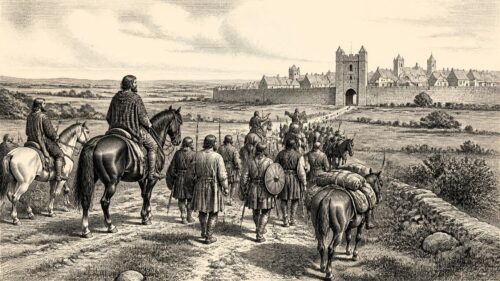
In 1316, Ireland endured Scottish invasion, provincial conflict, destructive warfare and famine. Edward Bruce, supported by Ulster allies, claimed kingship but controlled chiefly the former earldom of Ulster; his Leinster raid exposed divisions among Anglo-Irish magnates without establishing rule. In Connacht, Feidlim Ó Conchobair defeated rival Ruaidrí, built a broad coalition and attacked Anglo-Irish lordships. On 10 August, William de Burgh and the Berminghams crushed Feidlim’s army outside Athenry, killing Feidlim and leaders, and destabilising Connacht anew. Meanwhile, famine compounded military devastation. Carrickfergus surrendered to Bruce in September, yet no power secured Ireland: regional rivalries, hunger and contested lordship persisted.
Read Article
Archived: 26 September 2026
Abstract
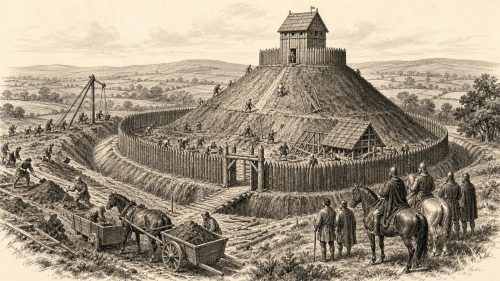
Ireland in 1181 remained politically fragmented among Gaelic kingdoms, Norse-Irish towns, church lordships and expanding Anglo-Norman territories. Henry II recalled Hugh de Lacy, fearing his autonomous power and Connacht marriage alliance, before restoring him under closer scrutiny. Flaithbertach Ua Máel Doraid defeated Connacht forces at Carbury, while killings, campaigns and cattle raids intensified Ulster rivalries. Tommaltach Ua Conchobair asserted Armagh's authority through Cenél Eógain; Henry influenced John Cumin's election to Dublin. Earth-and-timber castles supported settlement and land redistribution. Rural wealth depended on livestock and agriculture, while trade, monastic institutions and Gaelic learning endured. Rulers, churches and colonists contested regional frontiers.
Read Article

Archived: 26 September 2026
Abstract
In 1162 Muirchertach Mac Lochlainn’s loose high-kingship united northern, Meath and Connacht forces, yet failed to compel Dublin’s surrender; after plundering Fine Gall, he accepted 120 ounces of gold. Tribute arrangements in Meath and exemptions from coigny showed the political and local economic importance of land and provisioning. At Clane, Gelasius of Armagh led a synod reinforcing clerical discipline, Armagh’s educational primacy and church reform. Laurence O’Toole became archbishop of Dublin, while Derry’s sacred precinct was reorganised. Deaths, fires, relic enshrinement and raids exposed cultural vulnerability. Continuing regional warfare and dynastic rivalry undermined Mac Lochlainn’s seemingly dominant authority across Ireland.
Read Article

Archived: 26 September 2026
Abstract
In 1041, Ireland remained politically fragmented despite Donnchad mac Briain’s claims to wider kingship. Leinster’s struggle between Murchad mac Dúnlainge and Uí Chennselaig brought raids, the death of Domnall Remur, Ferns’s burning, and Diarmait mac Maíl na mBó’s devastating retaliatory attack on Glenn Uisen. Rivalries also produced blinding, killings and sanctuary violations at Timahoe and Kildare, while assassinations, raids and battles disturbed Osraige, northern regions and Munster. Annals also record learned churchmen’s deaths, ecclesiastical organisation and church-building. Cattle raiding underpinned warfare and wealth, although farming, commerce and learning continued. The selective record portrays violence alongside resilient institutions, foreshadowing Diarmait’s dominance.
Read Article
Archived: 27 October 2026
Abstract
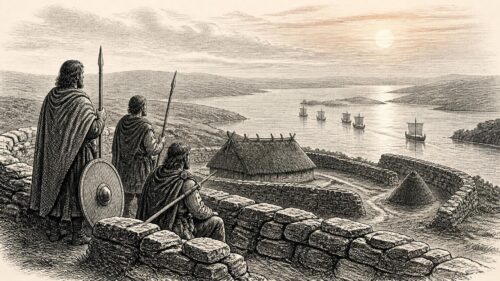
In 939, Irish annals record intense conflict linking kings, churches and Scandinavian seaborne power. Foreigners plundered Ailech, captured its ruler Muirchertach son of Niall, and released him for ransom. Dublin raided Cell Chuilinn in Leinster, while Munster forces with Scandinavian allies attacked Mide’s ecclesiastical sites, challenging Donnchad Donn. Donnchad campaigned in Brega, where a priest died during church violence, and Congalach defeated the Gailenga. Obits marked political and ecclesiastical succession. Donnchad commissioned a cover for Patrick’s Canon, probably the Book of Armagh. Annalists noted a blood-coloured sun, plausibly volcanic haze, and Æthelstan’s death in England on 27 October that year.
Read Article
Archived: 28 October 2026
Abstract
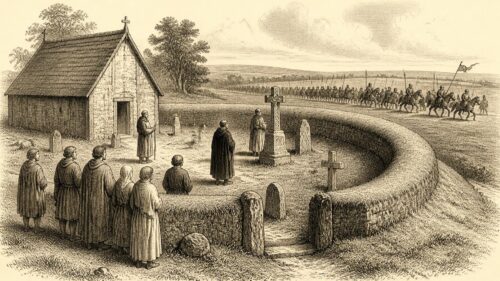
In 874, Féthgna, successor of Patrick and head of religion in Ireland, died after a long leadership of Armagh, highlighting that church’s political and spiritual authority. Áed Findliath, king of Tara, campaigned in Leinster, profaning Cell Ausili, probably Killashee, and burning other churches, demonstrating the vulnerability of sacred sites during royal coercion. Clerical deaths at Roscommon and Tamlacht emphasised the importance of bishops and scribes in administering wealthy, learned ecclesiastical communities. Foreign raiders plundered Cell Mór of Mag Enir. Against a changing Viking background following Ímar’s death, the year revealed Ireland’s interwoven military, religious, economic and intellectual pressures across society.
Read Article
Archived: 29 October 2026
Abstract
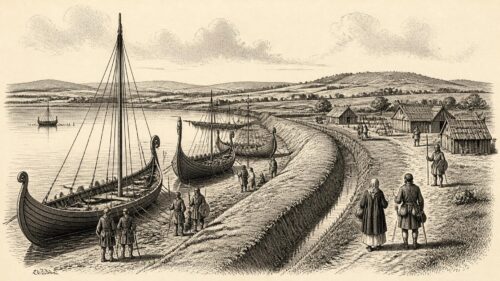
In 841, Irish annals recorded Scandinavian forces remaining on Lough Neagh and establishing fortified naval camps at Linn Dúachaill and Duiblinn. These longphuirt enabled repeated raids into the midlands, Leinster and Uí Néill territories, threatening churches, communities and regional economies while supporting provisioning and ship maintenance. Irish politics remained equally violent: Feidlimid of Munster marched to Carman in Leinster, but Niall Caille defeated him at Mag Óchtair, where Feidlimid's crozier was abandoned. Dynastic conflict included Diarmait's killing by Máel Sechnaill and Áed's treacherous murder. The year revealed an unconquered yet reoriented Ireland, facing persistent maritime power alongside rivalry among kings.
Read Article
Archived: 30 October 2026
Abstract
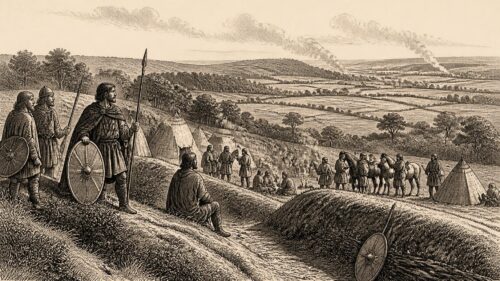
In 770, Donnchad Midi led a Uí Néill army into Leinster, where King Cellach mac Dúnchada avoided a decisive battle. Donnchad occupied Ráith Ailinne for seven days and burned Leinster’s borders, demonstrating coercive power rather than conquering the province. Leinster was already divided: Cellach had defeated rival groups at Áth Orc. Subsequent fighting brought a Leinster victory over southern Brega at Bolg Bóinne, while the Ciannachta defeated Uí Téig at Áth Cliath, with heavy losses and drownings. Annals also record ecclesiastical deaths and Feidlimid of Cashel’s possible birth, illustrating fragmented authority, warfare’s rural disruption, and limited surviving evidence in Ireland.
Read Article

