
Stokes Mission(c.1900s)
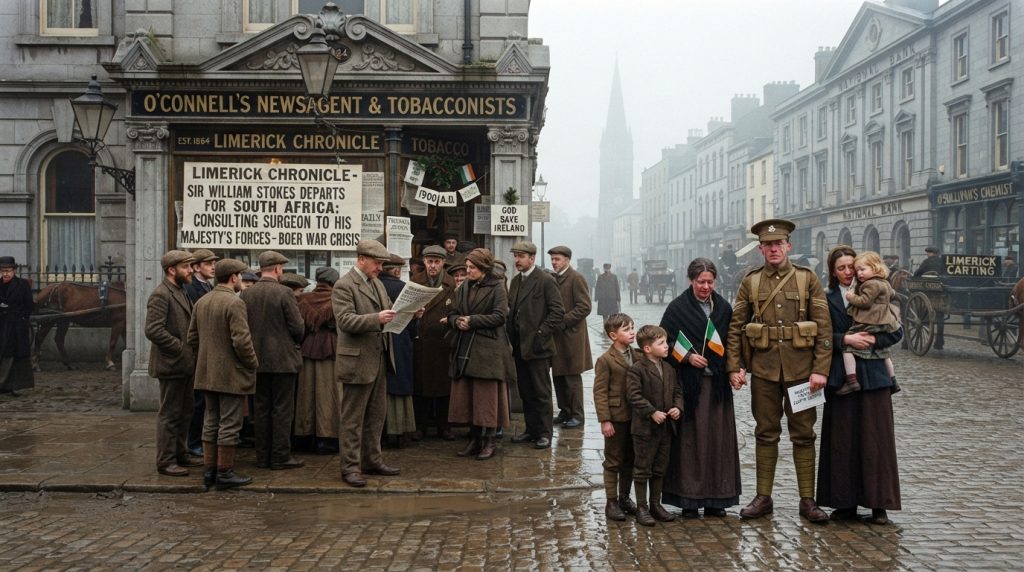
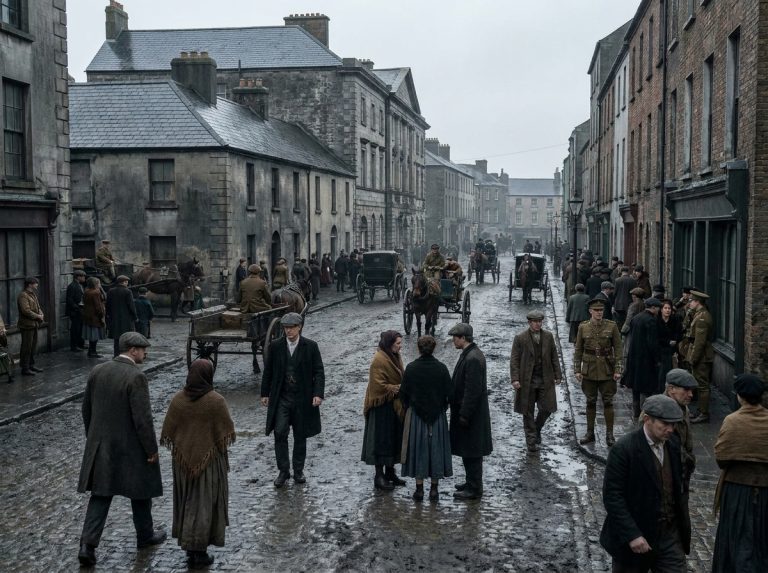
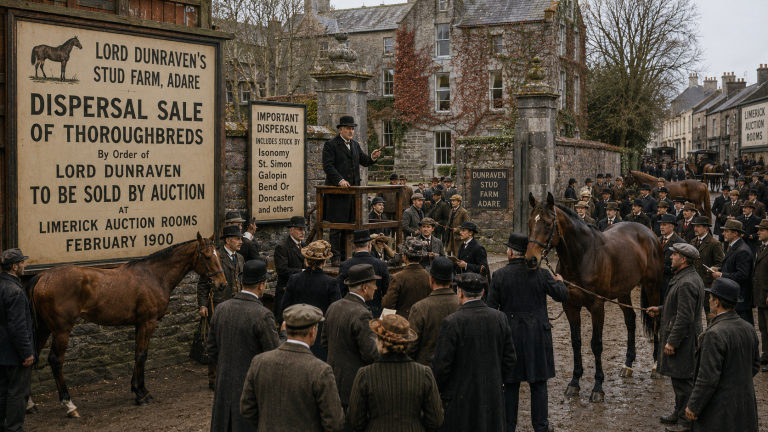
On 1 January 1900, Limerick readers opened newspapers carrying news that Sir William Stokes, Ireland’s celebrated surgeon, was going to South Africa as consulting surgeon to the British Army. The announcement connected the city with a distant war because men recruited throughout Limerick served in the Royal Munster Fusiliers, while their families depended upon military doctors to treat wounds and disease. Stokes was not a Limerickman, but his appointment represented Irish medical skill sent abroad during an imperial emergency. For households following sons, brothers and neighbours overseas, his journey offered reassurance that an experienced Irish surgeon would assist the wounded.
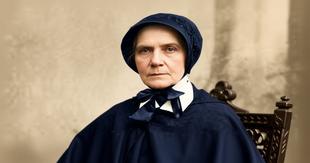
Sir William Stokes was born in Dublin in 1839, educated at Trinity College, and trained in European medical centres before becoming professor of surgery at the Royal College of Surgeons in Ireland. He served as president of that institution and as Surgeon-in-Ordinary to Queen Victoria in Ireland. By 1900, he was respected for operative surgery, teaching and clinical judgement. His selection carried national importance. The British authorities required senior civilian specialists who could advise military hospitals, perform difficult operations and improve treatment across an expanding campaign. Stokes answered that demand despite being sixty years old and professionally established at home.
The news published on New Year’s Day originated in a London dispatch dated 29 December 1899. It stated that Stokes would proceed to South Africa as consulting surgeon to the army. Britain had suffered reverses during Black Week earlier that month, producing heavy casualties and exposing weaknesses in transport, hospitals and battlefield organisation. Reinforcements, nurses, doctors and equipment were assembled. Stokes later embarked from Southampton aboard the liner Moor with passengers connected to the war effort. His appointment showed how the conflict was drawing Irish expertise, as well as Irish soldiers, into operations thousands of miles from Limerick and Dublin.
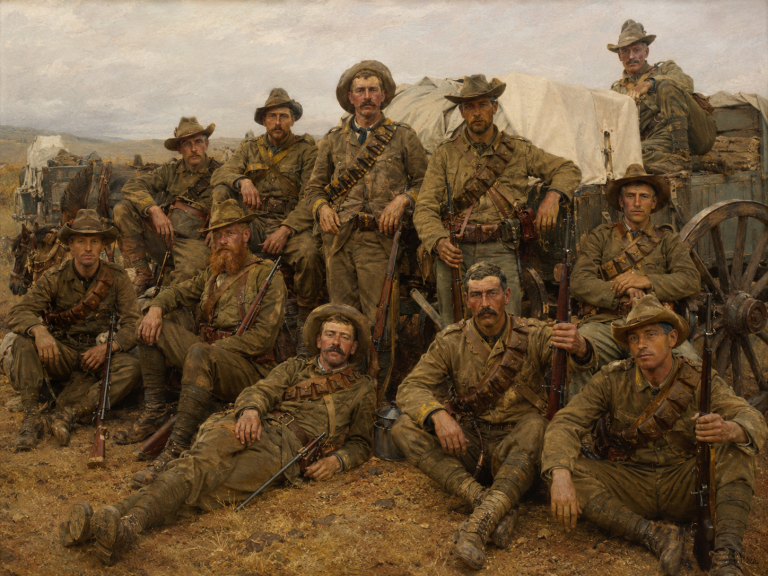
In South Africa, consulting surgeons moved between base hospitals, field hospitals and medical trains rather than remaining attached to one regiment. They examined difficult cases, advised officers and studied injuries caused by rifles and artillery. Disease was equally dangerous. Enteric fever, dysentery and respiratory illness filled wards alongside gunshot casualties, placing pressure upon medical staff. Stokes contributed to this system and later described the Princess Christian Hospital Train, which carried wounded and sick soldiers from forward areas to equipped centres. His work illustrates how treatment depended upon railways, evacuation, antiseptic practice and cooperation between military personnel, civilian specialists and nurses.
The Limerick connection rested upon the Royal Munster Fusiliers, the regiment recruiting across Limerick, Clare, Cork and Kerry. Its first battalion served throughout the South African War, and local newspapers carried reports concerning deployments, casualties and relief efforts. A surgeon of Stokes’s standing could not guarantee survival, but his presence symbolised Ireland’s contribution to the care of Irish troops and others serving beside them. Limerick also possessed its own medical tradition through Barrington’s Hospital, the City and County Infirmary and local dispensaries. Doctors there understood the serious challenges of trauma, infection, limited resources and rapid decisions confronting wartime medicine abroad.
Stokes’s mission ended tragically. After months of hospital work, he contracted pleurisy and died at Pietermaritzburg on 18 August 1900. His death transformed the New Year announcement into a story of professional sacrifice. He was buried at Fort Napier military cemetery, far from Ireland, and remembered as a surgeon who accepted dangerous service when his experience was required. For Limerick, his journey belonged to a history linking the city’s soldiers, families and medical institutions to the South African conflict. The report of 1 January revealed how quickly an international war entered Irish homes through newspapers, regimental connections and shared anxiety.
Primary Sources
- Irish Times, “Sir William Stokes,” 1 January 1900, pp. 1–2.
- Limerick Leader, 1 January 1900, contemporary local, military and South African War coverage.
- Irish Independent, 1 January 1900, reports and commentary concerning the South African War.
- New Zealand Herald, “The Boer War,” Volume XXXVII, Issue 11259, 1 January 1900, p. 5.
- Lyttelton Times, “The Transvaal War,” Volume CIII, Issue 12088, 1 January 1900, p. 5.
- New Zealand Times, “Miscellaneous,” Volume LXXI, Issue 3937, 1 January 1900, p. 7.
- Sir William Stokes, “The Princess Christian Hospital Train,” The Hospital, Volume 28, Issue 713, 26 May 1900, pp. 141–142.
- British Medical Journal, “The War in South Africa,” Volume 1, Issue 2037, 13 January 1900, pp. 99–108.
- War Office, Monthly Army List, January 1900, entries for the Royal Army Medical Corps and Royal Munster Fusiliers.
- The National Archives, WO 100/347, South African War medal rolls for the Royal Munster Fusiliers and Royal Dublin Fusiliers, 1899–1902.