William Johnson(c.1710s)
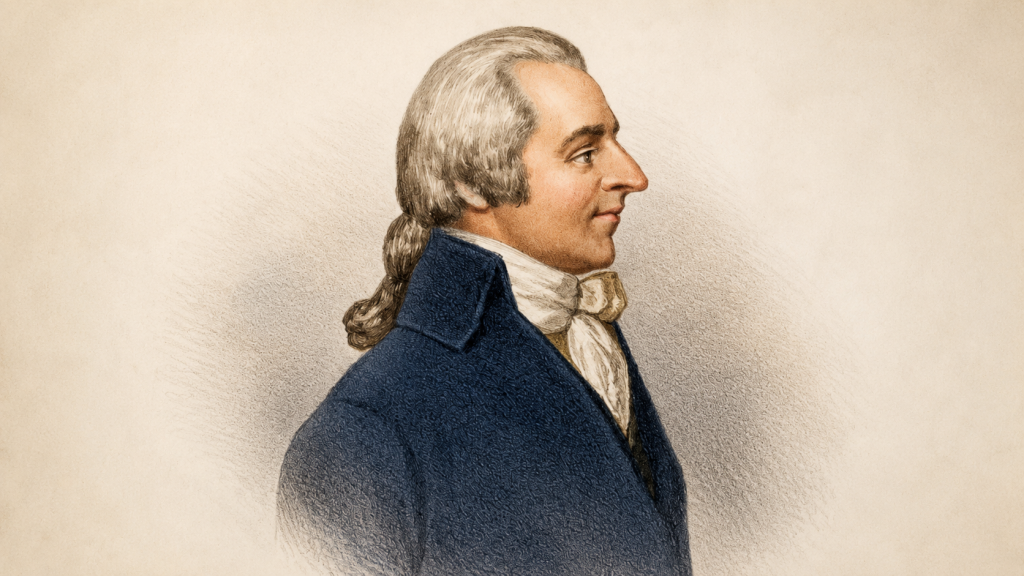
In 1750, William Johnson was not yet the titled imperial figure history would remember as Sir William Johnson, 1st Baronet. He was still William Johnson, an ambitious Irish-born landowner, trader and colonial official living in New York’s Mohawk Valley. Born around 1715 near Dunshaughlin in County Meath, Johnson had crossed the Atlantic in 1738. By 1750 he had become one of the most influential men on the northern frontier of British America, building a career upon commerce, land, military service and relations with the Haudenosaunee.
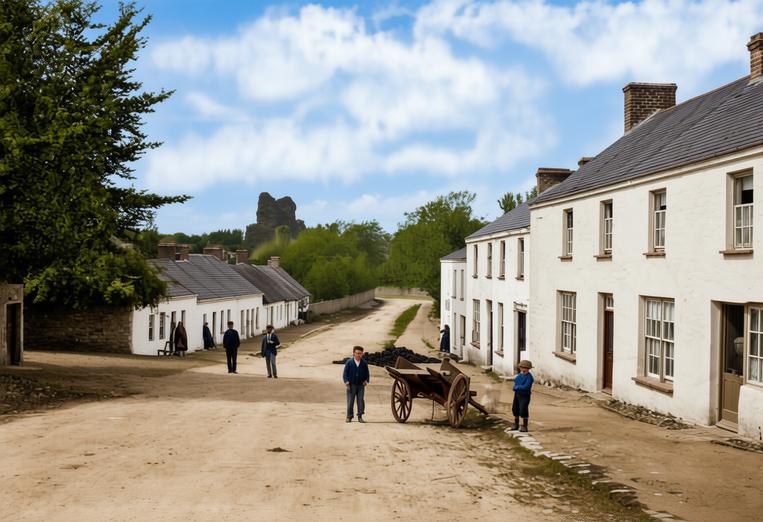
Johnson was the eldest son of Christopher Johnson of Smithtown, near Dunshaughlin, and Anne Warren, whose brother was the successful naval officer and landowner Peter Warren. In 1736 he began working as an agent for Warren, collecting rents from his uncle’s Irish tenants. Two years later he travelled to North America to manage Warren’s estate near Fort Hunter in the Mohawk Valley. The assignment became the foundation of his imperial career.
The Mohawk Valley was one of the most strategically important corridors in northeastern America. It connected the Hudson River region with the interior and bordered the homelands of the Haudenosaunee. Johnson quickly understood that success there required more than the habits of a conventional European landlord. He entered the fur trade, supplied settlers, bought and developed land, dealt in agricultural produce and established commercial connections extending to Albany and New York City. His prosperity grew rapidly, and by the 1740s he was challenging older Dutch merchant networks that had long dominated trade with Indigenous communities.
More significant than his wealth was Johnson’s ability to cultivate relationships with the Mohawk. He learned aspects of their language and customs, participated in diplomatic rituals and treated Indigenous political traditions with a seriousness many British officials lacked. His understanding of Haudenosaunee diplomacy gave him an influence few colonial officials could match. He was eventually adopted by the Mohawk and became closely associated with leading families within the nation. This relationship became the basis of his political importance to the British Crown.
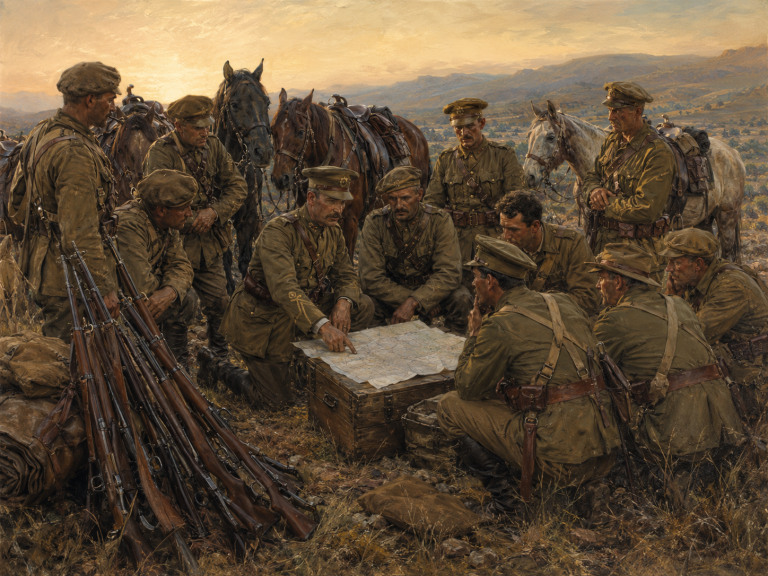
During the War of the Austrian Succession, known in North America as King George’s War, Johnson was drawn increasingly into military and political affairs. In 1745 he became a justice of the peace for Albany County and was appointed colonel responsible for relations with the Six Nations. He attempted to organise Indigenous scouts and warriors in support of British operations against New France. Although the Six Nations often preferred neutrality, Johnson’s role established him as a mediator between colonial authorities and Indigenous leaders. In 1748 he received further militia responsibilities on the New York frontier, strengthening his position among settlers and officials.
By 1750 his advancement had become unmistakable. In April that year Johnson was appointed to the New York Council, which advised the royal governor and represented one of the highest levels of provincial government. He rarely attended its meetings, but the appointment demonstrated how far the young man from County Meath had risen. Barely twelve years after arriving in America, Johnson had become a major landowner, merchant, militia colonel, justice and councillor. His authority rested not in a single office but in the combination of economic power, frontier knowledge and personal relationships that made him valuable to the imperial administration.
The year 1750 also belonged to a period of growing tension between Britain and France in North America. Both empires claimed vast territories, and both depended on alliances with Indigenous nations. The Ohio Valley, Great Lakes and routes linking Canada with the Mississippi basin were increasingly contested. Johnson understood that the Haudenosaunee could not simply be ordered into British service. Alliances had to be maintained through councils, gifts, negotiation and reciprocal obligations. His ability to operate within this diplomatic world would soon become crucial as the rivalry between Britain and France moved towards open war.
Johnson’s later fame can obscure the importance of these earlier years. He did not suddenly emerge as a major imperial figure during the French and Indian War. His position in 1755 was built on years of trading, negotiating, landholding and frontier administration. When war erupted, British leaders turned to him because he already possessed something London could not easily manufacture: credibility among important Mohawk leaders and extensive experience in the politics of the northern frontier.
In 1755 Johnson was appointed Superintendent of Indian Affairs for the northern colonies and given major military responsibilities. That year he commanded British colonial and Indigenous forces at the Battle of Lake George, where the French were checked in one of Britain’s few successes during the opening phase of the war. Johnson was wounded in the fighting. In recognition of his service, George II rewarded him with a hereditary baronetcy, and thereafter William Johnson became Sir William Johnson, 1st Baronet. His later career included an important role in the capture of Fort Niagara in 1759, continued diplomacy with the Six Nations and the negotiation of the Treaty of Fort Stanwix in 1768.
His achievements must also be viewed critically. Johnson became extraordinarily wealthy, accumulated enormous tracts of land and benefited from a colonial system that displaced Indigenous peoples even while he presented himself as their ally and advocate. He also owned enslaved people and used his public position to advance private interests. His life therefore reflects contradictions of the eighteenth-century British Empire: cultural adaptation alongside conquest, diplomacy alongside dispossession, and public service alongside personal enrichment.
Seen from the perspective of 1750, William Johnson stood at the threshold of his greatest influence. He was still five years away from the title by which history remembers him, but the foundations of that reputation were already established. The County Meath emigrant had transformed himself into a central figure of the Mohawk Valley and an increasingly indispensable servant of the British Crown. His story illustrates how an Irish-born colonial entrepreneur could rise within the structures of empire while becoming deeply entangled in the complex relationships between Europeans and Indigenous nations. By 1750, the future Sir William Johnson was already helping to shape the political frontier of British North America.
Primary Sources
- Johnson, William. The Papers of Sir William Johnson, Vol. I: 1738–1755. Albany: University of the State of New York, 1921.
Primary source. Essential for Johnson’s settlement, trade, correspondence, Indigenous relations and activities around 1750. (SIRIS) - Johnson, William. The Papers of Sir William Johnson, Vol. IX. Albany: University of the State of New York.
Primary source. Contains additional material covering Johnson’s settlement, King George’s War, the peace period 1749–1755, and the opening of the French and Indian War. (Smithsonian Institution) - Day, Richard E. Calendar of the Sir William Johnson Manuscripts in the New York State Library. Albany: University of the State of New York, 1909.
An indispensable guide to the surviving Johnson manuscripts and documents that were subsequently damaged or destroyed. (New York State Library) - O’Callaghan, E. B., ed. Documents Relative to the Colonial History of the State of New-York. Albany: Weed, Parsons and Company, 1853–1887.
Primary documents from British, French, Dutch and New York colonial archives, including Johnson’s reports and correspondence. (New York State Library) - O’Callaghan, E. B., ed. The Documentary History of the State of New-York. Albany, nineteenth century.
Contains official records, correspondence and material relating to colonial New York and relations with the Six Nations. The New York State Library identifies it as an important companion source to the Johnson manuscripts. (New York State Library) - New York State Library. Sir William Johnson Papers, 1715–1774. Manuscripts and Archives Collection.
The surviving original archive of Johnson’s correspondence, financial papers, Indian affairs documents and official records. (New York State Library) - Johnson, William. Correspondence and accounts concerning the Mohawk Valley, 1749–1751, in The Papers of Sir William Johnson, Vol. I.
Primary source material particularly relevant to your 1750 setting, including trade, land, political and diplomatic affairs. (SIRIS) - Johnson, William. Records relating to trade and diplomatic relations with the Six Nations, in The Papers of Sir William Johnson.
Particularly useful for establishing how Johnson developed his unusual position as intermediary between colonial authorities and the Haudenosaunee. The collection includes extensive material concerning trade and Indigenous relations. (National Library of Ireland Catalogue) - Gwyn, Julian. “Johnson, Sir William.” Dictionary of Canadian Biography, Vol. IV. University of Toronto/Université Laval.
One of the strongest concise scholarly biographies. It confirms his birth near Dunshaughlin, his relationship to Peter Warren, his arrival in America in 1738 and his rapid rise in the Mohawk Valley. (The Dictionary of Canadian Biography) - Flexner, James Thomas. Mohawk Baronet: A Biography of Sir William Johnson. Syracuse: Syracuse University Press, 1990 edition.
Major full-length biography covering Johnson’s Irish origins, commercial career, relationship with the Mohawk and imperial service. (Syracuse University Press) - Hamilton, Milton W. Sir William Johnson: Colonial American, 1715–1763. Port Washington, New York, 1976.
Important scholarly biography by one of the editors of Johnson’s papers. Hamilton spent many years working directly with the Johnson archive. (American Antiquarian Society) - Hamilton, Milton W. Sir William Johnson and the Indians of New York. Albany: University of the State of New York, 1968.
Particularly useful for Johnson’s relationship with the Mohawk, Haudenosaunee diplomacy and his role as a colonial intermediary. (FamilySearch) - Stone, William L. The Life and Times of Sir William Johnson, Bart. 2 vols. Albany, 1865.
An early substantial biography. It remains useful, particularly for documents and traditions available to nineteenth-century historians, although some conclusions should be checked against later scholarship. (The Dictionary of Canadian Biography) - Shannon, Timothy J. Indians and Colonists at the Crossroads of Empire: The Albany Congress of 1754. Ithaca: Cornell University Press, 2000.
Excellent context for the diplomatic world in which Johnson operated immediately after 1750. (New York State Museum Exhibitions) - Anderson, Fred. Crucible of War: The Seven Years’ War and the Fate of Empire in British North America, 1754–1766. New York: Alfred A. Knopf, 2000.
Provides the broader Anglo-French imperial context that transformed Johnson from frontier official into a major military and diplomatic figure. - Jennings, Francis. Empire of Fortune: Crowns, Colonies, and Tribes in the Seven Years War in America. New York: W. W. Norton, 1988.
Valuable for understanding relations among Britain, France and Indigenous nations and for avoiding an exclusively British interpretation of Johnson’s career. - Richter, Daniel K. The Ordeal of the Longhouse: The Peoples of the Iroquois League in the Era of European Colonization. Chapel Hill: University of North Carolina Press, 1992.
Essential background for understanding the Haudenosaunee perspective rather than treating them simply as allies of Britain. - White, Richard. The Middle Ground: Indians, Empires, and Republics in the Great Lakes Region, 1650–1815. Cambridge: Cambridge University Press, 1991.
Provides important context for the complicated diplomacy and cultural accommodation operating along the imperial frontier. - Taylor, Alan. The Divided Ground: Indians, Settlers, and the Northern Borderland of the American Revolution. New York: Alfred A. Knopf, 2006.
Particularly useful for Johnson’s land interests, Indigenous diplomacy and the longer-term consequences of British expansion into Haudenosaunee territory. - New York State Museum. “Sir William Johnson.” Colonial Albany Social History Project.
Useful institutional overview of Johnson’s Albany connections, property, commercial activity and political influence. The New York State Museum also identifies the Johnson papers and Hamilton biography as major research resources. (New York State Museum Exhibitions)